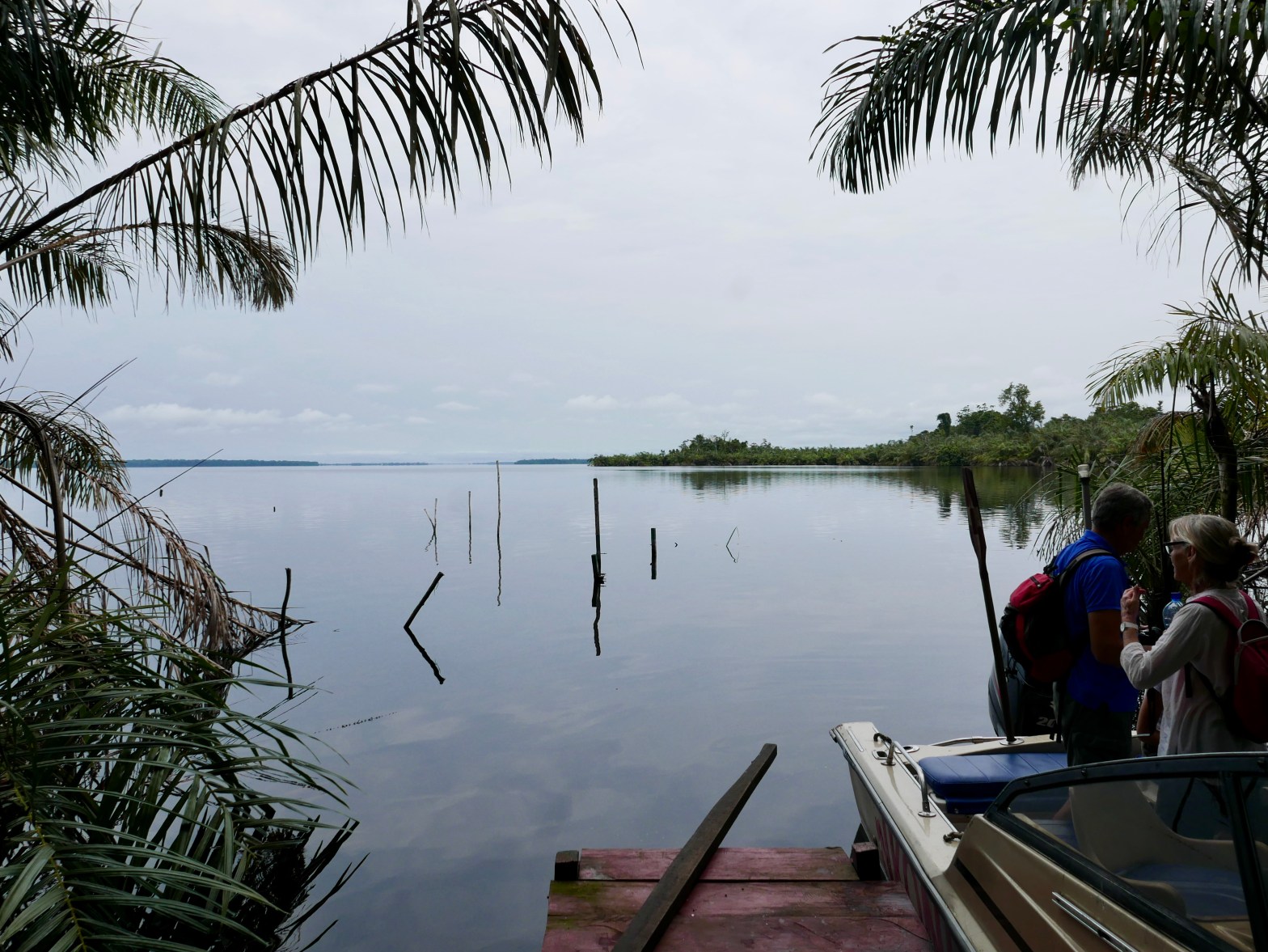
Back into the real world after Enamino, we find ourselves in friendly Omboué again. A boat is waiting to take us around the Fernan Vaz lagoon. This lagoon has a significant historical importance, as it has always been a transport and communication hub from and towards the villages of the deep interior, and became a place of commercial activity in the beginning of the 20th century, when pioneer woodsmen started to bring timber on the waters of the lagoon and send it to Port-Gentil, from where it would be exported to Europe and the Americas.
Life in these times around the Fernan Vaz is very vividly described in “La Mémoire du Fleuve”, a book written in the 80s by Christian Dedet on the extraordinary life of Jean Michonnet, the most legendary of these pioneers, who grew up in the lagoon as a French-Gabonese kid. Michonnet developed a very deep knowledge and understanding of the local ethnic groups, and grew businesses involving both local and colonial communities. He also knew Albert Schweitzer well. I could never recommend this book enough, even for people who have never been to Gabon: it abounds with fascinating stories, not told anywhere else.
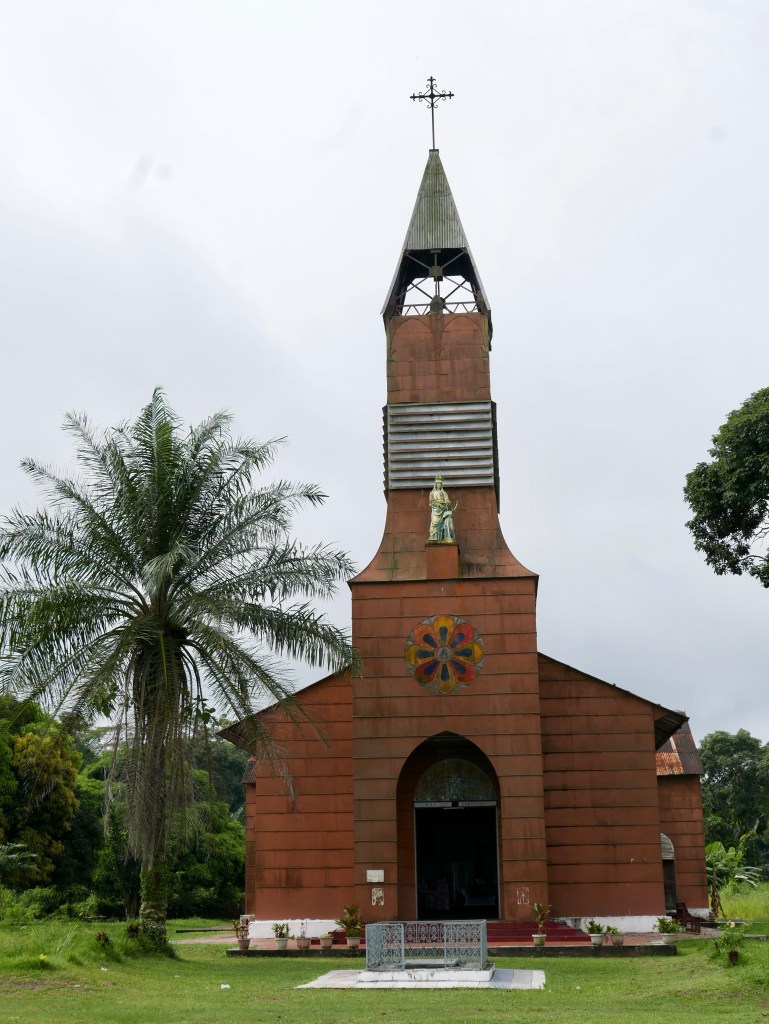
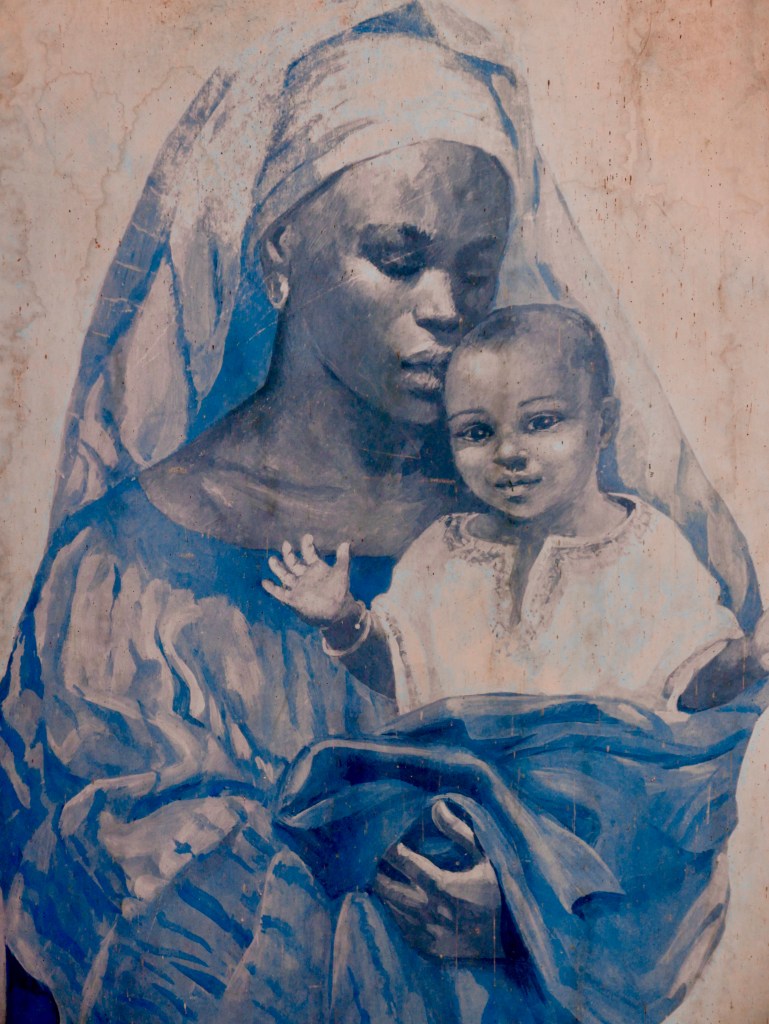
Overlooking the lagoon, between water and jungle, the Sainte-Anne church appears just like a mirage to someone lost in the desert. The Sainte-Anne mission was created at the end of the 19th century, and developed under the patronage of Father Bichet, a priest who came all the way from Brittany and dedicated his entire life to the mission. Since then, it has been the social heart of the lagoon. The mission of course aimed at spreading the Gospel, but Bichet also did a lot to promote education and access to healthcare for villagers.
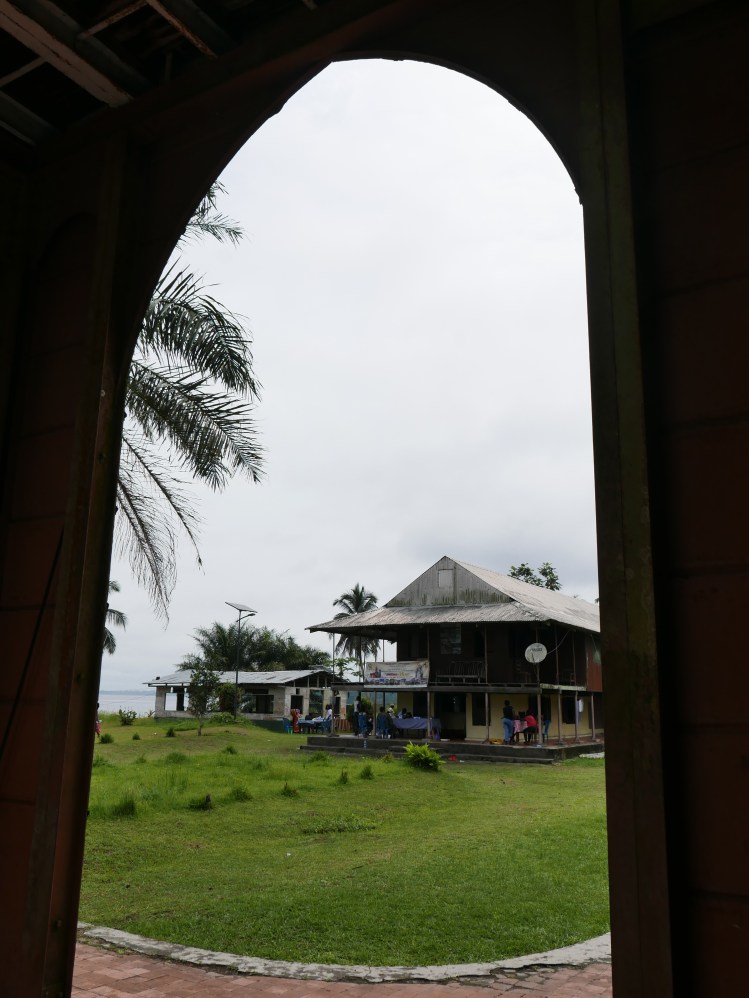
Today, the historical school still stands and operates, though the classrooms look extremely tired, suffering from humidity and the lack of every basic educational equipment. Across the lush garden, a couple of old buildings still resist, like the dormitories of the school. The newly appointed priest of the Sainte-Anne church takes us around and tells us about his renovation projects. He is full of energy and has taken lots of contacts with potential sponsors, though it looks like a daunting task to gather funds for such a remote place – needless to say, where are the only visitors today.
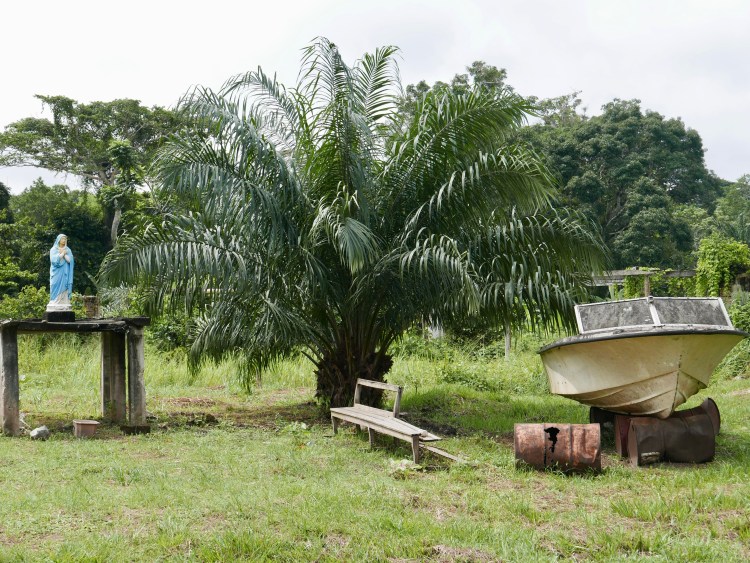
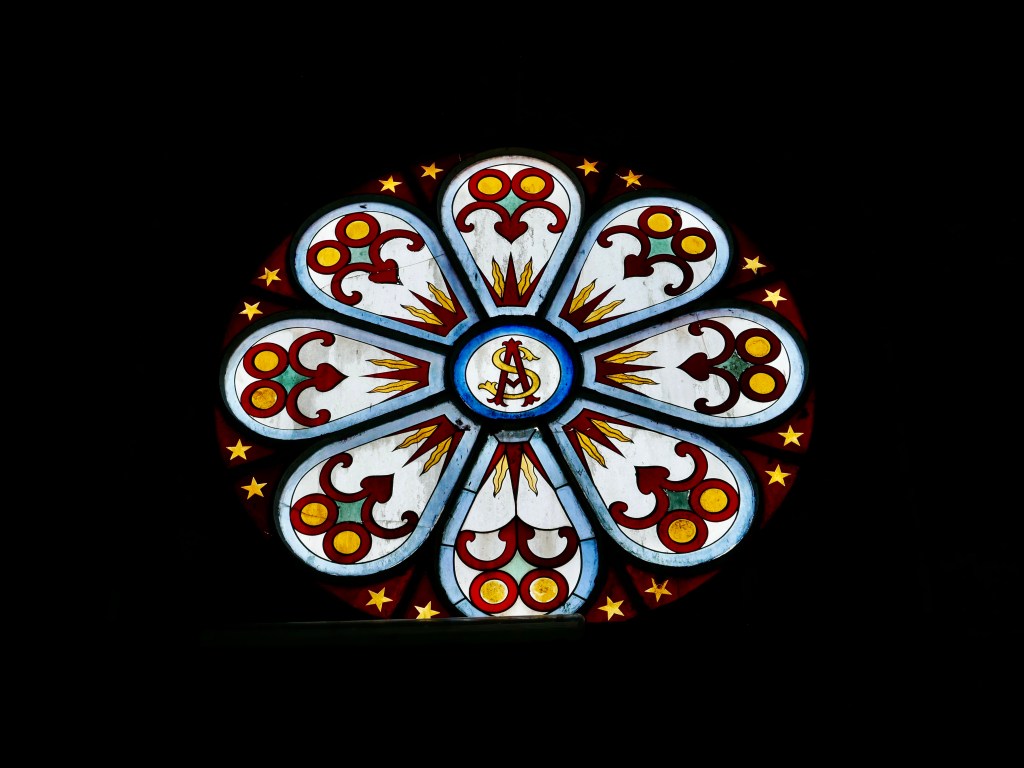
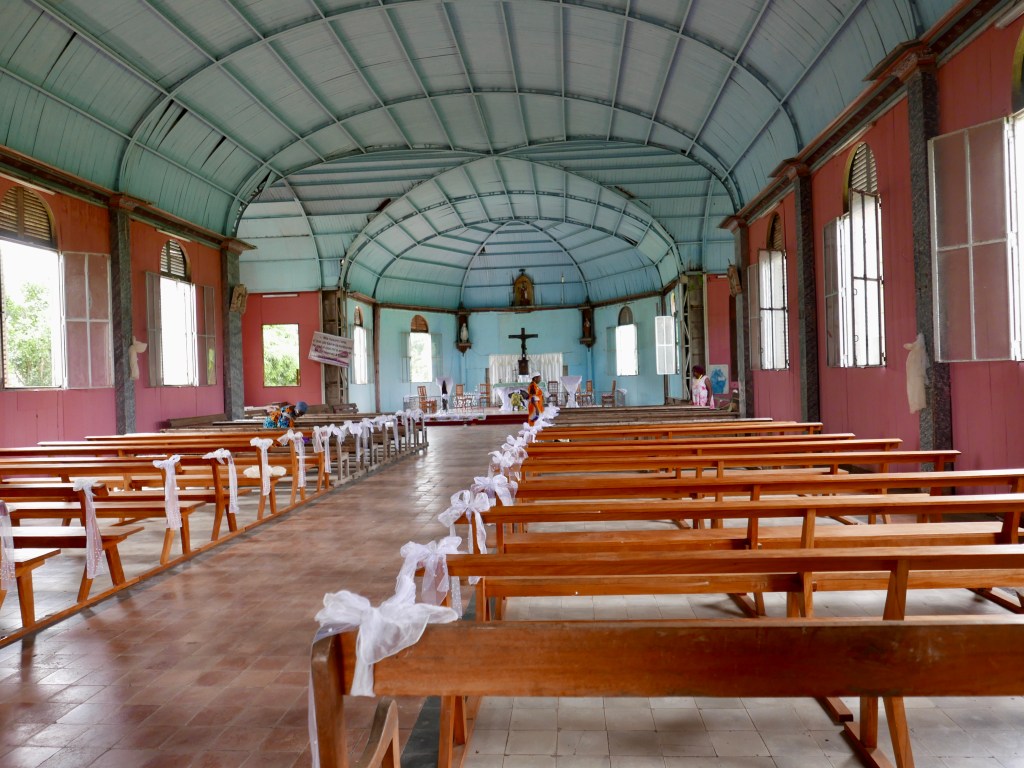
The story of the Sainte-Anne church is hardly believable. It was built in 1889 in the Parisian workshop of… Gustave Eiffel, and shipped in pieces to Gabon to Father Bichet. Then, 30 workers from Senegal assembled it, under the supervision of a French architect. Today, it still draws crowds every Sunday and is full for all important Christian celebrations and inside, nothing much has changed for the past 130 years. The priest shows us how humidity and rust attack its every wall and corner. There are even thousands of a sort of local bee building nests all over and flying around our heads. Still, it’s moving to see local men and women preparing flowers and decorations for the Sunday mass. It’s their church, their history. The UNESCO already came over here to study a potential world heritage status for the church, as one of the other projects the priest and the villagers have been fighting for. But before the UNESCO moves, the Gabonese government first must do something for the preservation the church – that may take a long time under the current circumstances, but this place and its people would really deserve it it to happen.
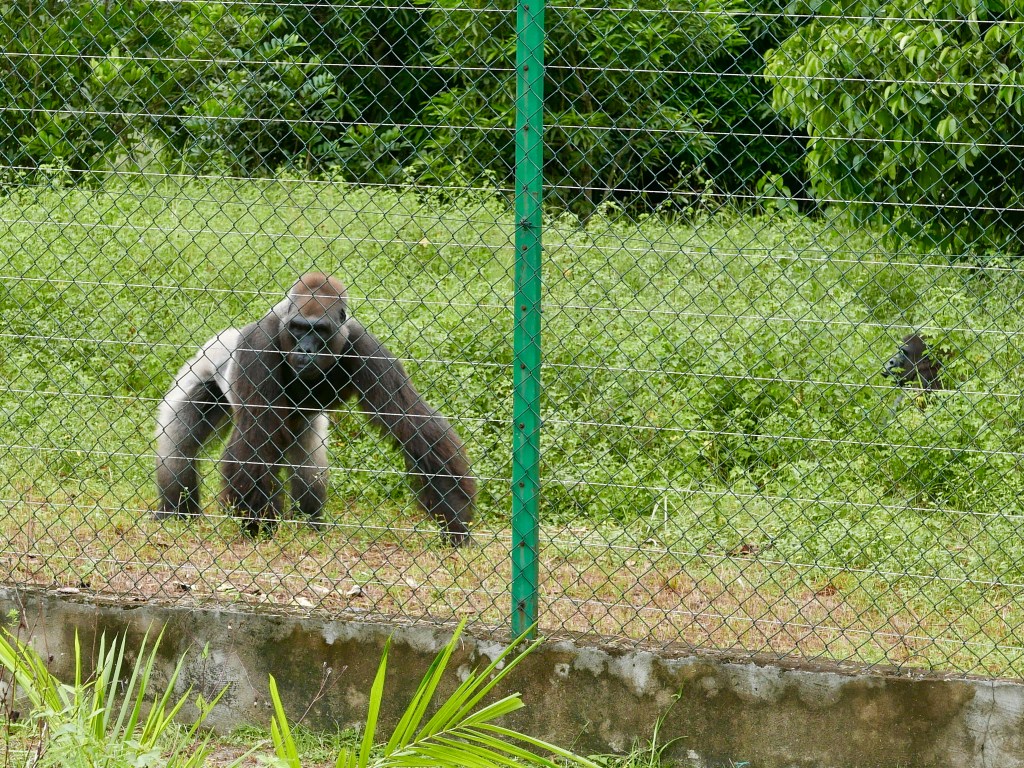
Further on the lagoon, we also make a quick stop to Evengué island to visit the Fernan-Vaz Gorilla project ONG (www.gorillasgabon.org). This island is a sanctuary, where orphan gorillas are rescued from the bushmeat trade and taken care of, growing in a wild but protected environment. There are always two guards on duty, coming from Omboué and rotating every week. They know their gorillas very well, however our presence is a source of stress for the animals, so we must keep a distance and respect a maximum of 20 minutes to watch them. These are powerful beasts, looking very calm when they seat eating fruits, but impressive when males run while loudly thumping their chest!
 Tanad stories from Gabon
A different world ! What a fascinating
place to live
LikeLike