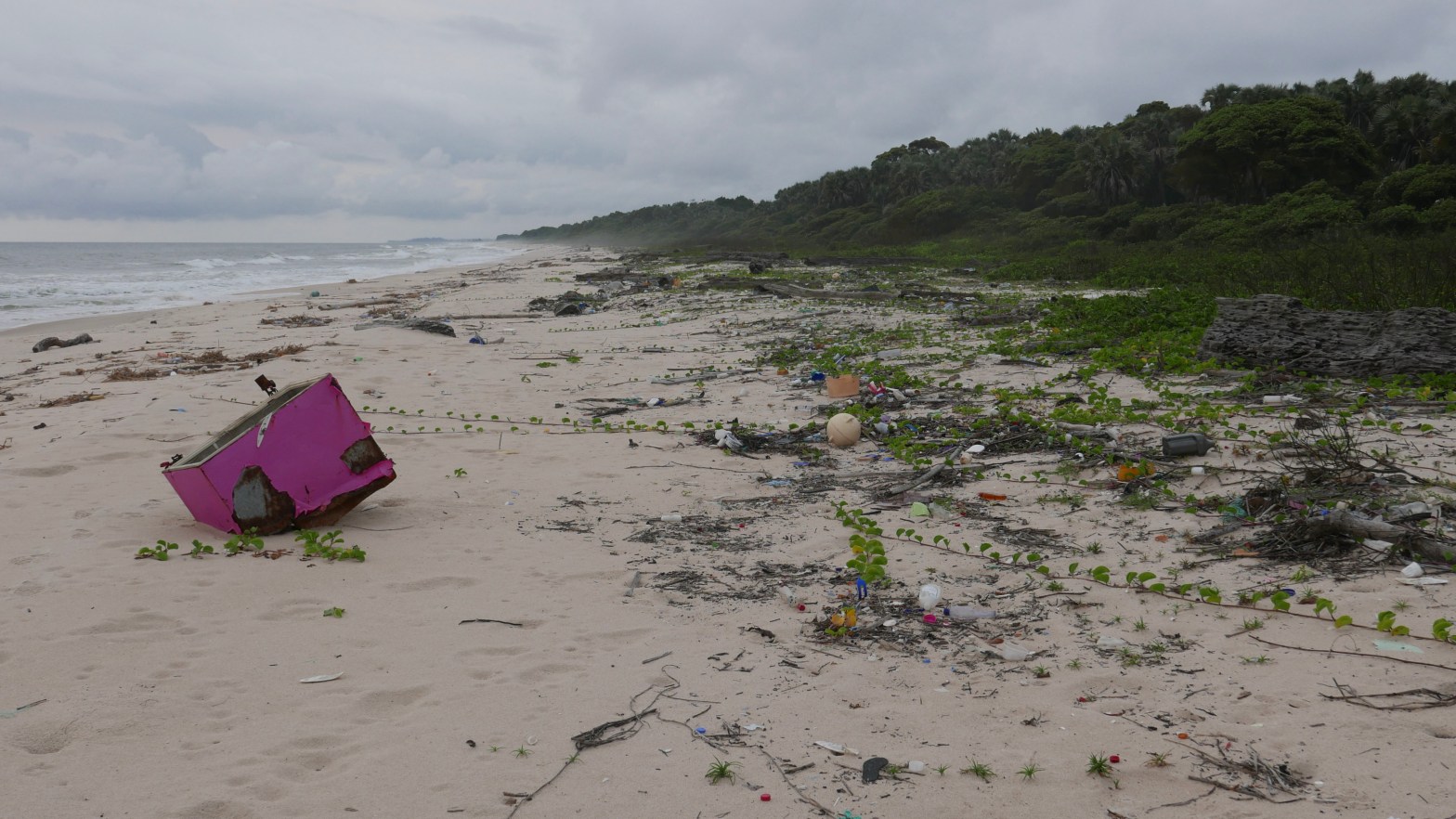
Small plastic bottles. Big plastic bottles. Plastic bottle caps. Plastic bottle films. Flip flops. Lollipop sticks. Motor oil jerrycans. Cooking oil jerrycans. Soap plastic bottles. Shampoo plastic bottles. Toothpaste plastic tubes. Toothbrushes. Plastic yoghurt pots. Plastic make-up pots. Alcohol and Coke glass bottles. Medicine plastic boxes. Medicine spray cans. Insecticide spray cans. Hair gel spray cans. Deodorant spray cans. Spray can lids. Q-tips. Plastic glasses. Plastic forks. Plastic knives. Plastic spoons. Used condoms. Plastic pens. Plastic pen ink refills. Plastic pen caps. Polystyrene. A baby potty. A pink freezer. A computer tower. 1-m unidentified plastic parts. 10-cm unidentified plastic debris. 5-cm unidentified plastic debris. 1-cm unidentified plastic debris. 1-mm unidentified plastic debris. Fishing nets. All of this and more, by the thousands and the tons, is what elephants, hippos, turtles, egrets and men can find lying and decomposing on the sandy beaches of Gabon, from North to South, from Libreville to the national parks of Loango and Mayumba. This is also what we have not shown so far on the nice beach photographs of this blog. To keep them nice, and probably also because this is not what we want to keep as a memory from Gabon. But as much as we hate to admit this is real, this photo below was taken on the same spot in Sette Cama as the nice one with the elephant walking in the sunset – here is a view of what he was treading on:
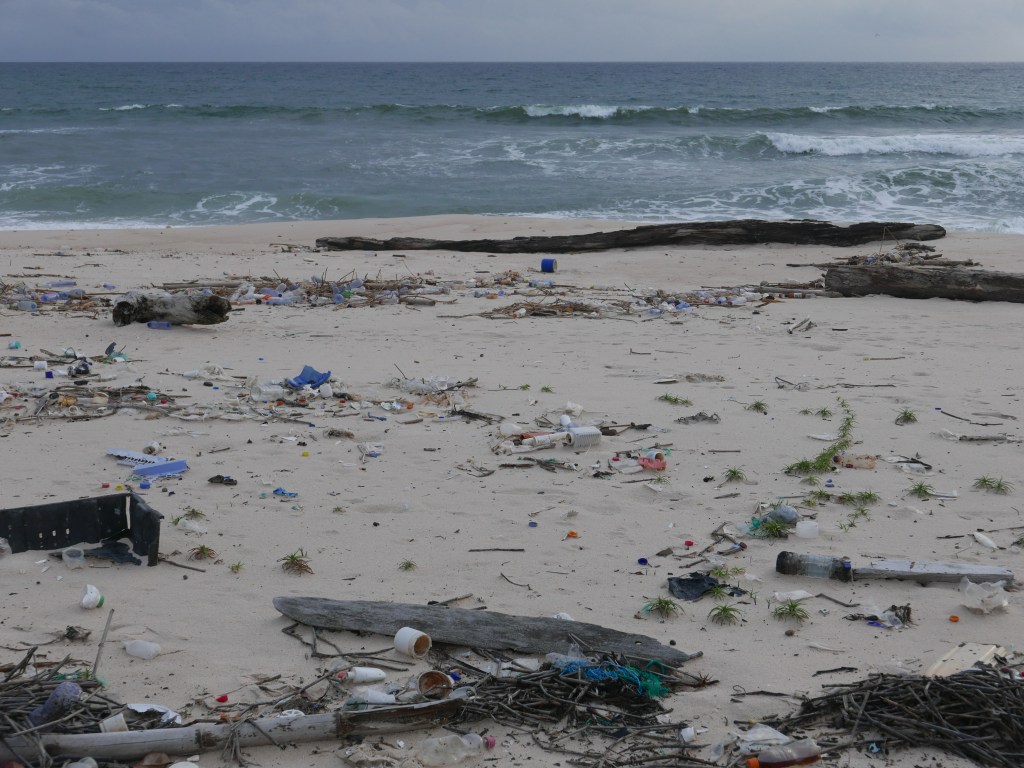
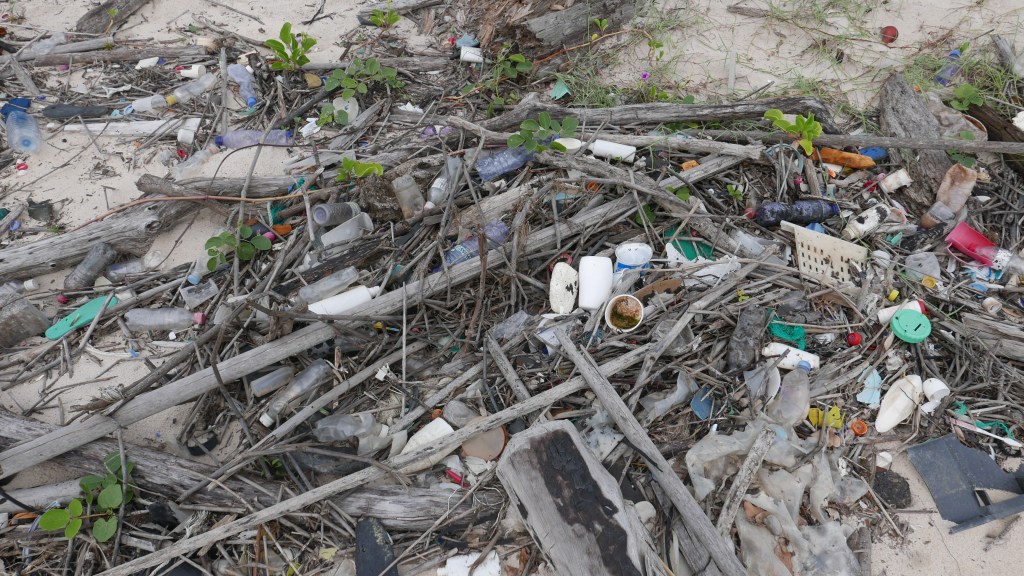
Reading the thin plastic film on the water bottles lying on the beaches of South Gabon is a stimulating activity as it gives you an instant geography lesson, and at the same time an idea of the dazing scale of the problem. The most frequent bottles do not come from Gabon – which makes sense given that coastal currents are mostly northward towards the Gulf of Guinea – but from the two Congos (Congo-Brazzaville and Democratic Republic of Congo) southward. Going further down, Angolese plastic bottles are also widely represented. Then we have lots coming from South Africa. But we also found bottles coming from as far as China, Singapore or Malaysia…
The tiny population of Gabon has grown by roughly 70% since 2000, mostly in and around Libreville. The sewage system of the capital was never meant to meet the needs of 800,000 inhabitants, and could never follow the uncontrolled urban development. Plastic is king – just imagine that you can buy small bags of cold water from street sellers… taxi drivers gulp it in a sec and throw the bag out of the window straight away. Today, city authorities are putting visible efforts behind keeping the centre and wealthier areas clean, but they cannot do much for those tens of thousands of people living in shacks of concrete loosely built along mazes of narrow streets or alleys, inaccessible to cleaning vehicles. So, rather than walk 1 km to the nearest collection point, these people throw their garbage in the ditch or in the nearby stream. On top of this, they do not have access to running water. Typically, a given district has only one water distribution point, and residents spend a lot of their time standing in line, often in the middle of the night, to fill the many plastic bottles that they always keep at home. At some point, these bottles need to be replaced and they also get thrown in the ditch or in the stream. Eventually, all of this goes into the ocean, and ends up on beaches. And the same goes for most cities along the coastline, like Kinshasa, for example, where no less than 17 million people live…
The first thing you can do about this is get depressed. Once you are past this stage, you can choose to act, even though you know you are never going to solve the problem at its roots. In Libreville, there are great initiatives led by both local and foreign residents and NGOs, supported by city authorities – like beach cleaning, the easiest way to make yourself feel useful and to meet nice people. Regularly (a bit less so in these Covid times), on Saturdays or Sundays in the morning, groups of volunteers of all ages gather on a stretch of beach, equipped with gloves and 100-litre bags; for a few hours, everyone stoops and removes every piece of plastic they can find on the sand. It’s totally addictive, because you’re never done: the quantity and variety of plastic you can find on 1 square meter of sand is astonishing. We usually go home with mixed feelings: the satisfaction of leaving a spotless beach behind, and the resignation that new plastic will invade it again within a few weeks.
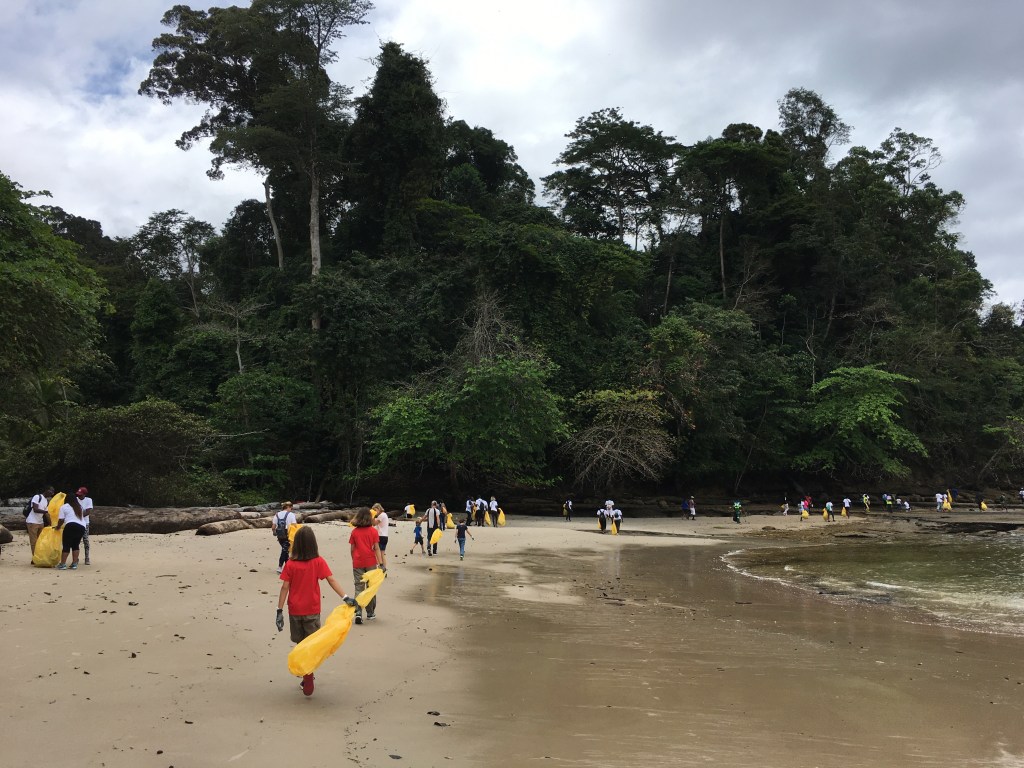
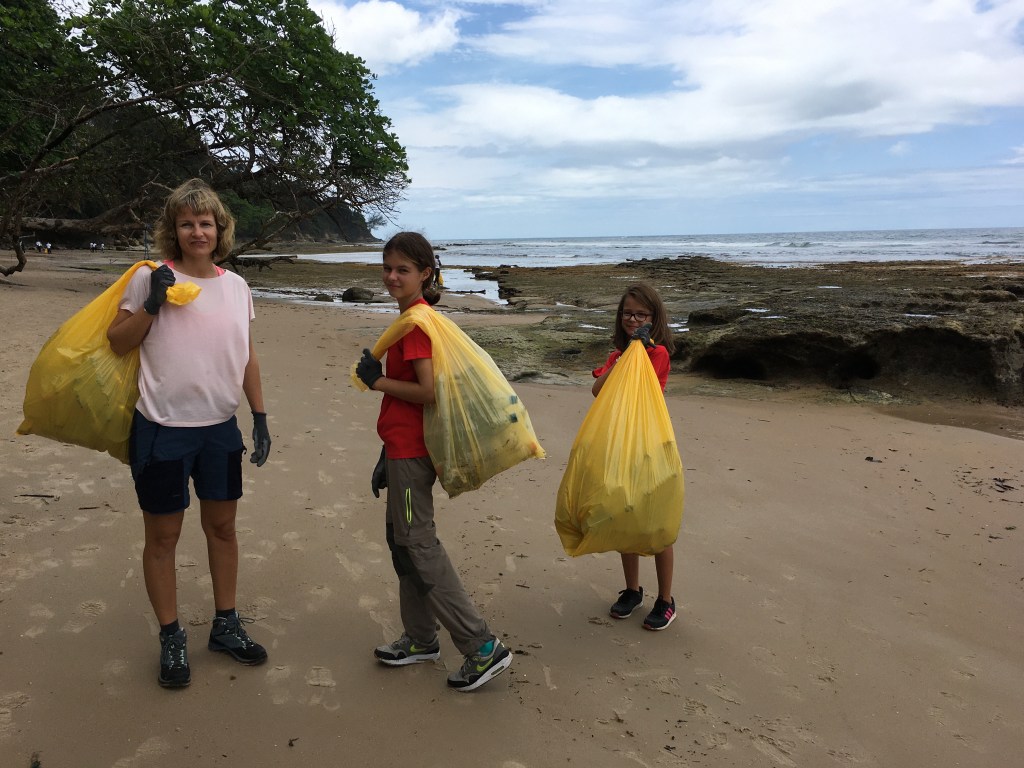
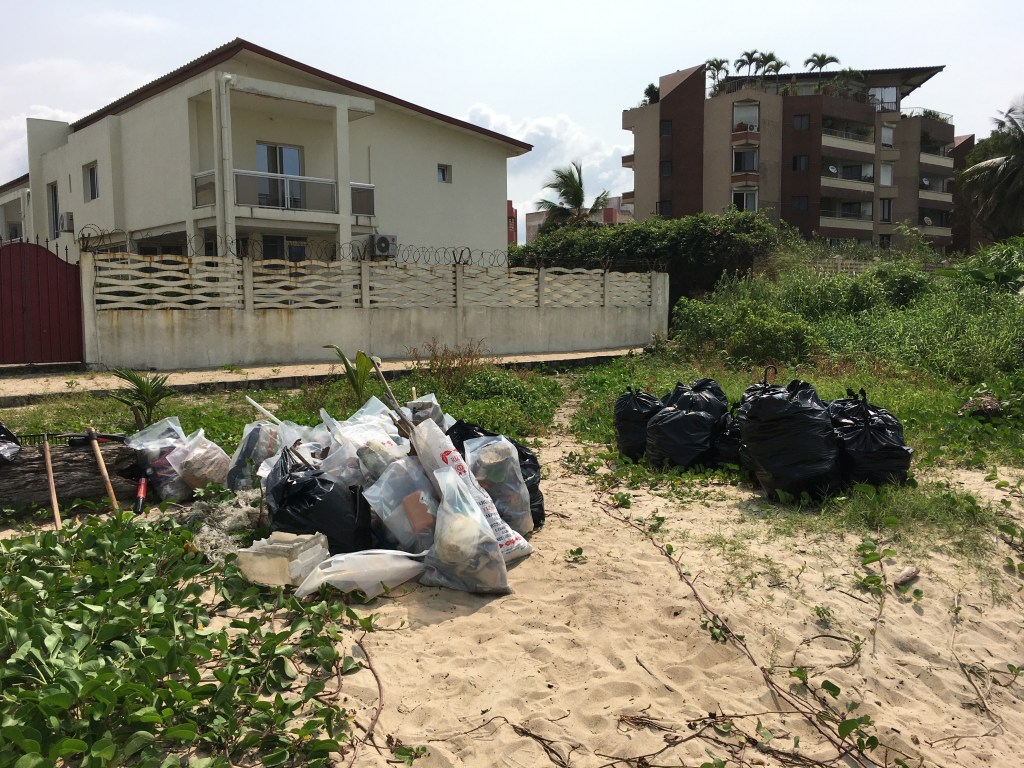
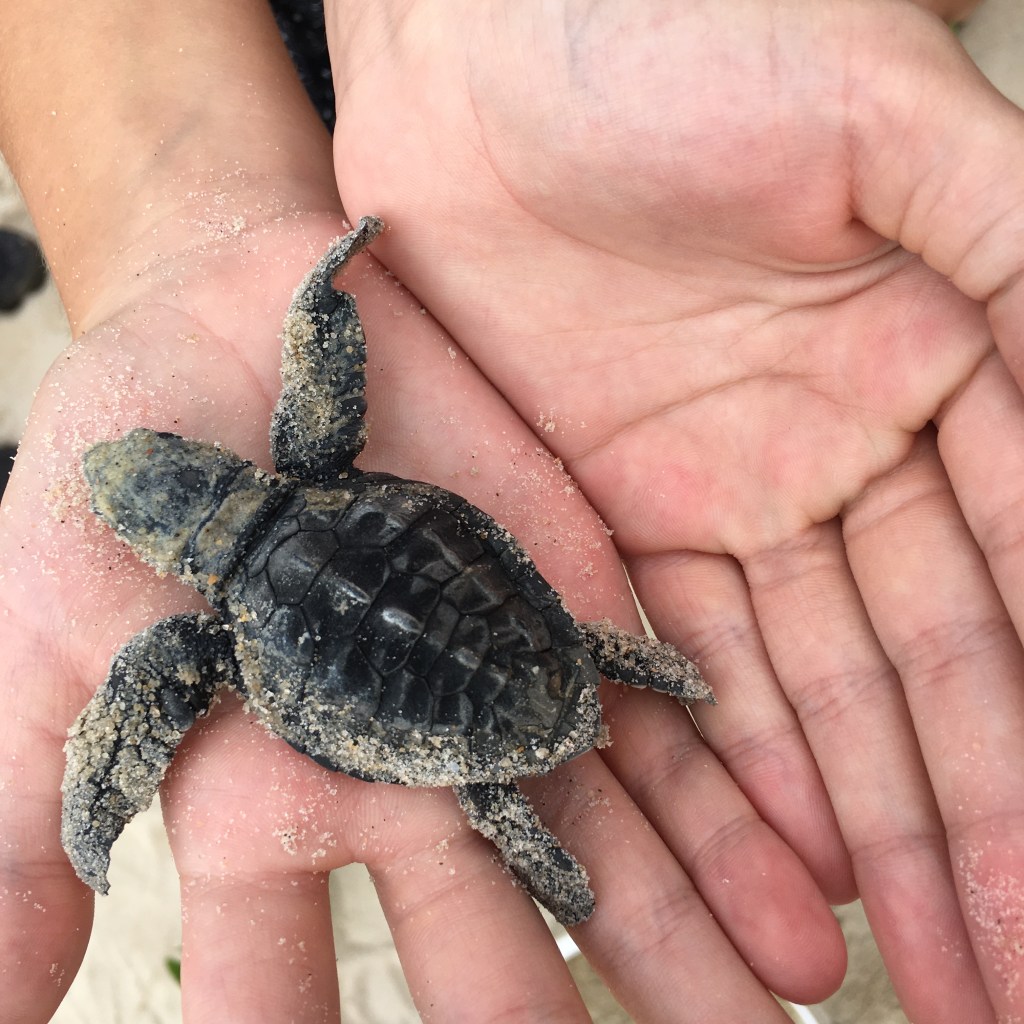
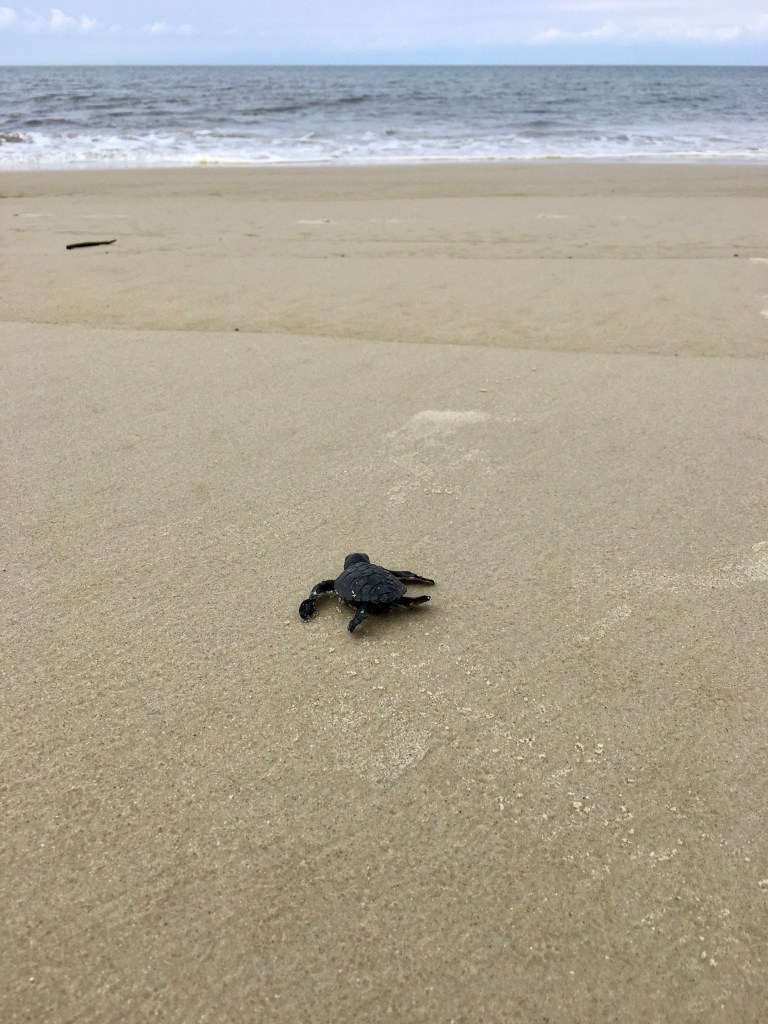
Beach cleaning is definitely fun during turtle season, from October to February. The hard work of volunteers helps newborn baby turtles to move freely from the nest towards the ocean and their destiny (only one out of a thousand will eventually reach adulthood), without meeting any obstacle on their path.
The city of Libreville has installed thick nets under a couple of bridges in the centre, where waste waters meet the sea. These nets retain an enormous quantity of plastic and prevents it from ending up in the ocean. In different areas of the city, a Belgian recycling company has placed a few dozen plastic bottle collection points; they also operate a local recycling factory. Libreville schools participate more and more frequently in beach cleaning activities. In the South, the Ibonga NGO, who hosted us for a night in Gamba and operates up to Port-Gentil, the second biggest city in Gabon, also promotes turtles protection through beach cleaning activities towards children and residents. At national level, a law to forbid plastic bags and single-use plastic objects has been in the works for quite a while, and it should at some point see the light of day. All of these initiatives are reasons to remain hopeful, but they will not be enough. Until all “world leaders” finally decide to treat this issue responsibly and globally, it will get everyday a bit harder for Gabonese elephants to find some sand to step on underneath the plastic, and a bit more impossible for baby turtles to reach the sea. In the meantime, put on your gloves, bring out your (plastic) bags, and listen to the ever-brilliant *Gorillaz album “Plastic beach” while cleaning your local beach!
 Tanad stories from Gabon