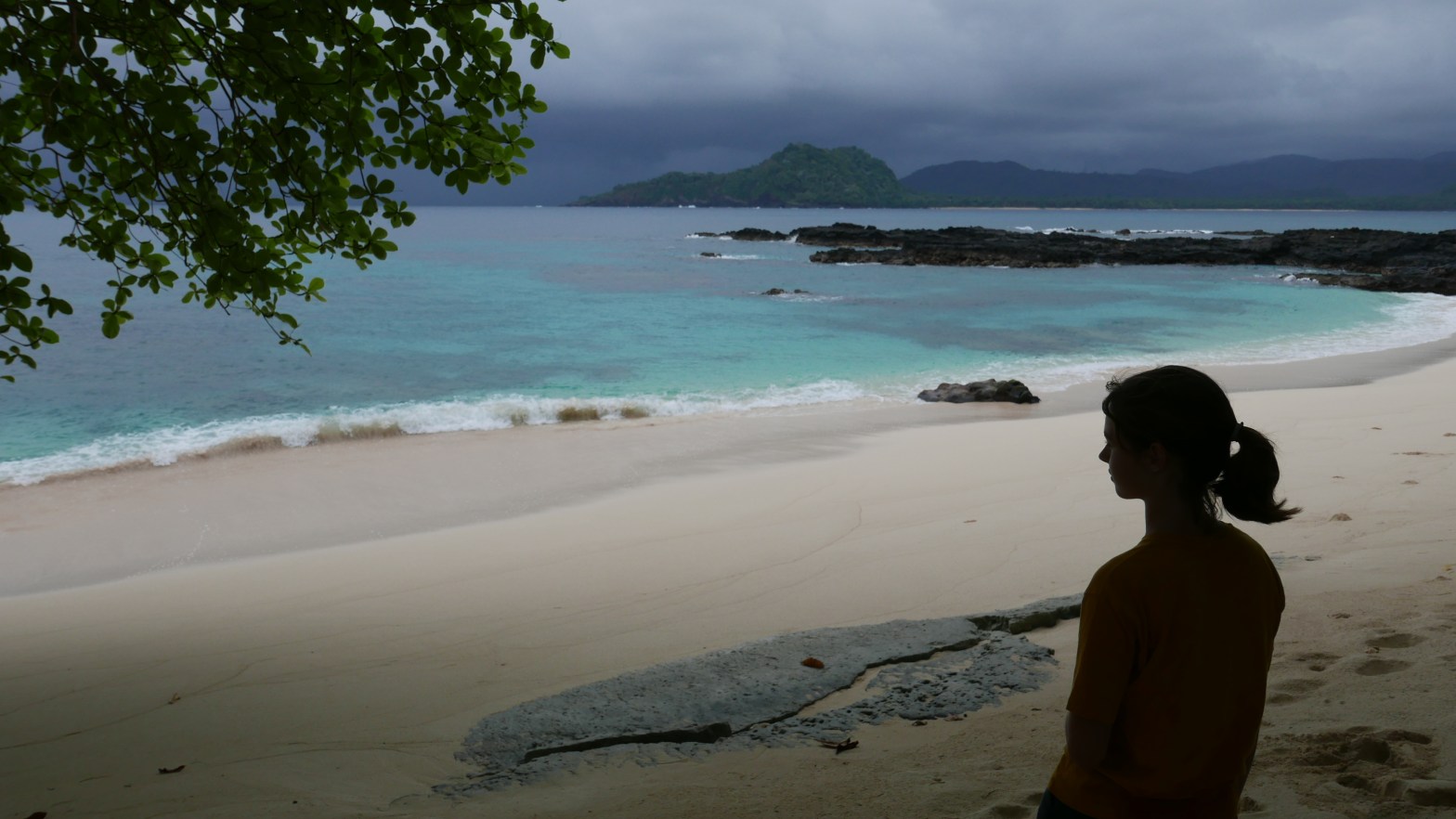
It’s October and I am back to Sao Tomé, this time well-accompanied: it’s the four of us now and two Parisian accomplices, tasting this unique Afro-Portuguese island vibe. We make it to the Southern tip of the island, past the village of Porto Alegre, where the beaches are endless and sandy and people are scarce.
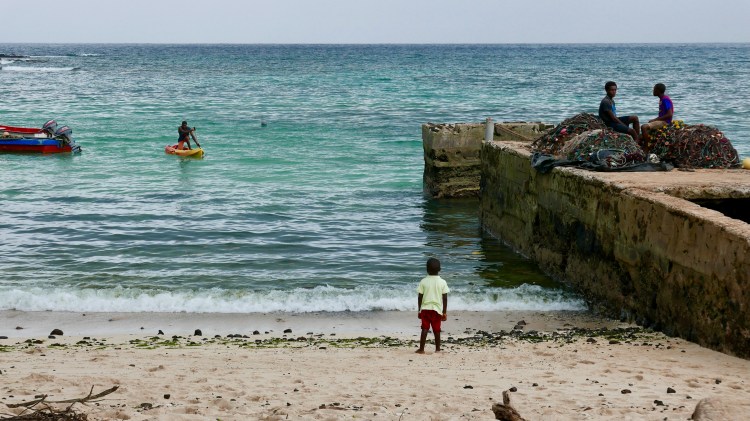
We reach Ilhéu das Rolas after 15 min spend on a motor boat. We are now on the islet that proclaimed itself the center of the Earth, though no one knows about it. The reason behind is that this minuscule piece of land is crossed by the equatorial line, and lies only a few degrees from the Greenwich meridian.
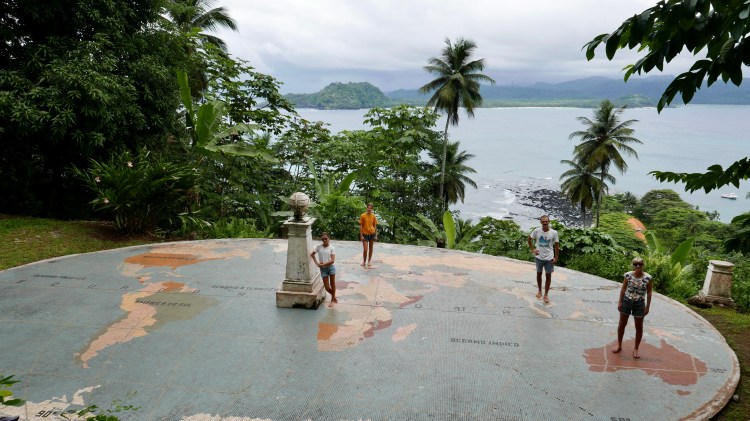
There is a nice monument right on the Equator, though like everything else in Sao Tomé it has lost it’s luster. We find it after a short walk through a welcoming jungle and with a little help from the locals.
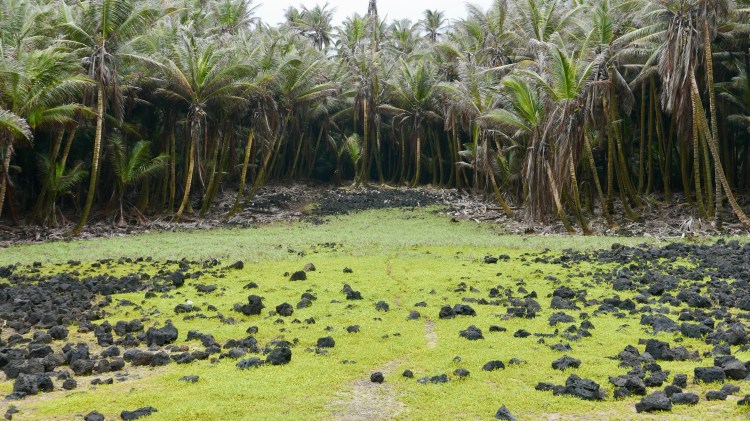
Then we roam around in search of the volcano that one of our friends told us about. We don’t know anything about it, just that we should go there. At the foot of a coconut tree we meet with Antonio. He knows where the volcano is. He proposes to take us there, and we start walking through an incredibly thick coconut trees forest. The soil is a very uncomfortable carpet of broken coconuts. We’ll realise throughout the day that the islet is almost entirely covered with coconut trees. Antonio wears a t-shirt with more holes in it than shirt, and no shoes.
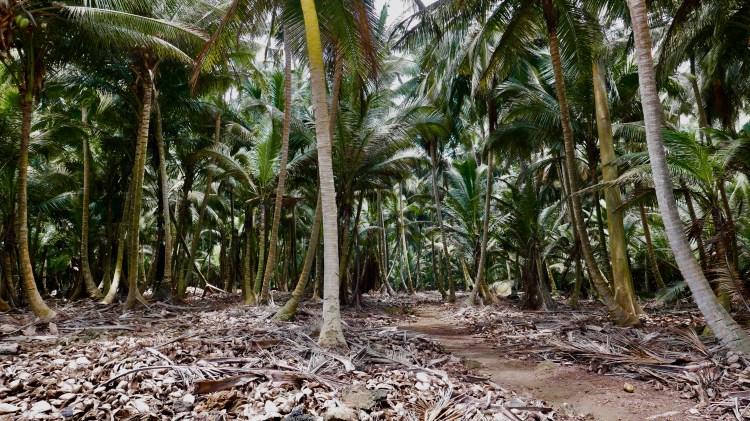
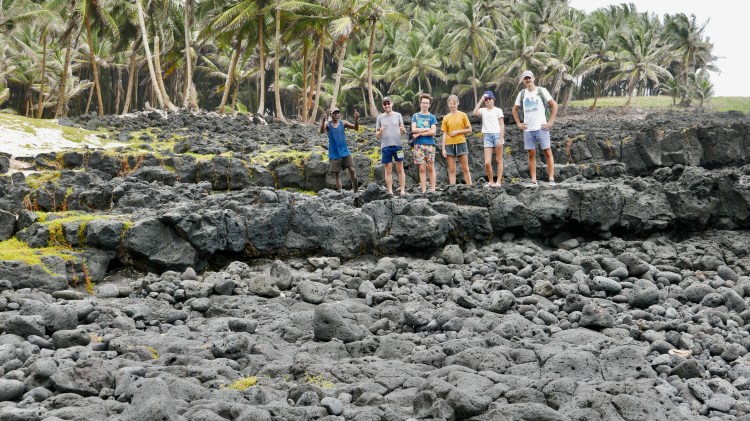
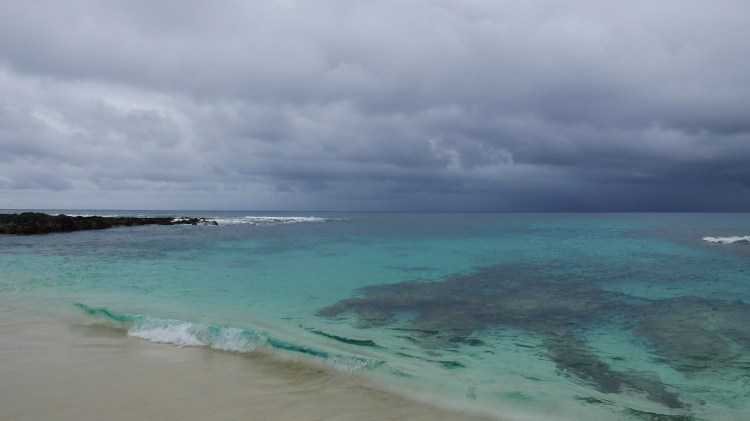
As we slowly make our way towards the volcano, we reach the volcanic stone-made Southern coast of the island. From then on, the “island of turtledoves” becomes otherworldly wild and beautiful.
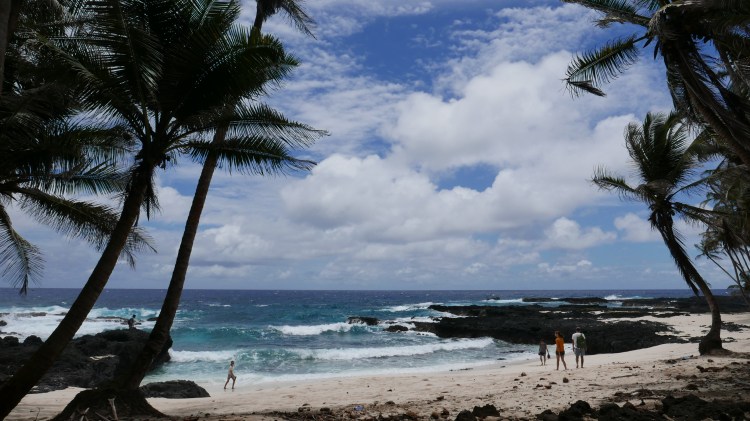
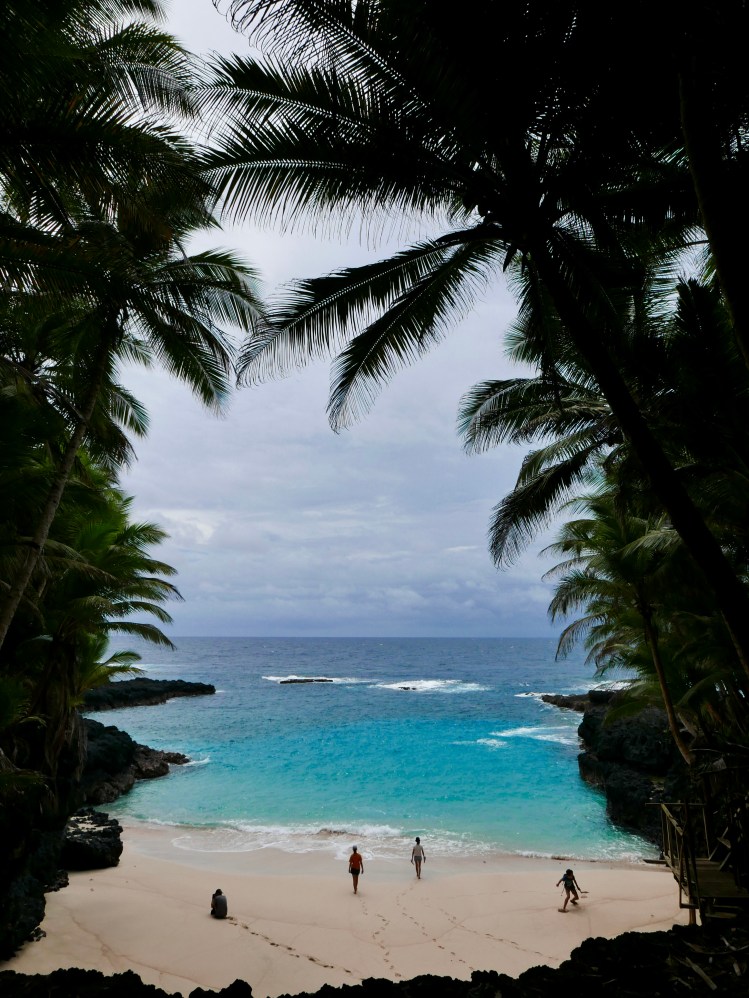
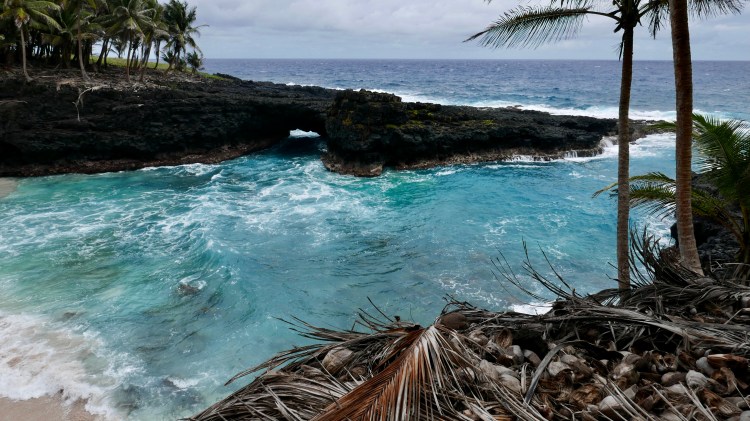
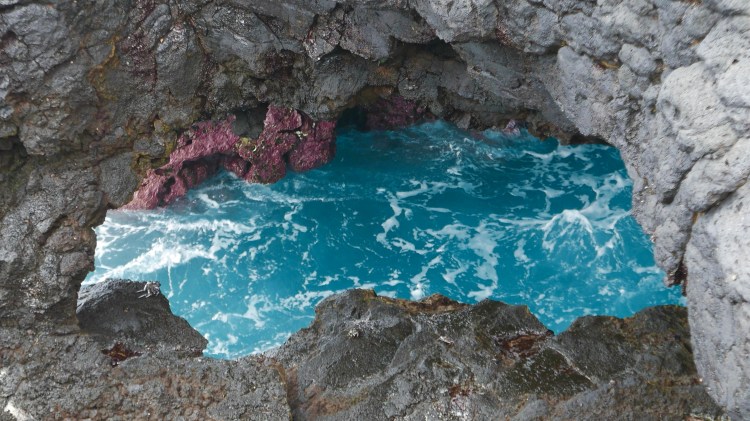
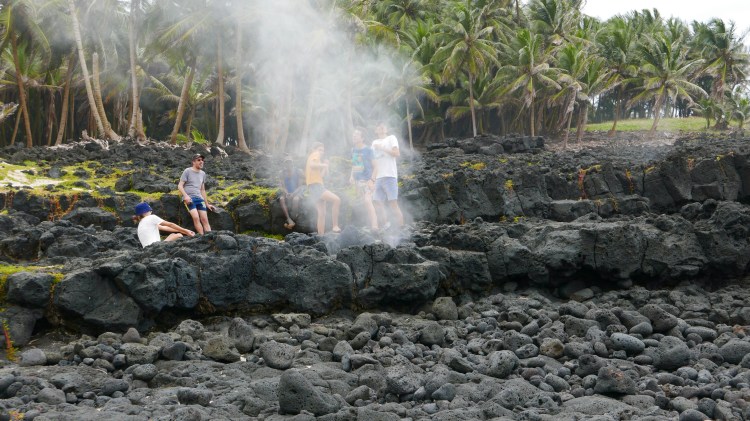
We find the volcano, which turns out to be a long rocky tunnel into which waves violently crash then crawl through, blowing out air and salt and droplets of seawater through the hole at the end of it every minute of so in quite a spectacular and hair-messing way.
By the time we have finished our walk around Ilhéu das Rolas, we have met with each of its welcoming 76 (according to Wikipedia) inhabitants, who live self-sufficiently off fishing and coconut. They tell us that today, we were the only visitors. Usually, being at the center of things means being busy. You may be happy to know that at the center of the planisphere, nature is untouched, men are few and nothing of note happens.
T-T
 Tanad stories from Gabon