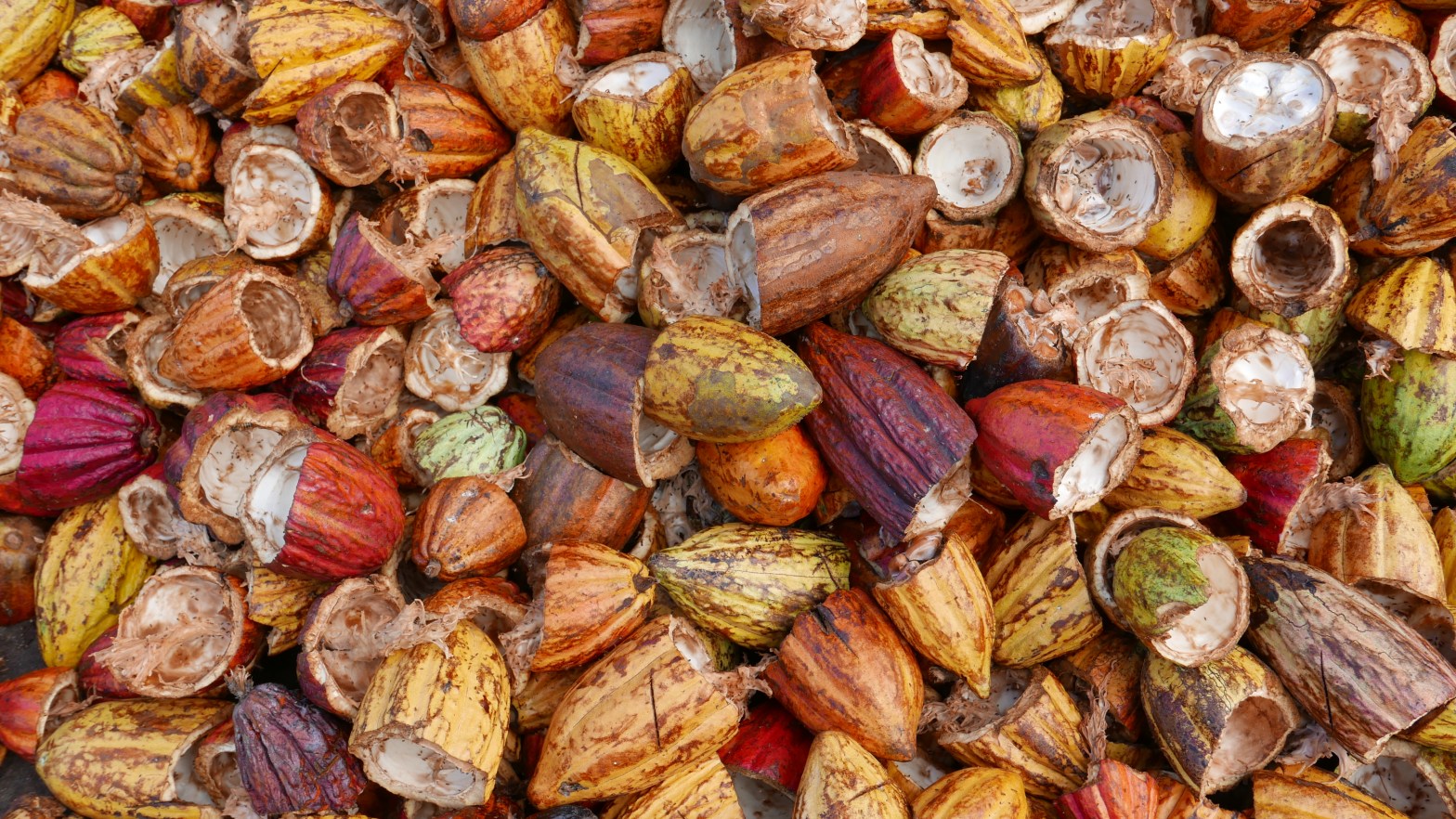
Things have changed a lot since the days when Sao Tomé was called “chocolate island” (see this earlier post). Many other African countries started growing cocoa and exporting it massively, while the main plantations in Sao Tomé have gradually shut down.
However, cocoa still can be found growing wildly all around the island and today, Santomean chocolate is revered by connoisseurs and discerning chefs around the world thanks to two local companies promoting the “tree to bar” philosophy: Claudio Corallo and Diogo Vaz.
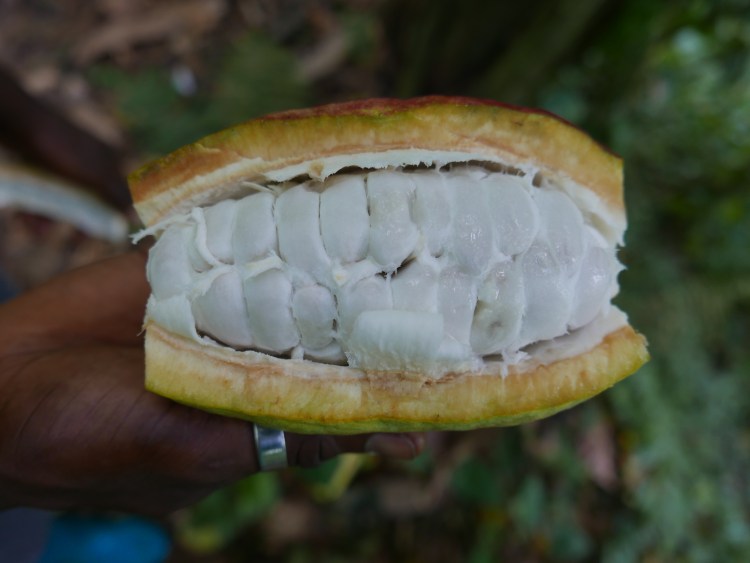
Claudio Corallo is the original pioneer who came to the island almost 50 years ago and whose work alone has put Sao Tomé again on the international chocolate map. His no-frills, perfect carton chocolate boxes can easily be found easily in Libreville. We love them. His workshop in Sao Tomé is open a couple of days per week and this time.
In comparison, Diogo Vaz is a newcomer. It started in 2014 with a small team of French chocolate enthusiasts who set themselves the task to revive the Diogo Vaz plantation, on the North coast. They have put a lot of hard work behind their ambitions and today, the Diogo Vaz brand is becoming less and less of a well-kept secret. Their tablets can easily be found in Libreville. We love them. And on this sunny October day (yes, it’s a lazy blog), as we drive the windy road up to the village of Diogo Vaz, we are eager to discover where it all comes from.
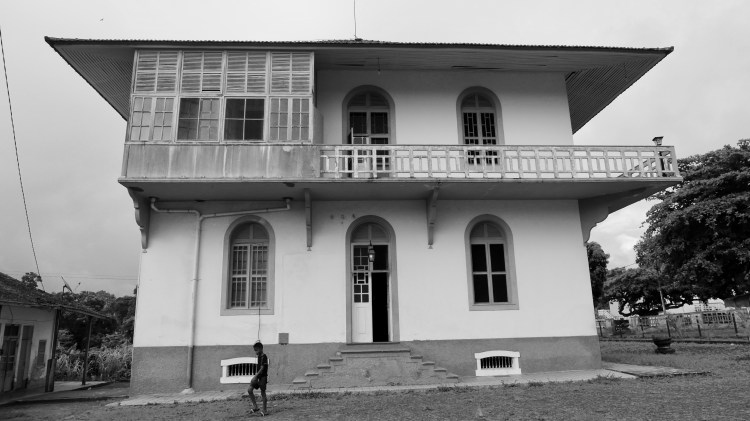
Our visit starts in the lush, damp and mosquito-infested plantation, where three different types of cocoa can be found. It ends with a black polygon melting in our mouth, leaving us happy and – so says science – smarter.
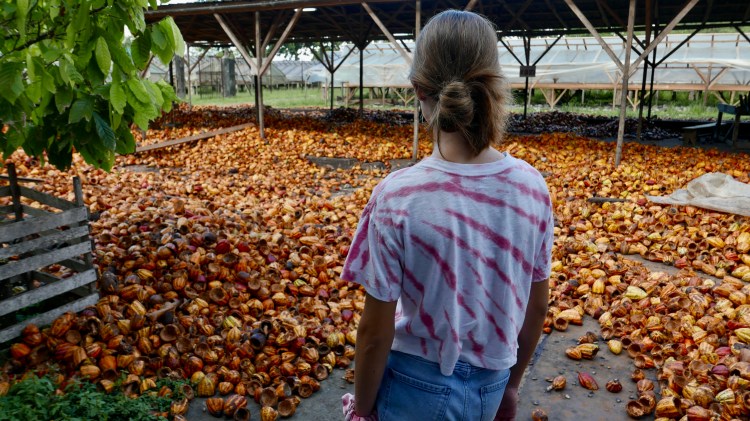
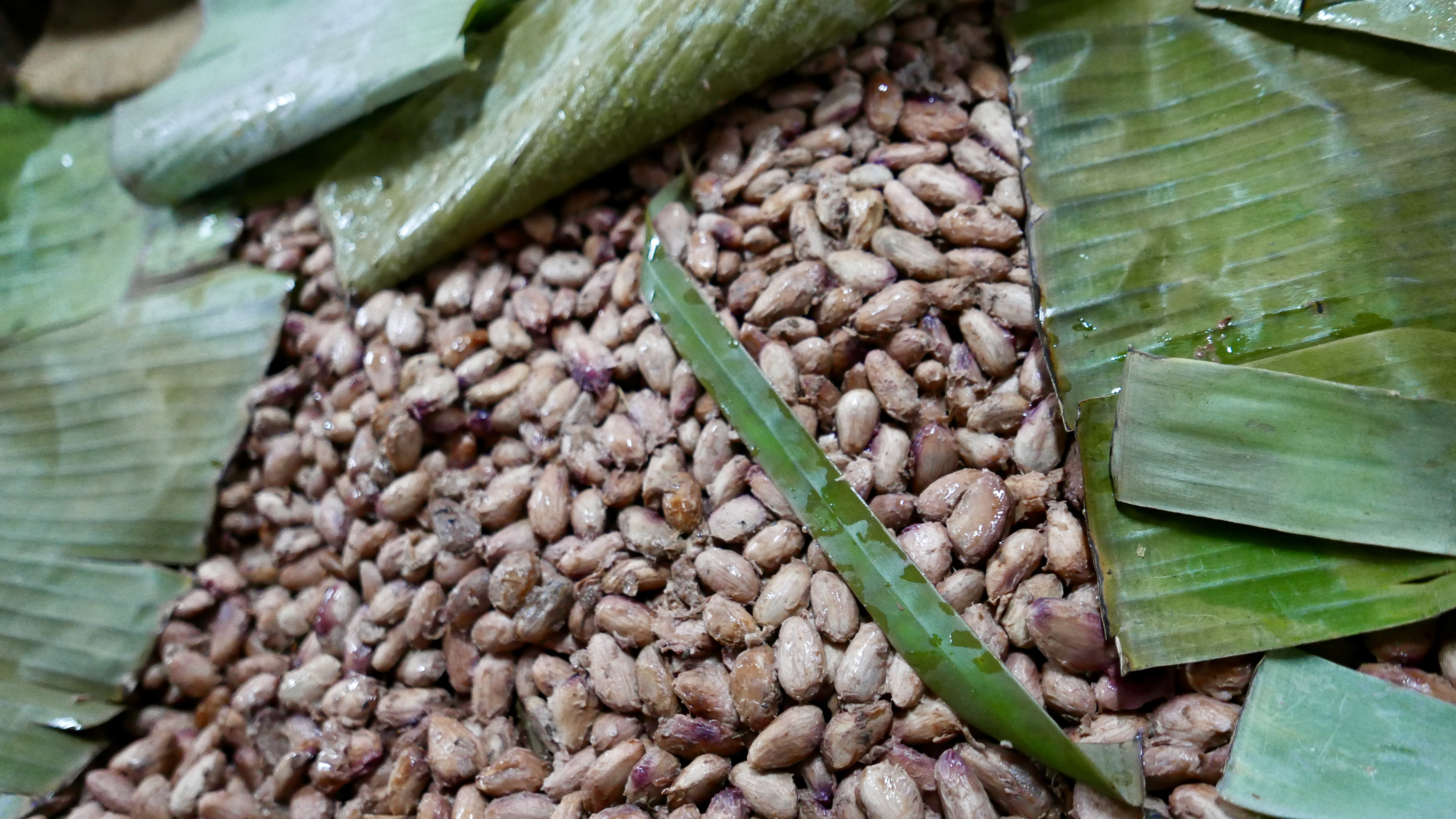
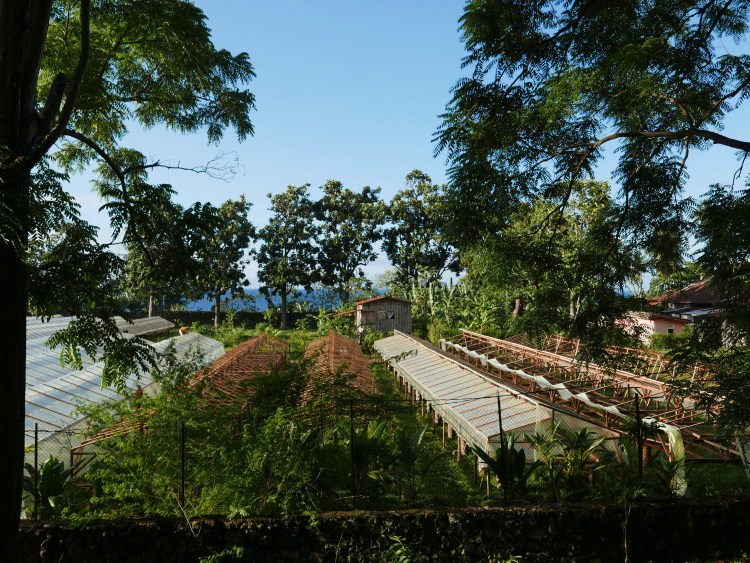
In between, we get to understand how the ripe cocoa fruits are cut off and opened manually, how their beans are then left to ferment under banana leaves for almost a week, so that the sweet pulp surrounding them is eliminated and the first chocolate aroma develops inside the beans, which are then put to dry outside.
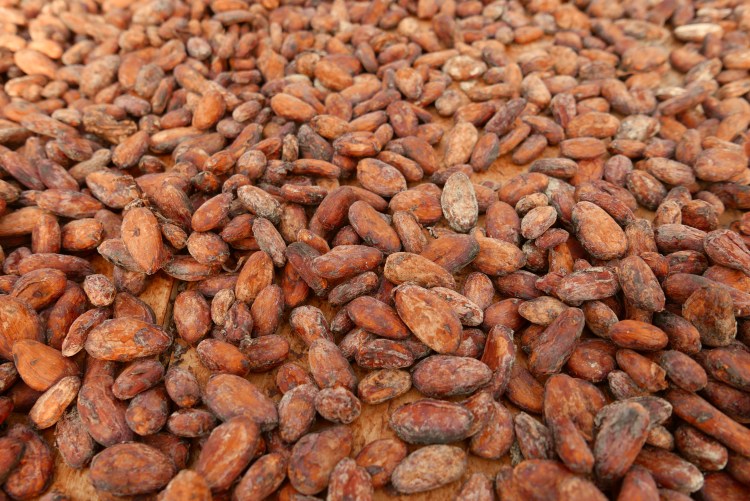
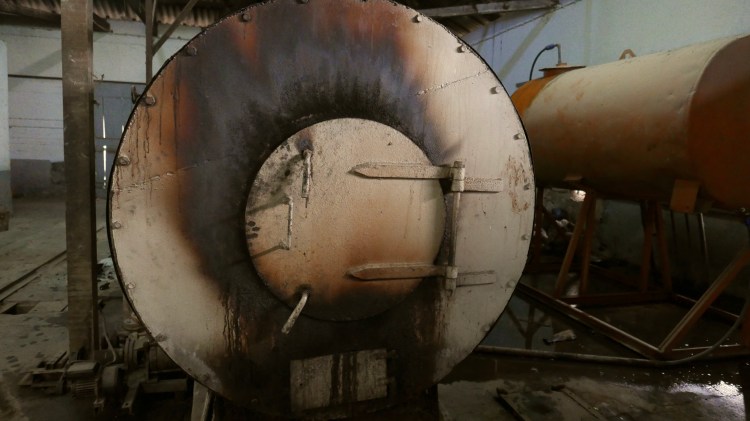
The last step is to put the beans to roast in a huge cylindrical oven for a little while, to finalise the drying, remove the bitter smells occurred by fermentation, and further develop the chocolate taste. All along this process, a strictly manual quality control is applied to make sure only quality beans will be used to make chocolate.
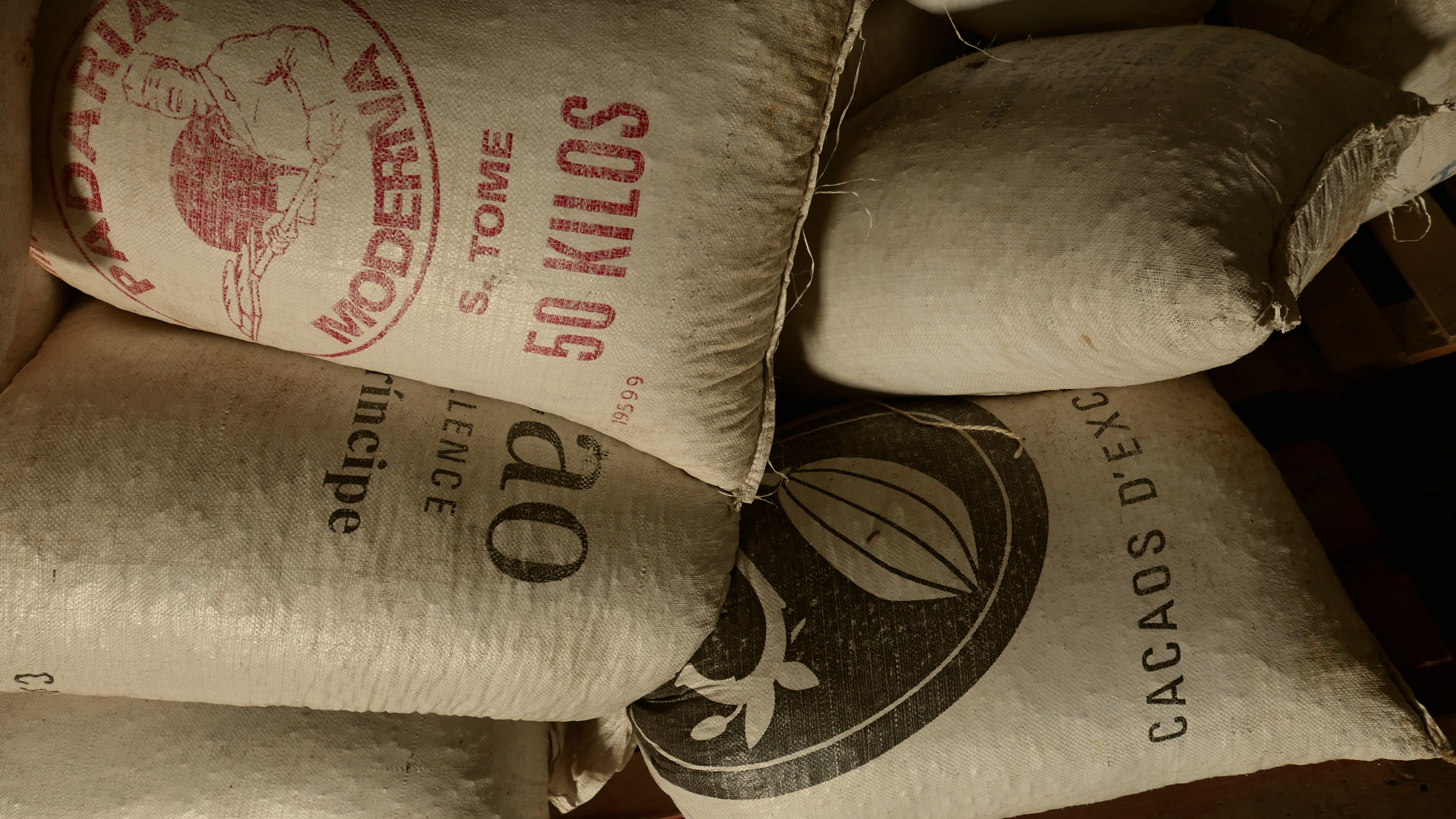
Eventually the dry beans are put into bags, which will either stay on the island and turn into Diogo Vaz chocolate, or be exported. All of this happens more or less in the same way than a hundred years ago, in the very buildings and with the machines and equipment that the Portuguese used at that time. Needless to say, it’s organic.
The great thing about this project is that it truly benefits the surrounding community. Today, 200 people live off directly from the plantation, and after decades of decay the Diogo Vaz village thrives again.
There is a fancy Diogo Vaz boutique on the seaside road in the city of Sao Tomé, very close to Claudio Corallo‘s factory. Alternatively, you may order your first Santomean chocolate fix online… Eating either of these chocolates feels like listening to music on vinyl: you simply get the real stuff. Just be aware of the very high chance of addiction!
T-T
 Tanad stories from Gabon
muito bom!! one day i want to see it for myself…
LikeLike