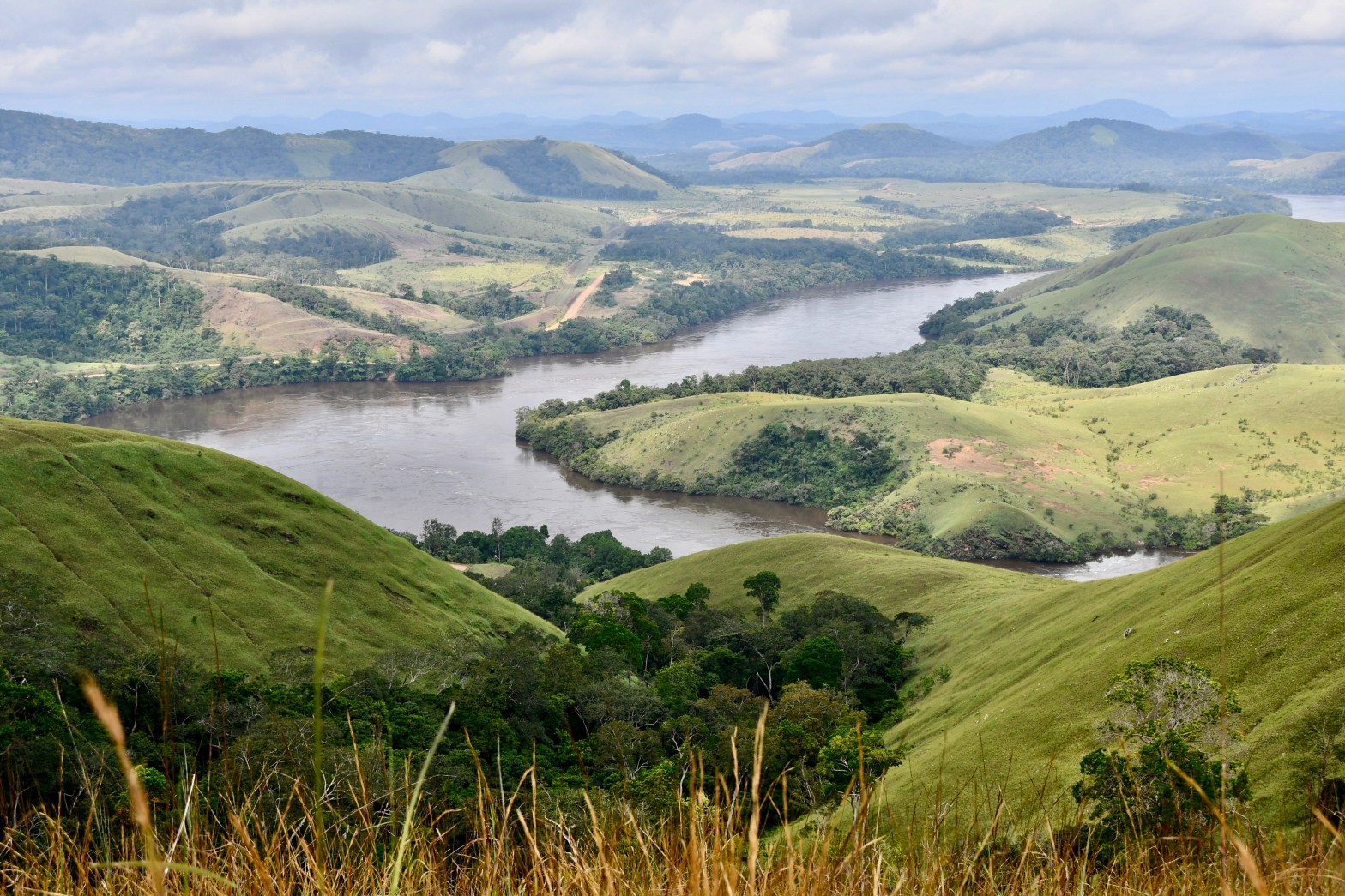
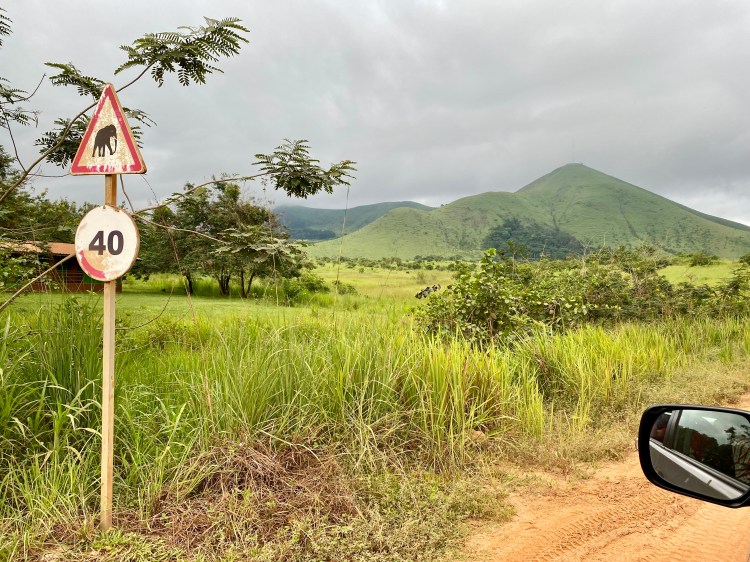
Traveling by car to remote places in Gabon is never an affair that should be taken lightly. Before you get behind the wheel, it’s wise asking around about the current state of the road, especially in the rainy season when a day is sometimes enough to cause landslides, giant mud puddles and accidents, eventually making a decent road impassable. It’s a few days before Christmas, my parents are visiting, and for our last expedition inside the country we want to discover Lopé National Park, which lies right in the middle of the country, 380 km away from Libreville, along an isolated dirt road that does not appear on Google maps despite its national road no. 1 status. So we ask around, and the general feedback we get about the road to Lopé is the classic “ça passe”, which roughly means “you can make it through, but don’t expect it to be easy”.
The first stretch of road until Bifoun is a delight. It used to be a potholed and dusty hell a few of years ago when we first took it, but by now it’s almost been entirely renovated and we are smoothly gliding over fresh asphalt, marvelling at how much this improves the living and traveling conditions in the area. Things start to get rough after the Bifoun crossroads, as we continue our journey towards the East. Sizable potholes appear, which locals aptly refer to as “craters”. We start slaloming slowly through. We cross tiny villages of shaky wooden-walled and tin-roofed houses, a few tired police barriers, an old and crumbling metallic bridge, we avoid here and there the remnants of recent landslides caused by the rain, pass through the industrious town of Ndjolé – a magnet for dodgy wood and mining business, find the mighty Ogooué river and drive alongside it for a while, and as usual the thick forest is all around and we sort of get high on green.
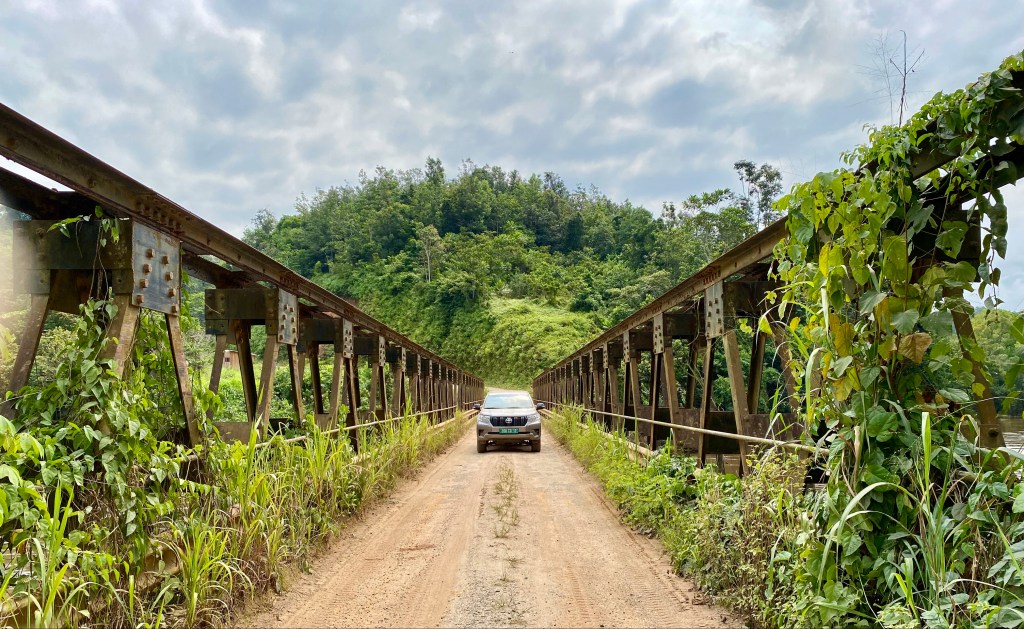
Finally, we reach Alembé, find the bridge that we were told about, cross it and find ourselves on national dirt road 1. We are a 100 km away from our destination. From now on, the only vehicles we are coming across are a few gigantic trucks loaded with timber, most often driven by Chinese, coming back from the depths of the country and taking their precious cargo to Libreville, leaving a lasting cloud of dust behind them. The road is dry, and our dependable Land Cruiser is doing great on it, which is good news as we quickly realise that there is no telephone network anymore.
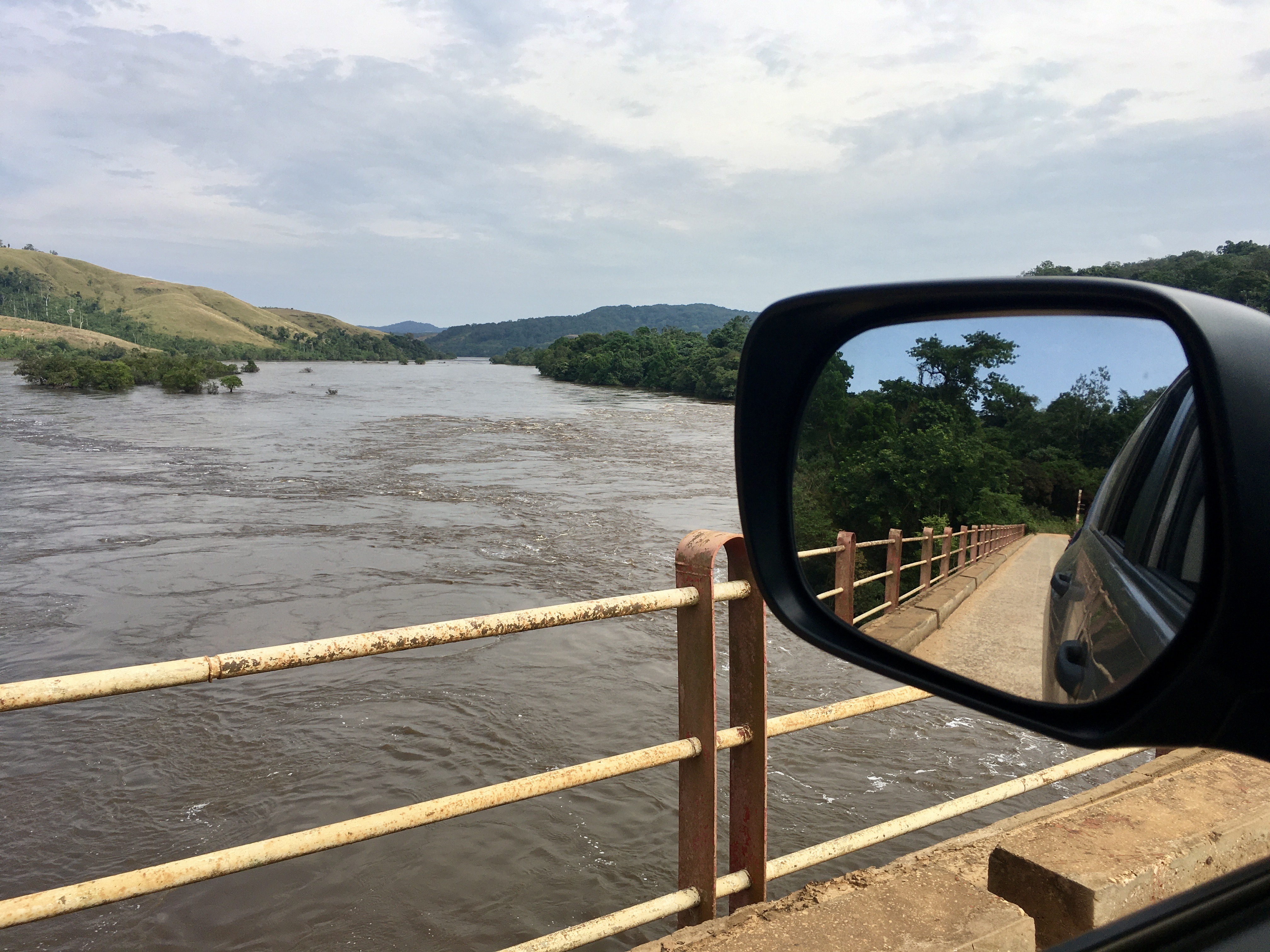
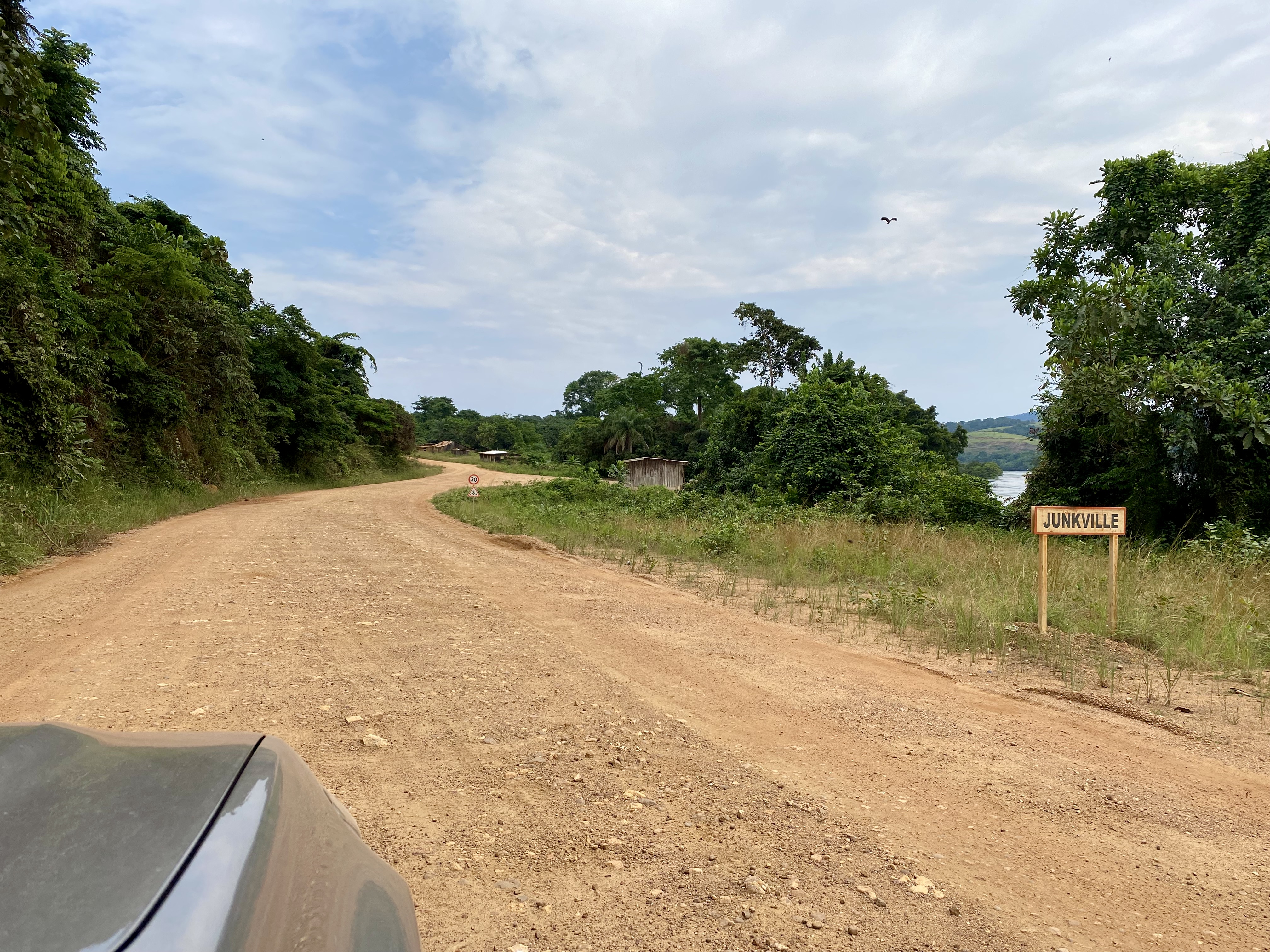
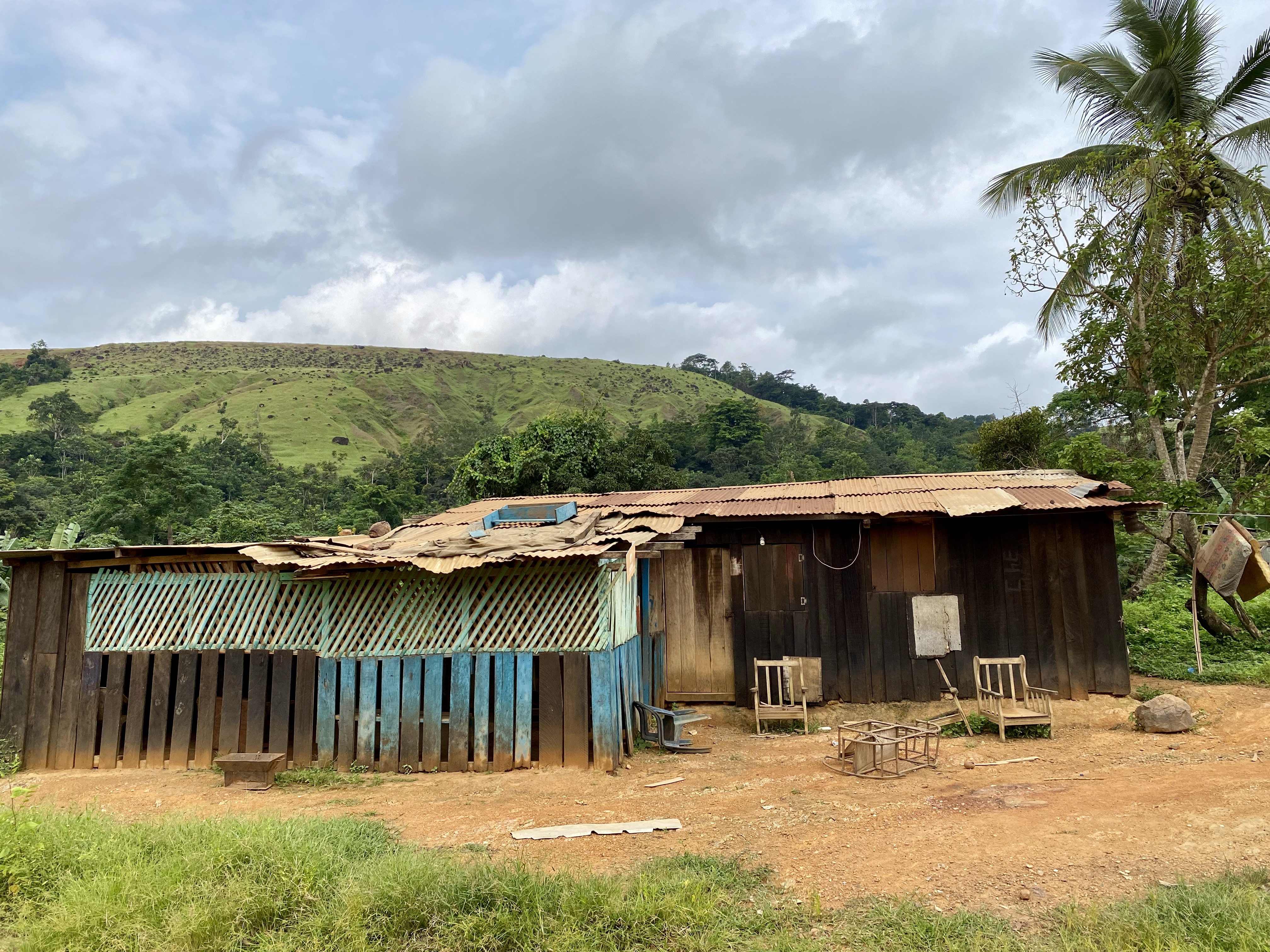
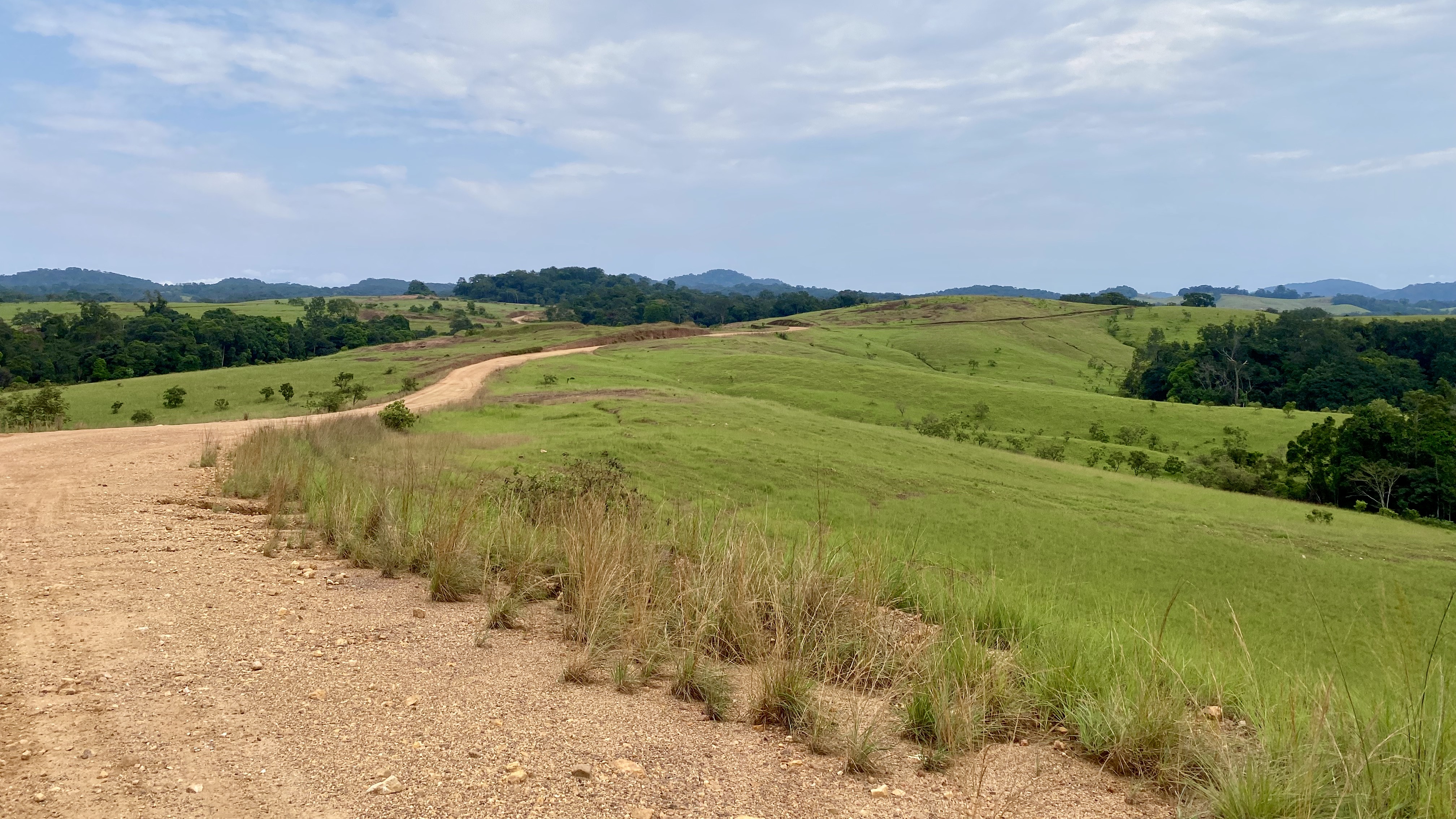
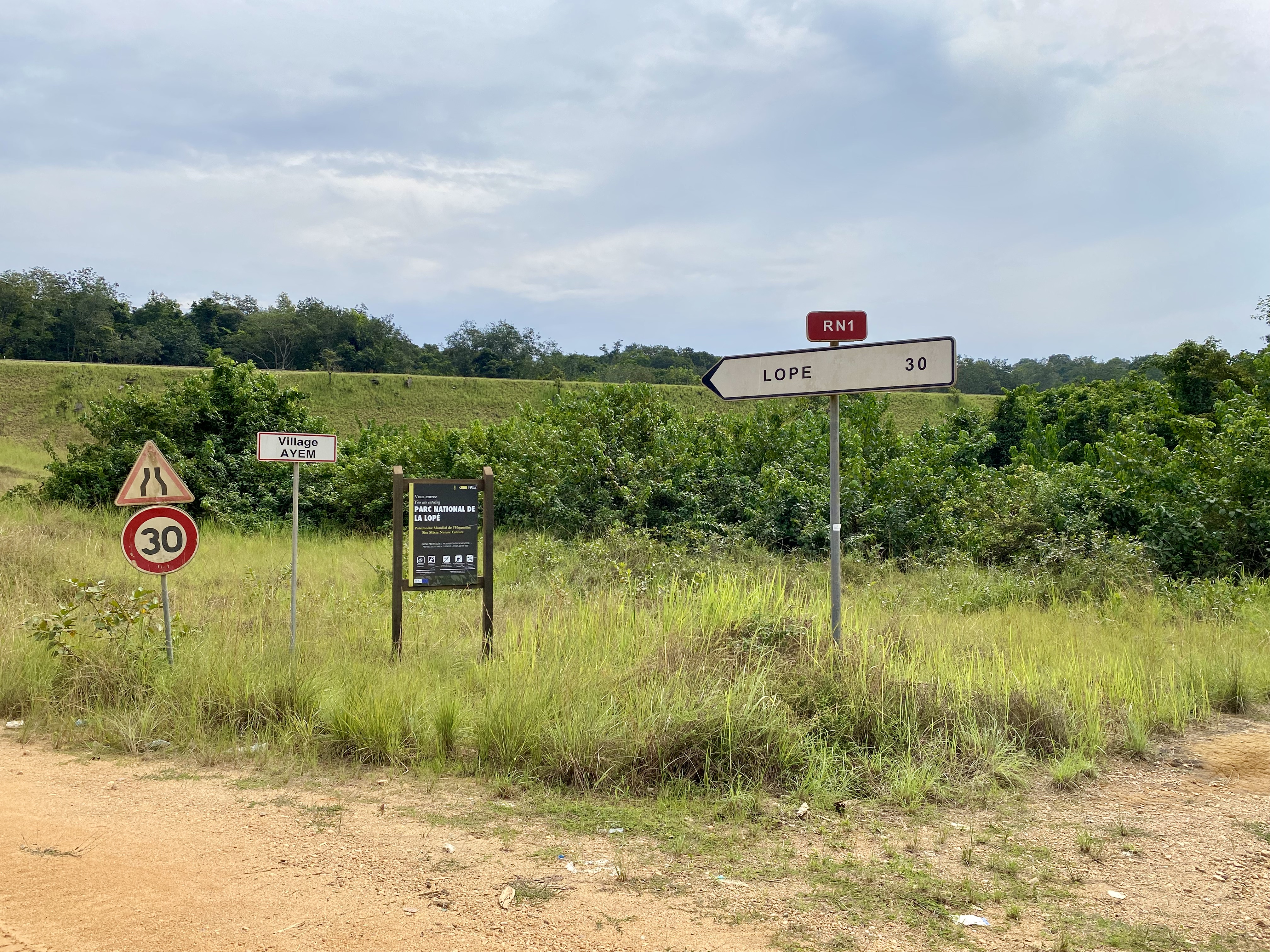
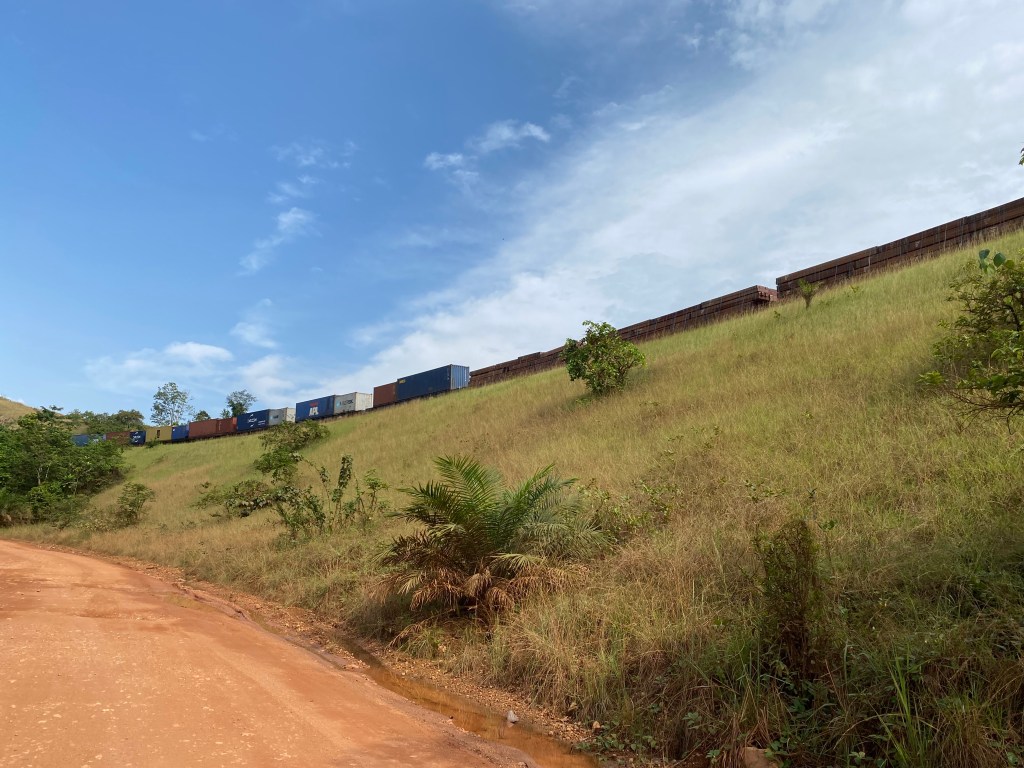
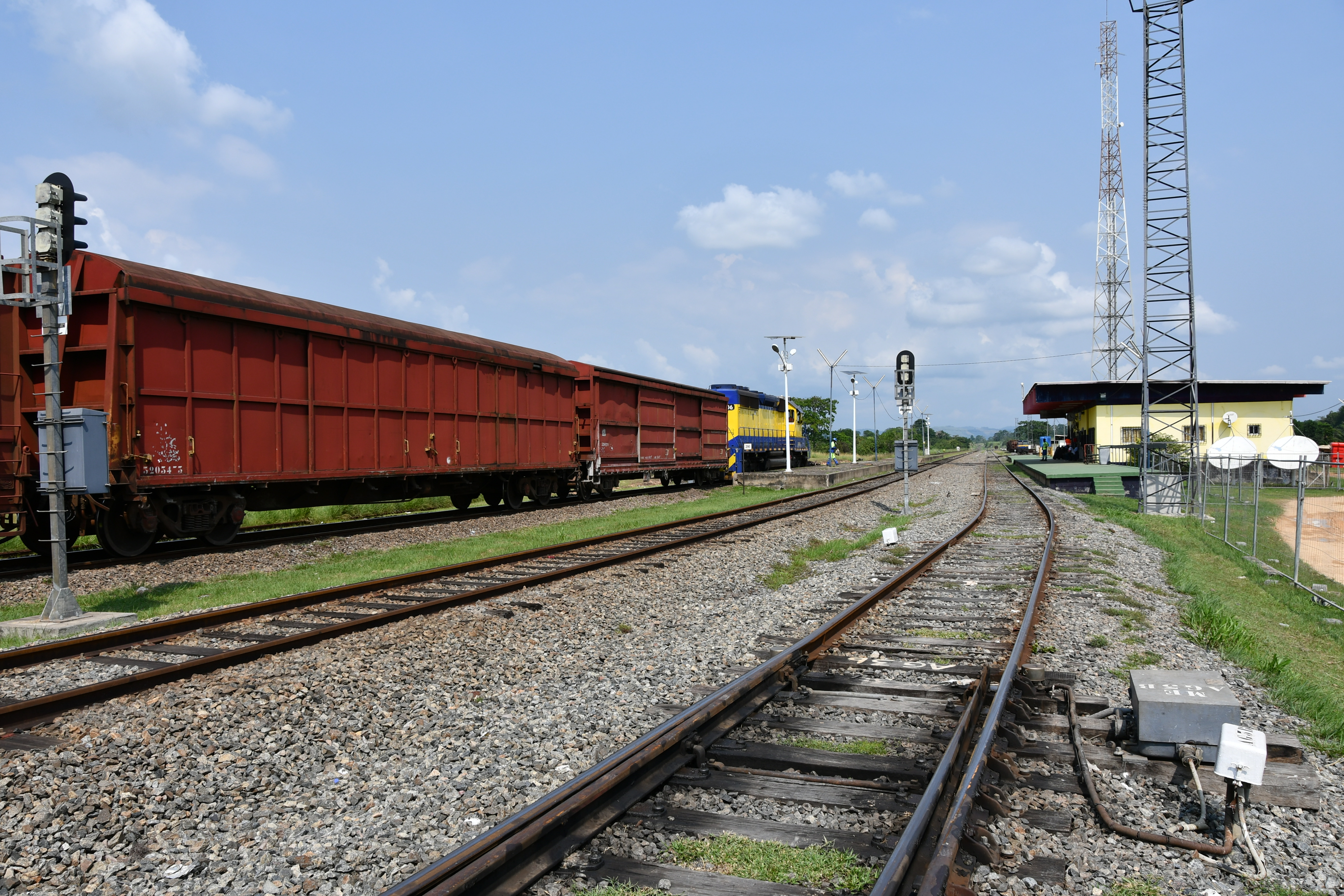
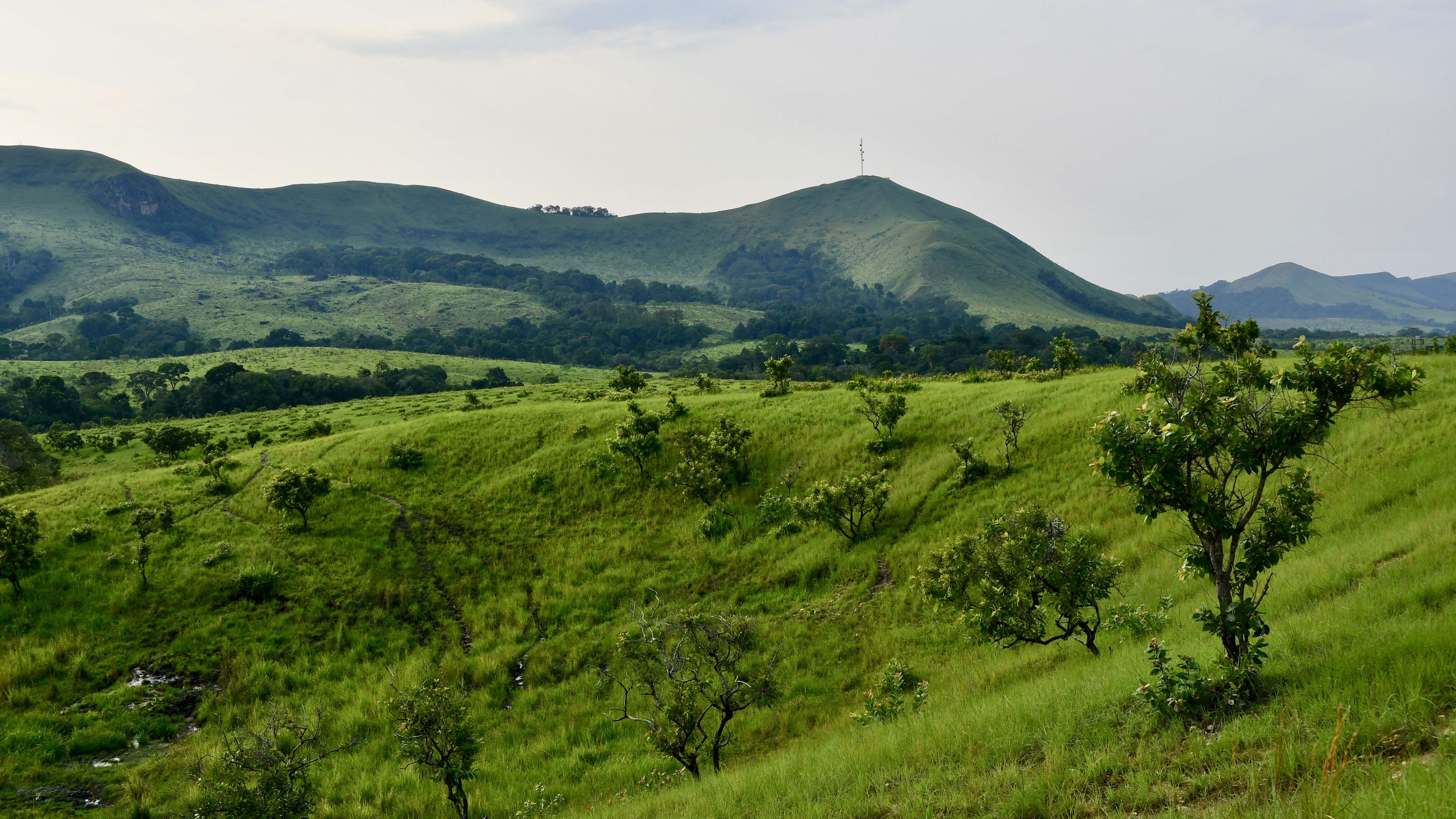
Slowly, the forest gets less dense and the landscape opens, becoming a welcoming savanna on hills. We find the Ogooué again and keep following its banks, never far from the railroad tracks. Yes, a railroad, the only one in Gabon, but a 700-km long one, linking Libreville to Franceville, far in the East. The trains have dozens of wagons and seem endless. They carry oil, timber, manganese, machines, food, water, people visiting their relatives in the East, even a few tourists to La Lopé. This railroad is economically and socially vital for the country.
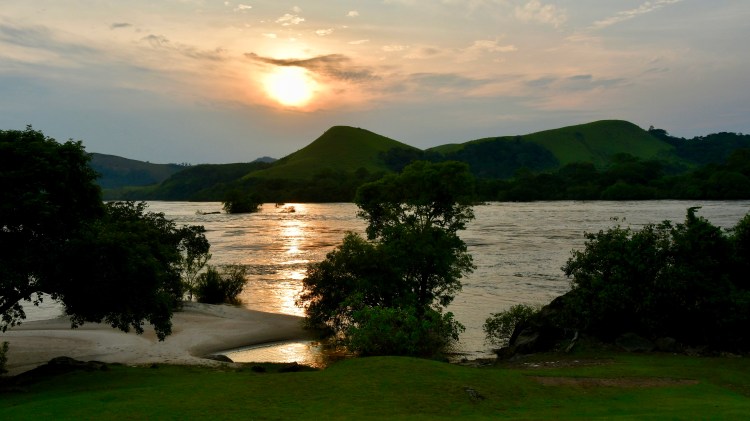
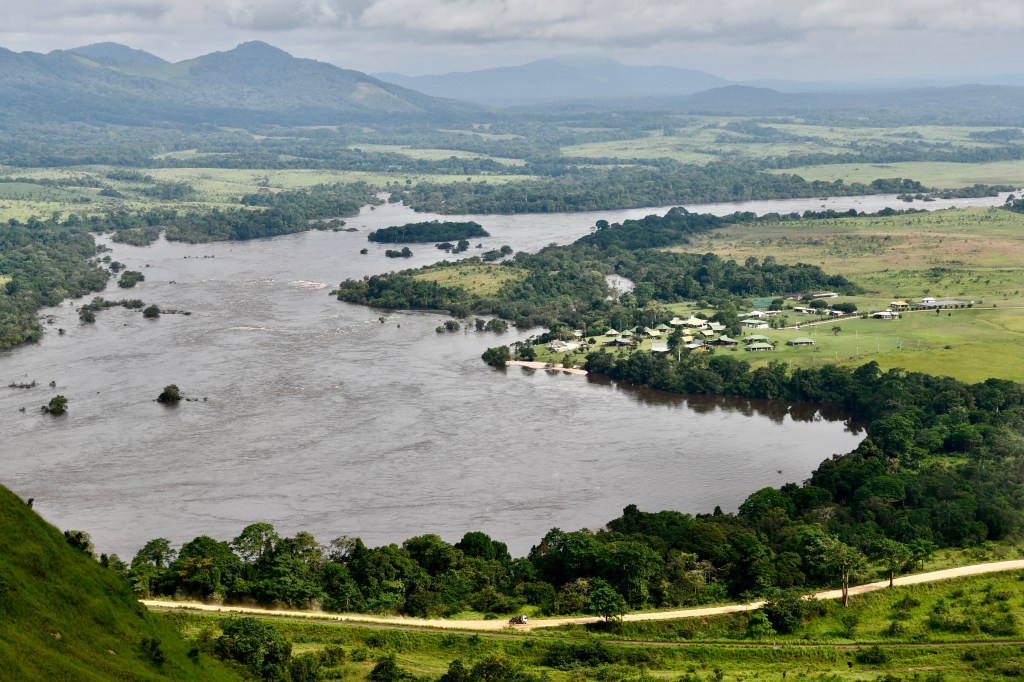
It’s really a wonderful drive, nevertheless we feel a great relief when we reach the village of La Lopé, 9 hours after we left Libreville in the morning. There is a bit of life here, and the historic Lopé hotel, with its wooden bungalows overlooking the Ogooué river, makes a perfect spot to unwind, even after we duly take note from the manager that there will be no electricity nor running water during daytime. We are the only visitors – a group of four will arrive later by train around 5 in the morning.
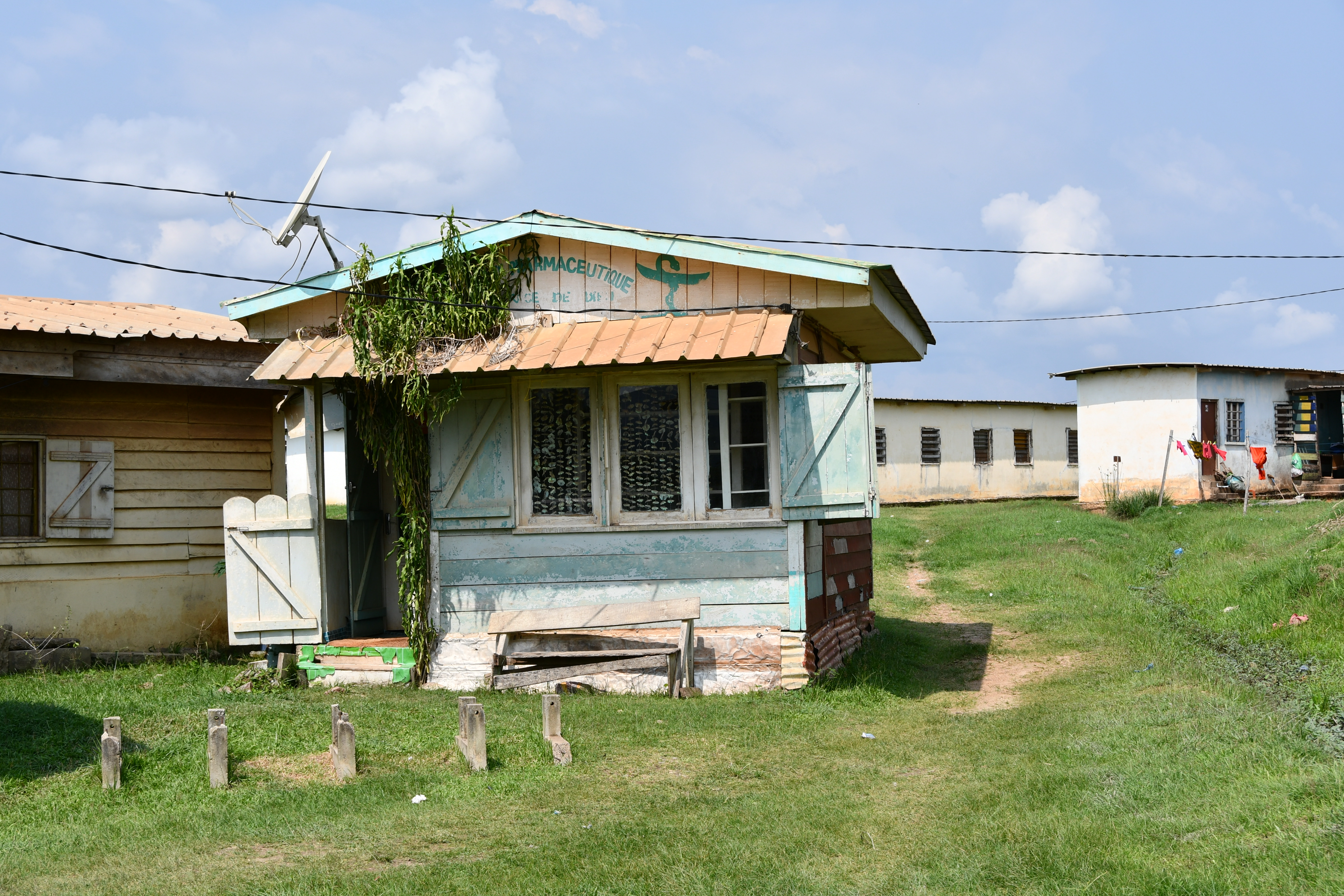
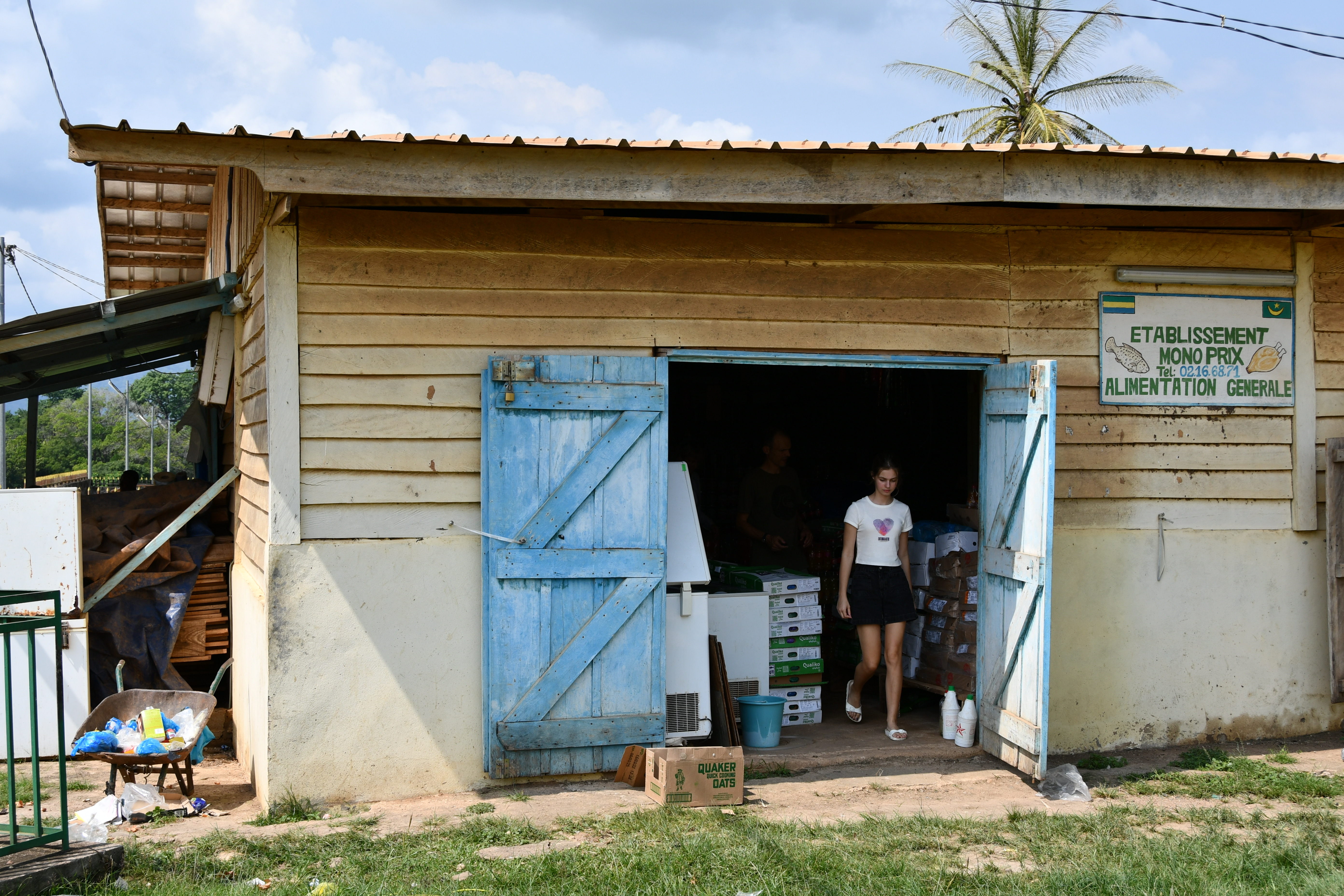
La Lopé village would be a perfect setting for an African Western film: two shops managed by faraway-from-home Lebanese, a pharmacy in which vegetation litterally grows, a bar, a restaurant, a primary school and a couple of churches, and of course the railway station. As we spot a cute kitten in the shop, the chatty owner tells us “he ain’t gonna live too long, one of these nights the leopards will come around and eat it, that’s how it goes around here”.
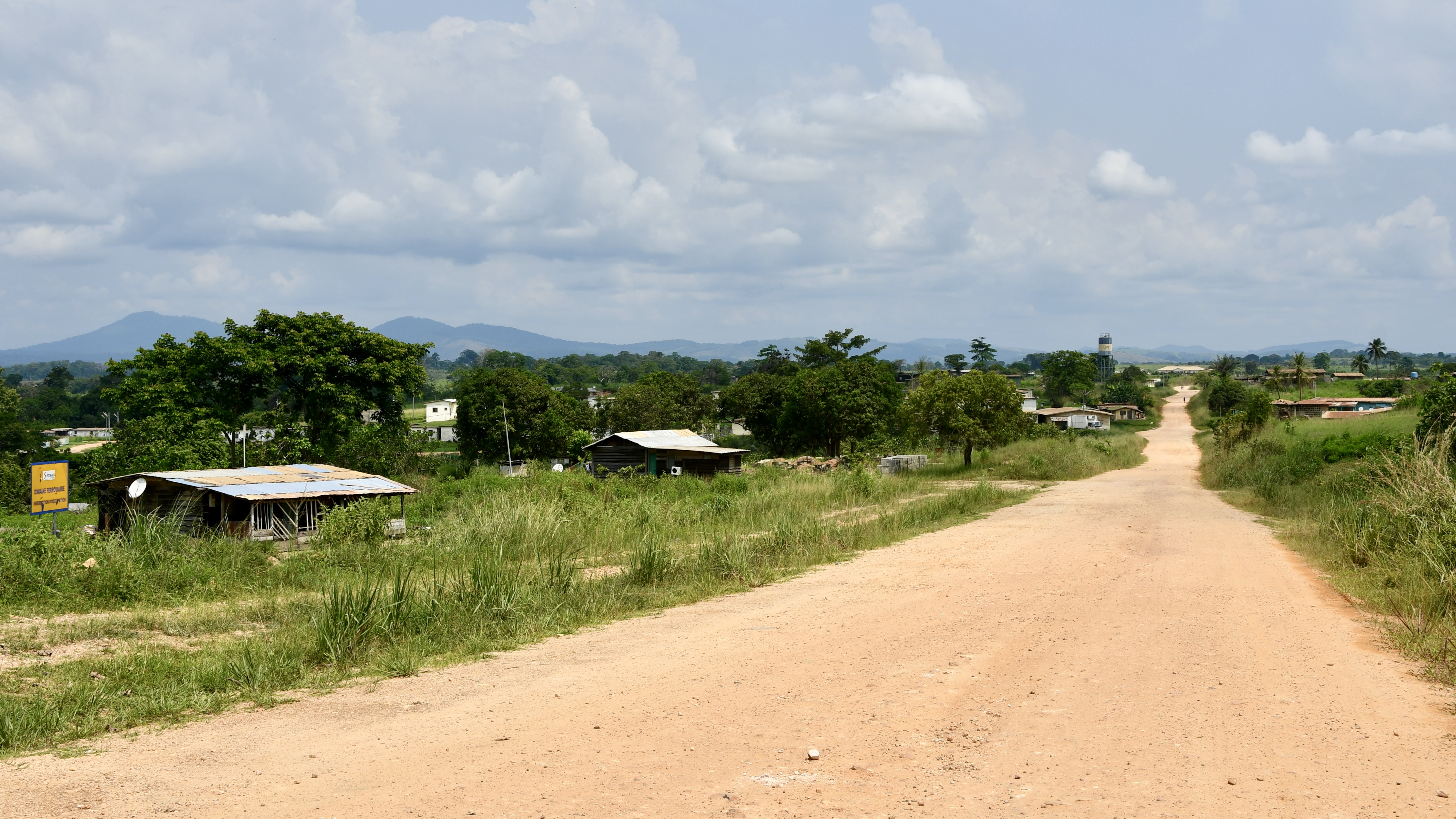
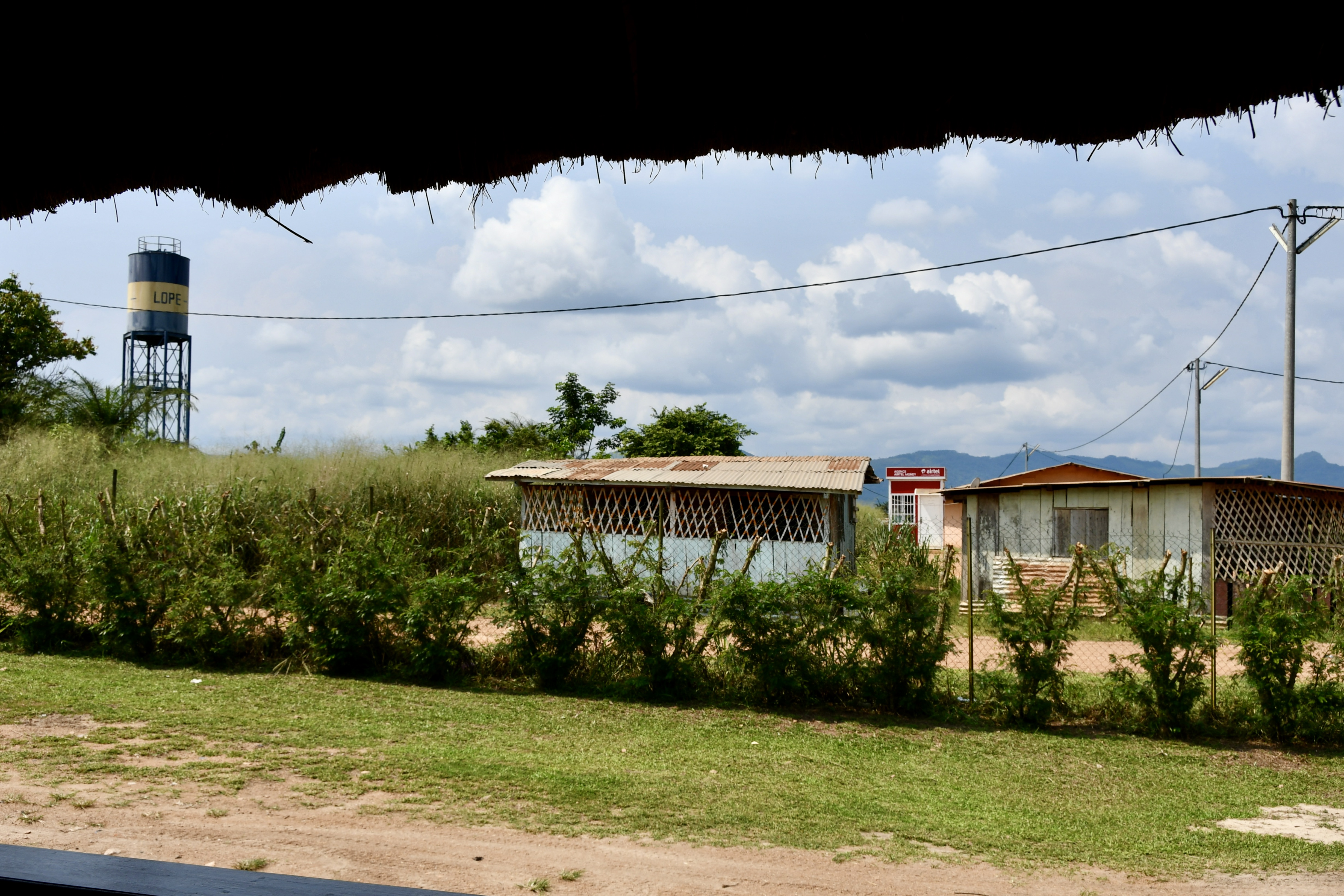
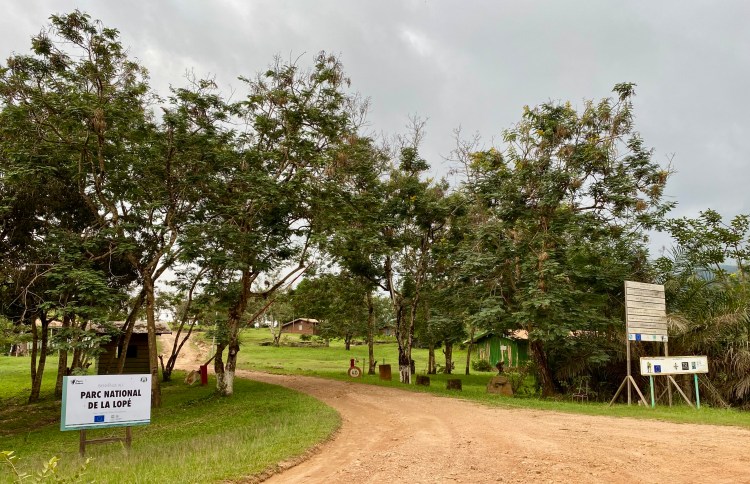
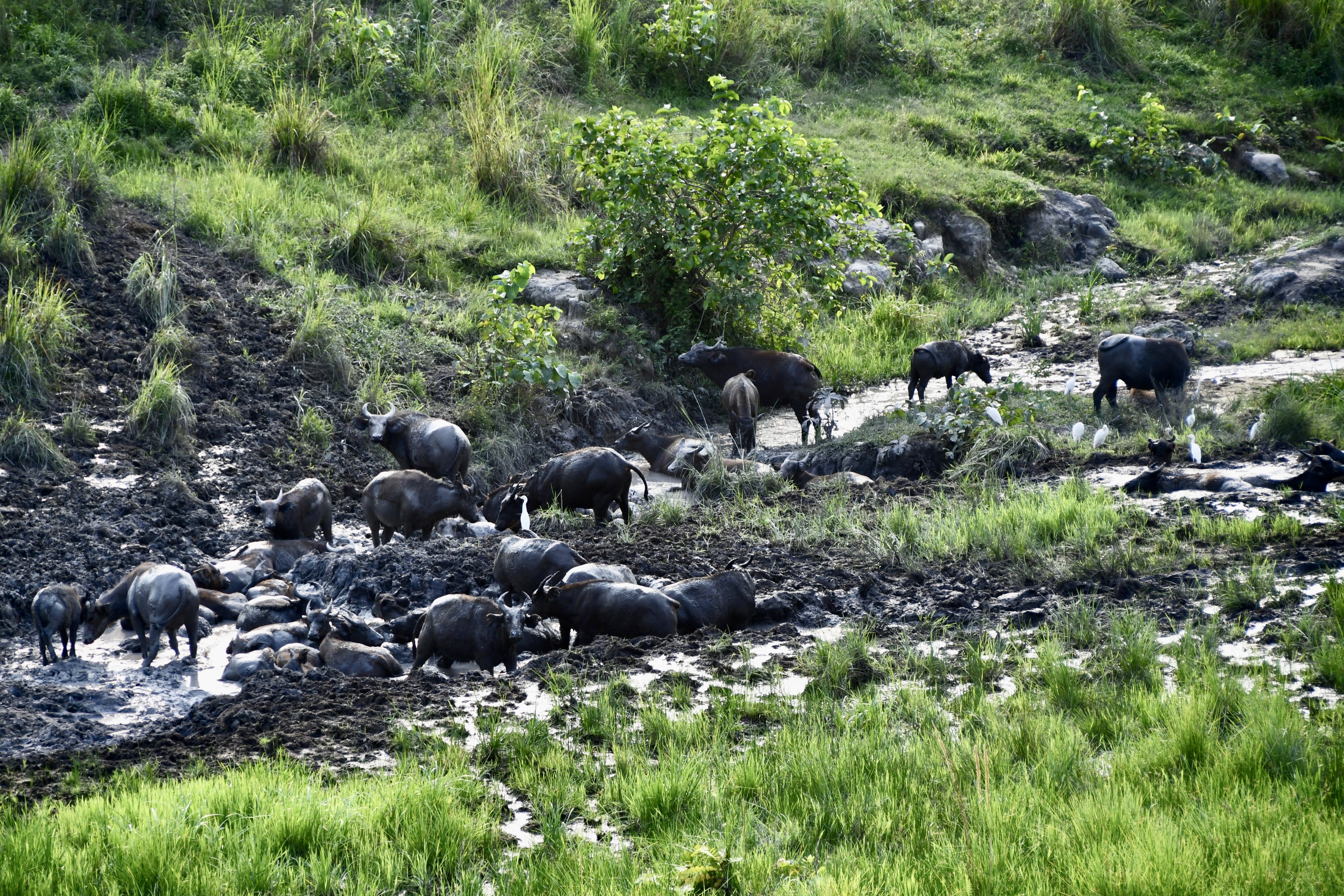
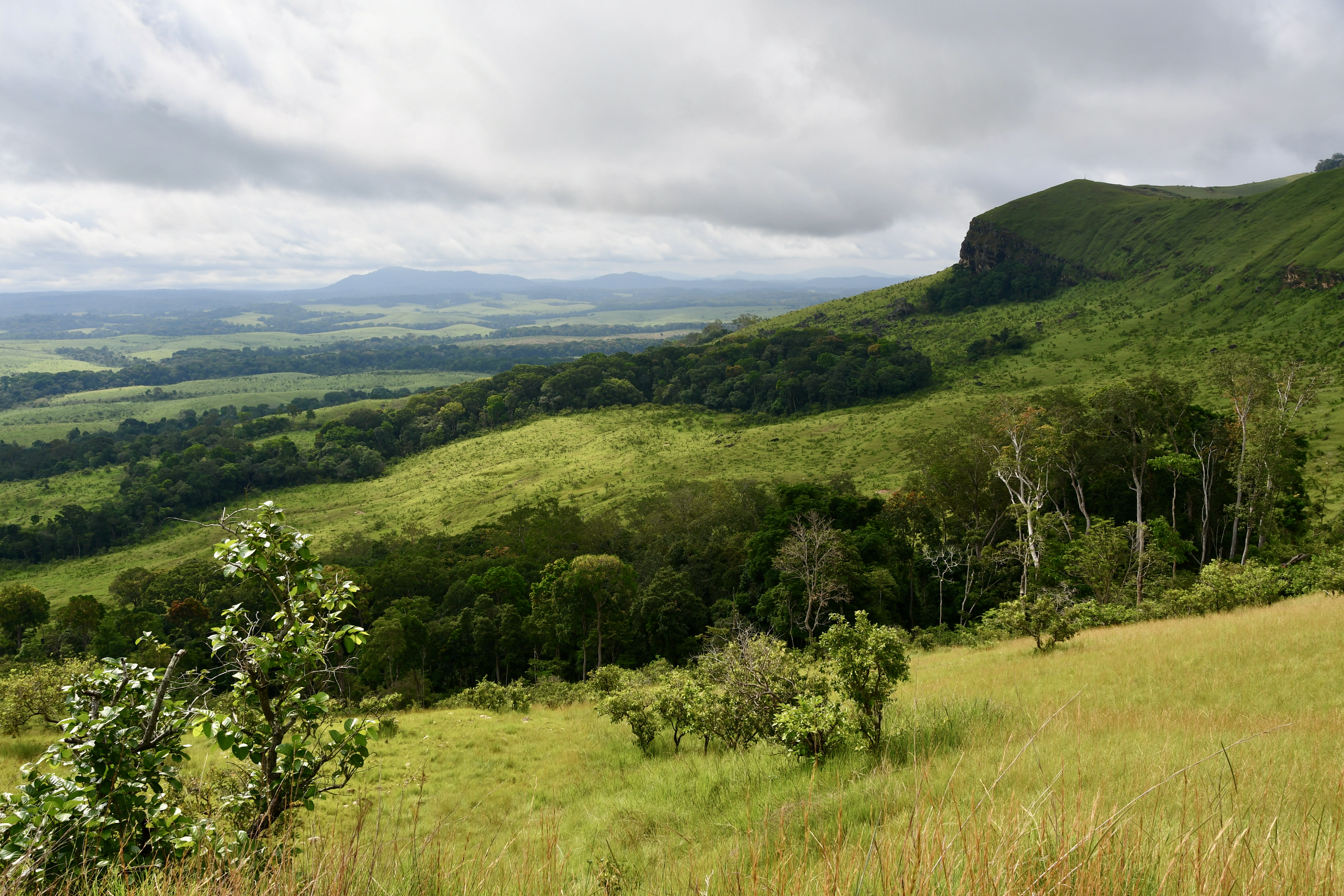
It is the Northern border of the mighty Lopé National Park, which covers almost 5,000 sqm in the central part of Gabon. It was the first natural protected area in Gabon and has been a UNESCO world heritage site since 2007. The richness of its biodiversity has attracted scientists from all over the world, and there are a few researchers on-site on a constant basis. The park is a mix of tropical forests and grass savanna, inhabited by healthy populations of elephants, buffalos, pangolins, chimpanzees, lowland gorillas, mandrills, a few leopards, hundreds of birds and plants species. In the park and its surroundings, archeologists also found traces of human life dating back 400,000 years ago!
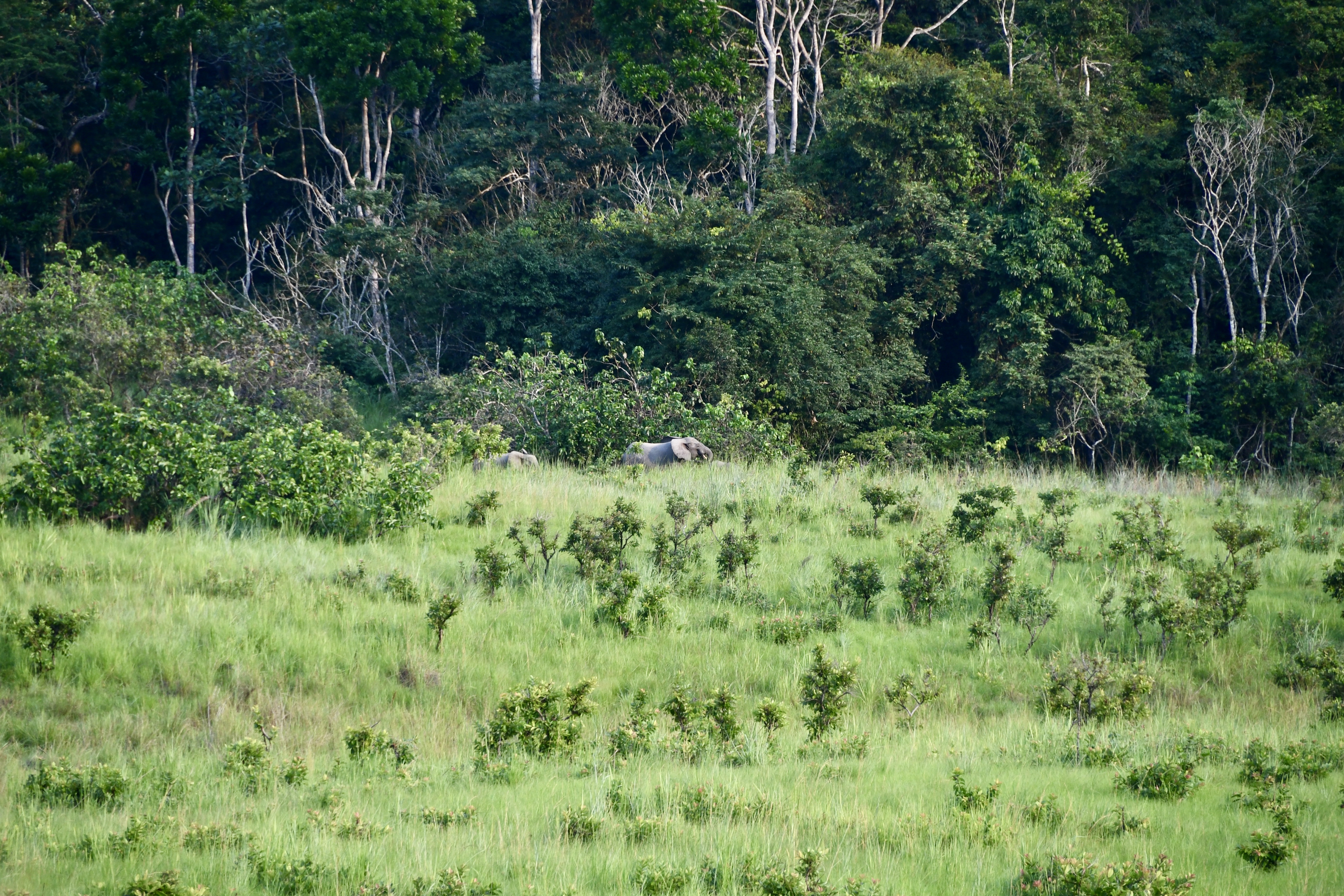
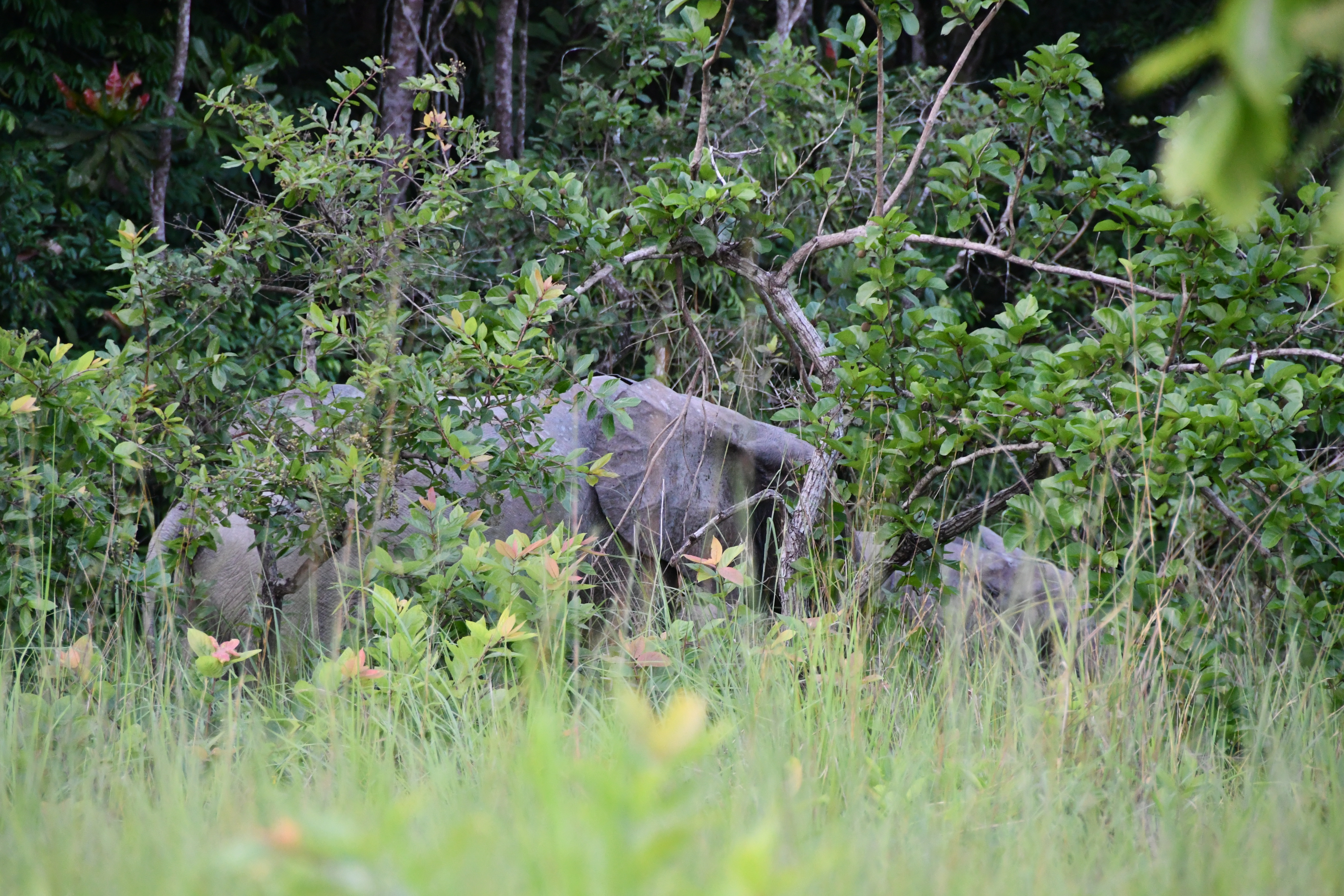
We spend the next couple of days exploring the park, by car around the savanna and by foot inside the forest. As usual in Gabon, we see quite a few elephants, wild buffalos, small monkeys and funny birds, but we have since long accepted that other animals will keep away from us. To see them from close, you need to be one of these few experts who study the park’s biodiversity, operating from a base that lies deep inside the forest, in rough conditions that most tourists would be unable to endure. Our sympathetic local guide, nicknamed “Vampire”, tells us that some 15 years ago, a team of park rangers was attacked by an elephant in the middle of the night. In panic, they fled and scattered. When they regrouped, one of them was missing. They found him 2 weeks later: he was inanimate, covered with insects bites, but still alive.
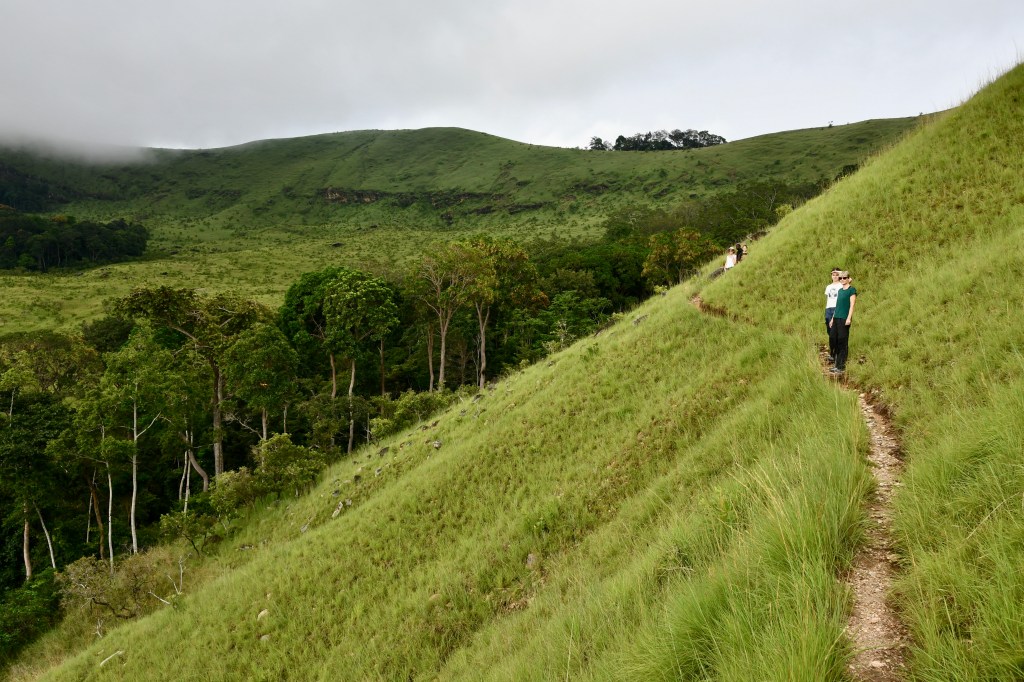
This makes the adventures of Pierre Savorgnan de Brazza in this region, in the 1870’s, all the most admirable. The Italian-French explorer was the first European to find the source of the Ogooué river. On his way, he went through what is today La Lopé. Today, the highest mount in the national park bears his name, just like the capital of Congo.
The road back to Libreville is almost easy. We feel blessed that it all went well, because in Gabon you really never know. Two days after we are back home, a massive landslide causes 900 meters of railway to go down into the river… The traffic only resumed three months later, after herculean works during which the Eastern part of the country was pretty much cut out from the world, with severe oil and food supply issues. That is something we will surely keep in mind the next time we consider whether it makes sense getting nervous or not about our French train being an hour late at its destination.
T-T
 Tanad stories from Gabon