School holidays! We have one week ahead of us and after many months sticking around the Libreville region, we are off to Lambaréné for the second time this year, only this time it takes a negative Covid test to get there. We are getting used to the gruelling 5-hour drive, however not yet to the bushmeat on regular display on the side of the road (gazelles, porcupines, turtles, bush pigs, monitor lizards hanging from ropes, some of them still moving…). Eventually, we appreciate finding ourselves back dining and sleeping at the venerable Albert Schweitzer hospital (about which you may read our earlier post).
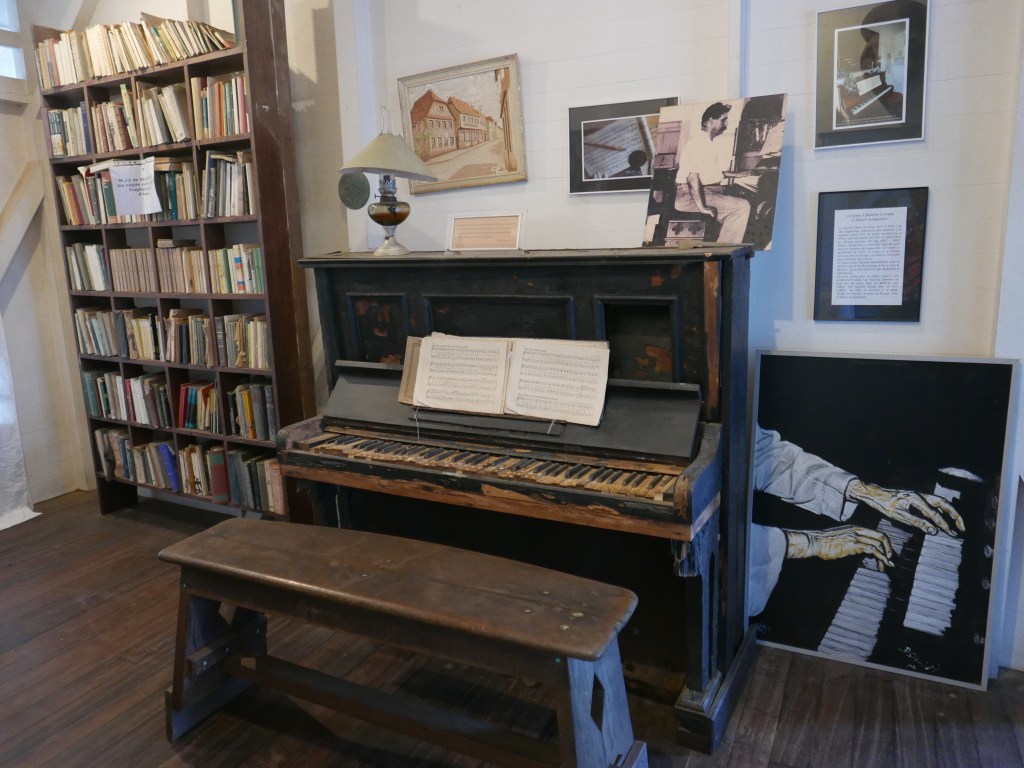
Dr Schweitzer’s old piano still stands despite the humidity
The next morning, we meet Cyril, who takes us aboard his motorboat down the Ogooué river, fringed by two thick green walls of equatorial forest. After 45 min, we take a left turn into the mangrove. The water path is getting narrower and airier as we enter the “pelican alley”. And indeed we soon seen them, sitting in and flying around their nests built on the high branches of trees that look like apartment blocks for birds. Their immediate neighbours are flocks of white egrets, and some grey-feathered herons.
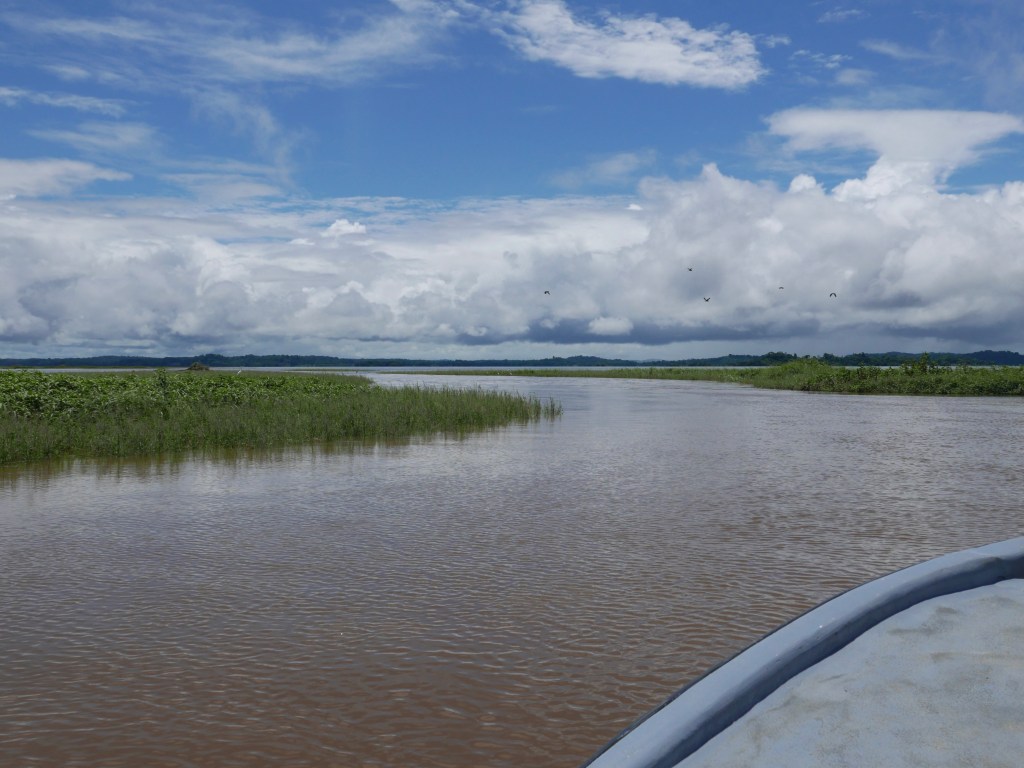
Lake Onague
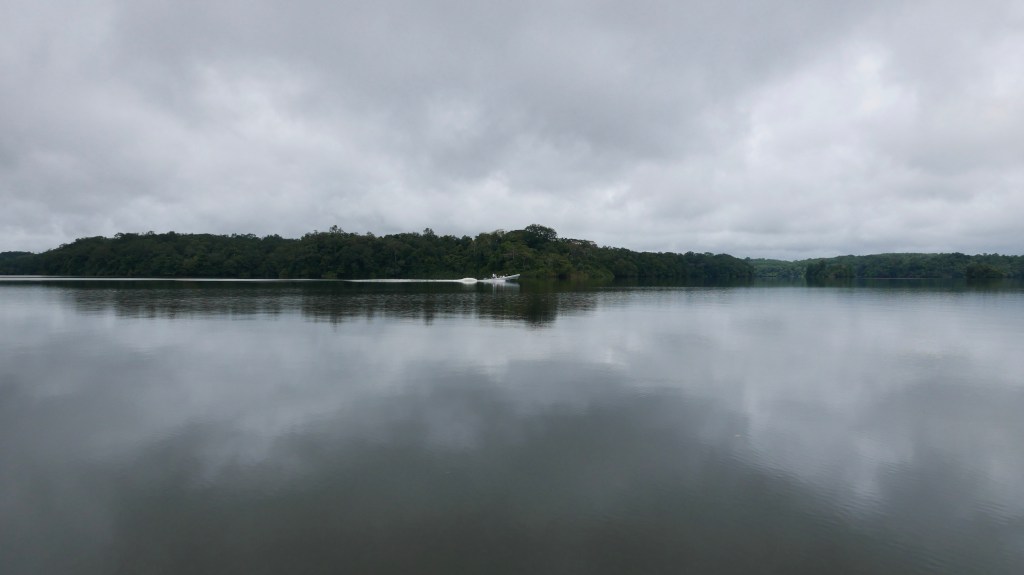
We then enter the great wide open : the peacefully spectacular lake Onague. Cyril invites us to abide to the tradition for first-time guests in the area to wash our face with the lake waters. Around us is a surprising mix of forest, green hills of savannah, and tiny villages nestled on the banks.
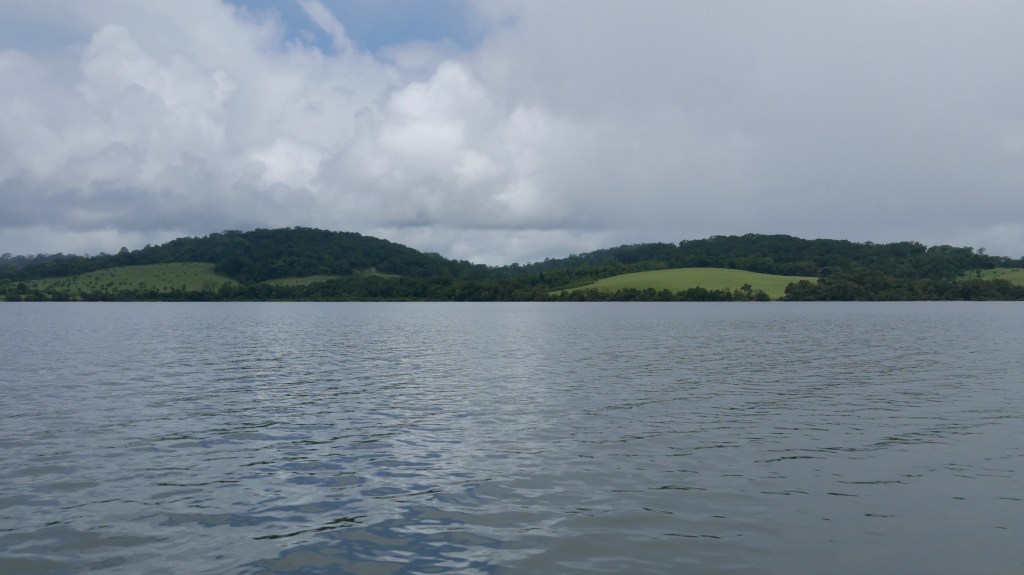
Lake Oguémoué
We voyage further on to lake Oguémoué and reach our destination: Tsam-Tsam, an ecotourism camp settled a 2-min boat ride away from the village of the same name, here.
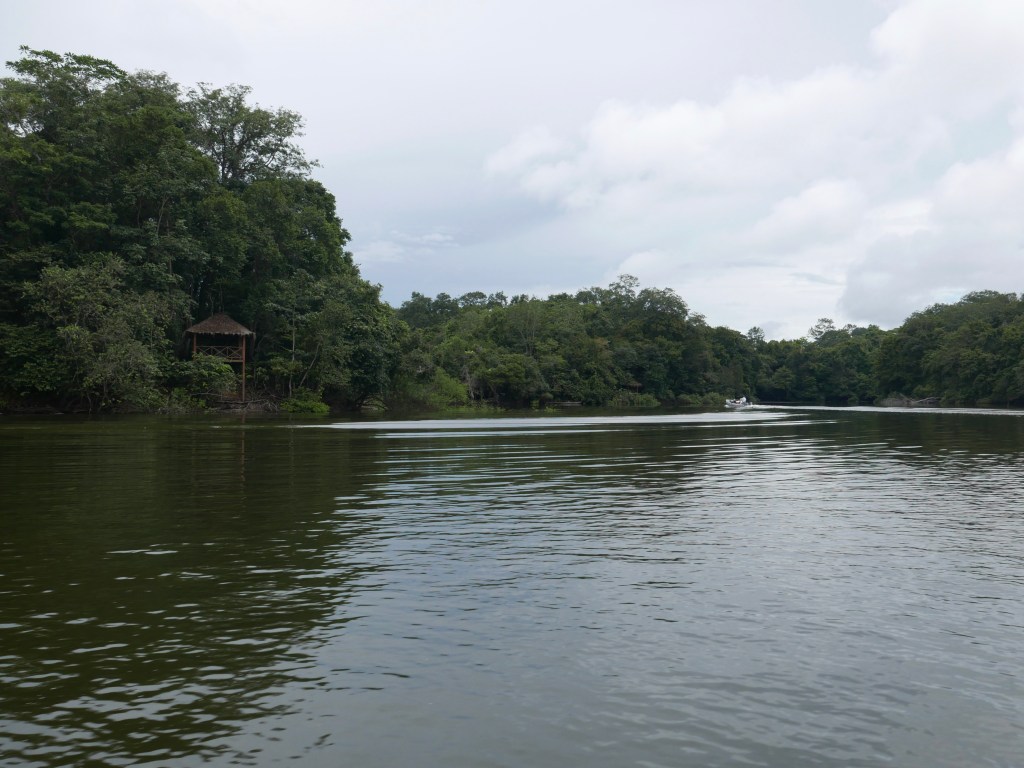
approaching the Tsam-Tsam camp
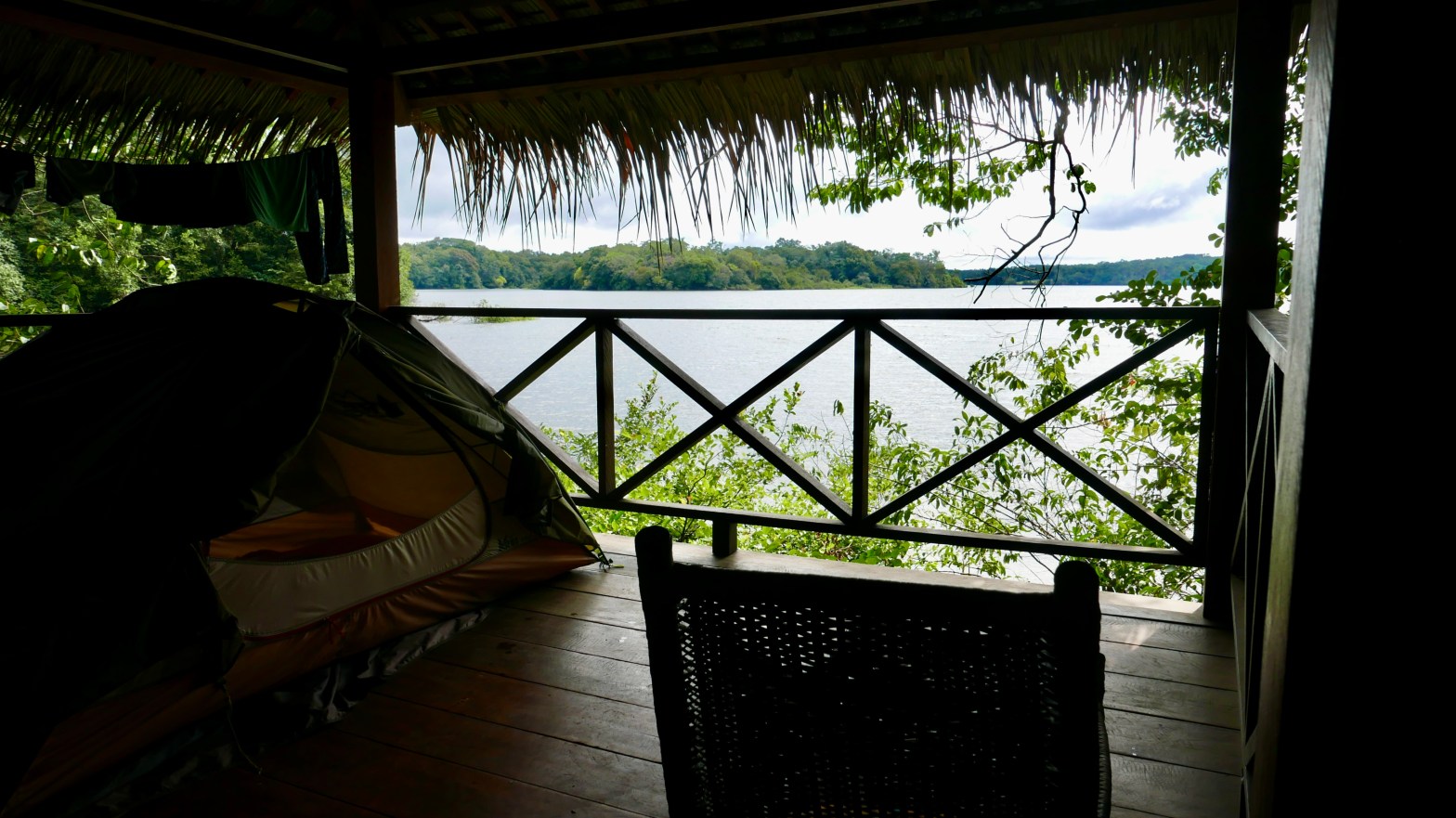
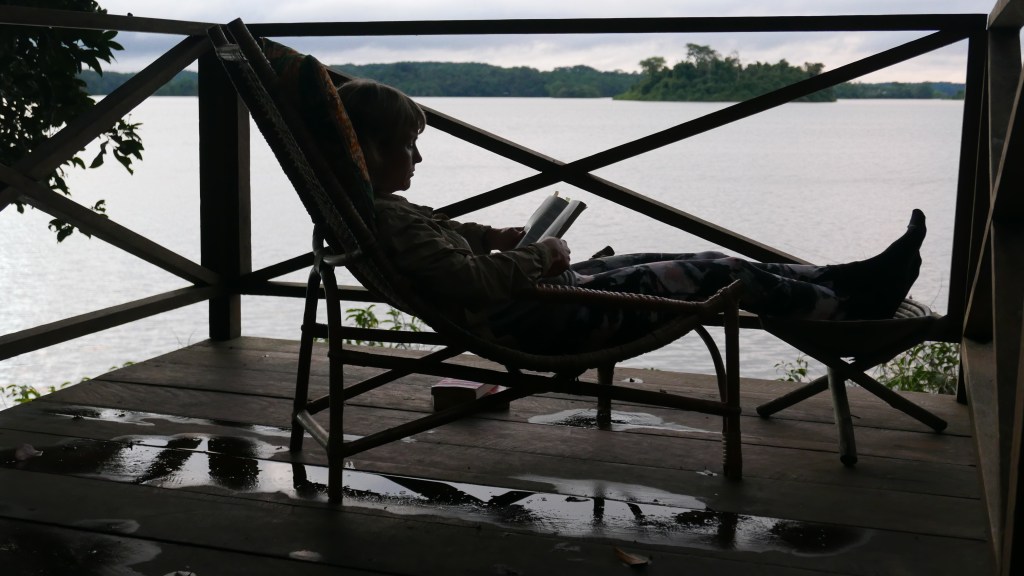
The camp consists of a few wooden and roofed platforms, on which comfortable tents are installed for guests, and a main platform that fits the dining table as well as a nice chillout area. These installations overlook the lake and seem to dissolve in the lush surrounding forest. Dry toilets, no running water. We take our showers with buckets of lake water. Food is cooked by a few ladies from the village. We spend a few days enjoying the scenery and taking things slow, eating local specialties – fish from the lake tastes delicious and we even venture towards challenging African delights such as manioc leaves. The small team at the camp is really welcoming and we slowly drift away from civilisation.
Cyril and his team take us on trips around the lake to visit local villages. Living conditions are very rough, it only takes a few houses to make a village, and the lake and the Ogooué river are the only road that connects people to Lambaréné, 90 min away. Fishing is the main activity. Ecotourism provides a welcome additional source of revenue for the community, even though, given the beauty of the scenery, it could be a dozen times more developed.
Cyril is entirely dedicated to the NGO that he founded with his American wife. It’s called OELO (Organisation Ecologique des Lacs et de l’Ogooué). They work hard in the following priority areas for the region: environmental education, reducing illegal bushmeat trade, sustainable fishing, ecotourism and research facilitation. You may learn more about them and support them here: https://oelogabon.org. Their activity report is truly impressive and shows that their actions positively impact hundreds of people in the region.
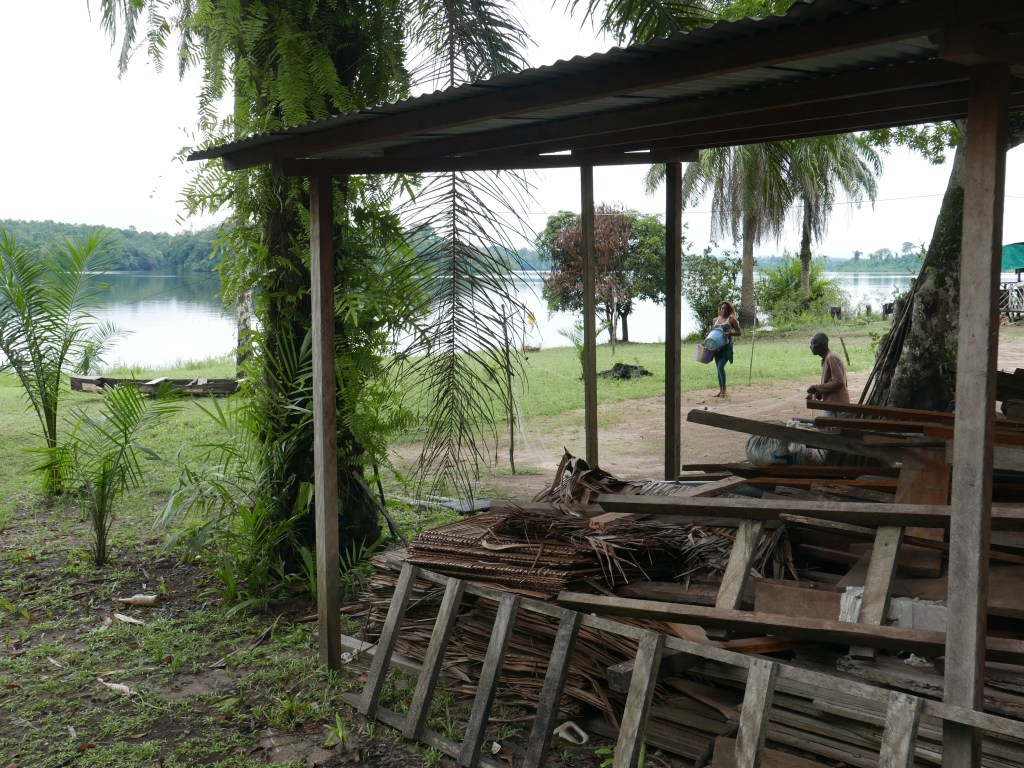
Tsam-Tsam village 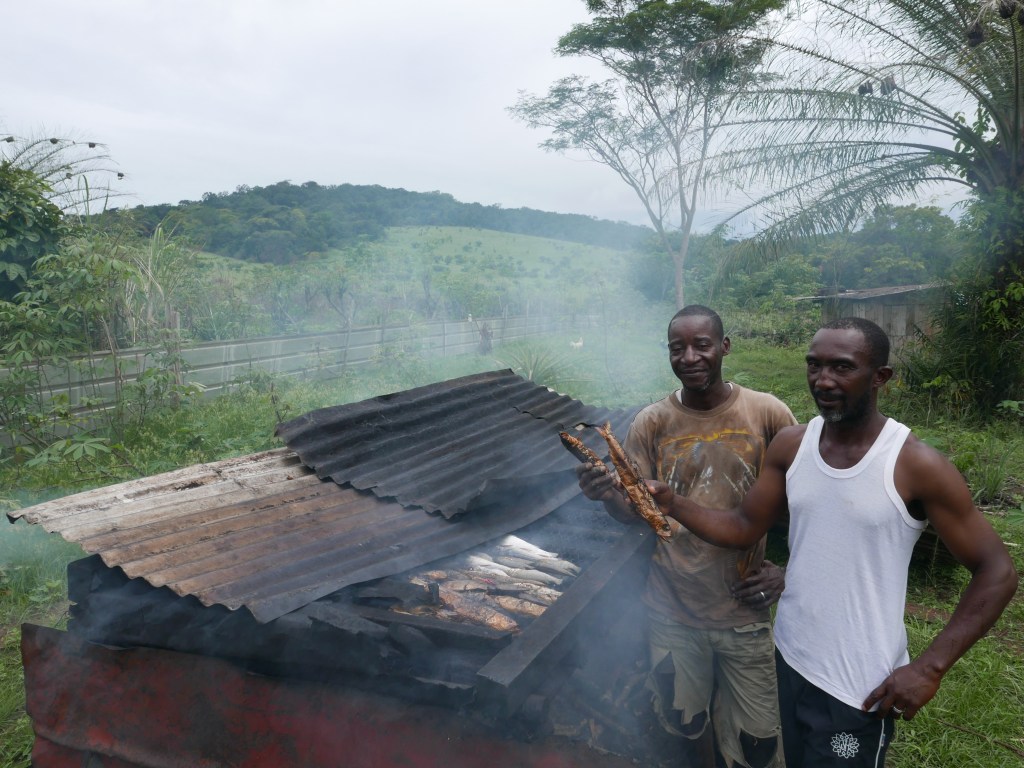
smoke’em!
In Tsam-Tsam, we also get close, by foot and by boat to the local wildlife. Beautiful birds abound and share the lake shores and mangroves with monkeys, huge lizards, crocodiles, and of course a few bats.
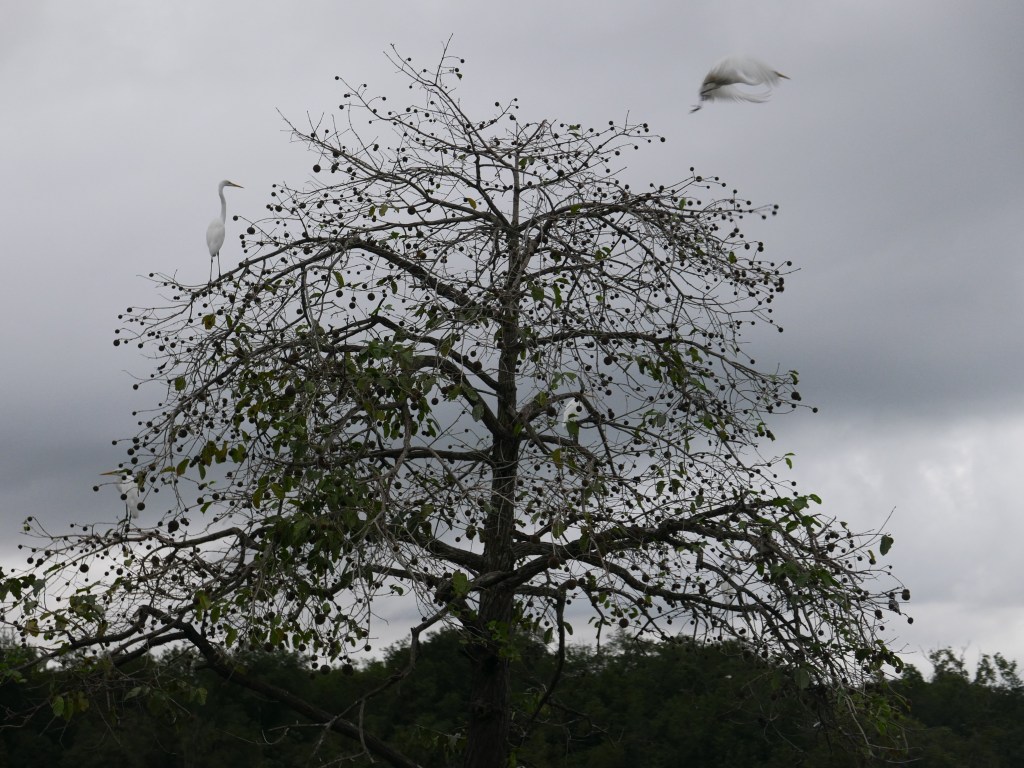
white egrets at dusk 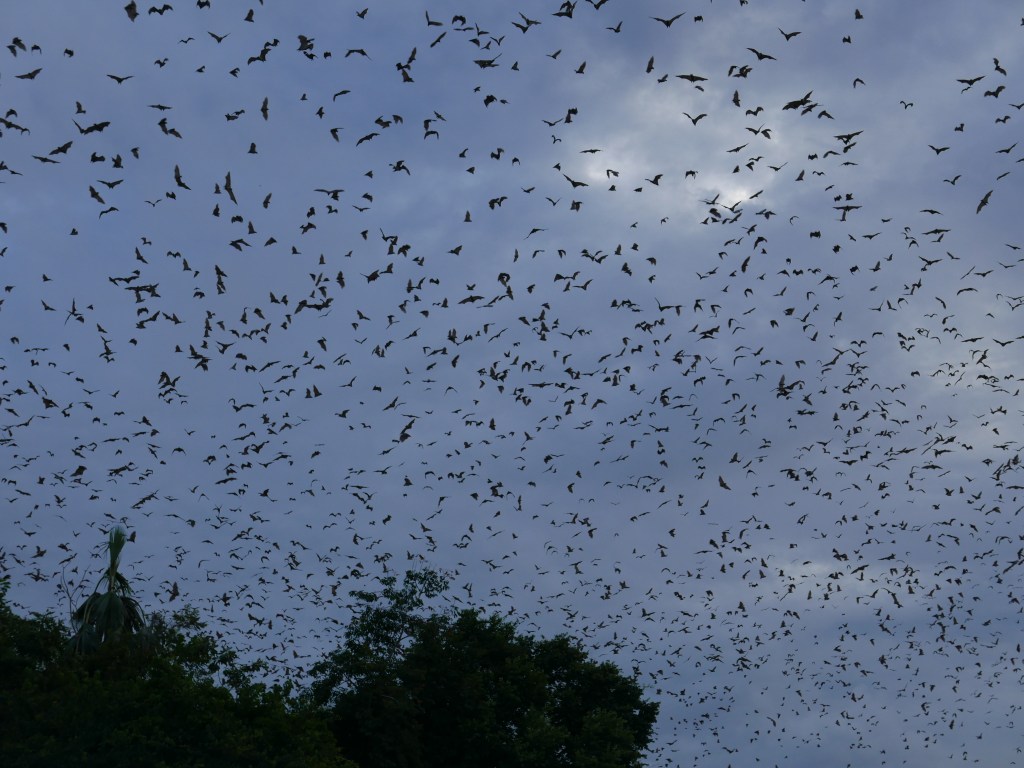
a small flock of bats
The highlight of our stay is a walk through the forest, led by Cyril and Joli, a very experienced guide. As usual in Gabon, we do not see the animals because the forest is too thick, but we hear them all around and find their footsteps on the ground. At some point, the noises get so close and so loud that Joli asks us to stop and kneel down. He then starts a fascinating series of imitations of several animal noises, ranging from the capuchin monkey to the bushpig, from the hornbill the gorilla. He uses his mouth and hands in ways unseen and unheard in the Western world, getting in a sort of trance. And animals respond immediately, they get louder even though we thought it was not possible. We hold our breath and open our ears for 5 minutes of this most amazing spectacle. In the end, it’s all quiet again, and we have only seen the shadow of a monkey’s tail, but we are all in a state of awe.
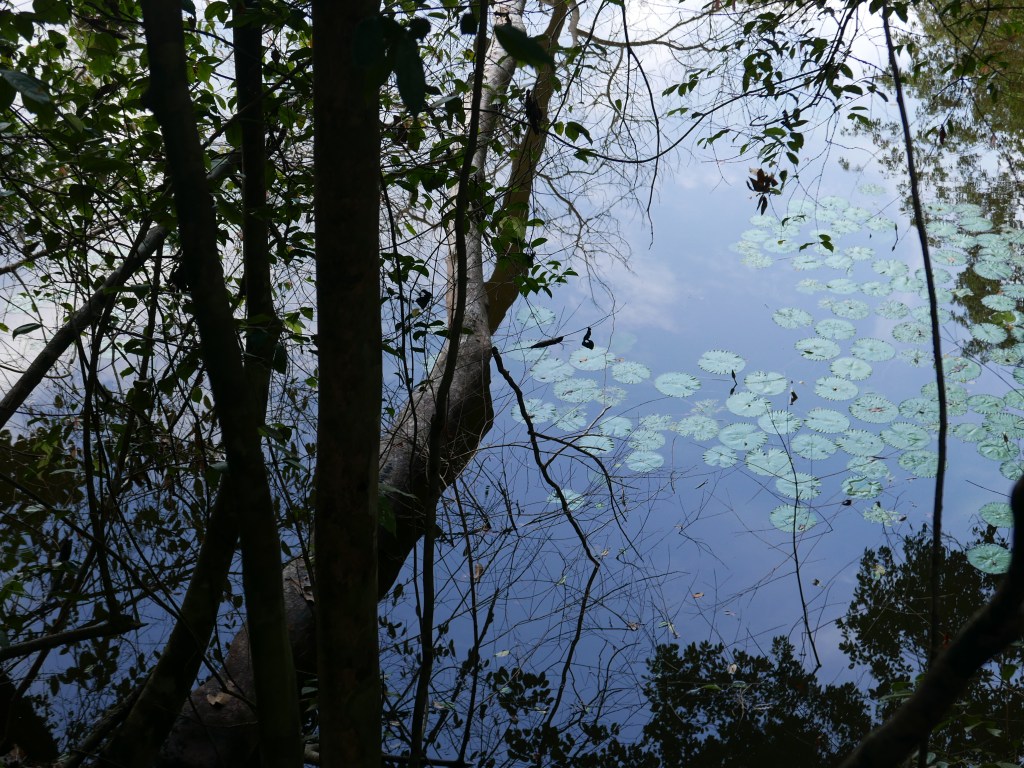
“mystic lake” waters
A moment later, we find ourselves on the banks of the so-called “mystic lake”. Joli spots the eyes of a crocodile from 200 meters away. Putting his hands around his mouth, he starts producing another fantastic throat noise, like someone banging on soft drums at a regular pace: it’s the noise of a crocodile in distress. We then just have to watch the prodigy happen… the animal is slowly, cautiously gliding towards us… until he is close enough to see that he was tricked, and decides to turn round. Joli has learned to speak in animal tongues from his father and grandfather who were forest hunters. Now we fully understand why Gabonese are reputed to be some of Africa’s most authentic “forest people”.
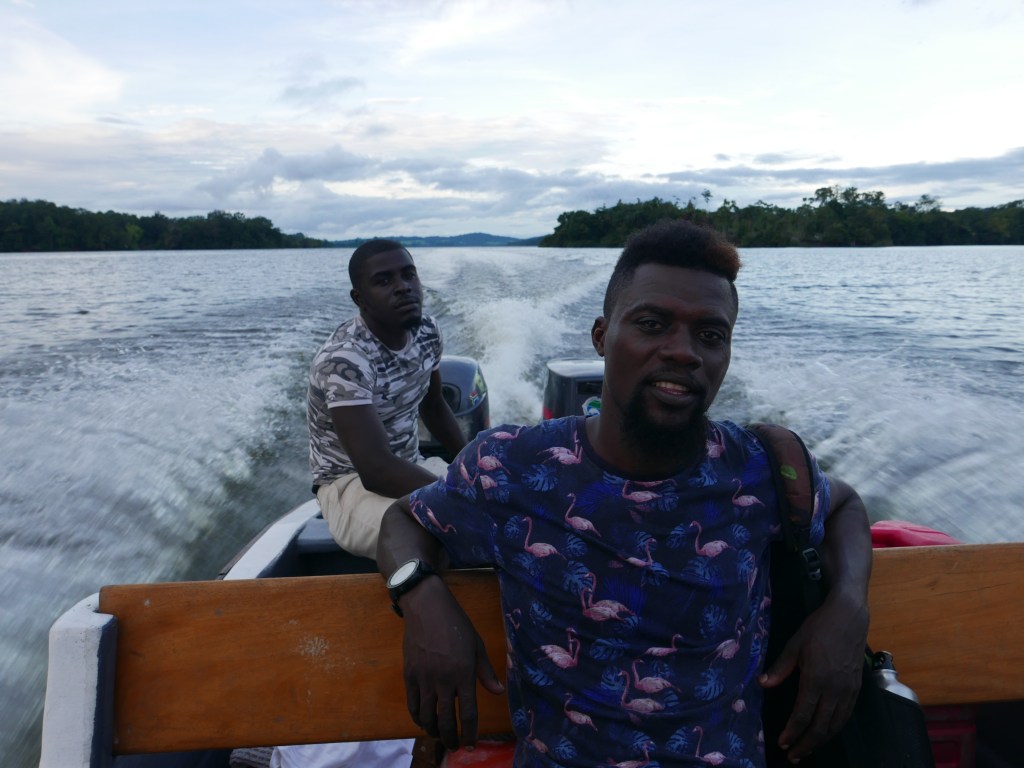
Yves and Joli, stylish boyz in the woods
Joli has another talent: he can play the mouth bow (l’arc-en-bouche), an instrument made of a wooden bow and a string that was originally invented in Gabon by the Pygmees, and later spread through other ethnic groups and communities. The sound of our evenings in Tsam-Tsam is deliciously monotonous and hypnotic.
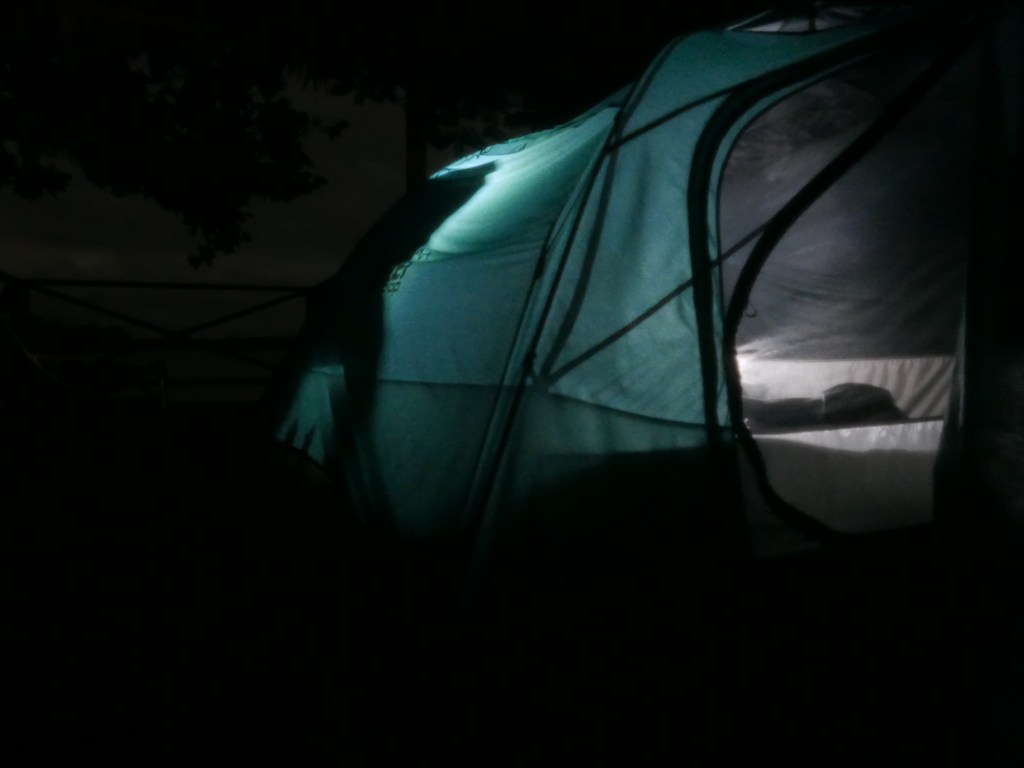
good nite!
 Tanad stories from Gabon