Hi everyone, this blog is over. I hope you enjoyed reading it as much as I enjoyed writing it, that you learned a couple of things along the way, and that perhaps it gave you a few out of the ordinary ideas for your next travels. We are leaving Gabon today and yes, it feels strange and it even hurts. Now we’re looking forward to new adventures in the coming years in… Tunisia.
Before we close this blog, we feel that something needs clarifying: we have not spent four years of our lives hiking in the equatorial forest, going on safaris in search of wild animals and lying on beaches fringed with coconut trees. Even though we did these things as much as we could, the reality is that we lived, studied, worked and spent most of our time in Libreville.
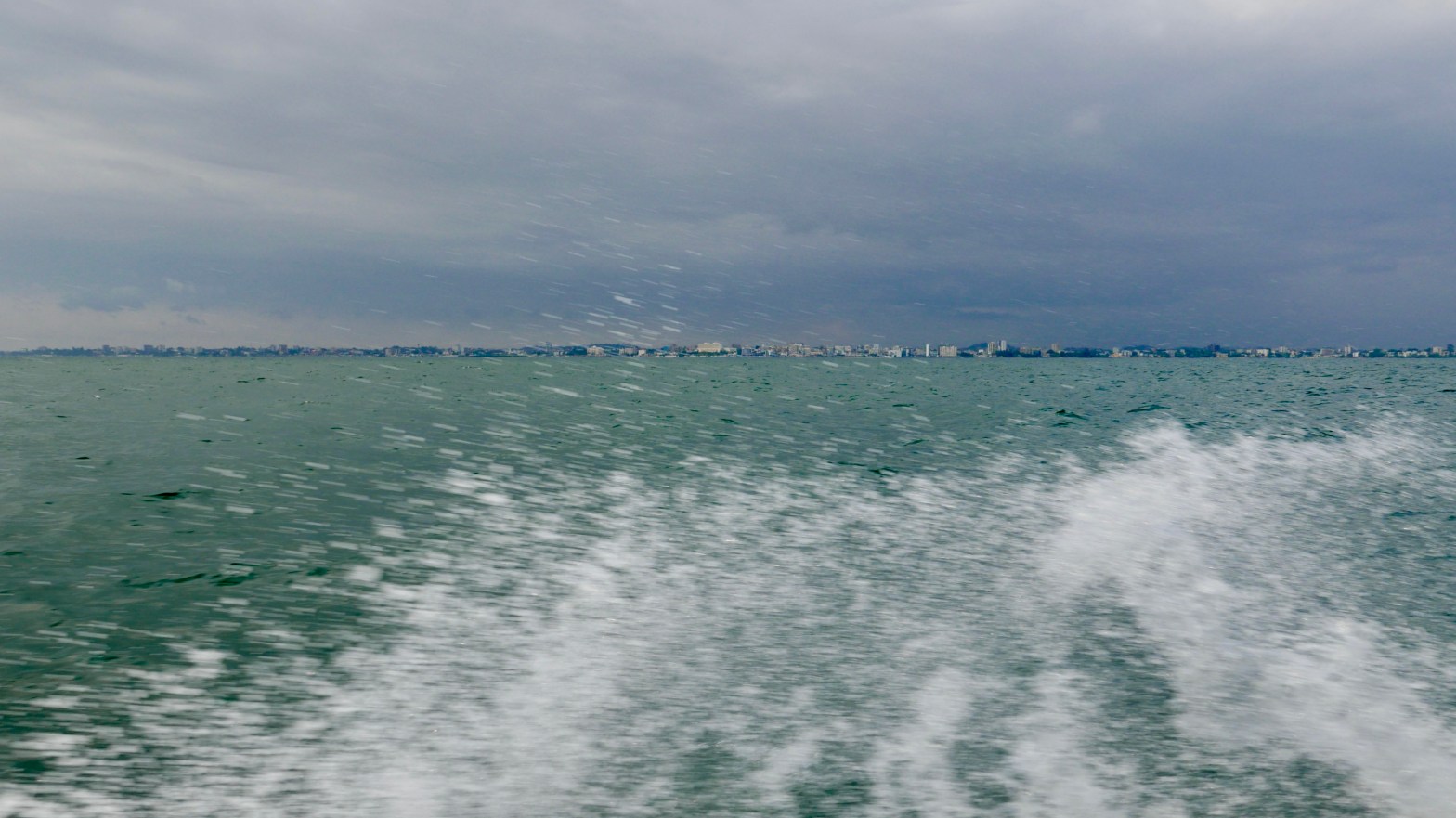
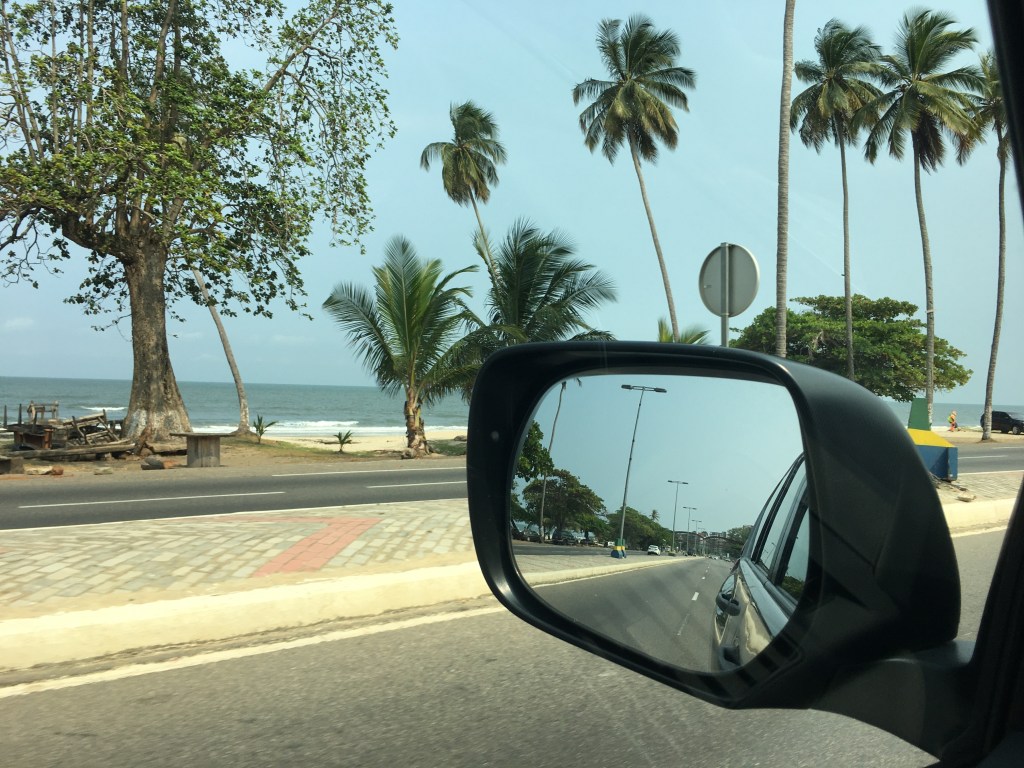
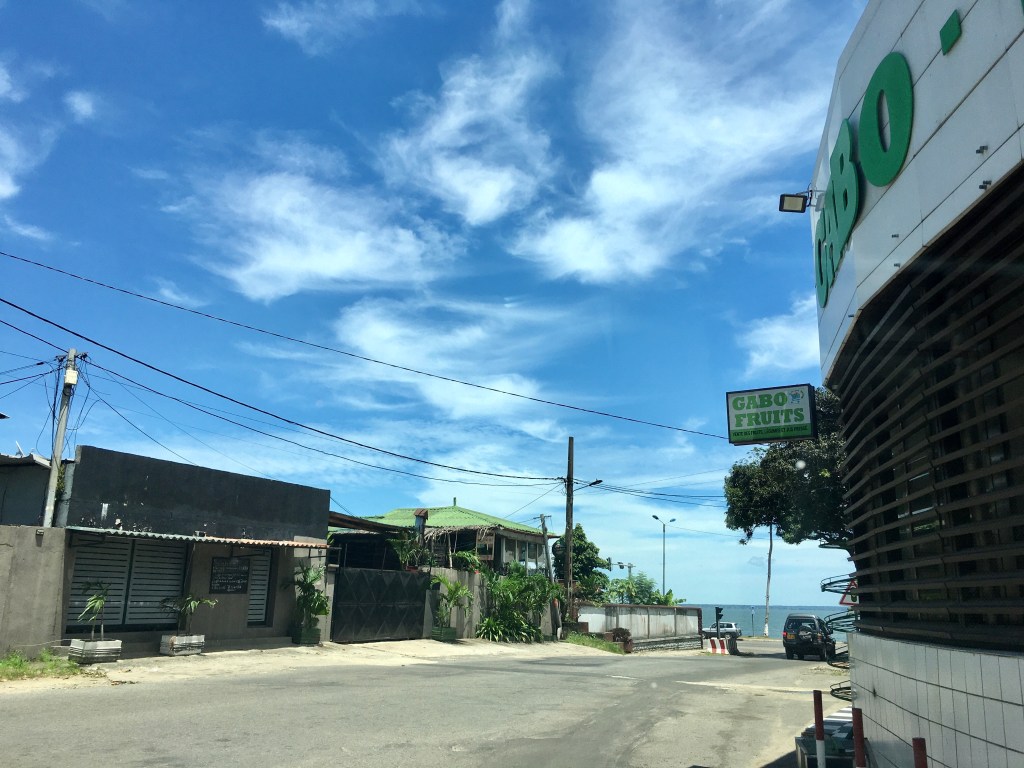
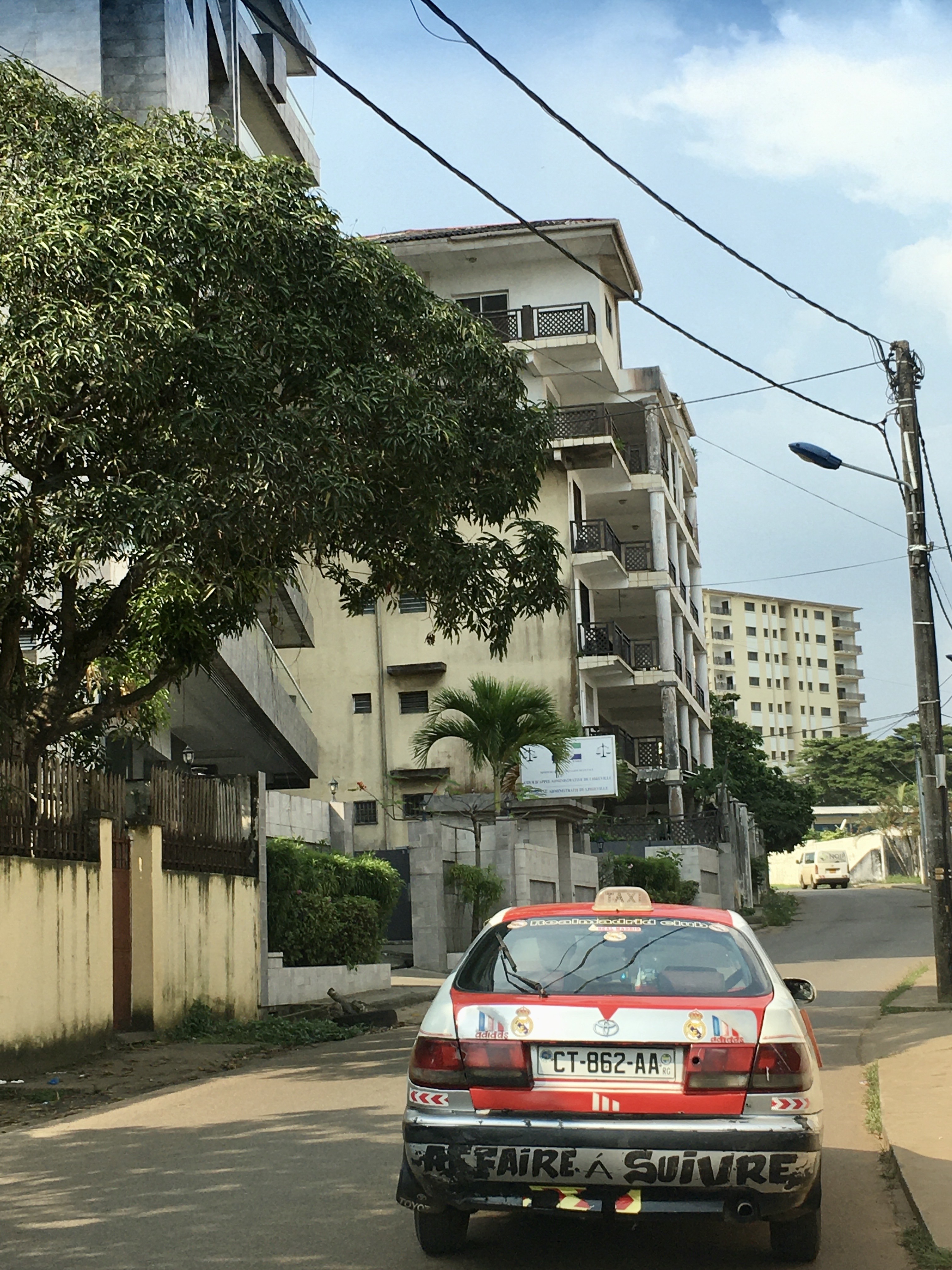
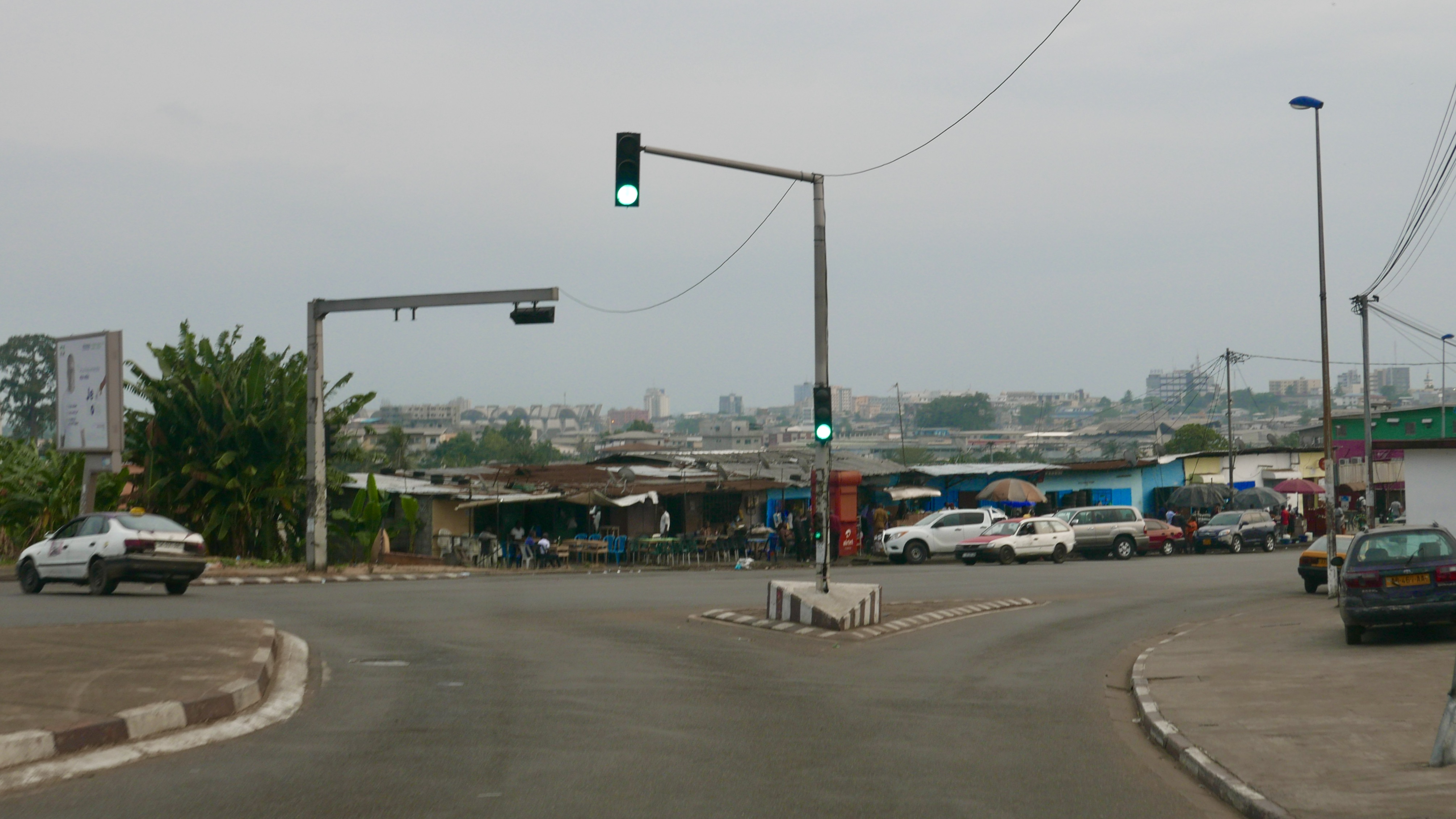
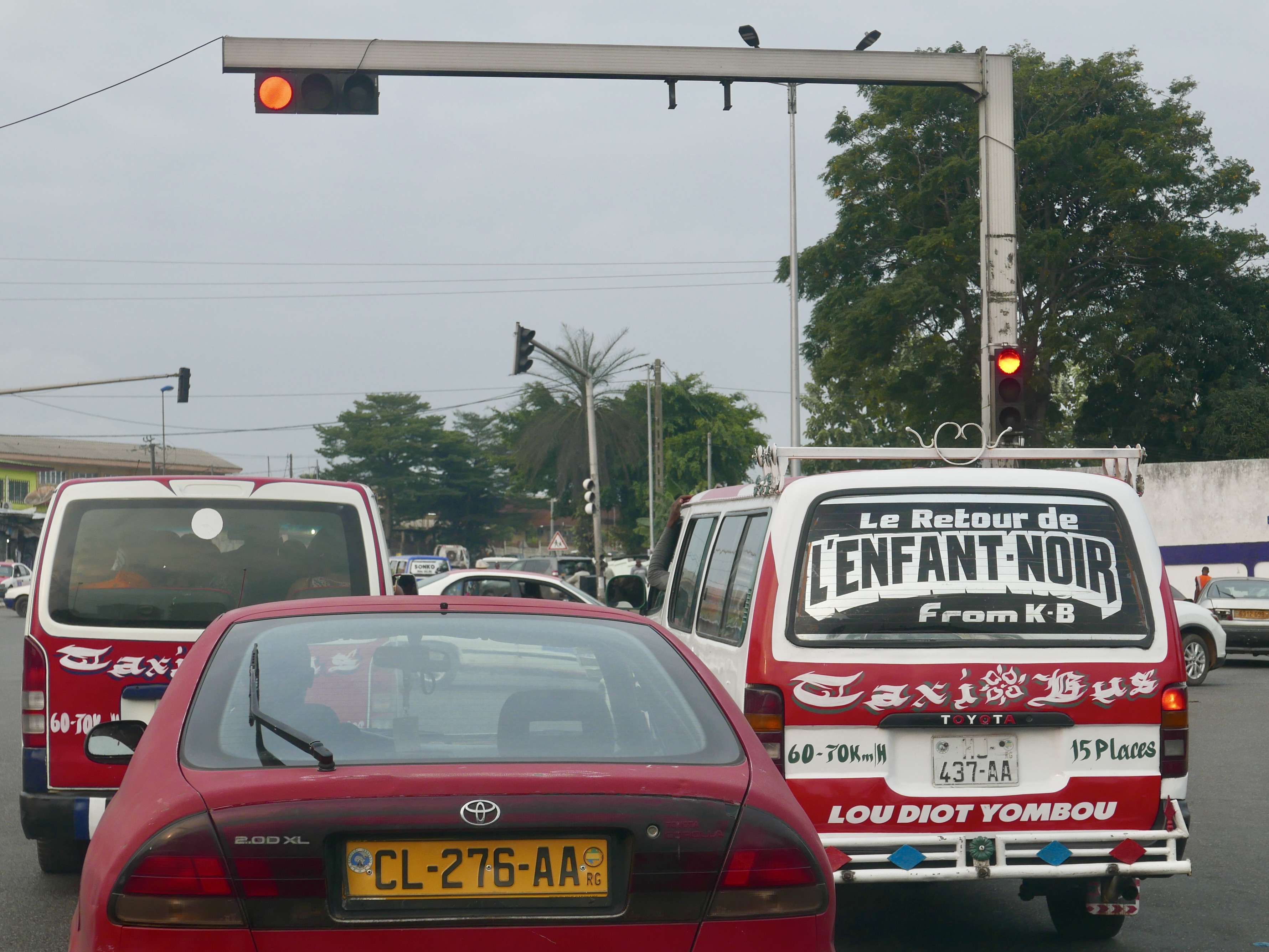
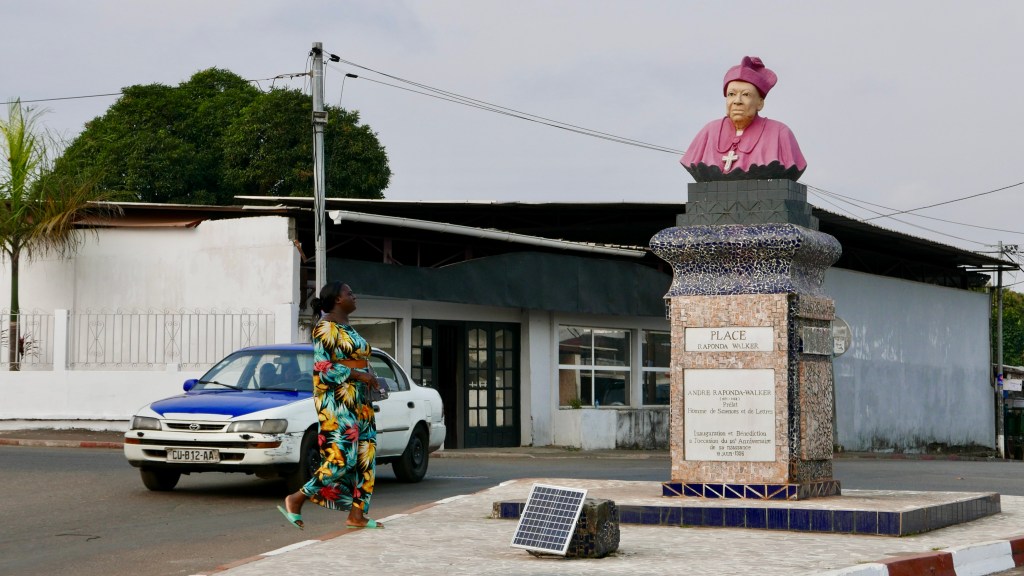
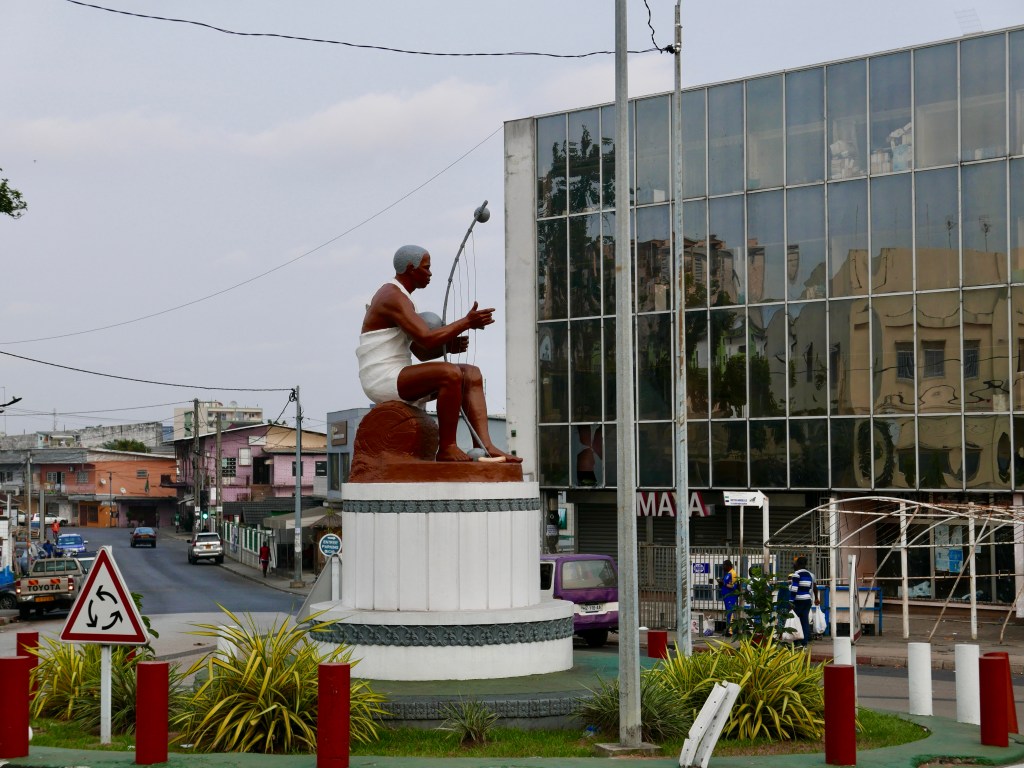
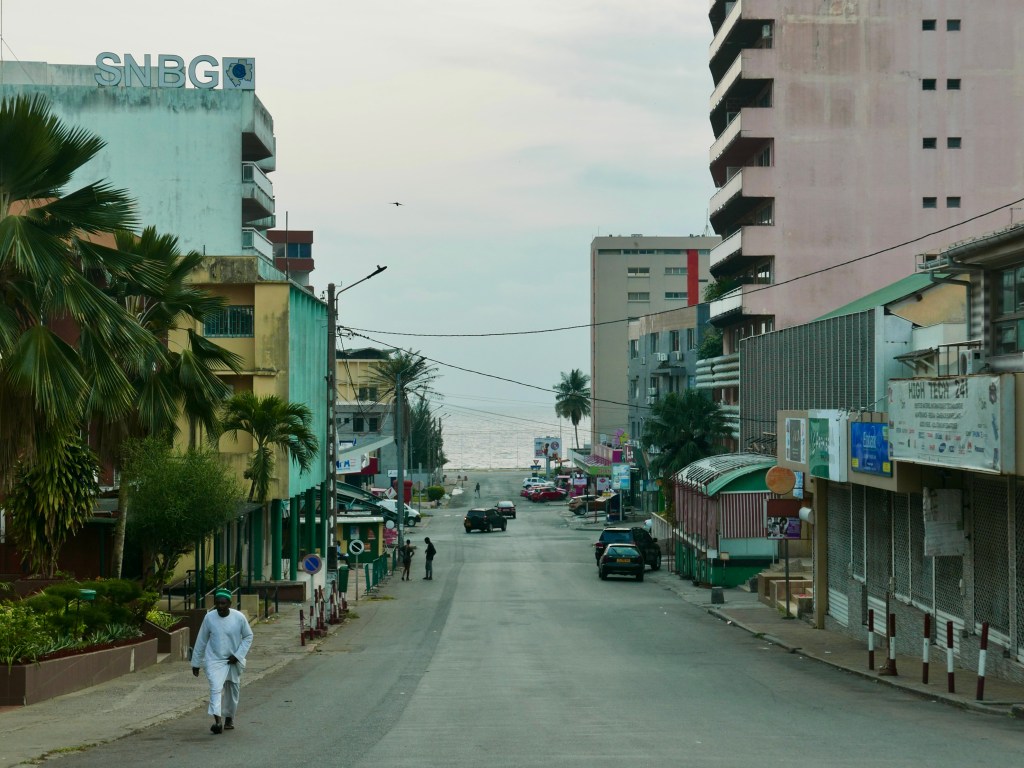
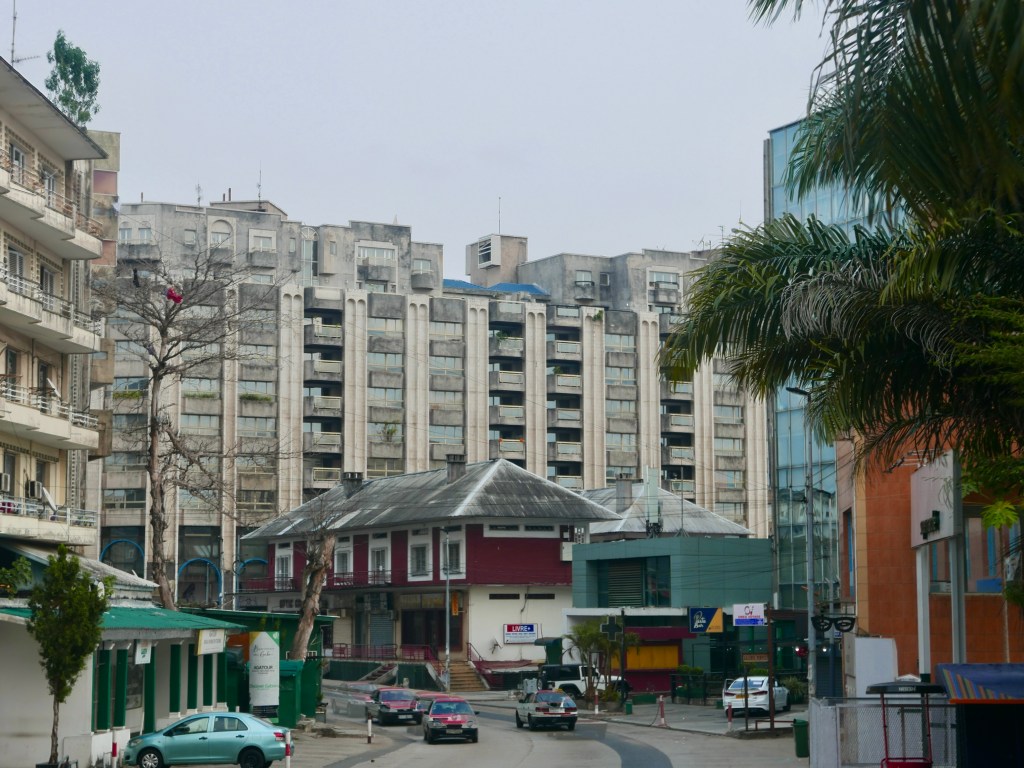
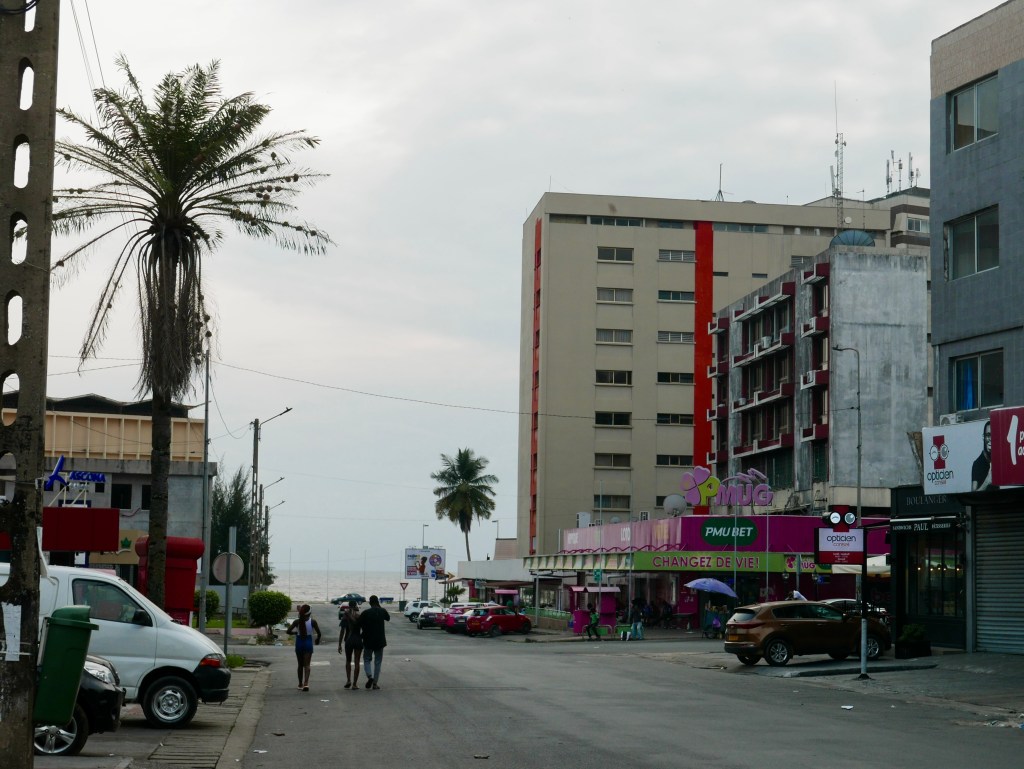
Batterie 4, Haut de Gué-Gué, Bas de Gué-Gué, Derrière Prison, Montée de Louis, Vallée Sainte-Marie, Mont-Bouët, Montagne Sainte, Glass, Lalala… Libreville is all about districts, and just hearing these names bring us to a particular spot in this city that we have learned to tame and to love over the years. There’s not much to see, it’s unbelievably hot and damp in the rainy season, it’s more than a bit of a mess in some places, police is everywhere, traffic gets completely stuck several times in the week when the president goes to and back from work, but it has this unique crazy-and-relaxed-at-the-same-time vibe and, greatest thing of all: it lies on the seaside.
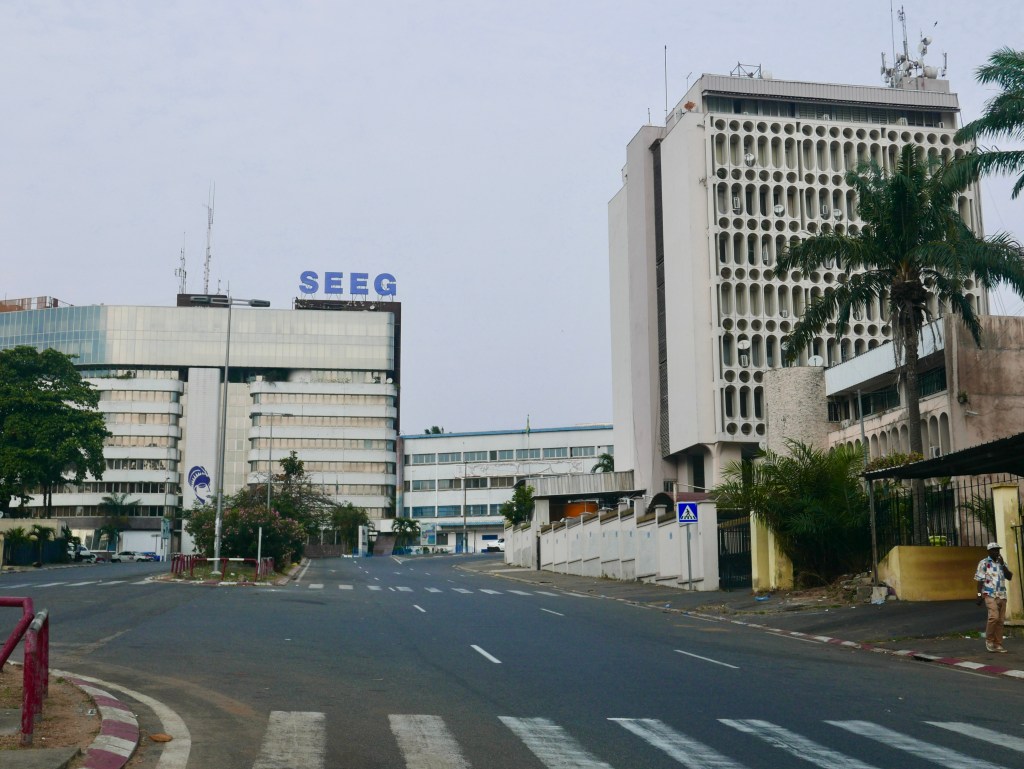
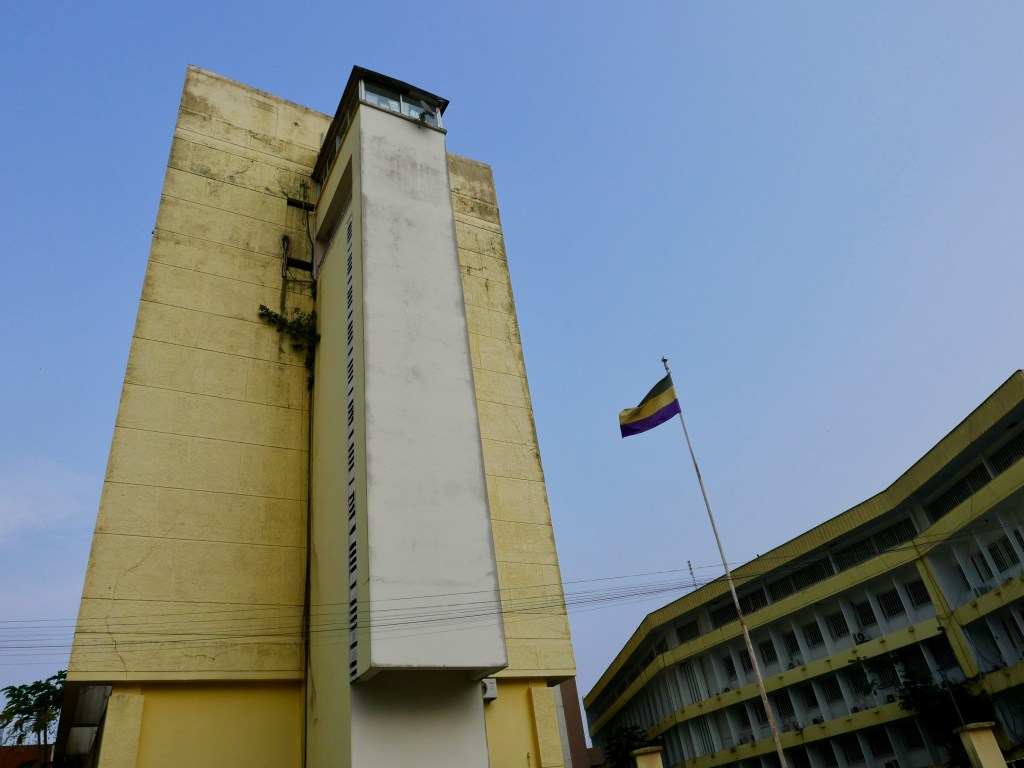
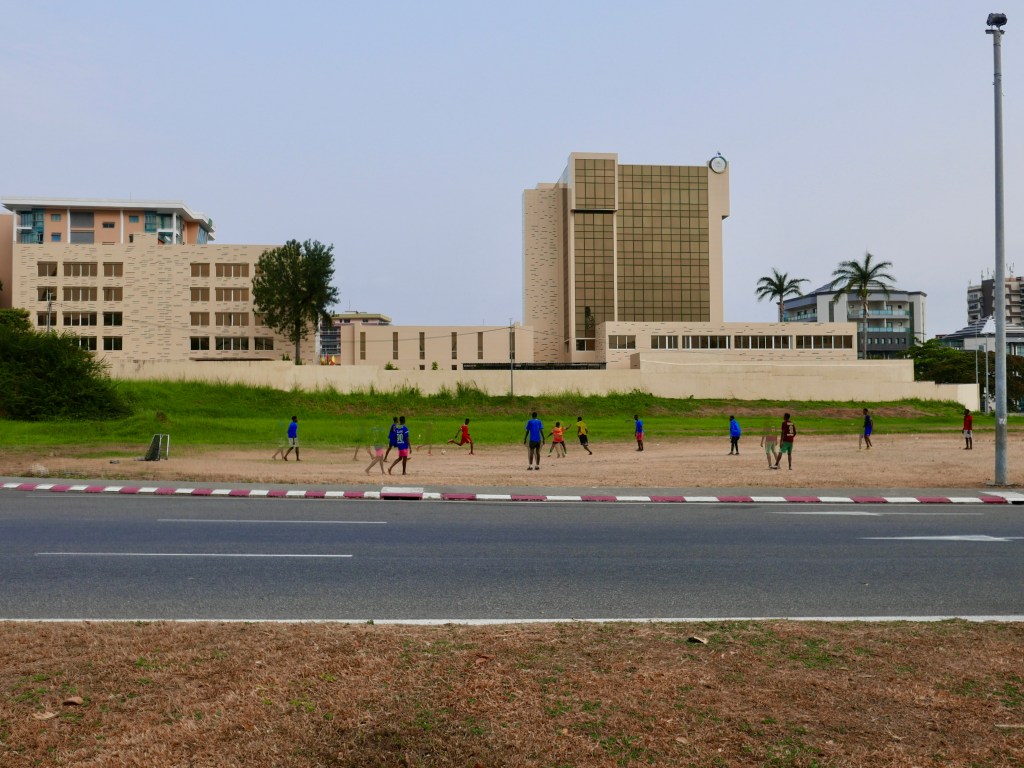
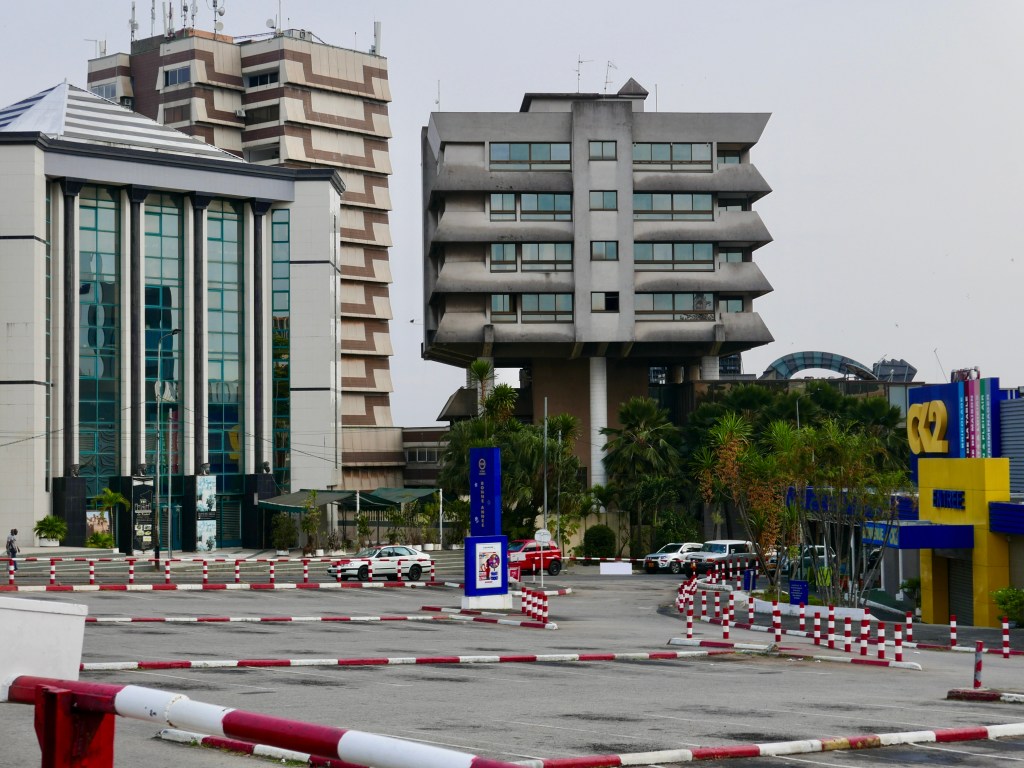
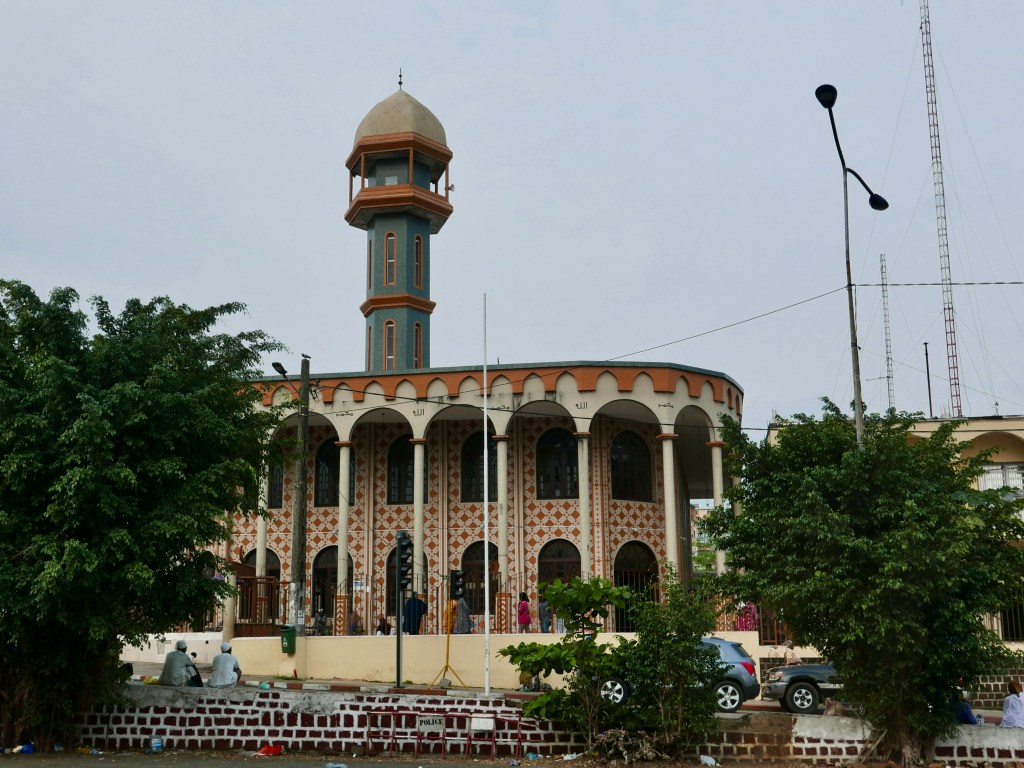
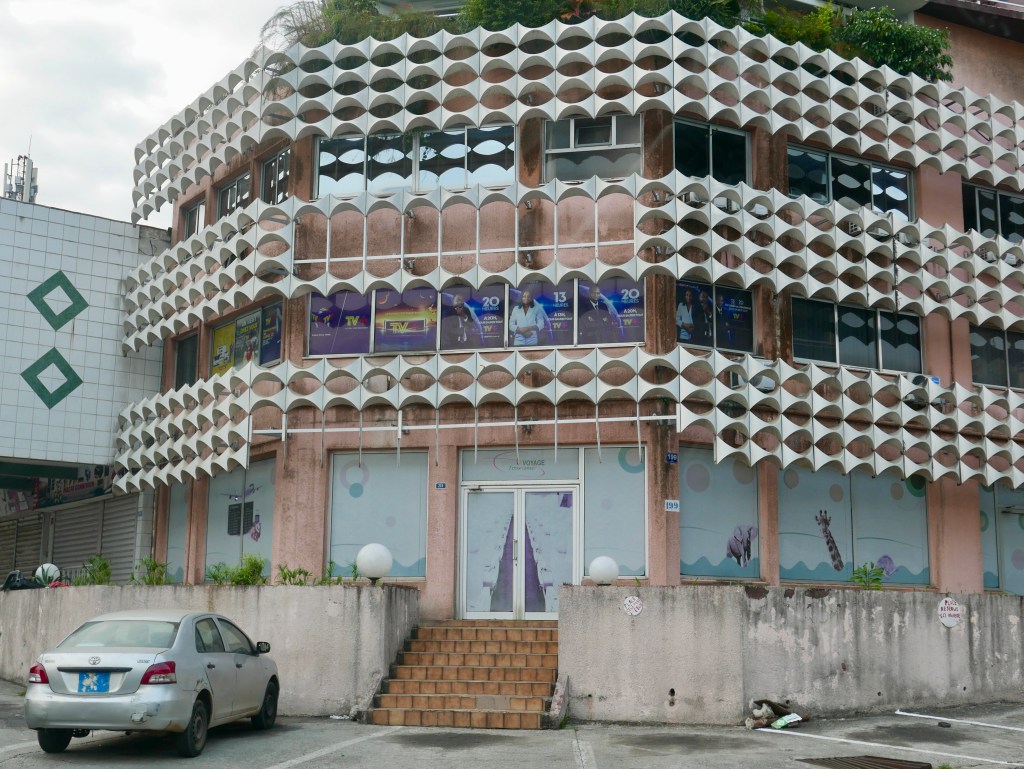
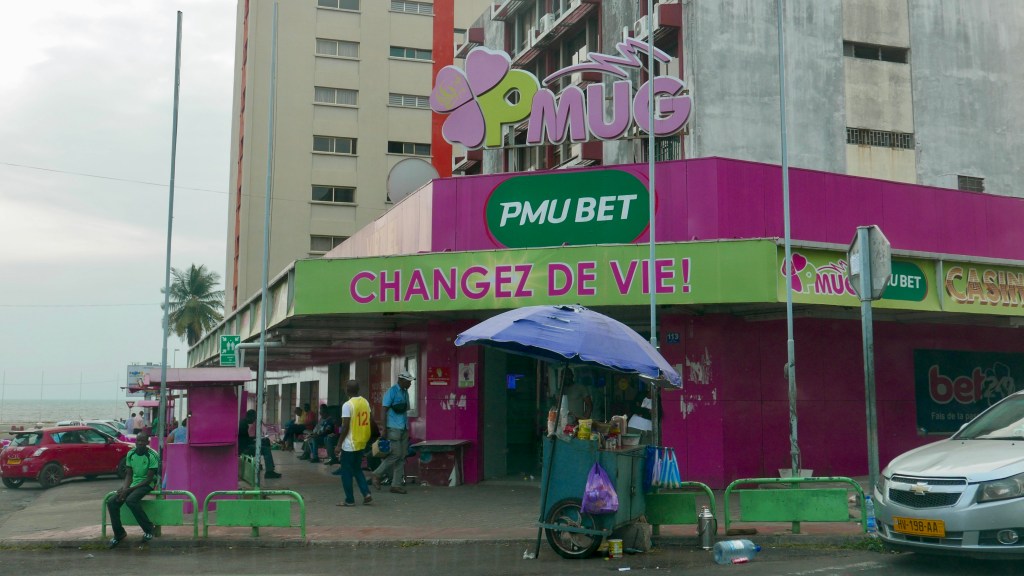
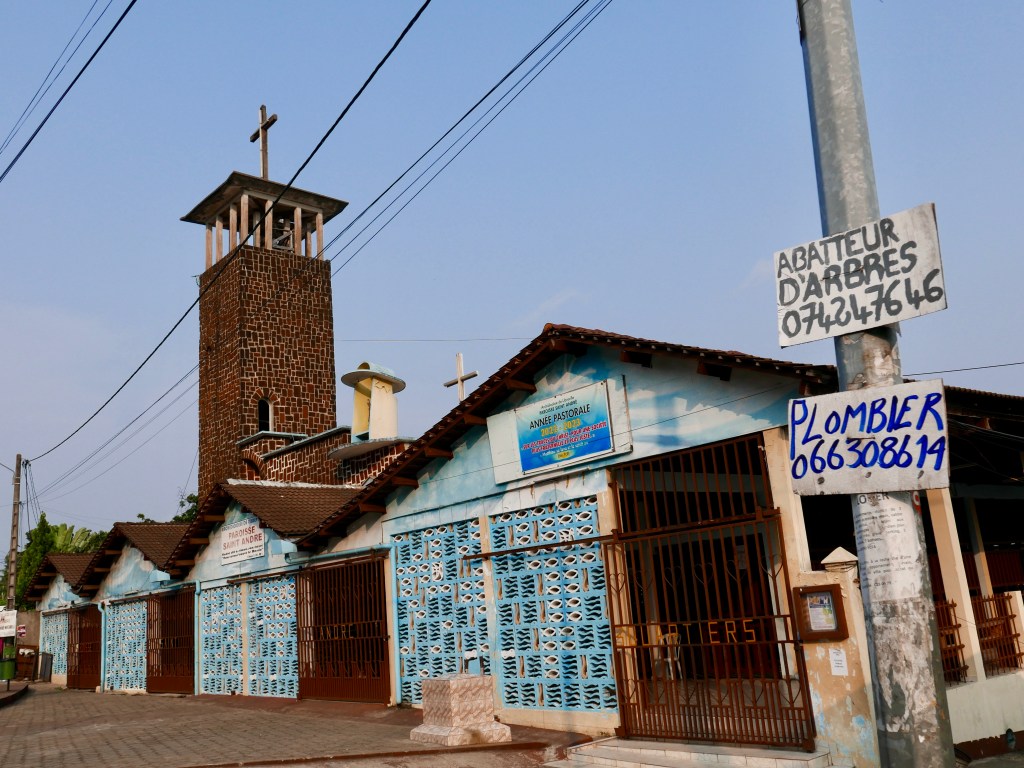
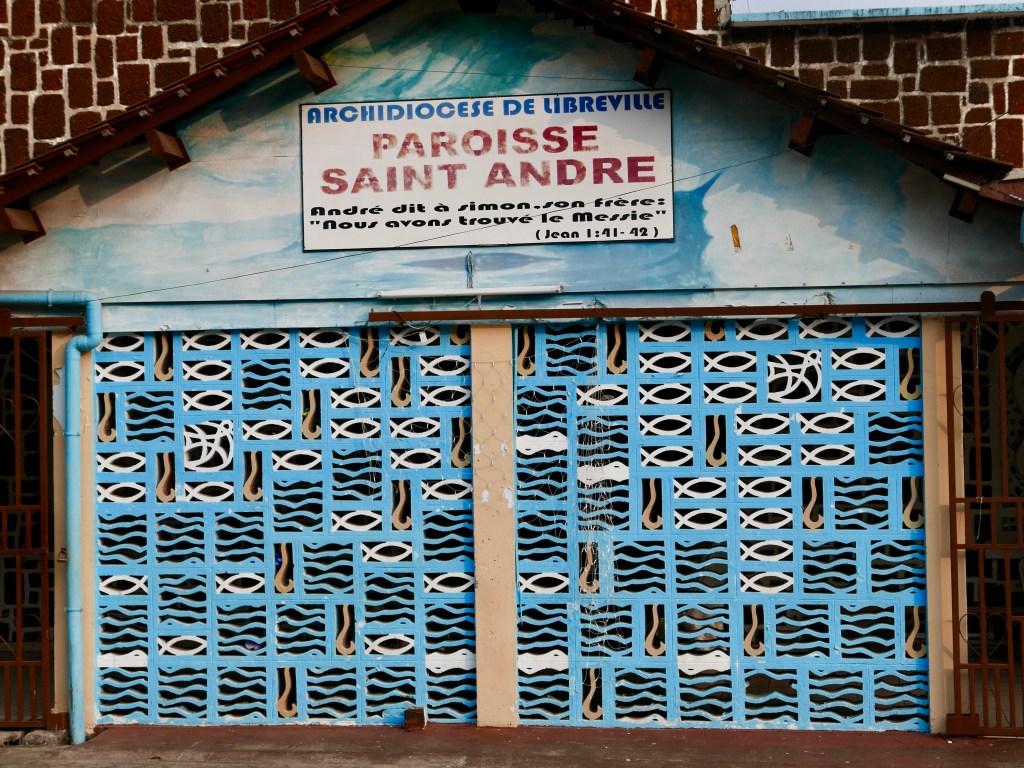
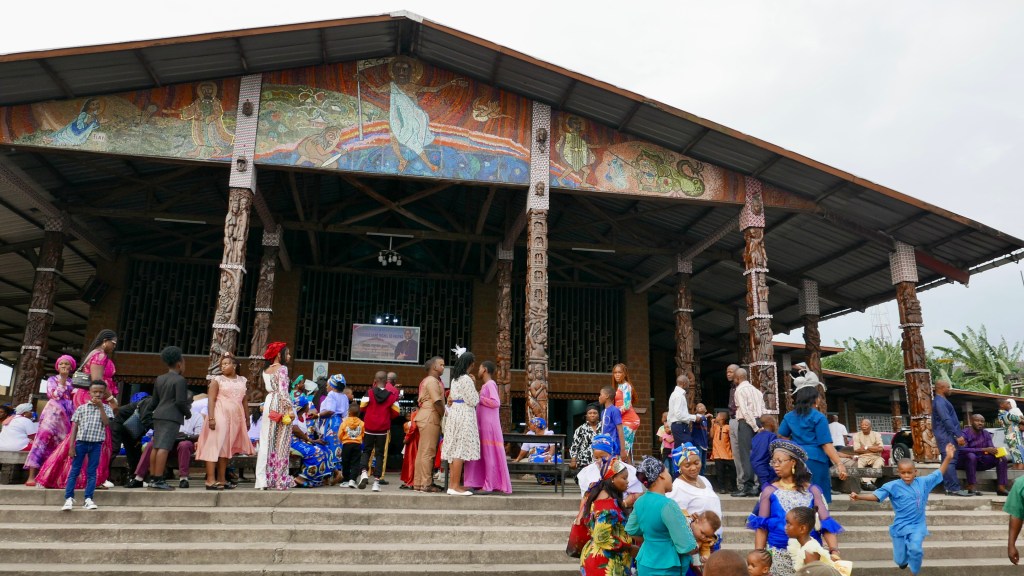
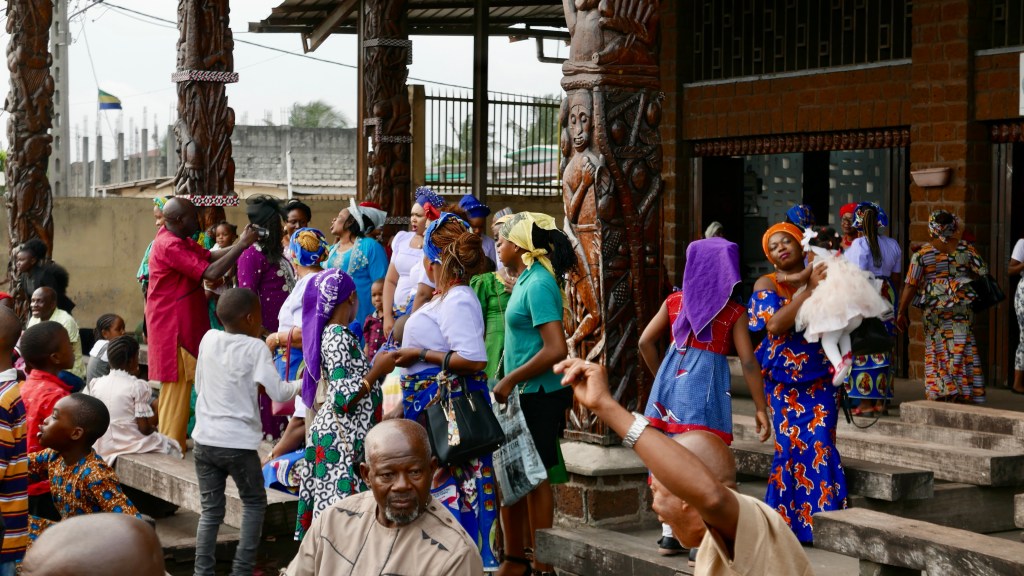
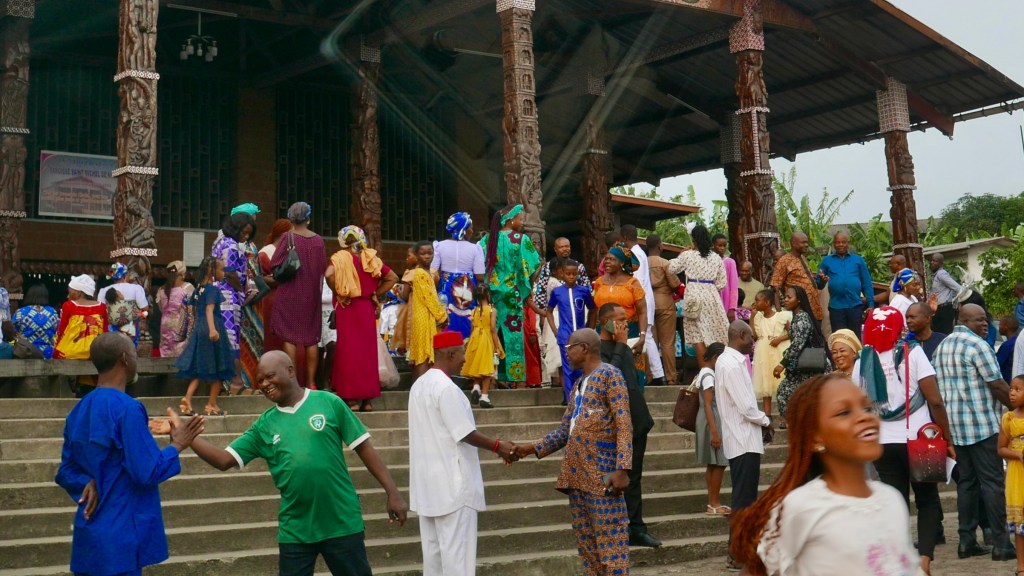
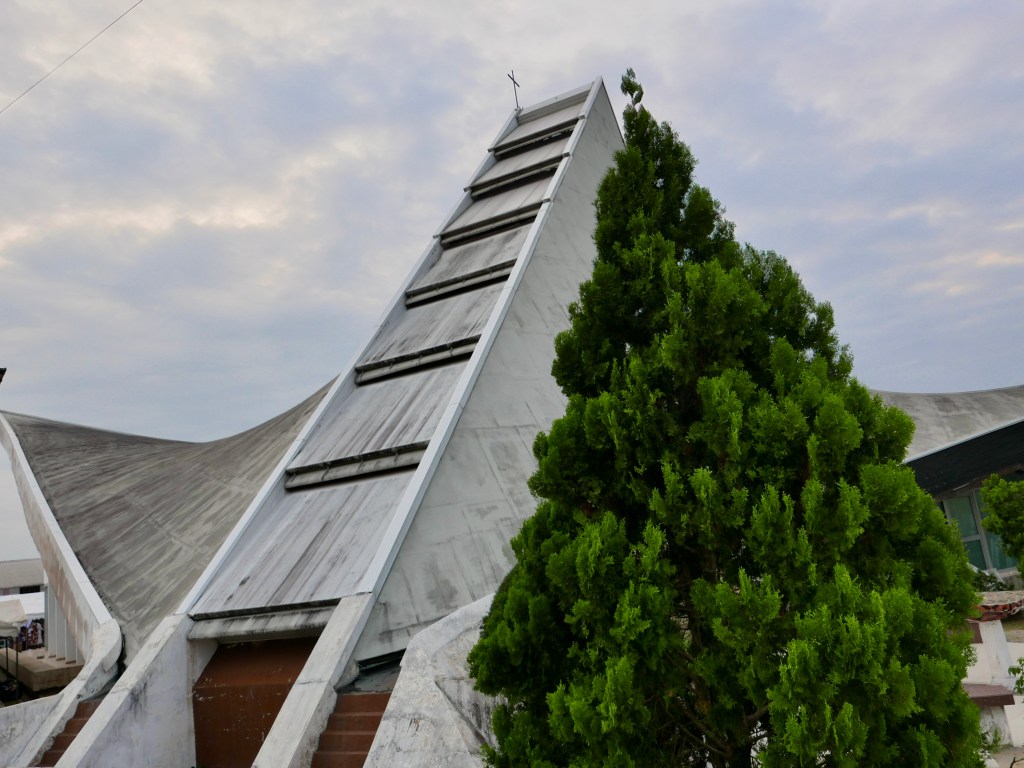
As you can see from the above photos, architecture in the centre is somewhat brutal and stuck in the 70’s. But in some places, certain buildings – churches especially – exude a real charm. The photos below present friendly Saint-André, Saint-Michel de Nkembo with its unique wooden carved pillars, and the spaceship-like Saint-Pierre church.
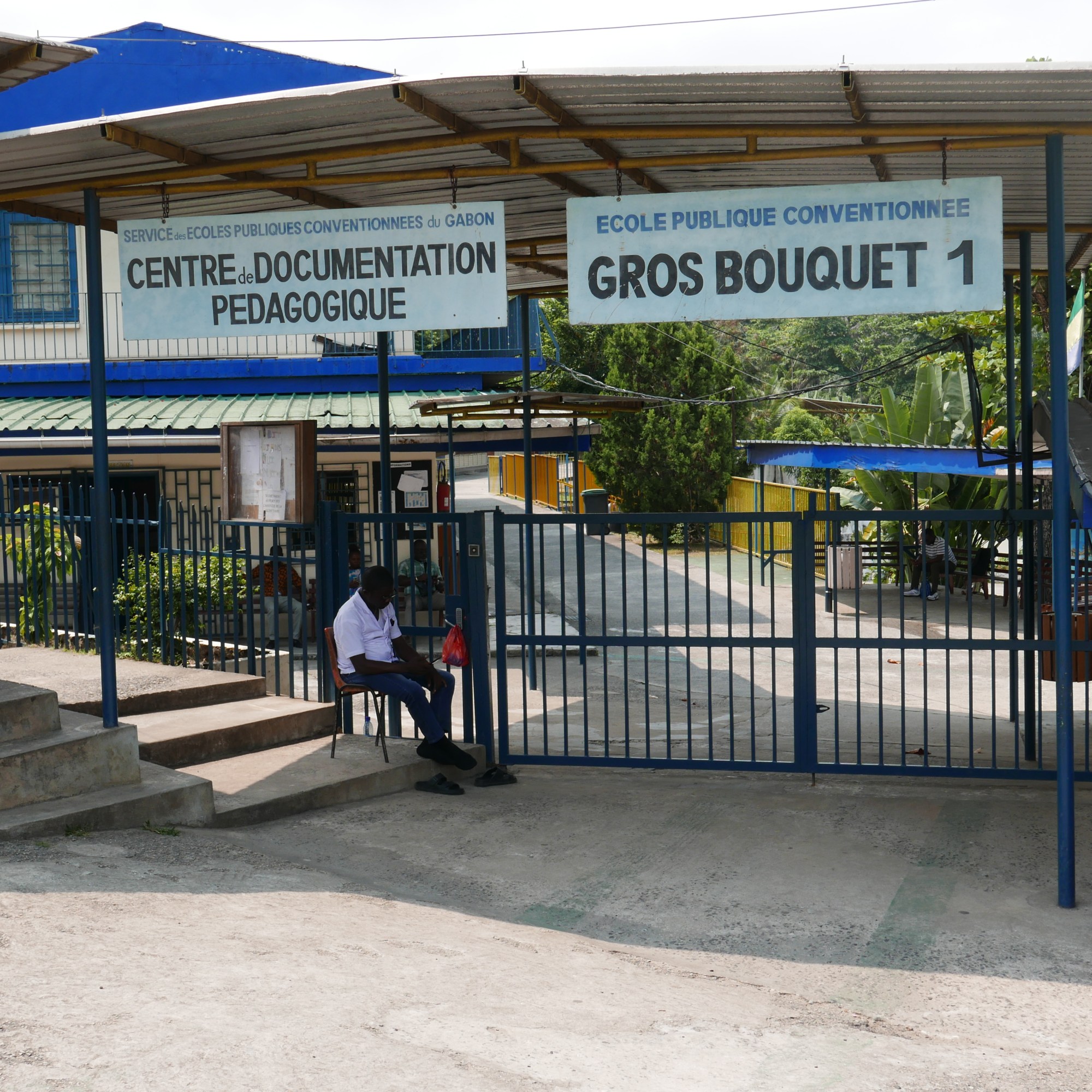
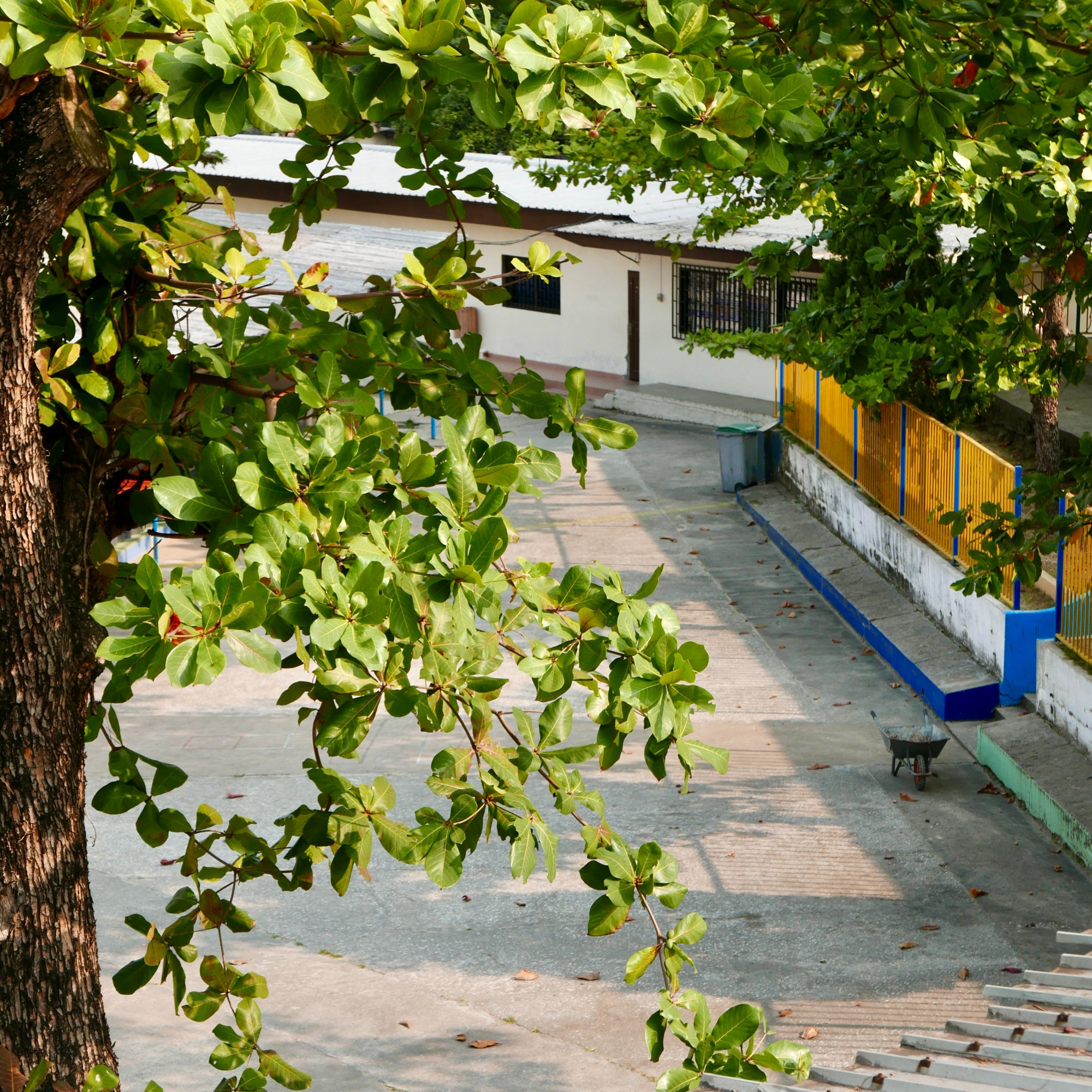
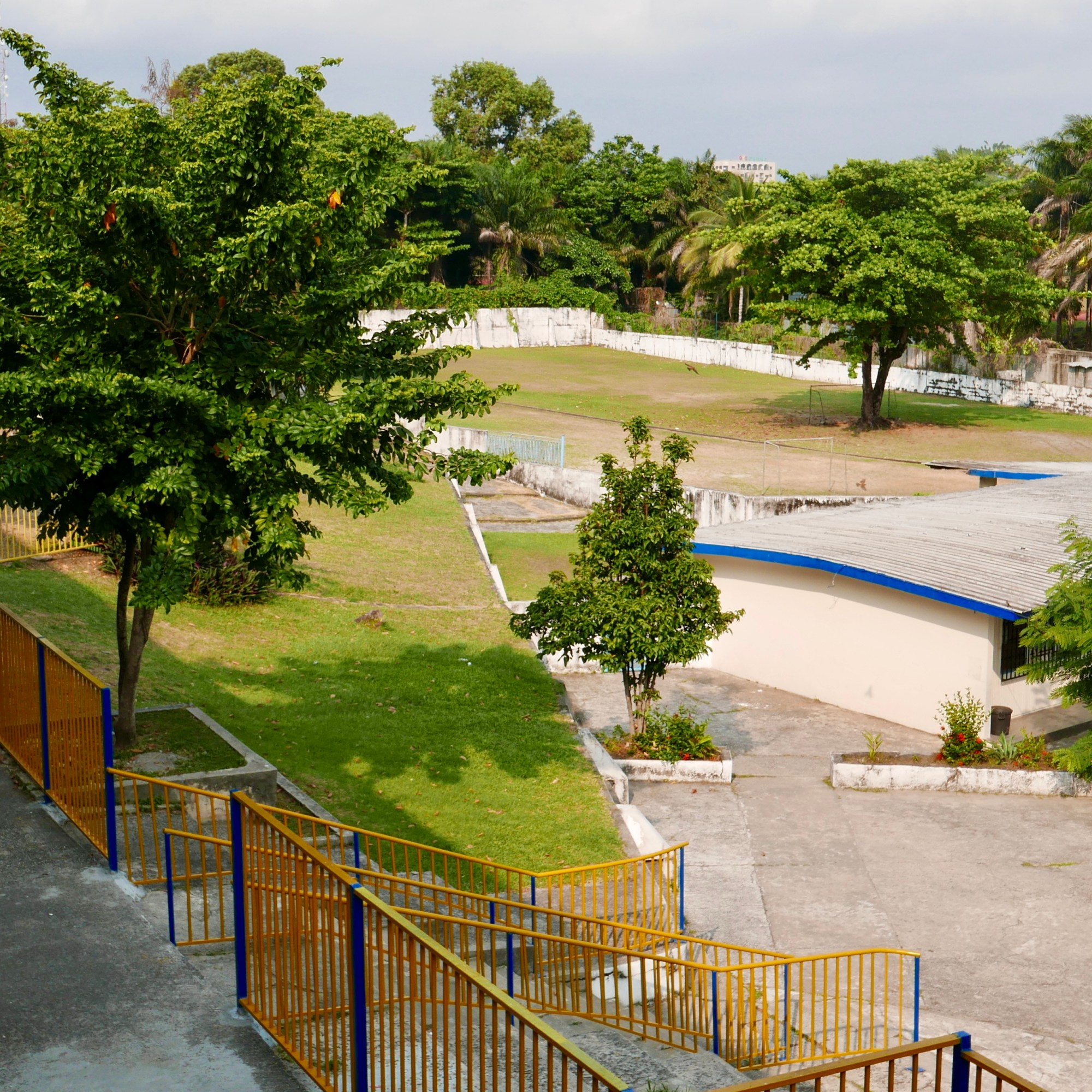
We were lucky to live in quiet Batterie IV, a green district full of schools – Gros Bouquet 1, the one where I was teaching was a 5-min walks from home and is the most beautiful workplace I may ever have, it felt like being in a tropical garden most of the time.
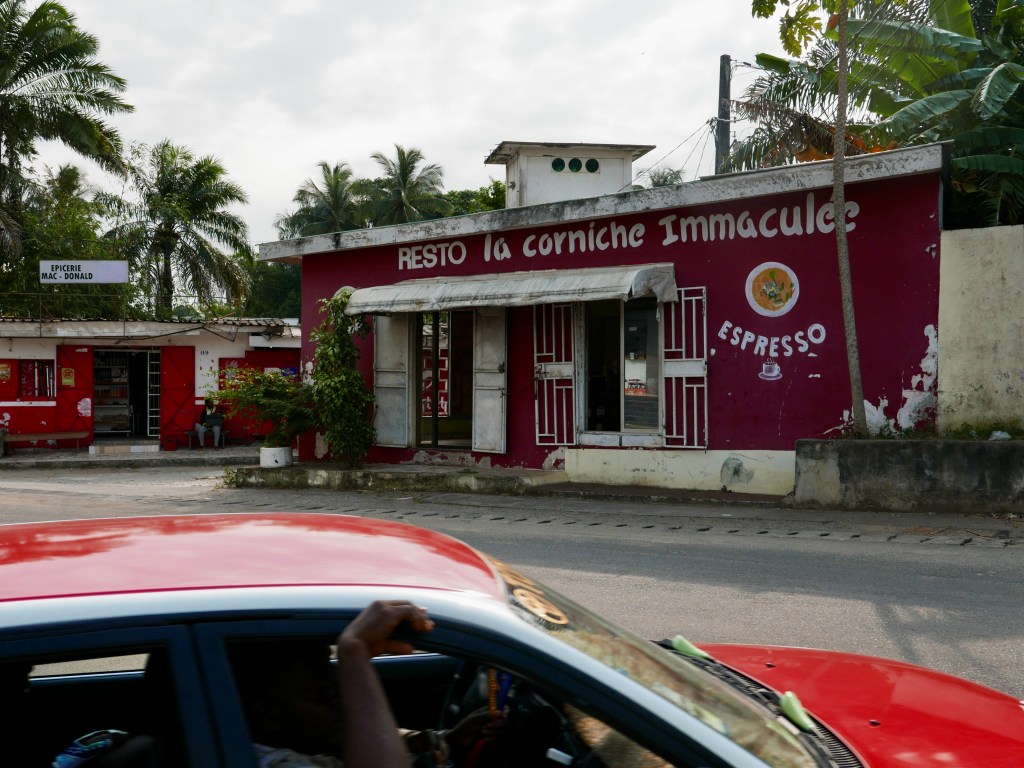
The Senegalese restaurant and Mac-Donald shop right in front of my school in Batterie IV
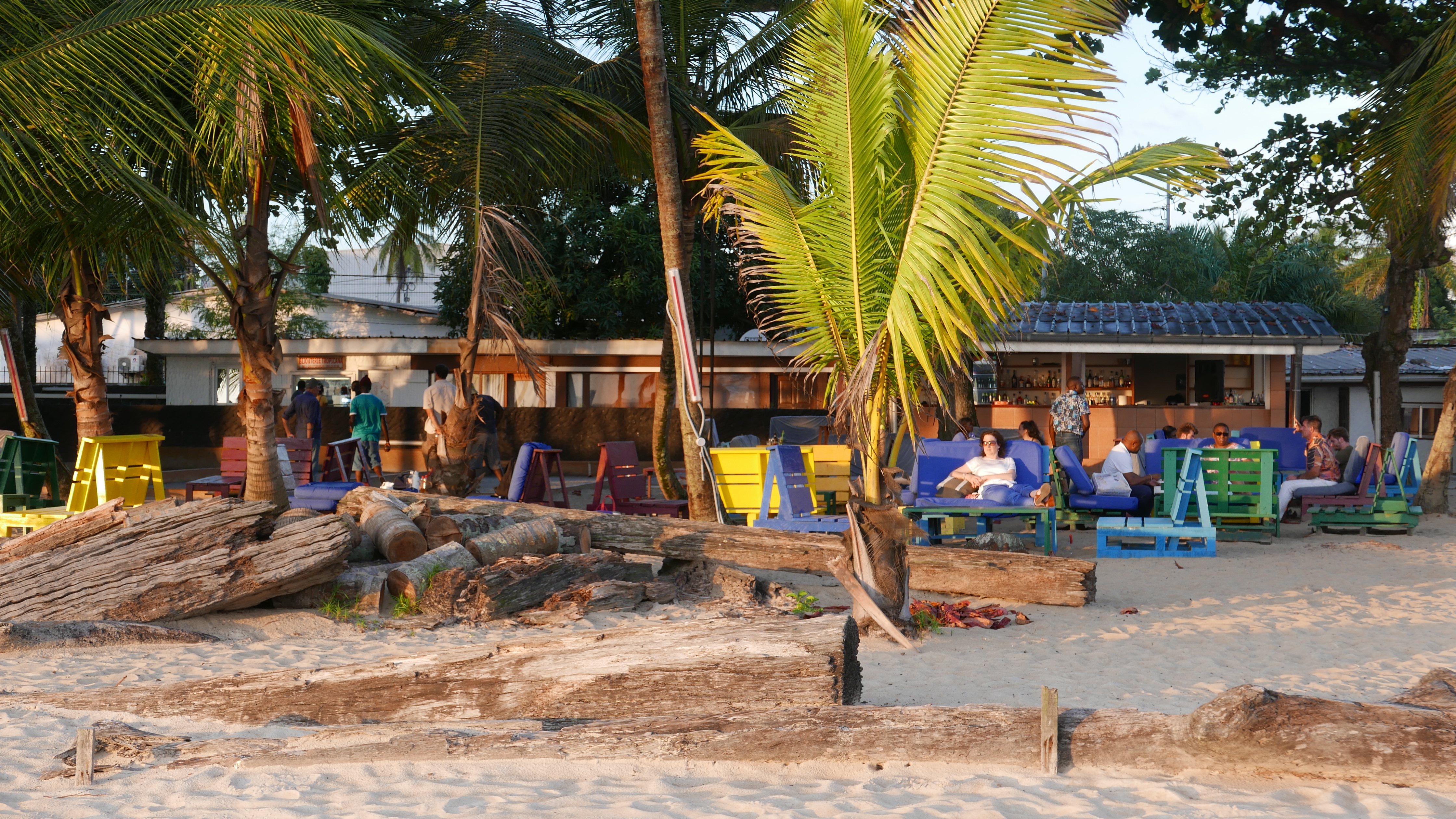
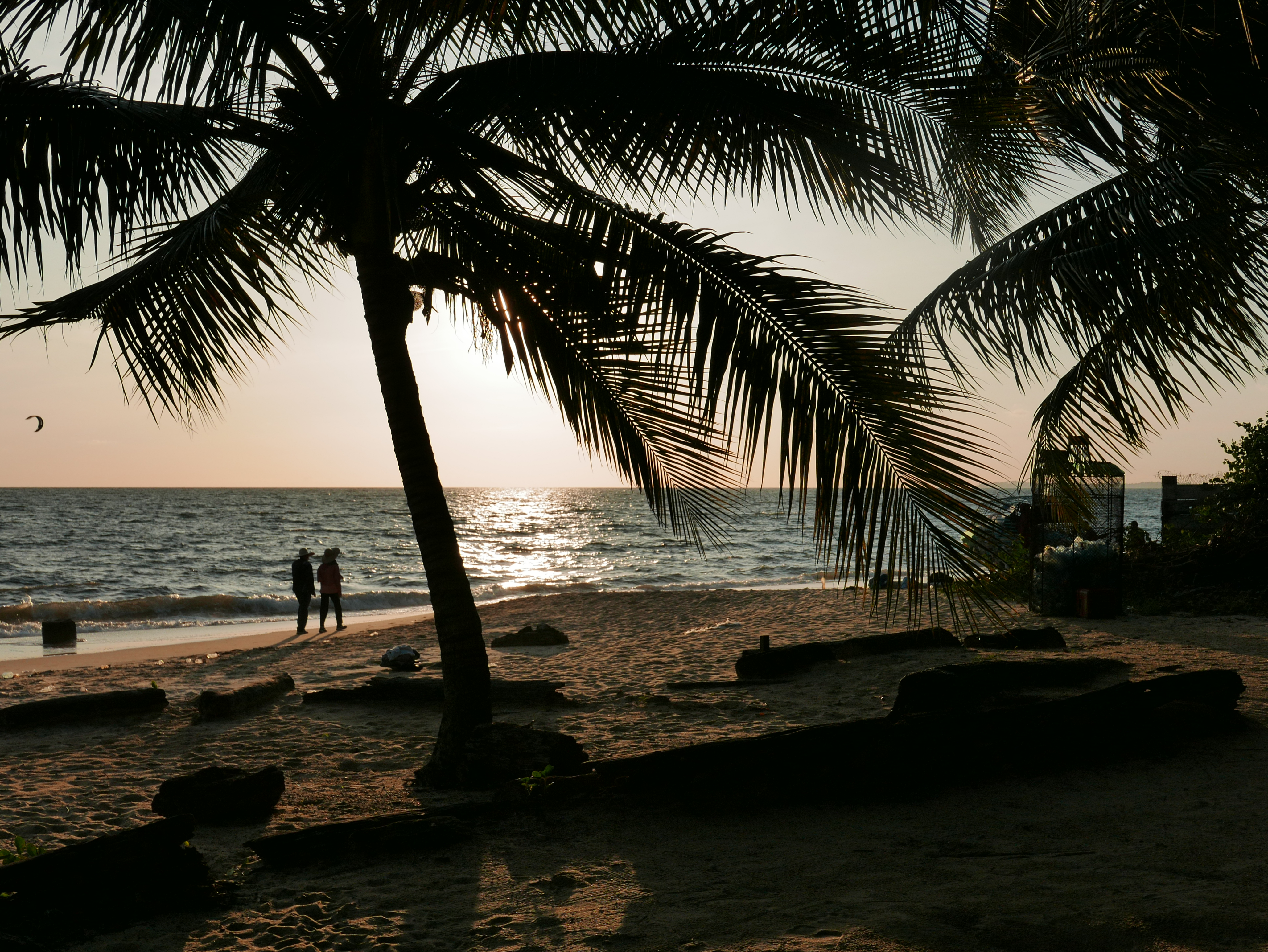
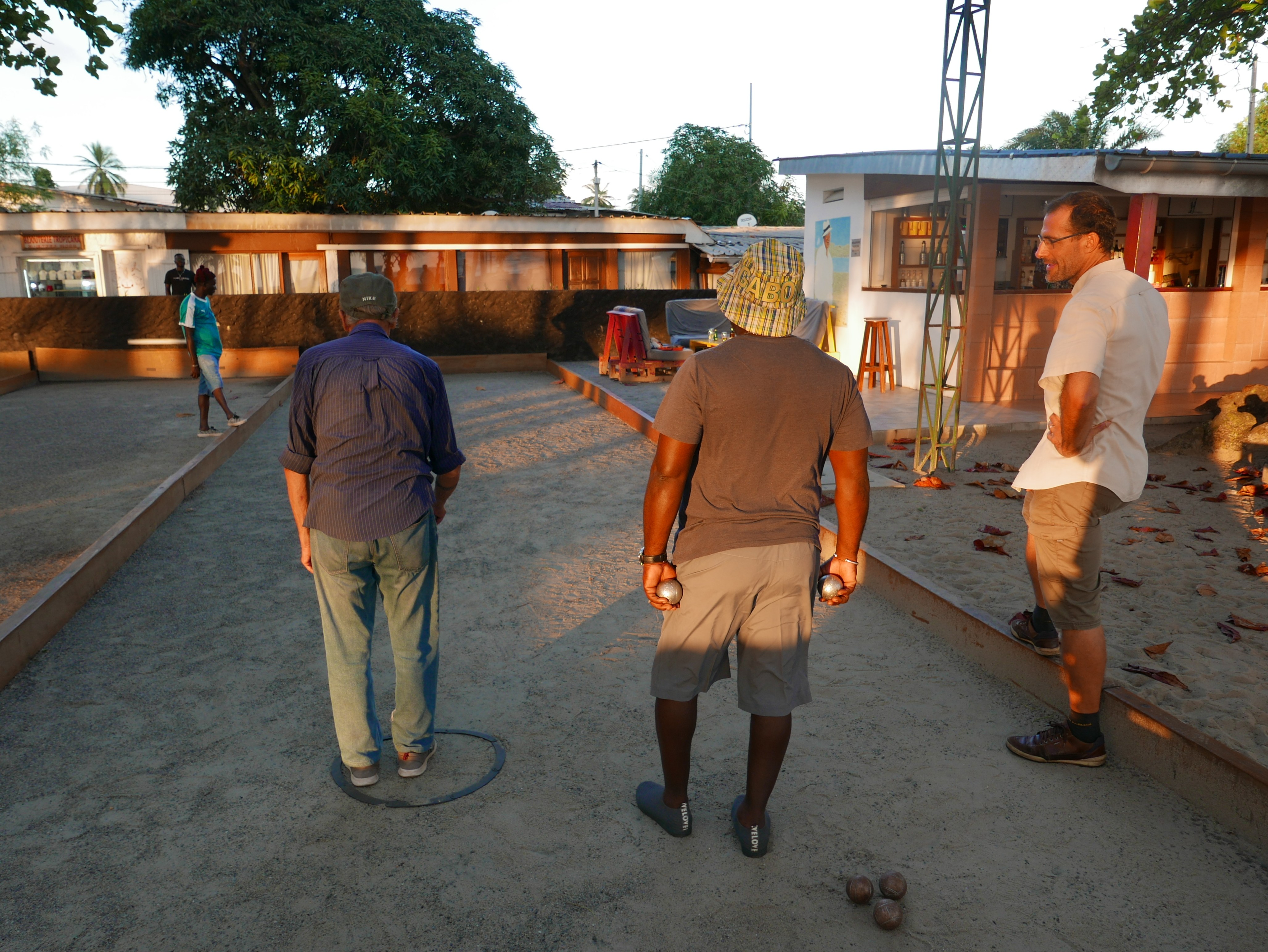
Any day of the week, Tropicana is the best spot to unwind with friends and a drink, have a fresh fish meal, or play pétanque on the Henri Salvador boulodrome. This place is so close to perfection that it seems like it has always existed and will exist forever.
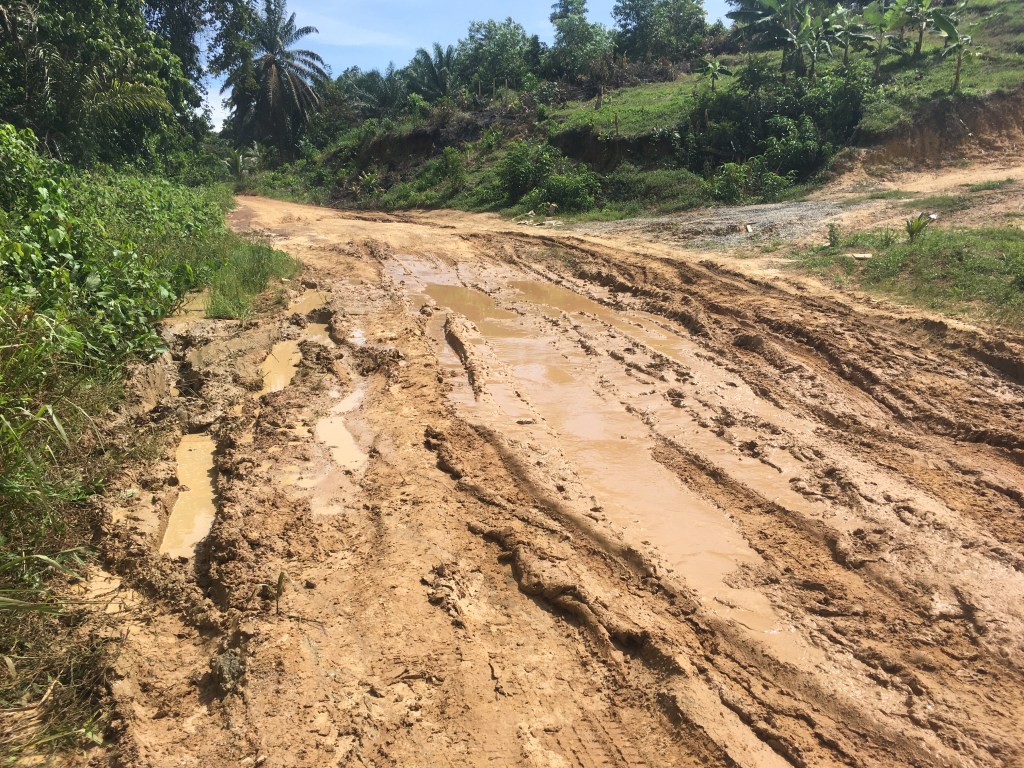
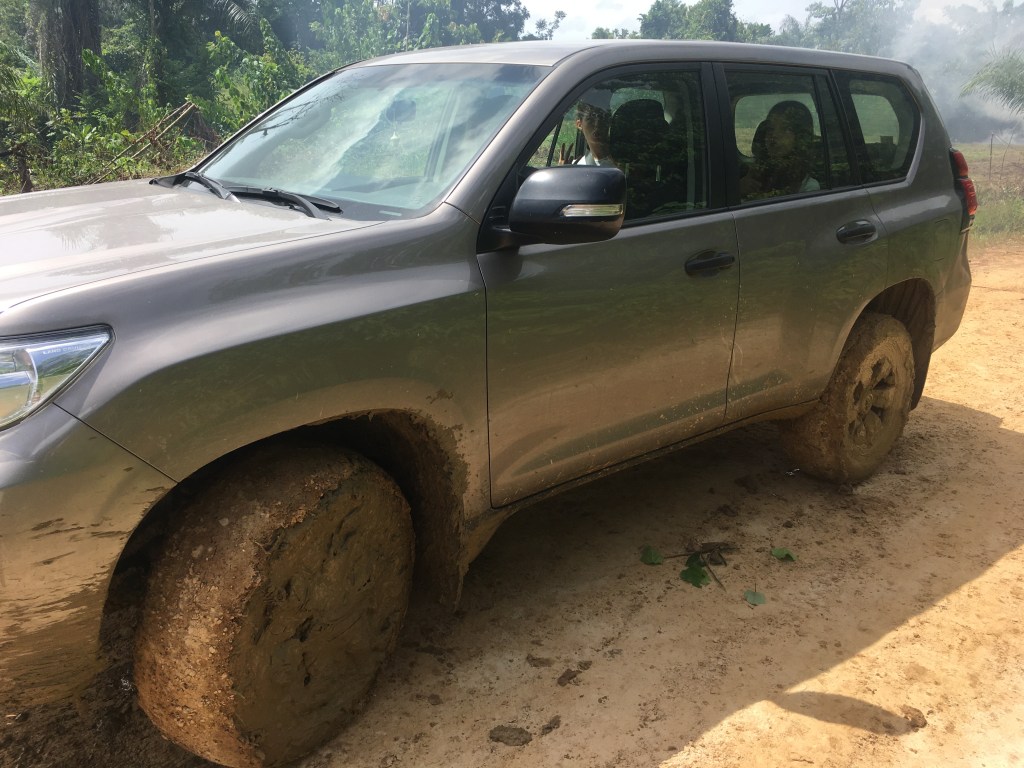
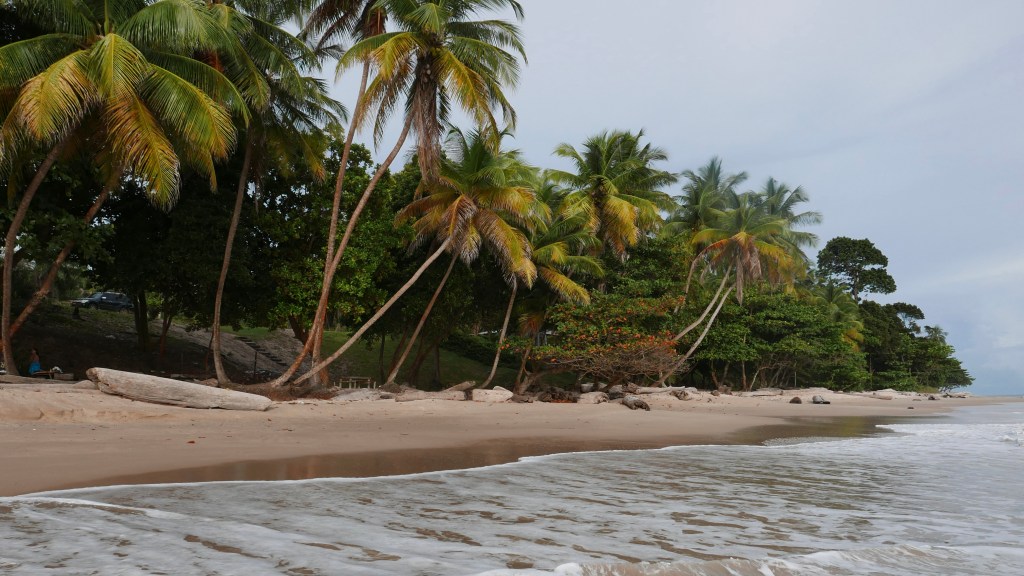
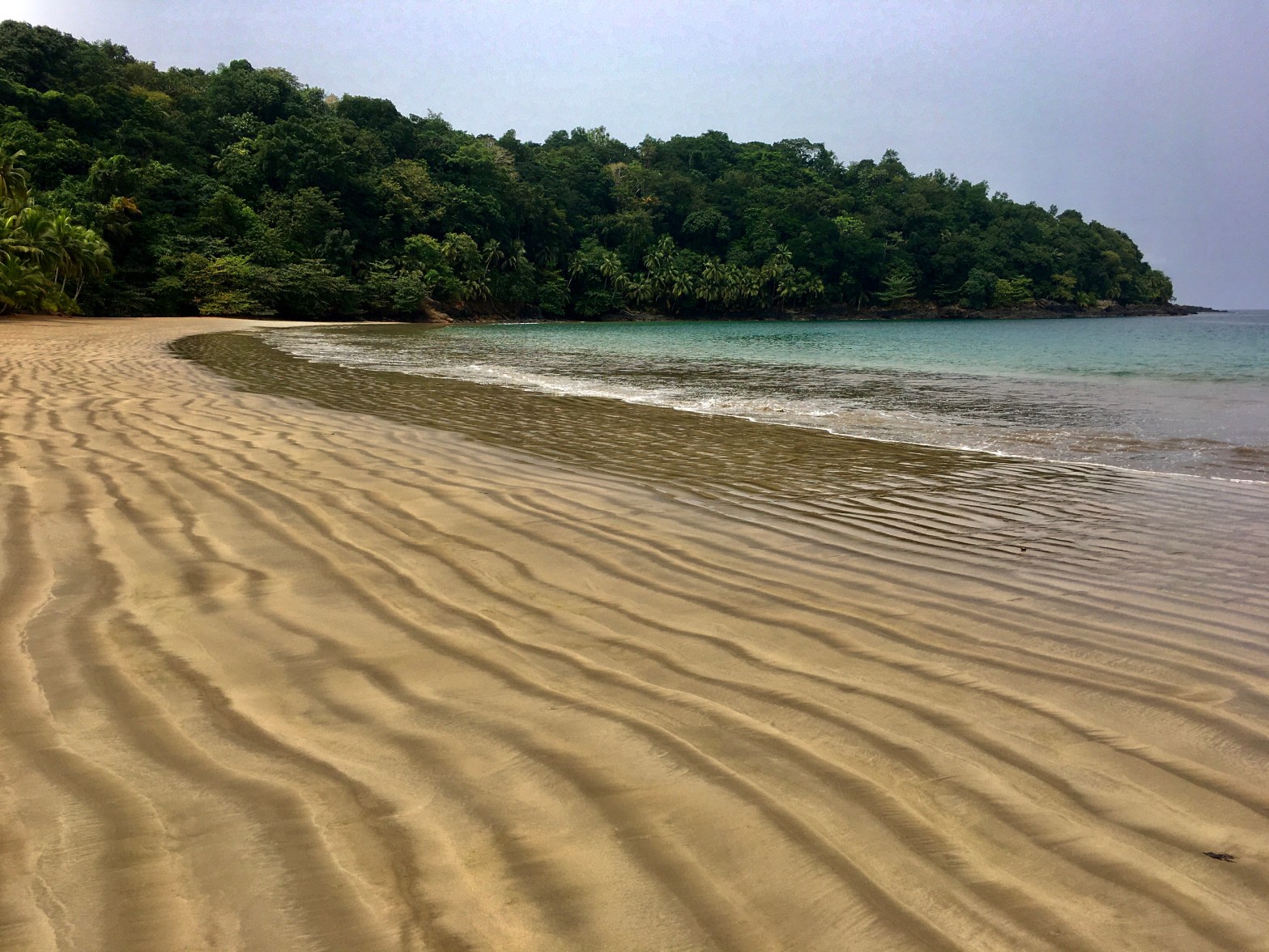
On the weekend, it takes a 20 km drive up North to go hiking in the arboretum or to Cap Santa Clara beach, though the road there can get very rough in the rainy season (and yes, last time we got stuck in the mud as you can see below).
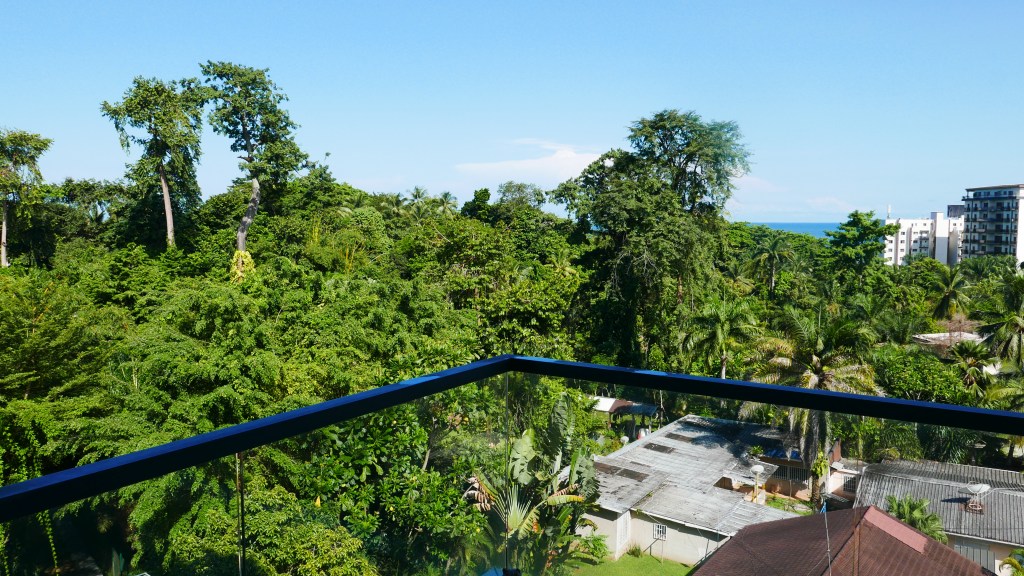
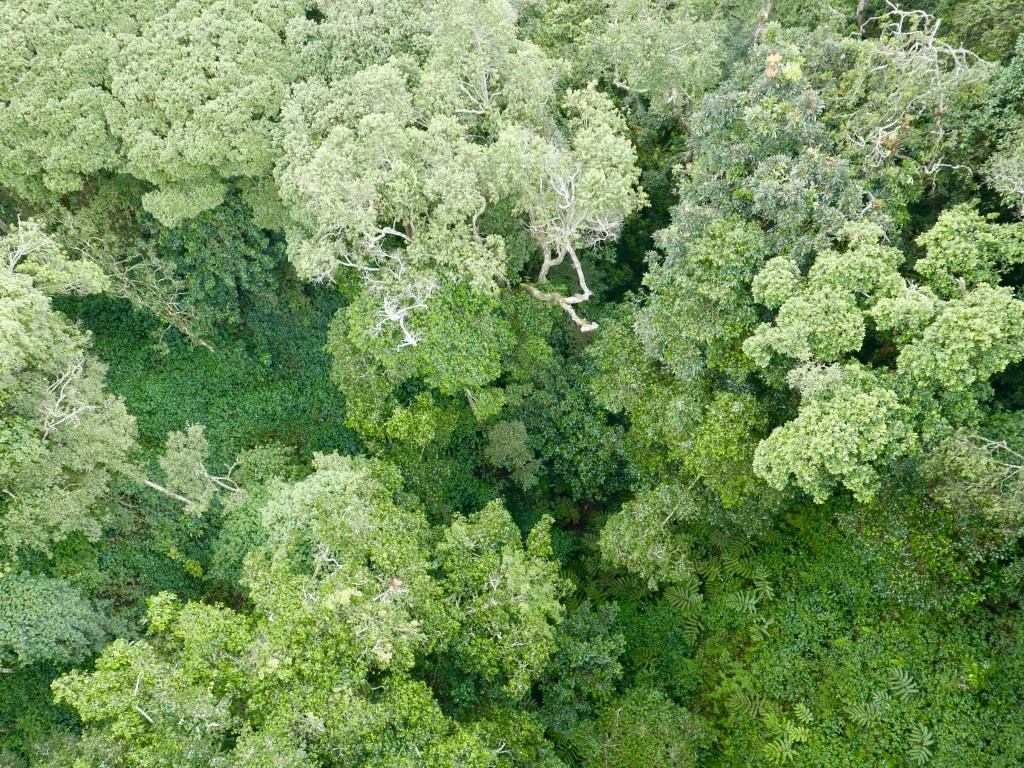
Nature is strong in Gabon, even asphalt cannot prevent plants and grass from growing, so even in the most urban sections of Libreville you will find patches of green. Some of these patches are bigger than others, and the one below may be the biggest little forest in the city. It lies just beyond our balcony and hosts bats, grey parrots, kingfishers and dozens of multicoloured birds species, frogs, and an entire orchestra of insects that starts playing everyday at dusk. This view may well have lasted us a lifetime.
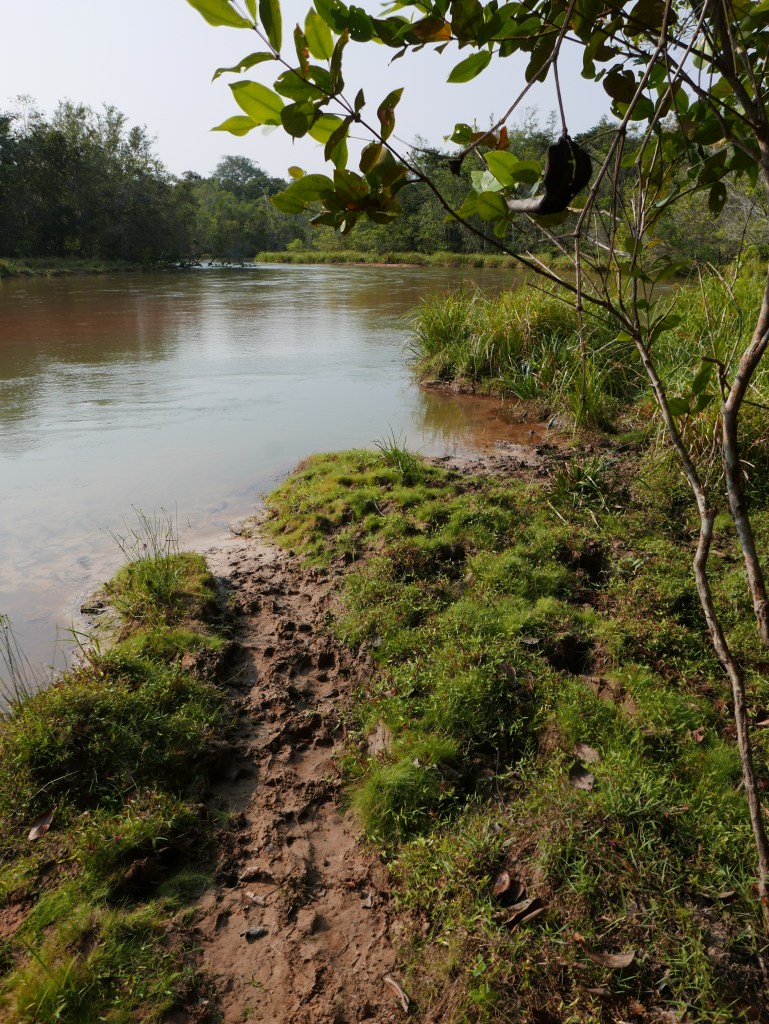
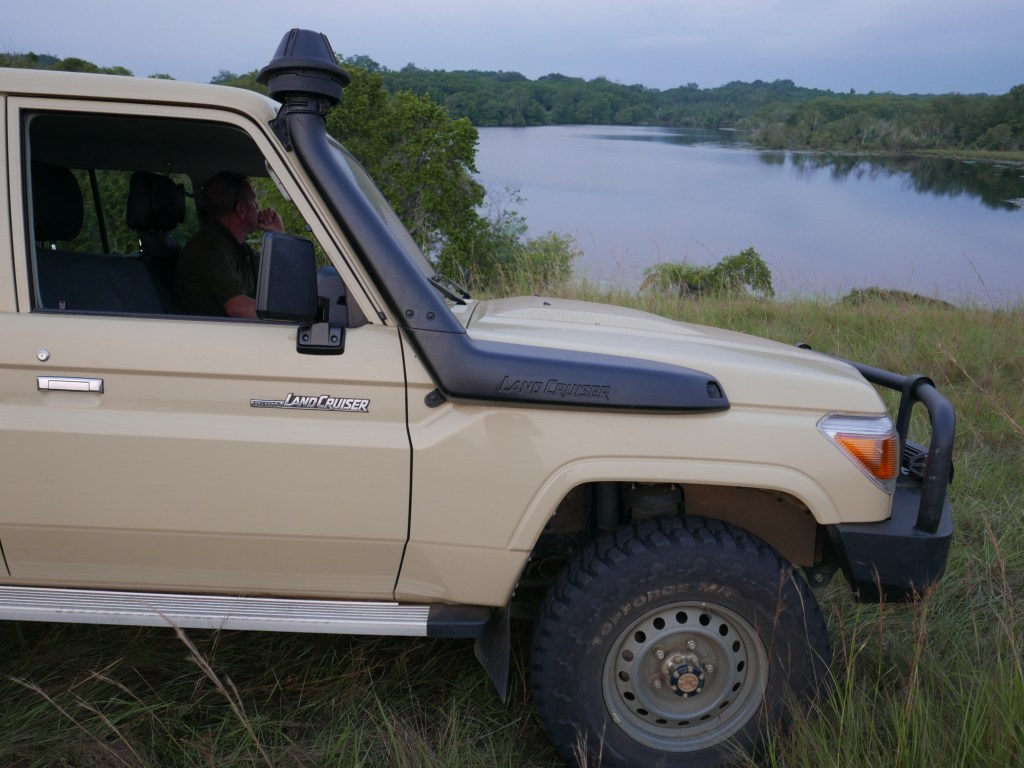
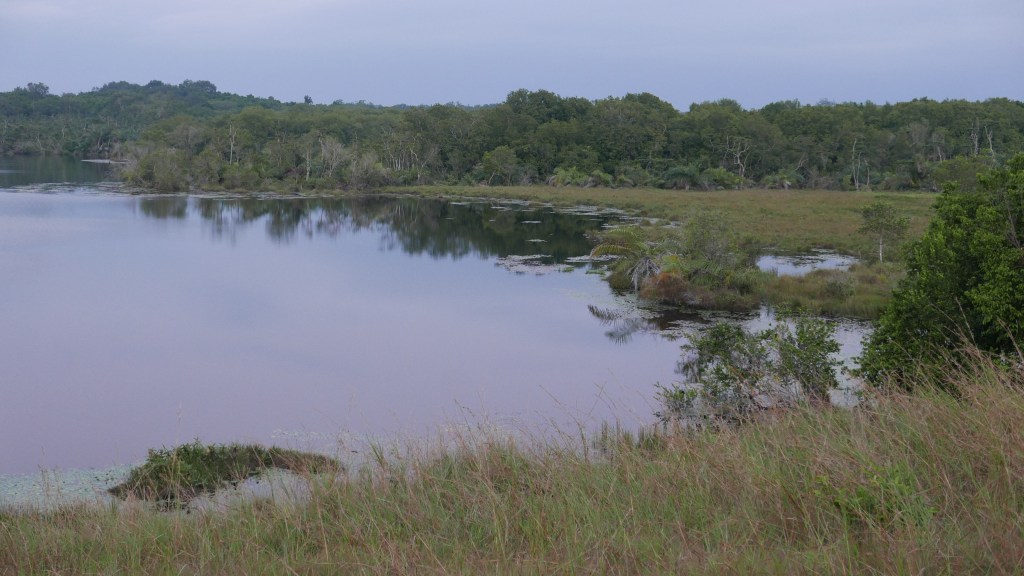
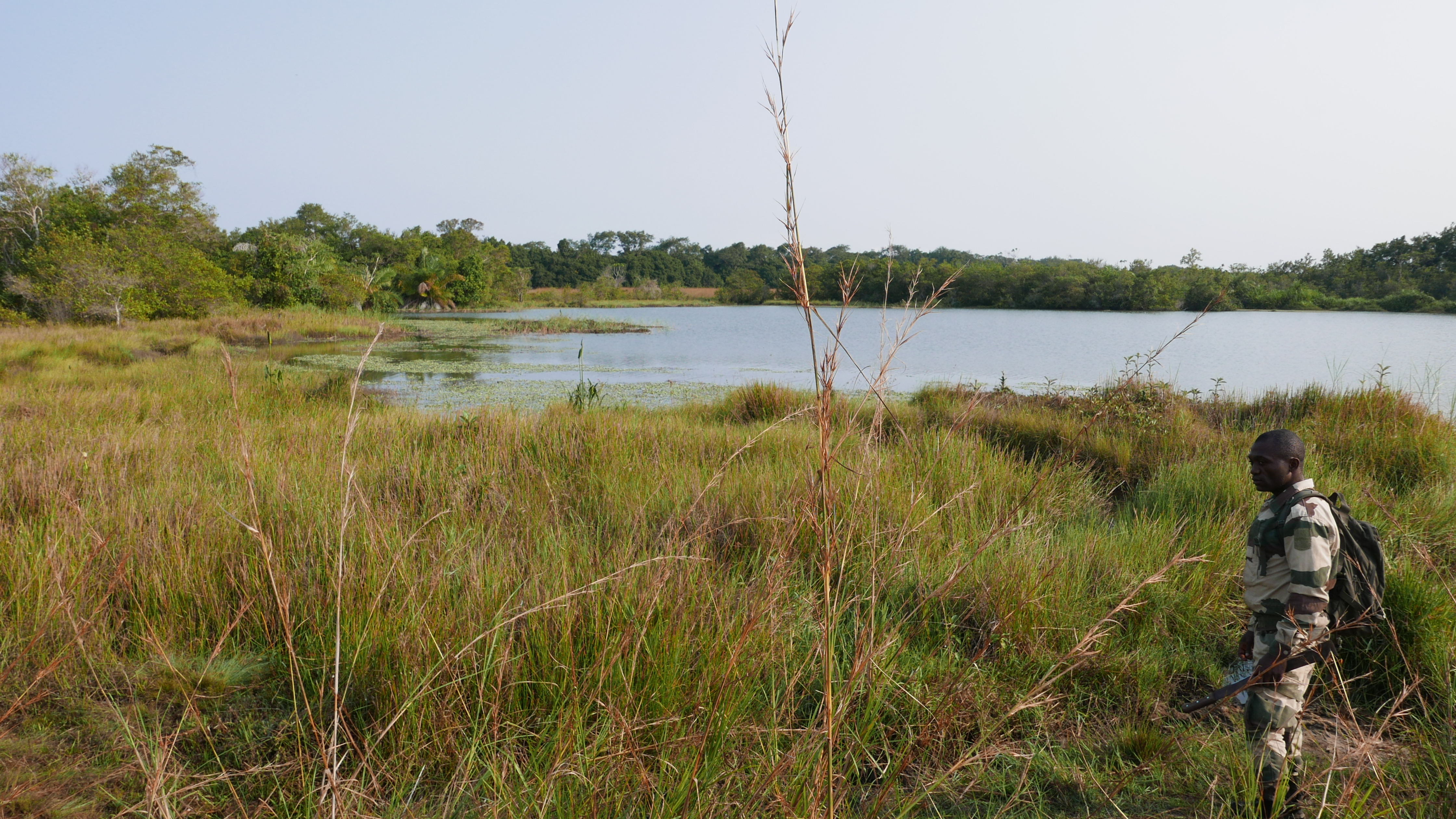
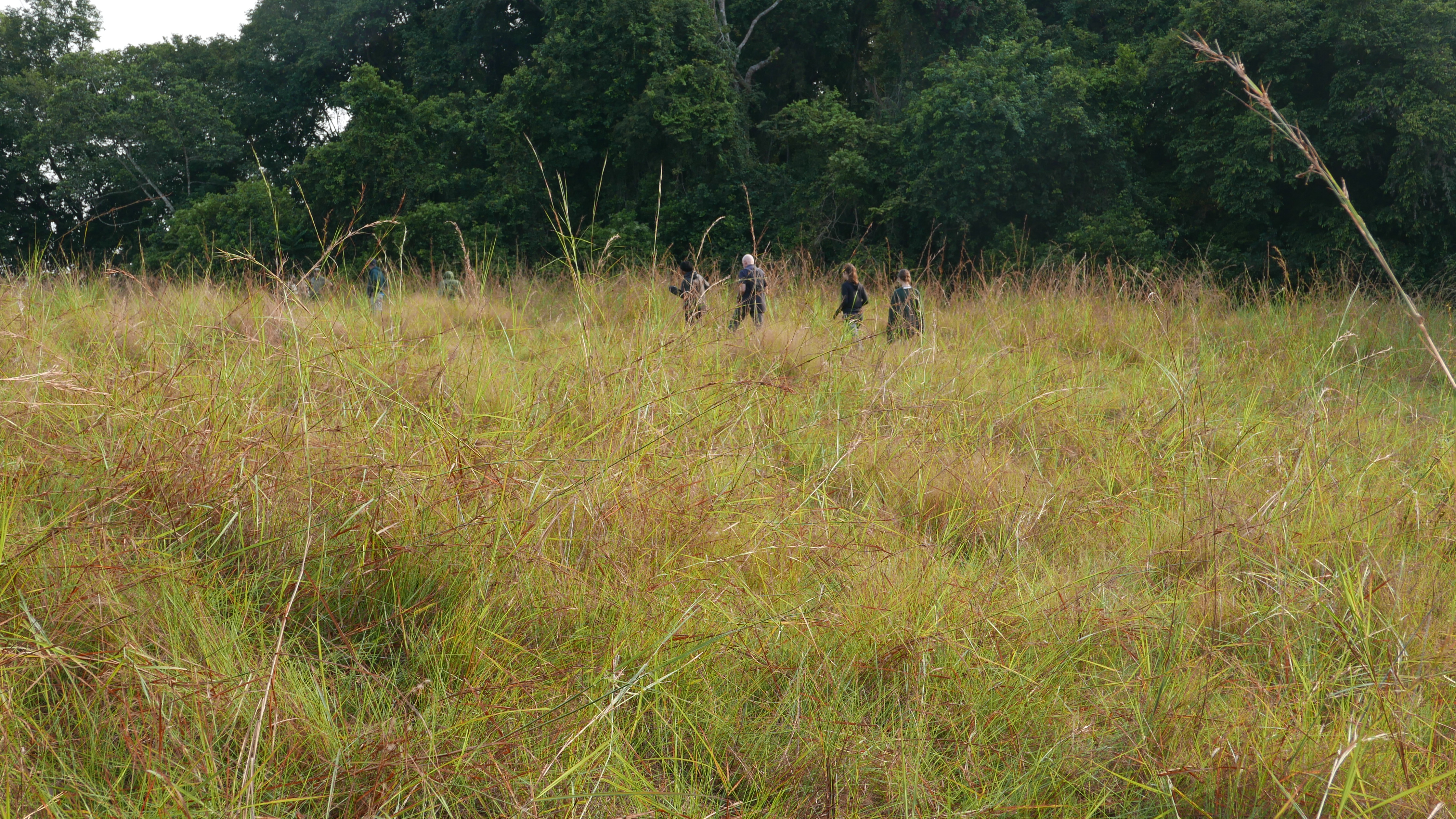
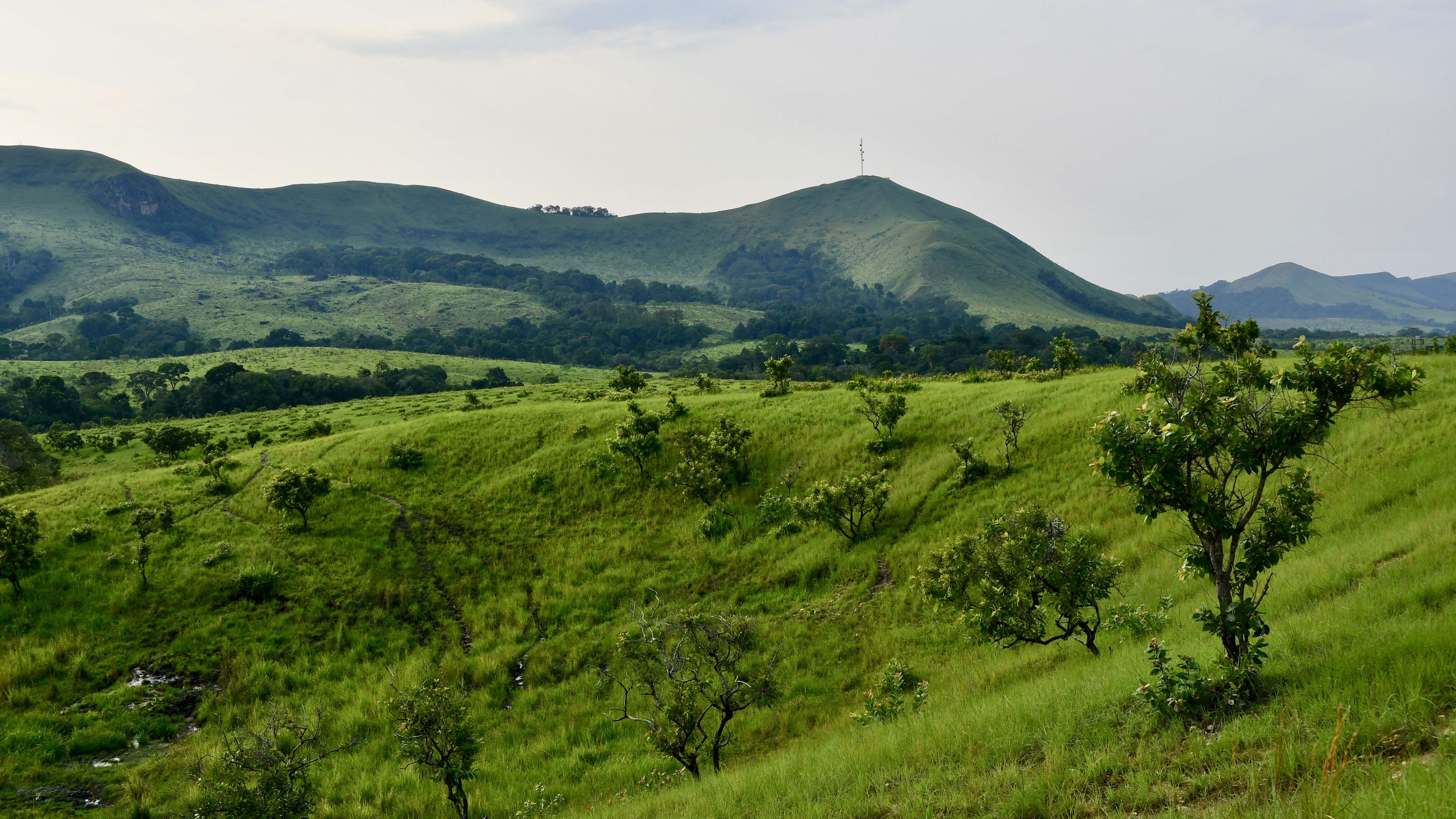
Our stay in Gabon is coming to an end, and this is our last expedition. The destination is nothing less than Wonga-Wongué, a reserve created in 1972 and that has traditionally not been accessible to the public – the reason why is in the above title. However, for a few weeks now, it has discreetly started to welcome a few visitors here and then, and with our small group of friends, we feel privileged to make it there.
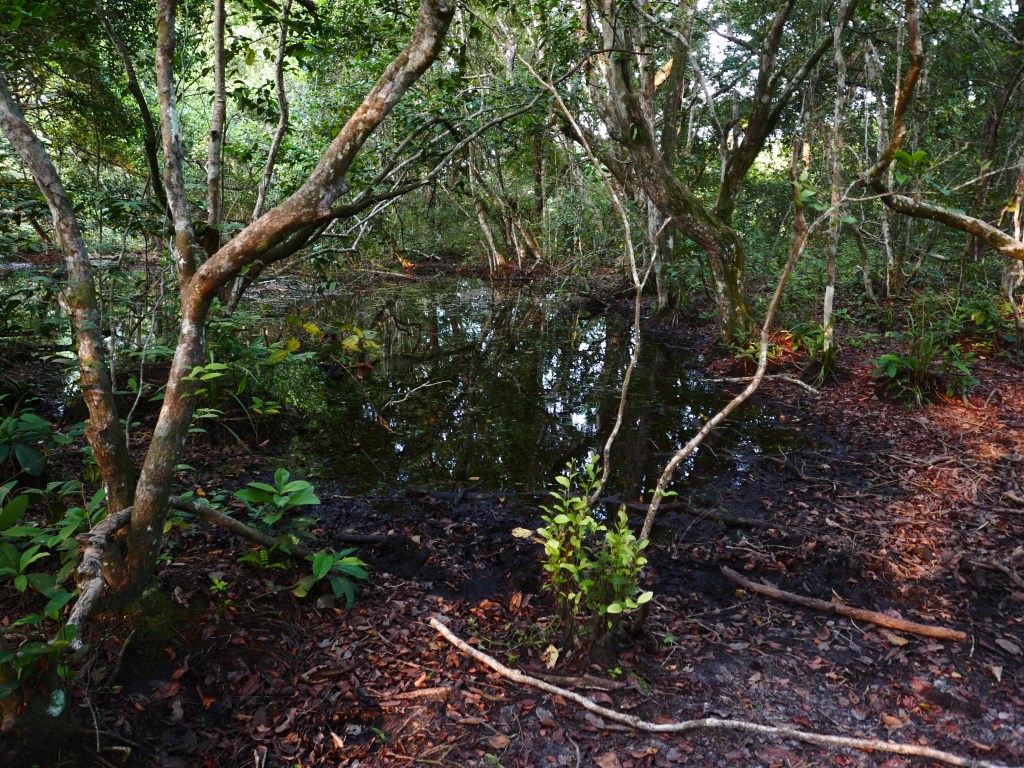
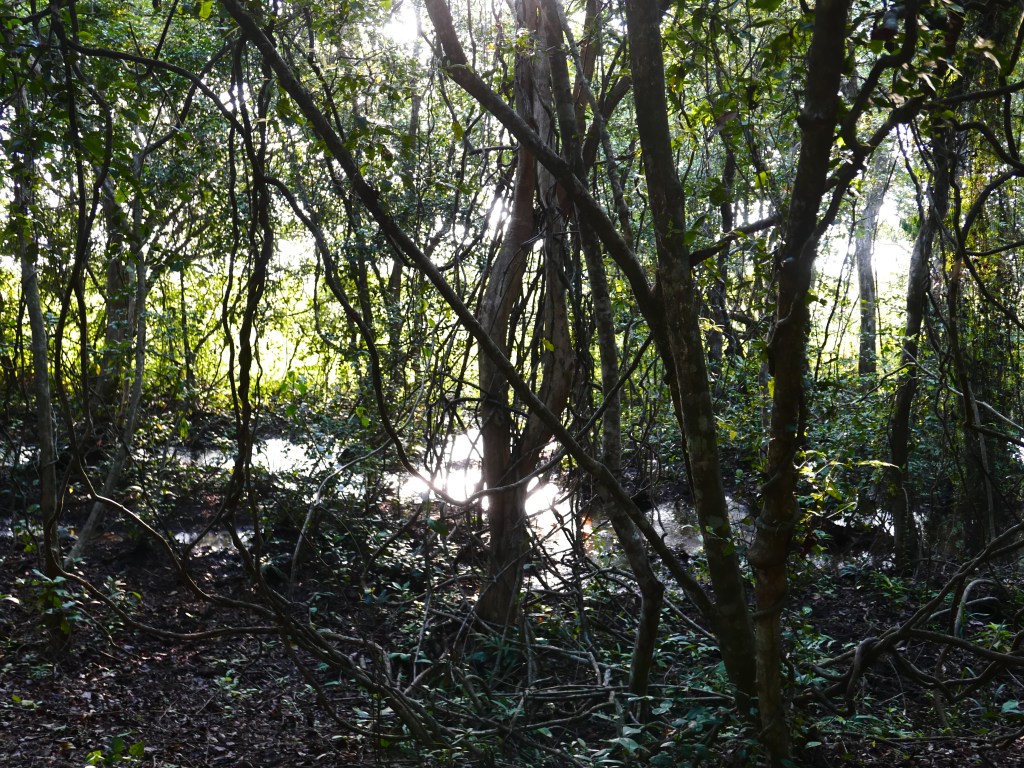
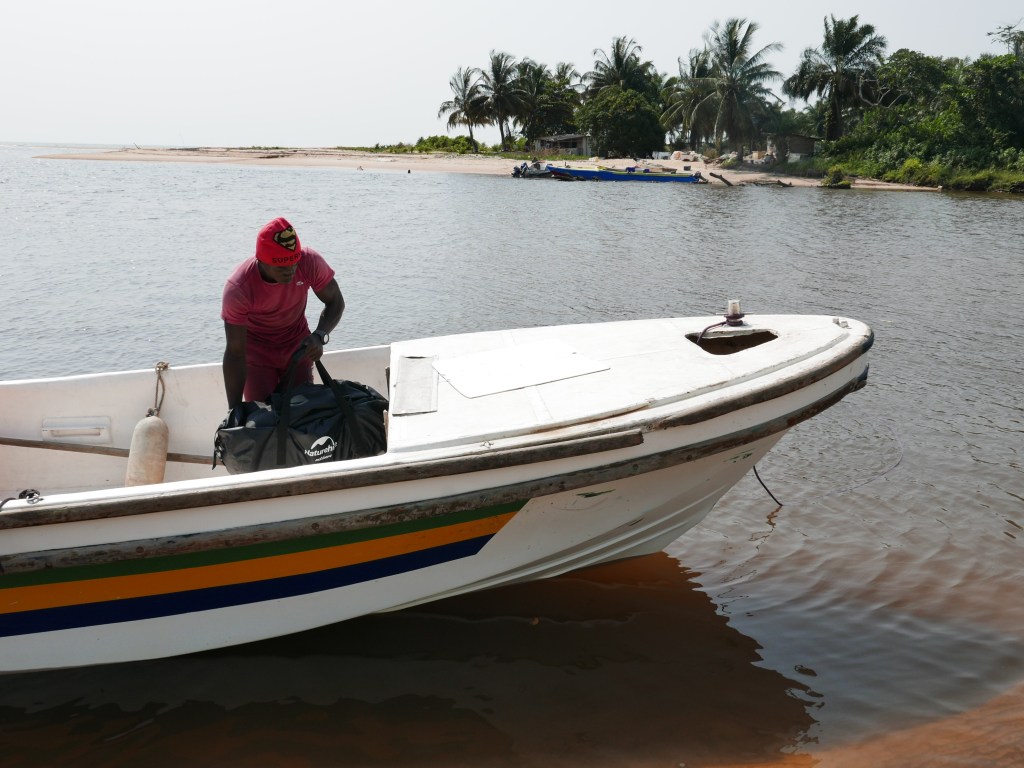
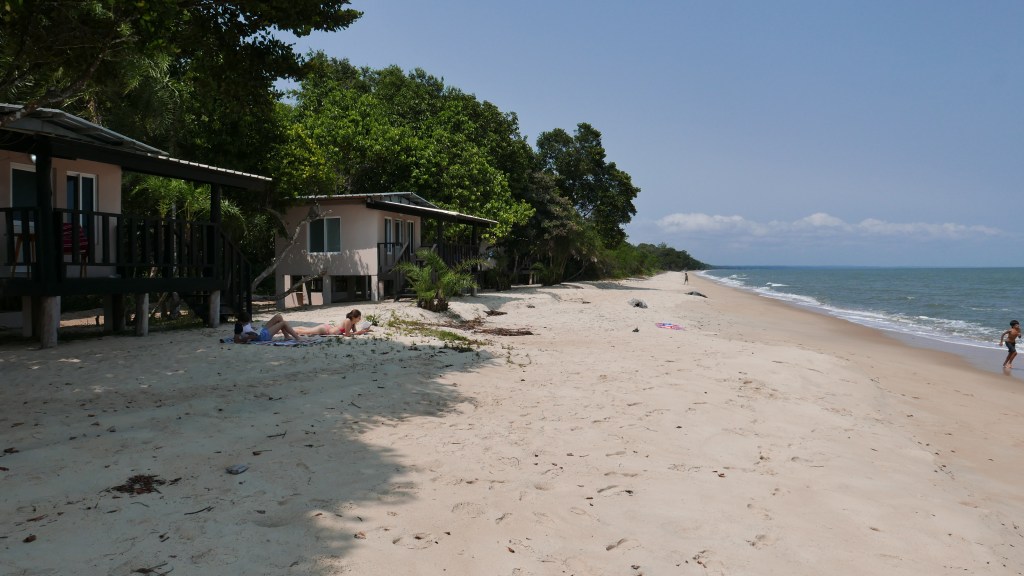
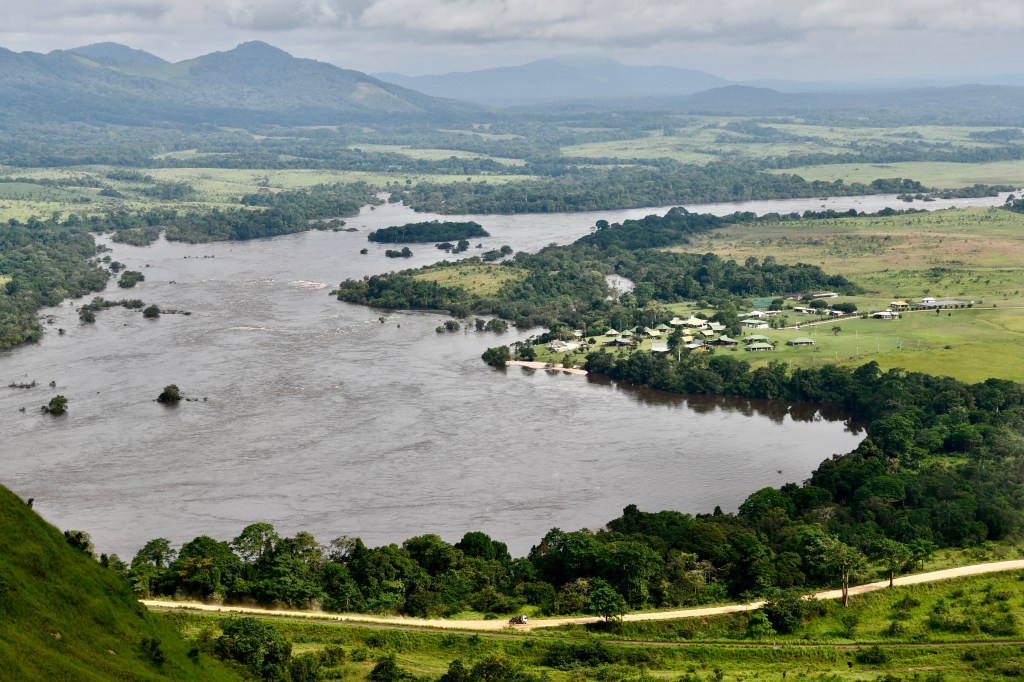
The basecamp lies on the Atlantic coast, some 80 km and a 2-hour bumpy boat ride South of Libreville, halfway to Port-Gentil. That is to say, it’s not connected by road to any city, and feels really isolated from civilisation. The camp consists in a couple of houses for Norbert, the park keeper, and his team, as well as four recently renovated bungalows aligned on the oceanfront.
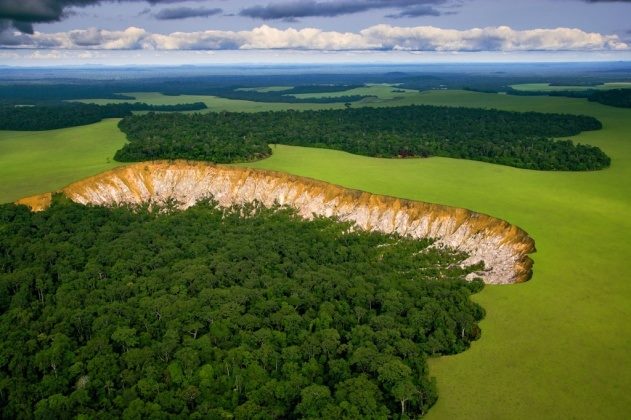
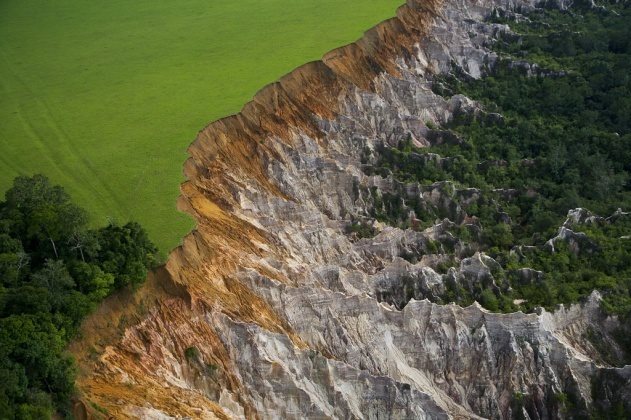
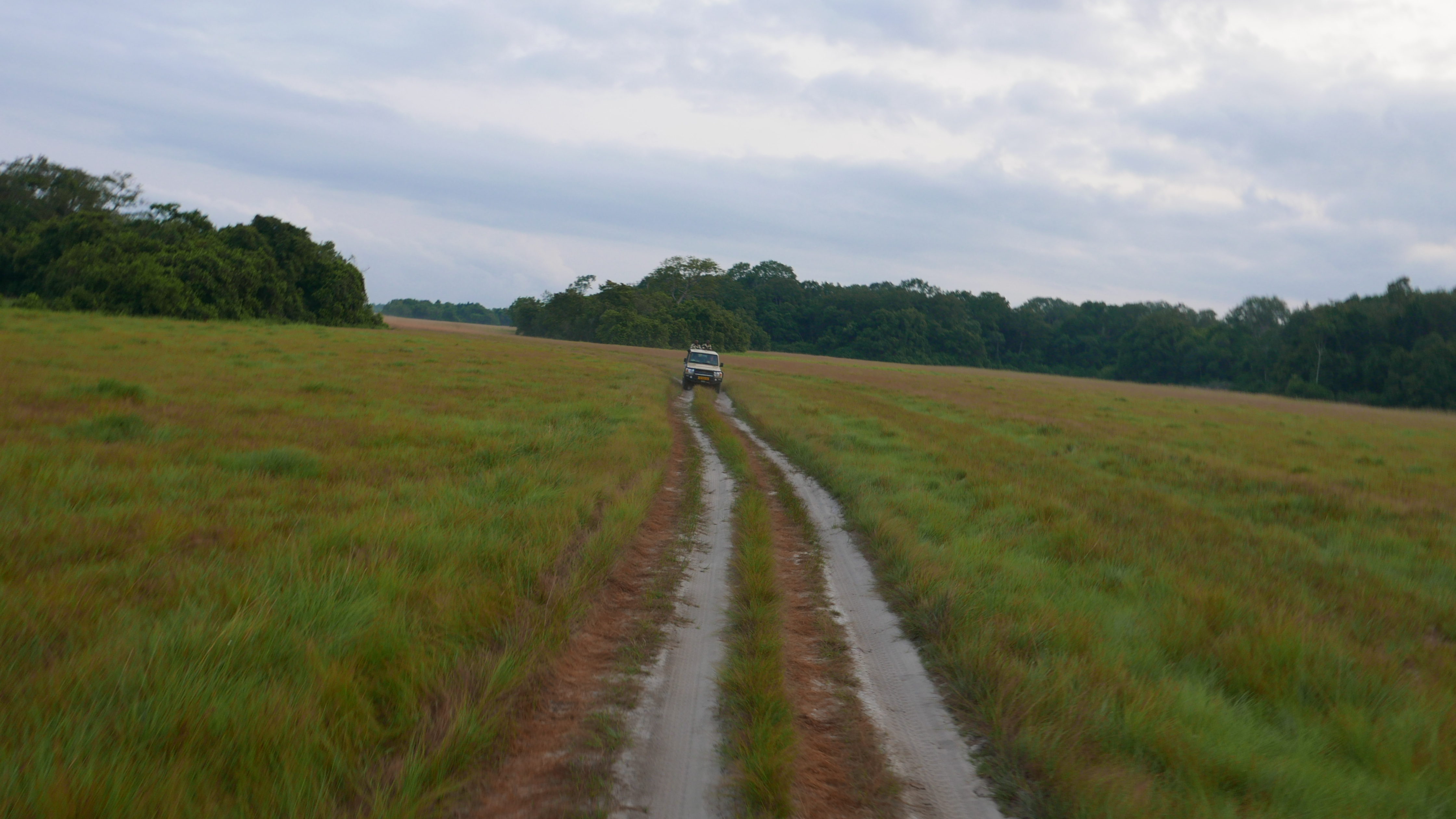
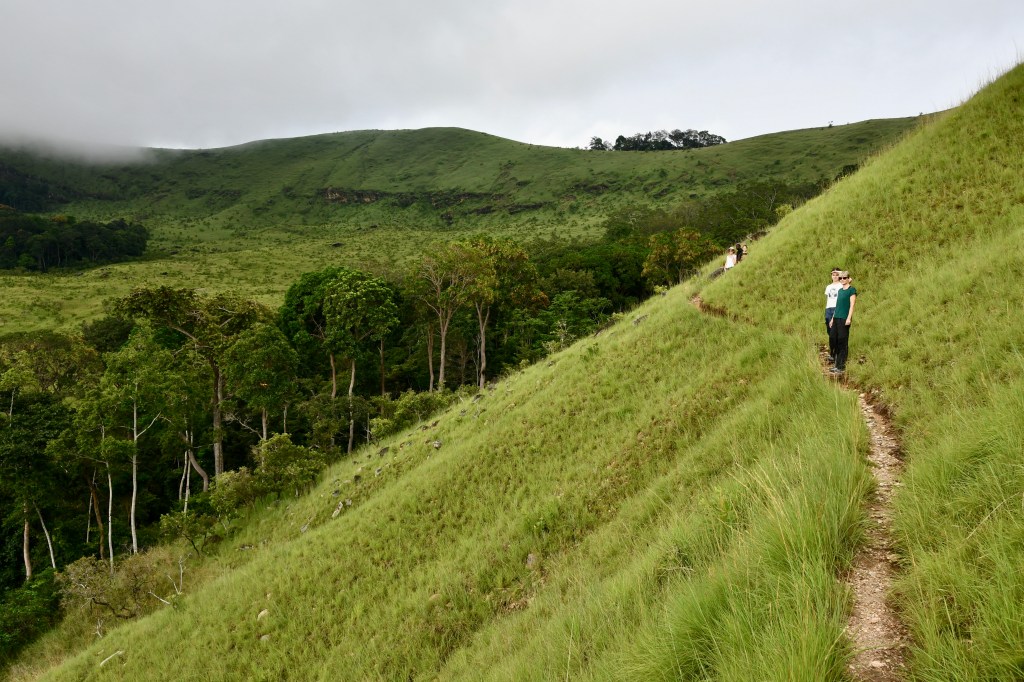
The reserve itself is the size of the bigger national parks of the country, Libreville could fit 10 times into it. No wonder Norbert drives his small plane almost every day to get around. It’s a maze of coastal savannah, secondary forest, marshes, rivers and lakes and spectacular stone cirques, the most famous of which is called Grand Bam-Bam. That makes for a very precious and wide area as well as a 800 km network of dirt roads to take care of.
Cirque de Grand Bam-BamSadly, we are not the ones who took these photos
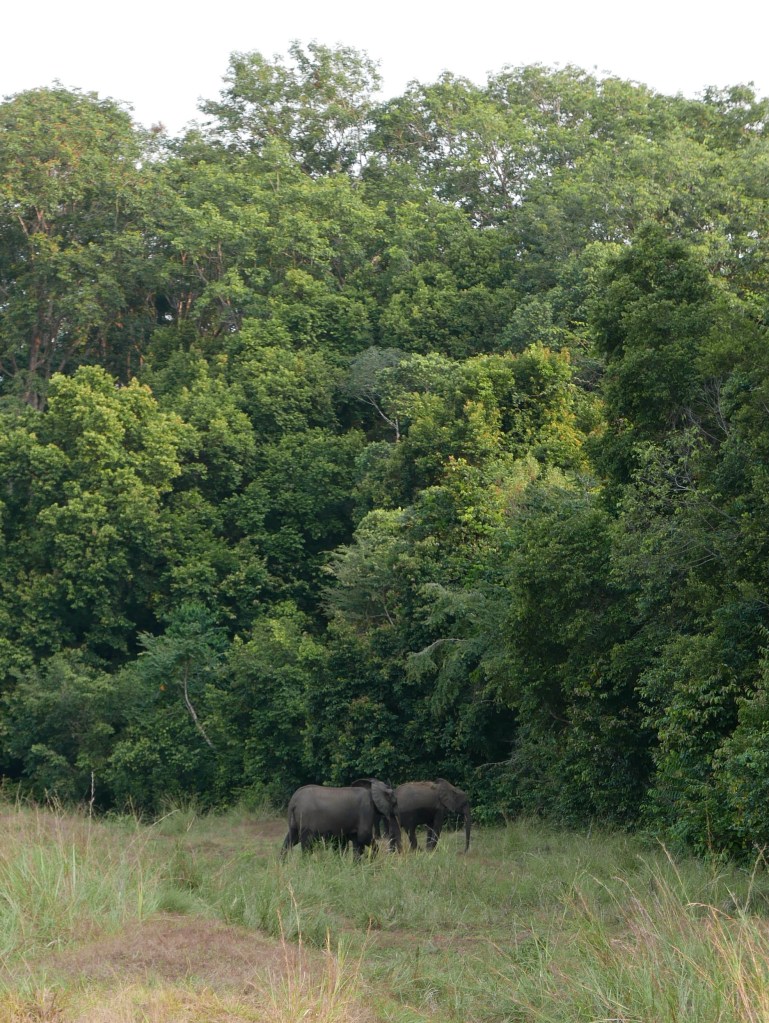
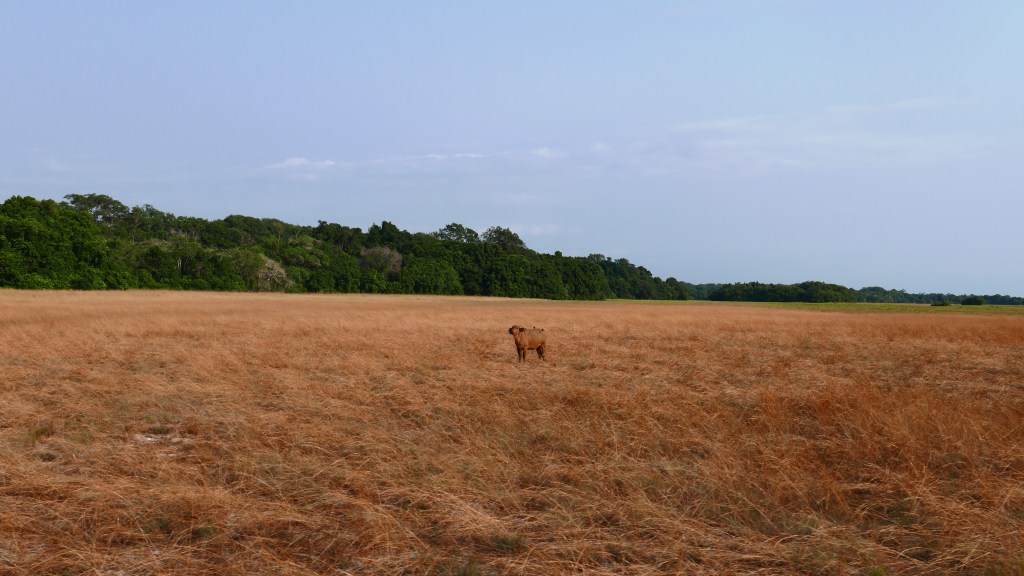
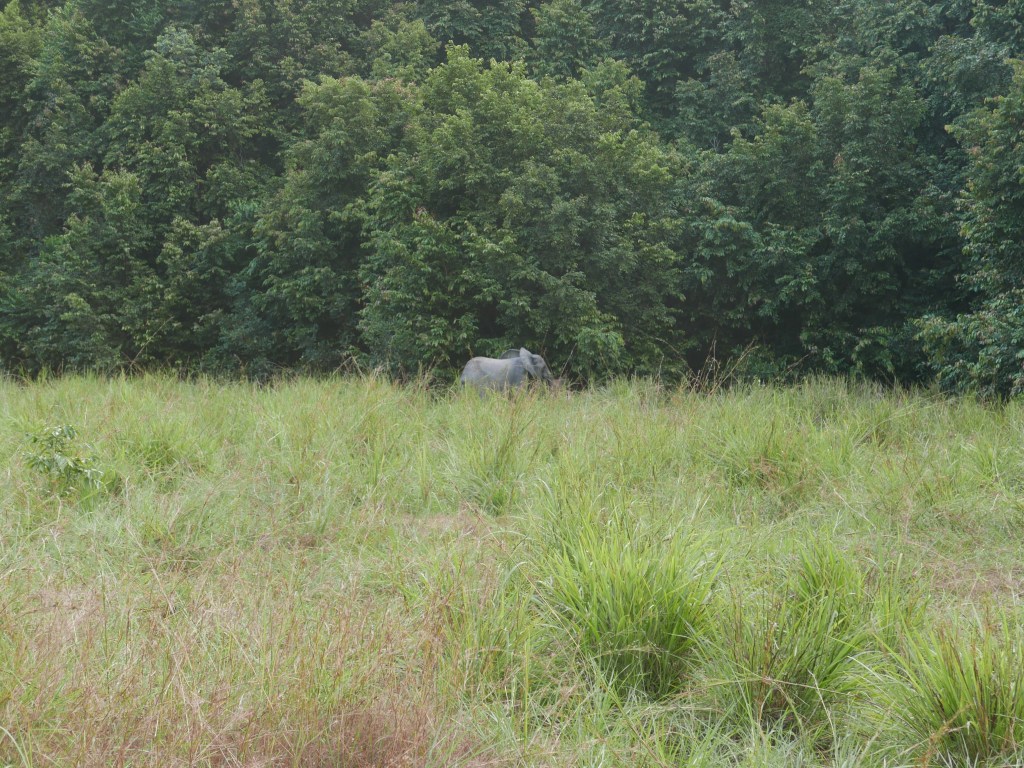
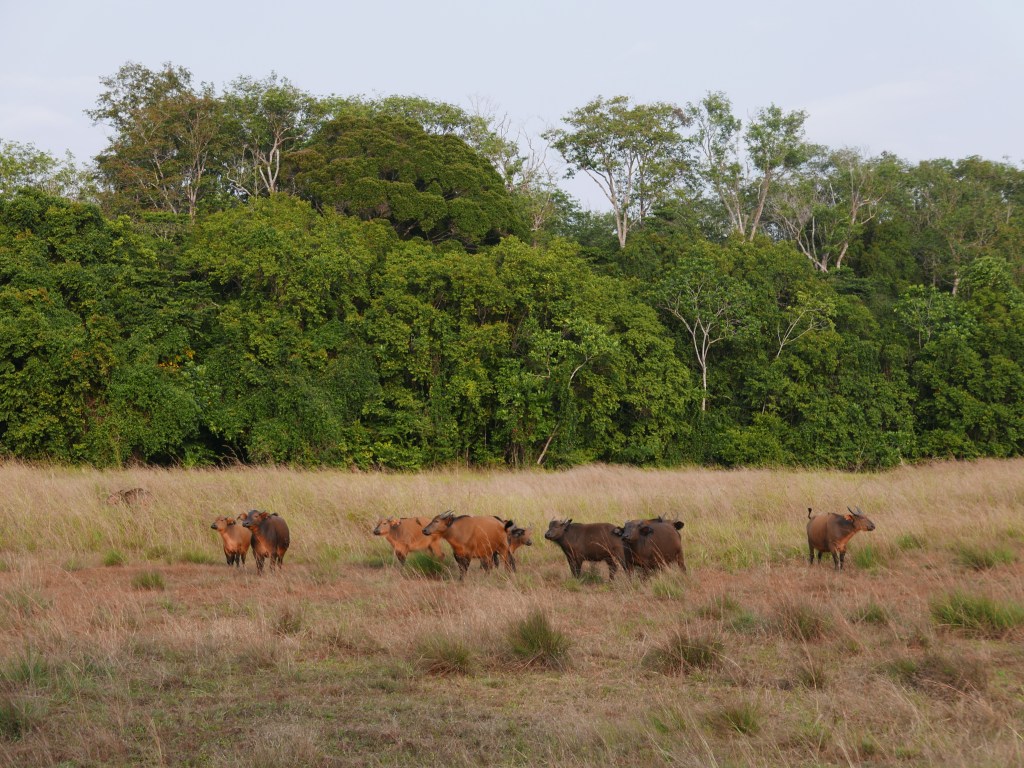
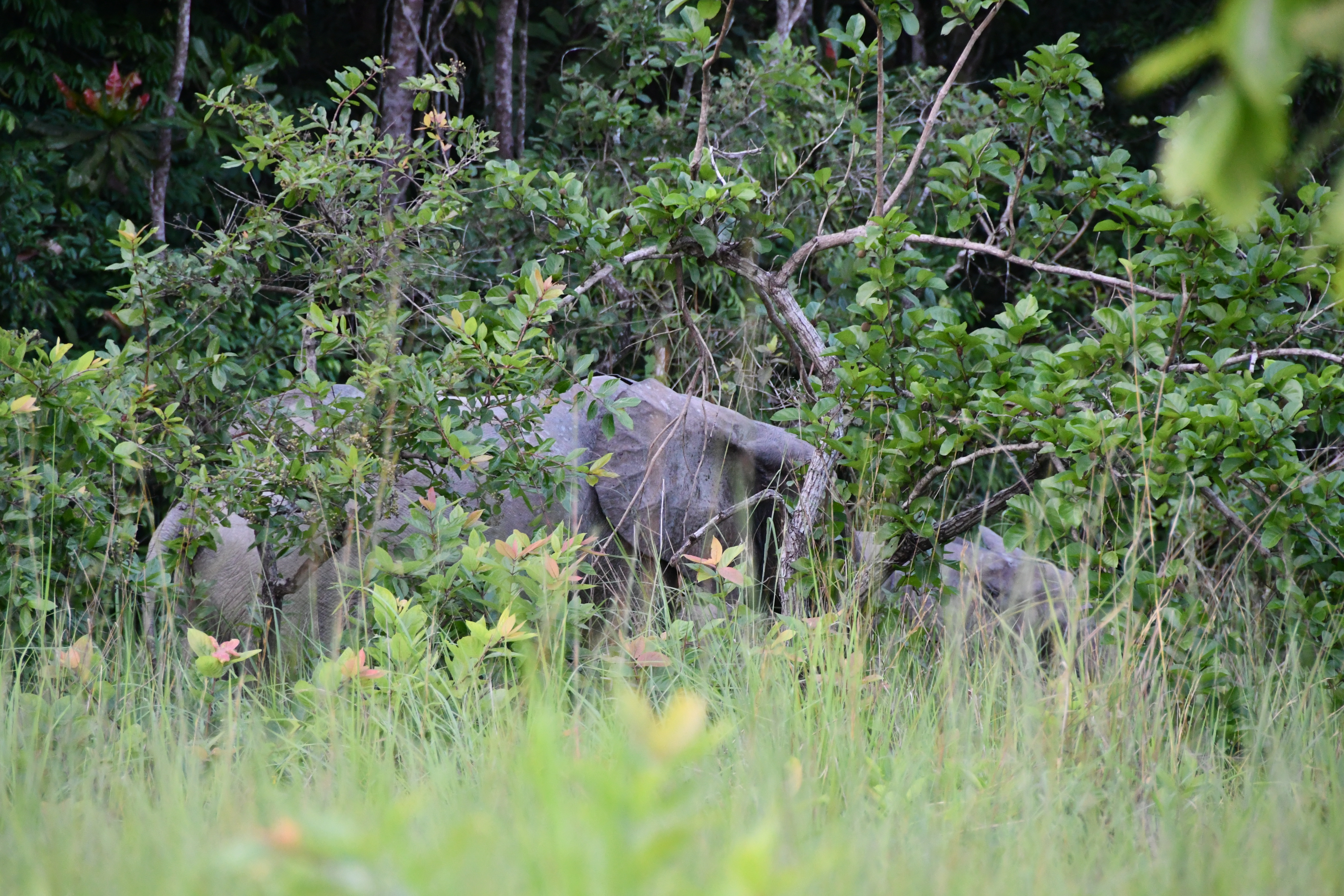
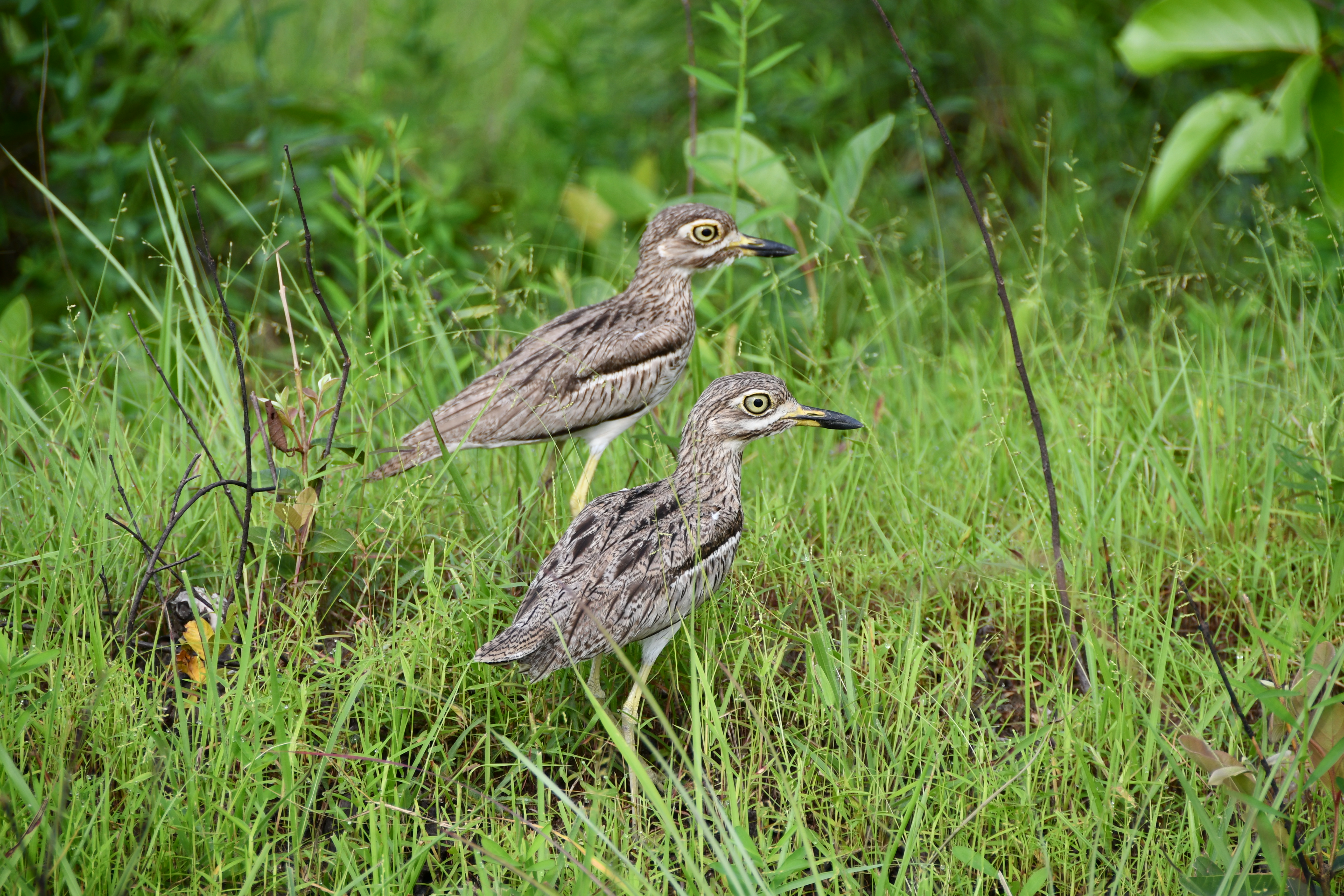
Wonga-Wongué is the home of the biggest population (11,000 individuals) of forest elephants in the Congo basin, and of significant numbers of gorillas, chimps, hippos, buffalos, gazelles. The reserve’s waters are full of fish, marine turtles come to nest here from November to February and humpback whales swim along its coast in July and August. So on top of the maintenance of the reserve’s road network, a big part of Norbert and his team’s daily job consists in studying and protecting the reserve’s fauna, which is drawing increasing scientific and political attention.
The team consists of around 130 people, many of whom are Pygmies, recently hired from all over the country in their quality of undisputed masters of knowledge on forest and fauna. Of course it’s an insufficient number given the size of the reserve, but they are at work from dawn till dusk, almost every day of the week. Norbert tells us that over the recent years, they have managed to almost stop poaching inside the park and that after decades of decline due to intensive fishing, the fish population is on the rise again. However these improvements remain fragile and the team needs to maintain a constant dissuasive presence all over the park to maintain this momentum. We can’t tell here the stories we heard from Norbert, all we can say is that it’s not a job for everyone.
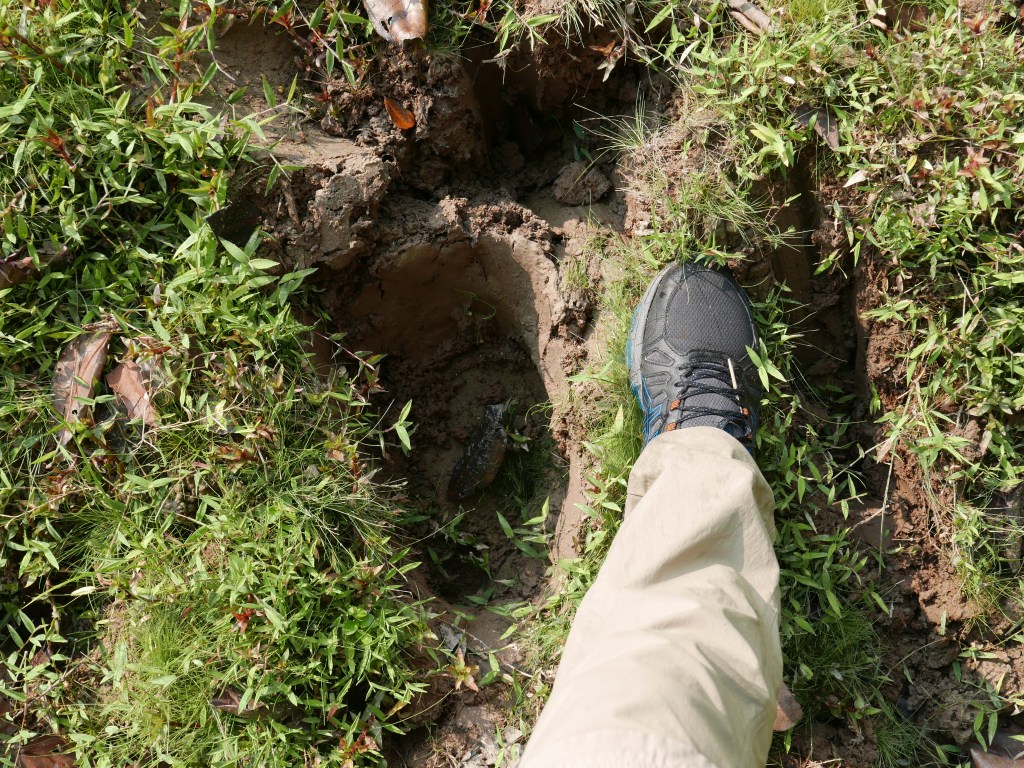
Elephants were hereHere too!We just missed the hippos – fortunately
In Wonga-Wongué, we have our last safari, our last walk in the Gabonese wild. For the last time in these four years, we watch in awe these landscapes and their inhabitants, we marvel at the mysterious sounds of the forest and the roar of the sea in the background. An hour before we leave, special visitors that we had never seen before come right in front of the camp, where the river meets the sea: dolphins! Twenty of them, coming to play and fish. We could not have dreamt of a nicer farewell committee.
I have just parked my car at the supermarket, and the face of a young man surges behind the window on my left, his lips move but I can’t hear anything. He’s carrying a plastic bag, out of which the magnificent dark white head of an owl ermeges. In the streets of Libreville, I was offered puppies several times, a chameleon once, but never an owl, one of my favorite birds.
I step out, the conversation starts. The man is called Cedric, he tells me that he usually works here and there but that he is in need of money now, so when he saw this owl in his neighbourhood, he made an effort to capture it in the hope of making money. He heard that high-ranked politicians would give as much as 150 000 francs (more than 200 euros) for an owl. As he talks volubilantly, his arms move swiftly and the poor bird’s head is making crazy circles and getting me dizzy. I have seen owl on the menu of certain local restaurants, besides protected bushmeat delicacies such as gazelle or crocodile. Cedric confirms that indeed, people usually eat them. Alternatively, they may sprinkle gasoline on them and set them on fire as according to popular beliefs, the owl is an evil bird.
After 15 minutes during which I use all my persuasion power, throwing in various arguments such as the usefulness of the owl in nature’s equilibrium, its significance in Greek mythology as a symbol of knowledge and wisdom, the sheer beauty and elegance of this animal that the God we both believe thought of creating, the need for man an animal to share habitat peacefully, and the equivalent of 10 euros, I finally strike a deal with Cedric: he will go back to the place where he found the owl and set it free. And to prove me that he did it, he will send me a film of the liberation.
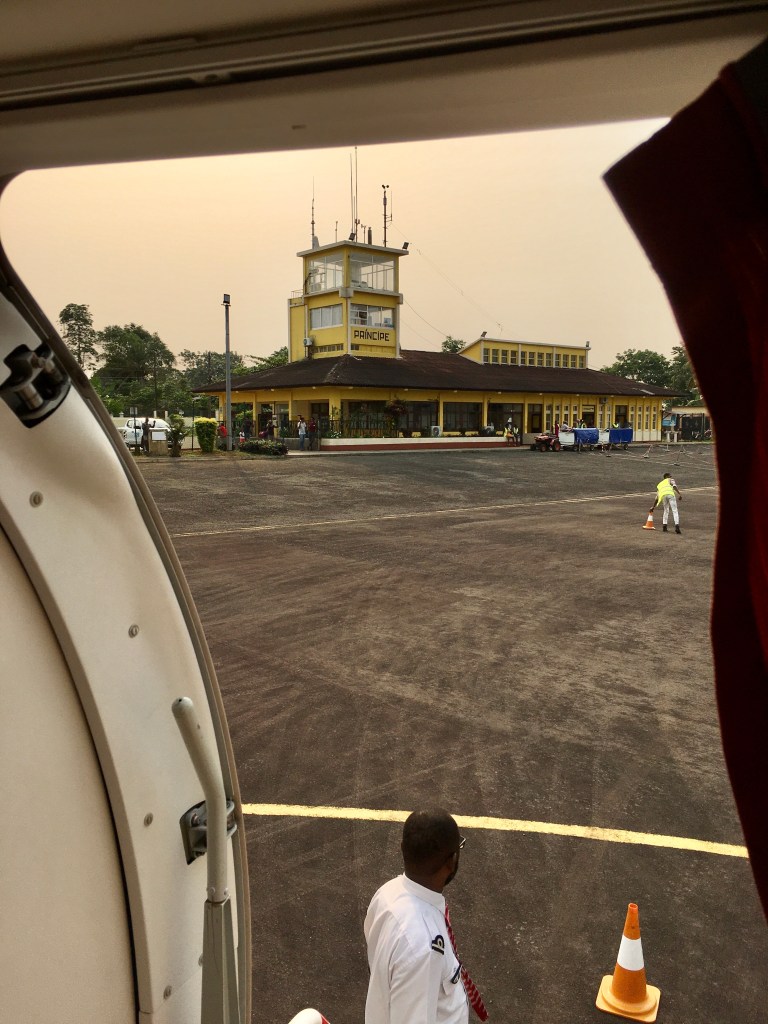
The tiny plane that left Libreville 40 minutes ago has just landed on a thin grey strip surrounded by a lush forest and a few villages. The other passengers are heading further to the sister island of Sao Tomé. I am the only one getting off here in Principe, happily walking towards the Playmobil-like yellow airport building. Behind his tired wooden desk, Joao from the immigration service is surprised to see me. He was not expecting any foreign visitor today. He kindly asks me for a bit of patience as he takes my passport and rides home on his motorbike to fetch the immigration entry stamp that he left there somewhere in the kitchen. 15 minutes on the island, and I am feeling good.
On Principe, there are 11,000 inhabitants, around 40 tourists daily, not more than 40 cars, and the longest stretch of road is 16 km. The wild, difficult to access Southern half of the island is classified as a UNESCO biosphere reserve. For five days in this little corner of the world, I’ll watch it spinning, gently out of time.
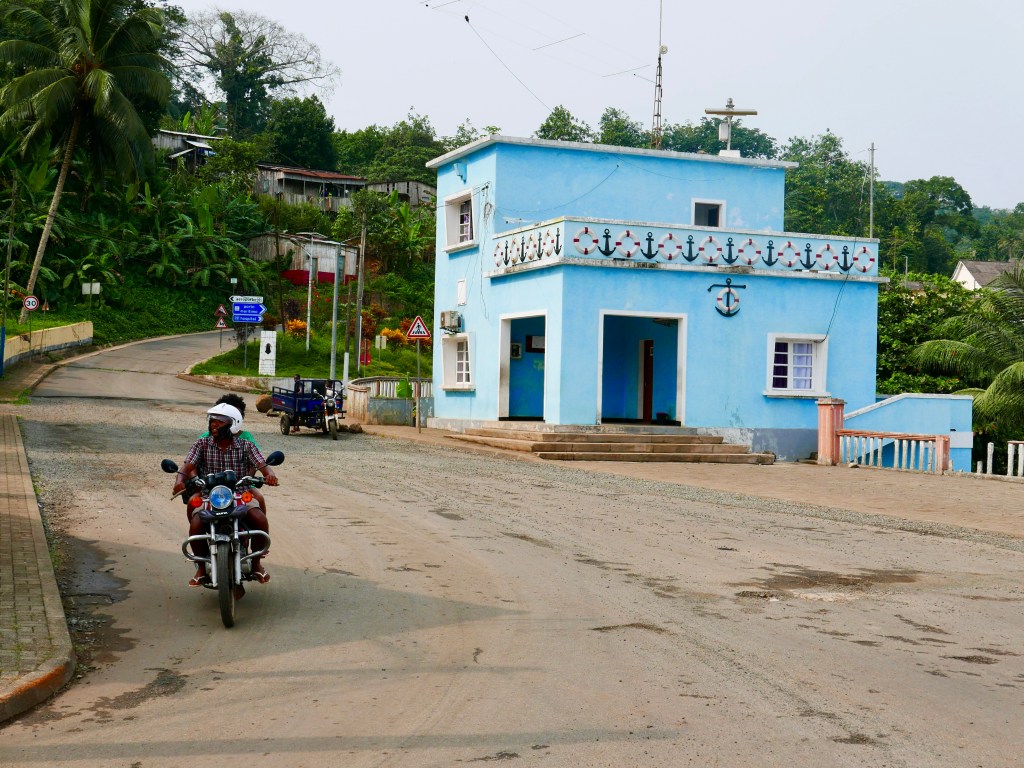
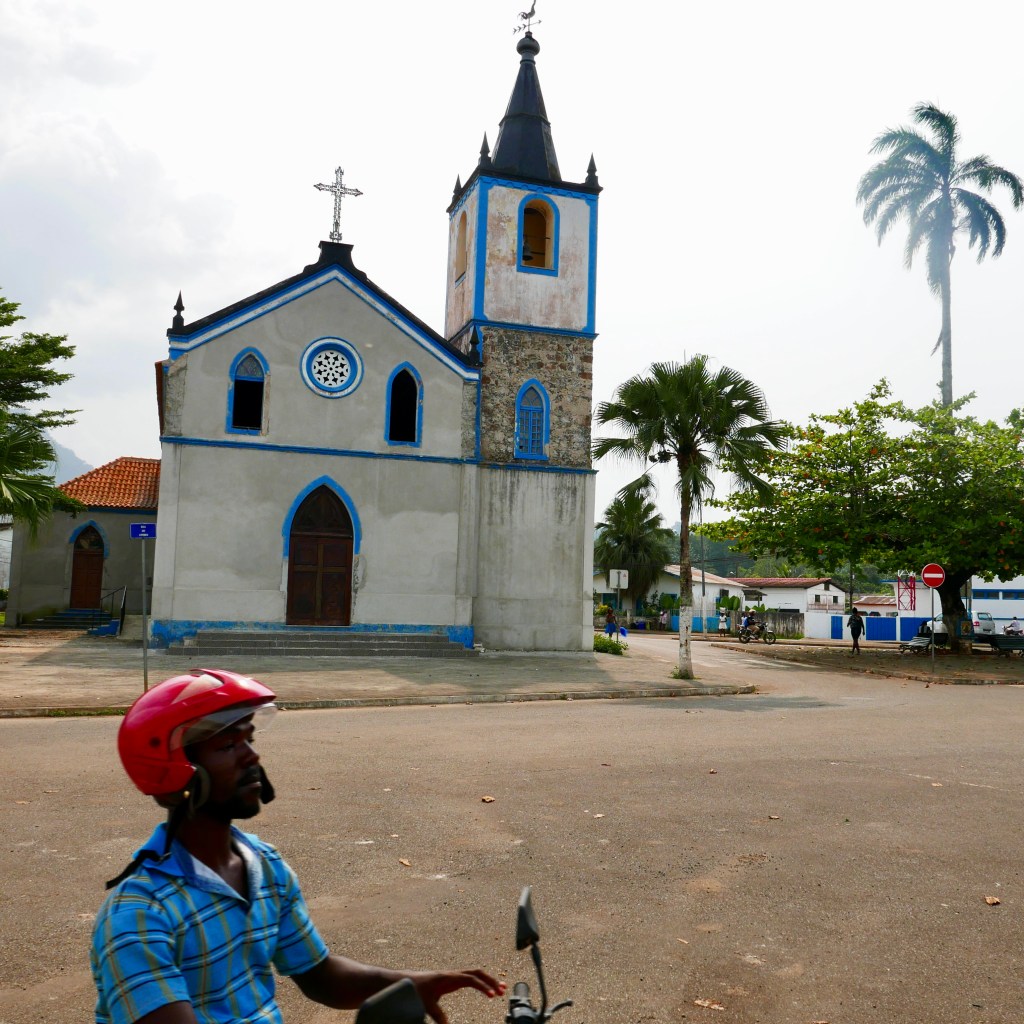
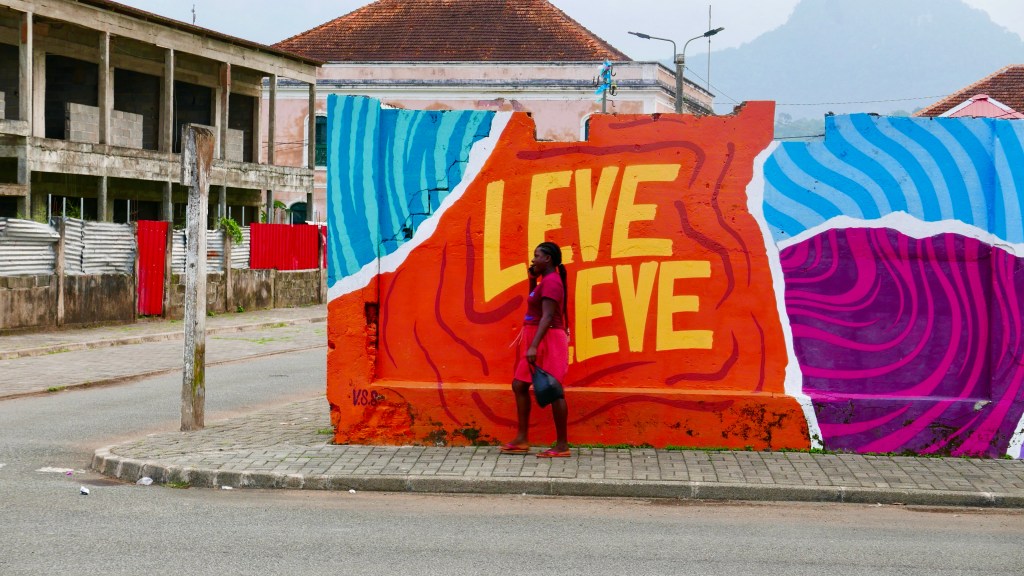
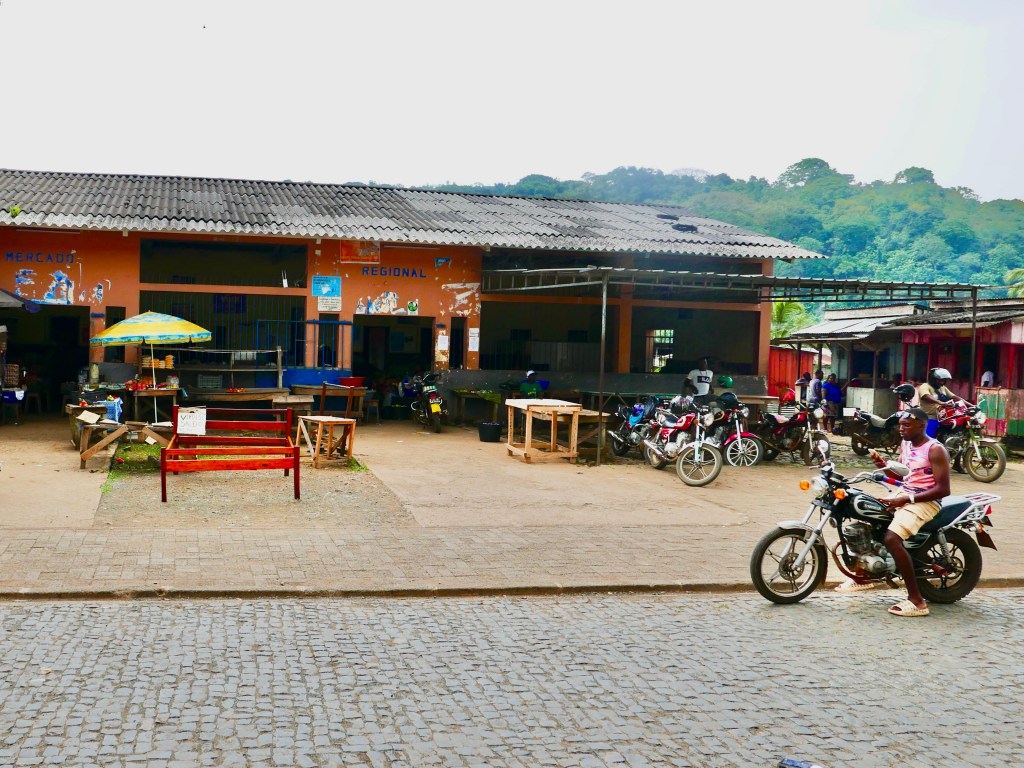
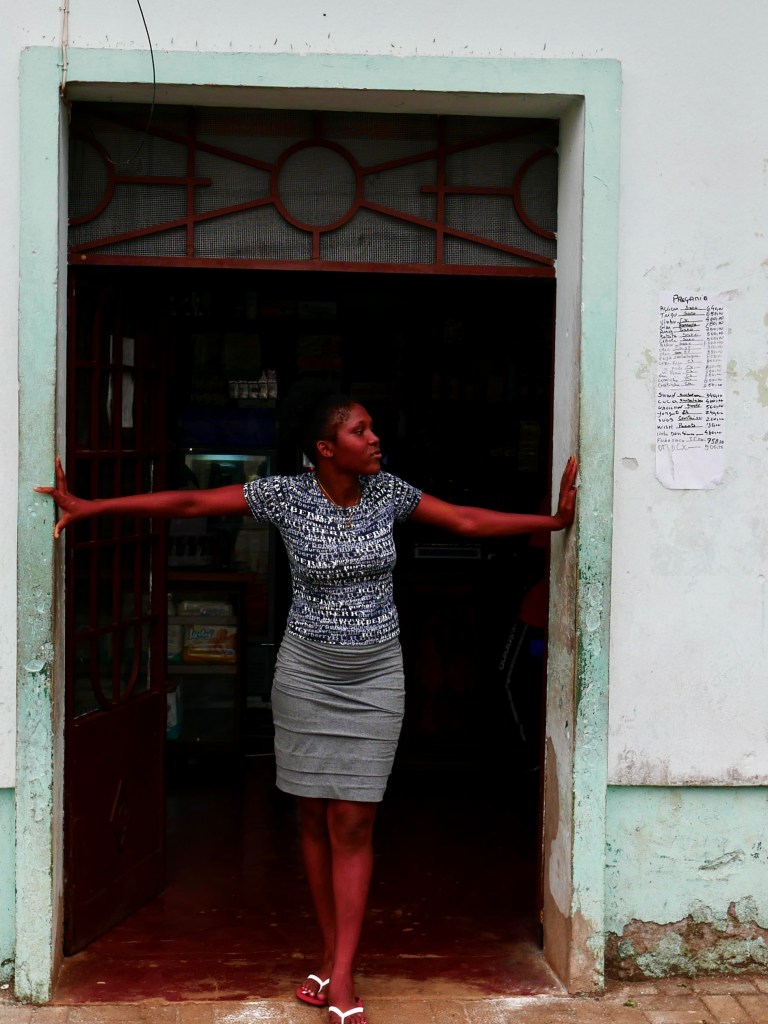
Though both islands form a country and share the same motto “Leve, leve” (take it easy, easy), the vibe on Principe feels surprisingly different than on Sao Tomé. My guide tells me that the people of Principe are hard-working and proud, and tend to see the people of Sao Tomé as party people who do not make the most out of the beautiful land they live on. Indeed, as I roam around the island on motorbike taxis or by foot in the sleepy town of Santo Antonio, I see people at work, clean streets and roads (Principe has recently passed a law banning plastic bags), wooden houses and exotic fruit gardens that are well taken care of. There is no apparent misery or sadness here, no rampant alcoholism. It all seems to modestly work in a certain harmony.
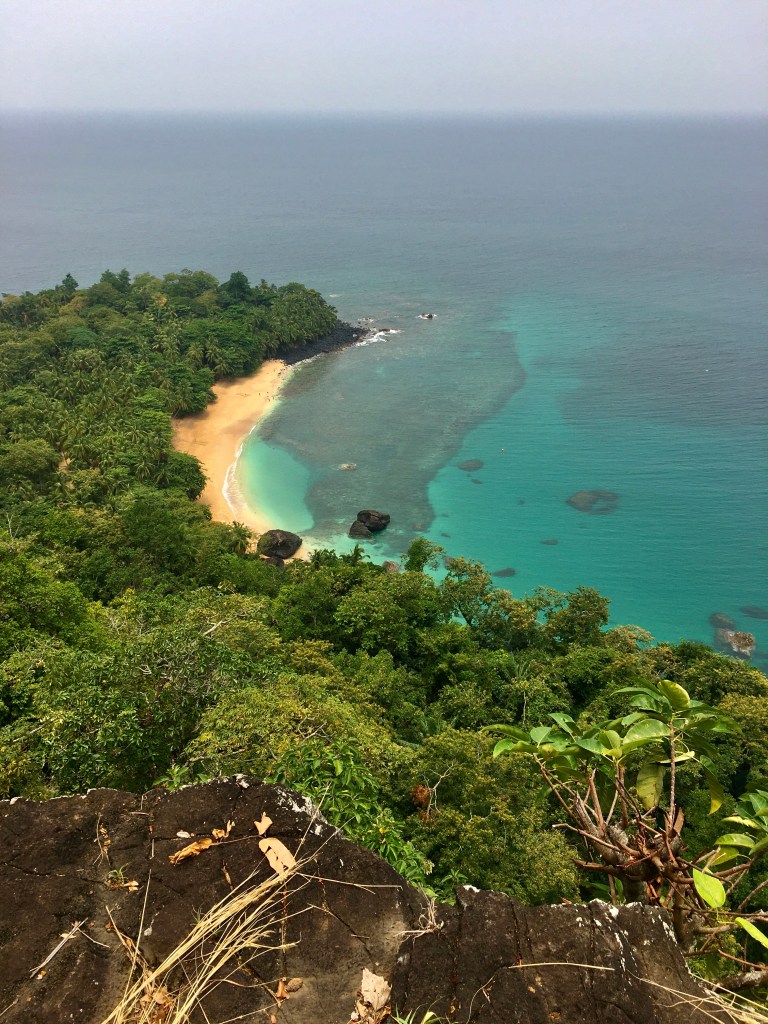
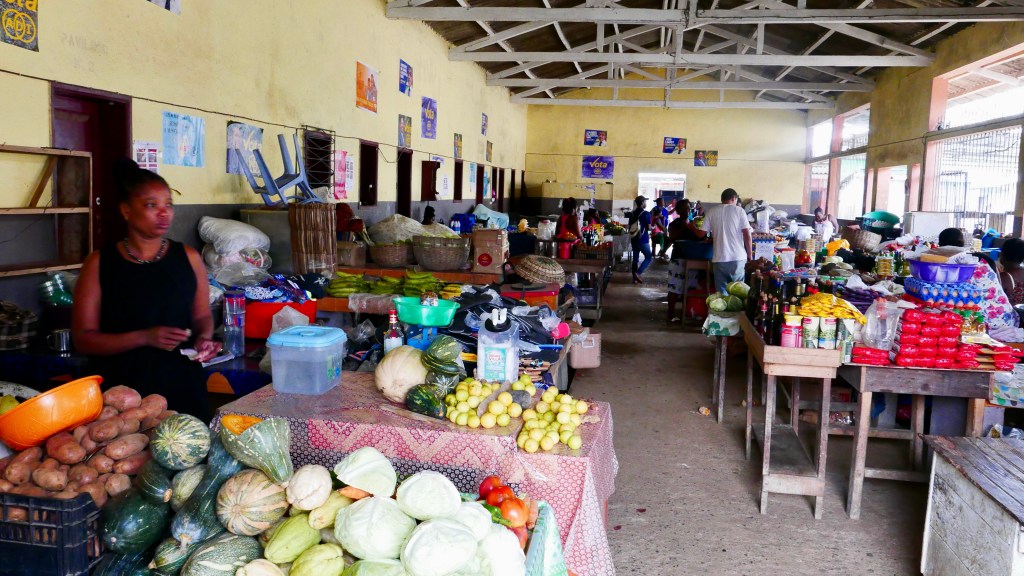
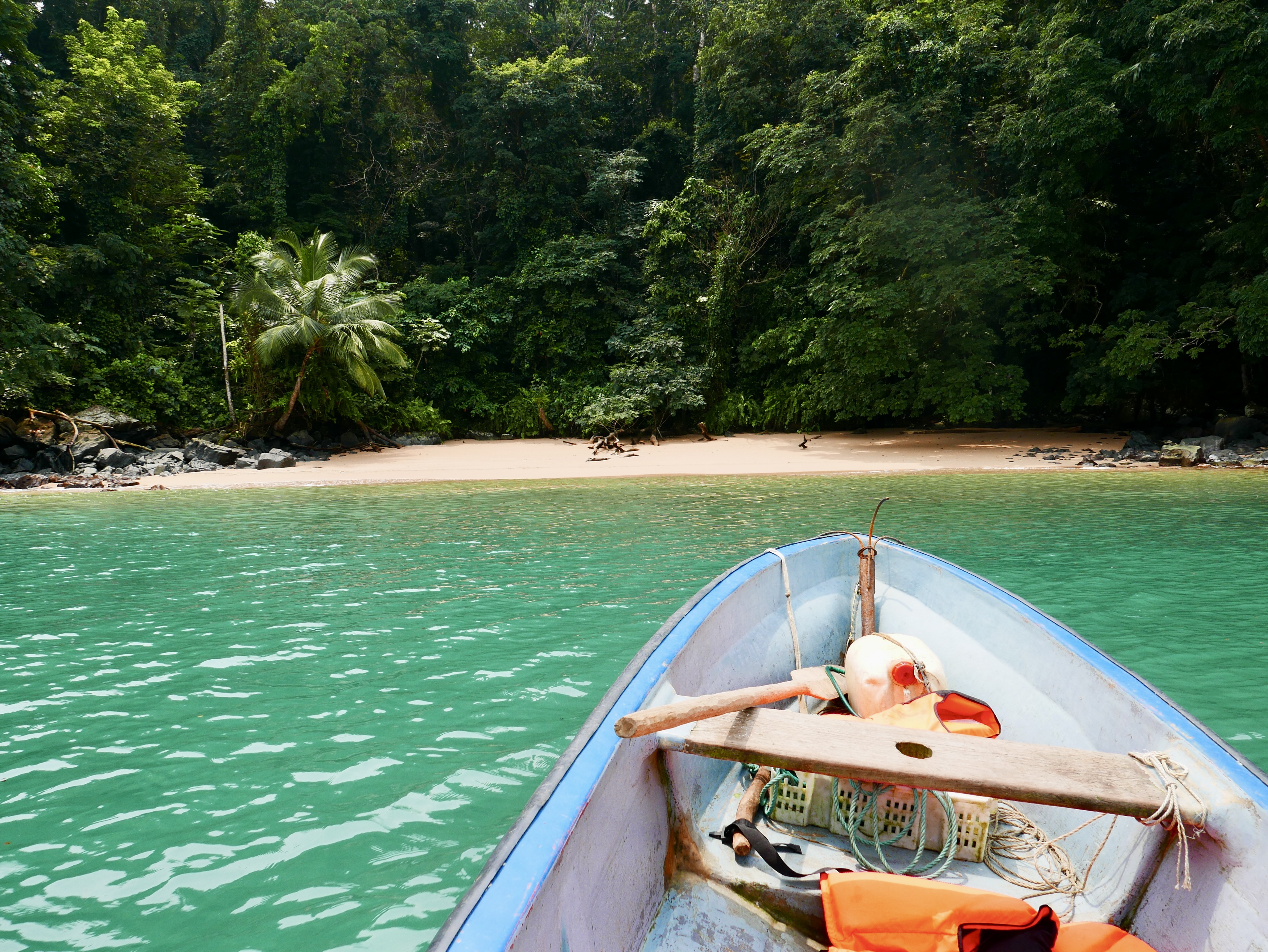
Hikes in the forest, hearing and trying to spot kingfishers, grey Gabonese (!) parrots – the talkative ones with their spectacular red tail – and quite a few endemic birds. Boat rides, hopping from on spectacular virgin beach to the other. Roça visits, remains from colonial times when local cocoa and coffee were exported all around the world, some of which a couple of millionaires from abroad are trying to revive today. Lazy fish lunches in tiny canteens in Santo Antonio, gourmet dinners in restaurants between the walls of restored colonial mansions.
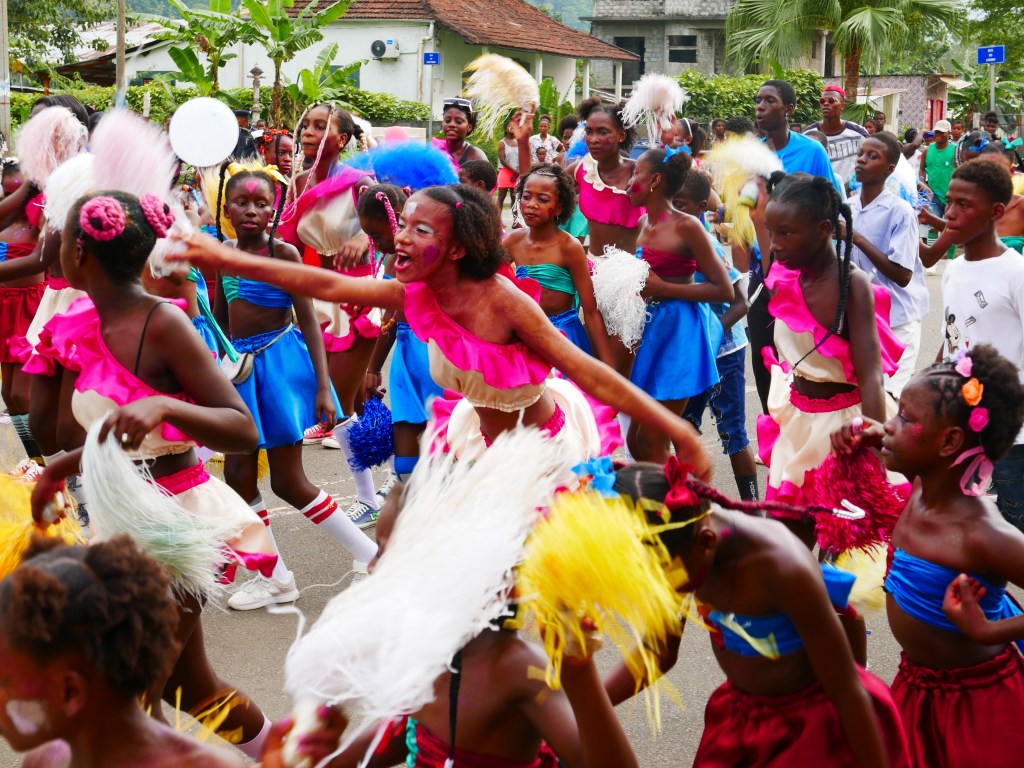
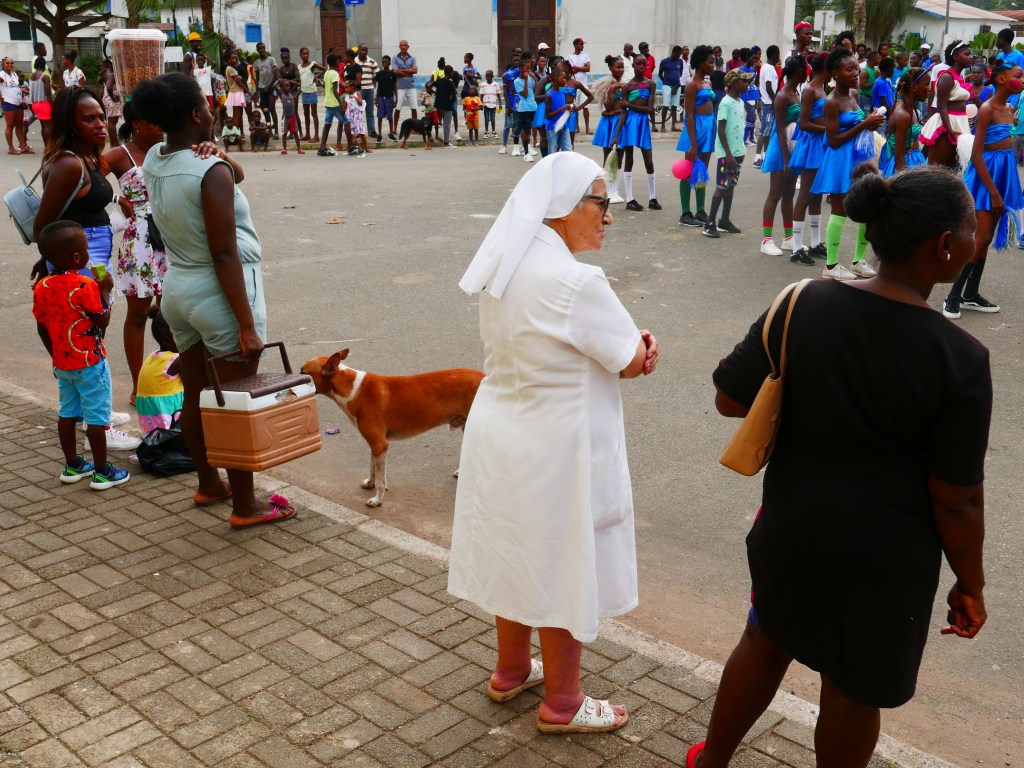
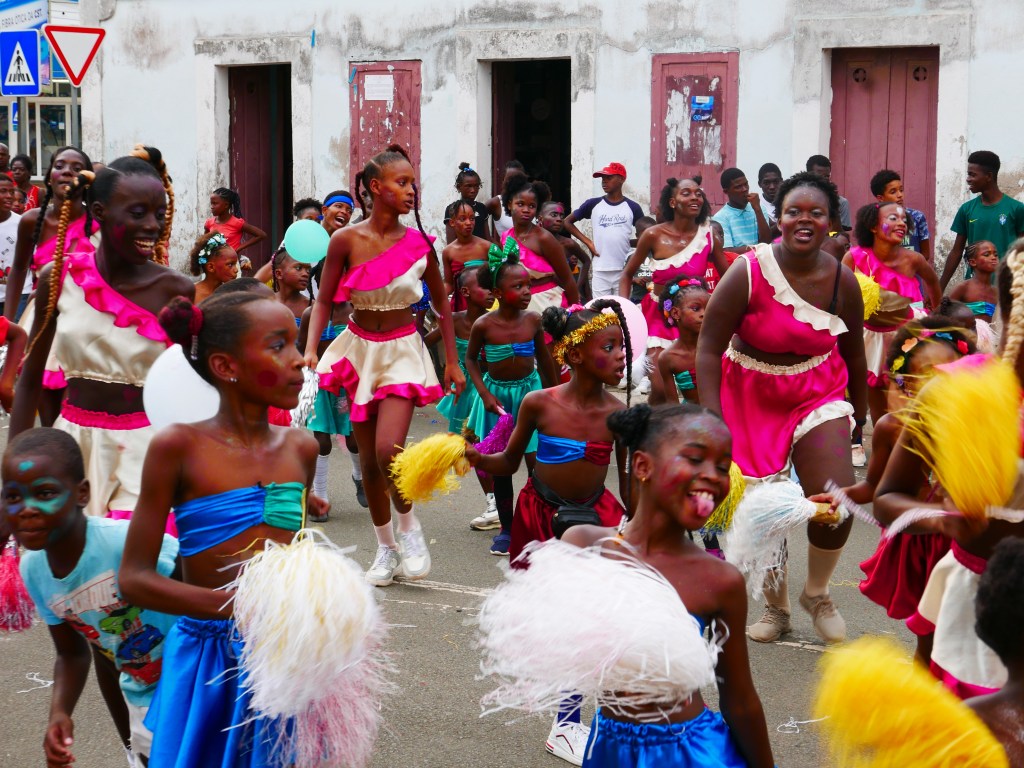
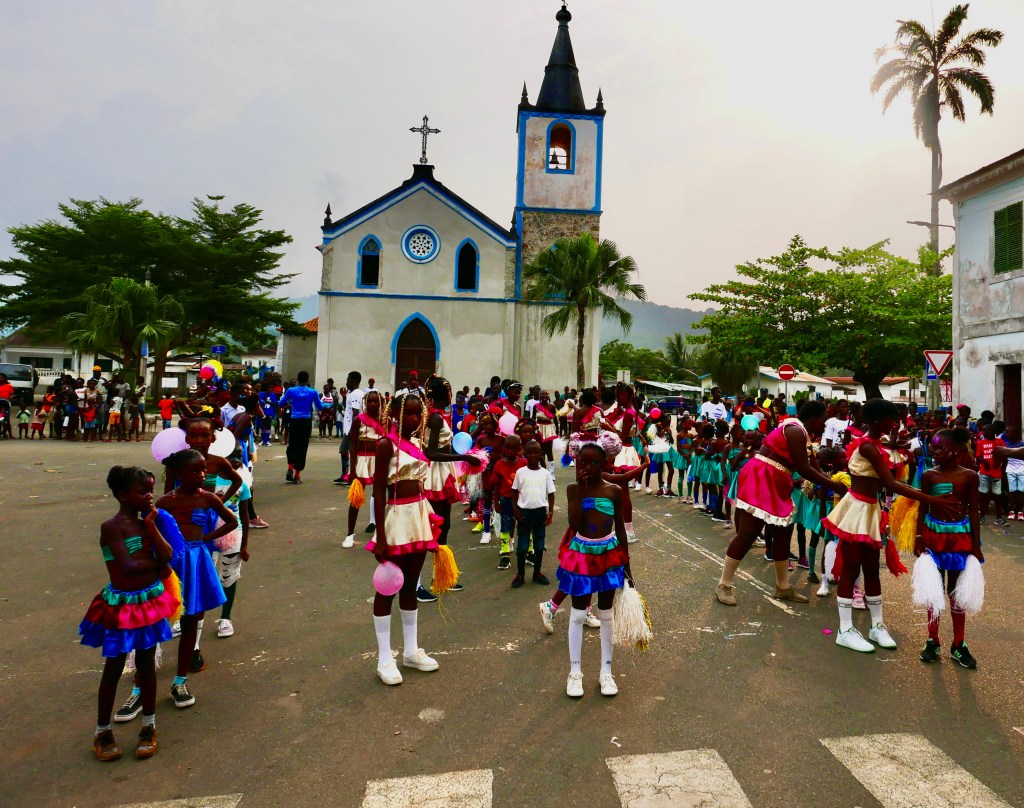
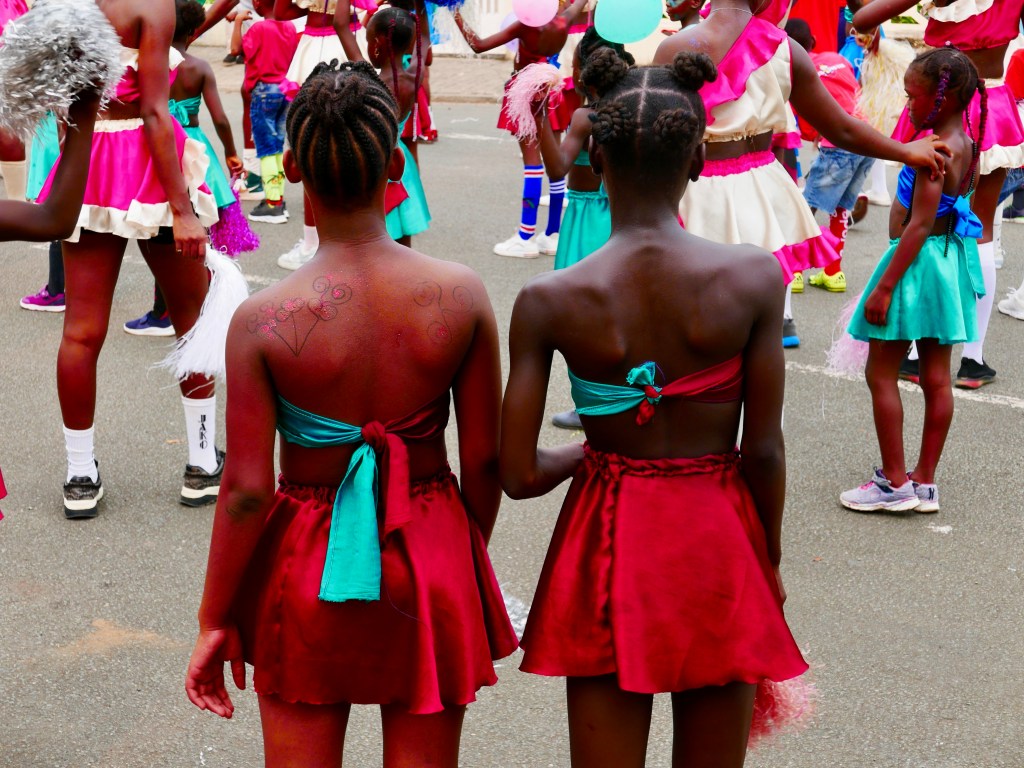
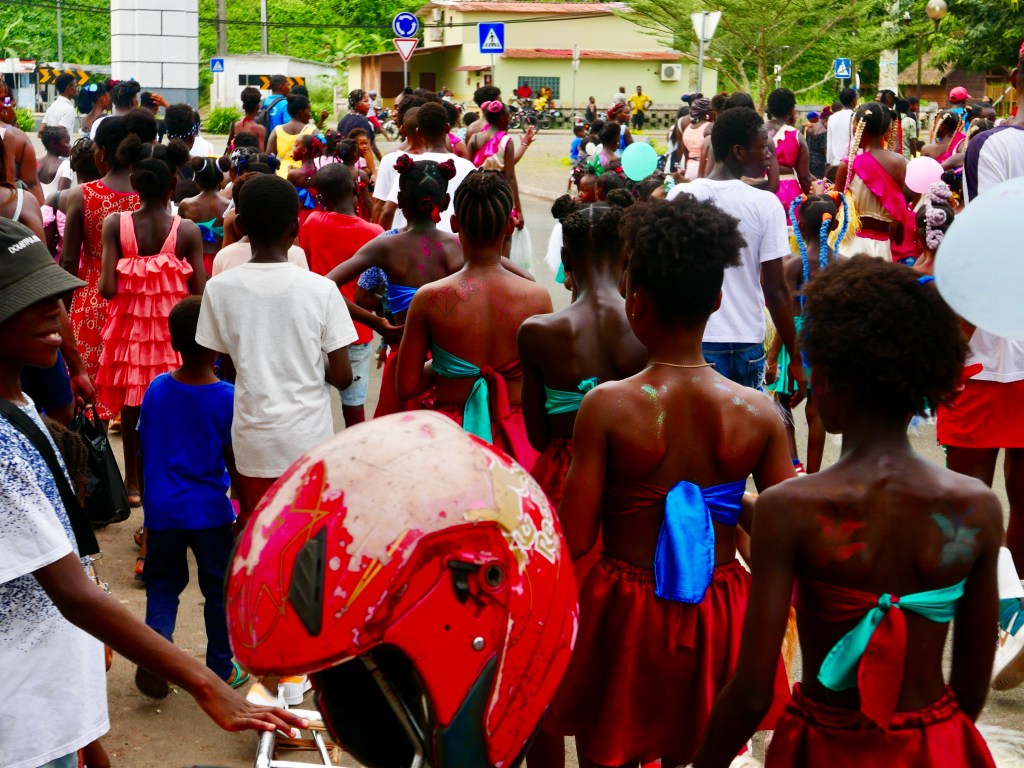
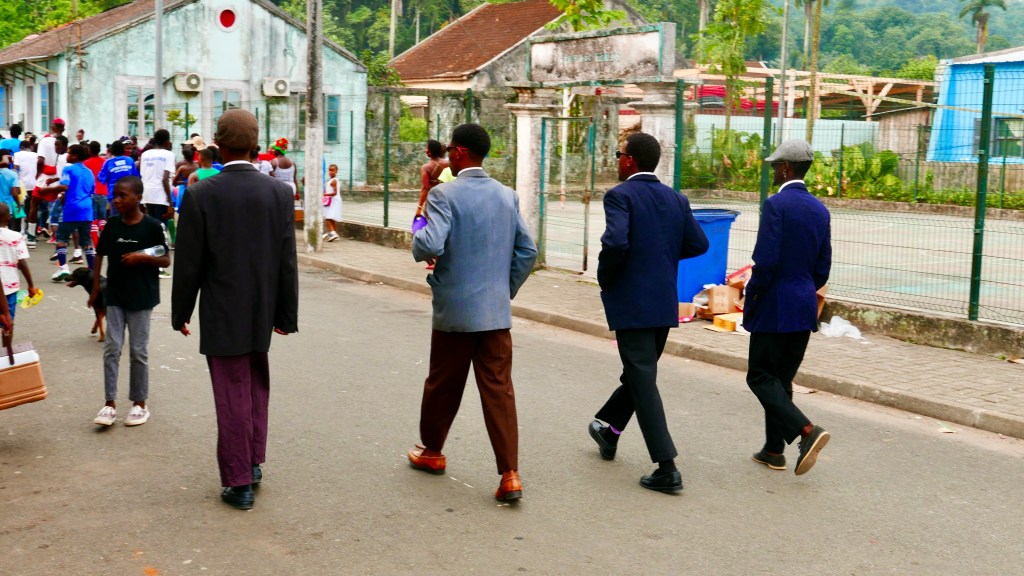
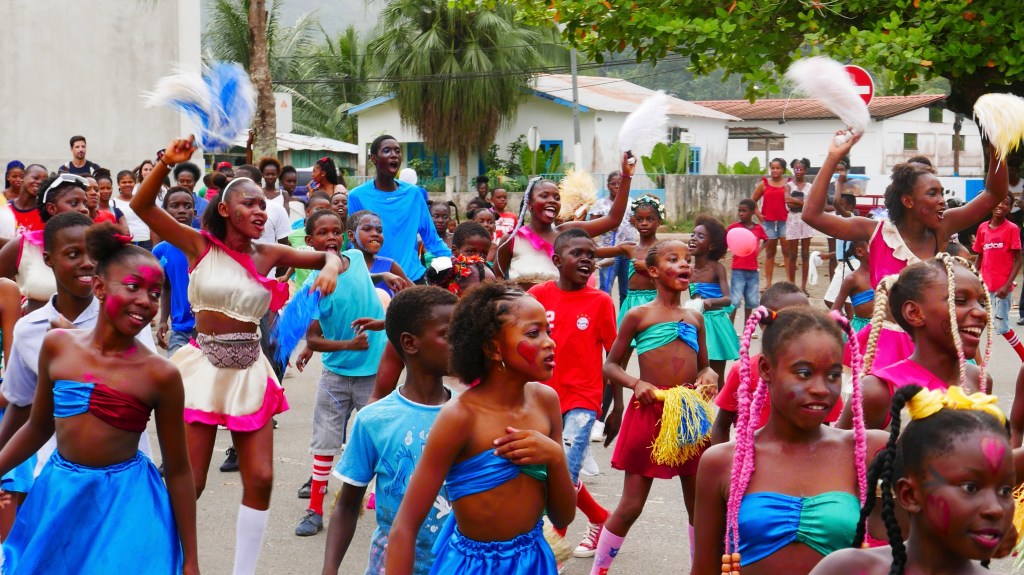
And I was lucky enough to be around for the Carnaval celebrations, which made for a fun and colorful afternoon as I got caught in the swirl.
Principe was so good to me! I am sort of lost for more words.
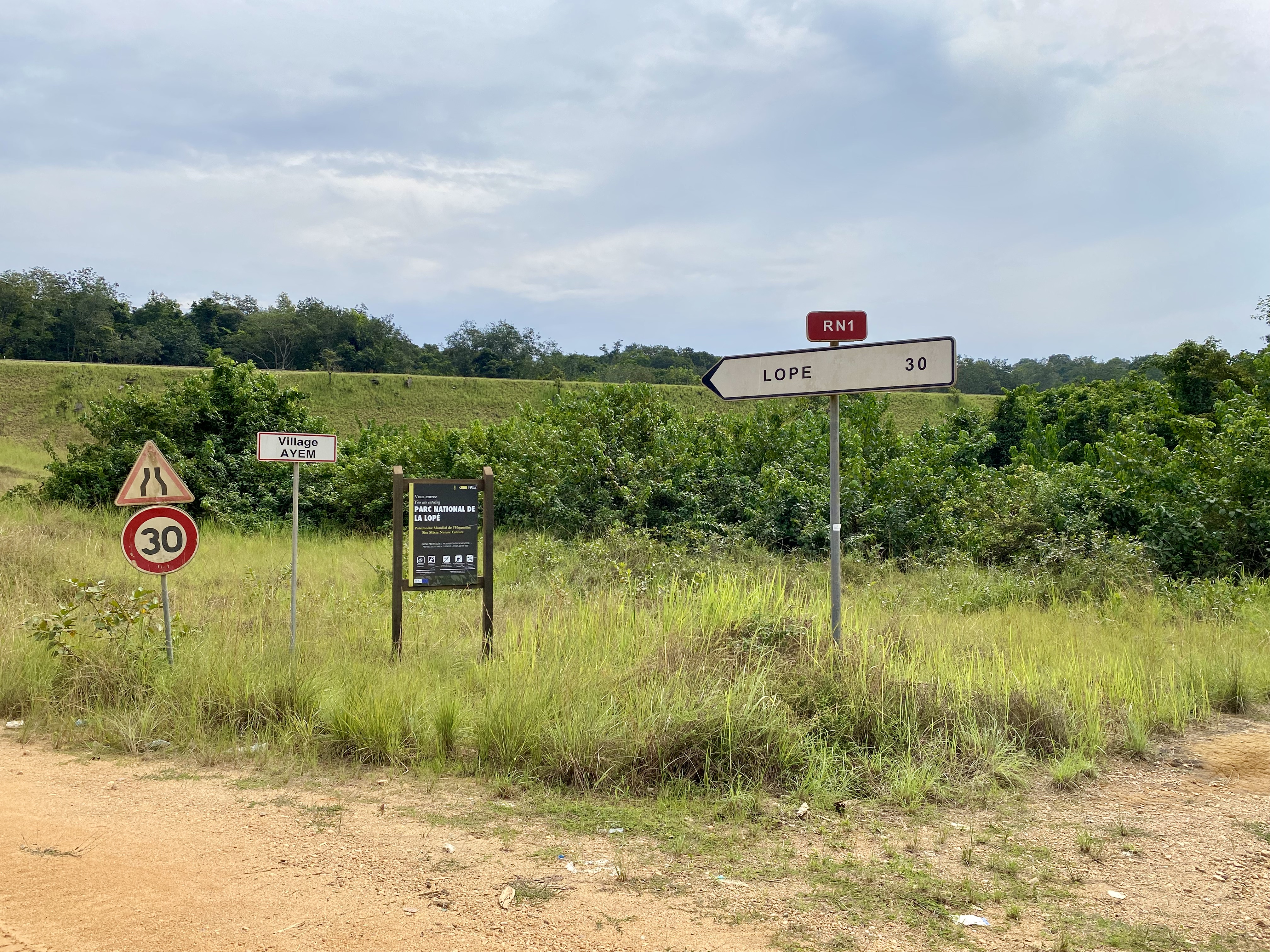
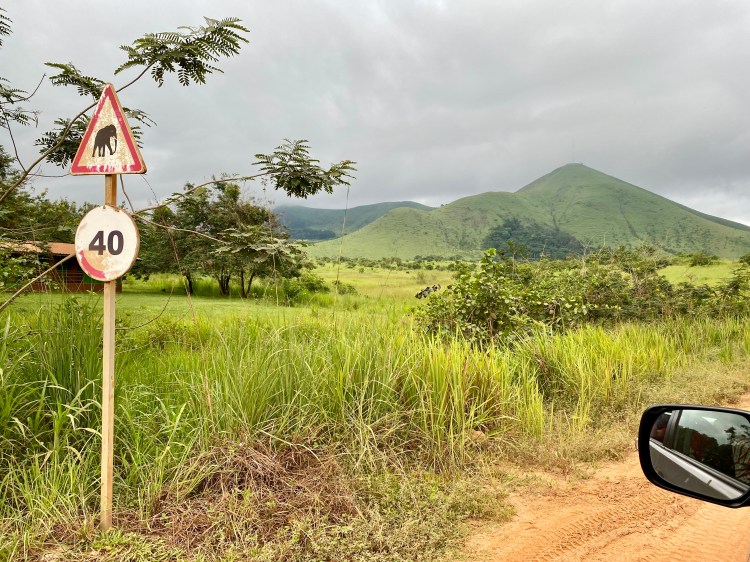
Traveling by car to remote places in Gabon is never an affair that should be taken lightly. Before you get behind the wheel, it’s wise asking around about the current state of the road, especially in the rainy season when a day is sometimes enough to cause landslides, giant mud puddles and accidents, eventually making a decent road impassable. It’s a few days before Christmas, my parents are visiting, and for our last expedition inside the country we want to discover Lopé National Park, which lies right in the middle of the country, 380 km away from Libreville, along an isolated dirt road that does not appear on Google maps despite its national road no. 1 status. So we ask around, and the general feedback we get about the road to Lopé is the classic “ça passe”, which roughly means “you can make it through, but don’t expect it to be easy”.
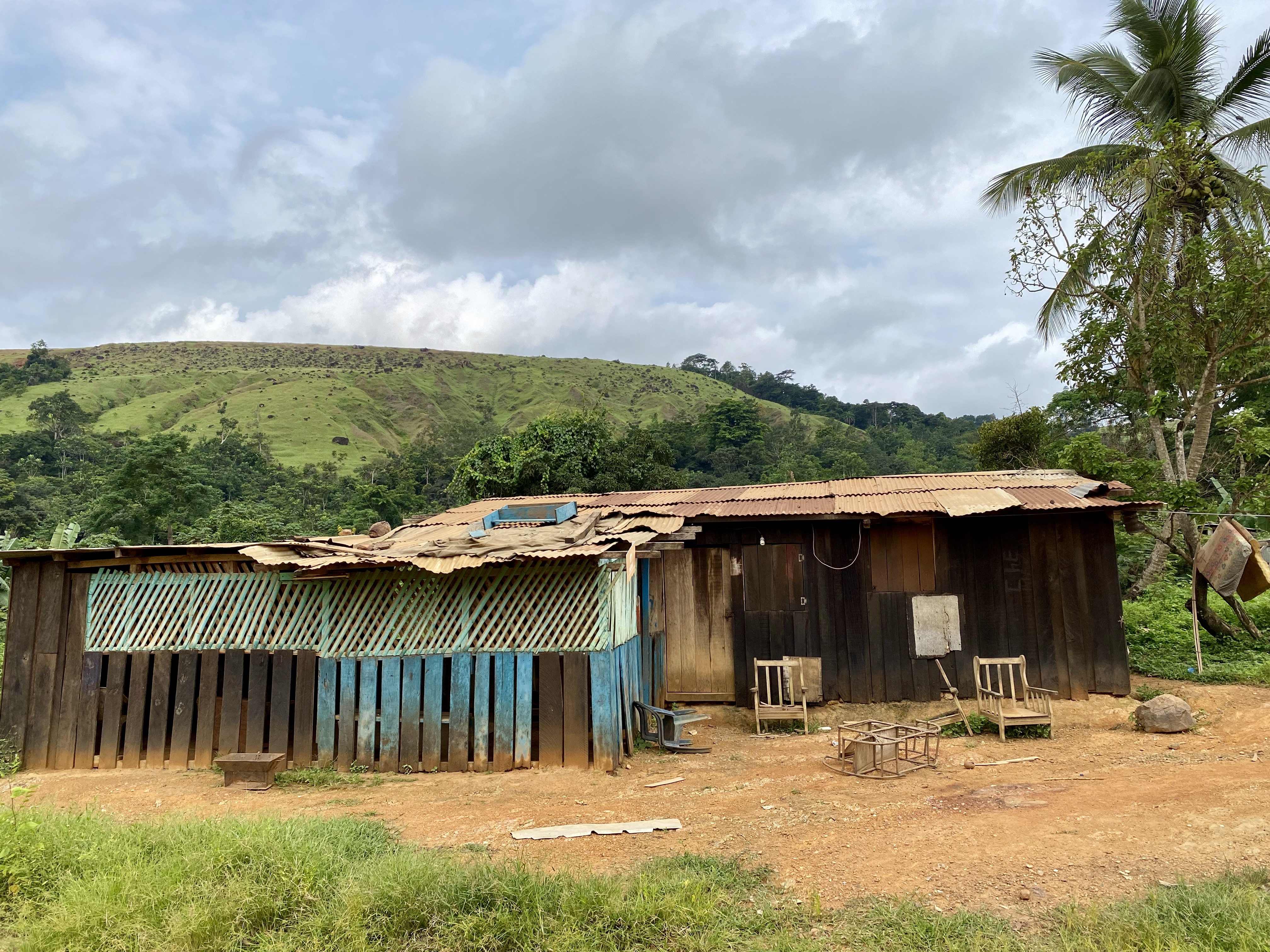
The first stretch of road until Bifoun is a delight. It used to be a potholed and dusty hell a few of years ago when we first took it, but by now it’s almost been entirely renovated and we are smoothly gliding over fresh asphalt, marvelling at how much this improves the living and traveling conditions in the area. Things start to get rough after the Bifoun crossroads, as we continue our journey towards the East. Sizable potholes appear, which locals aptly refer to as “craters”. We start slaloming slowly through. We cross tiny villages of shaky wooden-walled and tin-roofed houses, a few tired police barriers, an old and crumbling metallic bridge, we avoid here and there the remnants of recent landslides caused by the rain, pass through the industrious town of Ndjolé – a magnet for dodgy wood and mining business, find the mighty Ogooué river and drive alongside it for a while, and as usual the thick forest is all around and we sort of get high on green.
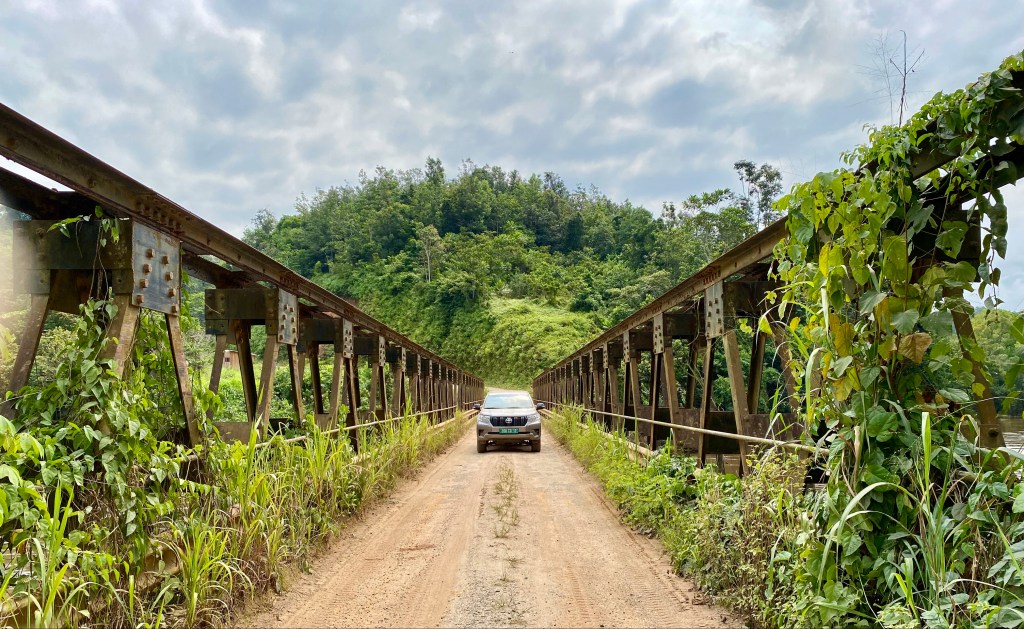
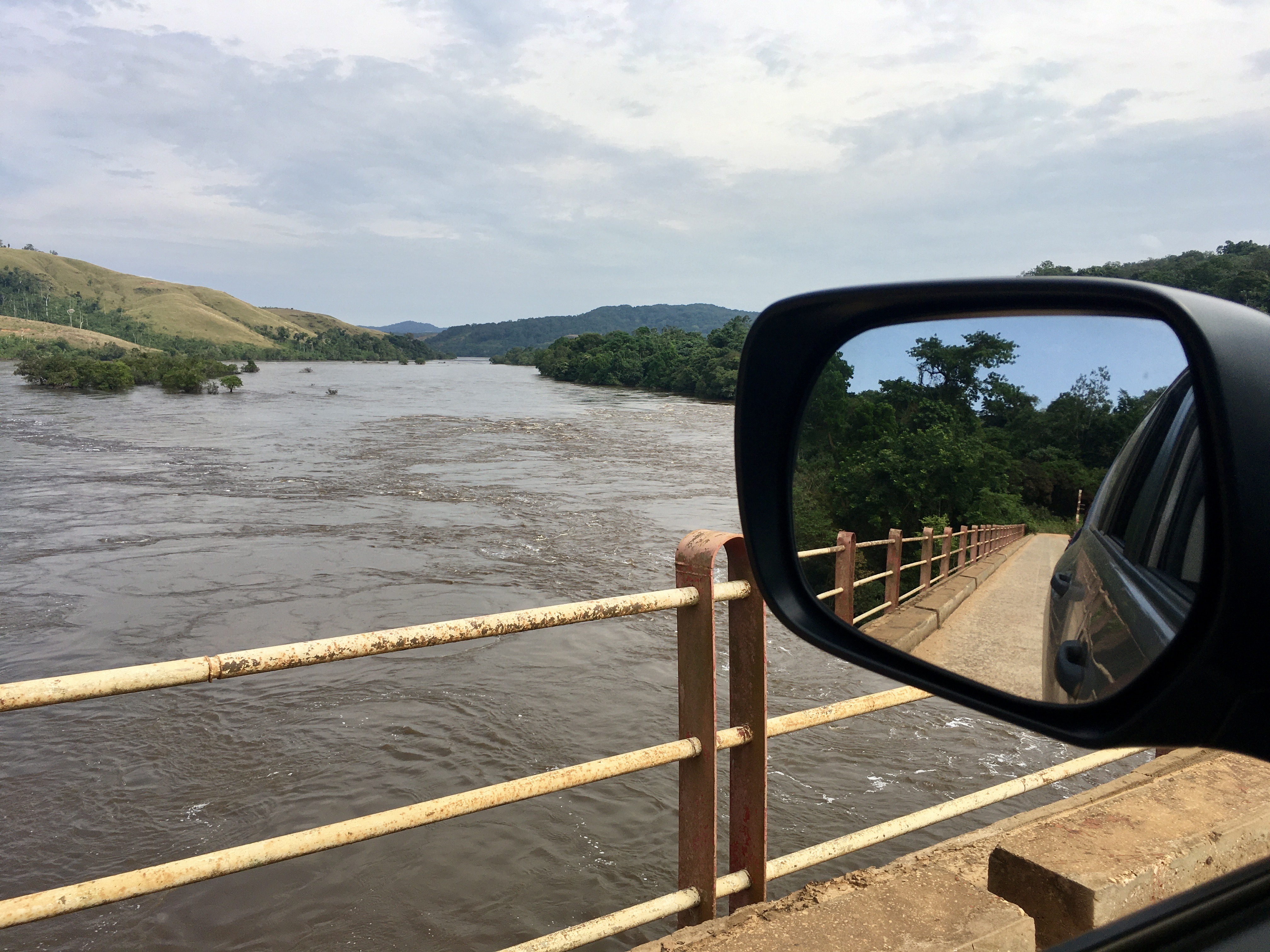
Alembé bridge
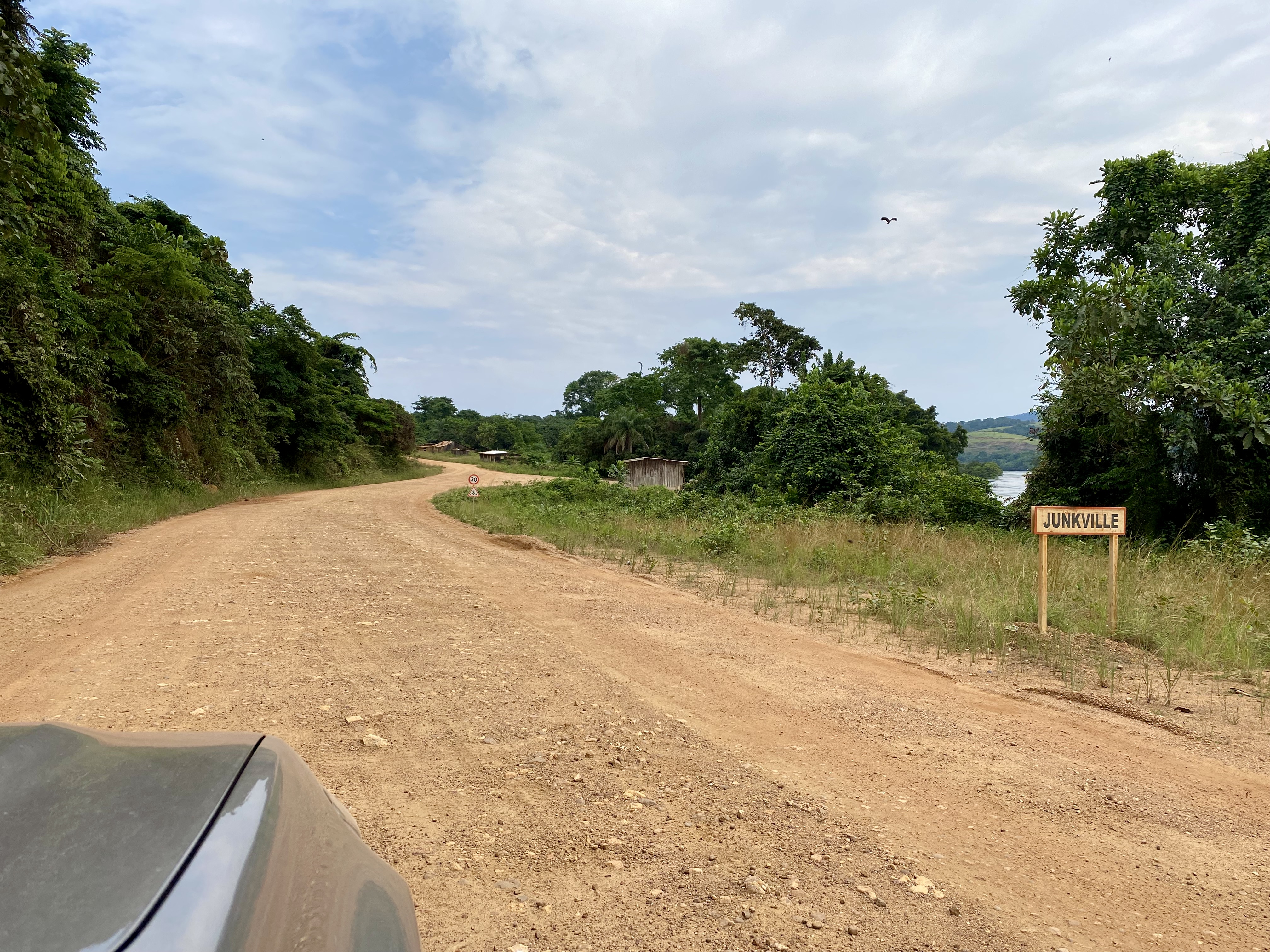
Finally, we reach Alembé, find the bridge that we were told about, cross it and find ourselves on national dirt road 1. We are a 100 km away from our destination. From now on, the only vehicles we are coming across are a few gigantic trucks loaded with timber, most often driven by Chinese, coming back from the depths of the country and taking their precious cargo to Libreville, leaving a lasting cloud of dust behind them. The road is dry, and our dependable Land Cruiser is doing great on it, which is good news as we quickly realise that there is no telephone network anymore.
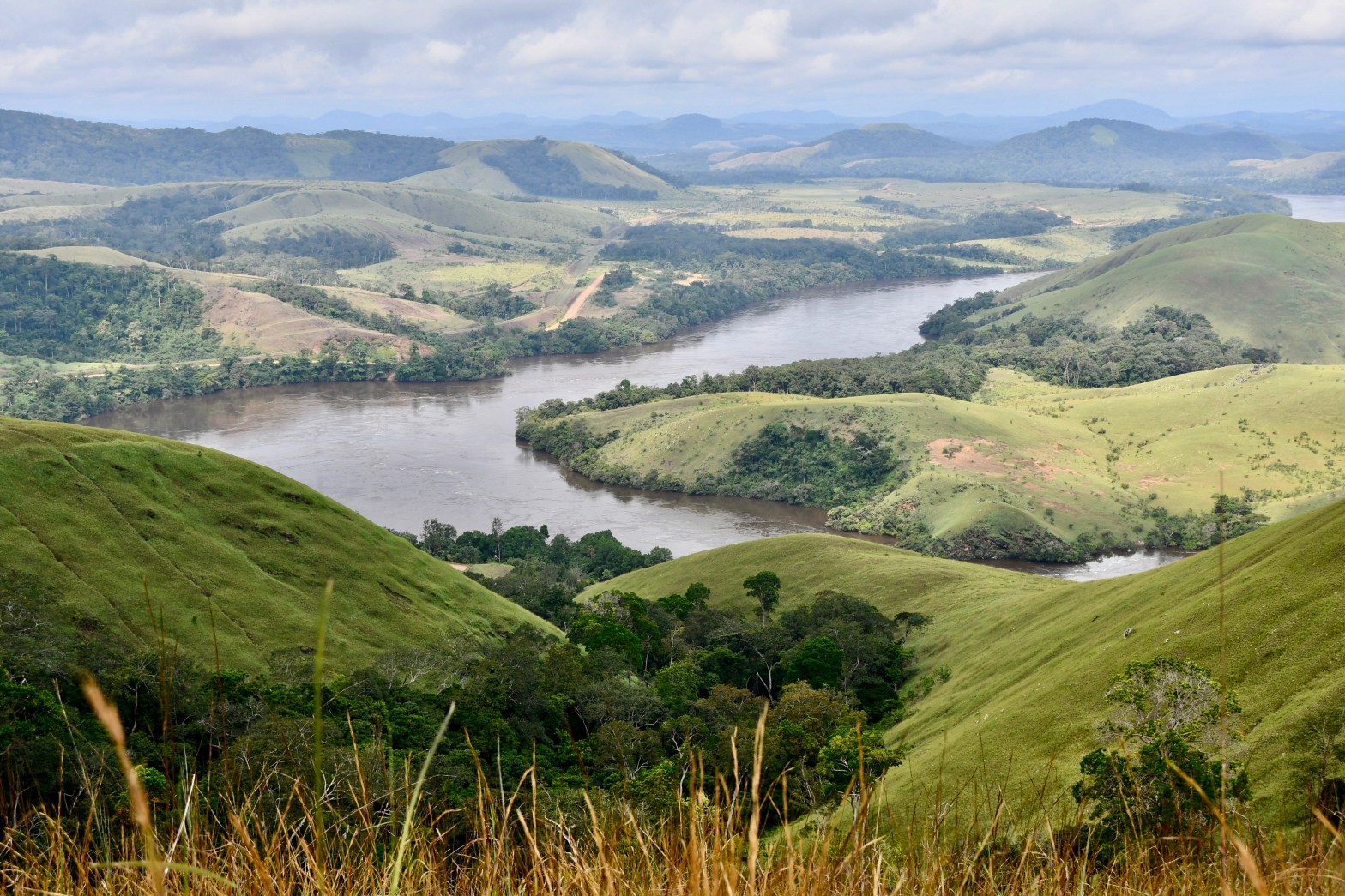
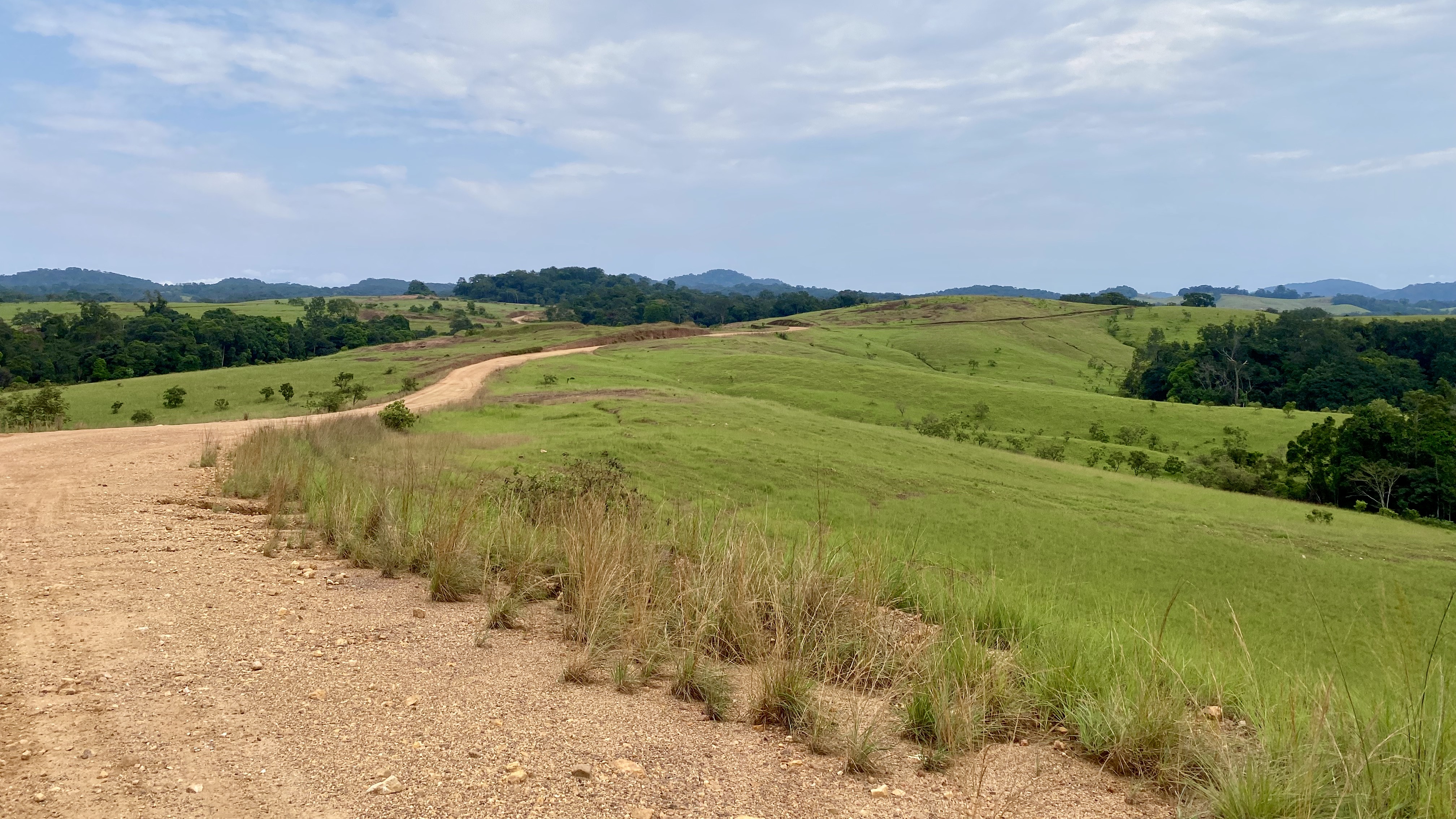
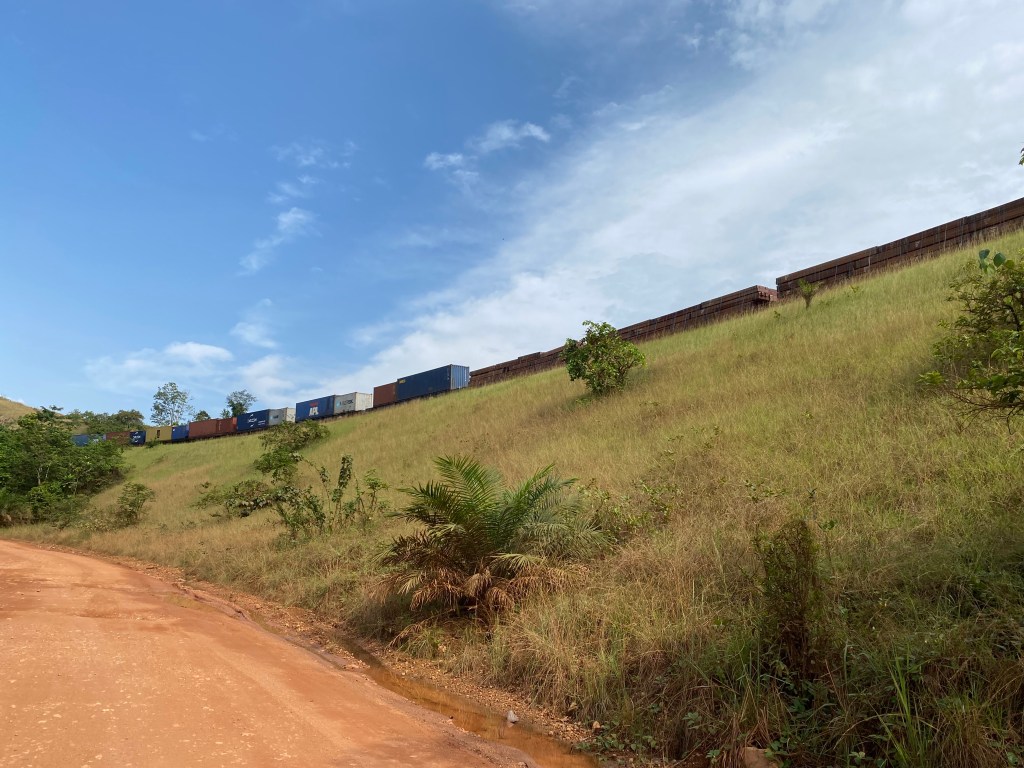
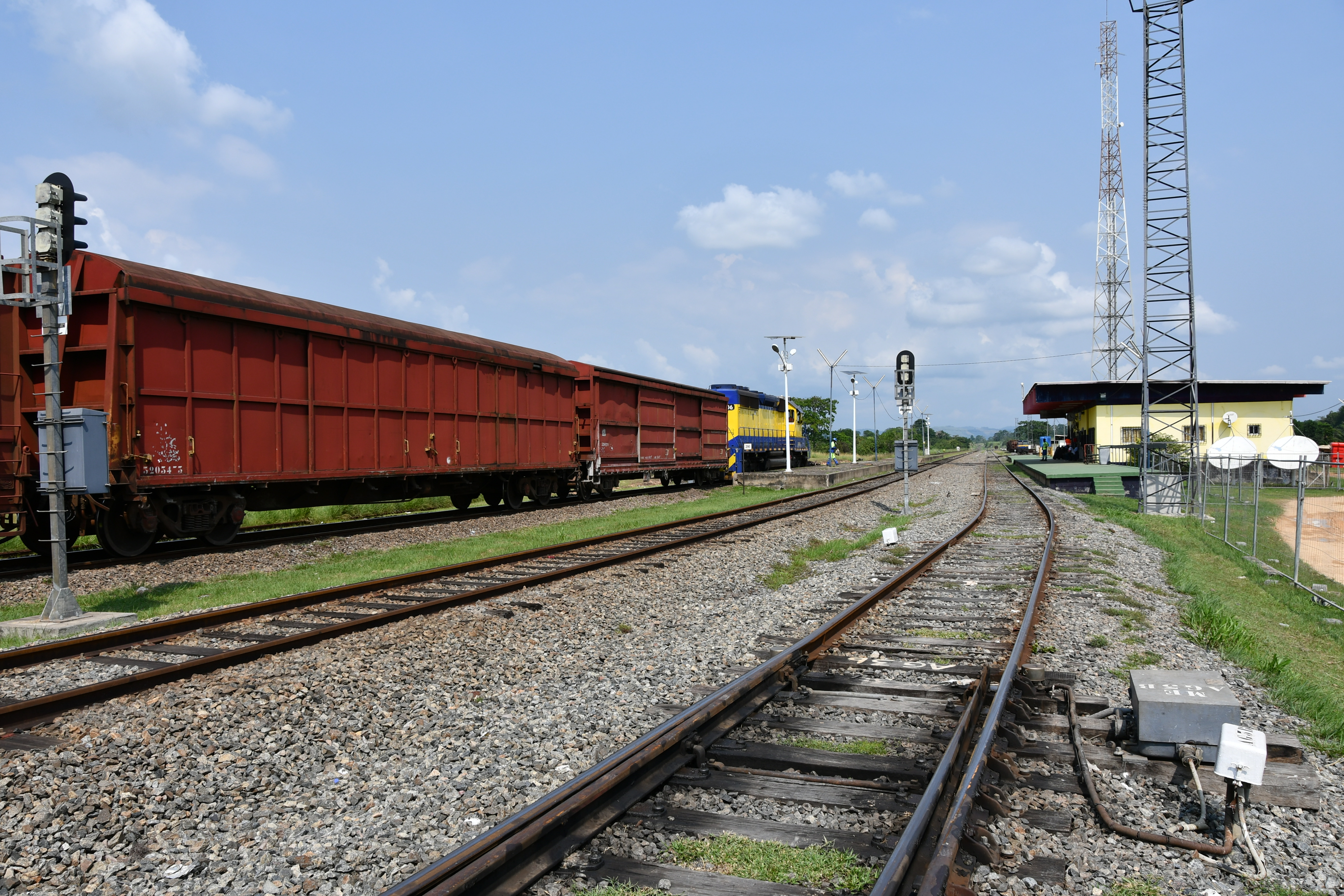
Slowly, the forest gets less dense and the landscape opens, becoming a welcoming savanna on hills. We find the Ogooué again and keep following its banks, never far from the railroad tracks. Yes, a railroad, the only one in Gabon, but a 700-km long one, linking Libreville to Franceville, far in the East. The trains have dozens of wagons and seem endless. They carry oil, timber, manganese, machines, food, water, people visiting their relatives in the East, even a few tourists to La Lopé. This railroad is economically and socially vital for the country.
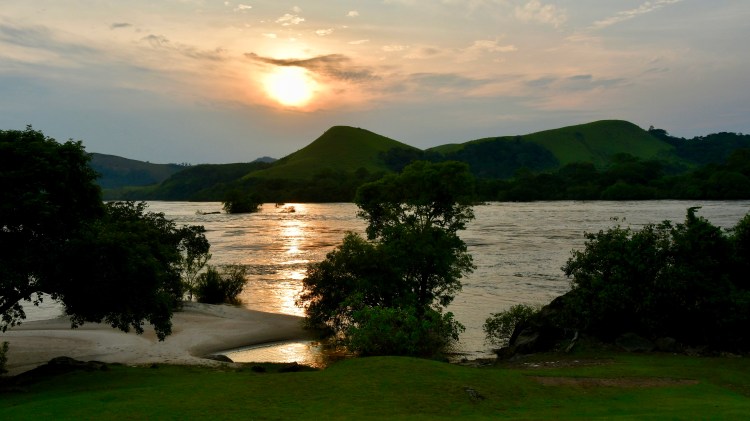
It’s really a wonderful drive, nevertheless we feel a great relief when we reach the village of La Lopé, 9 hours after we left Libreville in the morning. There is a bit of life here, and the historic Lopé hotel, with its wooden bungalows overlooking the Ogooué river, makes a perfect spot to unwind, even after we duly take note from the manager that there will be no electricity nor running water during daytime. We are the only visitors – a group of four will arrive later by train around 5 in the morning.
Sunset on the Ogooué river seen from Lopé hotel
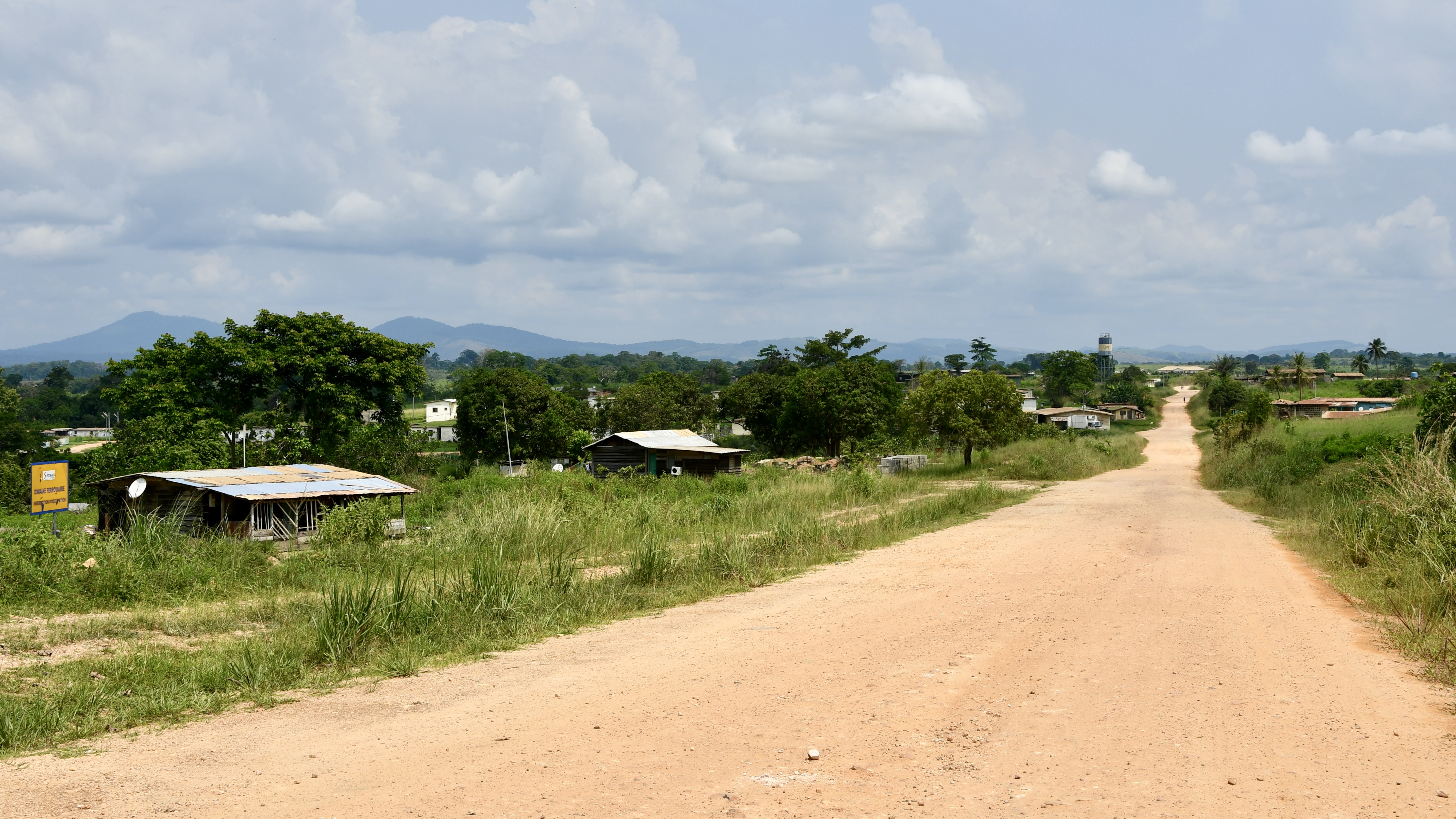
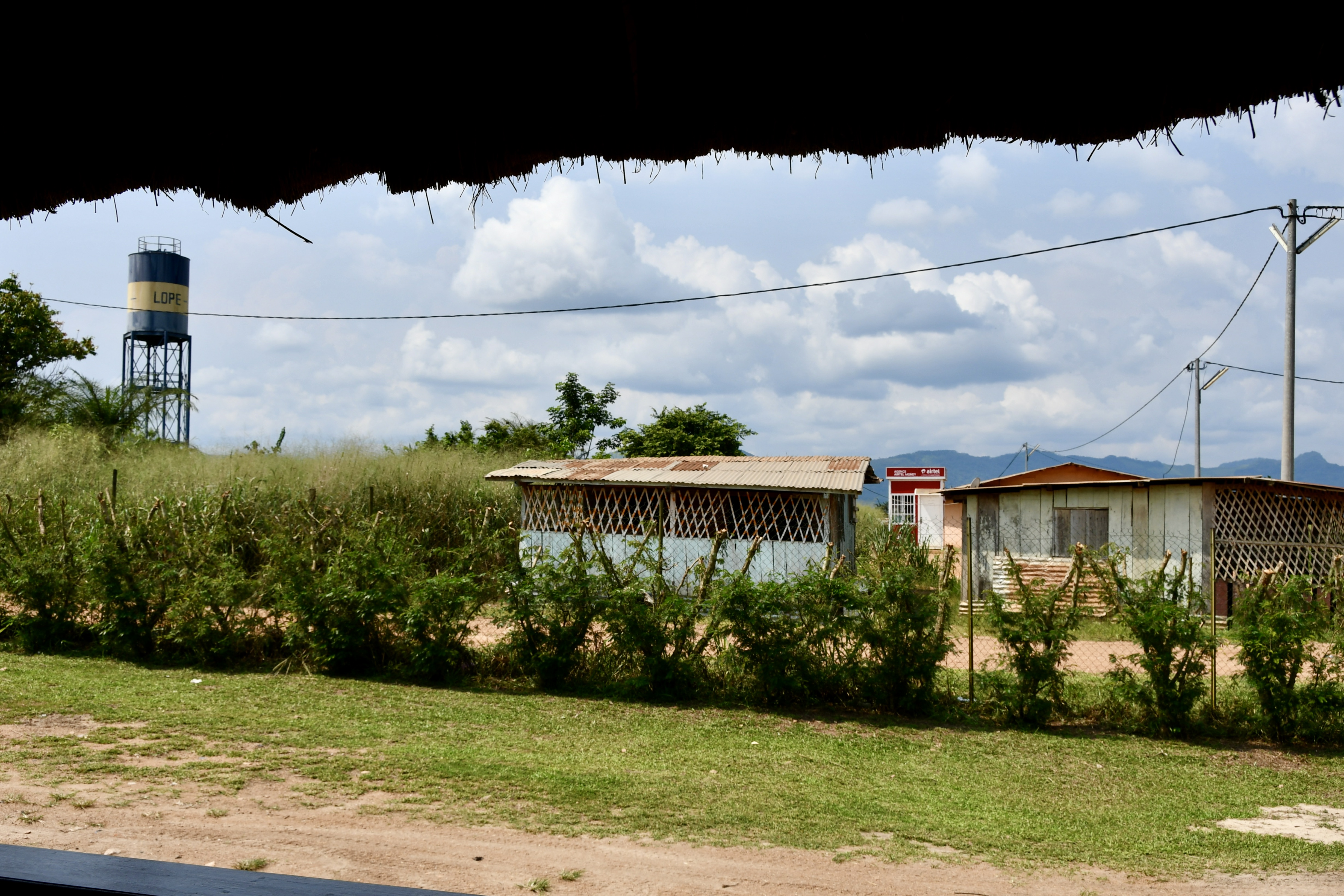
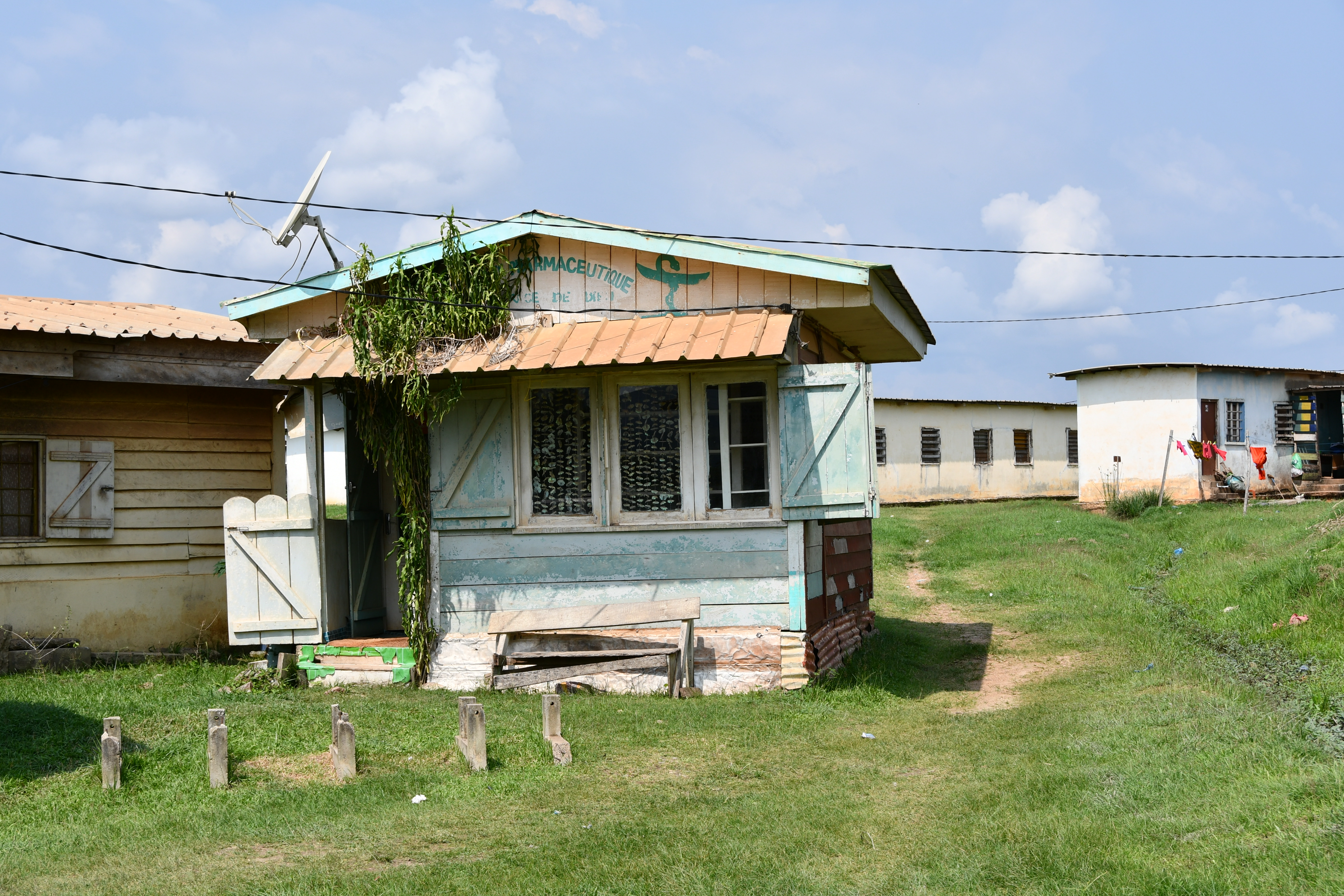
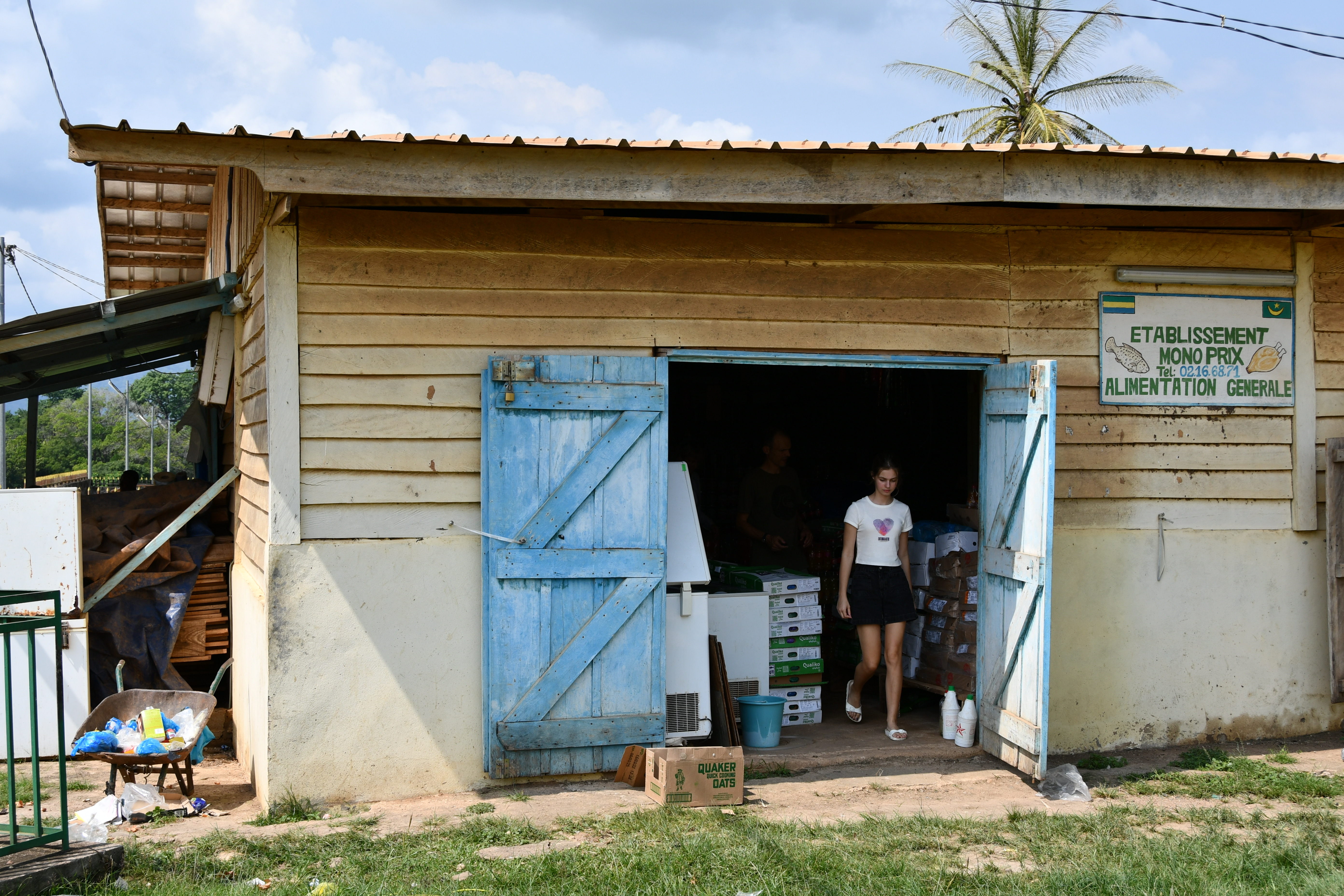
La Lopé village would be a perfect setting for an African Western film: two shops managed by faraway-from-home Lebanese, a pharmacy in which vegetation litterally grows, a bar, a restaurant, a primary school and a couple of churches, and of course the railway station. As we spot a cute kitten in the shop, the chatty owner tells us “he ain’t gonna live too long, one of these nights the leopards will come around and eat it, that’s how it goes around here”.
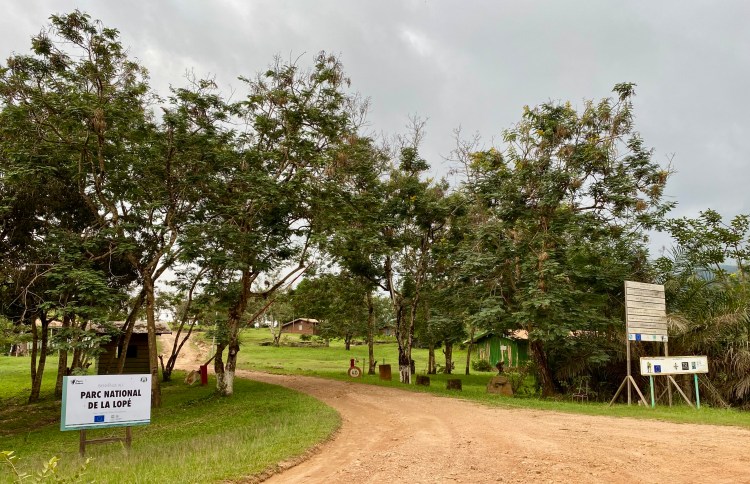
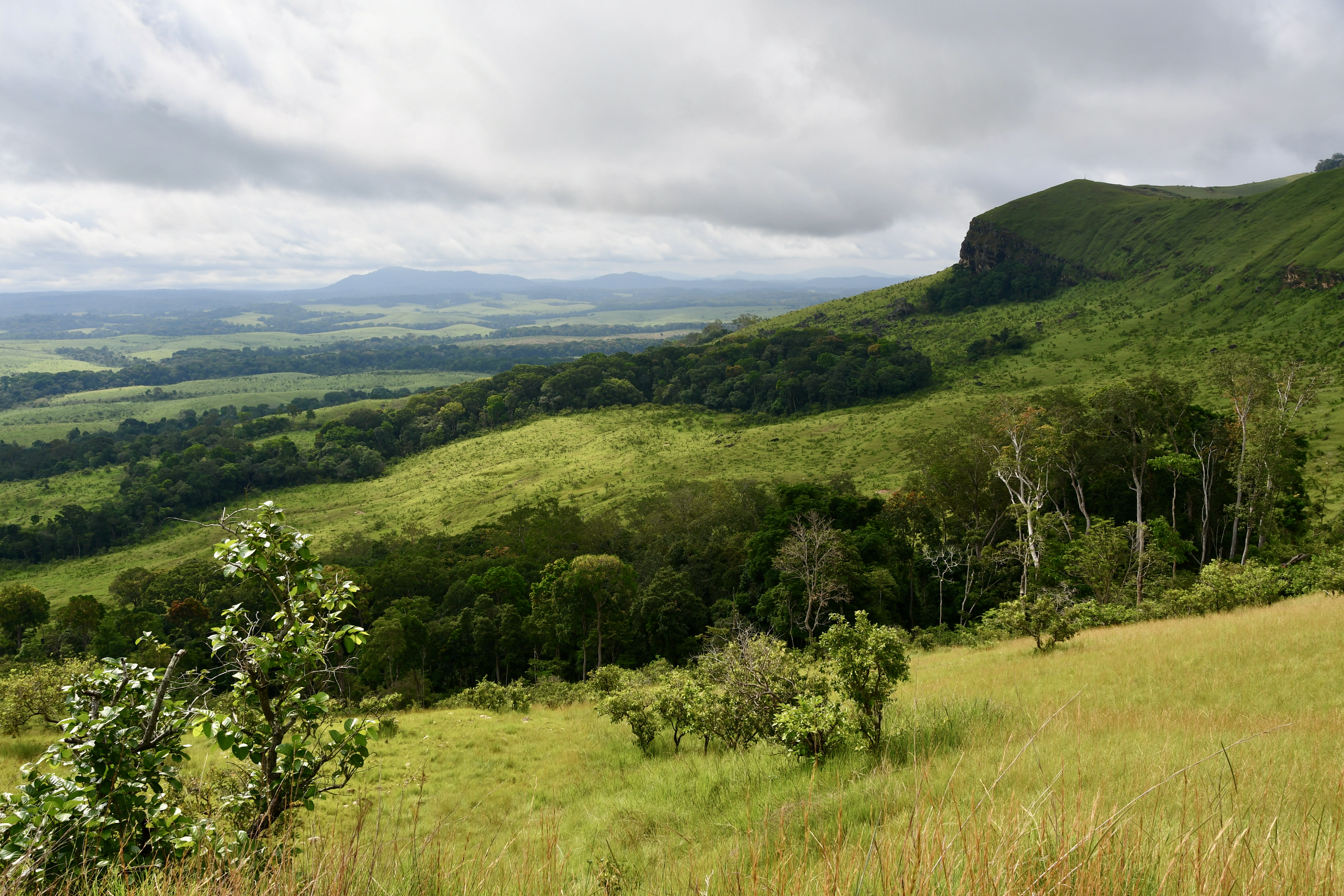
It is the Northern border of the mighty Lopé National Park, which covers almost 5,000 sqm in the central part of Gabon. It was the first natural protected area in Gabon and has been a UNESCO world heritage site since 2007. The richness of its biodiversity has attracted scientists from all over the world, and there are a few researchers on-site on a constant basis. The park is a mix of tropical forests and grass savanna, inhabited by healthy populations of elephants, buffalos, pangolins, chimpanzees, lowland gorillas, mandrills, a few leopards, hundreds of birds and plants species. In the park and its surroundings, archeologists also found traces of human life dating back 400,000 years ago!
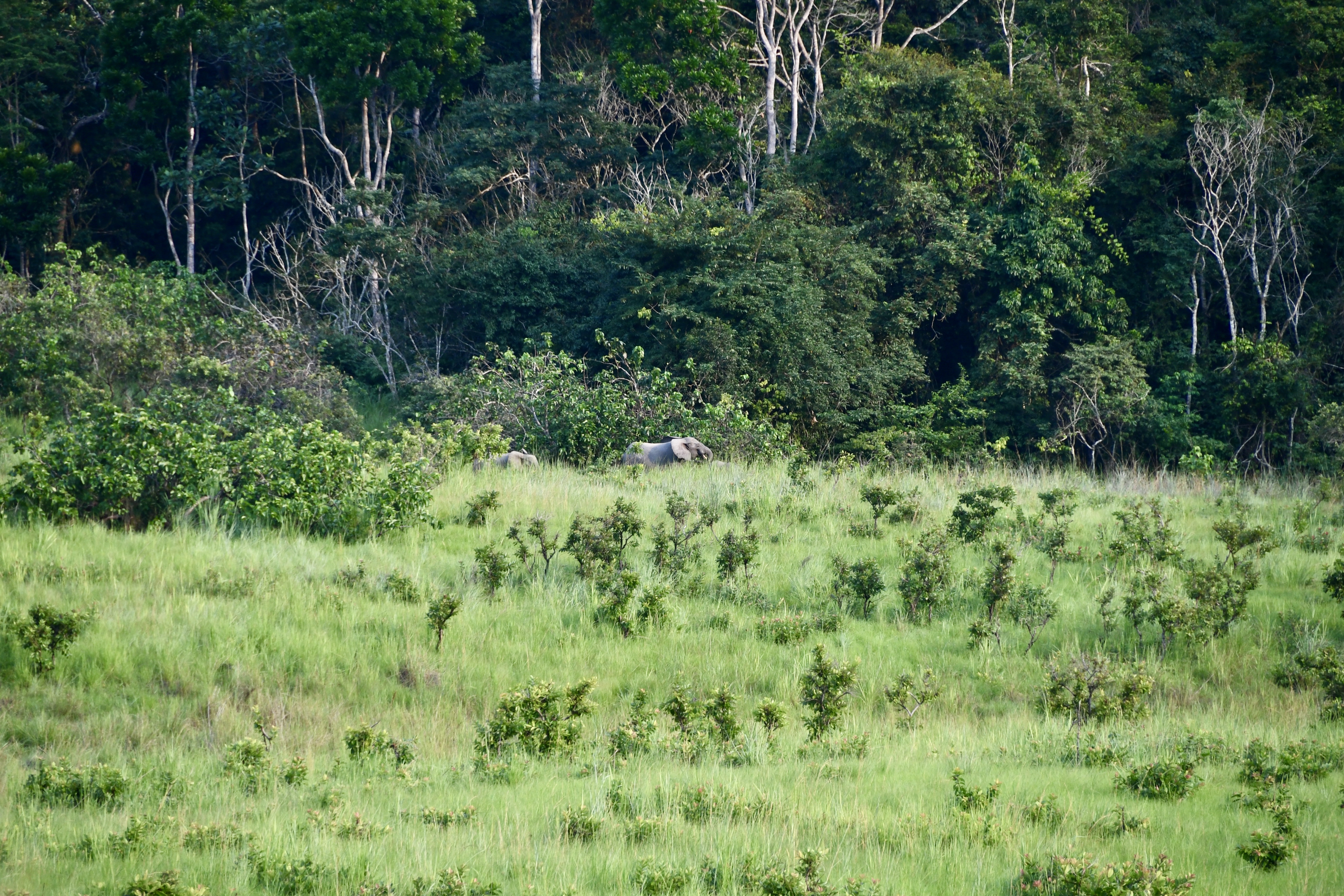
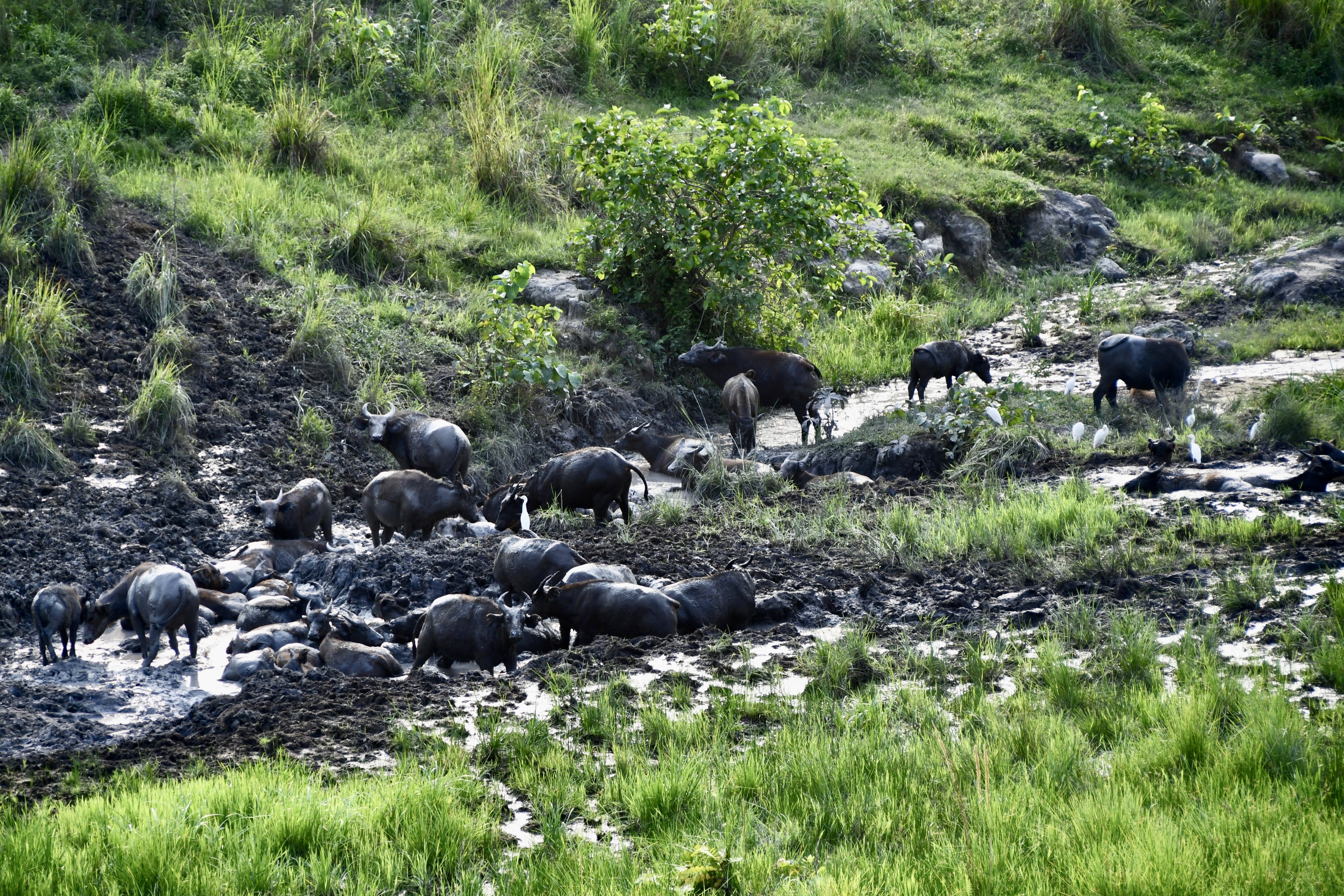
We spend the next couple of days exploring the park, by car around the savanna and by foot inside the forest. As usual in Gabon, we see quite a few elephants, wild buffalos, small monkeys and funny birds, but we have since long accepted that other animals will keep away from us. To see them from close, you need to be one of these few experts who study the park’s biodiversity, operating from a base that lies deep inside the forest, in rough conditions that most tourists would be unable to endure. Our sympathetic local guide, nicknamed “Vampire”, tells us that some 15 years ago, a team of park rangers was attacked by an elephant in the middle of the night. In panic, they fled and scattered. When they regrouped, one of them was missing. They found him 2 weeks later: he was inanimate, covered with insects bites, but still alive.
This makes the adventures of Pierre Savorgnan de Brazza in this region, in the 1870’s, all the most admirable. The Italian-French explorer was the first European to find the source of the Ogooué river. On his way, he went through what is today La Lopé. Today, the highest mount in the national park bears his name, just like the capital of Congo.
It’s a hot and sweaty climb to the top of Mount BrazzaView to the North from Mount Brazza, with the railway and road no. 1 in the foreground, the Ogooué river and Lopé hotel in the middleground
The road back to Libreville is almost easy. We feel blessed that it all went well, because in Gabon you really never know. Two days after we are back home, a massive landslide causes 900 meters of railway to go down into the river… The traffic only resumed three months later, after herculean works during which the Eastern part of the country was pretty much cut out from the world, with severe oil and food supply issues. That is something we will surely keep in mind the next time we consider whether it makes sense getting nervous or not about our French train being an hour late at its destination.
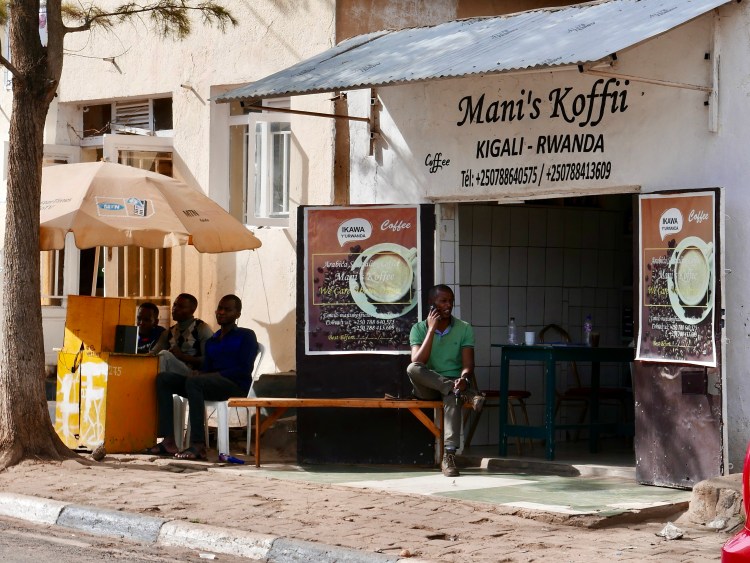
Our first day in Kigali is the last Saturday of October, and there is not much we can do in the morning: it’s Umaganda, a monthly national holiday for mandatory nationwide community work from 08:00 to 11:00. In the neighbourhood of our guesthouse, people are all busy cleaning up the dirt streets and gutters and the front of their houses with straw brooms and their hands. It’s all peaceful, there is not a single car running, the only thing we can hear is the chit-chat of the people at work.
Then at 11:00, the work stops and it’s time for the neighbourhood monthly council. A few dozen citizens gather on wooden chairs in front of a small shop and for an hour, they discuss the current issues in the neighbourhood and how to solve them as a community. Finally, around noon, the weekend can begin, the first cars get moving and people go about their business, while we are still pondering on what we have just seen: has it really happened for real or were we on a film set?
It’s indeed hard, if not impossible, to imagine this happening at a national level in Gabon nor in any country in Europe. But in Rwanda, Umaganda (which means “coming together in common purpose to achieve an outcome”) has been running 12 times a year since 2009. And the fact is, during our one-week stay in the country, we have not seen a single piece of trash or junk anywhere on the streets, not even a tiny piece of dirty paper. Rwanda is truly spotless and I would encourage any mayor (say for example, of Brussels, Paris or Libreville) to see it with their own eyes.
Our discovery of the country starts with the Genocide Memorial in Kigali, a difficult but necessary experience. Midway through our visit, as we have understood the roots of the genocide, seen and read how it unfolded, we find this simple sentence: “By the end of July 1994, Rwanda was dead.” Everything that we will see in Rwanda in one week seems to testify that what has happened since then is nothing short of a miracle.
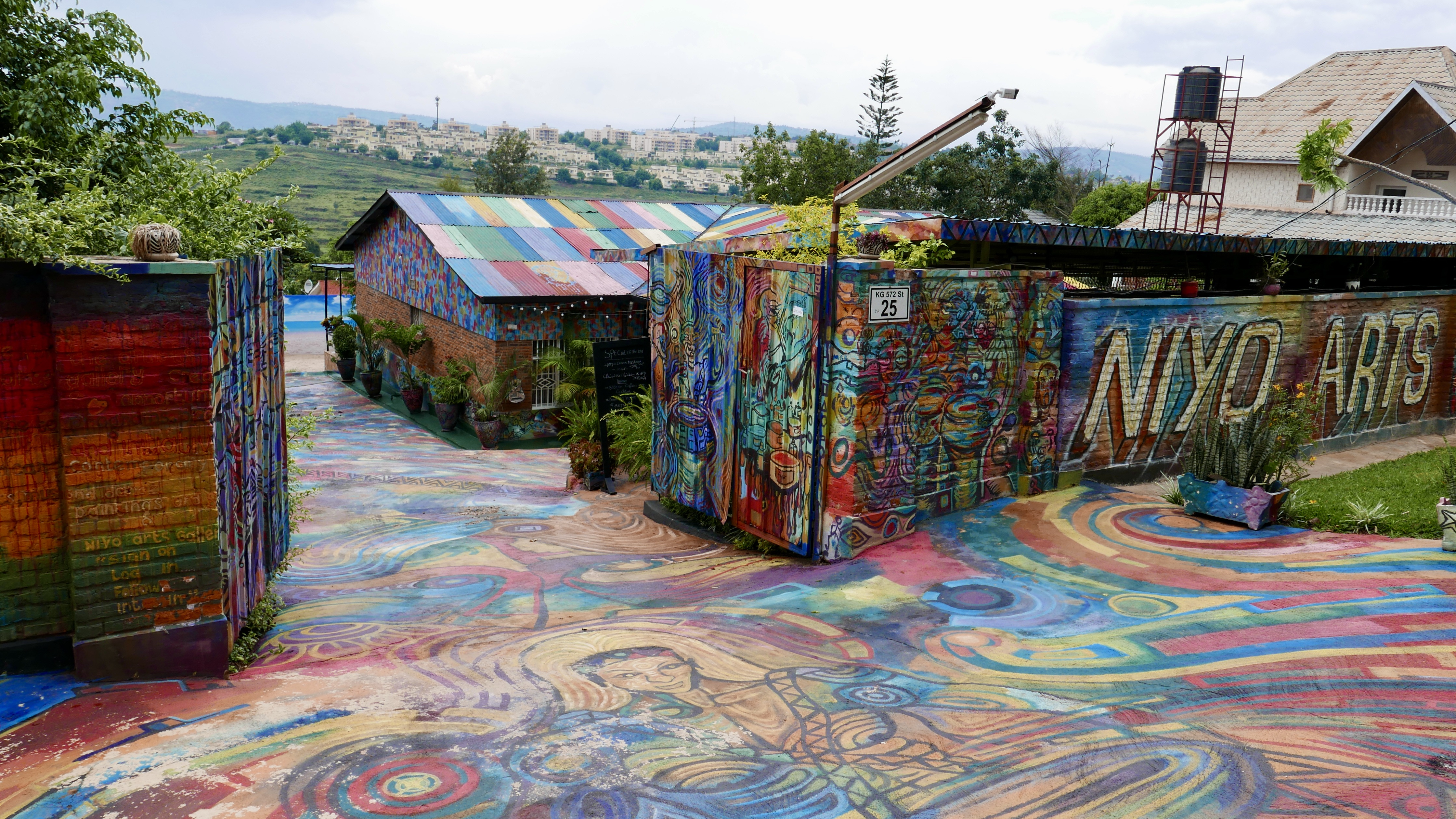
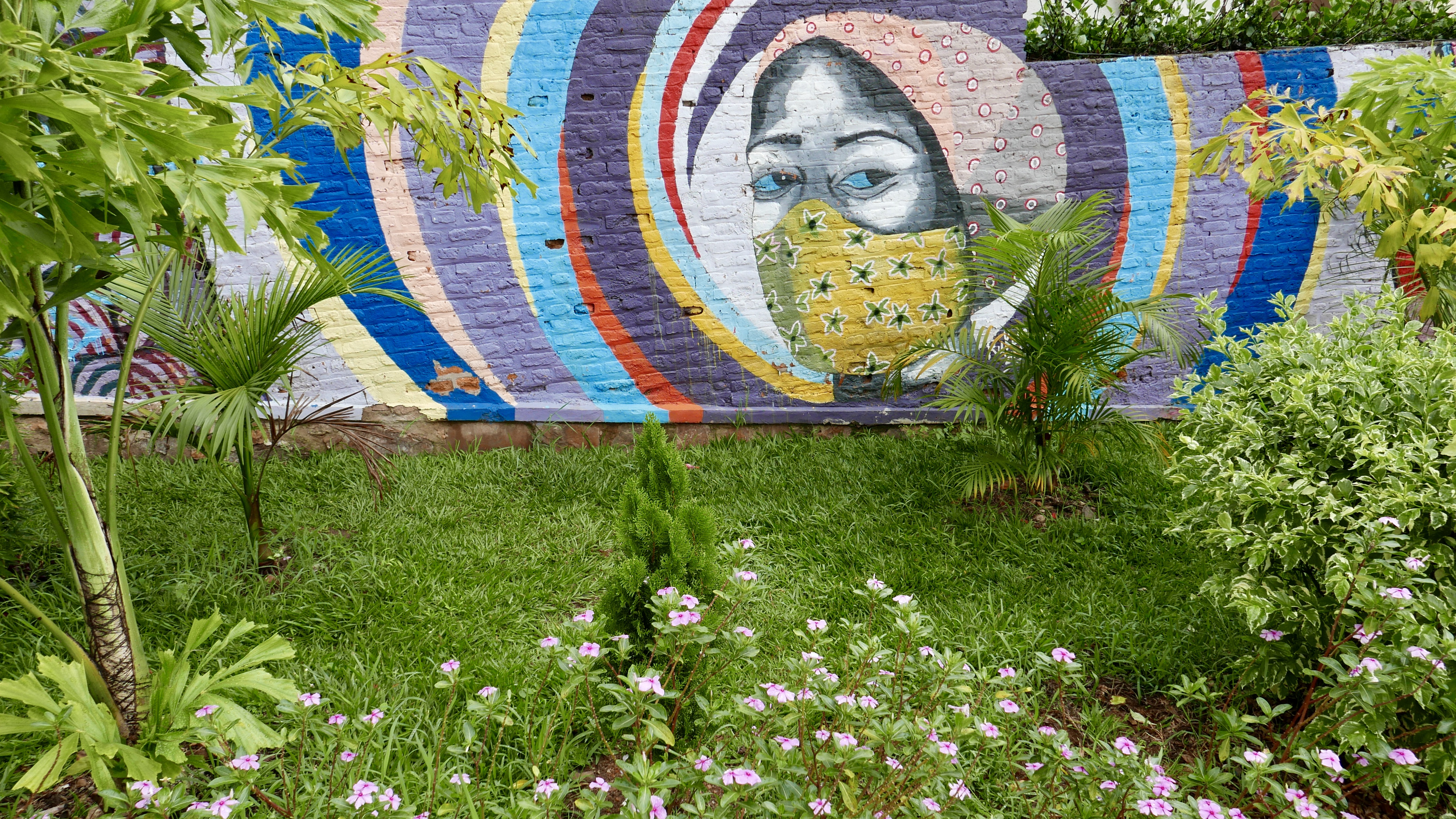
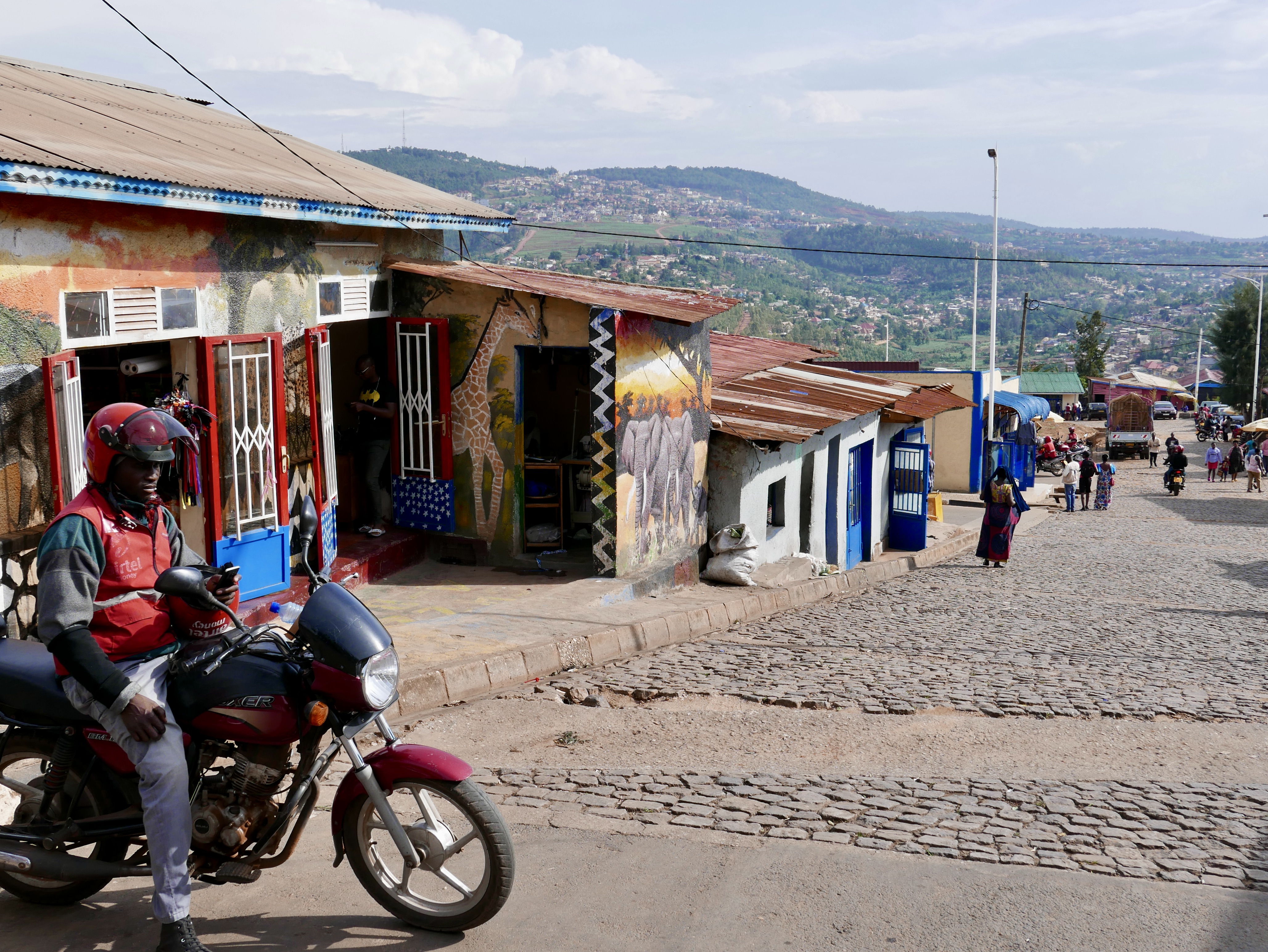
The country is called “Land of a thousand hills” and at least a few hundreds of them are in Kigali. Cars keep going up, down and along narrow curves and green avenues. It’s incredibly busy but has a laid-back vibe. It’s modern and well-organised, packed with fancy hotels and restaurants, art galleries and crafts shops. As I develop the bad symptoms of malaria in the middle of our second night (fortunately I carried the treatment with me and took it right away, so I got better in the morning), I even get to test the local private hospital, which looks like a spacecraft by any Gabonese standards and fares as well as any European hospital.
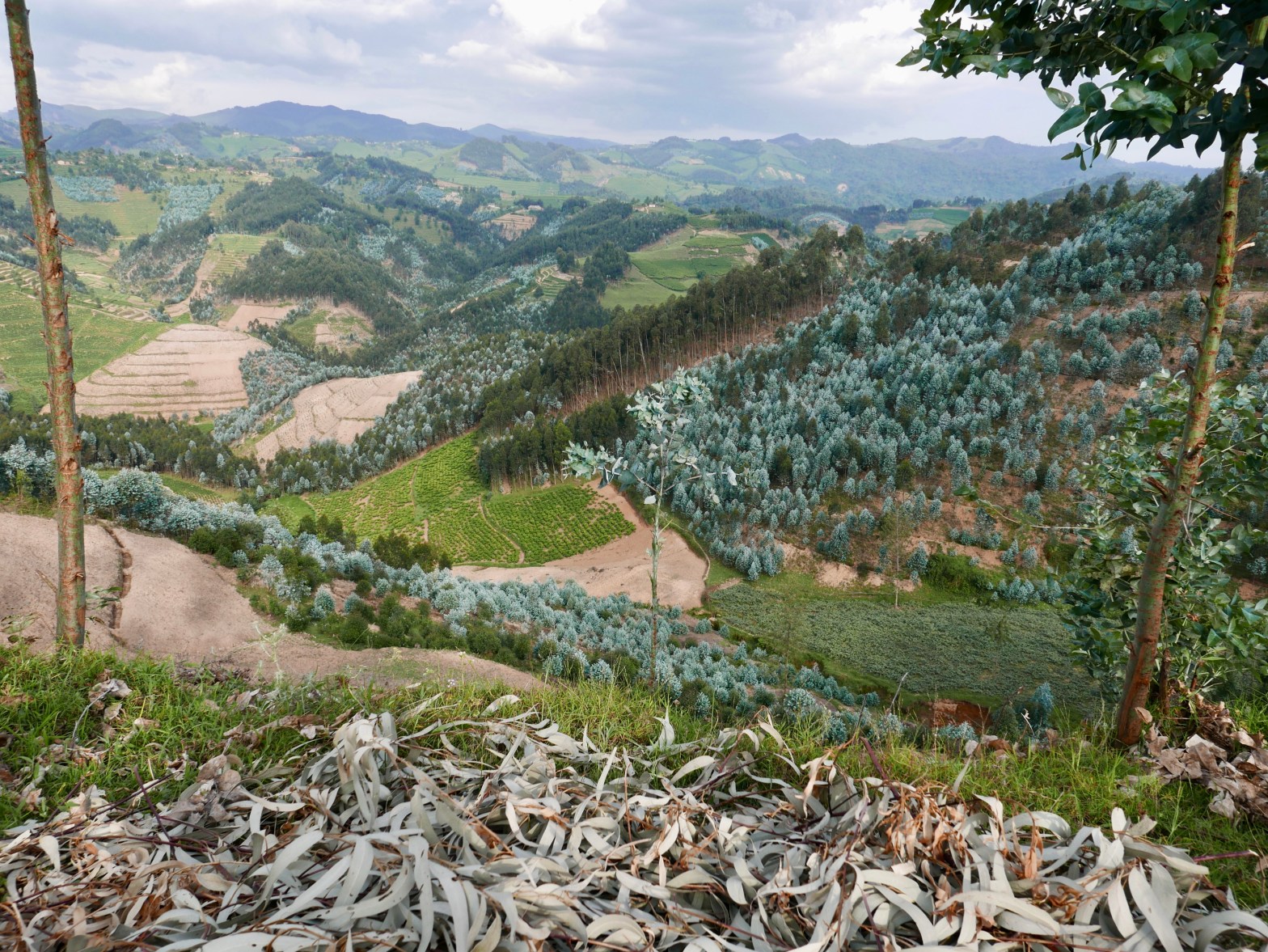
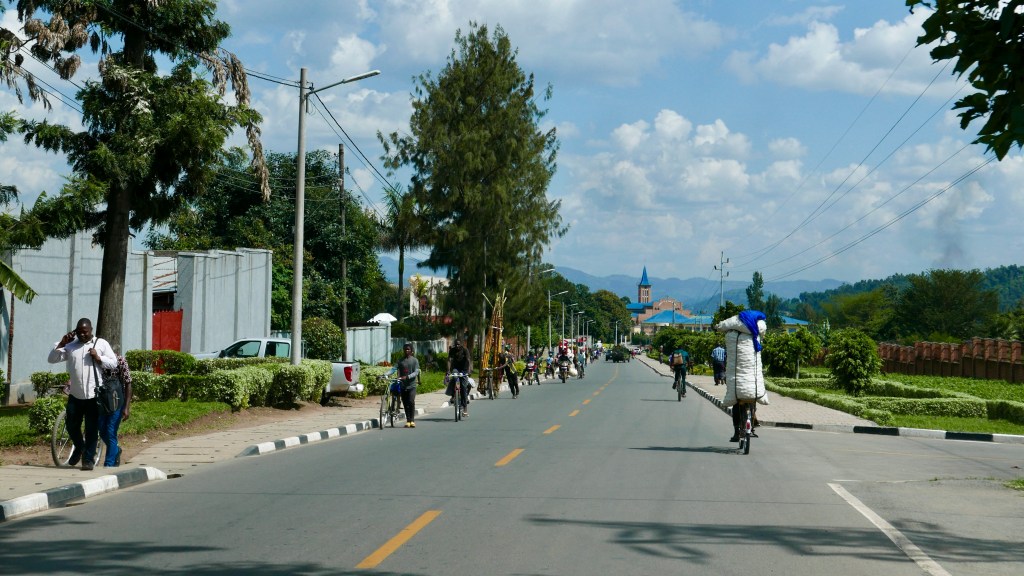
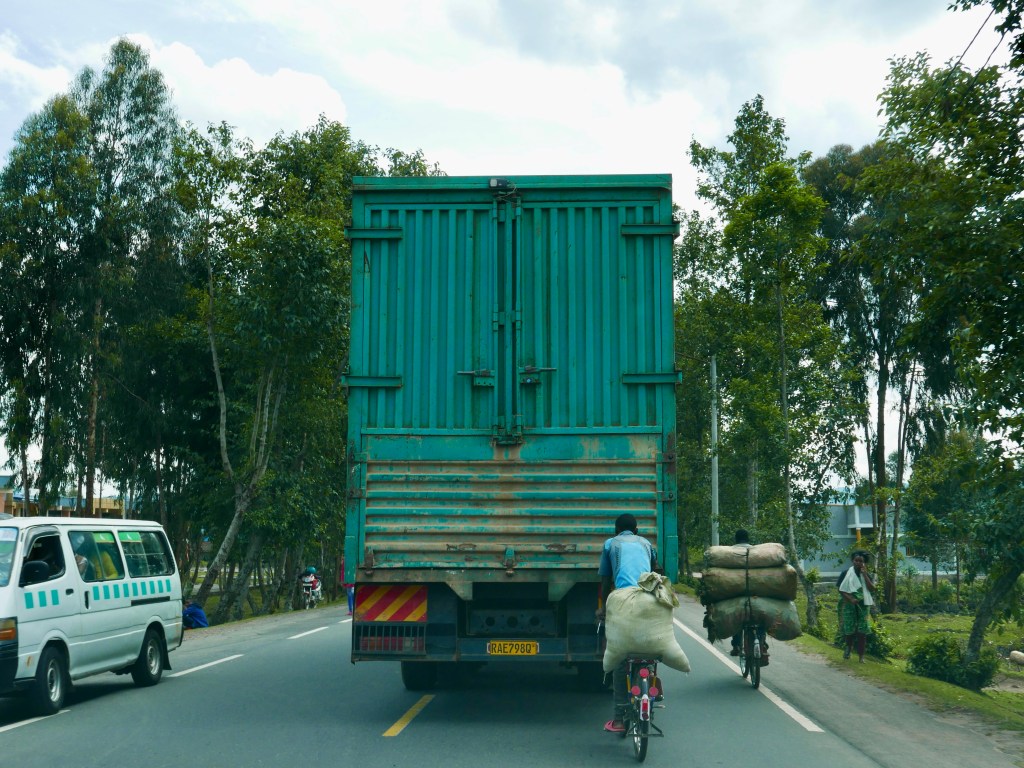
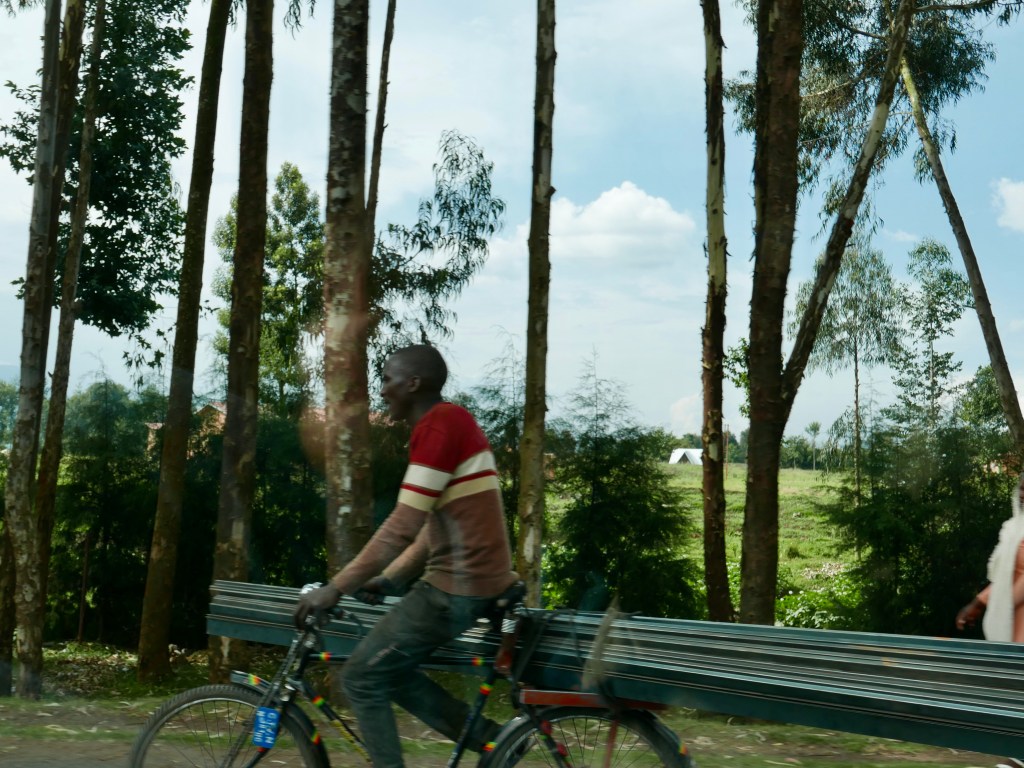
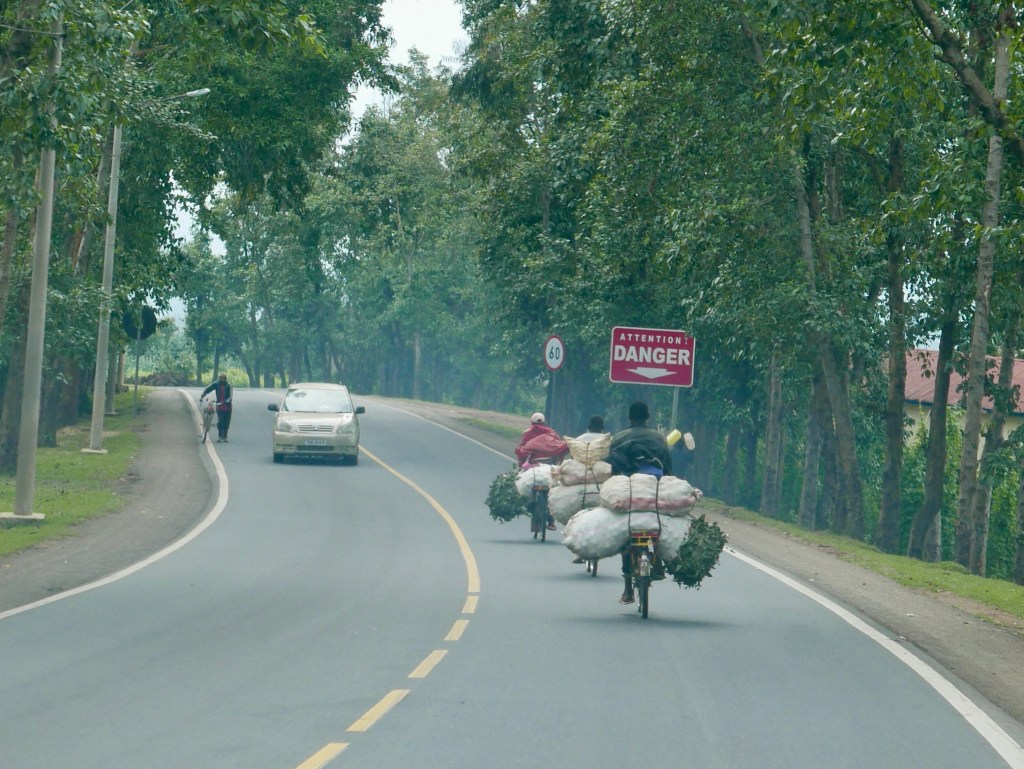
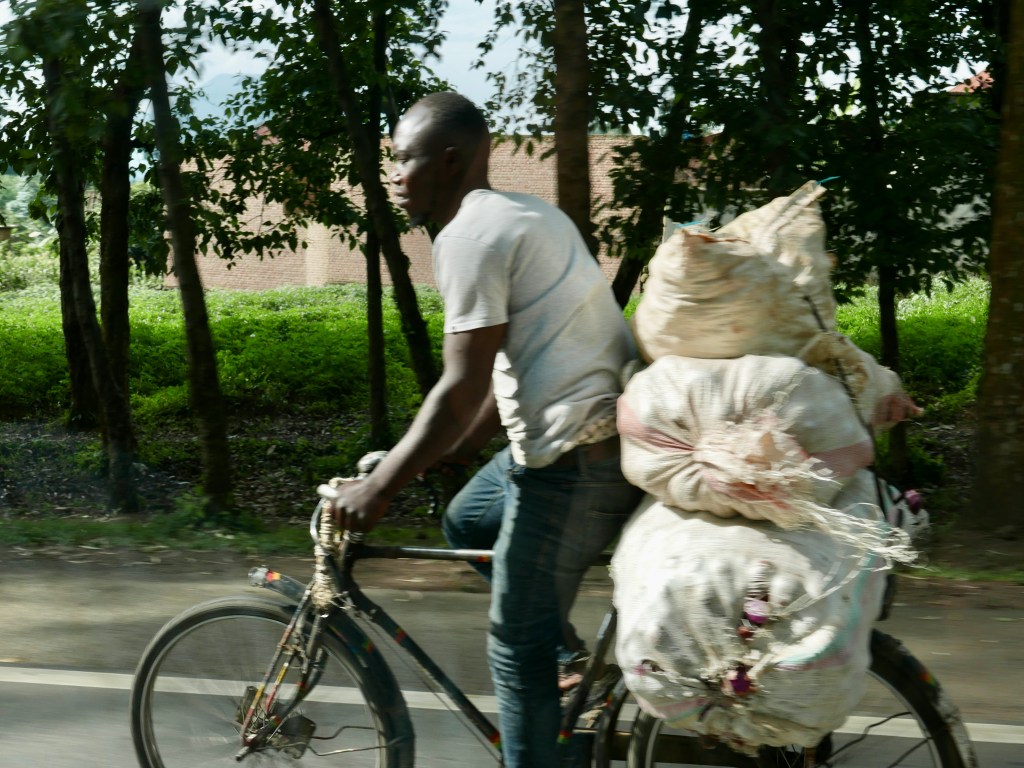
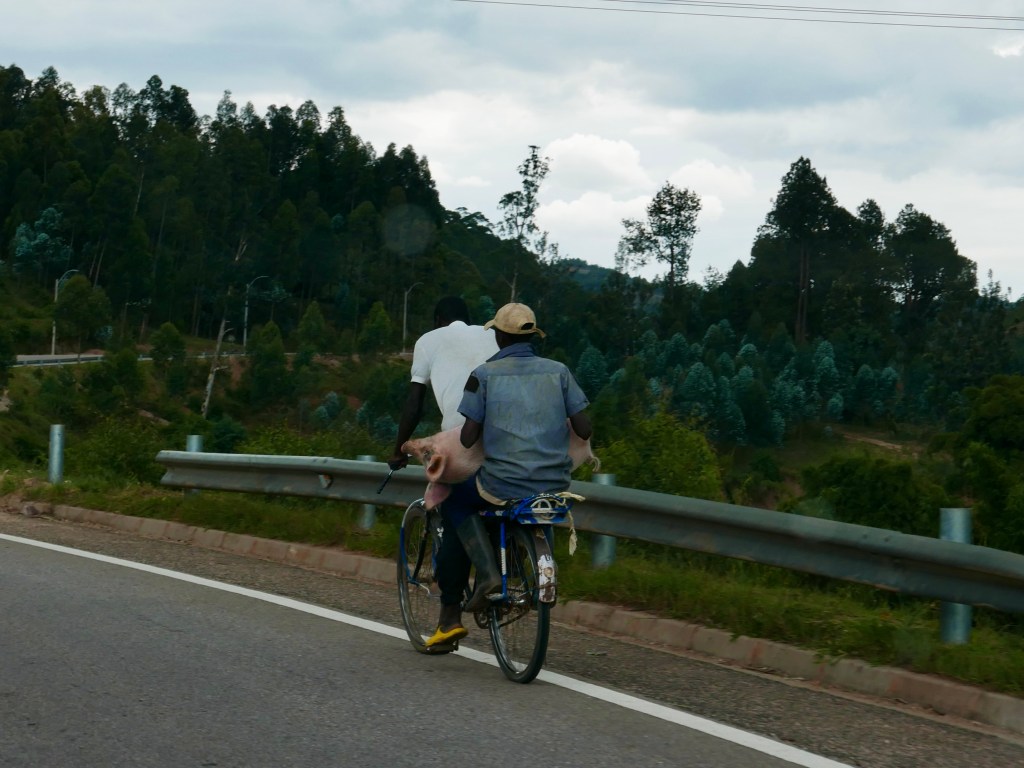
It’s a real delight to drive through Rwanda and it’s even better when you have a driver, because you can enjoy the friendly scenery and the permanent show without any stress. Indeed, once you leave Kigali, the city stops, but not the crowds: people are everywhere on the side of the road or in the fields, and they are all working hard. Rwanda is a tiny country, slightly smaller than Belgium but with more than 13 million inhabitants and a strongly growing population, aiming at self-sustainability in the agricultural sector. So apart from a couple of pristine national parks, it looks like every single hill, every single piece of land is cultivated – in a smart and sustainable way, with small plots and a wide diversity of fruits and vegetables on each plot, very far from the destructive monocultures we are used to in Europe. From one village to the next, all kinds of goods are moving on bicycles often overtaking our car at the craziest speed, whilst our driver needs to carefully watch ours as there are speed cameras every kilometre or so.
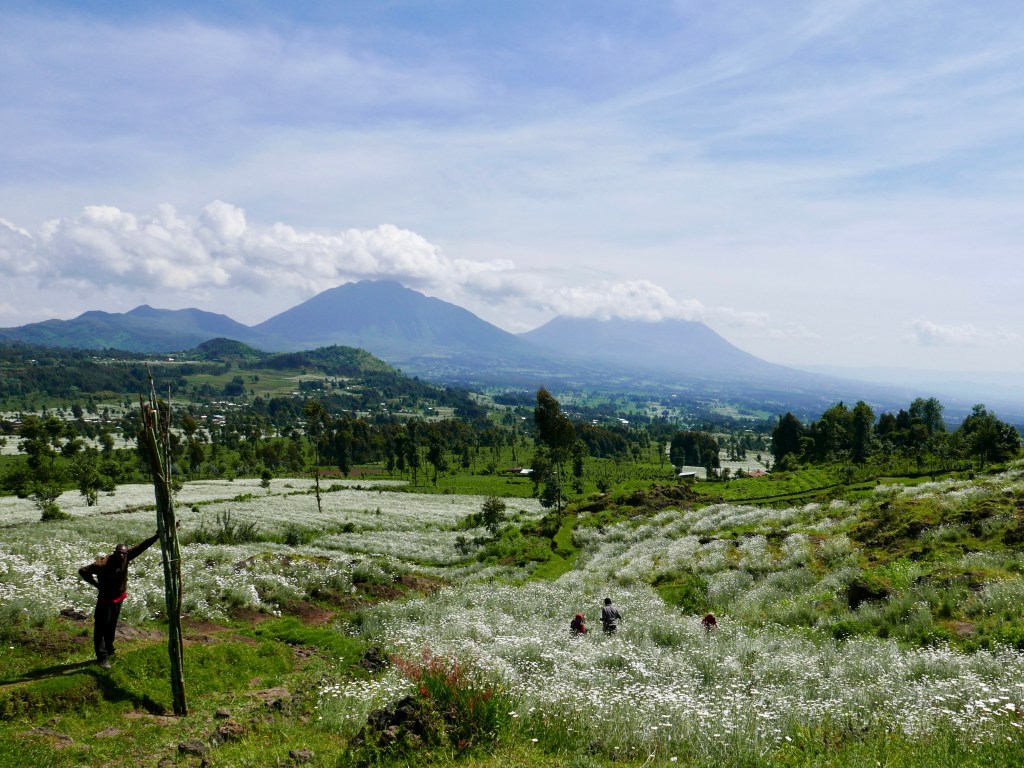
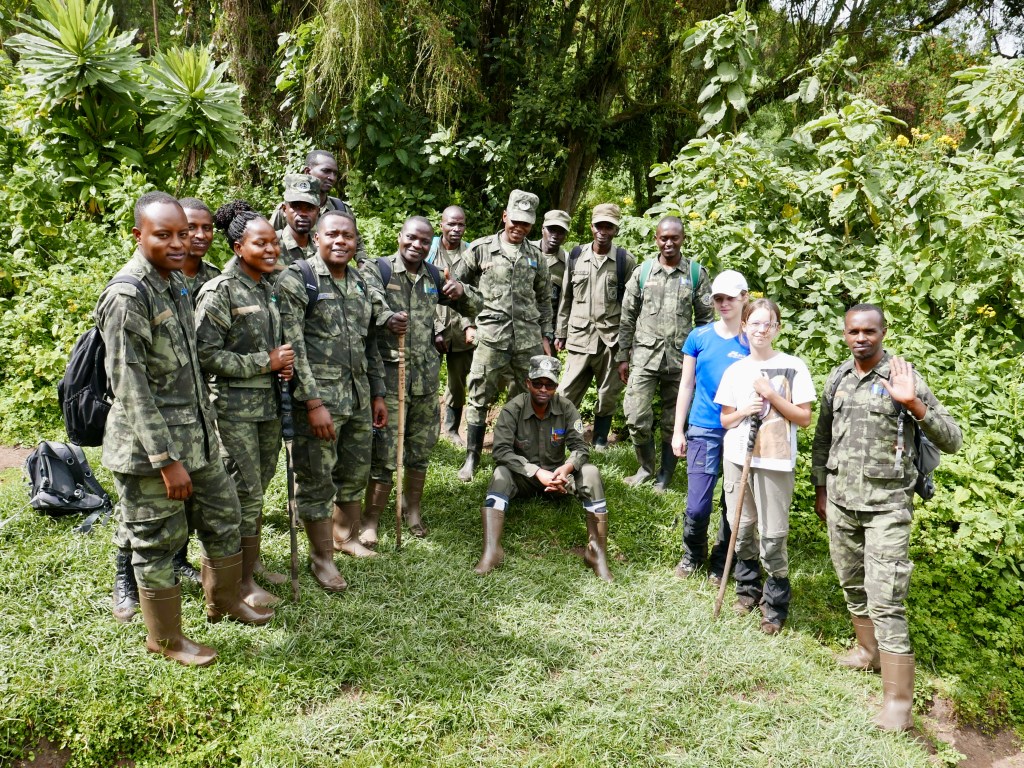
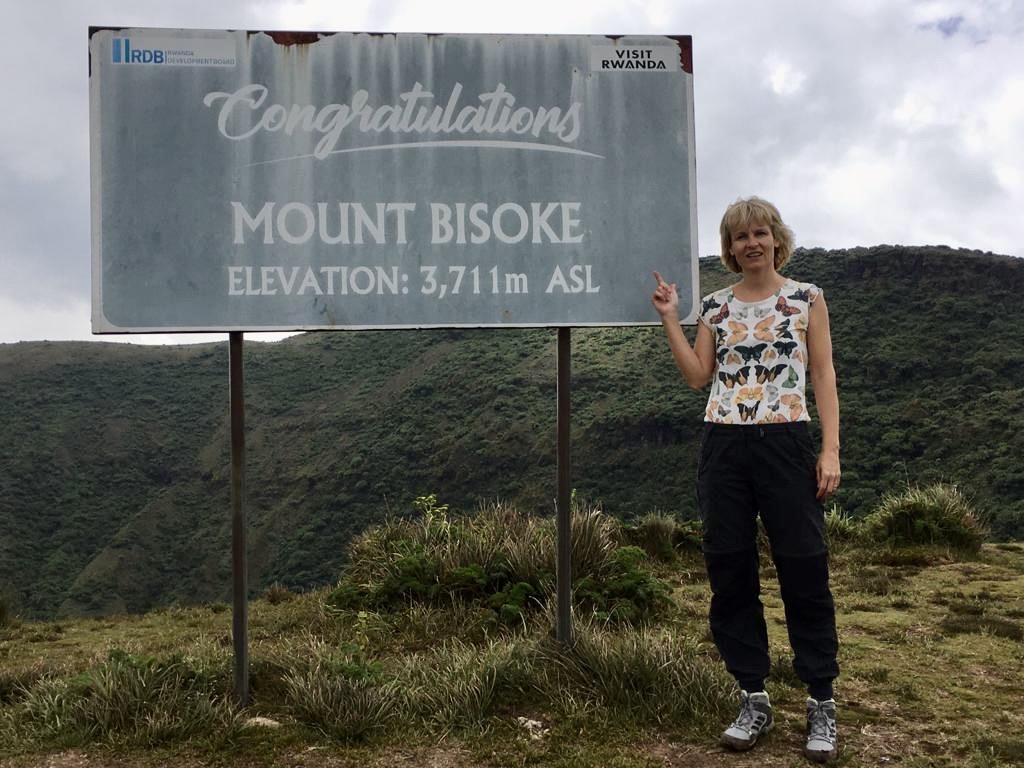
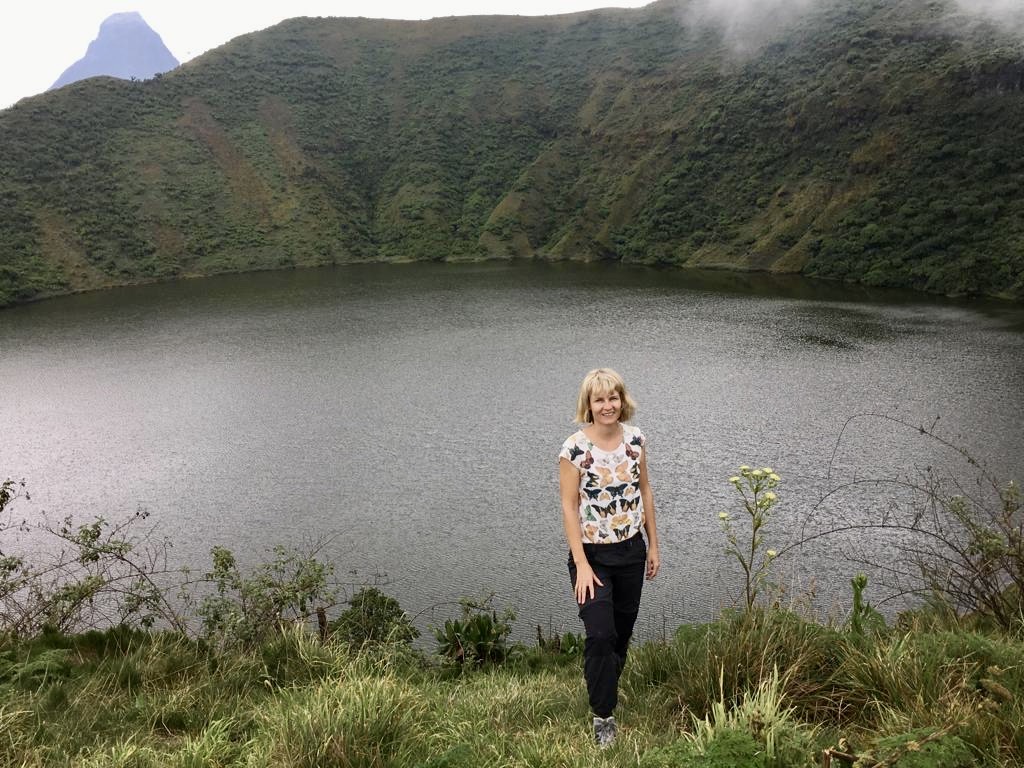
The Volcanoes National Park is located at the border with Uganda and the Democratic Republic of Congo. It encompasses five of the eight volcanoes of the Virunga mountains, which make for a both peaceful and spectacular scenery. Most visitors come trekking here to meet with habituated groups of mountain gorillas. We do not feel like it, not only because the permit costs $1,500 per person, but also because we do not want to disturb them and we are perfectly happy with simply visiting their natural habitat. After crossing gloriously white pyrethrum fields, we enter the national park. A few hundred meters later, the family splits: I stay with Milla and Flora, we team up with a group of more than twenty rangers on a training and head towards the remnants of the Karisoke Research Center, while Fruzsi stays with two rangers and three European visitors for the walk up to the crater of the Bisoke volcano.
Virunga mountains & volcanoesFeeling safe!
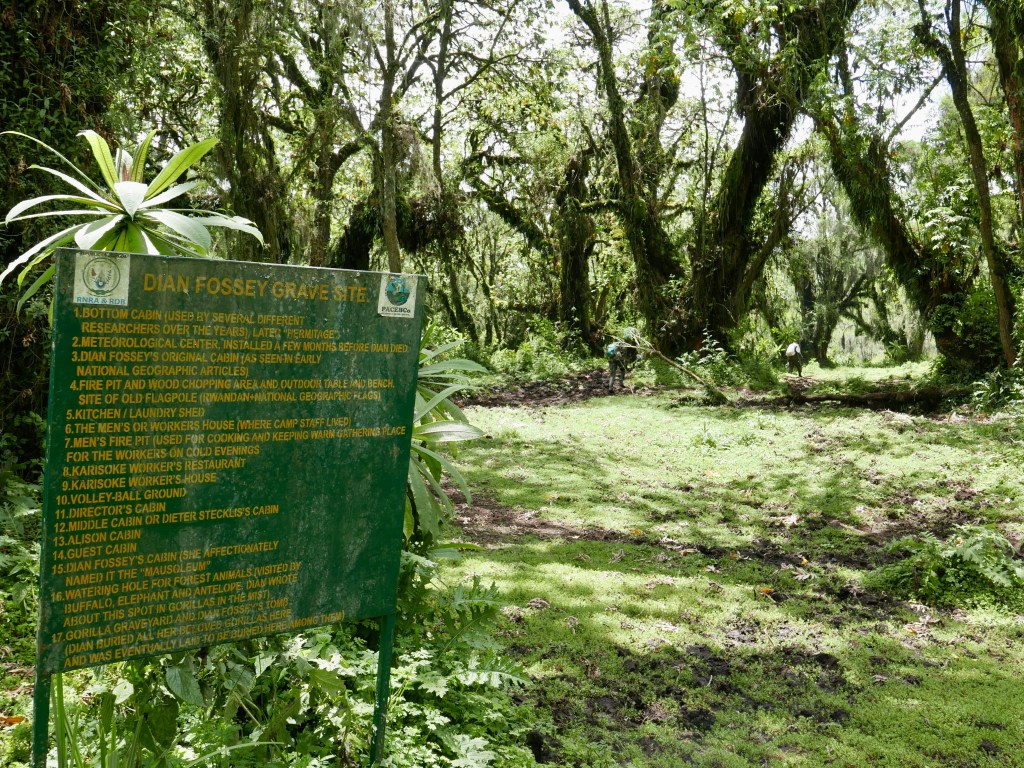
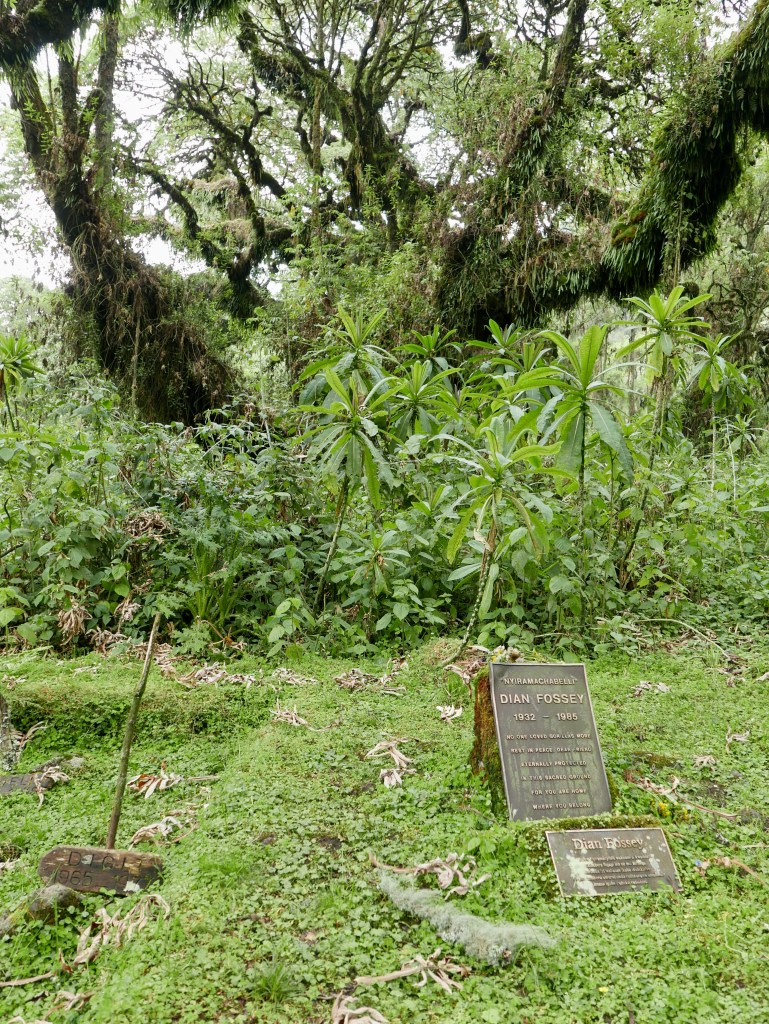
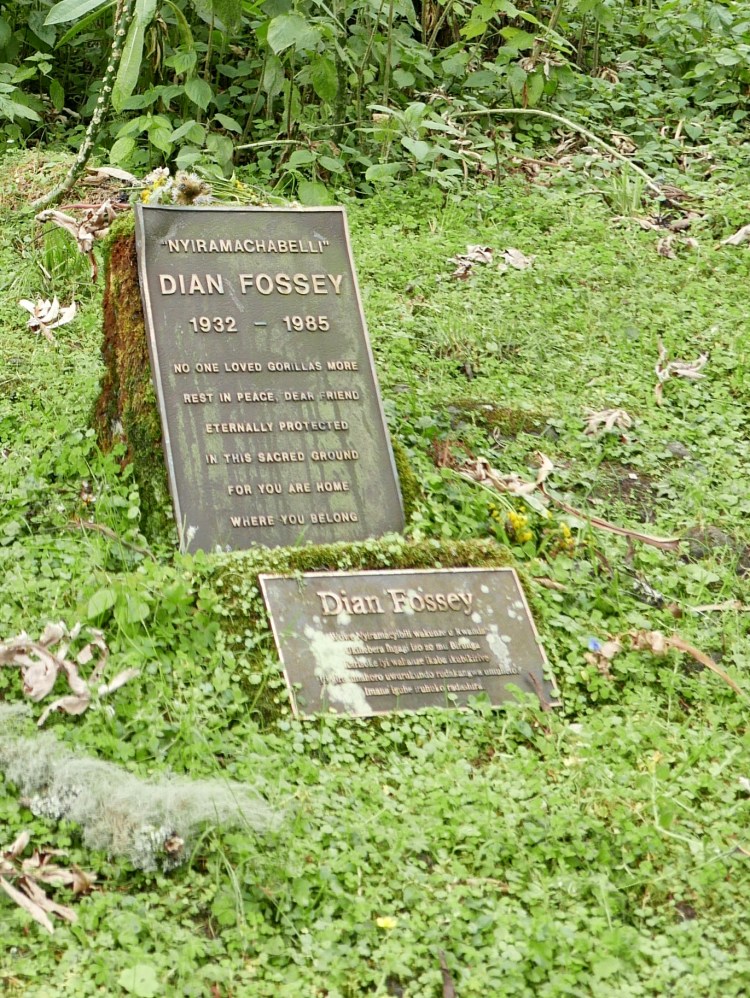
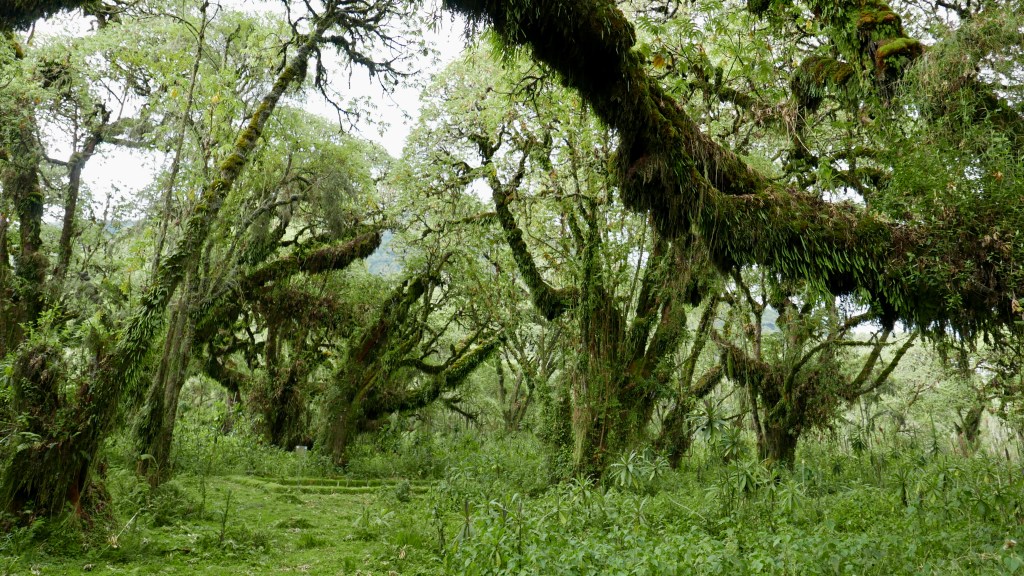
The Karisoke Research Centre was founded by the American naturalist Dian Fossey, the lady thanks to whom the mountain gorillas still exist today, and whose life and work were made world famous by Michael Apted in the film “Gorillas in the mist”, starring Sigourney Weaver as Dian Fossey. Not much remains from the centre apart from the foundations of a couple of houses that were built there back in the 60’s and 70’s by Fossey and her team. But the thick rainforest and green curtains falling from the trees surrounding us, and the head of the ranger team’s deep knowledge of the place and Dian Fossey’s lifework manage to bring to life this piece of African history for us. After being murdered there in 1985, Dian Fossey was buried in the back of her camp next to a dozen of the gorillas she studied and lived with throughout her stay in the Rwandan mountains, the most famous of whom was called Digit. There is something deeply soothing, almost church-like, emanating from the peaceful gravesite. We feel especially lucky we could make it here, as the border with DRC lies a few hundred meters away and access to the site is often prohibited to visitors given the ongoing tensions in the North Kivu region.
Meanwhile, Fruzsi has reached the crater of the volcano, after 3 gruelling hours of a trek that verged towards heroic alpinism at its end. Two of her three team mates gave up halfway: too hard, too steep, too rocky. With a sense of care and anticipation reminiscent of many of our Gabonese experiences, the rangers had told them it would only take a couple of hours, and omitted to mention that the height difference exceeded 1,200 m, and that it may be smart to bring more than a small bottle of water and an apple if they want to make it to the top. Because the top actually lies at no less than… 3,711 m!
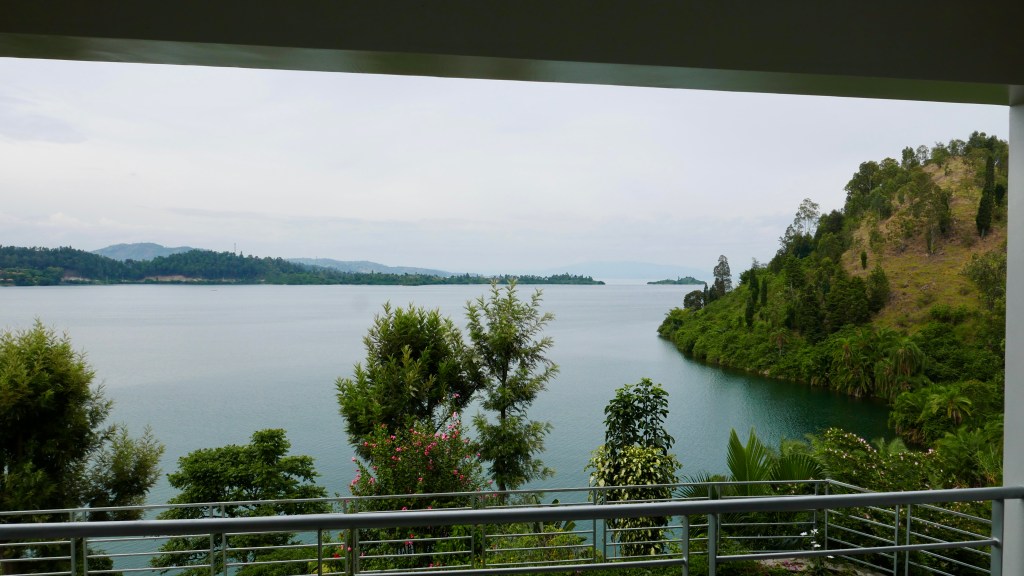
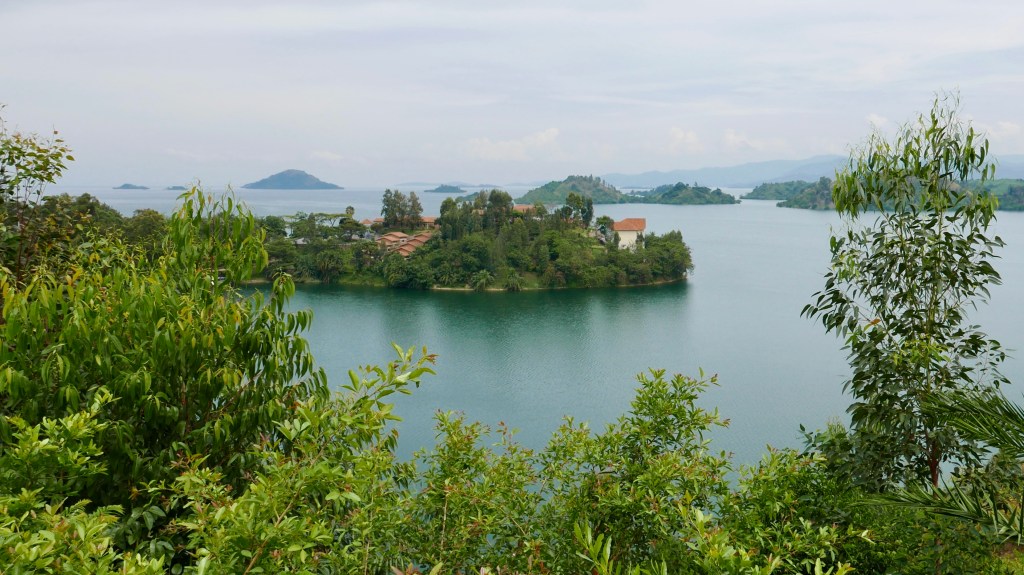
The next day, we are in the small town of Kibuye, watching the sun set over Lake Kivu and DRC in the background. We have seen the children walk back home from school, now there are just fishermen on their boats. From our balcony, it’s impossible to imagine that chaos rules on the other side.
Lake Kivu
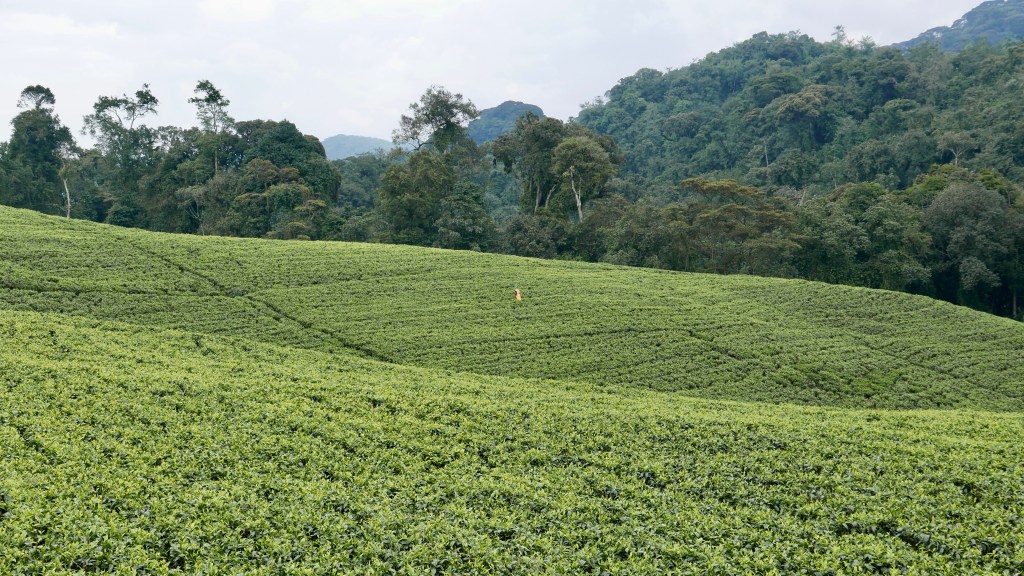
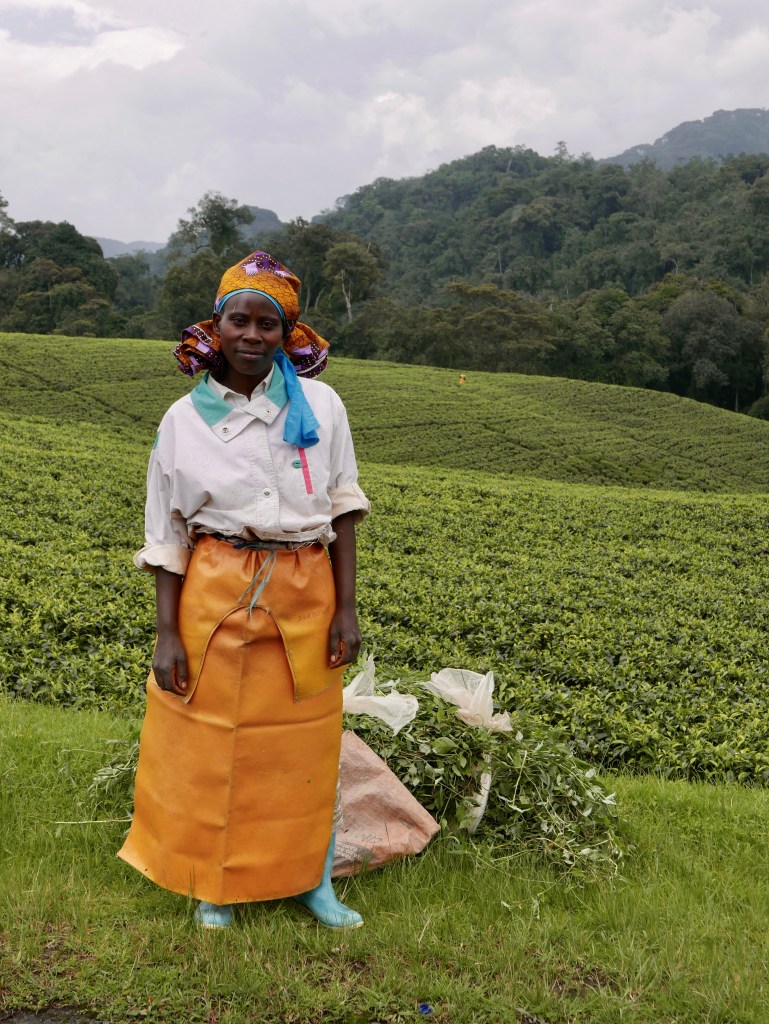
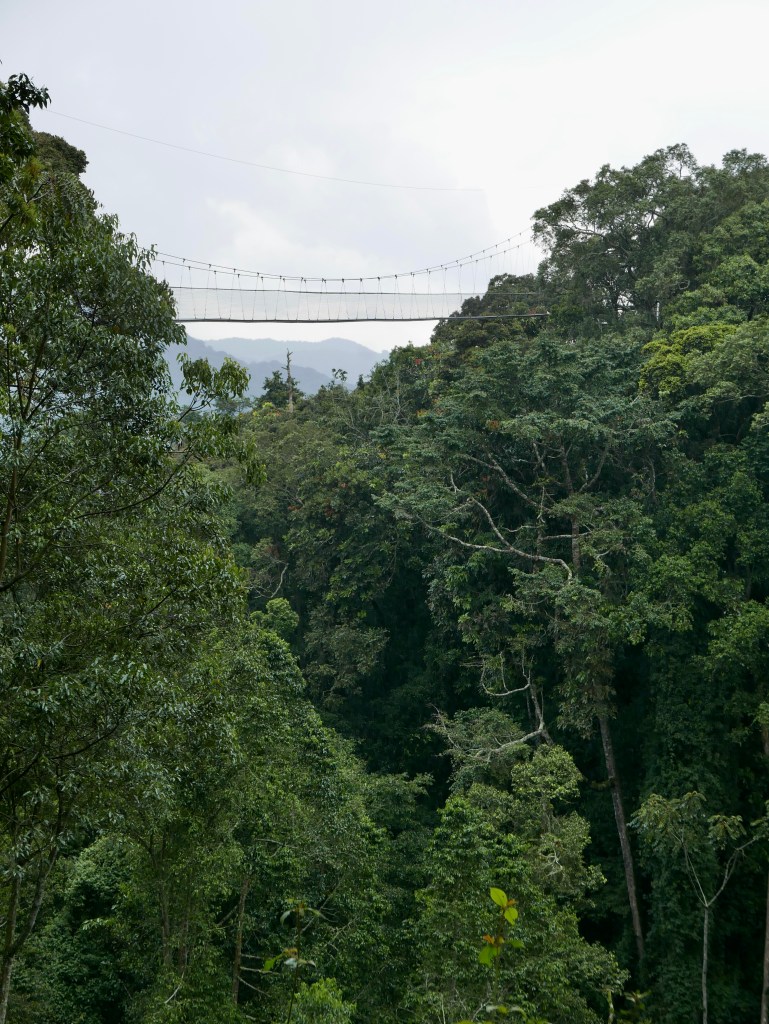
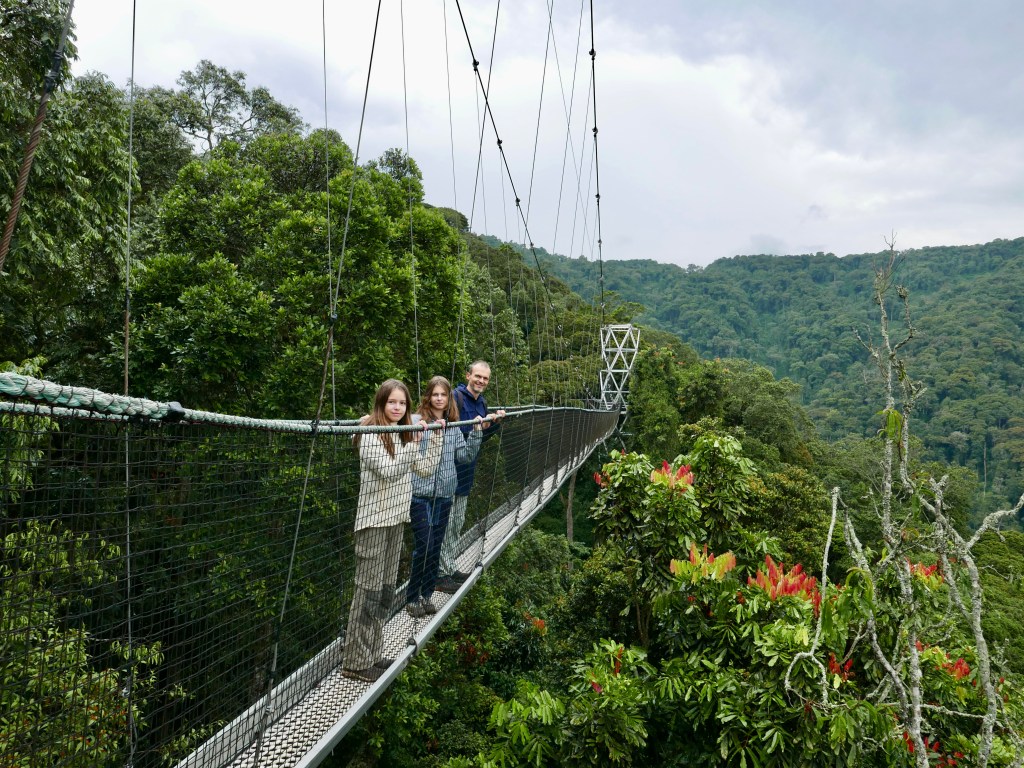
Order and beauty discreetly prevail in Rwanda, and later in our round trip, the endlessly curvy roads, the uncountable green hills, the majestic tea plantations on the South side of the lake and the shrouded in mist mountains and primary forest of the Nyungwe National Park keep us under a constant spell. Locals always do their best to make us feel welcome and advertise for their country, which they know is one of the very few in the region that is going into the right direction. And to top it all off, it’s a bit cold outside, which feels nice when you live in Gabon.
Tea plantations, Gisakura
Within one week, we get a short but precise glimpse of a tiny African country that seems to set an inspiring example of societal, economical and environmental success, from which many Western and African countries could learn. Of course, there has to be a dark side to this success – you get a fine if you don’t participate in the monthly Umaganda, so it seems safe to assume that a certain level of control is exerted on individuals, nevertheless the truth is: today’s Rwanda has to be seen to be believed.
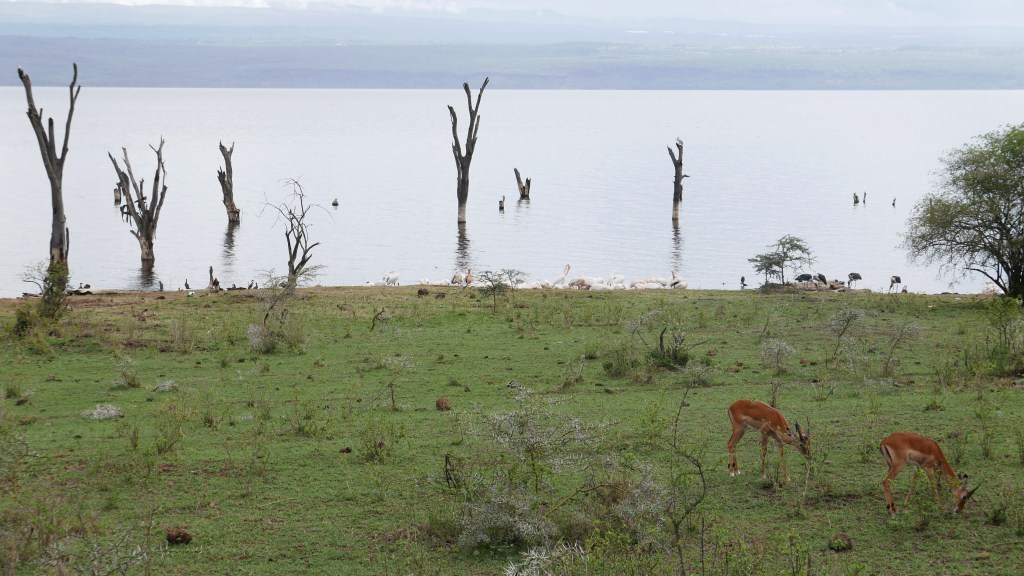
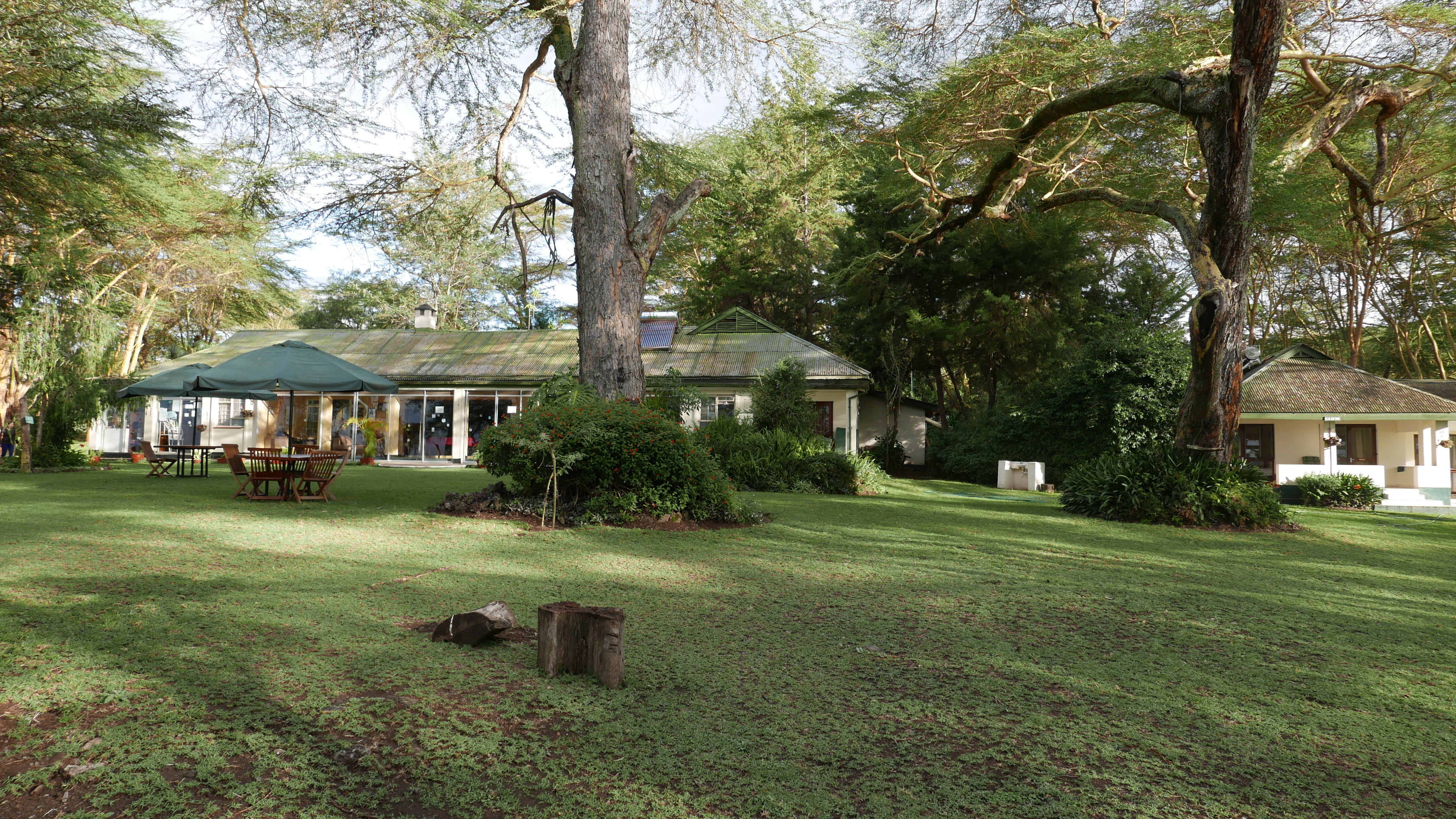
The flooded shores of Lake Nakuru as as desolated as the ones of Lake Naivasha. Pale dead tree trunks sprouting out of the water like needles. We must be 15 visitors altogether in this gigantic lodge that can accomodate around 200 guests, and we are happy we came in the rainy season even though it’s raining – a bit.
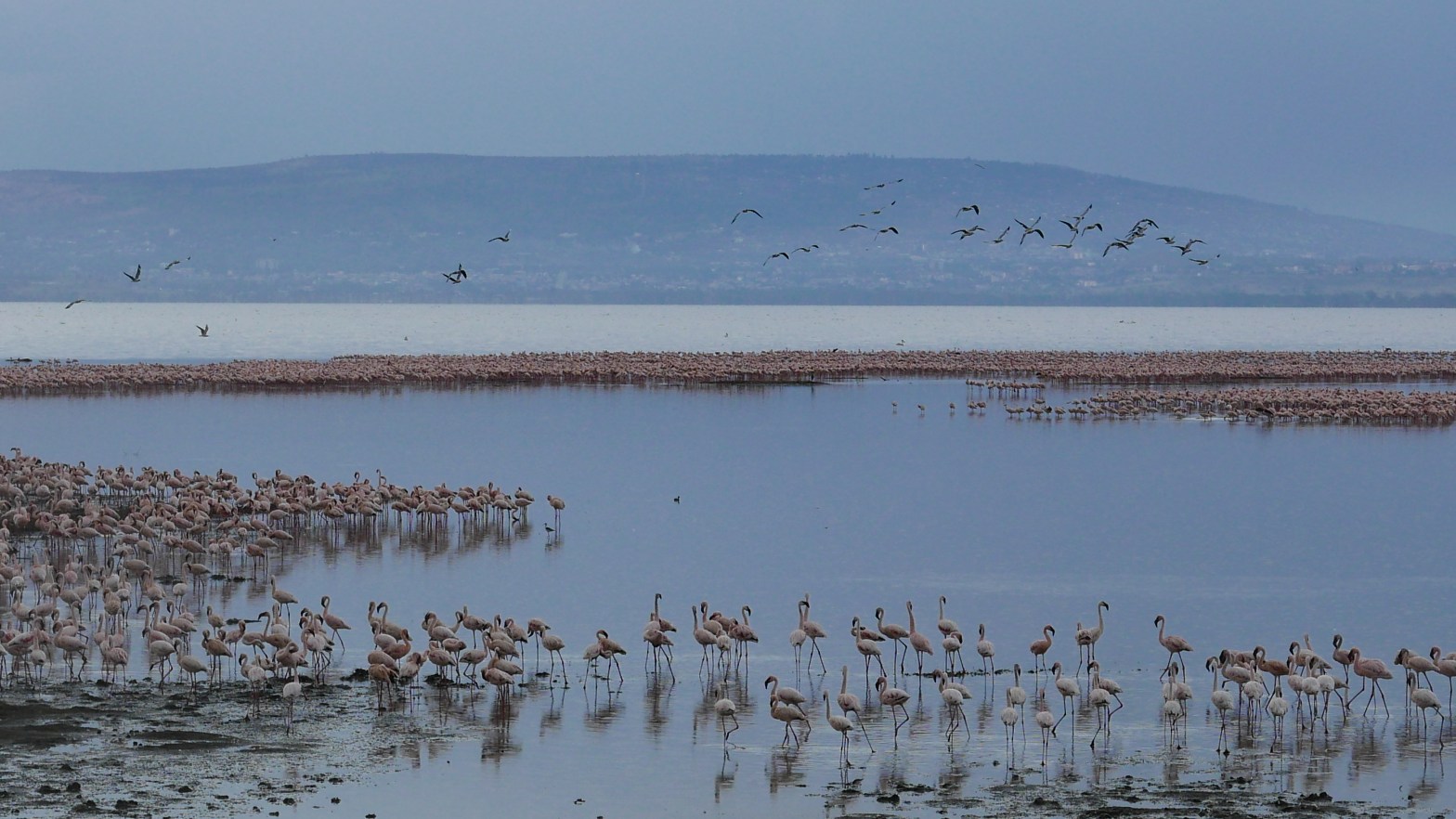
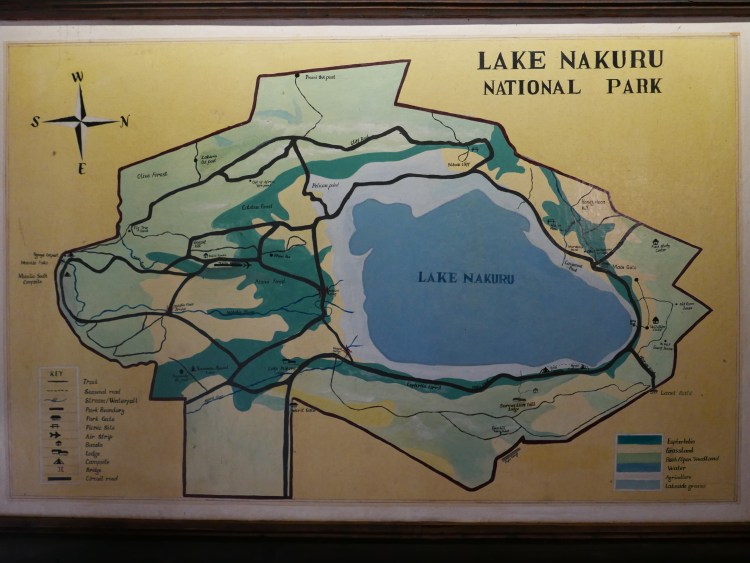
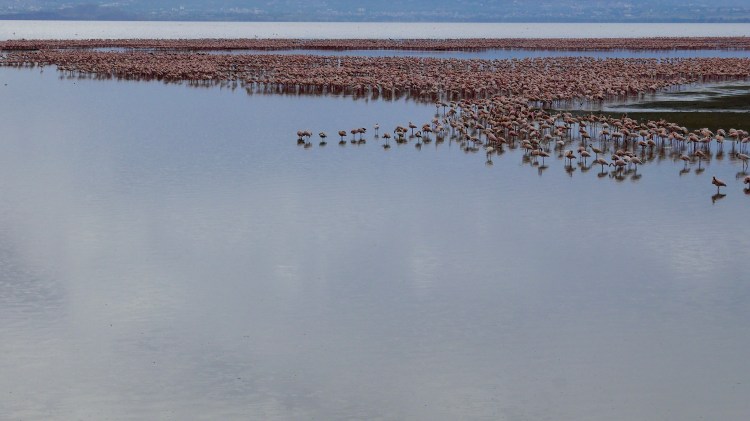
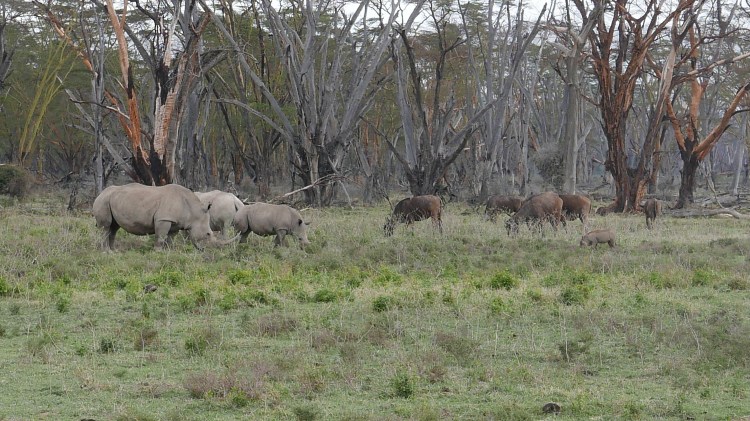
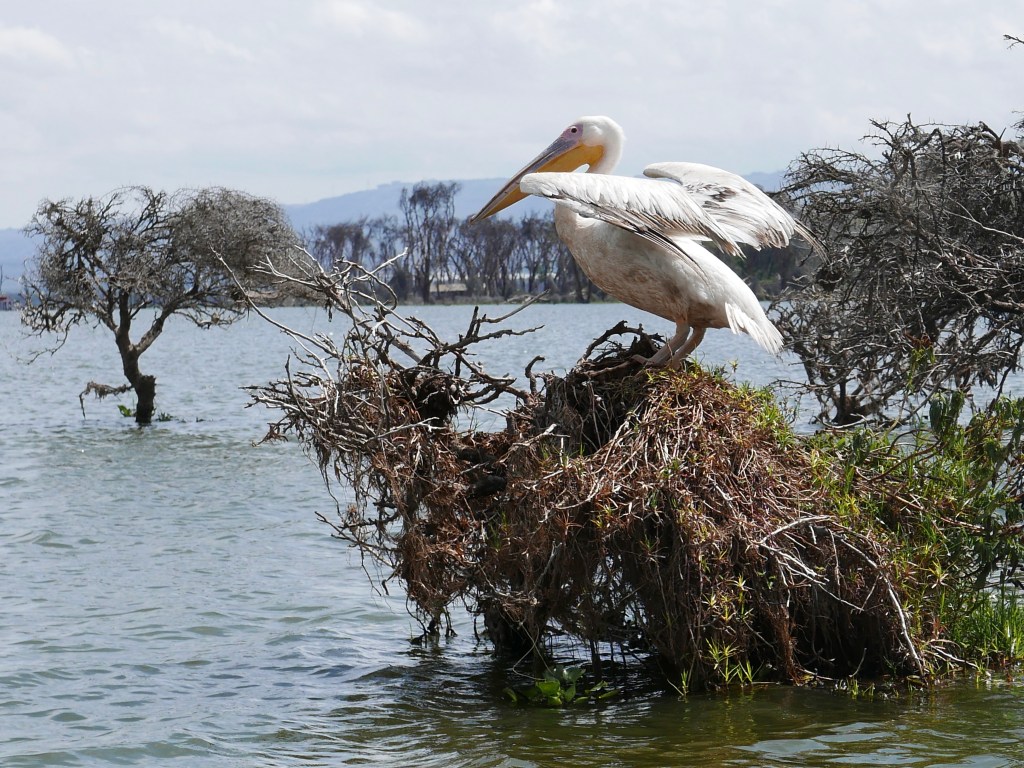
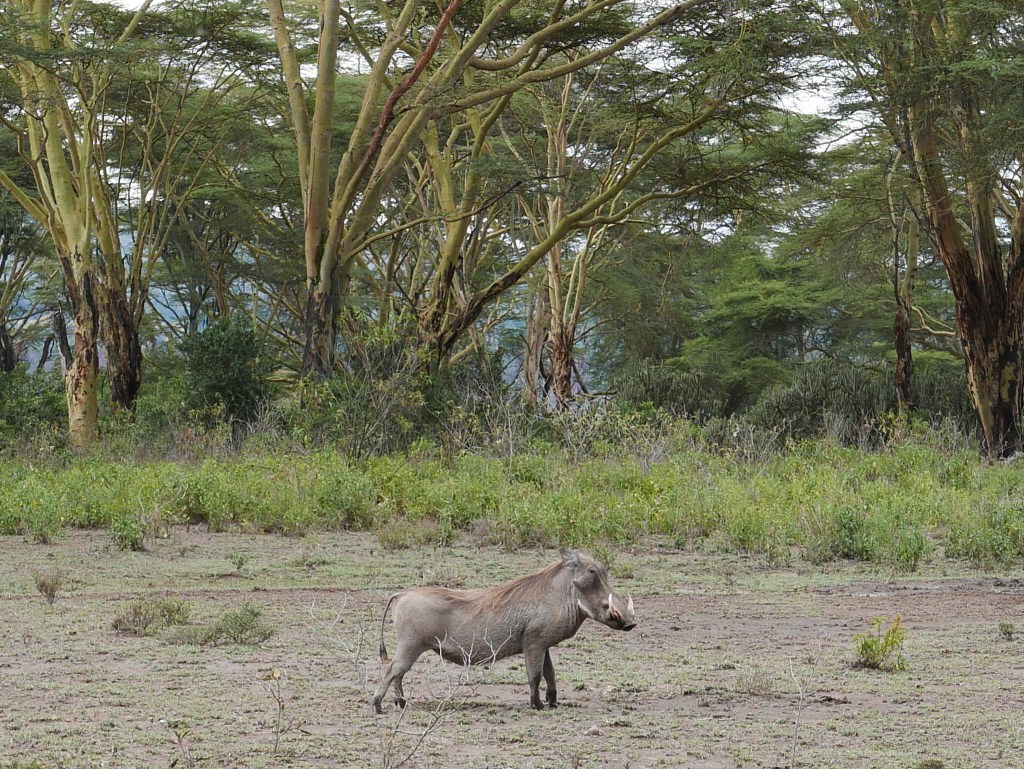
The National Park comprises the lake and its shores, as well as a relatively small stretch of land in the West. A few scenes from the movie Out of Africa where shot here. It’s made of plains and hills and in the background, we can see Nakuru, the 4th largest city in Kenya. Wildlife abounds in the form of birds – eagles, pelicans and… flamingos. From far, they form a flashy, thick pink strip between the lake waters and the land. From close, their continuous conversation melts into a loud high-pitched chirping blob, as they stand in the mud by the thousands. In the past, there used to be millions of them here. Behind the flamingos, grey rhinos are grazing while warthogs are fooling around at their feet.
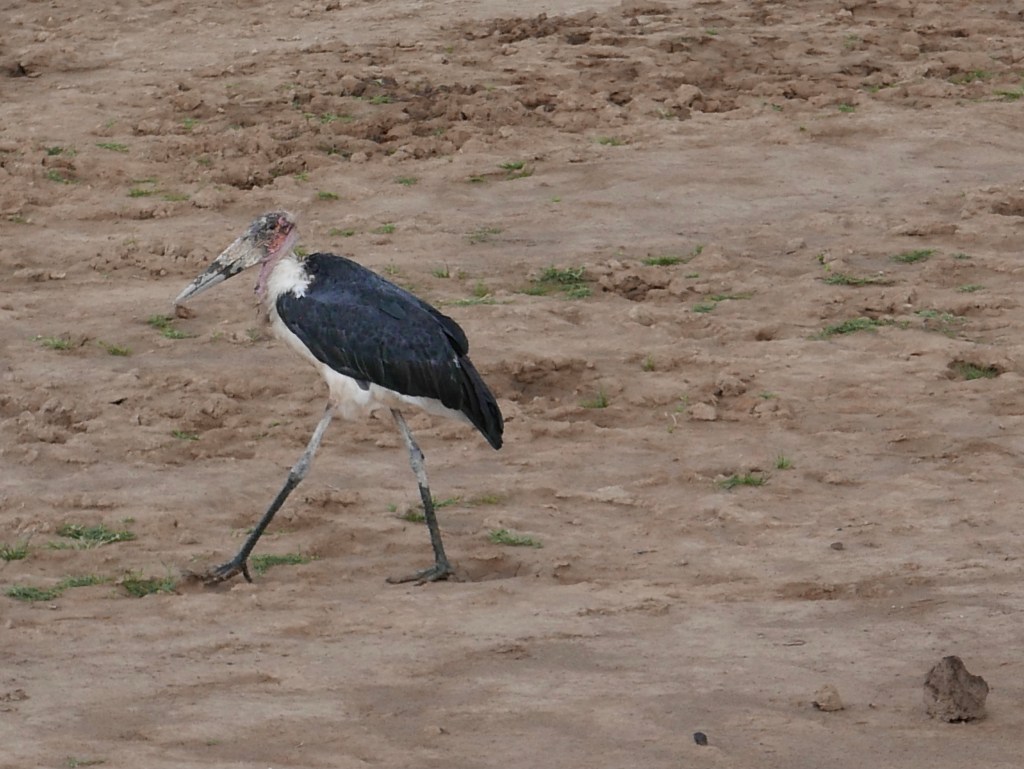
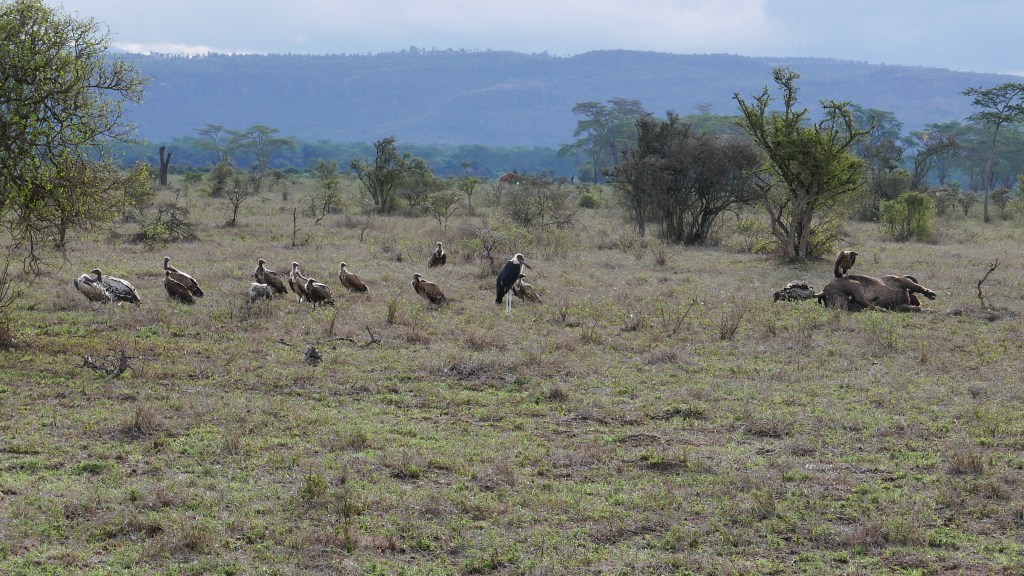
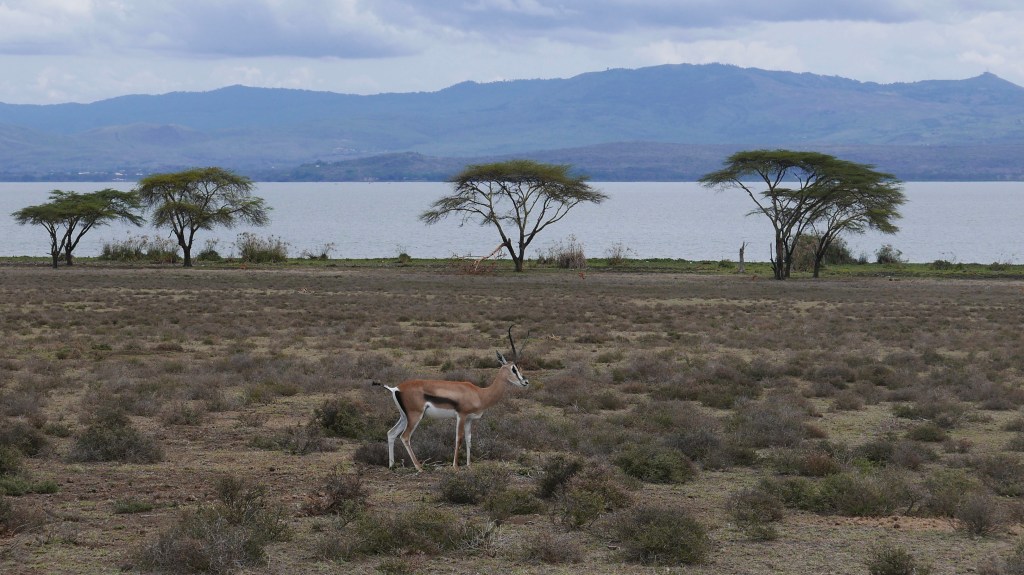
Driving through the savannah further away from the lake, it’s easy to spot gazelles and buffalos, some of which lying dead on the grass – our driver and guide Victor tells us the rain came late this year and grass grew too late, and that anthrax still kills herbivores. After a week in Kenya, it’s only now that we are stricken by the ominous presence of vultures, and here in Nakuru they are joined by the grim reaper himself, the ugliest of all feathery creatures: the marabout. Together, never far from a carcass, they form team death, and seeing them at work is slightly sickening.
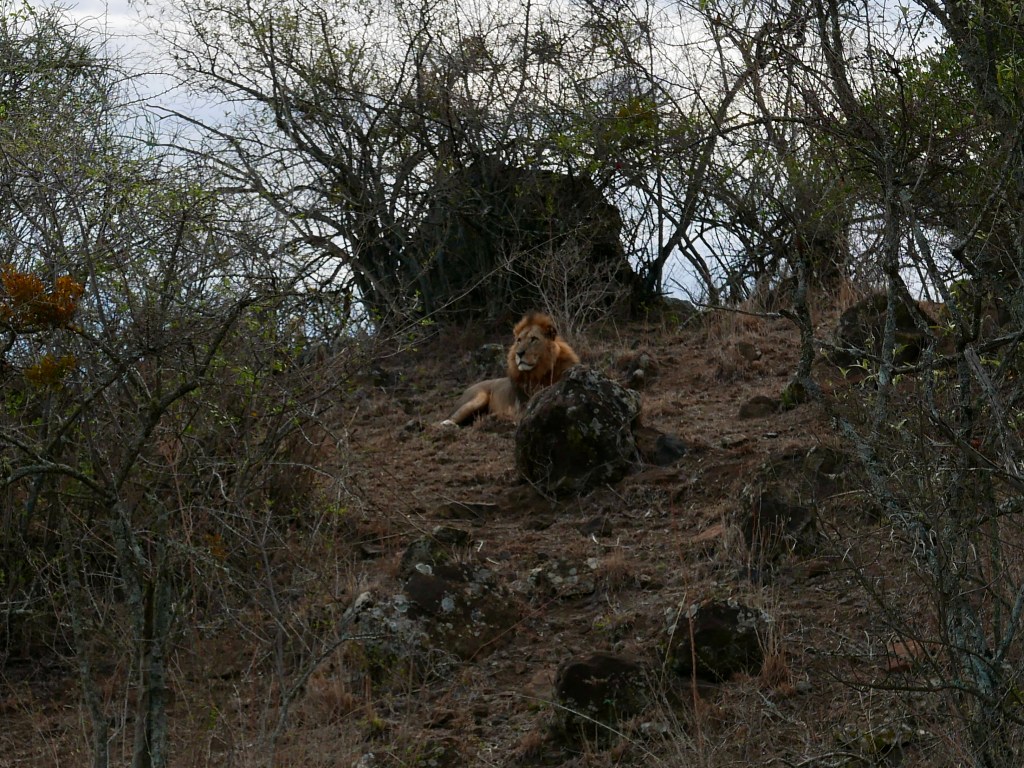
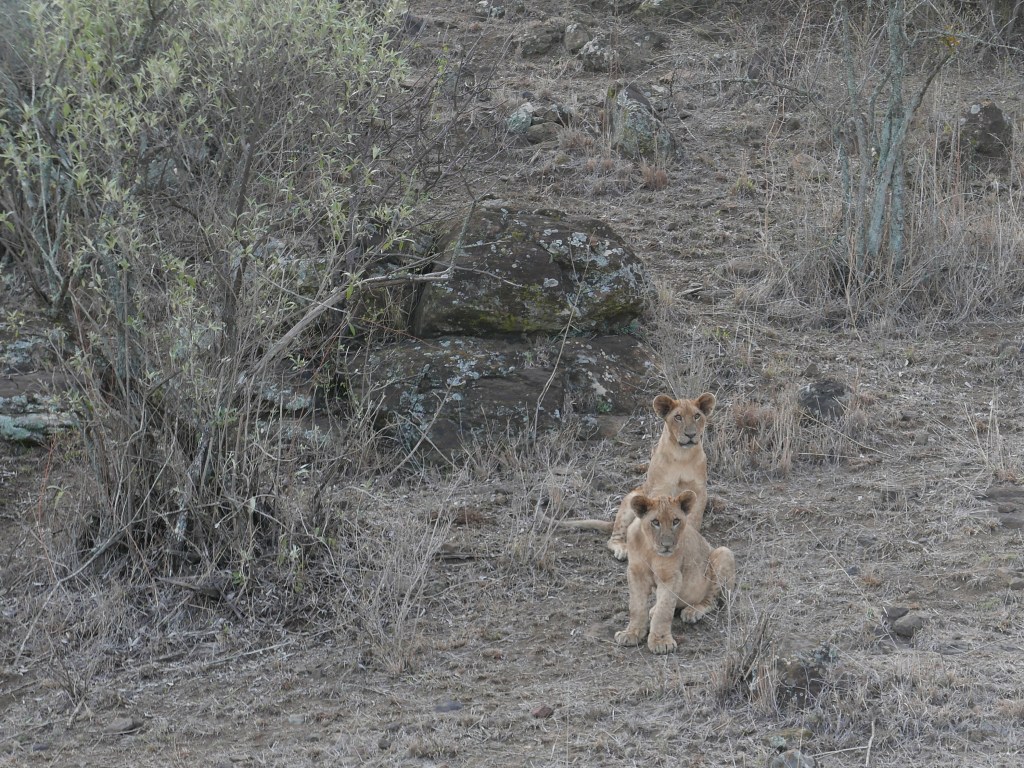
Fortunately, we finish our safari at sunset (by the way, safari means voyage in Swahili!) in Nakuru with much nicer encounters: two cubs under close surveillance from their dad, a couple of hippos, and at last a solitary black rhino browsing the bushes. There are only around 5,000 of them remaining today on the planet.
The morning after, it’s finally time for us to head back to civilisation. Within a few hours, we reach the green and breezy neighbourhoods of North Nairobi. We learn everything about the author of “African Farm”, whose life inspired the movie Out of Africa (partly shot around Nakuru) at the Karen Blixen house and museum. Another would-have-been-a-normal-European life that Africa put upside down and made fascinating. We meet up with our friend Bartol again, and during the weekend we discover Nairobi with him… a real modern African city with modern skyscrapers, large roads and insane traffic, shopping malls, poor and rich hard-working people out on the streets, quiet expat districts with huge Victorian mansions, trendy bars and restaurants. Not the Africa we are used to in Gabon! Still, we find ourselves happy to be back under the sun and on the seaside in our dear… Librevillage.
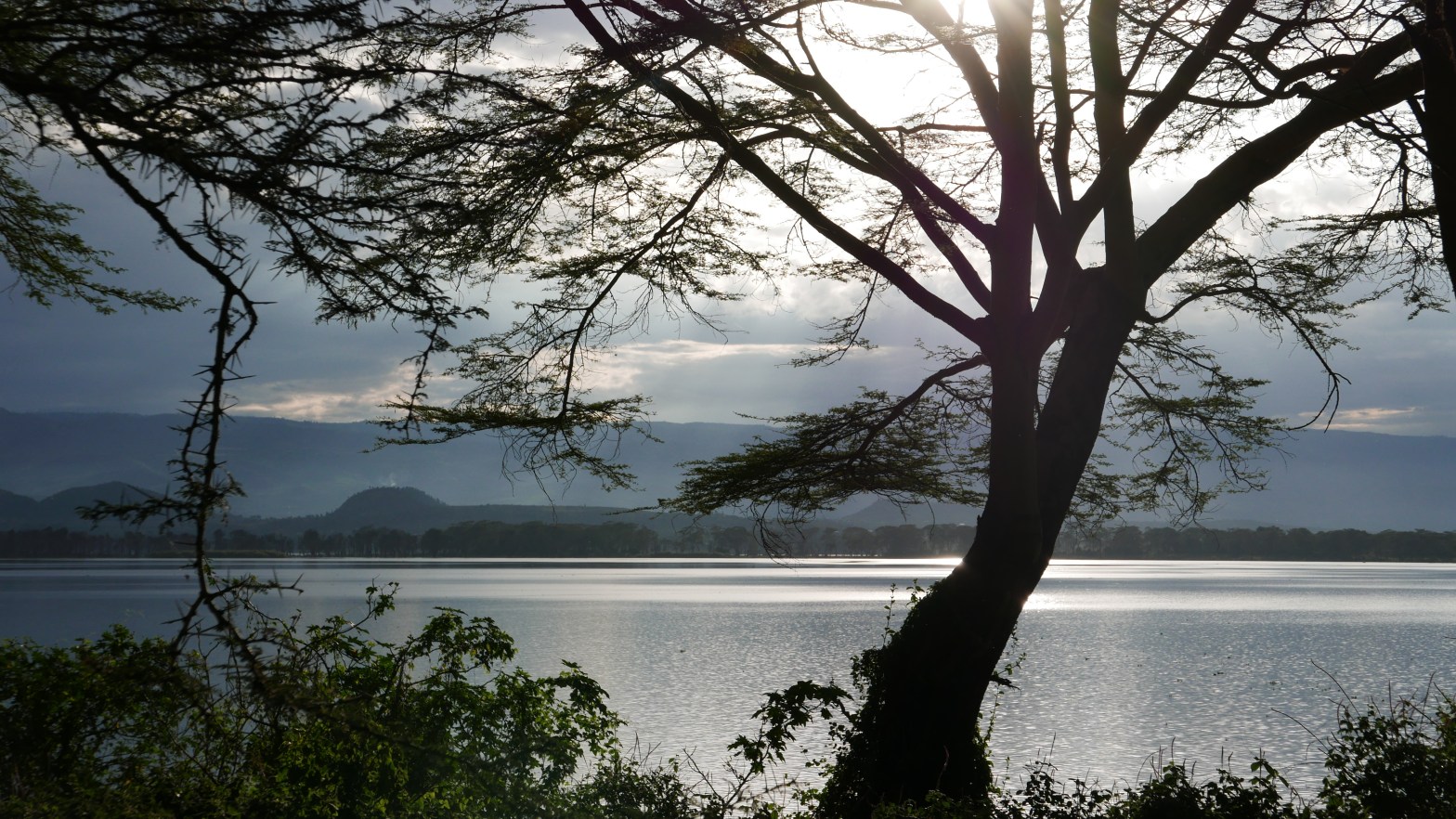
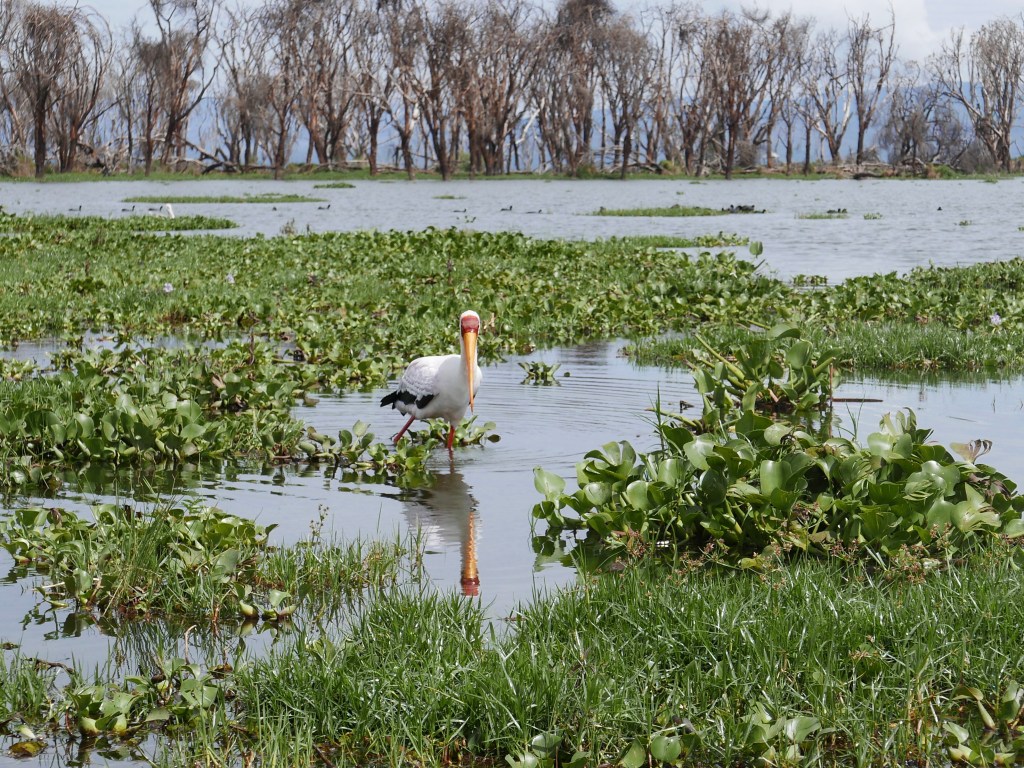
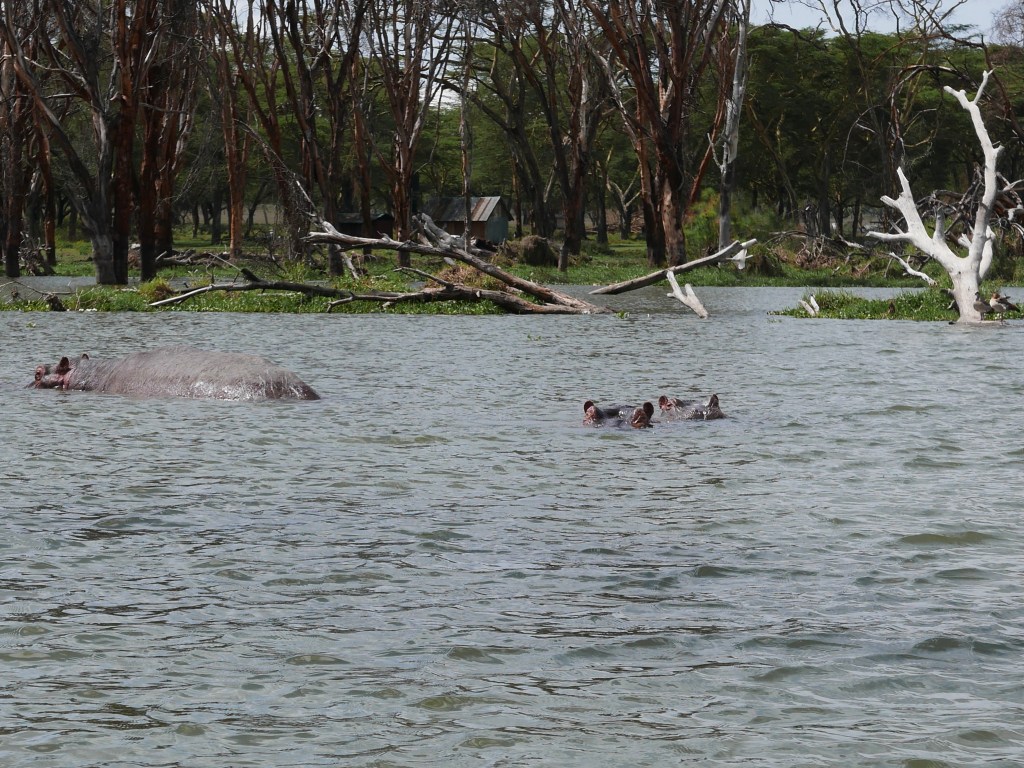
In in the first half of 2020, torrential rains fell for months upon the string of 8 lakes of the Rift Valley in Kenya, including Lake Naivasha. The same had happened in the early 2010’s. Today, the surface of the lake is 50% larger than in 2012. The floods have obliged hundreds of people to leave their homes, dozens of farms to shut down, and caused more hippo attacks on human as the lake shores get closer to the surrounding villages. After the recent overflow, the waters have receded by roughly 150 meters, leaving a crown of dead tree trunks as well as destroyed houses, hotels and bungalows all around the lake. Not exactly your dream travel destination, but rather a palpable example of climate change impact in East Africa.
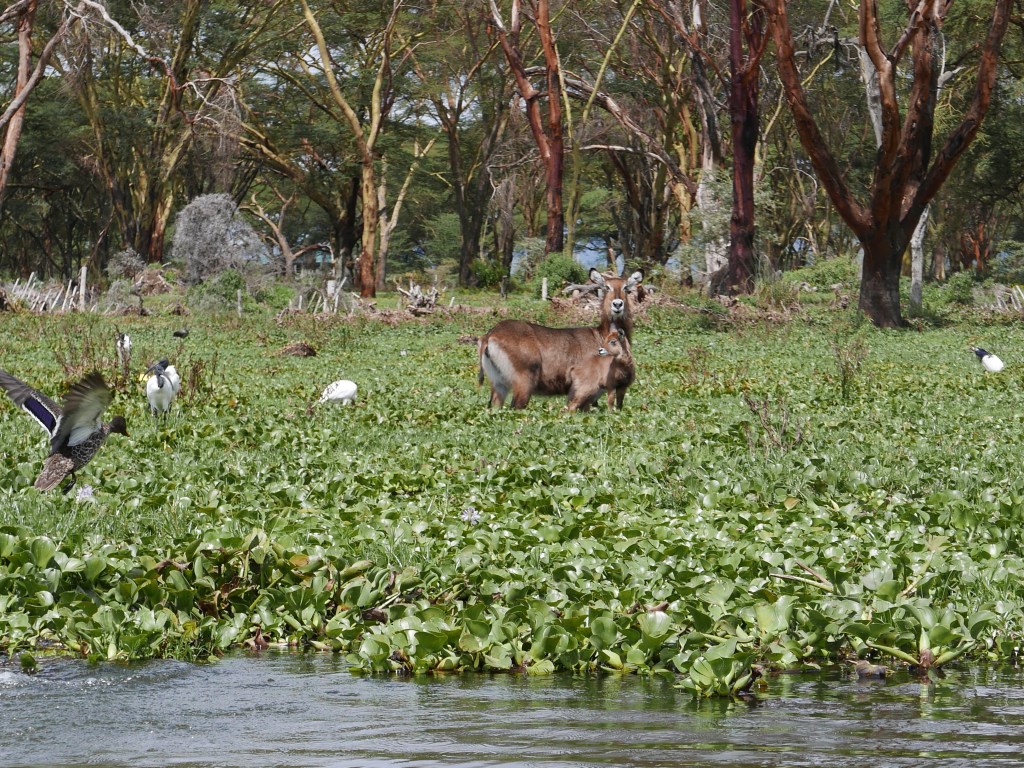
A year after the overflow, animals and humans still thrive around Lake Naivasha, just in a different way and in a different place. Everyone has adapted. It’s a busy place, with the nearby geothermal plants and gigantic flower farms that employ thousands of people. Did you know that if you have tulips or roses in your Belgian or English house now, there are great chances they were grown in Naivasha – how insane is that?
Sanctuary farm
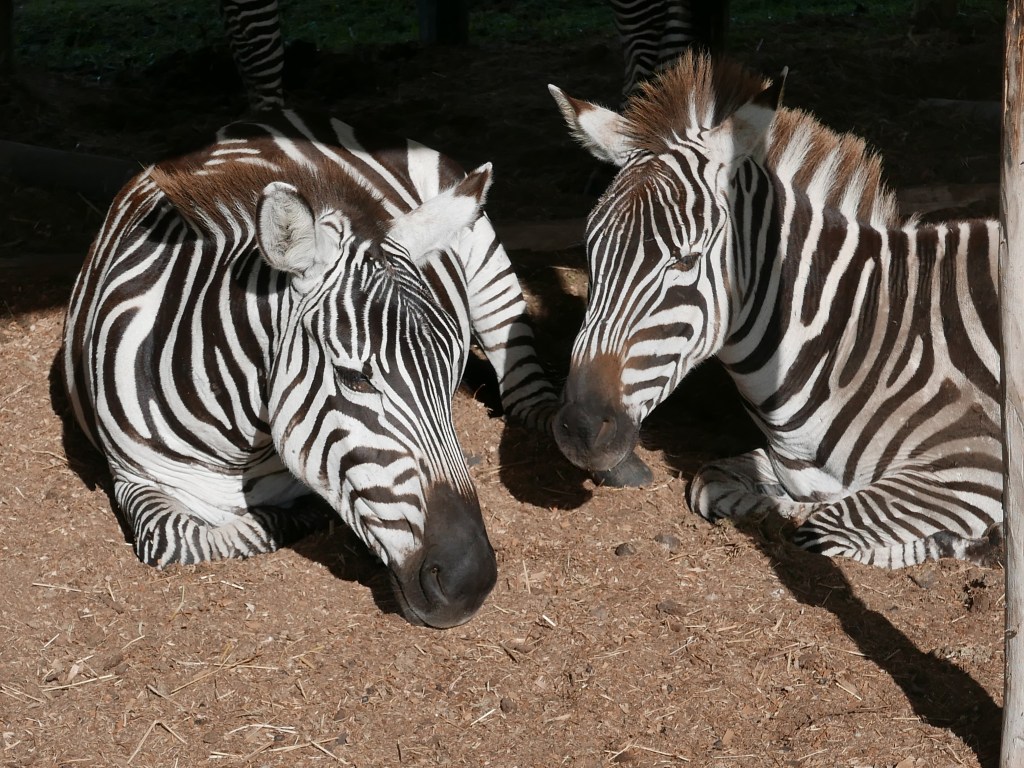
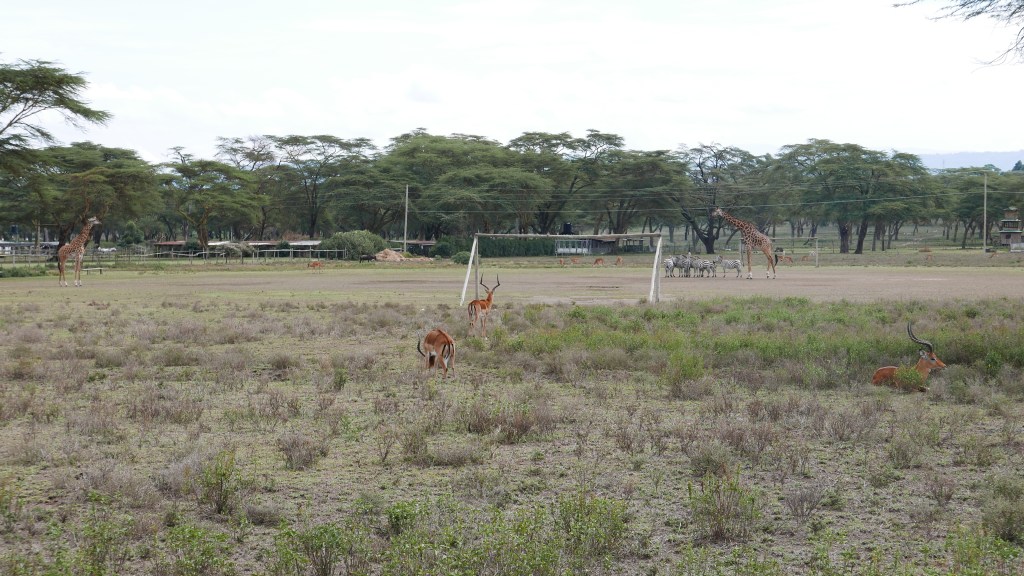
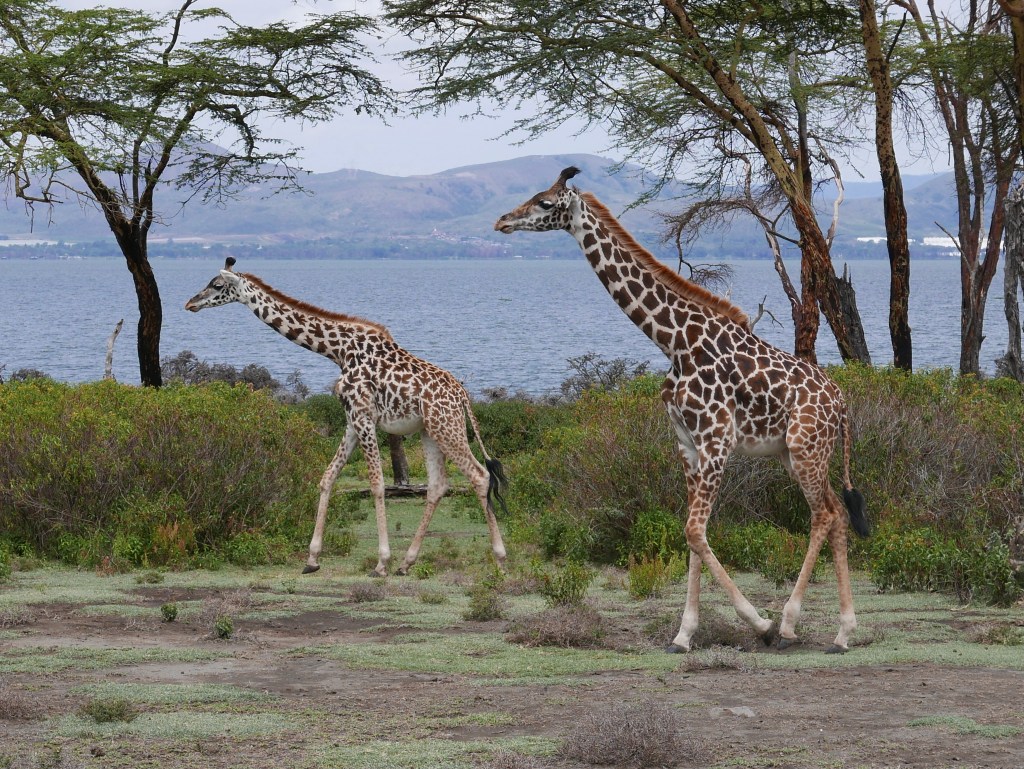
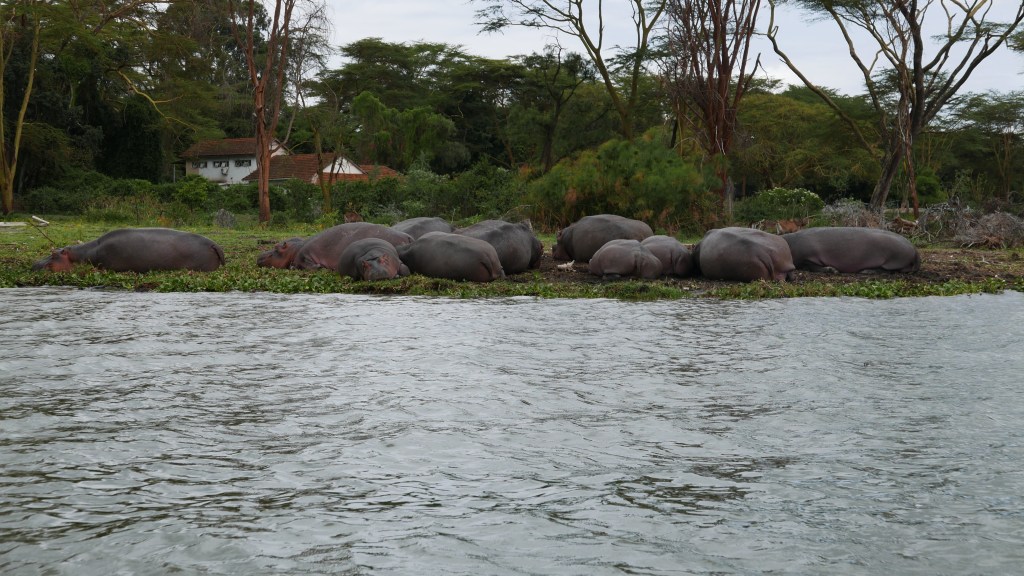
We spend time in Sanctuary Farm, where you can horse ride among giraffes and zebras. We take a walk on Crescent Island, which tree line bears heavy traces of the flood, and take a boat ride trying to keep at a reasonable distance from the hippos, while local fishermen literally risk their lives much too close from them.
Players and referees in place!
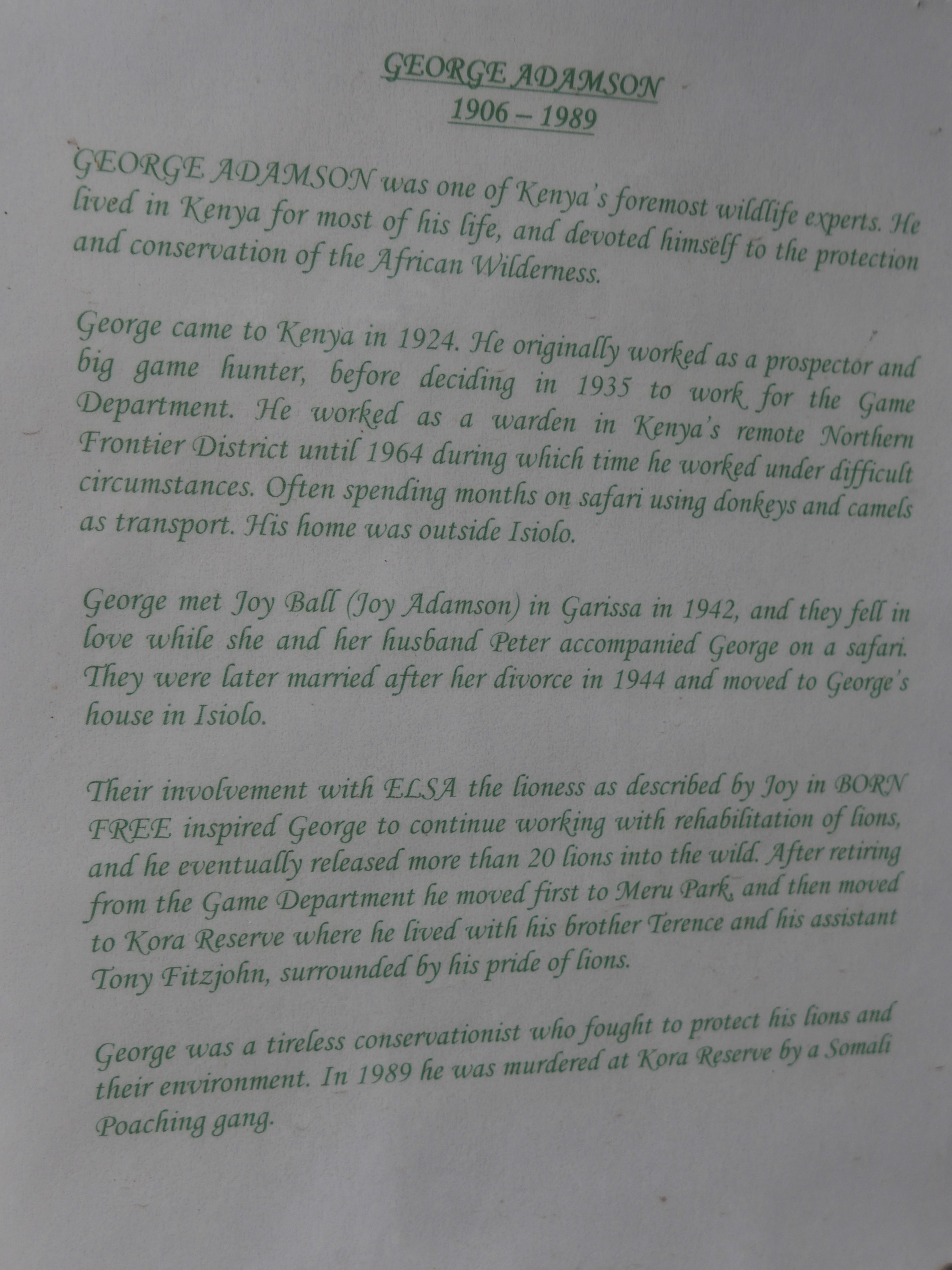
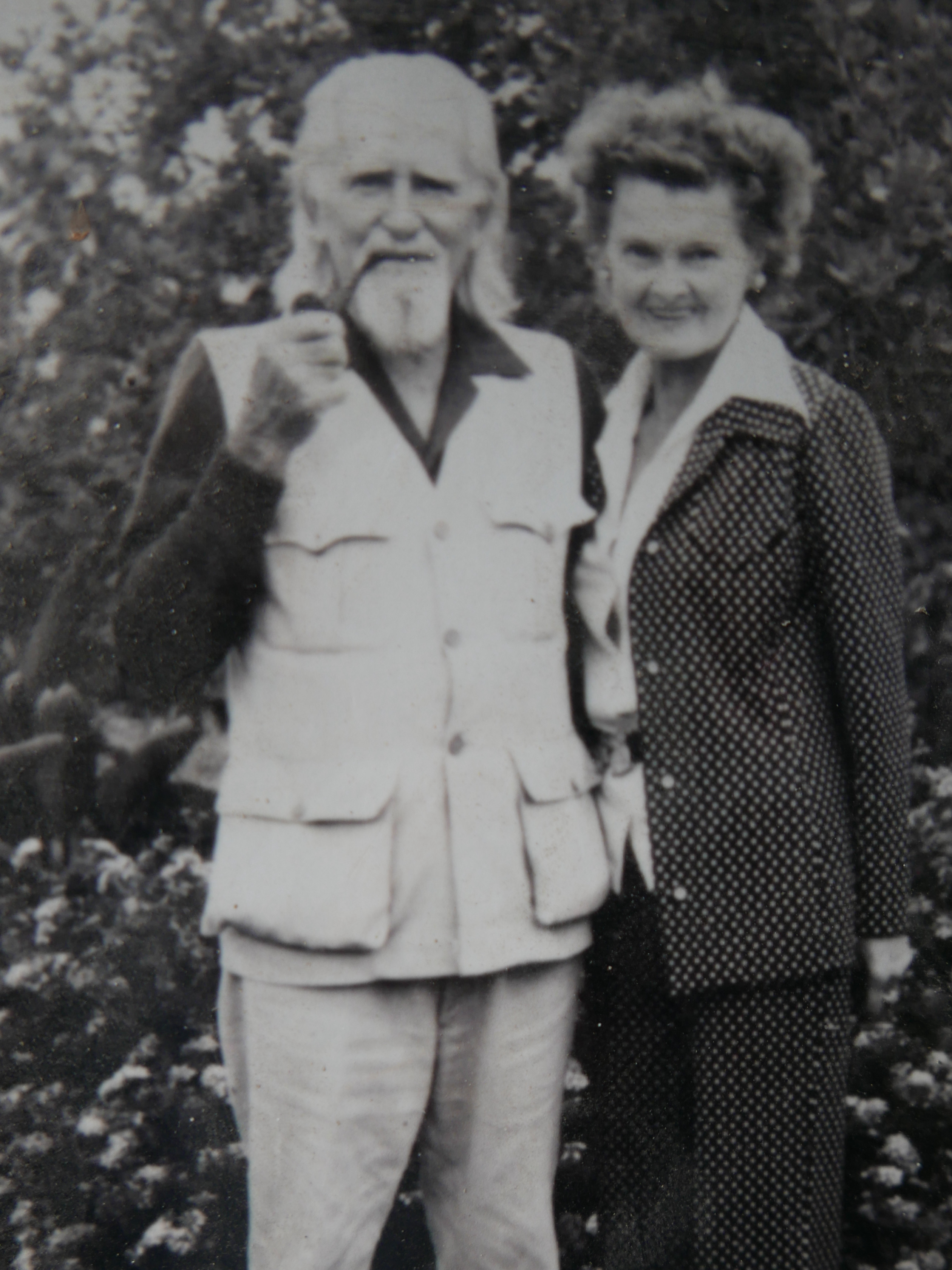
On the South shore of the lake, we visit the peaceful Elsamere museum, which used to be the house of George and Joy Adamson. They were among the first environmentalists on the African continent. George was a game hunter turned into a fierce conservationist who spent most of his life celebrating and protecting the natural wonders of Kenya. Joy was a talented painter – she started at a young age to make portraits of Kenyan people from remote regions and ethnies. She also wrote the best-seller “Born Free”, in which she describes her life in the bush with George raising a lioness called Elsa, and which was made into a feature film in 1966. George and Joy’s heritage is still very much alive for our generations to get inspiration from and in the Elsamere museum, through Joy’s paintings on the walls, dozens of authentic artefacts, as well as the very Land Rover in which George was murdered in 1989, we get as close as it gets to these two wild and supersized existences.
We have a parted ways with our friend Bartol and their daughters, who are driving back to Nairobi, while we head a few hundred kilometres North to Lake Naivasha, one of the many lakes that dot the Kenyan stretch of the Rift Valley. On the road, we are surprised at how busy the country seems to be. Traffic is heavy with lots of trucks coming from and going to Uganda, and we are so happy we have a driver who knows how to manage the craziness of it. Cities and villages are bustling with activity and everyone apparently has something to do. There is also a lot of activity in the fields and on the land. Everything would look very organised if not for the houses and buildings, which construction only obeys the law of chaos, and the muddy streets in between them, which cannot cope with the rainy season and are often littered with plastic trash.
Close to Lake Naivasha lies Hell’s Gate National Park. We are in a high geothermal activity zone, where the smart Kenyans built the first geothermal station in Africa, back in 1981, followed by 3 more stations in the past 30 years. Today, they provide clean electricity to a sizeable part of the Nakuru region.
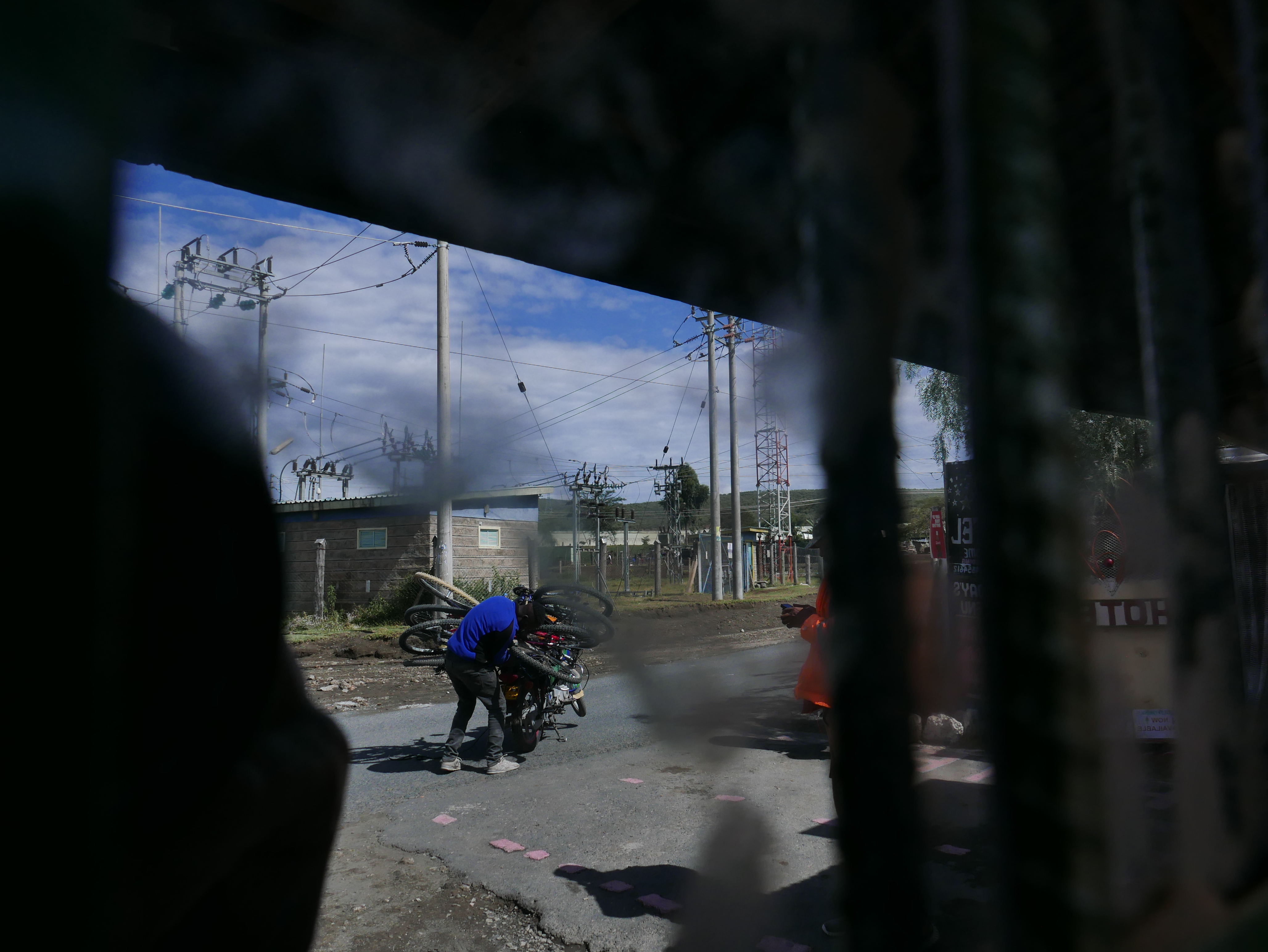
How to put 5 bicycles on a motorcycle
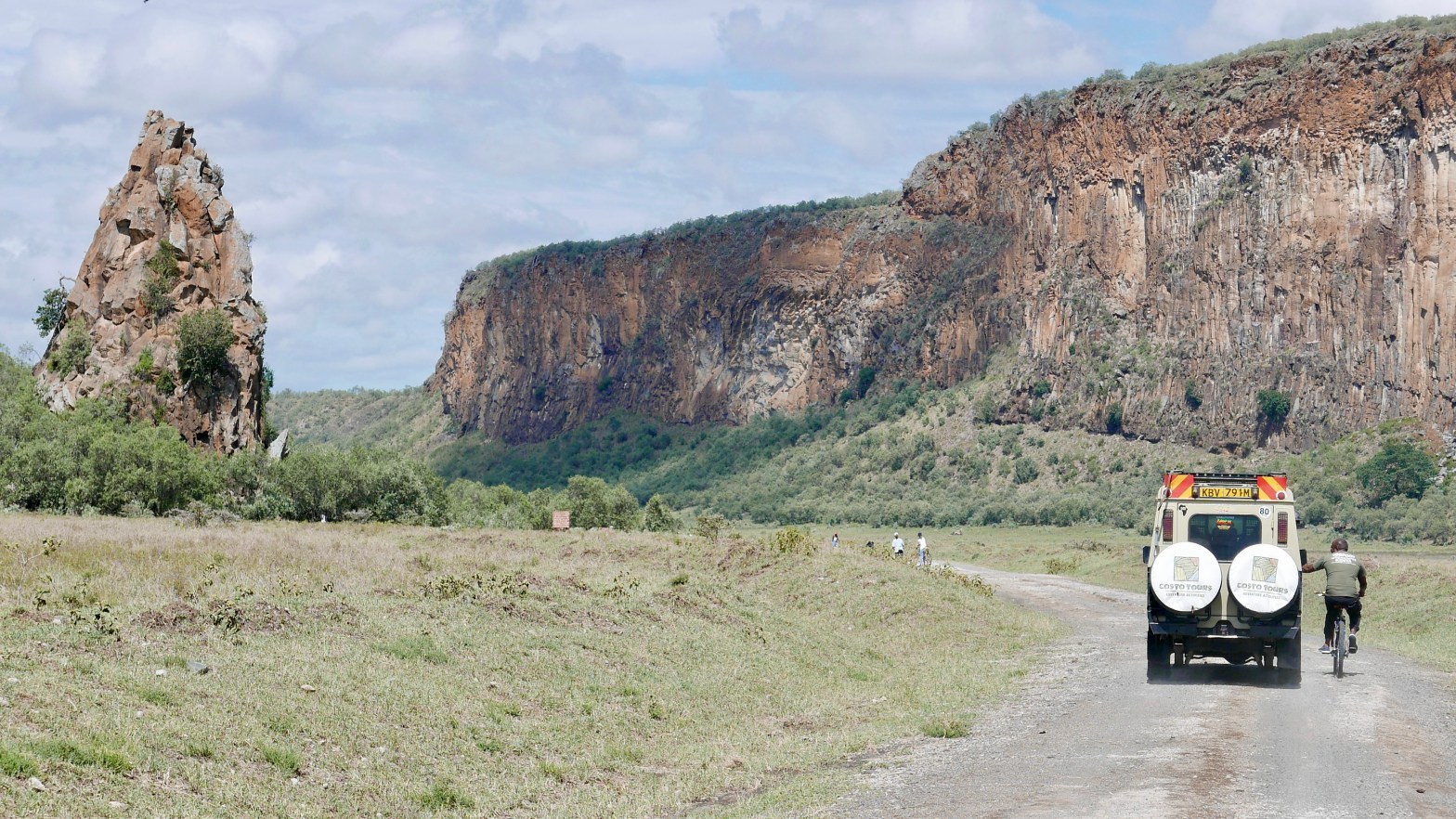
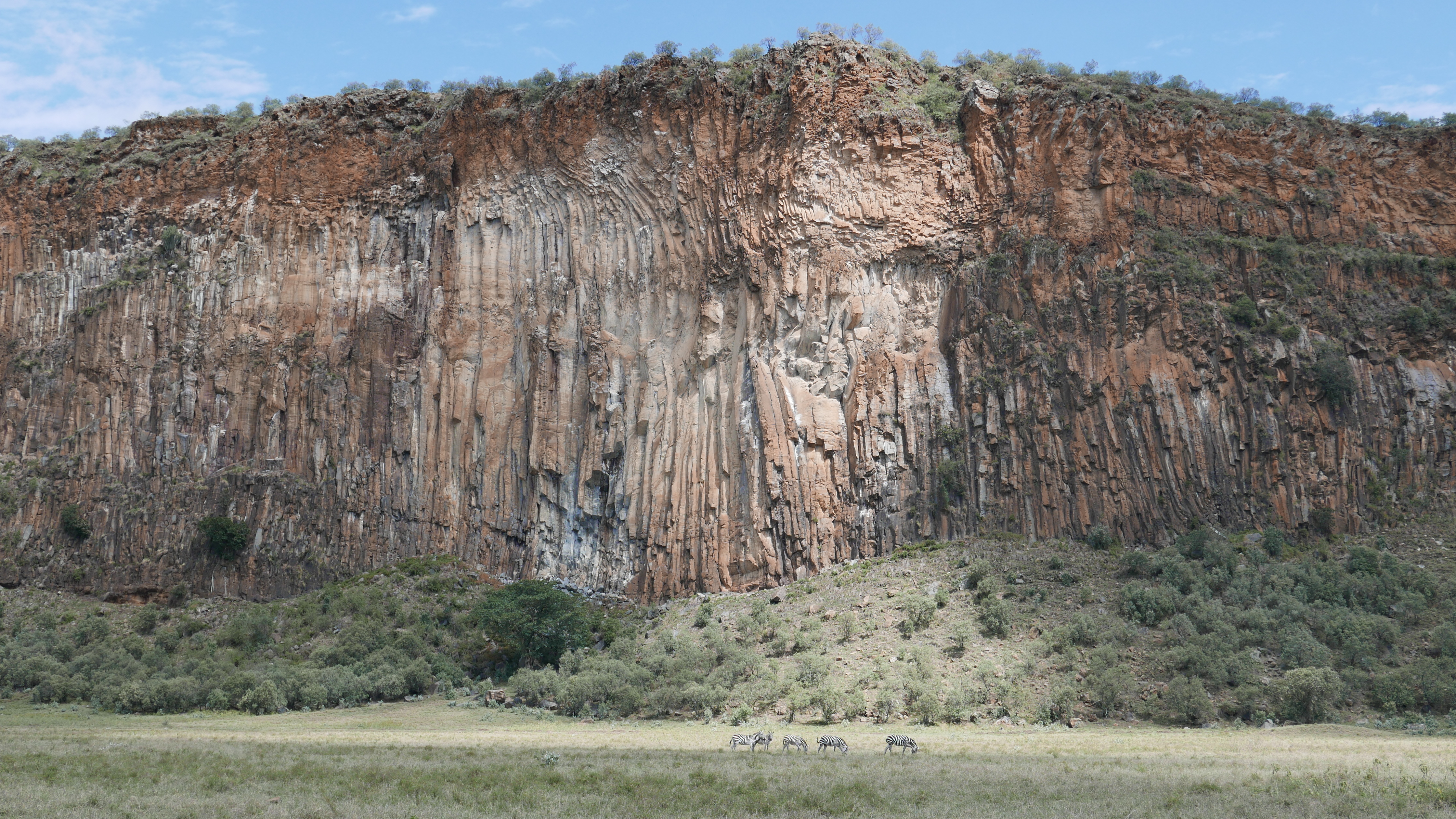
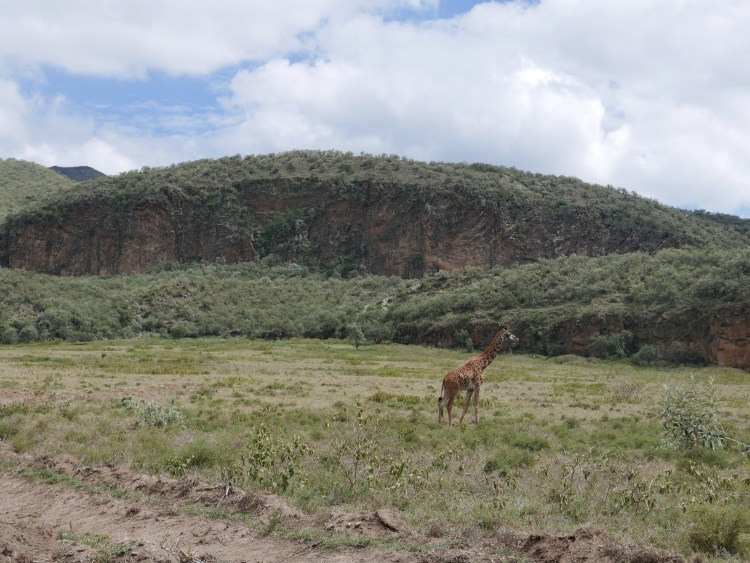
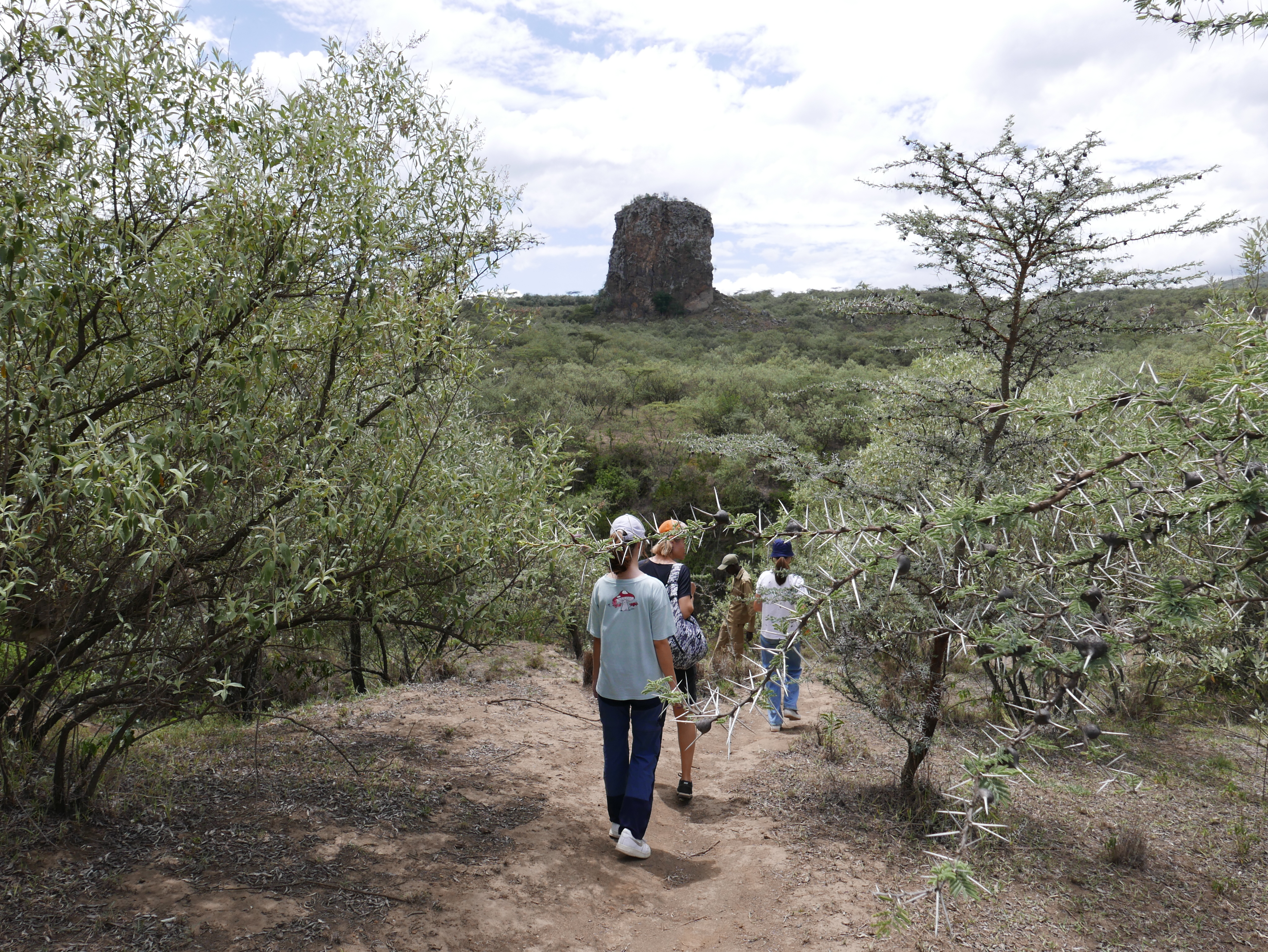
But as we enter the National Park on utterly uncomfortable mountain bikes rented for 5 dollars a day, we only see spectacular orange cliffs and rock towers looming. The weather is glorious and at the bottom of the cliffs, peaceful zebras, giraffes and buffalos are strolling around. For our only bike ride of the year (in Libreville, being a pedestrian is dangerous enough), we are spoiled.
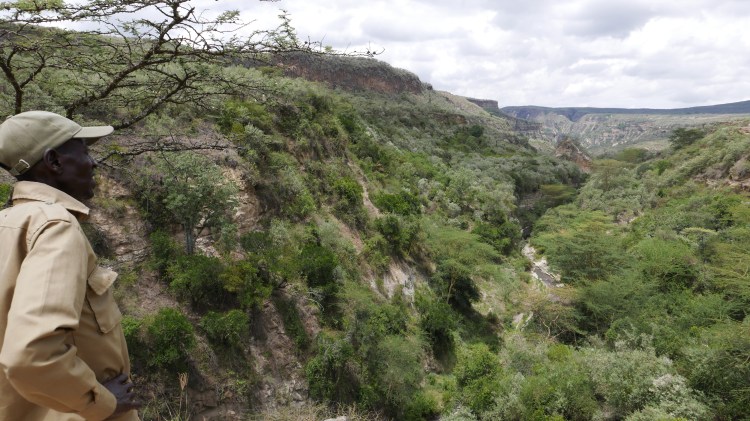
A few kilometres further into the park, we reach a canyon-like spot where the water dug deep gorges. They look attractive from above, but it is forbidden to walk them in this rainy season. The guide explains us that within a few minutes, the water level in the gorge can rise by several meters. We console ourselves with a panoramic view from the so-called “Lion King rock” – there are more than a few of them in Kenya. Nearby, from an invisible point in the rocks, hot water is flowing…
 Tanad stories from Gabon