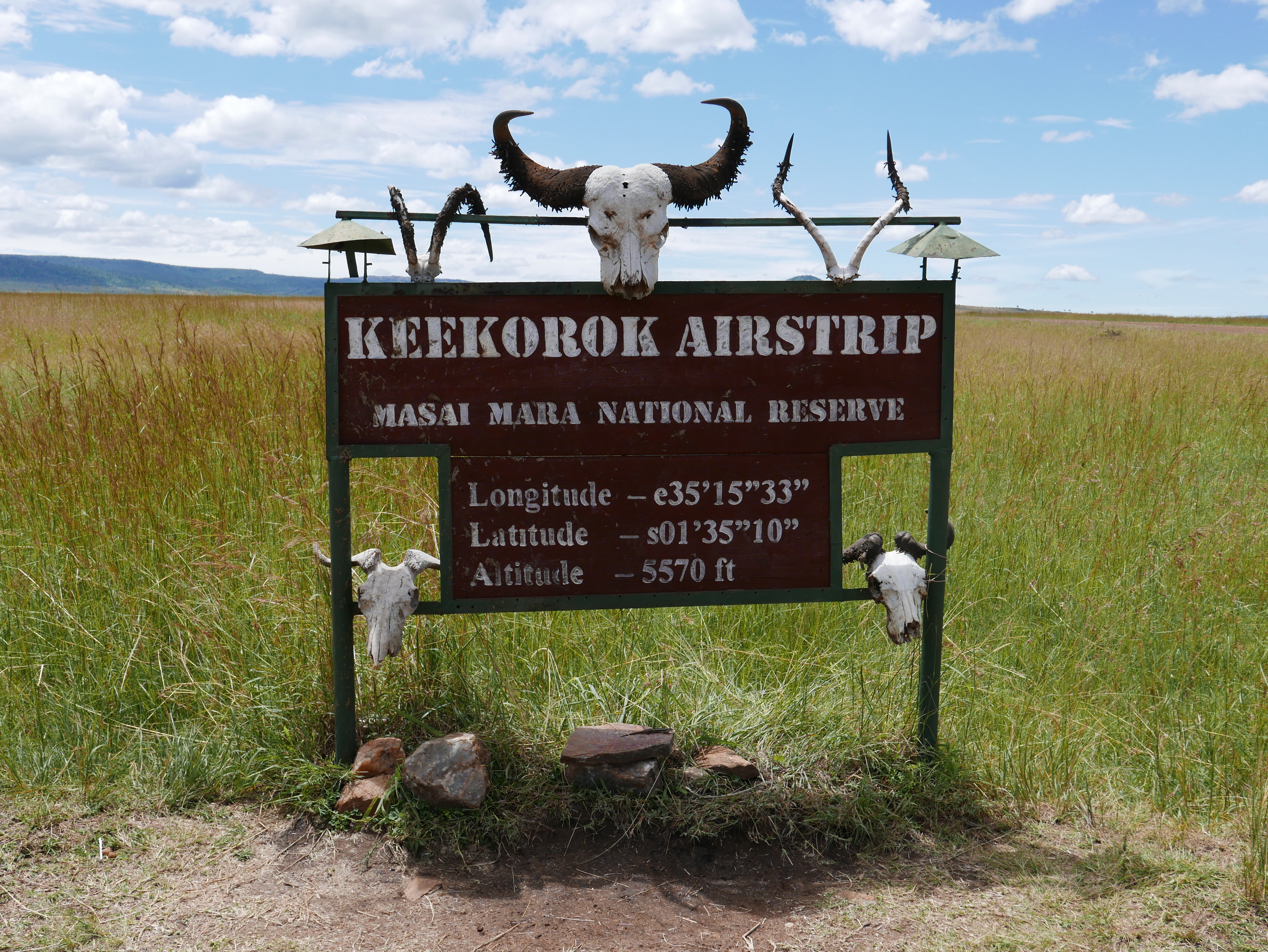
We land at 4 in the morning in Nairobi. By lunchtime, after a sleepy 5-hour drive, we are already down South in the world-famous Masai Mara National Reserve, along the Tanzanian border. Our Croatian friend Bartol, who has lived in Kenya with his family for the same three years we have lived in Gabon, wants us to make the best of our Easter stay in his adoptive country.
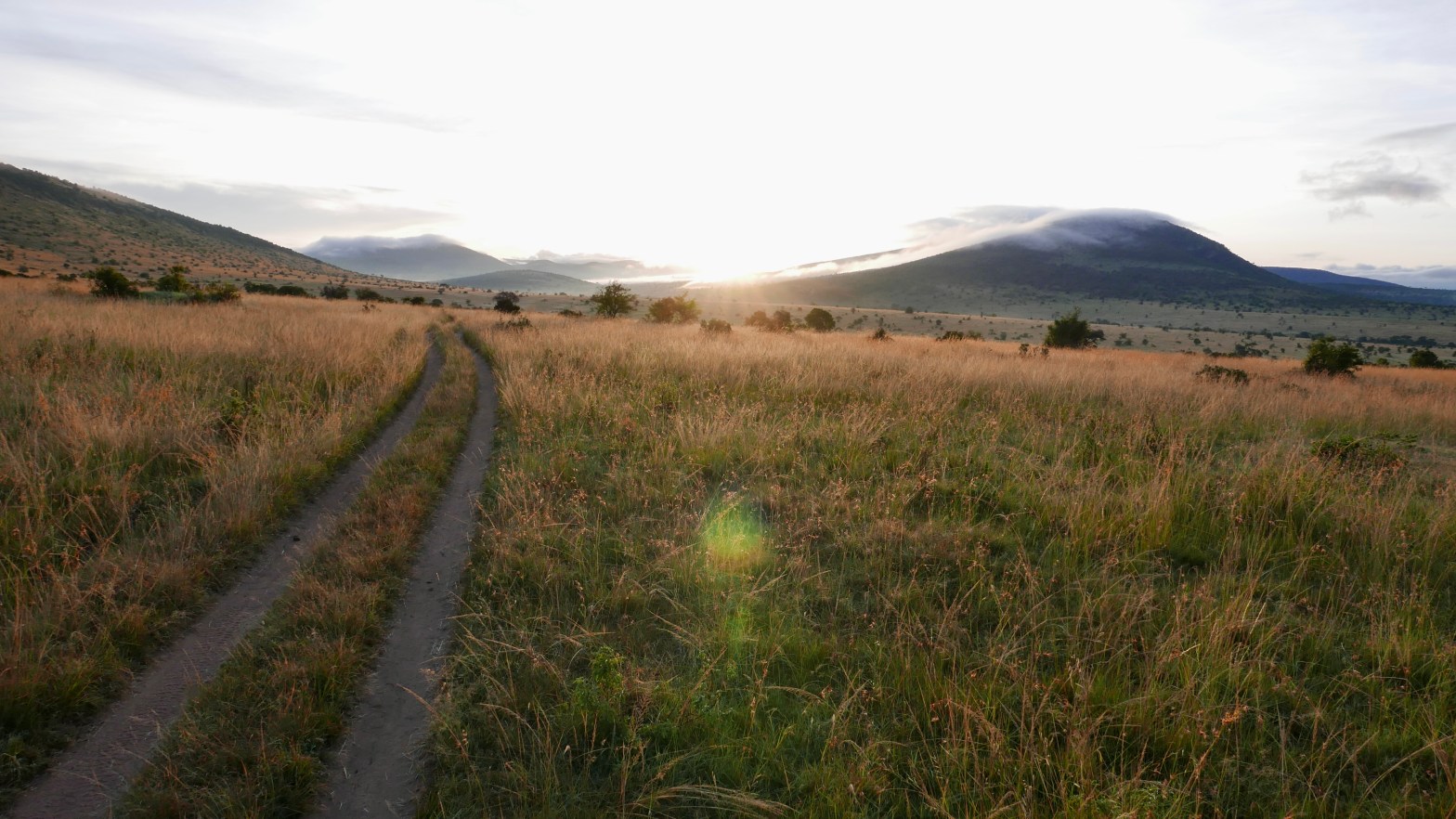
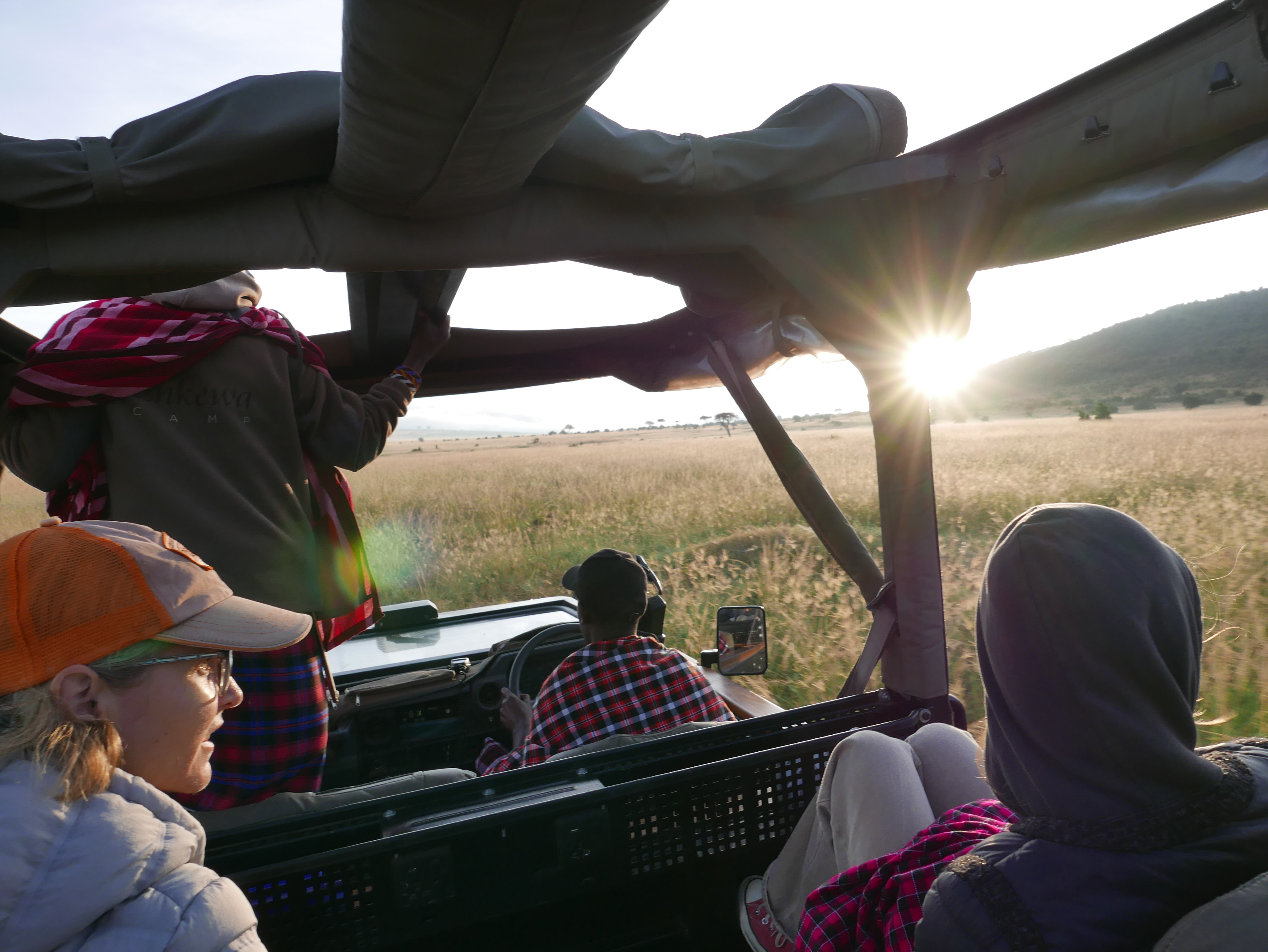
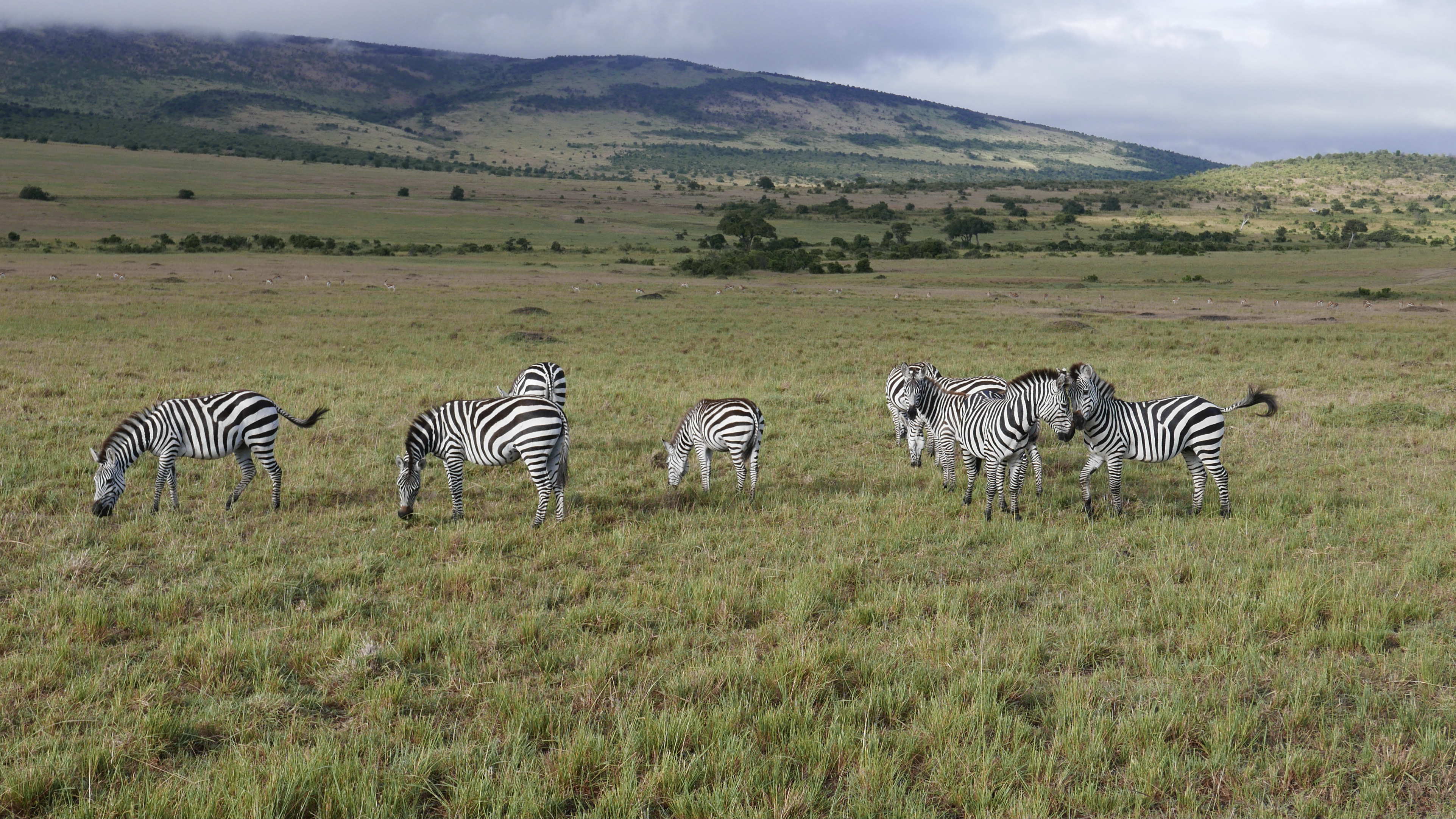
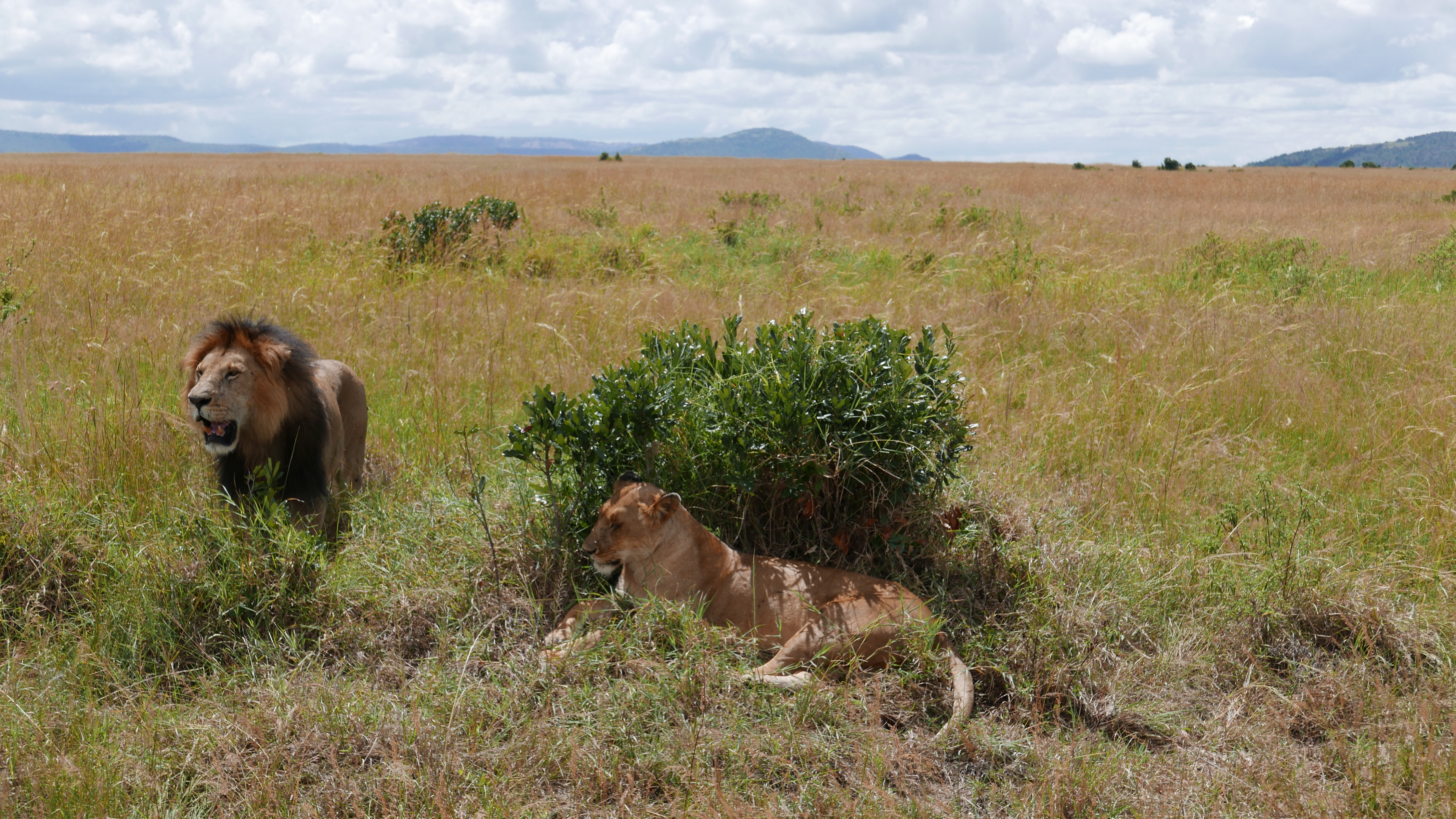
Our first safari in the hands of our Masai driver and guide is a resounding success and after just a few hours the Land Cruiser, we have understood that we are in for a very different experience than what we are accustomed to. Gabon is a giant, thick, mysterious and sometimes hostile forest where animals can be so hard to spot that the mere sight of a wild turkey can be the towering achievement of a 5-hour hike. In the Mara (as locals say), we are simply thrown onto the set of the Lion King: an astounding amount and variety of wild animals roam freely in majestic and infinite landscapes, in the green plains and hills, through the tall yellow grass of the rainy season.
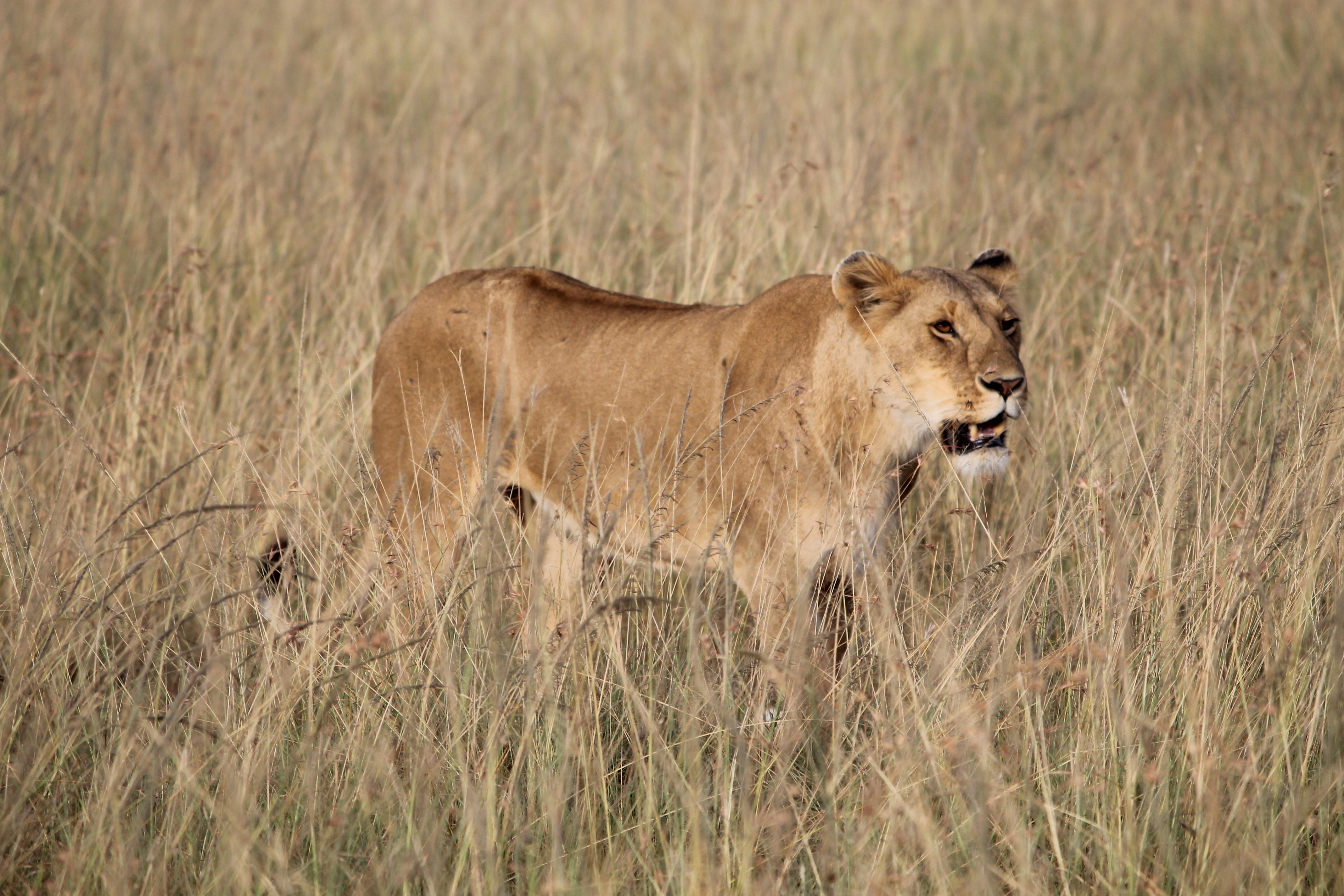
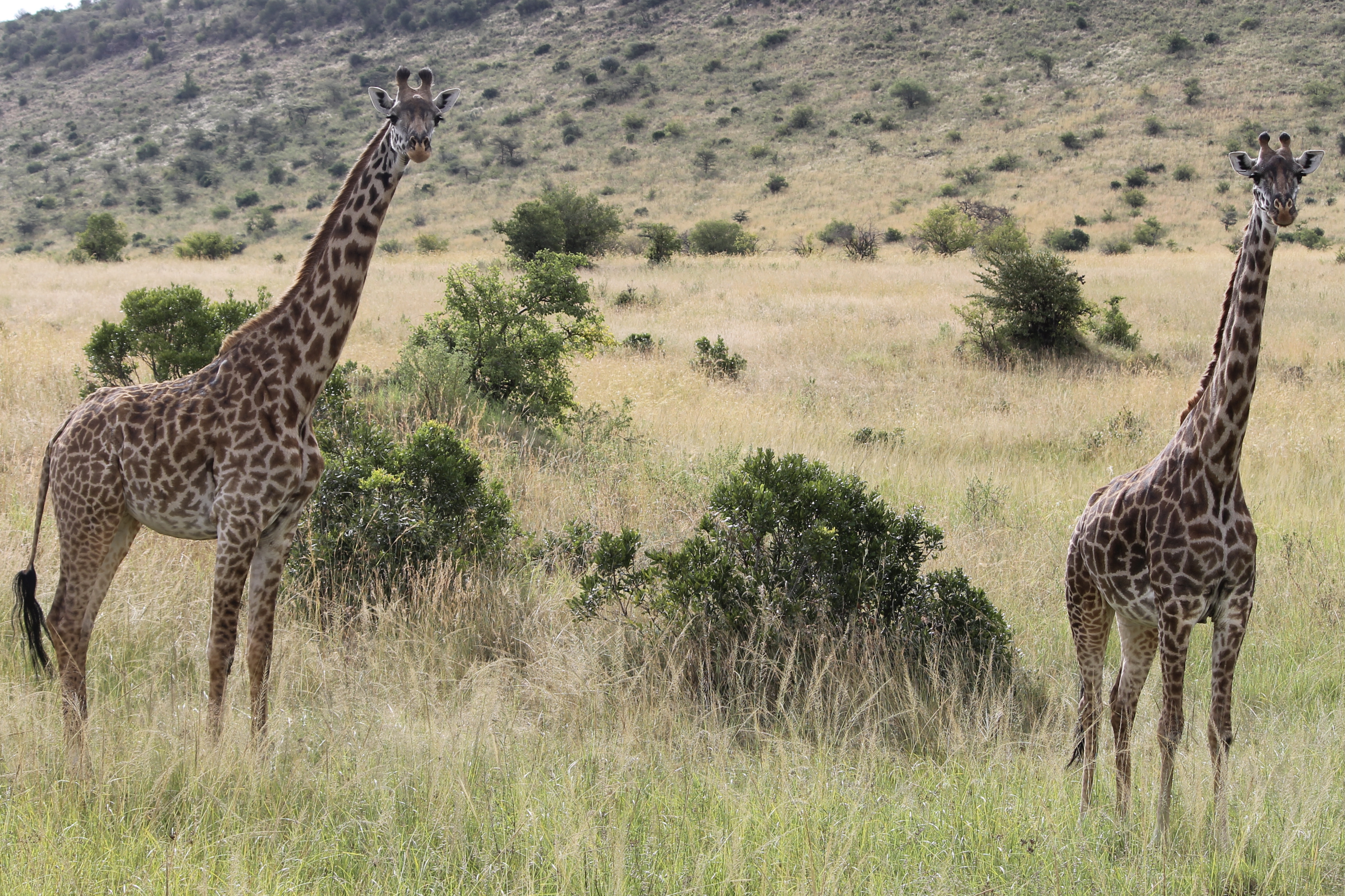
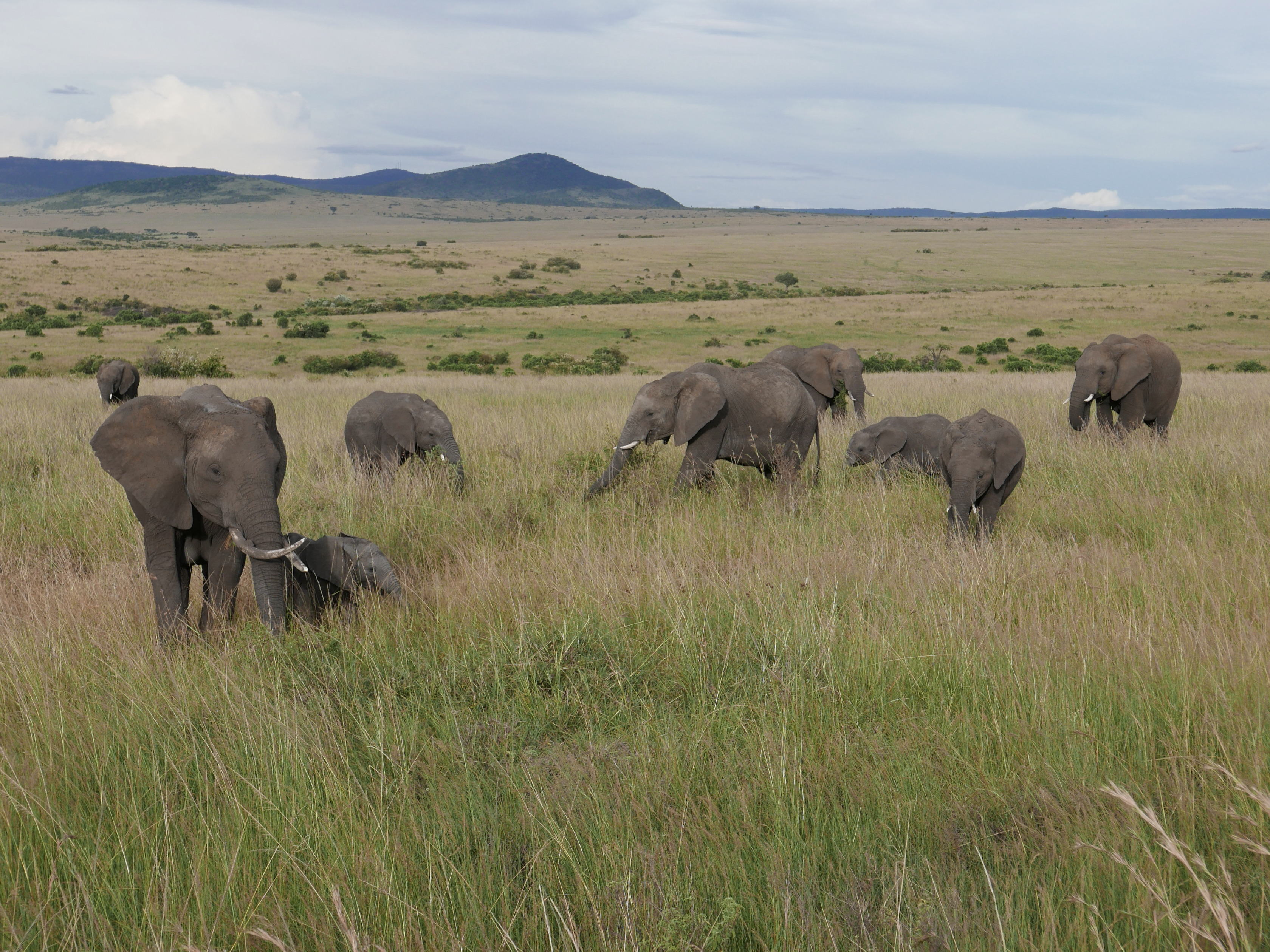
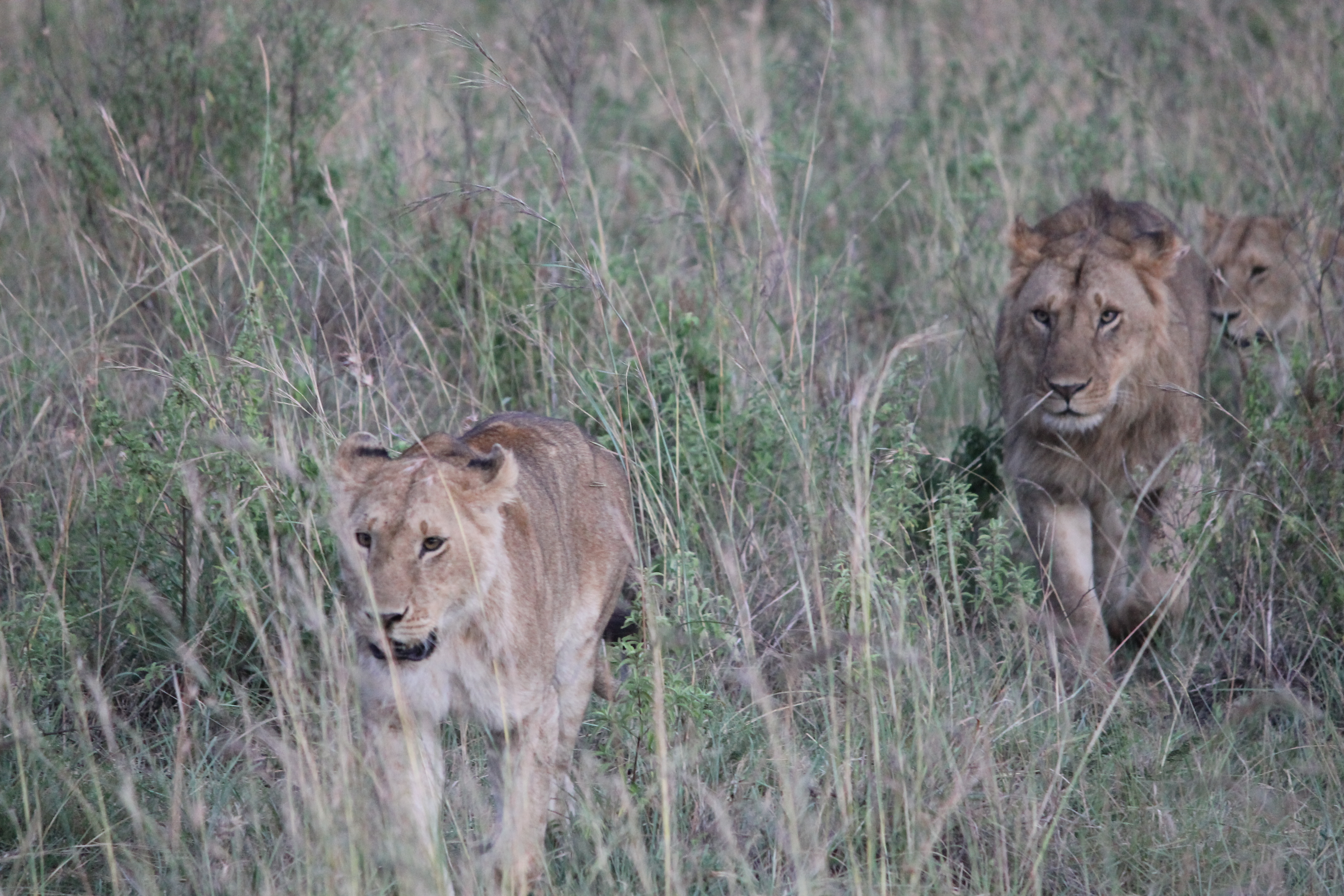
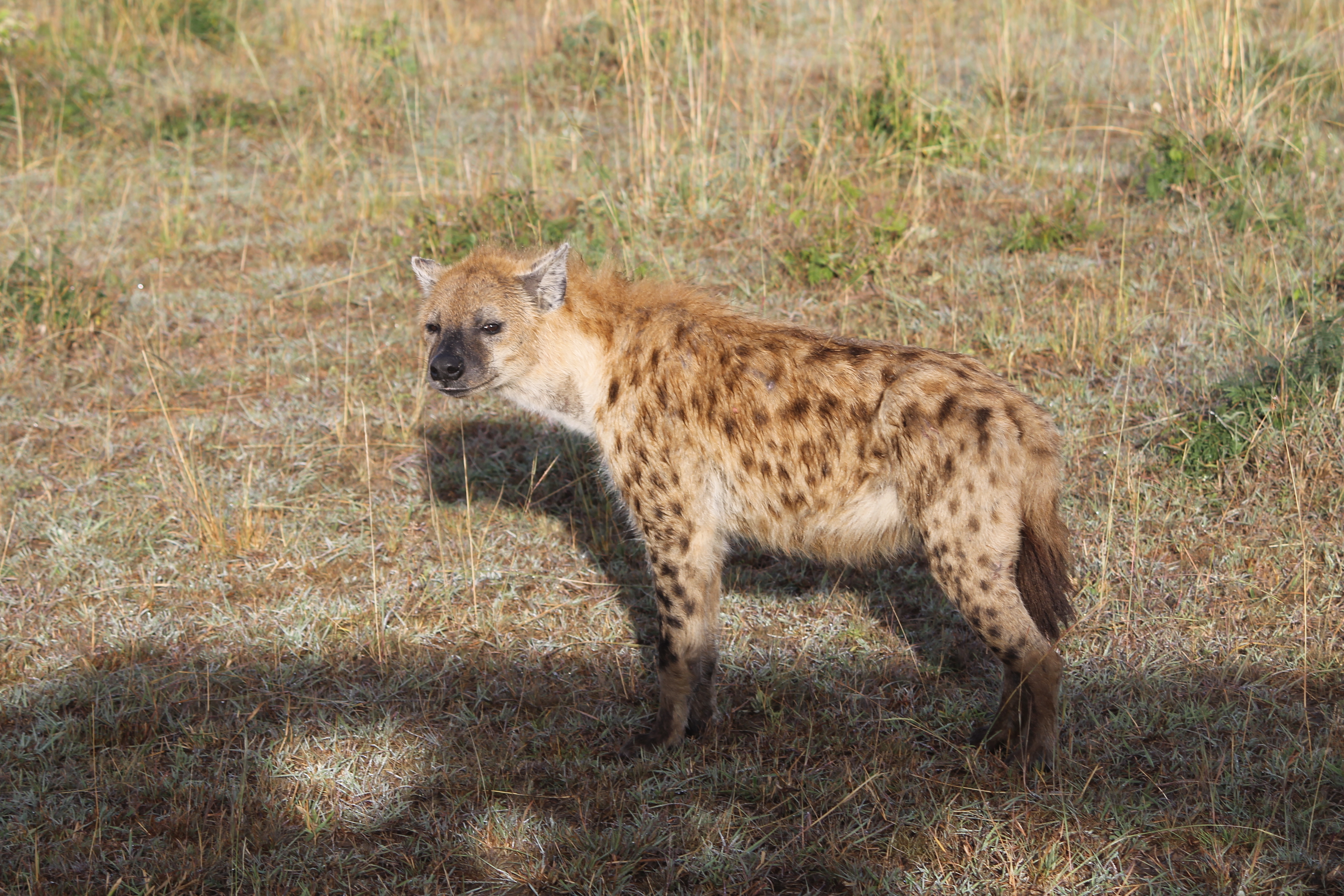
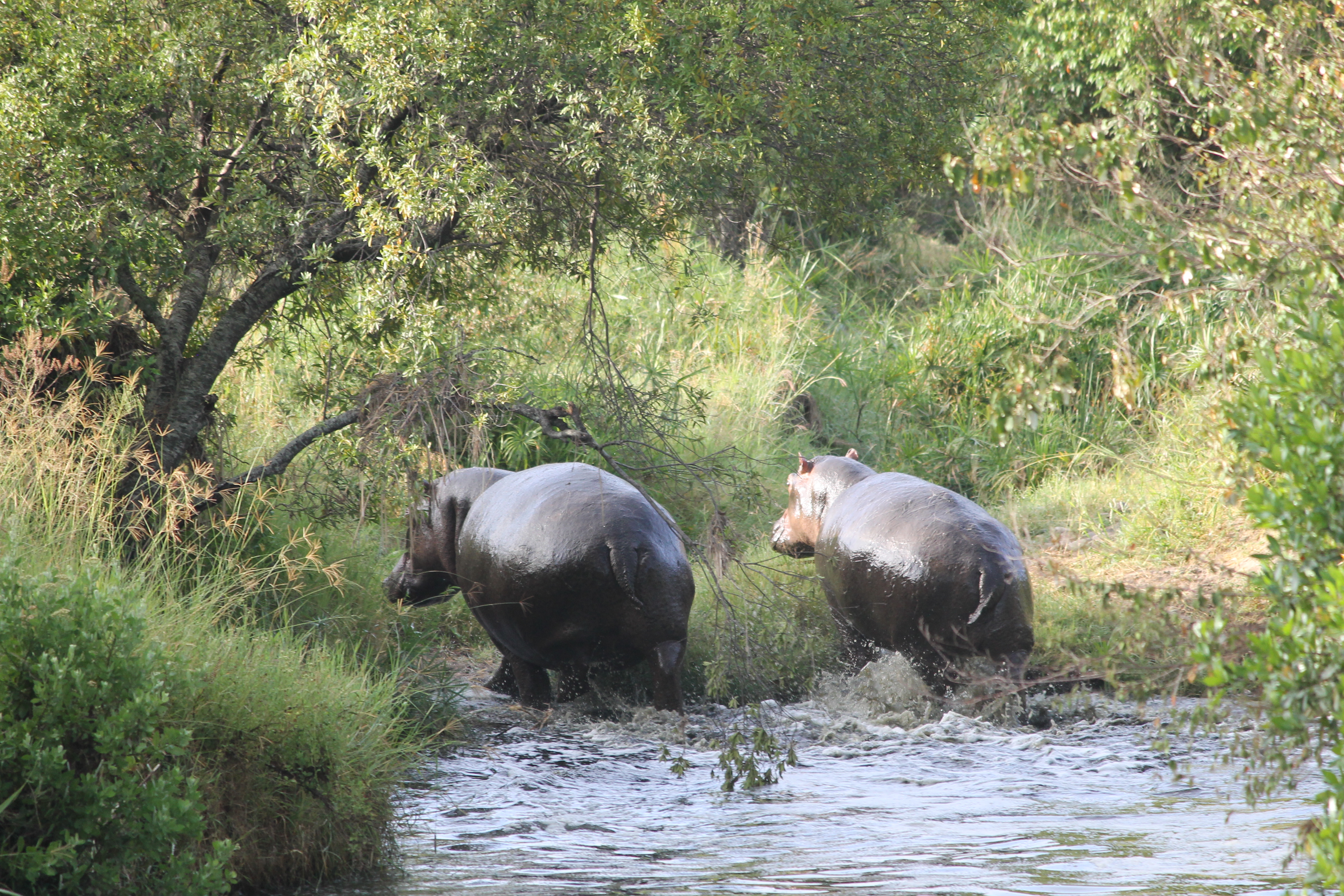
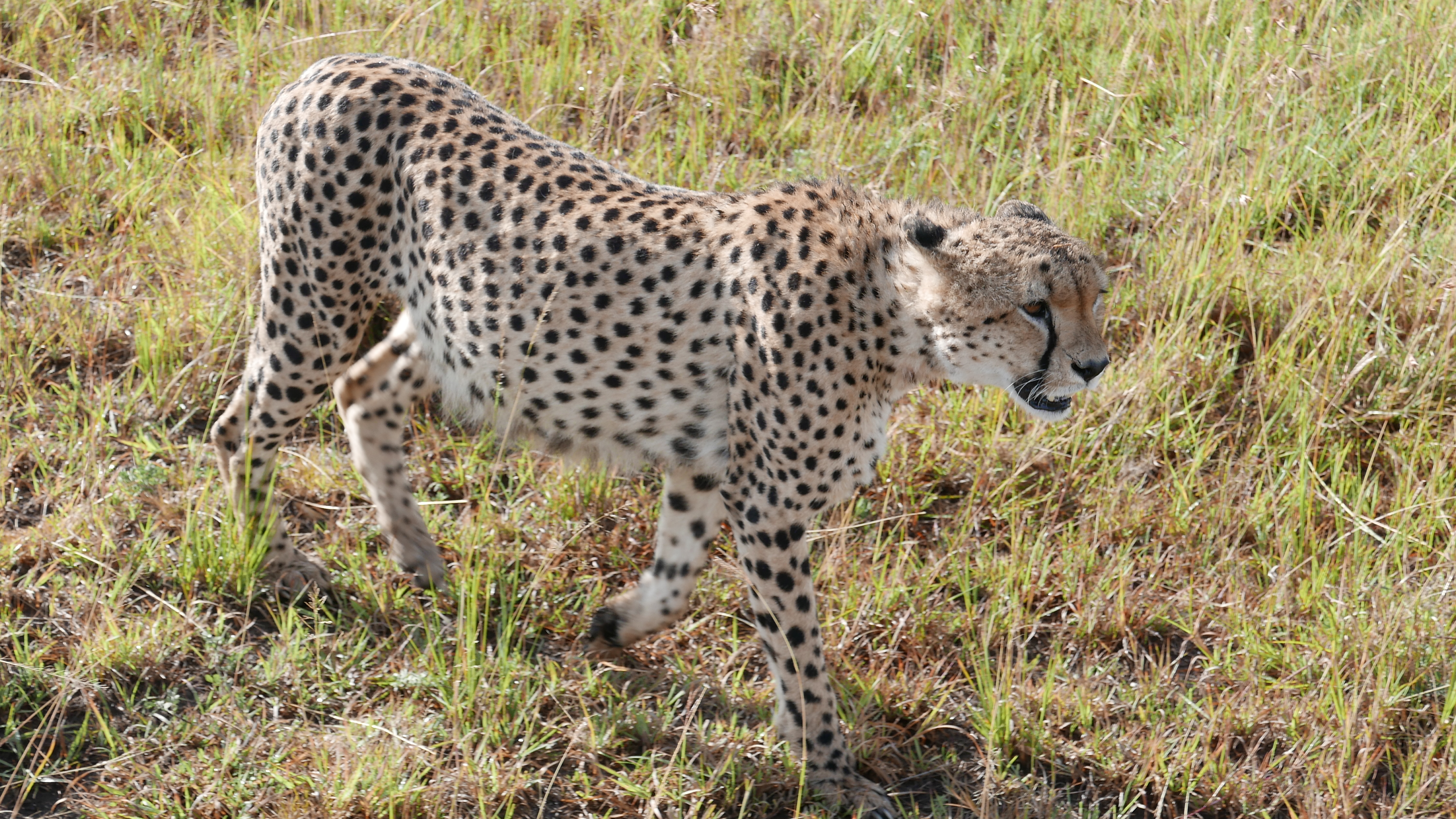
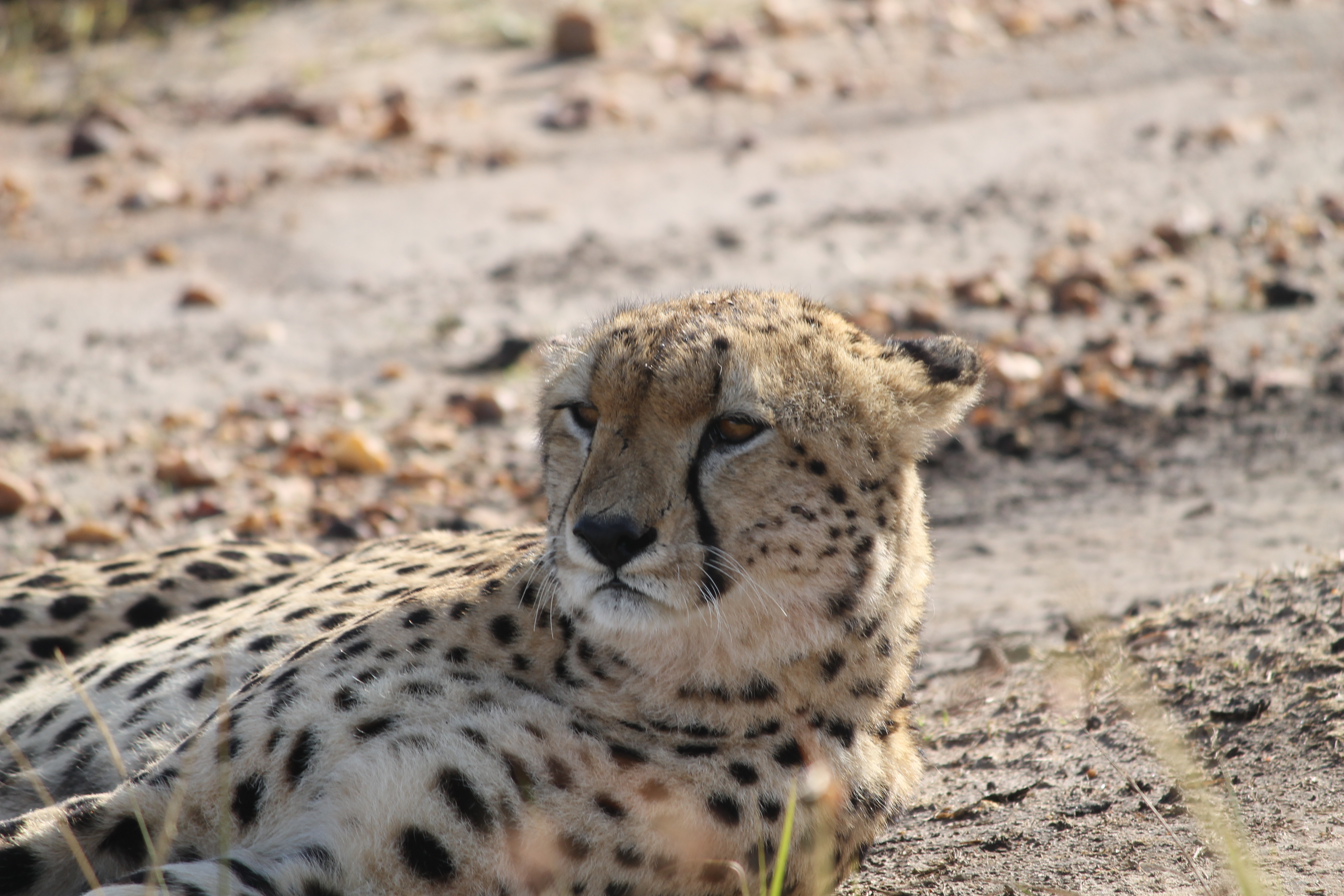
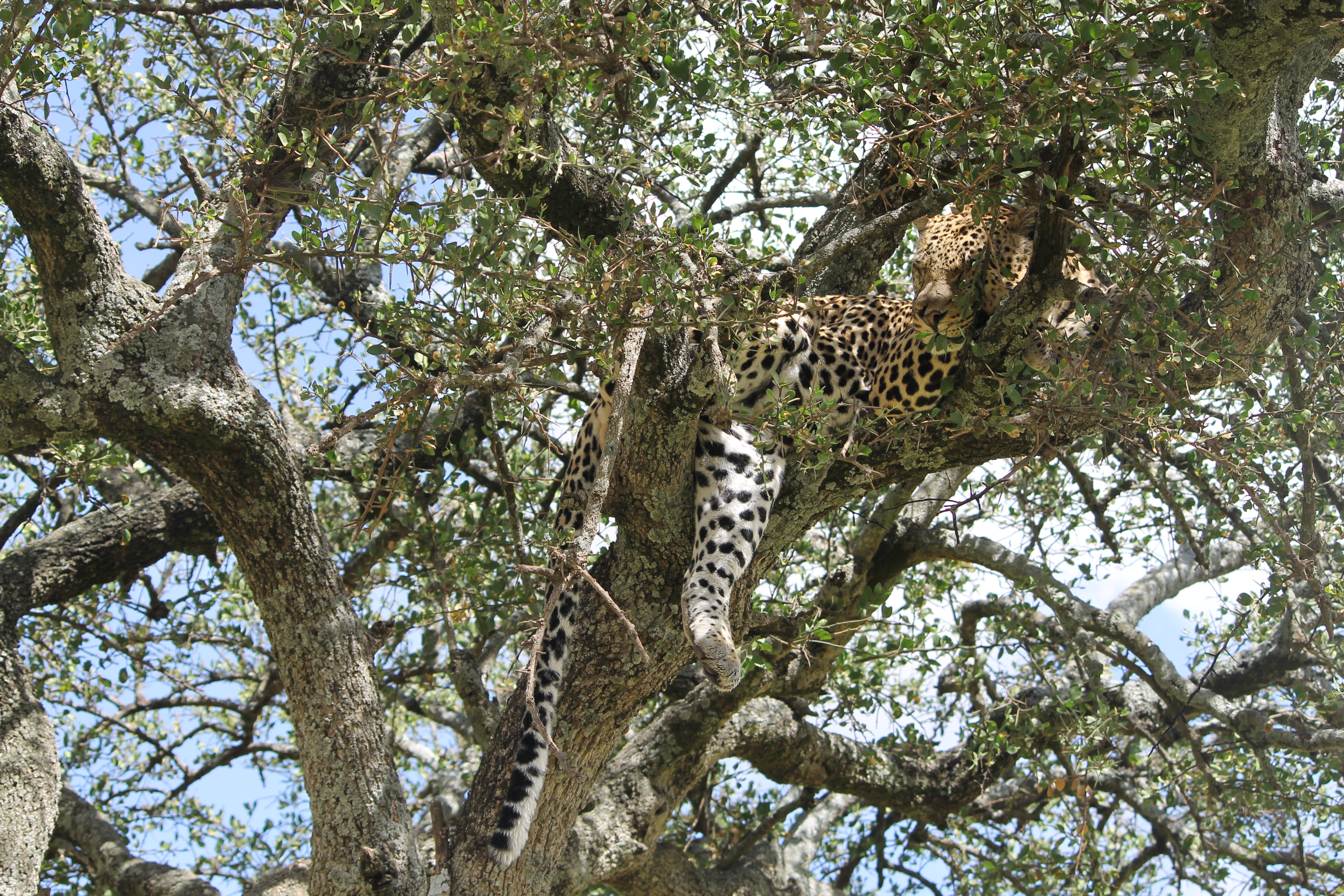
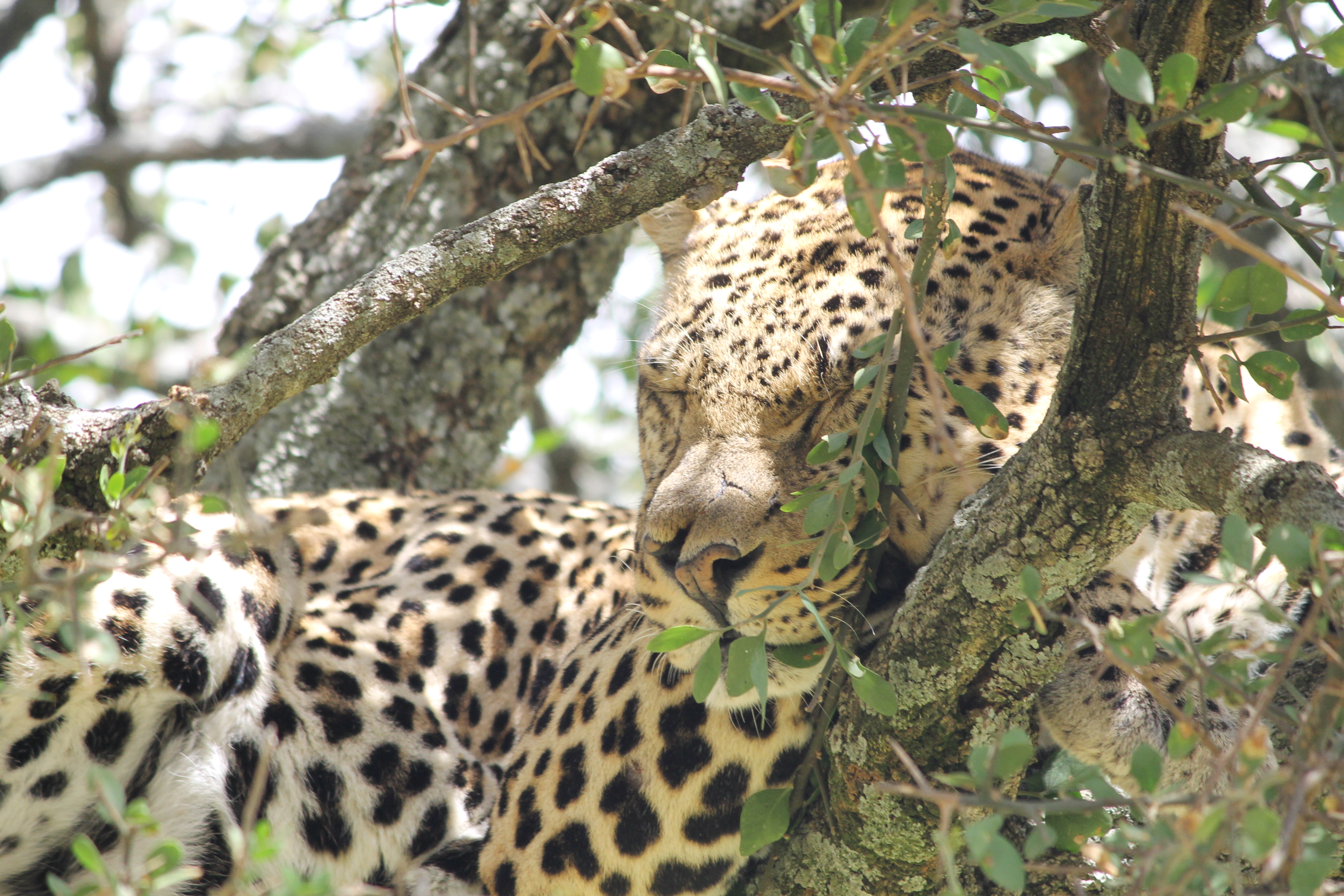
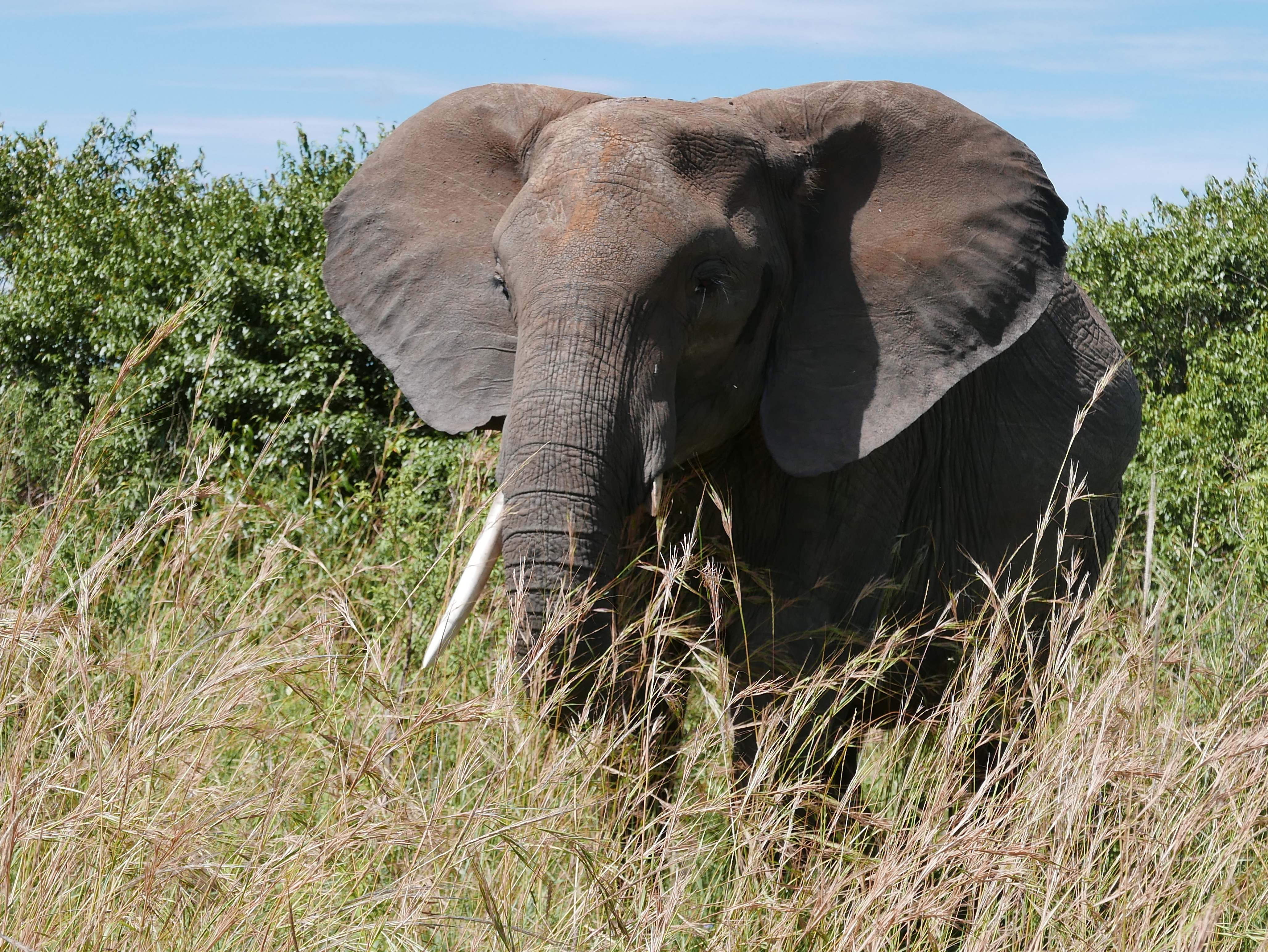
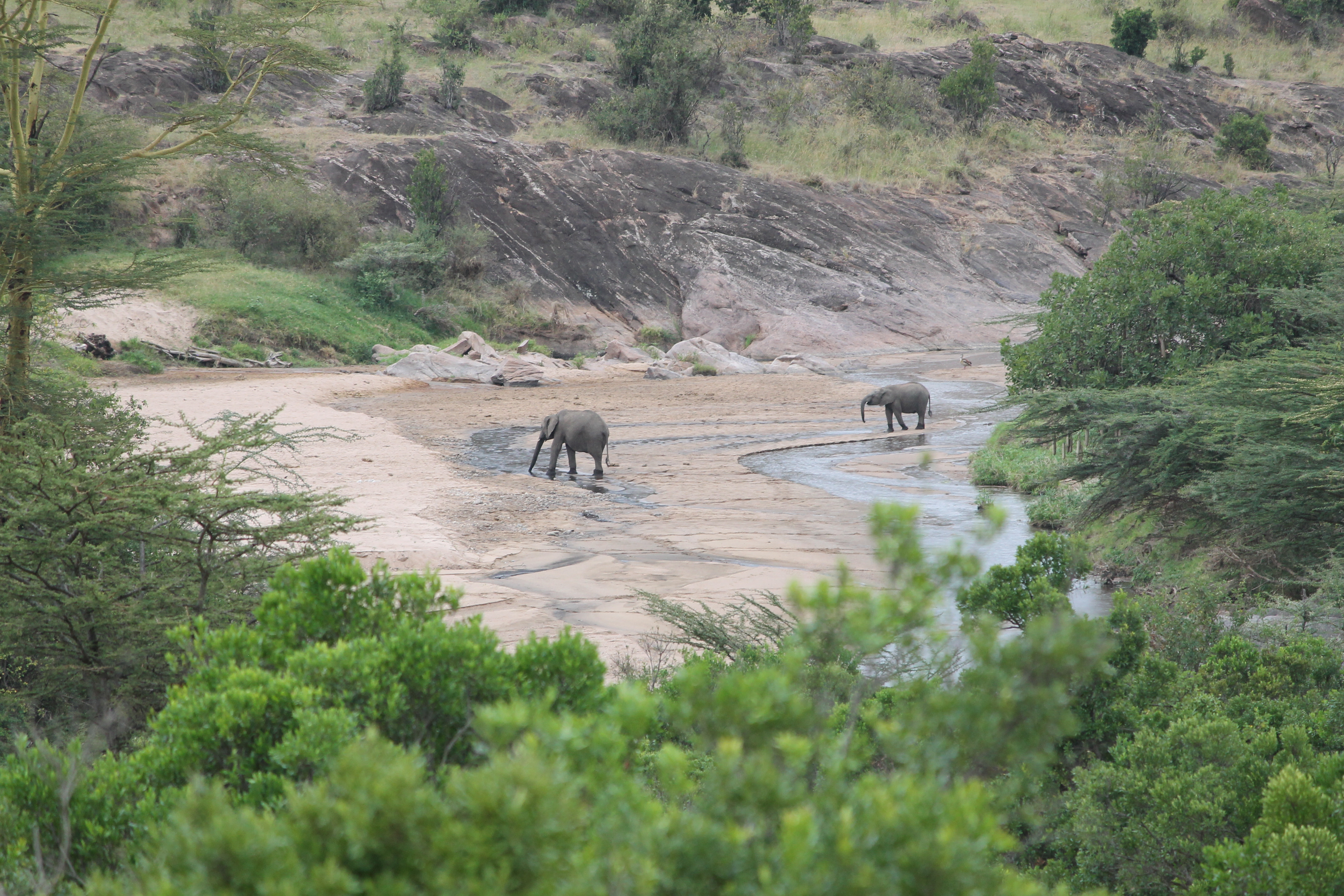
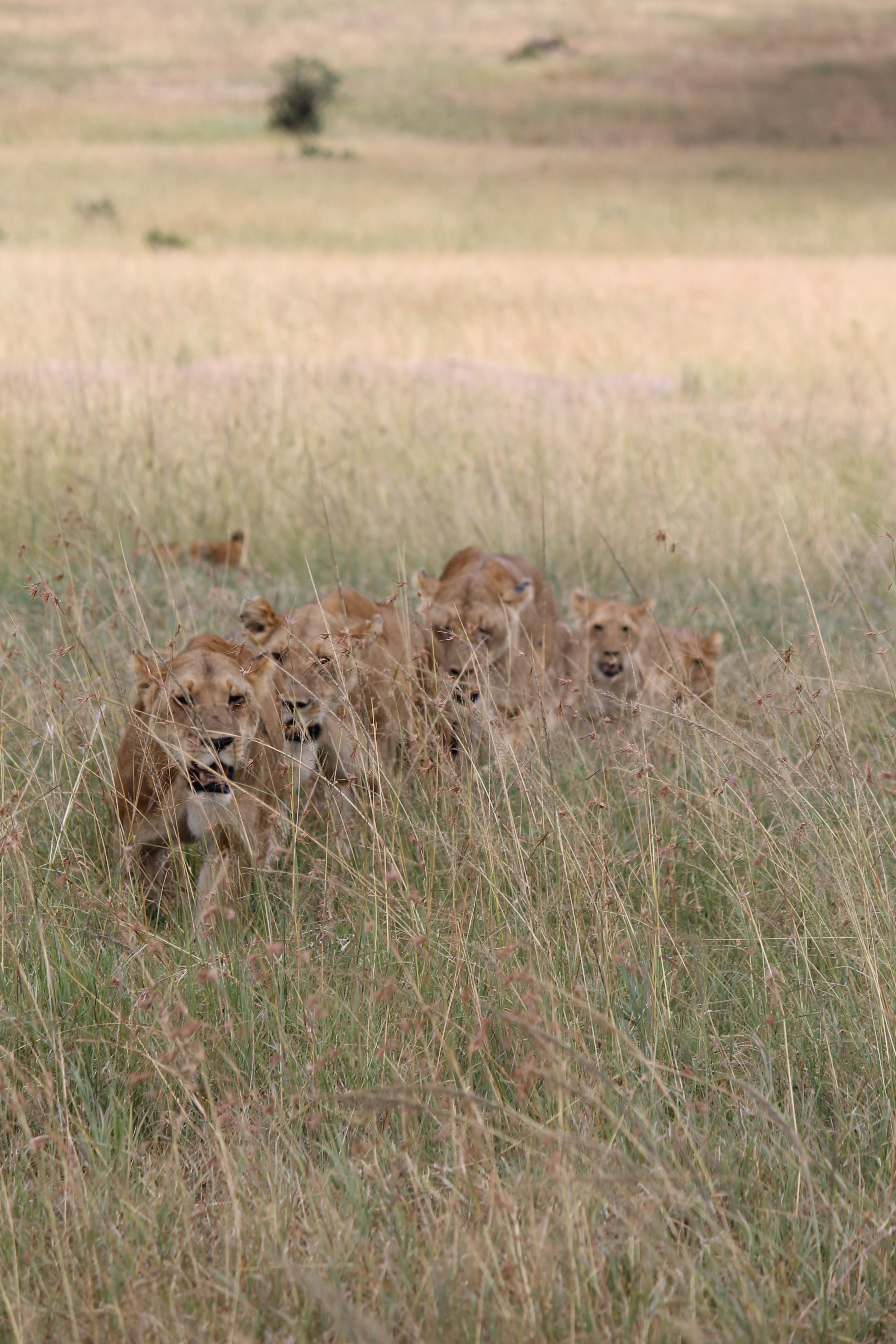
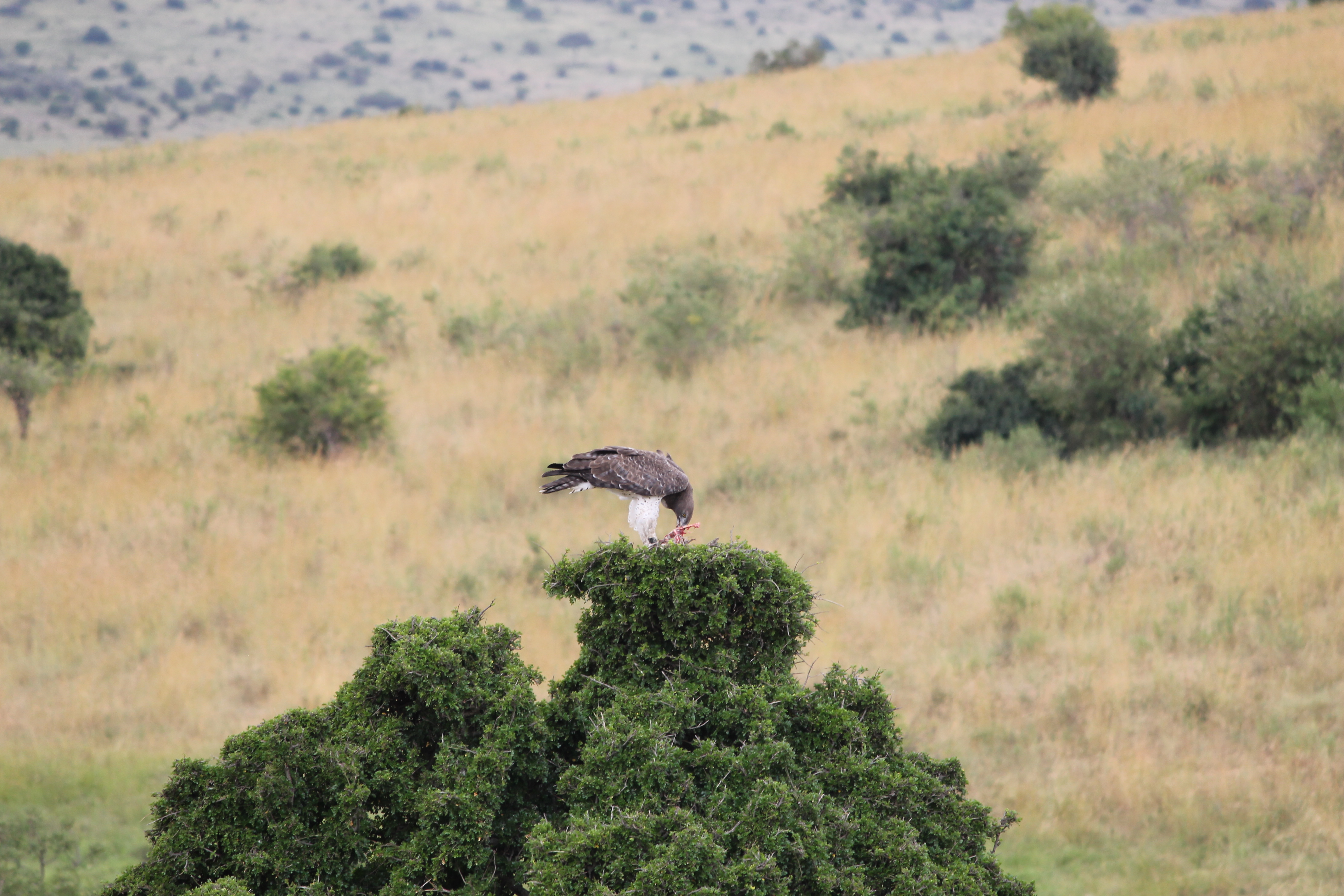
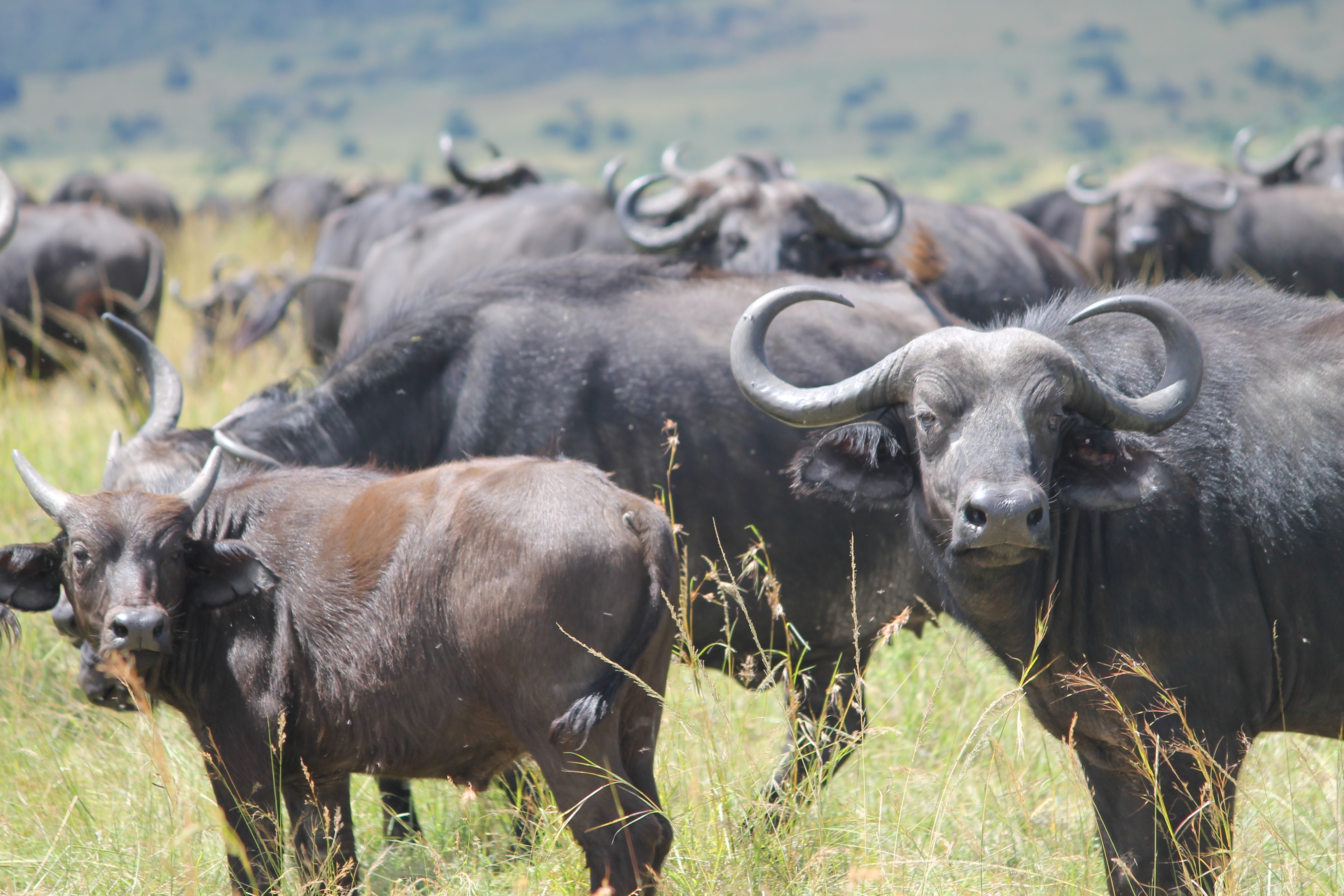
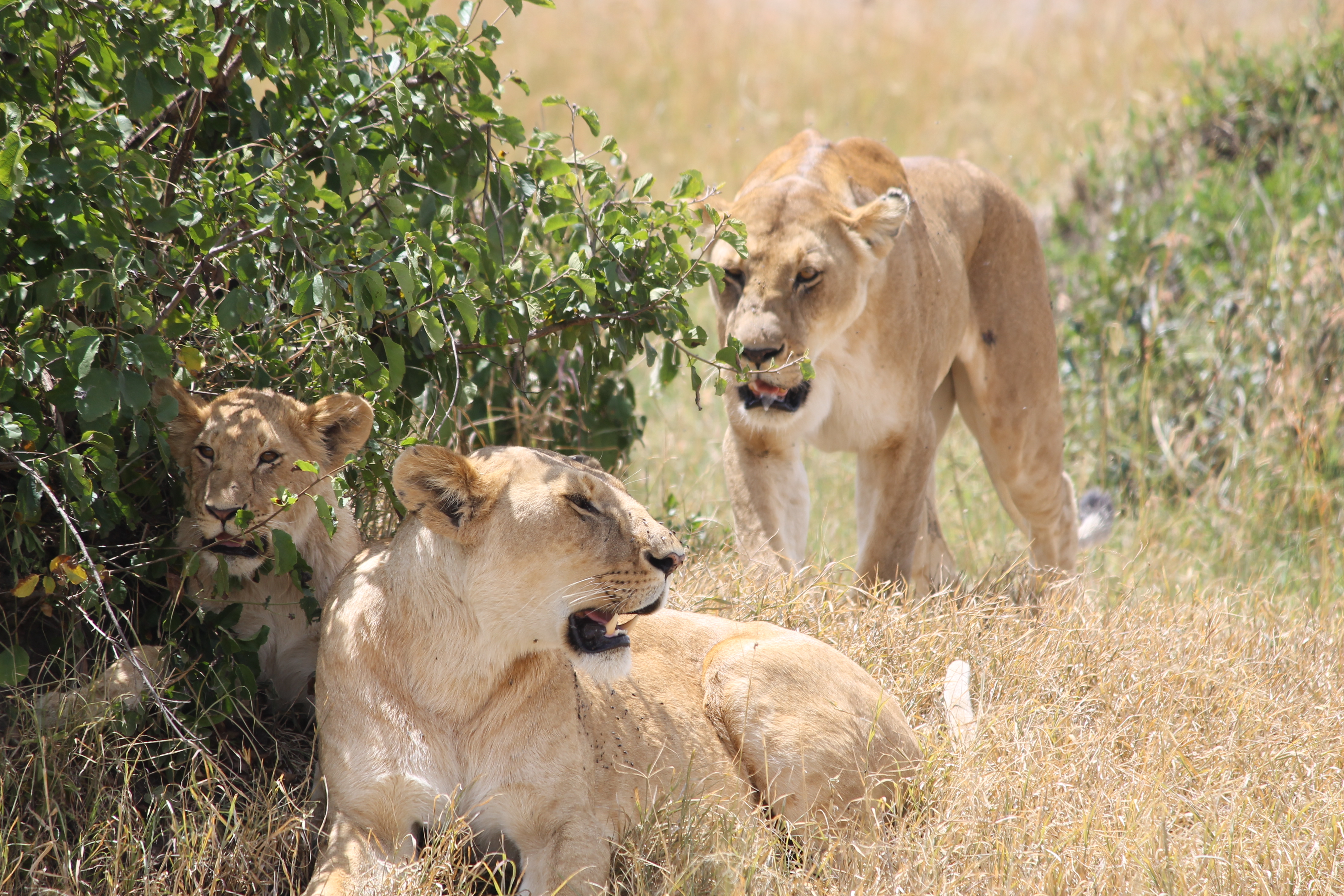
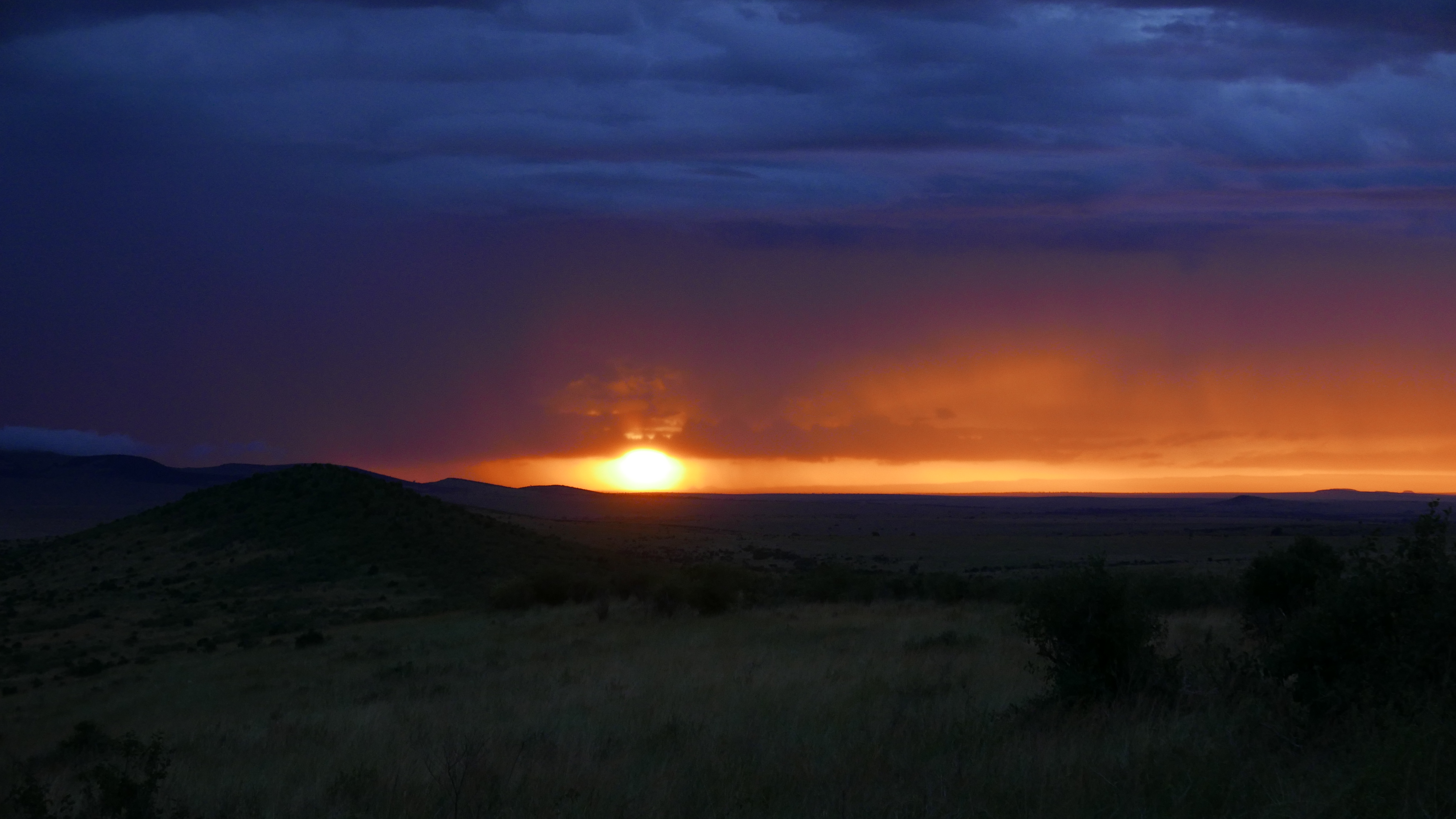
The Masai Mara National Reserve is a place where you can have breakfast under an acacia tree, then pack, and realise that there was a group of lions basking in the sun a hundred meters away. It’s a place where zebras, giraffes and gnus pass you by without even seeming to notice, where you can slalom safely through a troop of elephants or wild buffalos, where eagles and vultures are never far above your head in search of their next meal, where no waters are hippo-free. It’s the place where we get so lucky we even see three cheetah brothers and a leopard – the most elusive of animals- for the first time in our lives. It’s one of these rare places where you feel like the world was born yesterday.
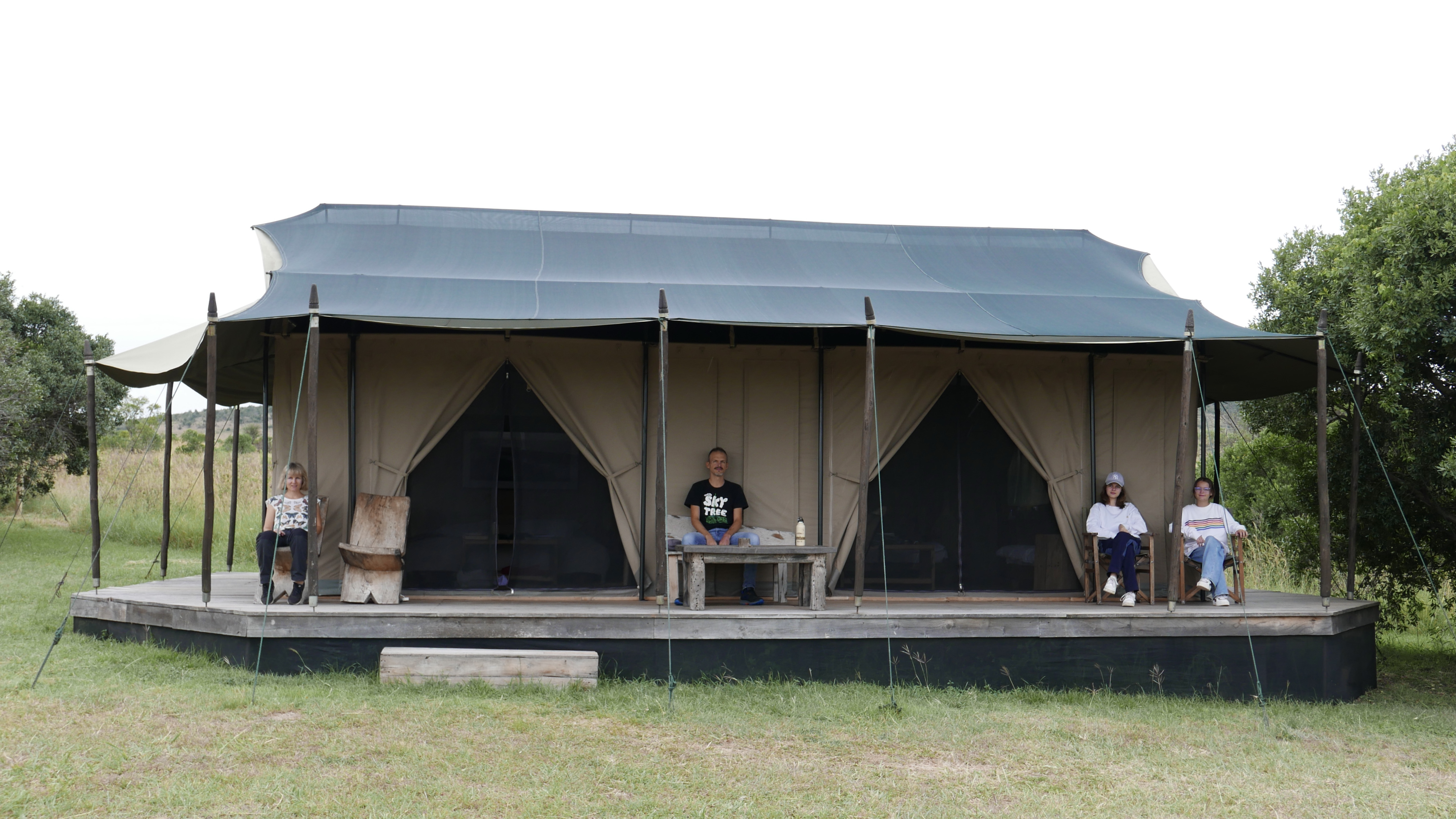
At night, from our cosy tented lodge, we hear at times terrifying noises and squeaks. Lions, leopards and hyenas on the hunt, and you definitely don’t want to go sleepwalking outside. A couple of Masai people are guarding the camp, just in case. Talking with one of them, we learn he is from Tanzania. His village is a few kilometres away in the Serengeti National Park. When he wants to see his family, he just takes a walk there. Masai people are indeed the only ones who are allowed to walk in the Mara – their knowledge of the land and wildlife grants them this privilege. The fact that the Mara is historically their territory also allows them to cross the Tanzanian border without any passport.
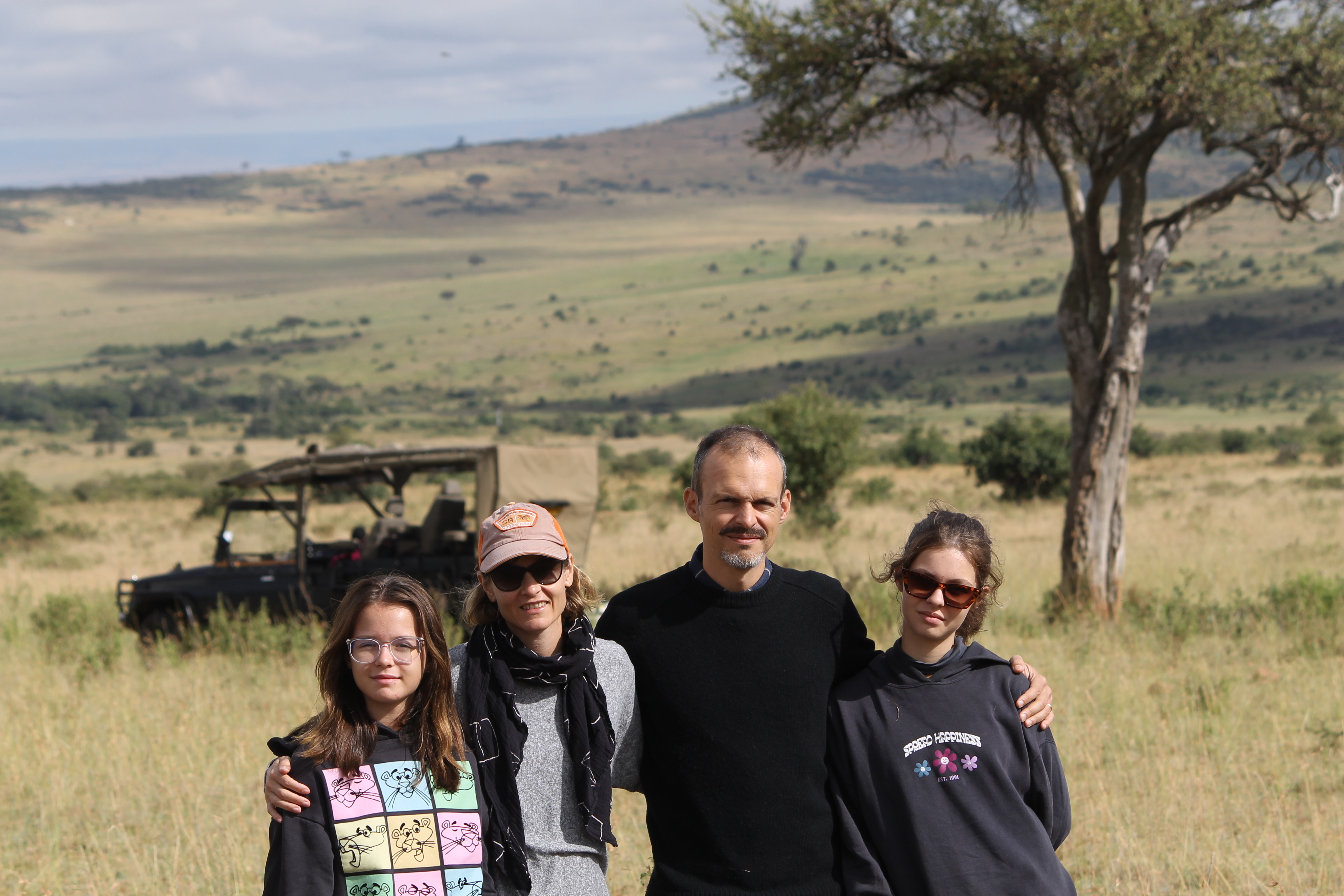
Experiencing the Mara in the company of a friend whom we have known for more than 20 years and his two daughters makes it all the more special. As we exit the park after two surreal days, we already know that the memories we are bringing back with us are lifelong, and that we started our stay in Kenya on the highest of notes!
P.S.: roughly half these photos are courtesy of our friend Bartol.
When we were there two years ago for half a day, we did not get such a good impression of Port-Gentil (POG), Gabon’s second largest city, and its economic capital thanks to the dozens of offshore oil platforms that have been lighting up its sea and sky at night for decades now. Indeed, the golden days of oil extraction are gone for good, and POG is not anymore the vibrant town it used to be at the end of the twentieth century. Today, the platforms still work and attract workers from abroad, but much less than in the past.
POG is practically an island, isolated by the sea and by the swamps from the rest of the country. Since 2020 you can reach it by car, but from Libreville it’s a very long affair. The overall state of the town reflects this isolation – decayed and rusty buildings eaten by salt and the equatorial humidity, tired and potholed roads.
Yet, in the past months, we have had several conversations with expats living in POG and loving it, praising its laid-back people, its cut-from-the-world island feeling and its crystal-clear waters. So we decided to give it another try, and to follow insiders tips on where to spend time around there. Flying to POG takes 30 minutes and by the kilometre, it has to be the most expensive flight in the world.
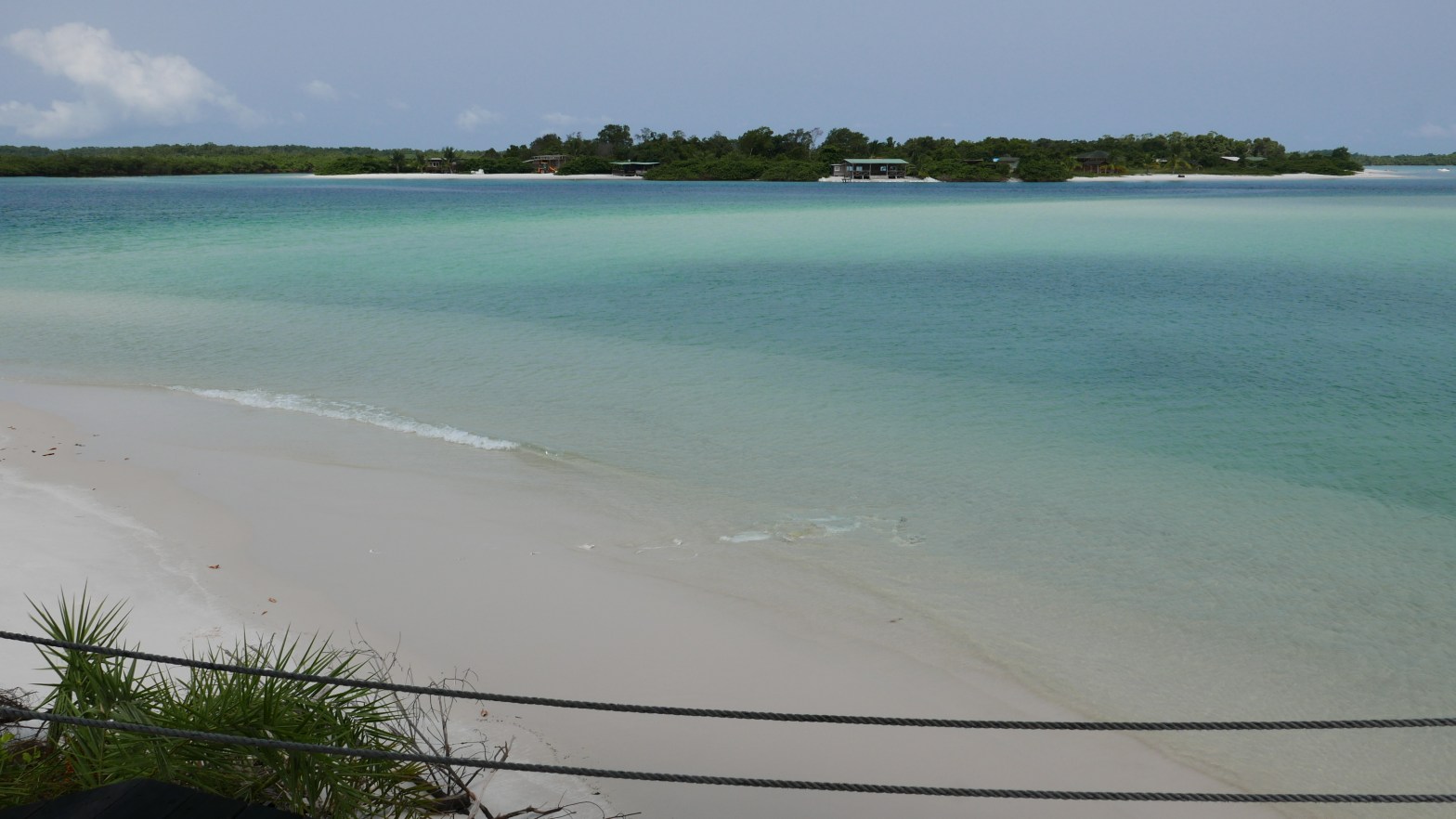
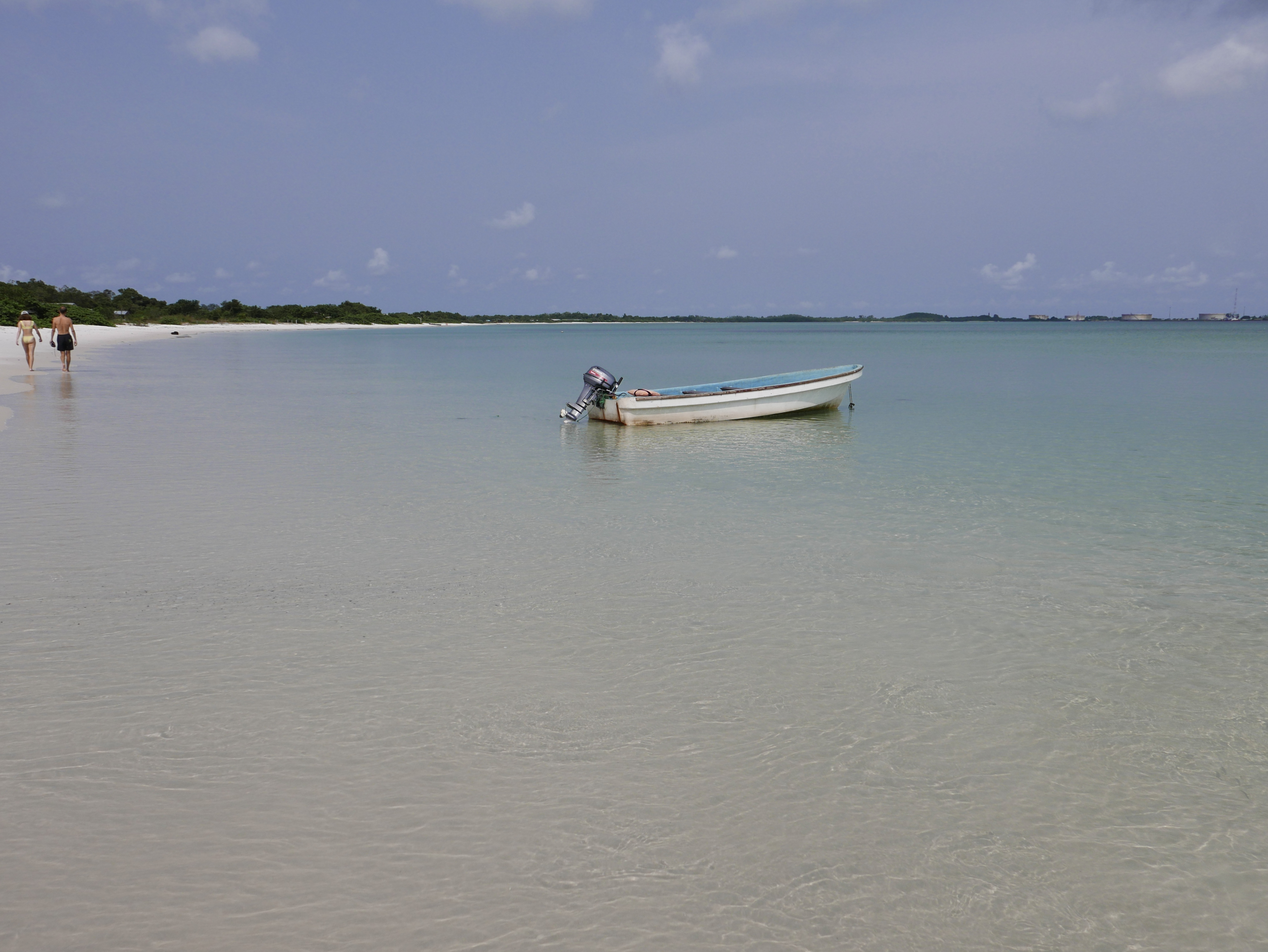
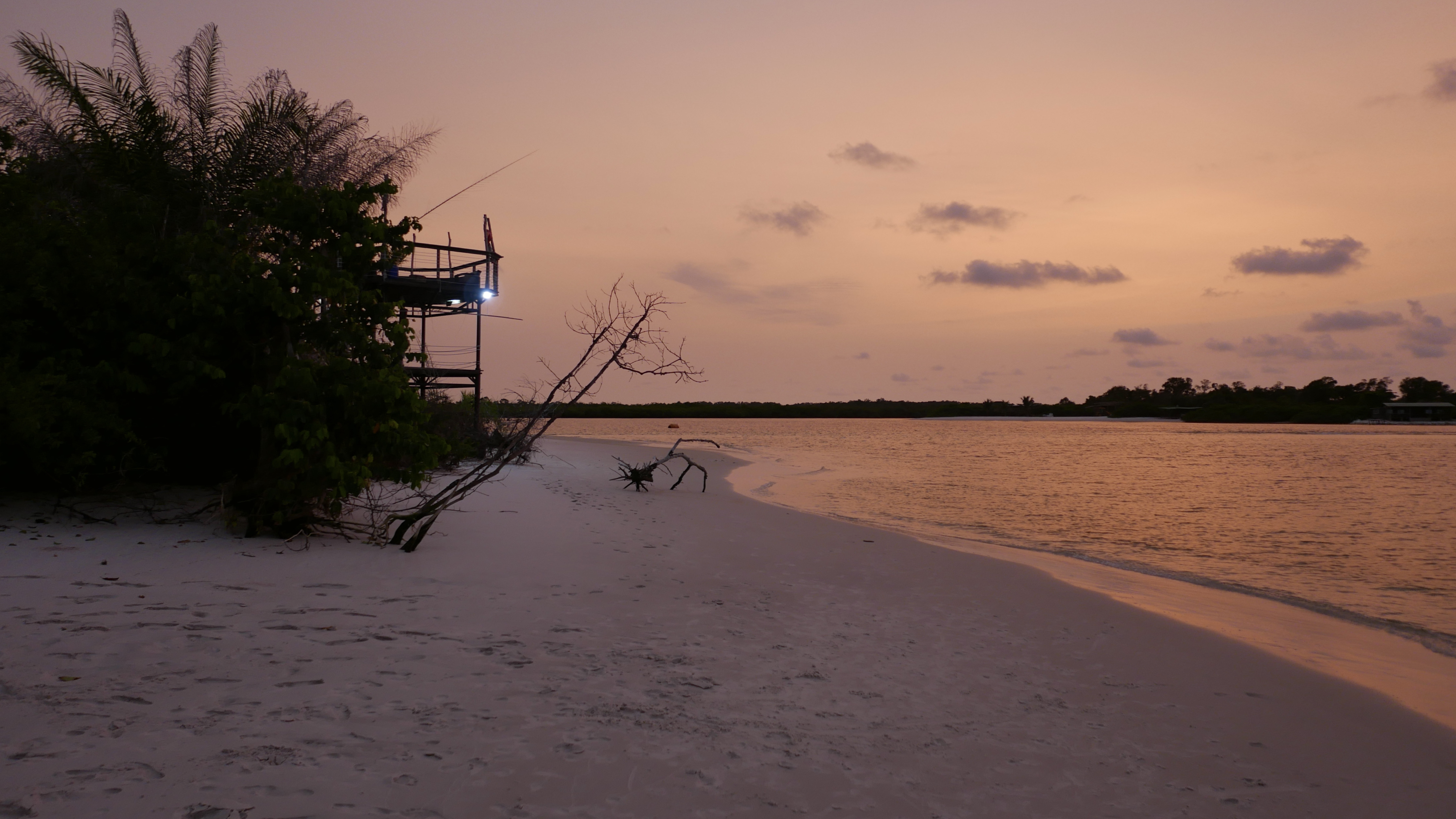
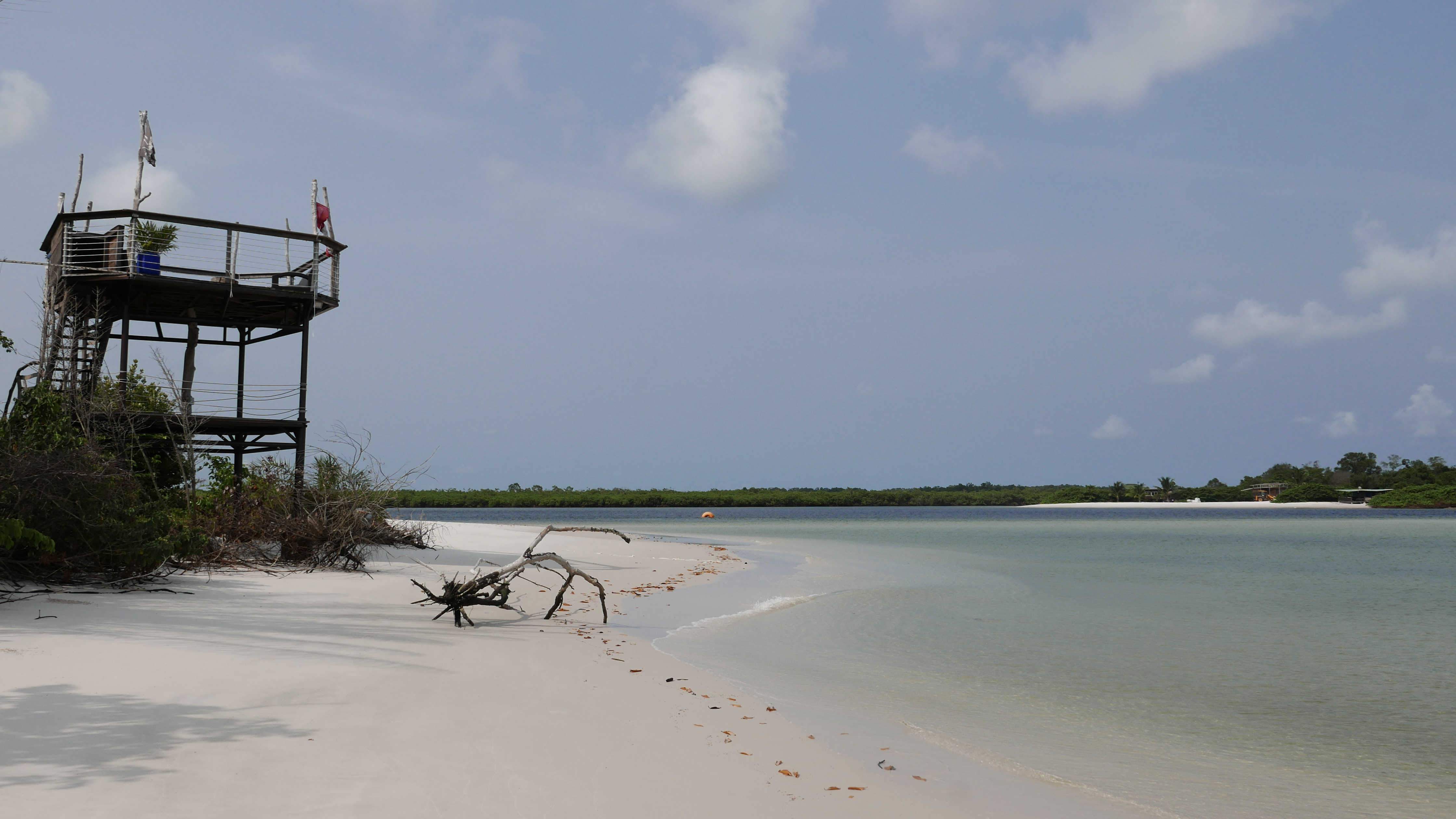
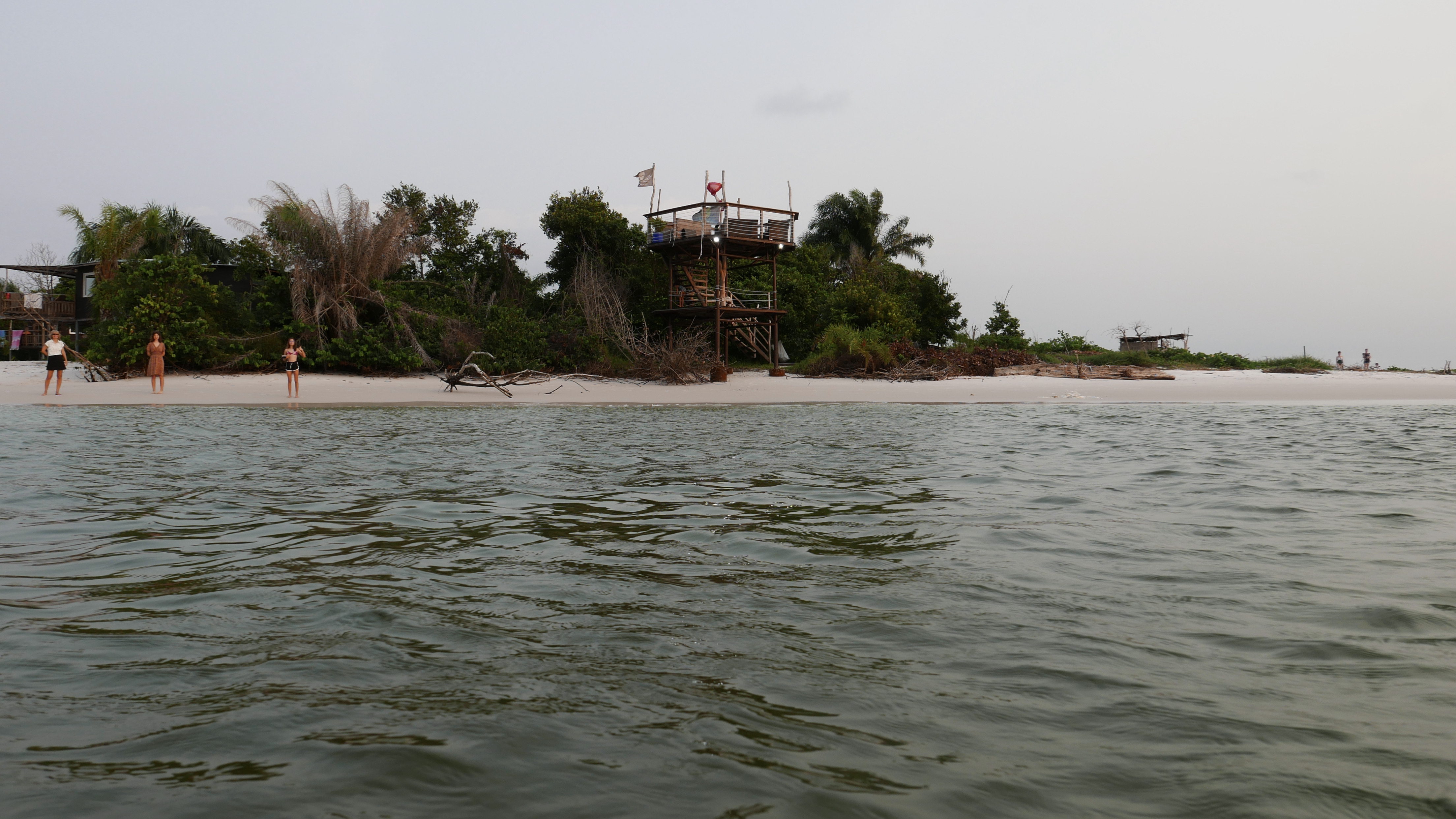
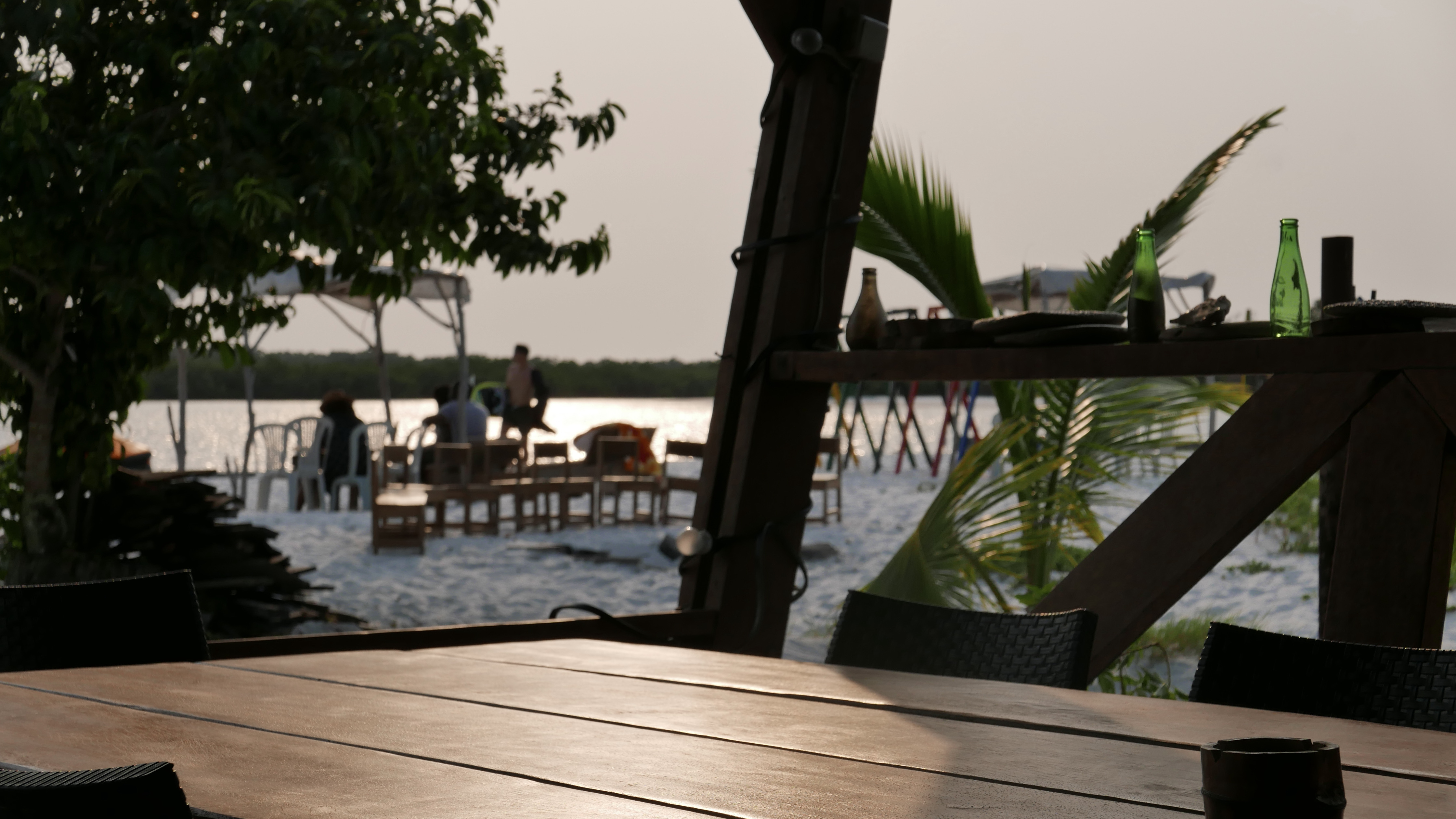
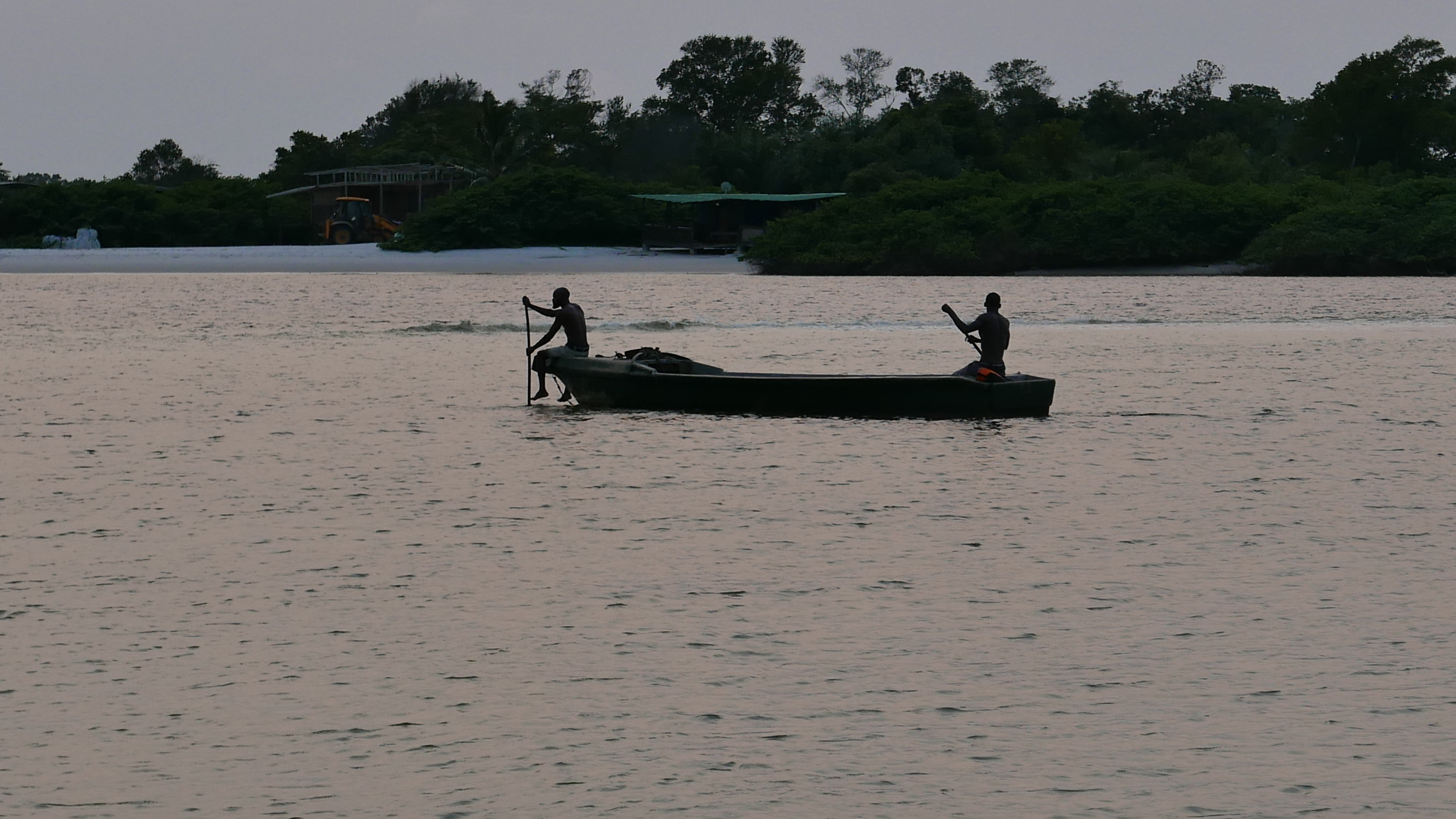
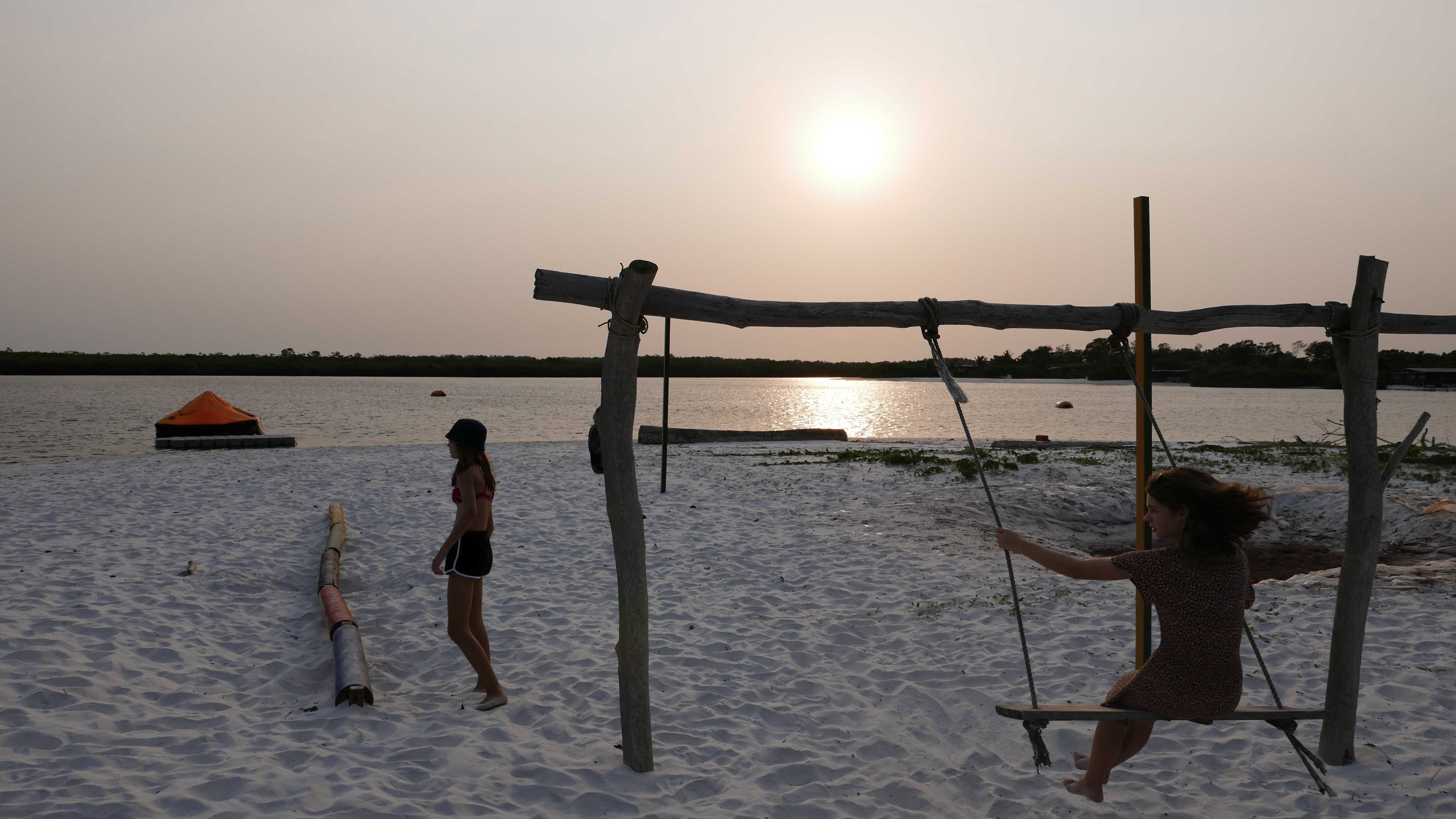
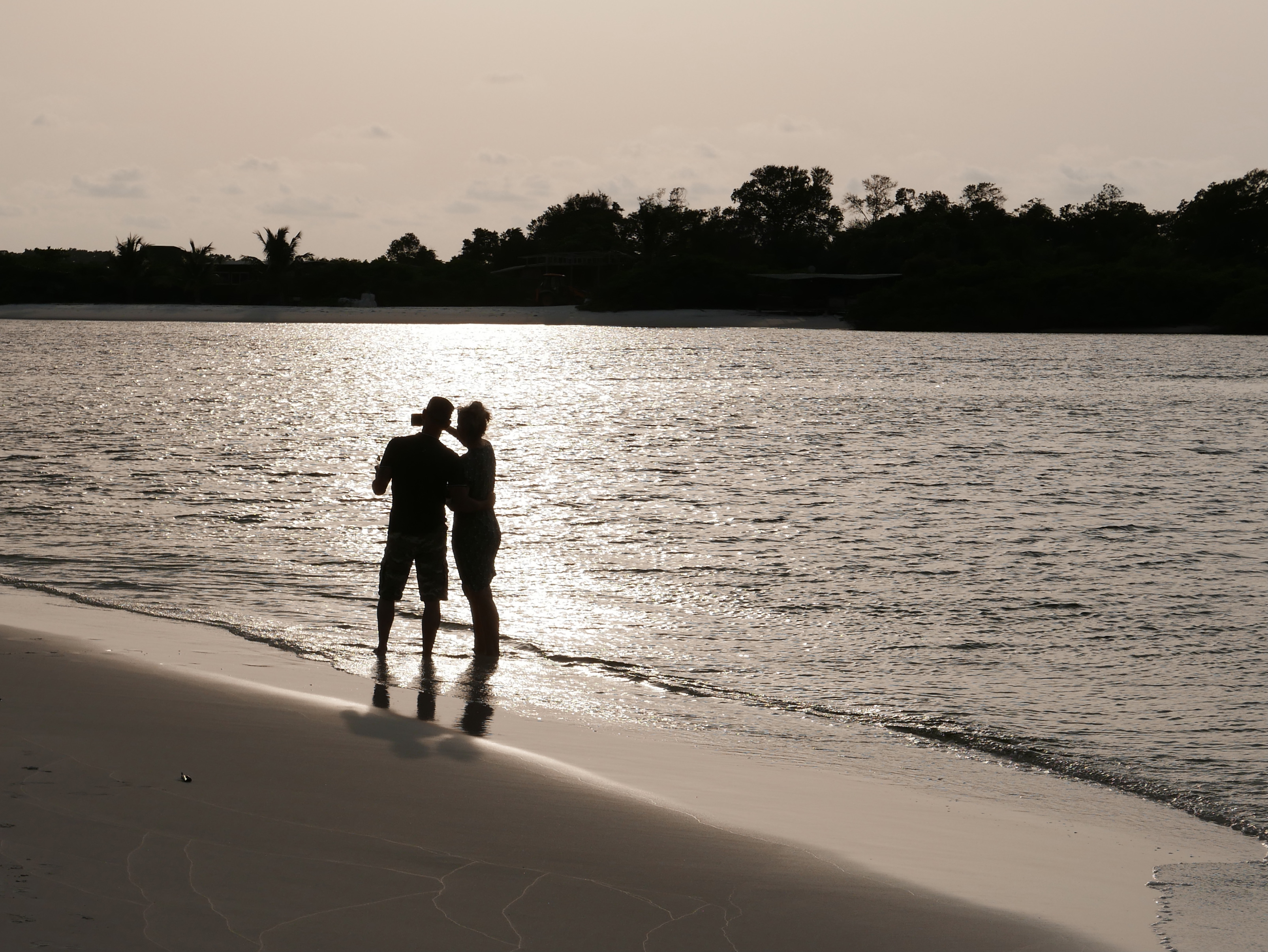
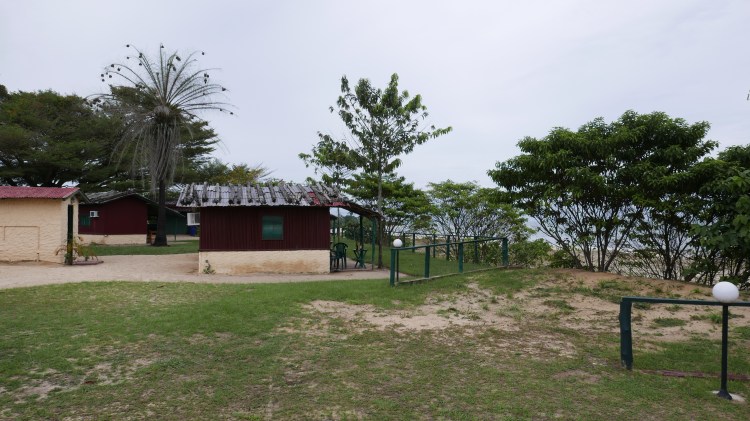
We reach our final destination after a short taxi and boat ride. We are at Aux Berges des Trois Rivières, in a wooden bungalow overlooking a river, the sea (and the oil terminal in the far background), and we quickly understand that what we heard was true: POG can indeed be a nice place to linger in. Thanks to the huge and high sandbanks on the East side of Cap Lopez, the water is the clearest you’ll find in all of Gabon, and we will not get enough of it in three days here.
nightday
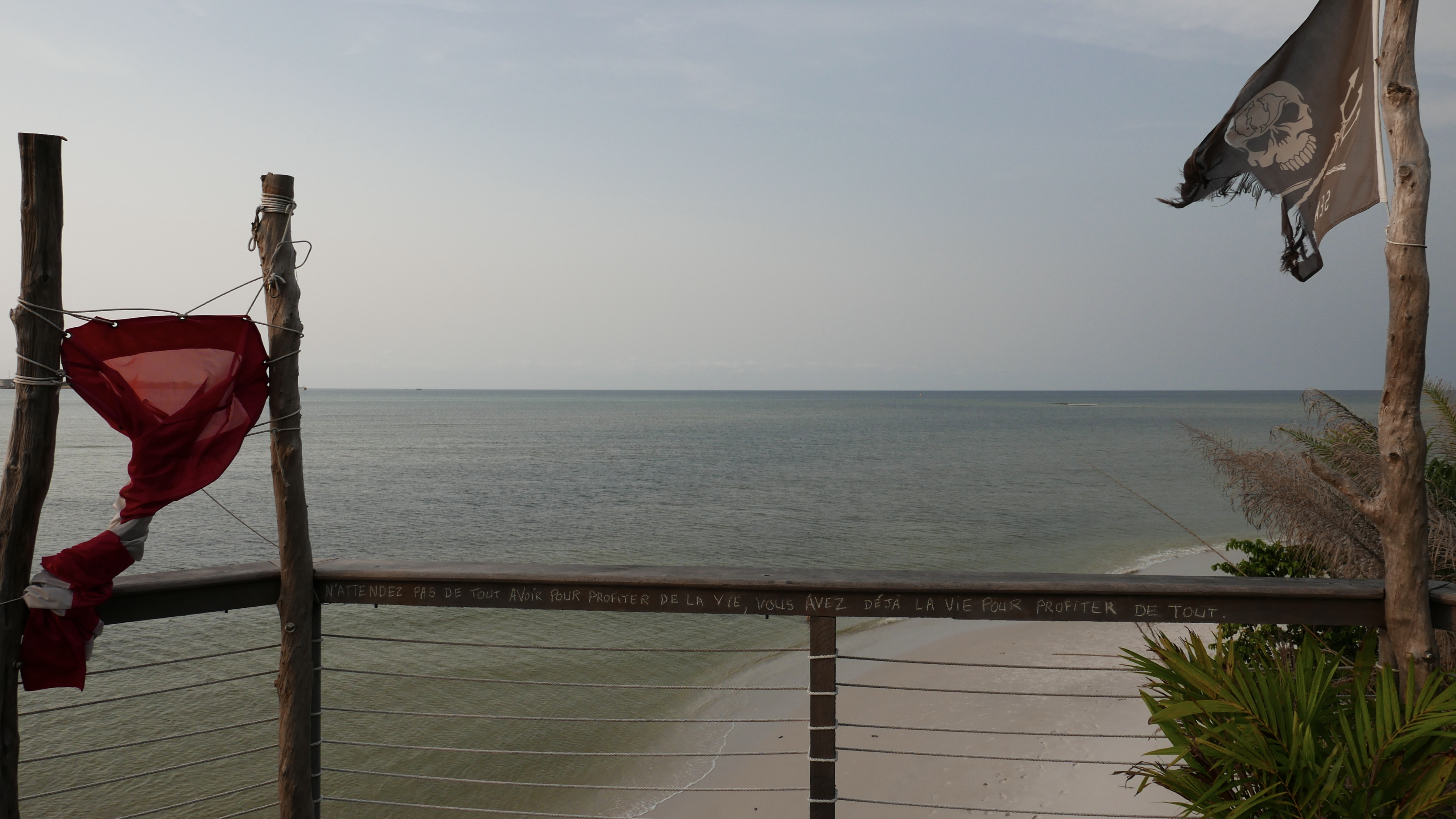
wise words!
We take the early morning boat back to Libreville. For a while, the Robinson vibe will stay with us. Many places deserve a second chance, and POG is one of them.
Things have changed a lot since the days when Sao Tomé was called “chocolate island” (see this earlier post). Many other African countries started growing cocoa and exporting it massively, while the main plantations in Sao Tomé have gradually shut down.
However, cocoa still can be found growing wildly all around the island and today, Santomean chocolate is revered by connoisseurs and discerning chefs around the world thanks to two local companies promoting the “tree to bar” philosophy: Claudio Corallo and Diogo Vaz.
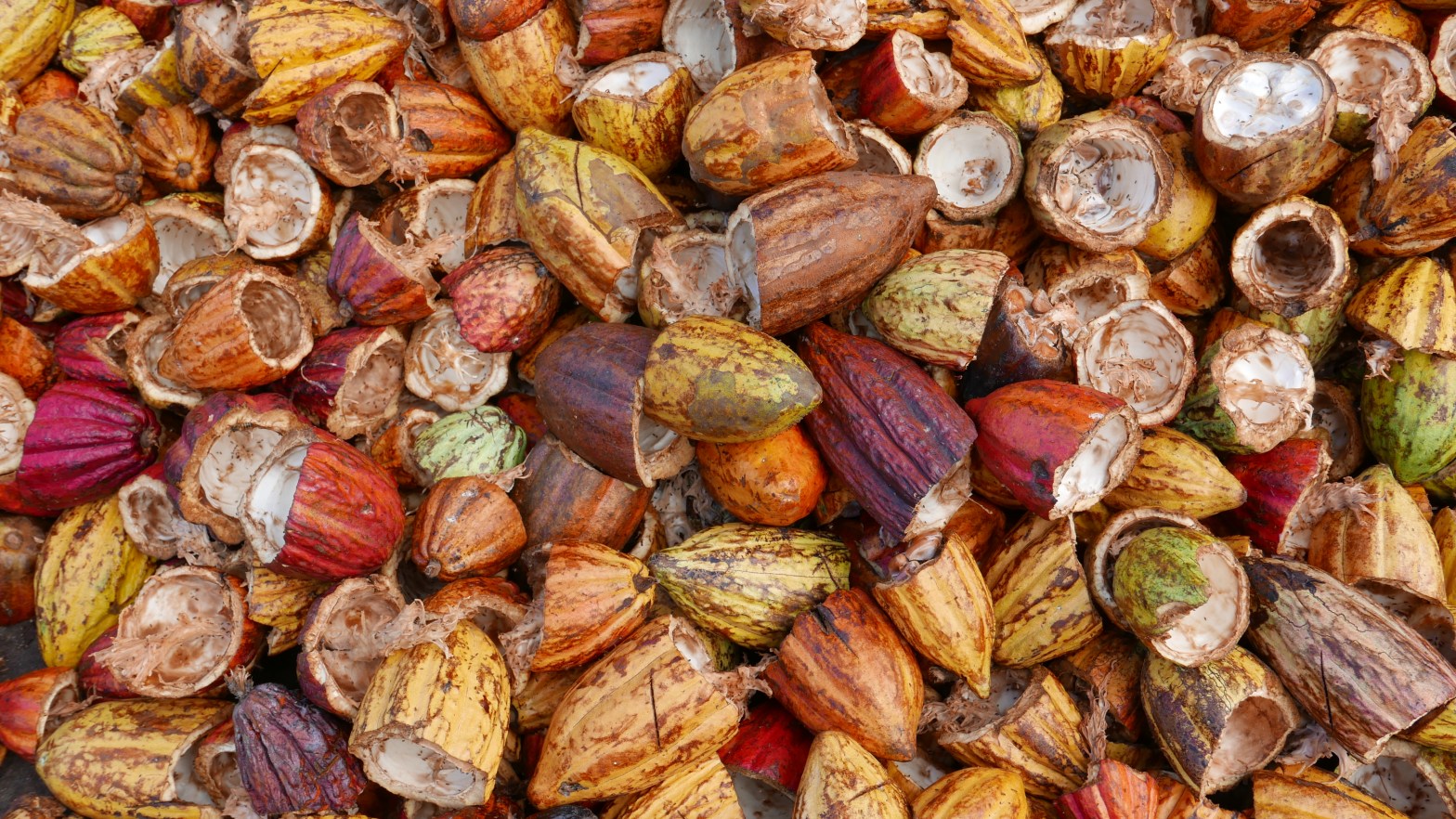
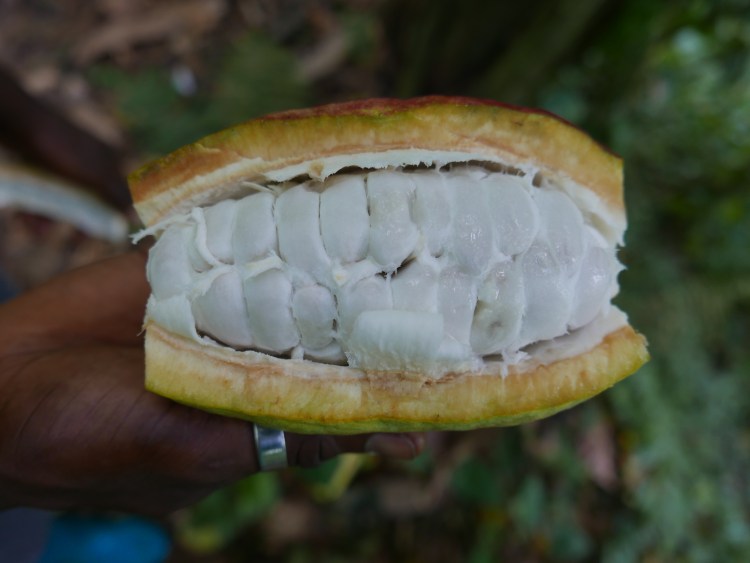
The ripe cocoa fruit, its beans under a sweet white pulp
Claudio Corallo is the original pioneer who came to the island almost 50 years ago and whose work alone has put Sao Tomé again on the international chocolate map. His no-frills, perfect carton chocolate boxes can easily be found easily in Libreville. We love them. His workshop in Sao Tomé is open a couple of days per week and this time.
In comparison, Diogo Vaz is a newcomer. It started in 2014 with a small team of French chocolate enthusiasts who set themselves the task to revive the Diogo Vaz plantation, on the North coast. They have put a lot of hard work behind their ambitions and today, the Diogo Vaz brand is becoming less and less of a well-kept secret. Their tablets can easily be found in Libreville. We love them. And on this sunny October day (yes, it’s a lazy blog), as we drive the windy road up to the village of Diogo Vaz, we are eager to discover where it all comes from.
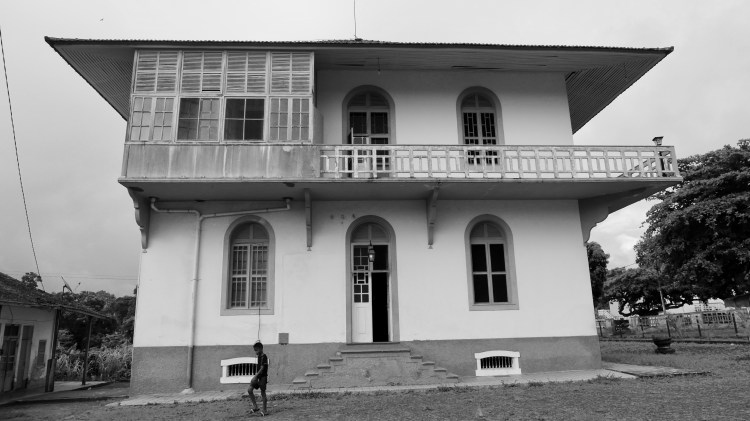
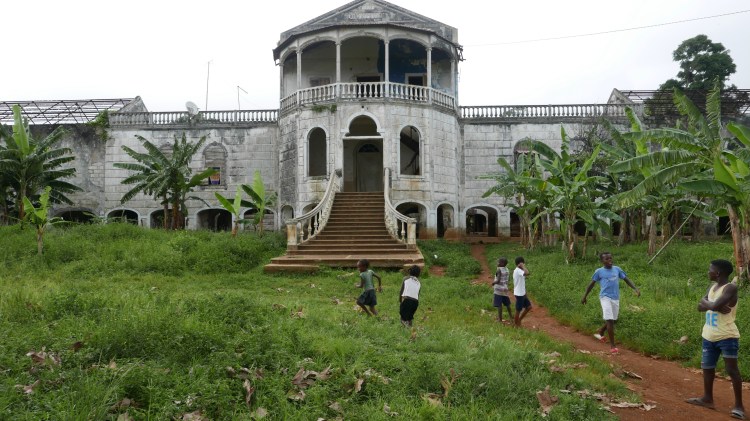
The colonial house at the entrance of the plantation.
Our visit starts in the lush, damp and mosquito-infested plantation, where three different types of cocoa can be found. It ends with a black polygon melting in our mouth, leaving us happy and – so says science – smarter.
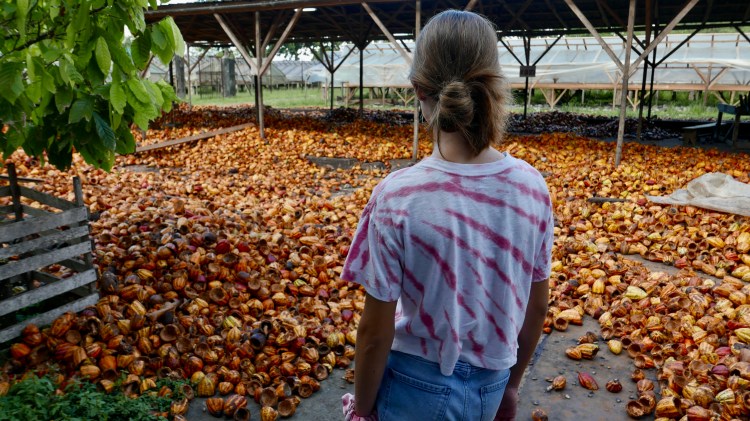
Manually opened cocoa fruits lying on the floor… some serious cleaning should follow.
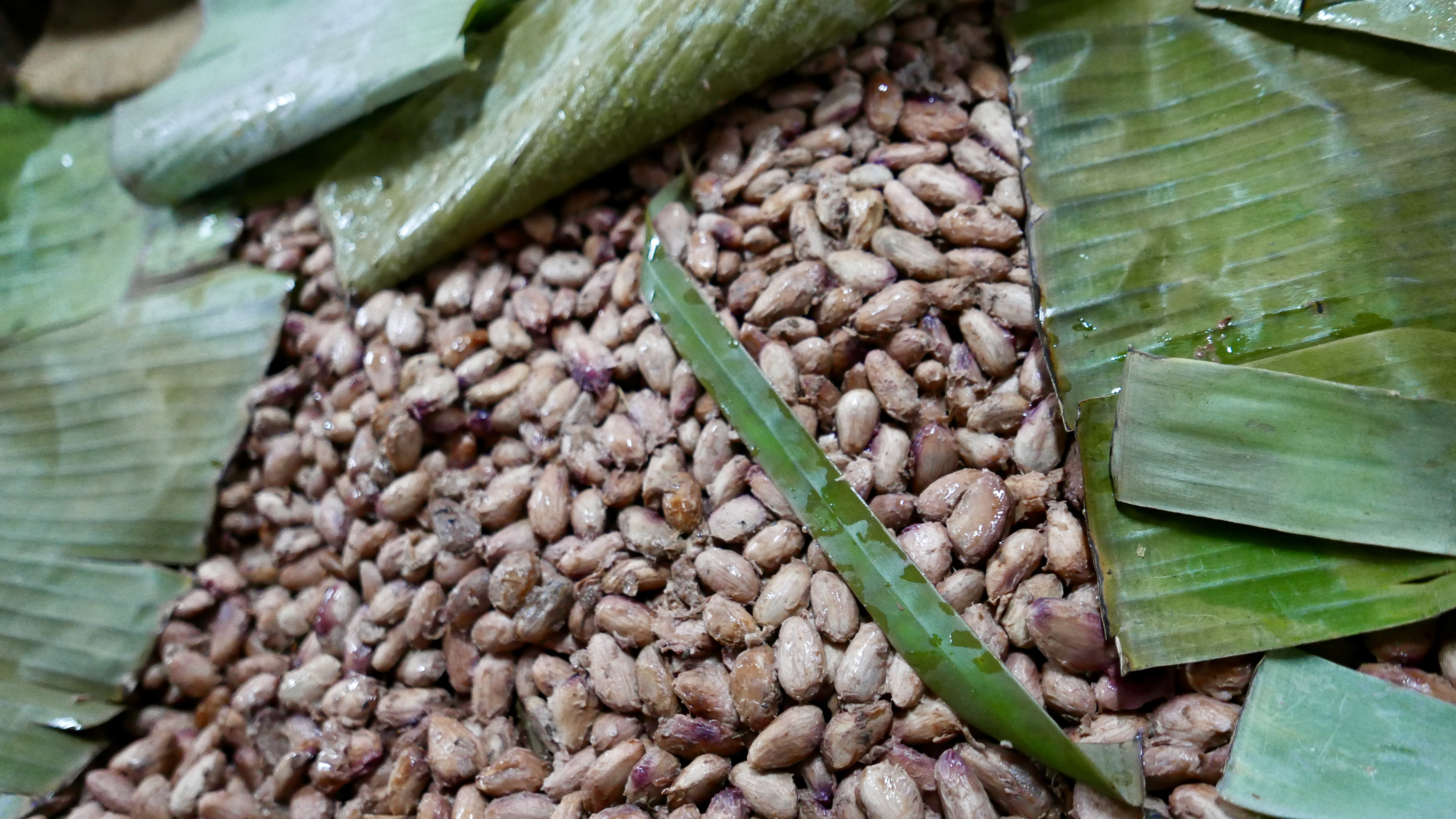
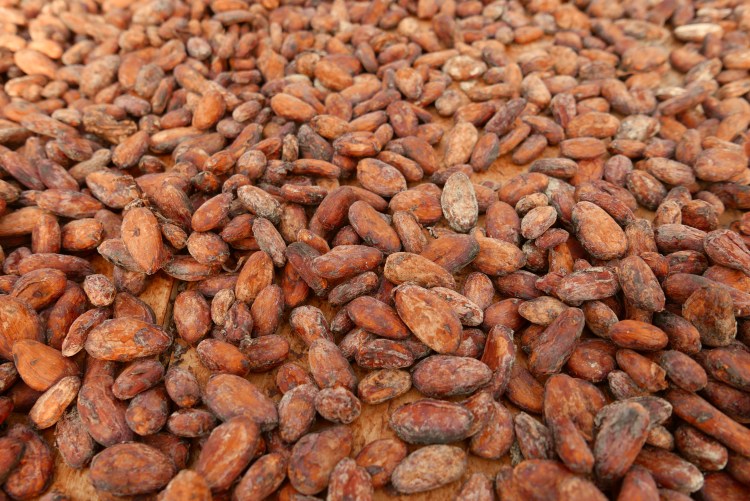
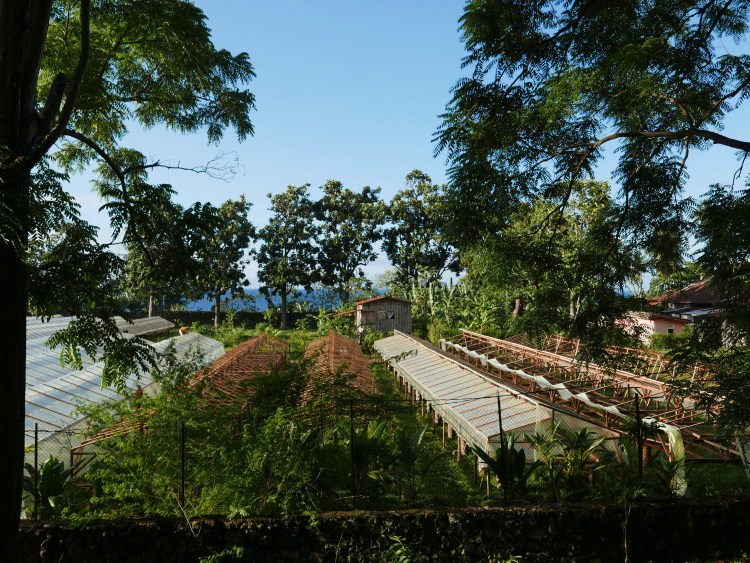
In between, we get to understand how the ripe cocoa fruits are cut off and opened manually, how their beans are then left to ferment under banana leaves for almost a week, so that the sweet pulp surrounding them is eliminated and the first chocolate aroma develops inside the beans, which are then put to dry outside.
During fermentation, the temperature rises up to 50 degrees beneath the banana leaves.Dry, at last ! But with a slight taste of vinegar following fermentation.
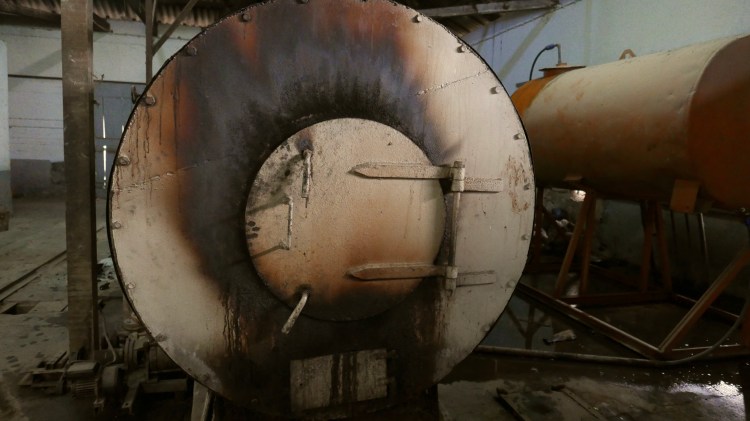
The last step is to put the beans to roast in a huge cylindrical oven for a little while, to finalise the drying, remove the bitter smells occurred by fermentation, and further develop the chocolate taste. All along this process, a strictly manual quality control is applied to make sure only quality beans will be used to make chocolate.
The roasting oven from colonial times is still used today.
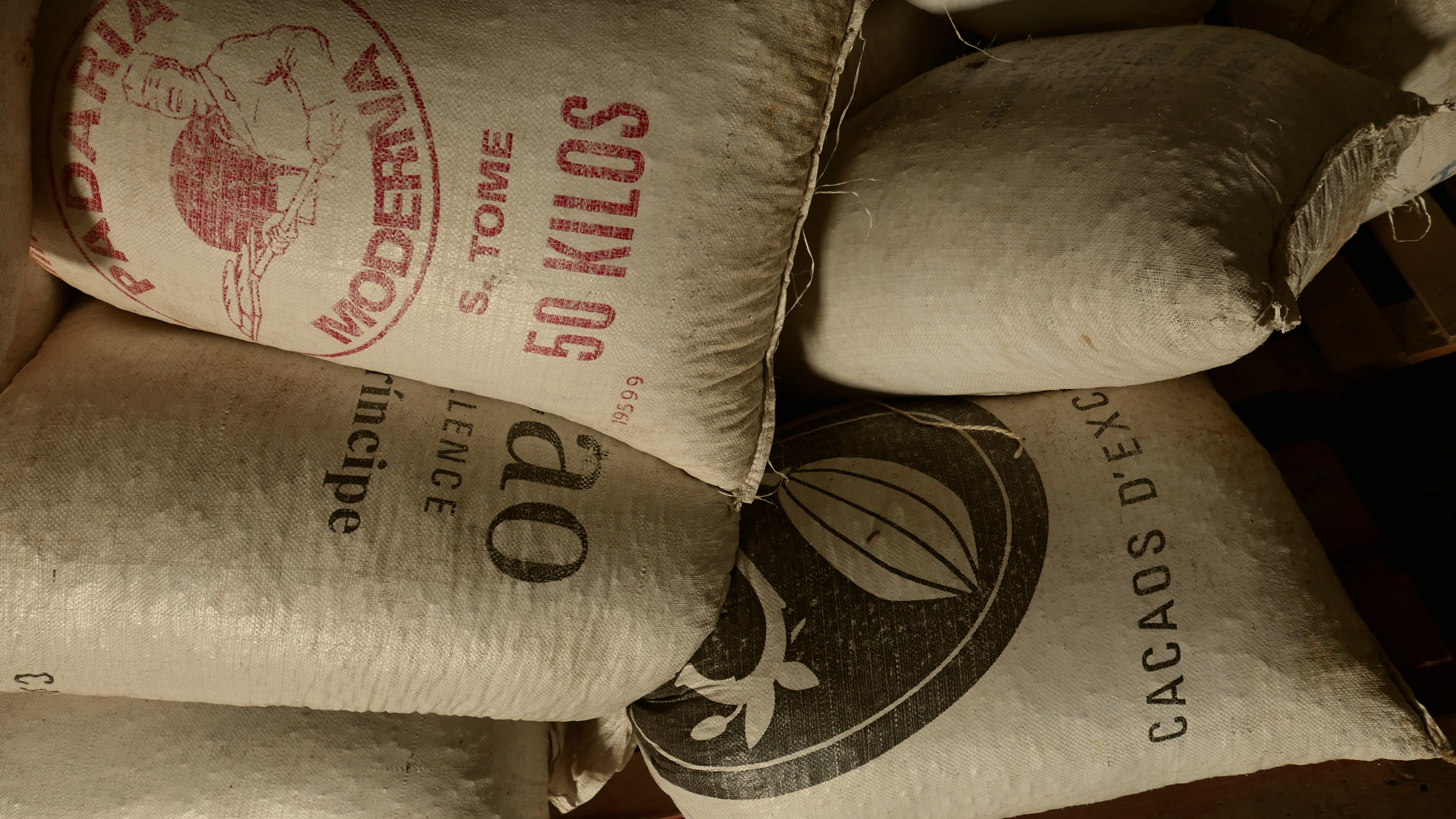
Eventually the dry beans are put into bags, which will either stay on the island and turn into Diogo Vaz chocolate, or be exported. All of this happens more or less in the same way than a hundred years ago, in the very buildings and with the machines and equipment that the Portuguese used at that time. Needless to say, it’s organic.
The great thing about this project is that it truly benefits the surrounding community. Today, 200 people live off directly from the plantation, and after decades of decay the Diogo Vaz village thrives again.
View from the road of beans drying out into the sun. The ocean is right behind.
There is a fancy Diogo Vaz boutique on the seaside road in the city of Sao Tomé, very close to Claudio Corallo‘s factory. Alternatively, you may order your first Santomean chocolate fix online… Eating either of these chocolates feels like listening to music on vinyl: you simply get the real stuff. Just be aware of the very high chance of addiction!
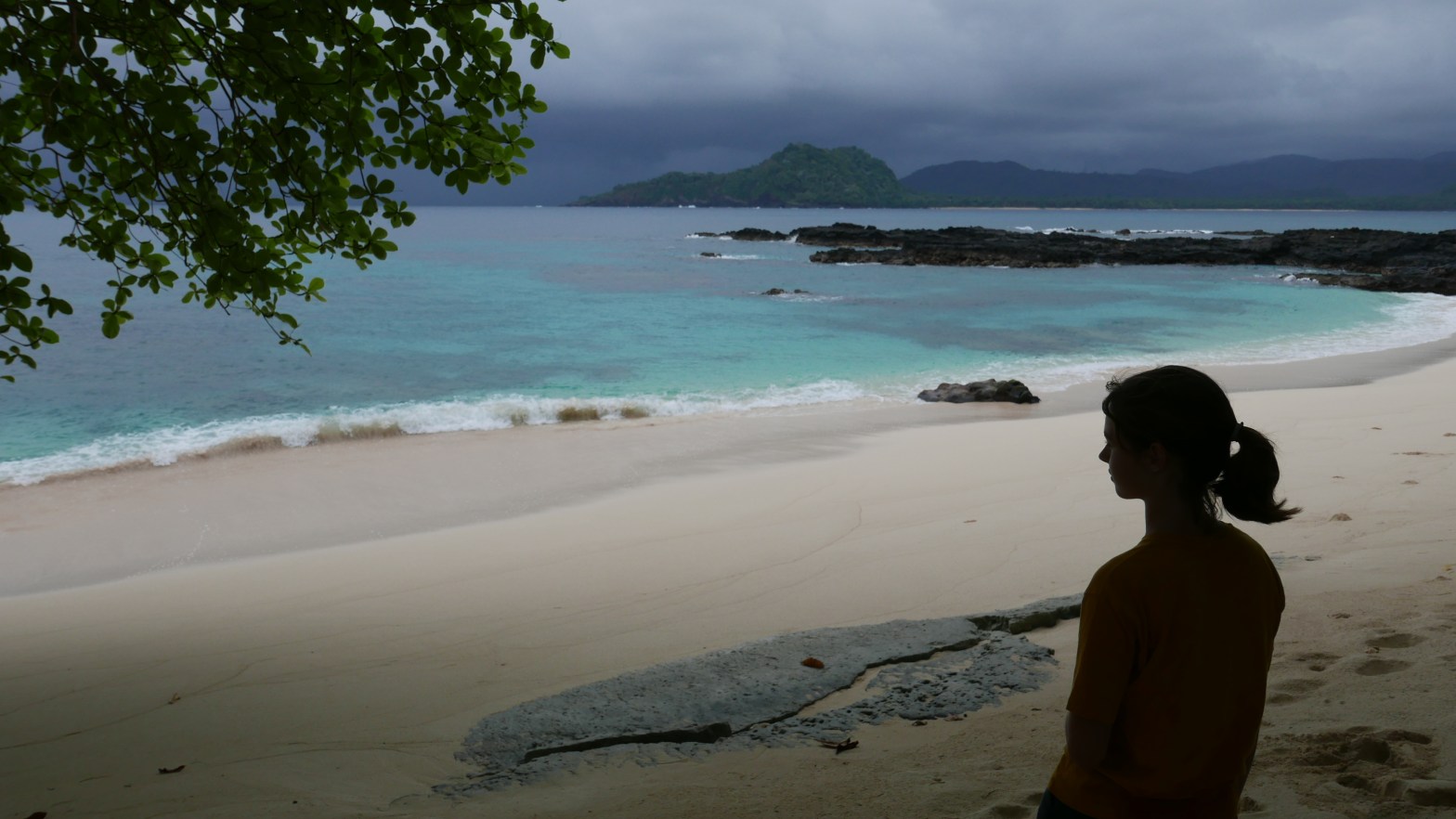
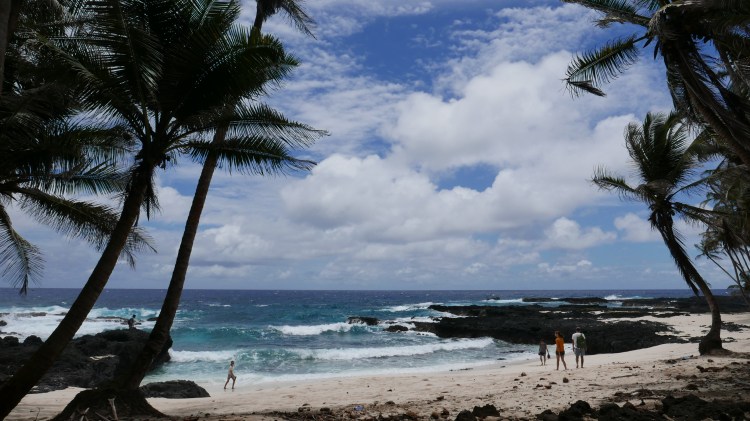
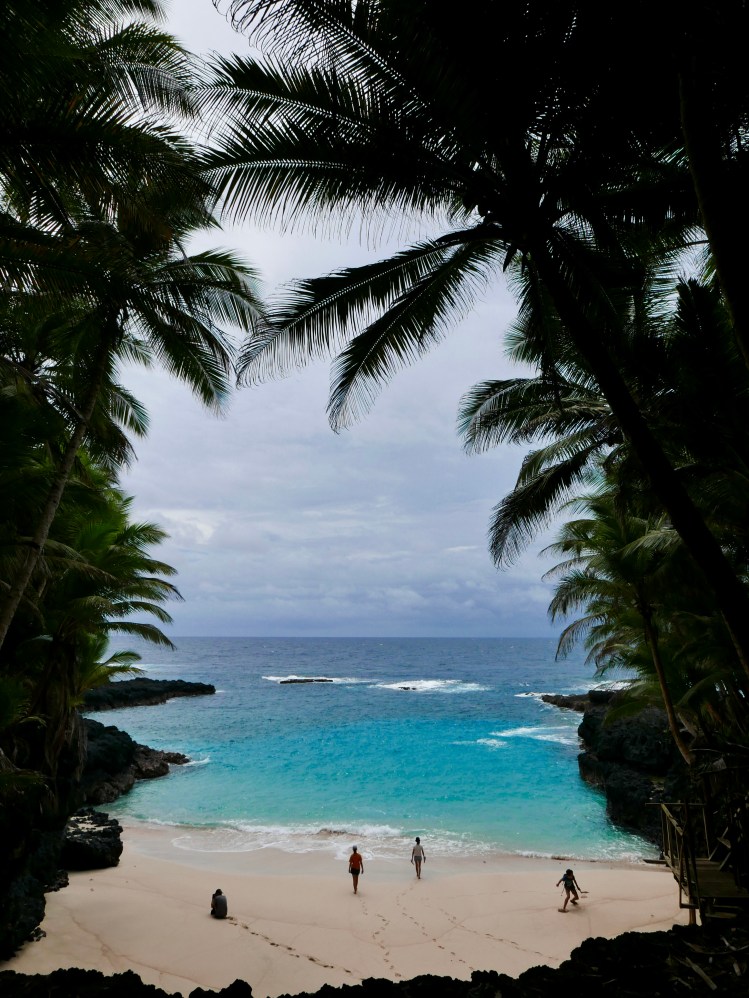
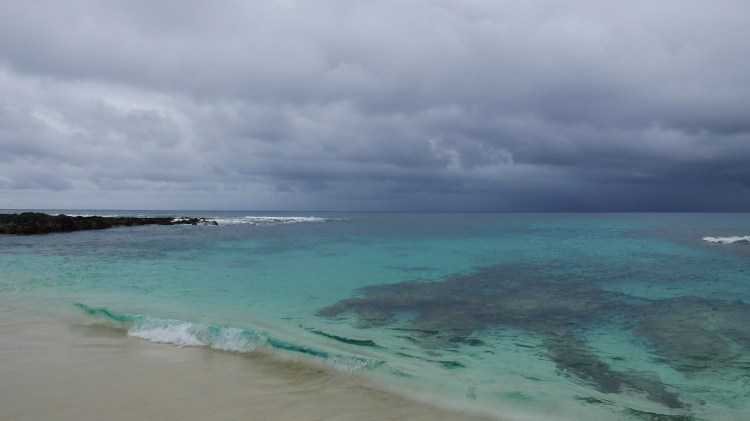
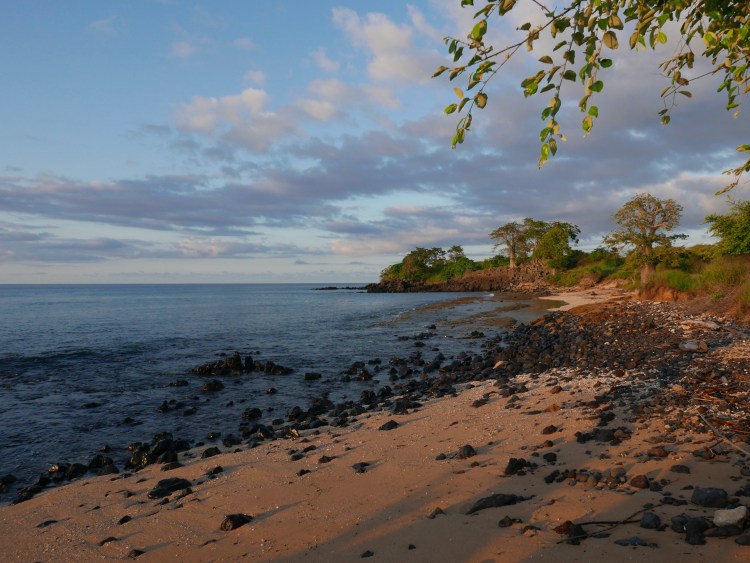
It’s October and I am back to Sao Tomé, this time well-accompanied: it’s the four of us now and two Parisian accomplices, tasting this unique Afro-Portuguese island vibe. We make it to the Southern tip of the island, past the village of Porto Alegre, where the beaches are endless and sandy and people are scarce.
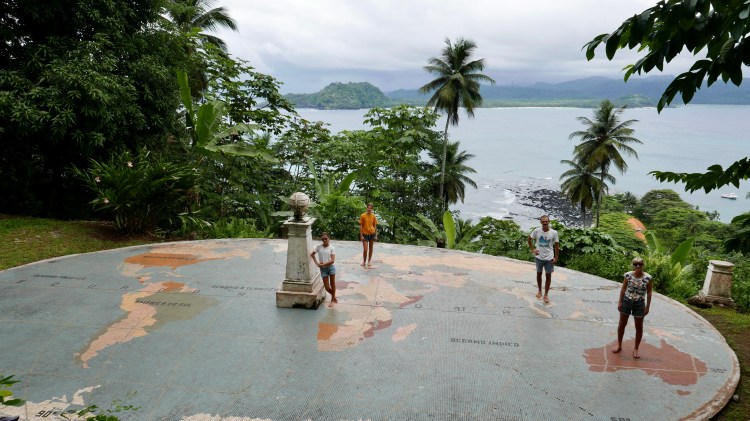
We reach Ilhéu das Rolas after 15 min spend on a motor boat. We are now on the islet that proclaimed itself the center of the Earth, though no one knows about it. The reason behind is that this minuscule piece of land is crossed by the equatorial line, and lies only a few degrees from the Greenwich meridian.
There is a nice monument right on the Equator, though like everything else in Sao Tomé it has lost it’s luster. We find it after a short walk through a welcoming jungle and with a little help from the locals.
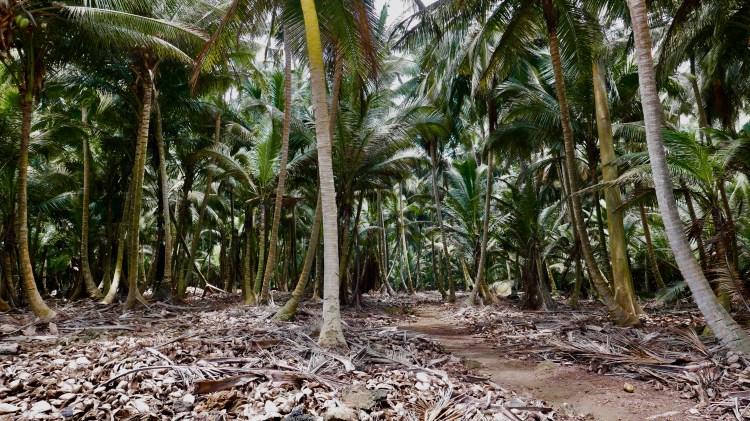
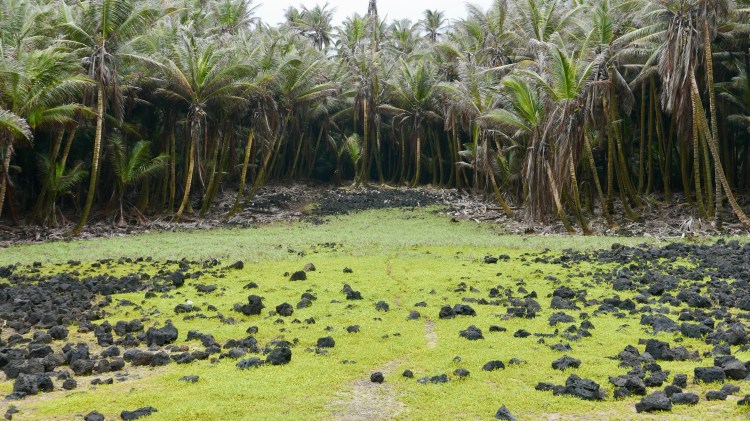
Then we roam around in search of the volcano that one of our friends told us about. We don’t know anything about it, just that we should go there. At the foot of a coconut tree we meet with Antonio. He knows where the volcano is. He proposes to take us there, and we start walking through an incredibly thick coconut trees forest. The soil is a very uncomfortable carpet of broken coconuts. We’ll realise throughout the day that the islet is almost entirely covered with coconut trees. Antonio wears a t-shirt with more holes in it than shirt, and no shoes.
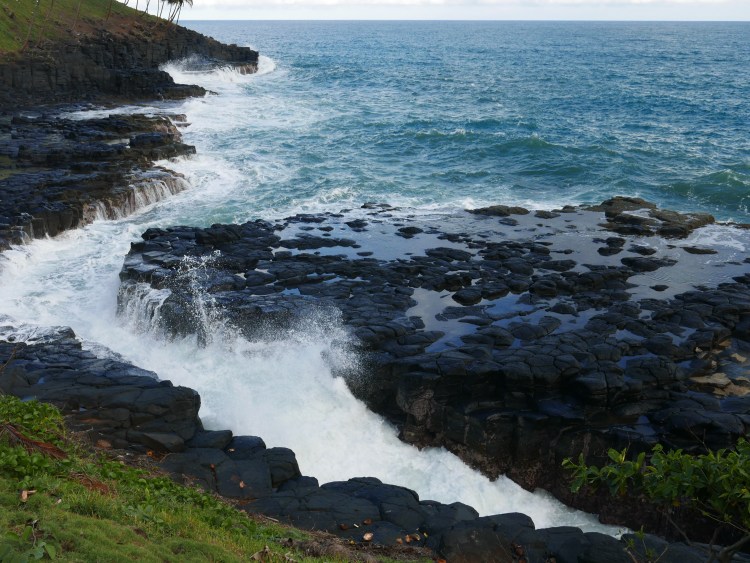
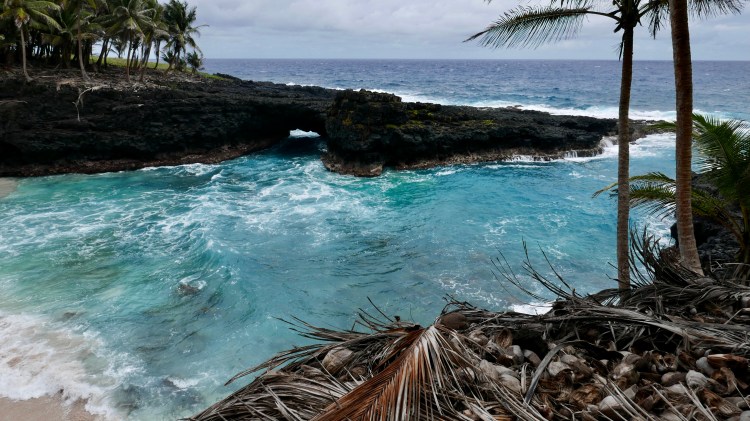
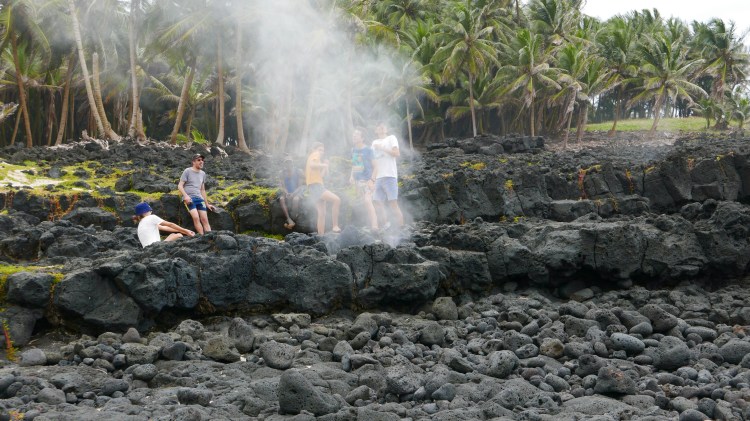
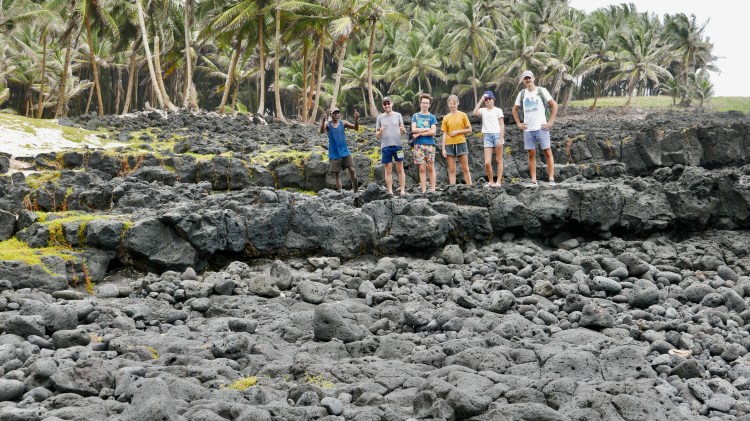
As we slowly make our way towards the volcano, we reach the volcanic stone-made Southern coast of the island. From then on, the “island of turtledoves” becomes otherworldly wild and beautiful.
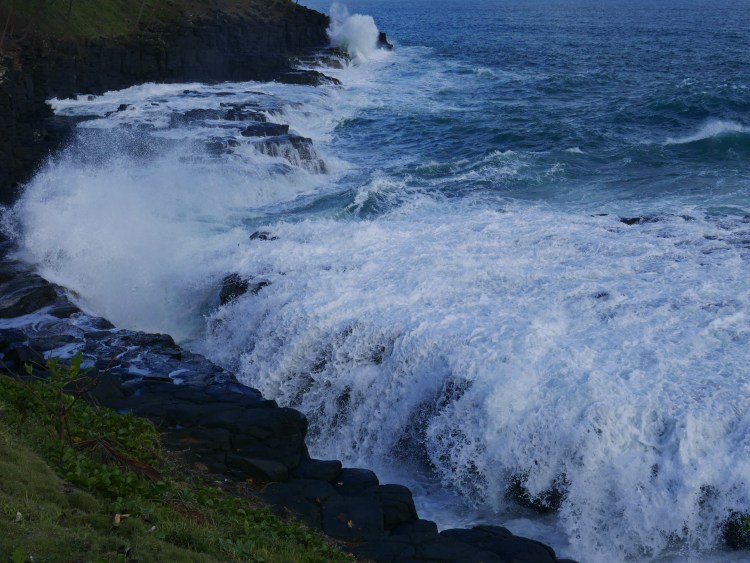
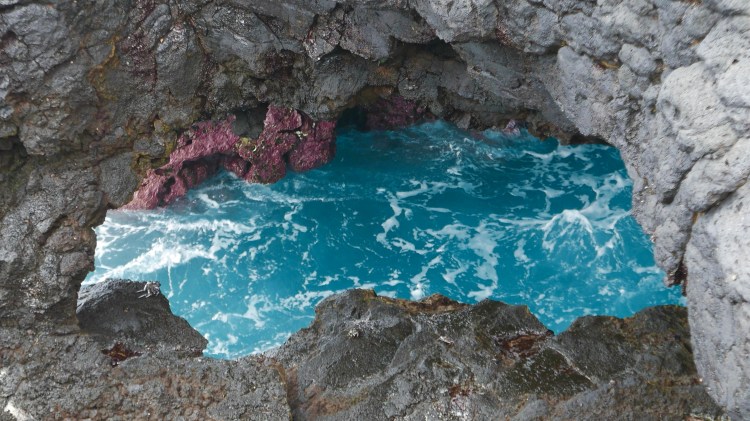
We find the volcano, which turns out to be a long rocky tunnel into which waves violently crash then crawl through, blowing out air and salt and droplets of seawater through the hole at the end of it every minute of so in quite a spectacular and hair-messing way.
By the time we have finished our walk around Ilhéu das Rolas, we have met with each of its welcoming 76 (according to Wikipedia) inhabitants, who live self-sufficiently off fishing and coconut. They tell us that today, we were the only visitors. Usually, being at the center of things means being busy. You may be happy to know that at the center of the planisphere, nature is untouched, men are few and nothing of note happens.
Hello! We have not written anything here in a long time. But all is still well in Gabon, we have started our third year here actually, and the four of us are fully busy at school or at work. We are lucky to have already seen quite a lot of the country, and we do want to see more, but at this point on our weekends we are happy to rediscover places we’ve already visited.
a few shacks between the savannah and the ocean… welcome to Nyonié !
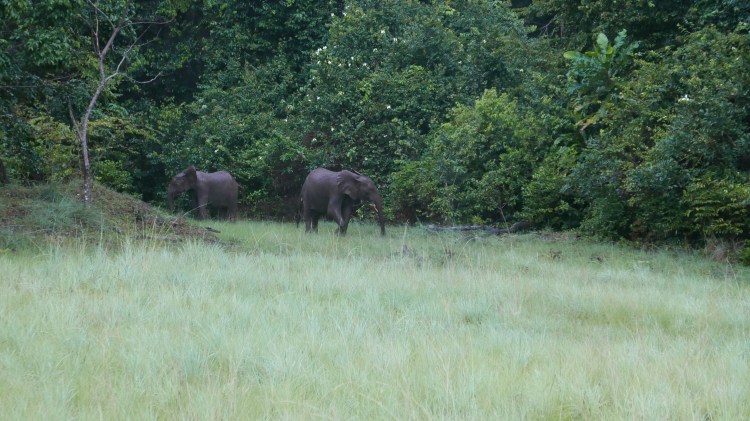
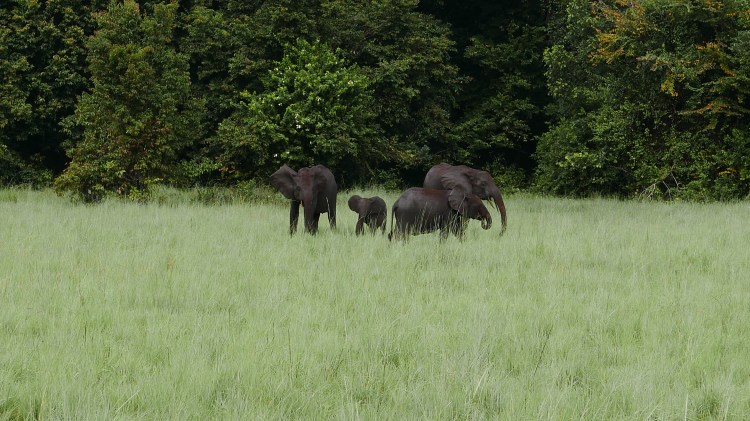
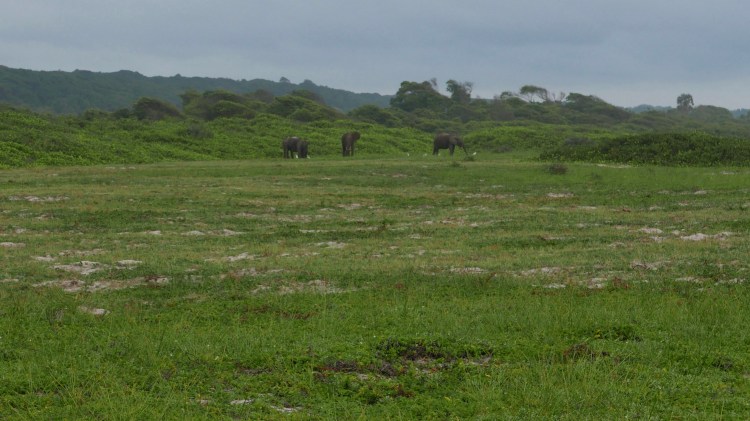
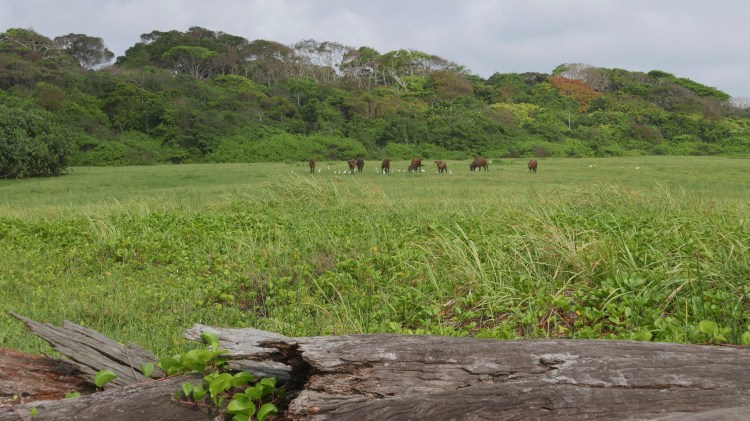
Such as Nyonié, this tiny village set on the ocean side of the Pointe Denis, a 3-hour boat and 4WD expedition from Libreville. It’s where we saw our first Gabonese elephants back in 2019, and fortunately they too are still around, the undisputed kings of this slightly lunar bit of coastal savannah, around which we roam at dawn during an unforgettable safari.
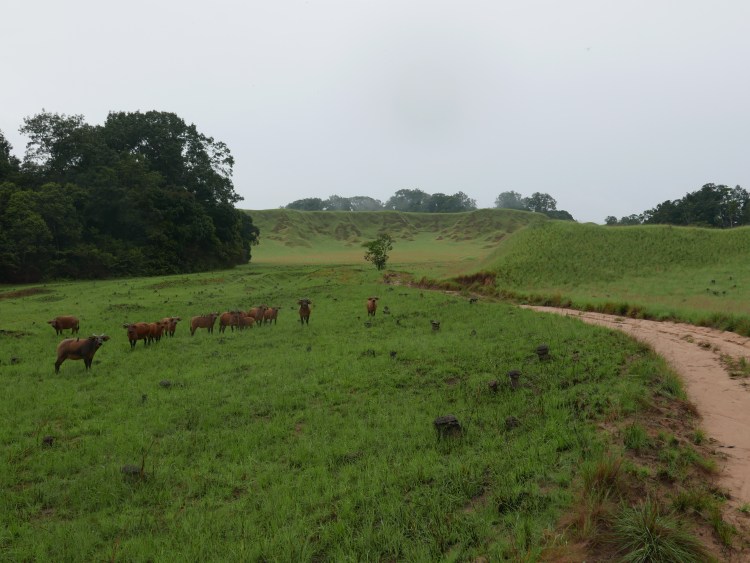
Besides the elephants, brown wild buffalos are plentiful, but let’s face it, they are as much fun to watch as a Normandia cow. For us, the unexpected stars of the morning hours are the birds: egrets, ibises, hamerkops, calaos… are much more visible than in the evening. See, even though we are still incapable of photographing them, we are at least starting to be able to call them by their real names.
Spend a weekend in Nyonié, and you’ll come back home to Libreville on Sunday evening with the feeling of having visited another planet. A friendly and green one on which time has not grip at all, full of mysterious wildlife, most of which remains fortunately hidden to the human eye.
If you’d like to know more about the amazing and secret wildlife around Nyonié, the best thing you can do is take fifteen minutes to watch some of these videos made by the local team with “trap” cameras set in front of giant mirrors in the middle of the forest: https://www.youtube.com/user/XHB06400CANNES/videos.
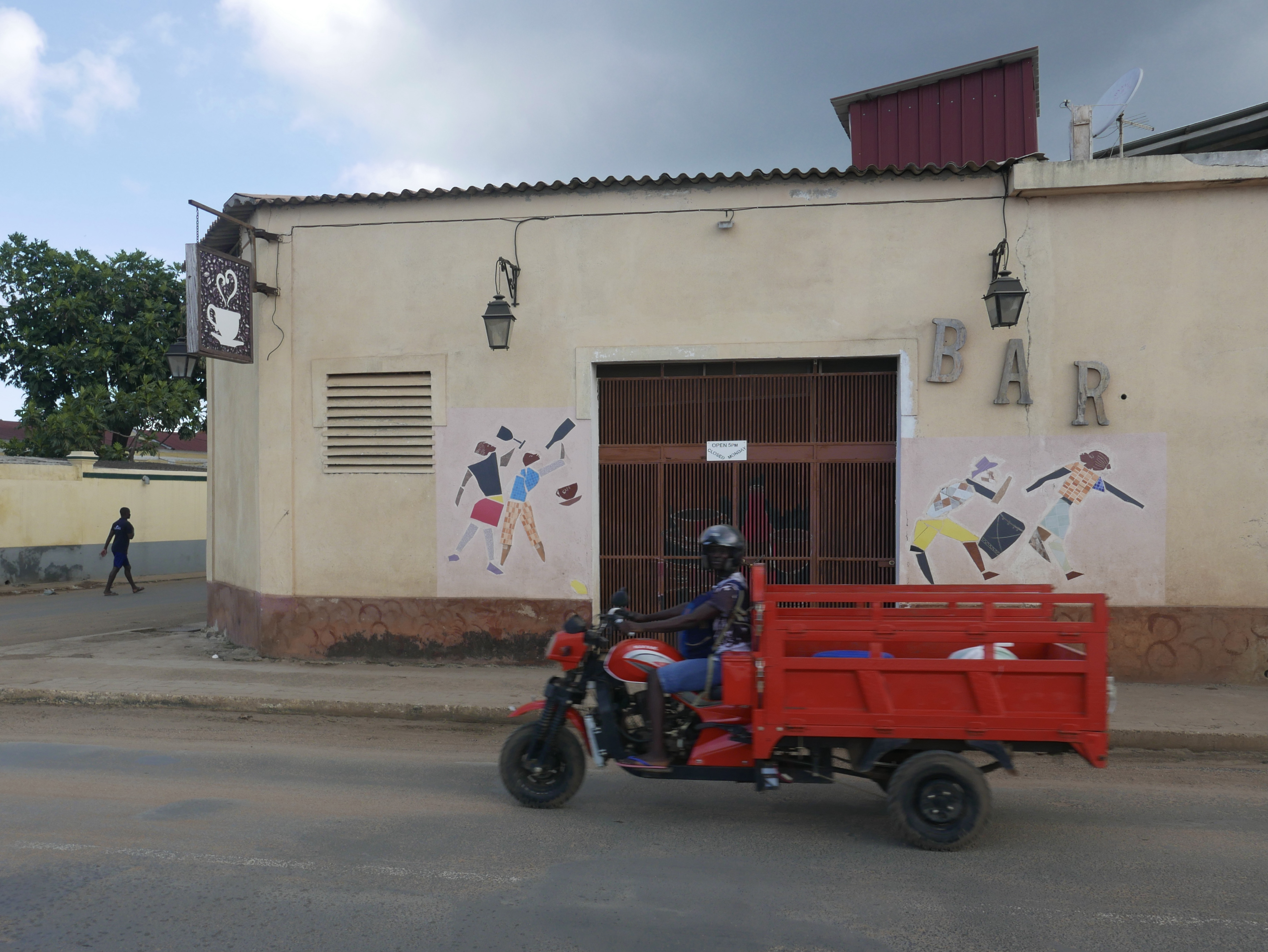
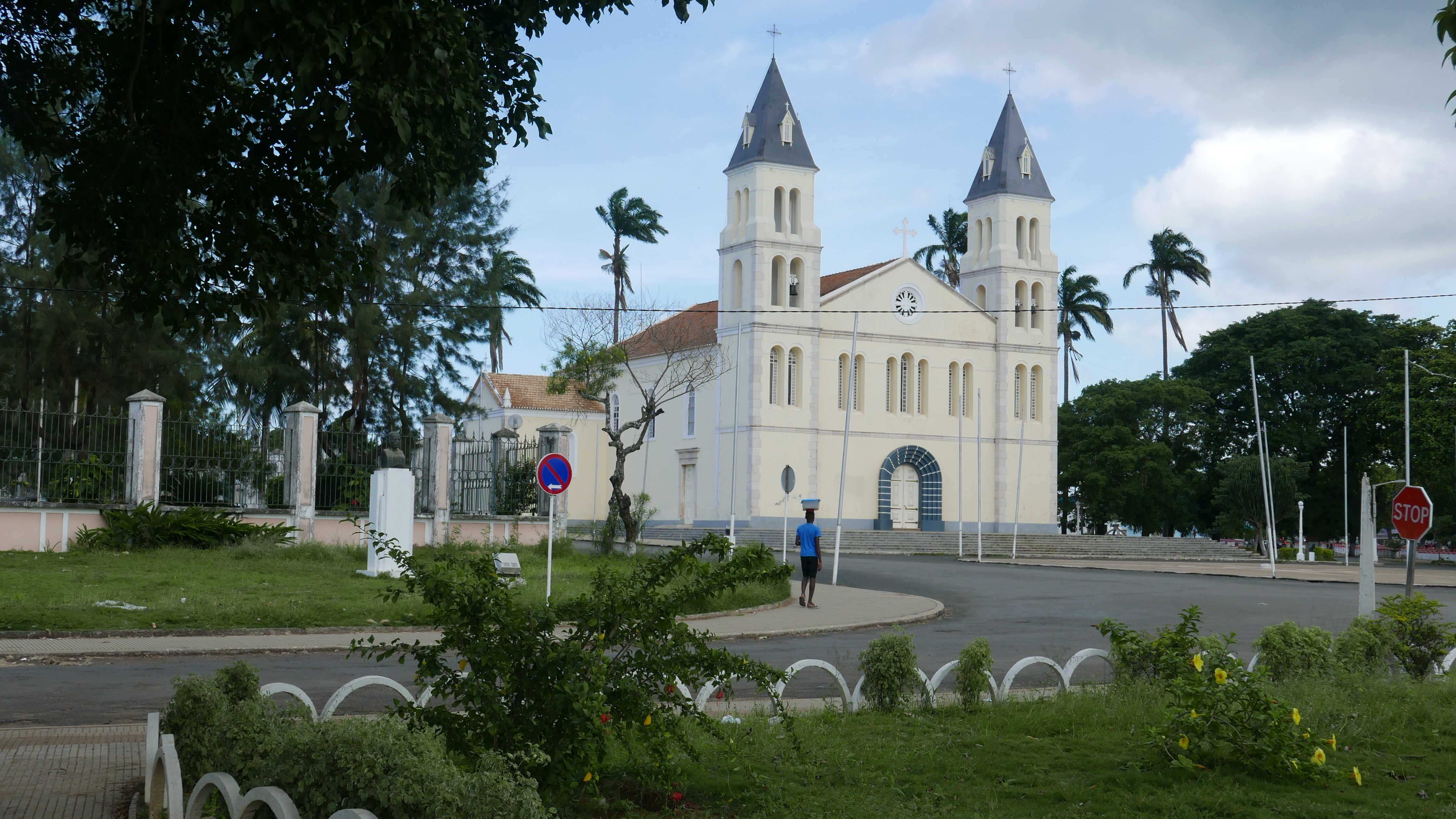
Before we moved to Libreville, we were not aware of the existence of a country called São Tomé and Principe, made of two tiny volcanic islands dropped in the middle of the Gulf of Guinea, lying some 250 km away from the Gabonese shore, right at the intersection of the Greenwich meridian and the equator. It’s not an excuse I know, but it is indeed the second smallest country in Africa (behind Seychelles), with a bit more than 200,000 inhabitants. As I did not have the same holiday dates as my three girls, I went there after Easter for a solo discovery one-week trip. São Tomé is a 45-min direct flight from Libreville in a toy-like plane, and a complete change of scenery from Gabon – except for the weather, which is just as hot, damp and rainy.
São Tomé remained uninhabited by humans until the Portuguese discovered it in 1470. Tiny populations of Portuguese, Jews and slaves from Angola made up the first settlements. The Dutch tried their luck in occupying it, and the French even briefly took control of the island of Principe in 1799. All kinds of dodgy traffickers, pirates, convicts and misfits from Europe showed up. The Portuguese kept a strong hand on both islands, which became a hub for the Portuguese slave trade, with slaves bought from what is today West Africa, Congo and Angola, and sold to Portugal, Brazil or the Caribbean. As a result, the population of the islands is very mixed today.
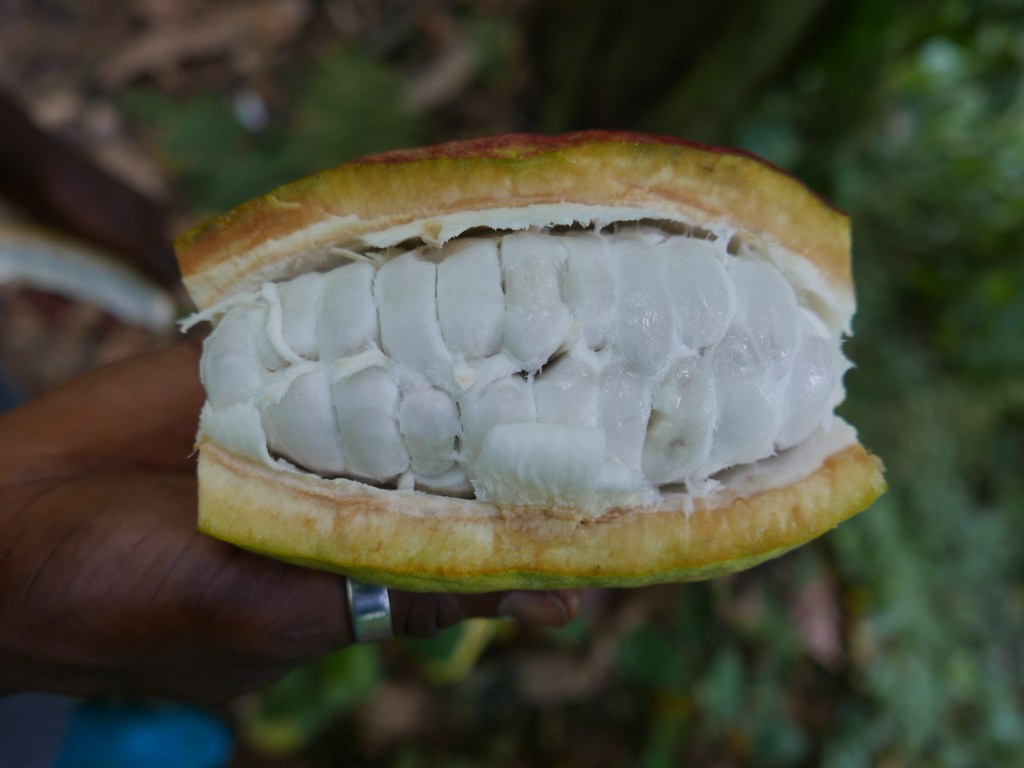
Someone lost their denture? No, that’s a perfectly ripe cacao fruit. The white pulp around the beans is deliciously sweet. Monkey and man love it.
The settlers introduced coffee and cacao in the 19th century, which quickly became the main resources of the islands. Though slavery was officially abolished in 1875 by the Portuguese government, the working conditions in the plantations remained close to slavery for a long time, allowing São Tomé to become in 1913 the biggest cacao exporter in the world, which earned it the nickname of “chocolate island”. The two islands became an independent country in 1975. Since then, they have remained, for better or worse, isolated from global turmoil. In 2018, a record number of 33,400 tourists visited the country. In May 2021, there are no more than two weekly planes linking the island with Lisbon and one with Libreville, and none of them is full.
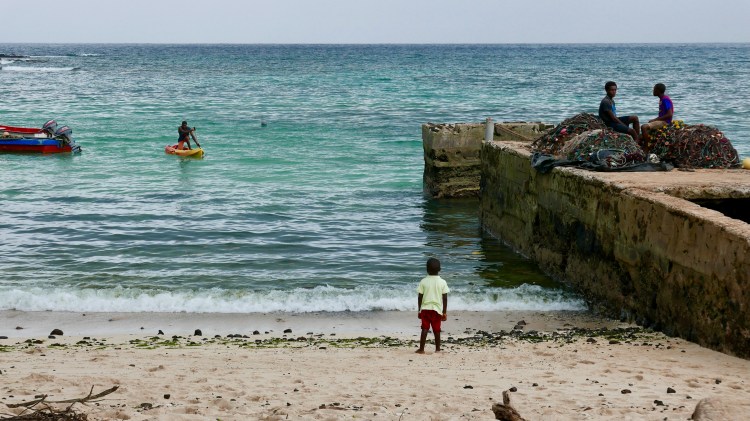
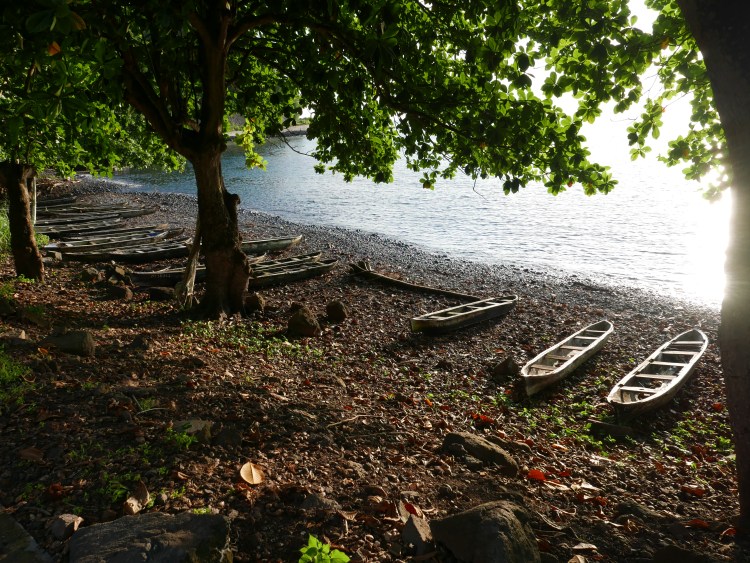
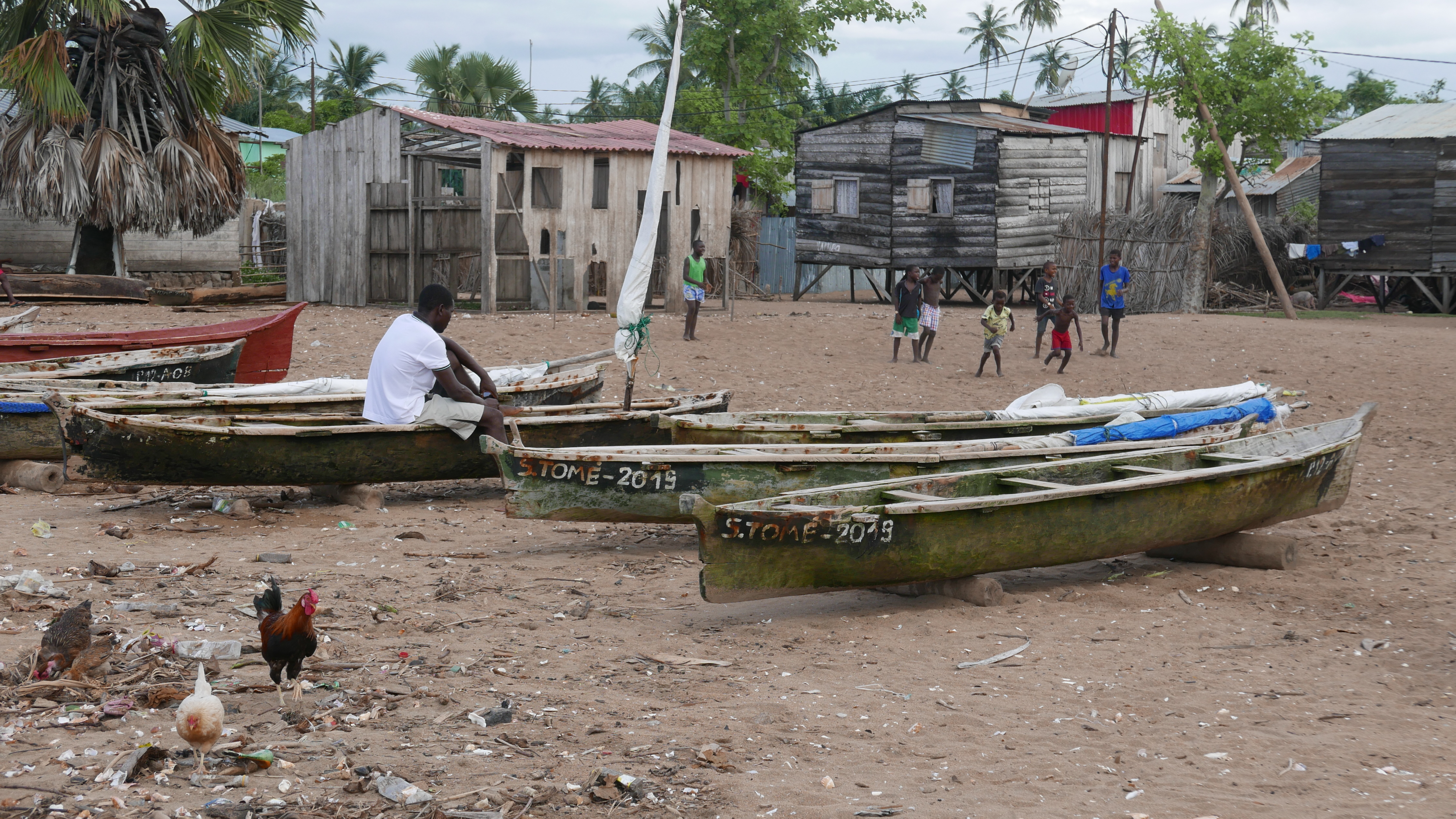
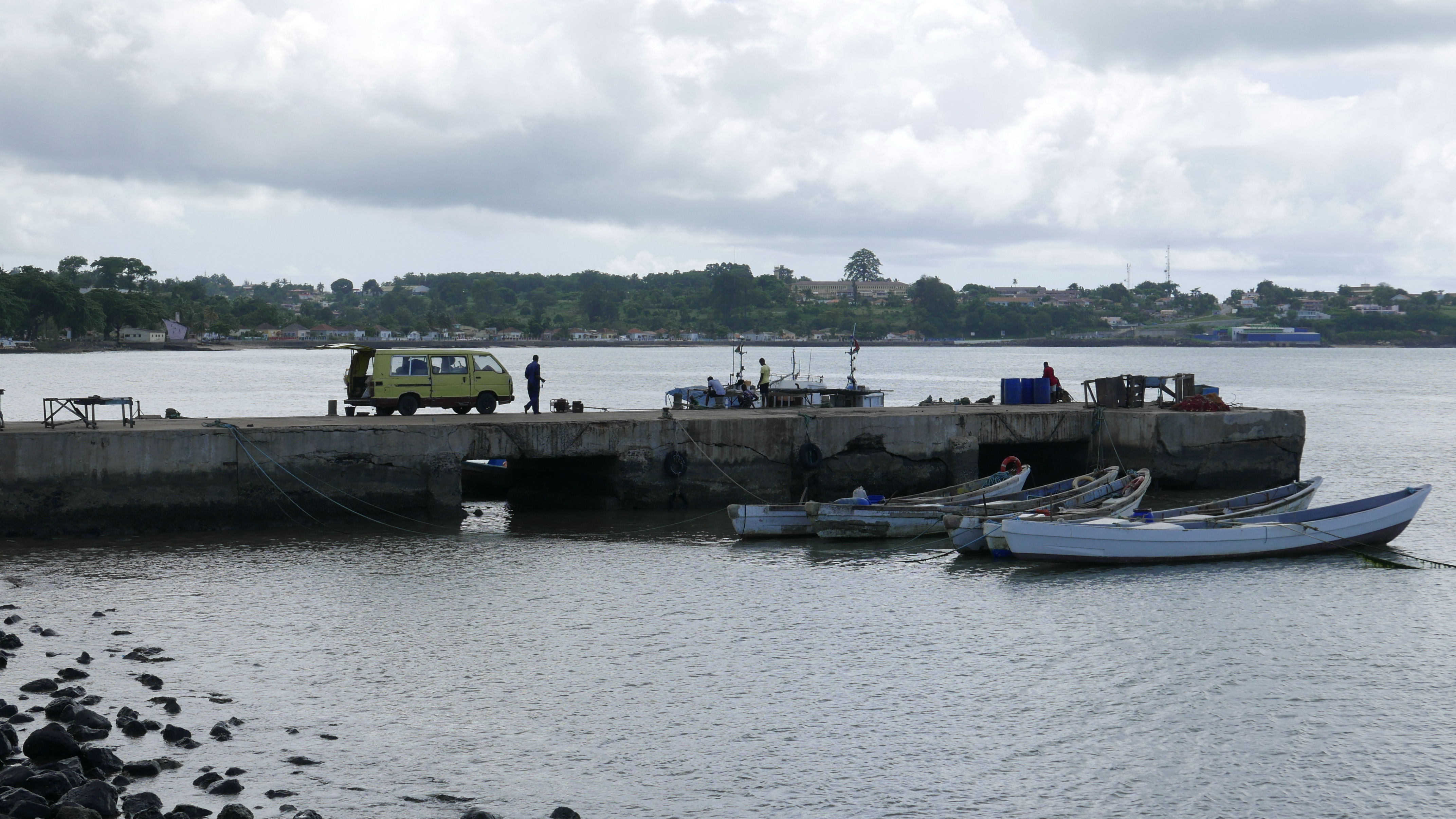
Heavy traffic on the West road approaching NevesFishermen in Santa Catarina
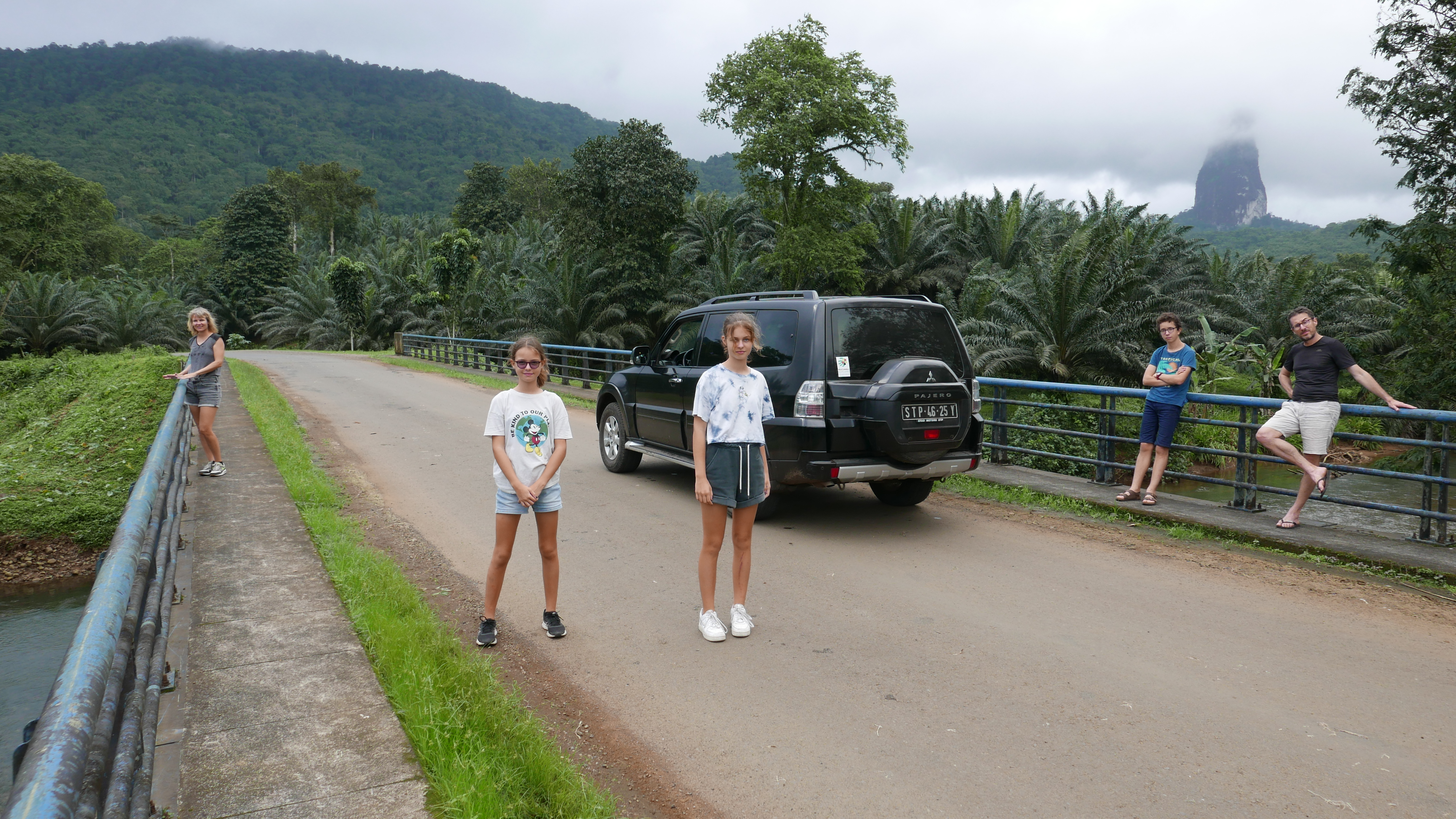
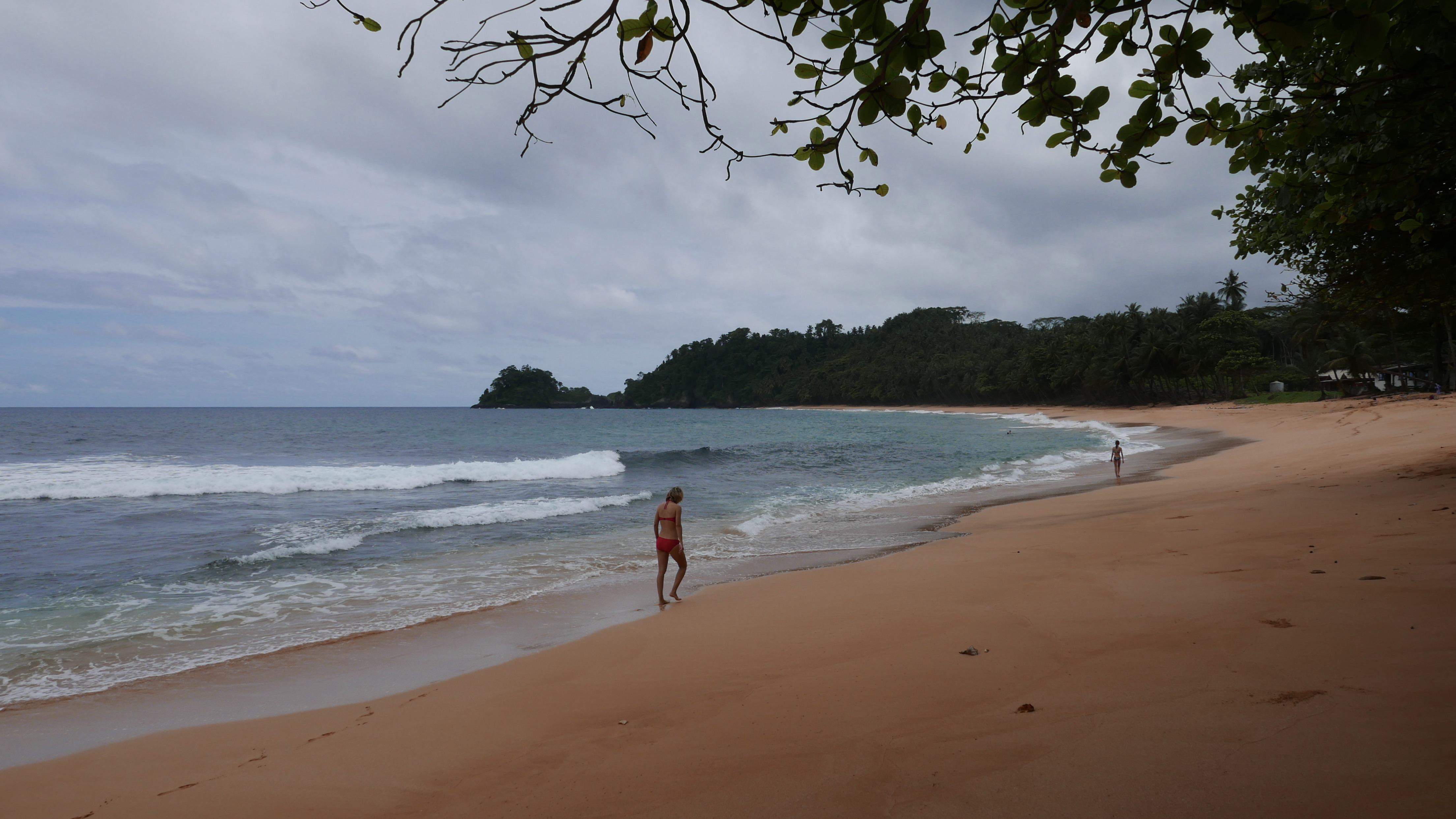
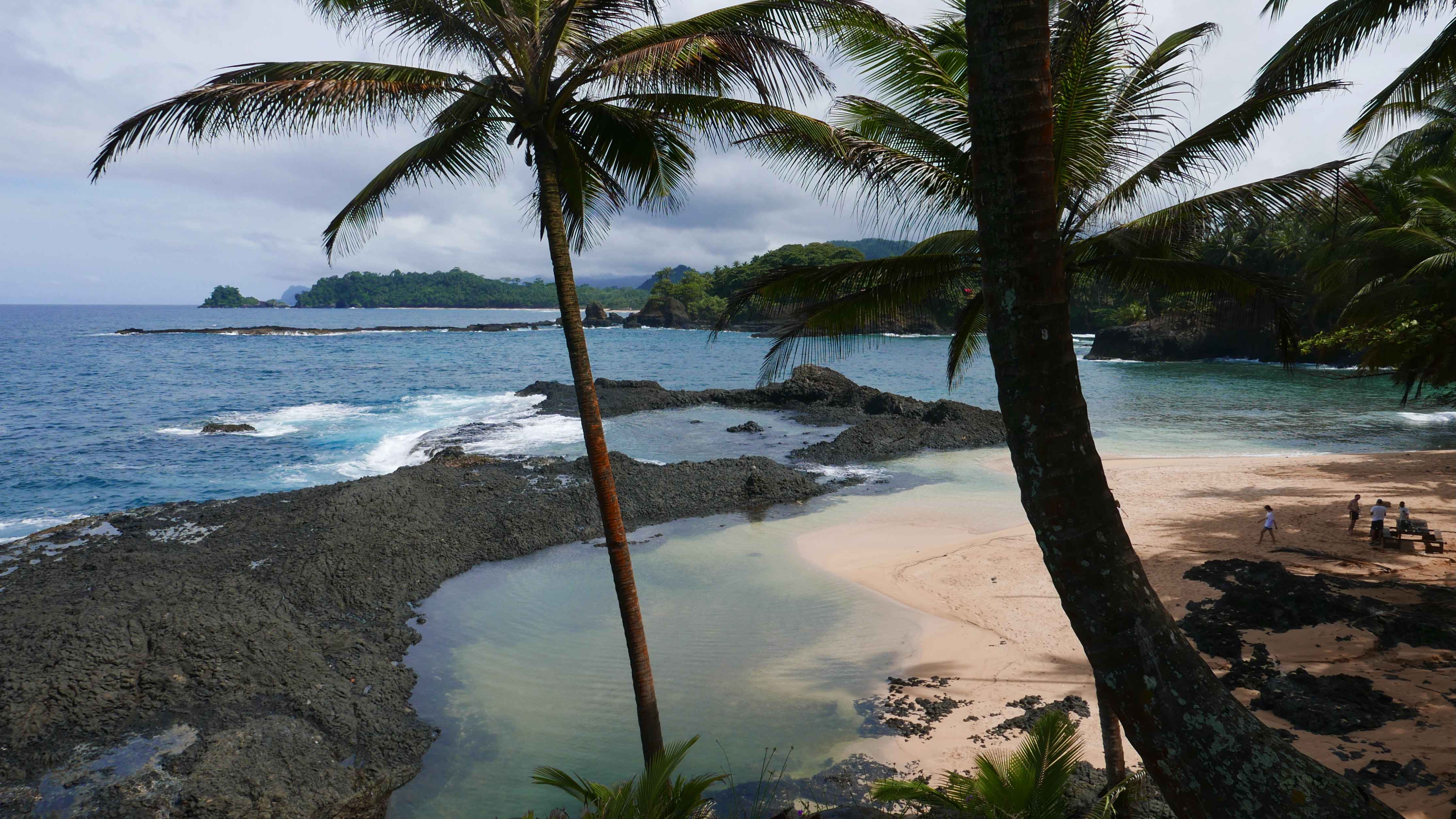
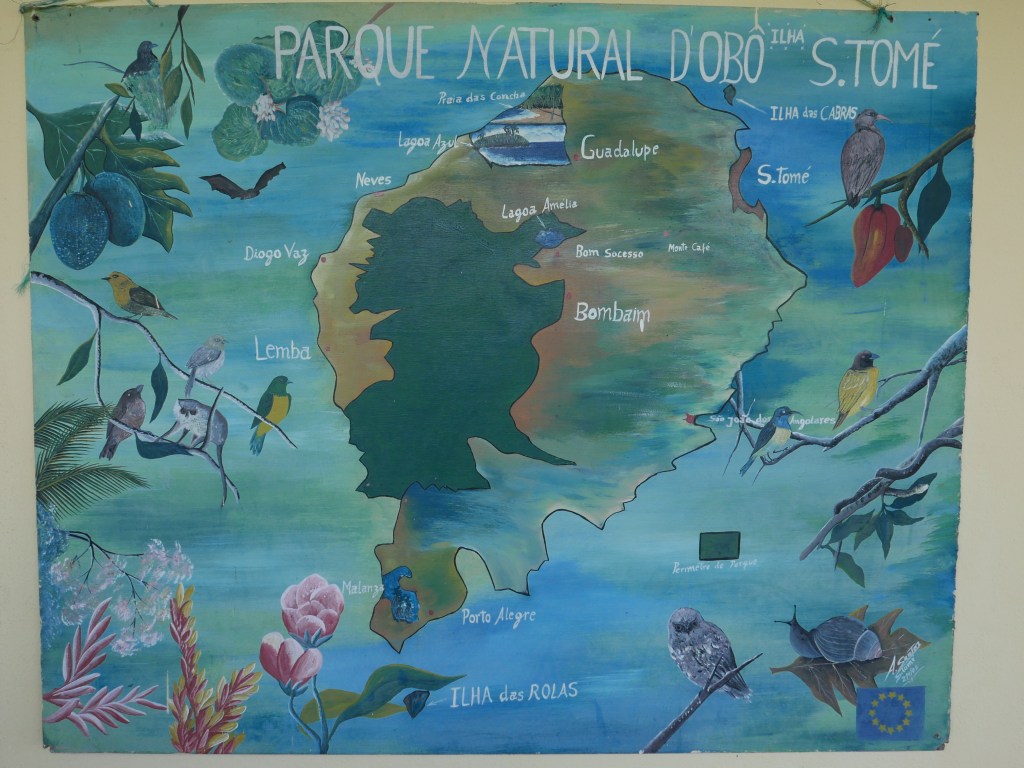
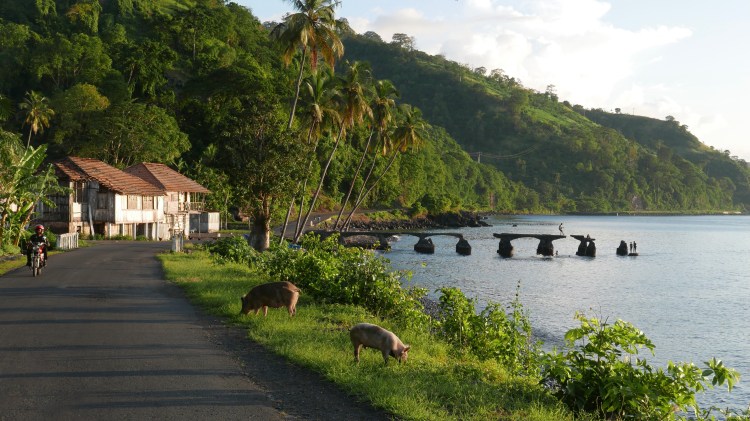
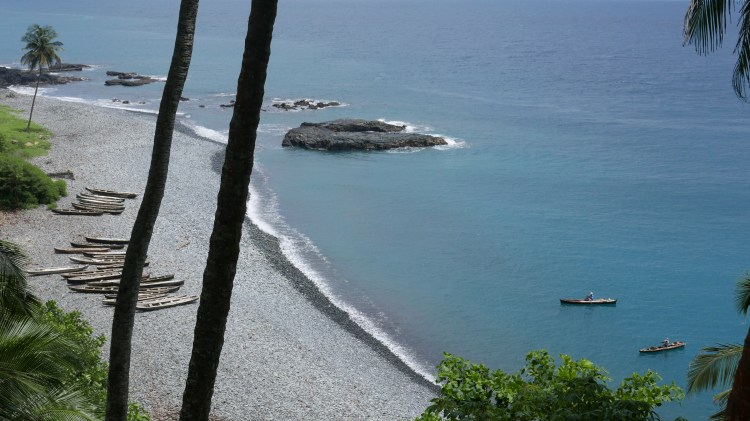
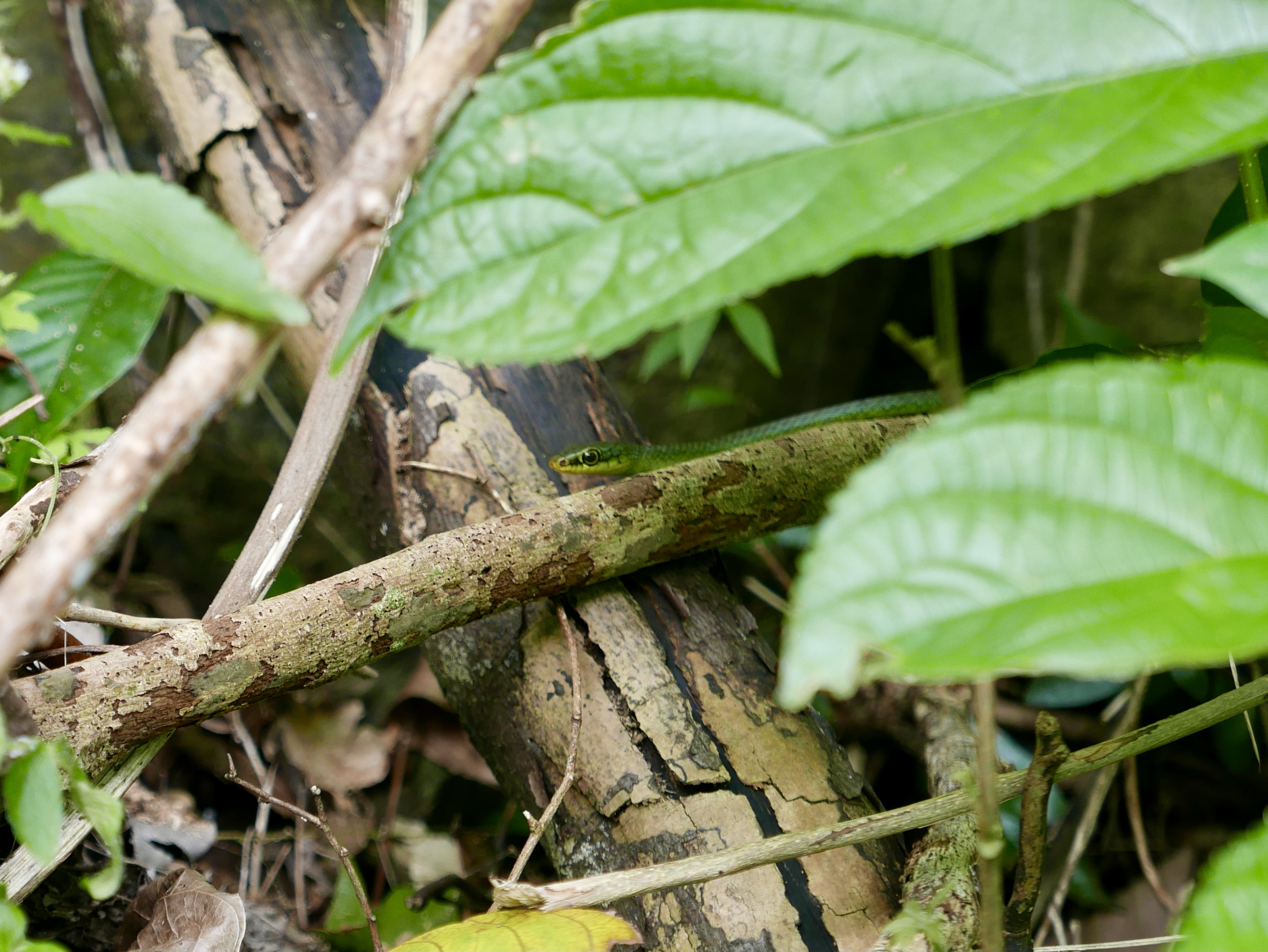
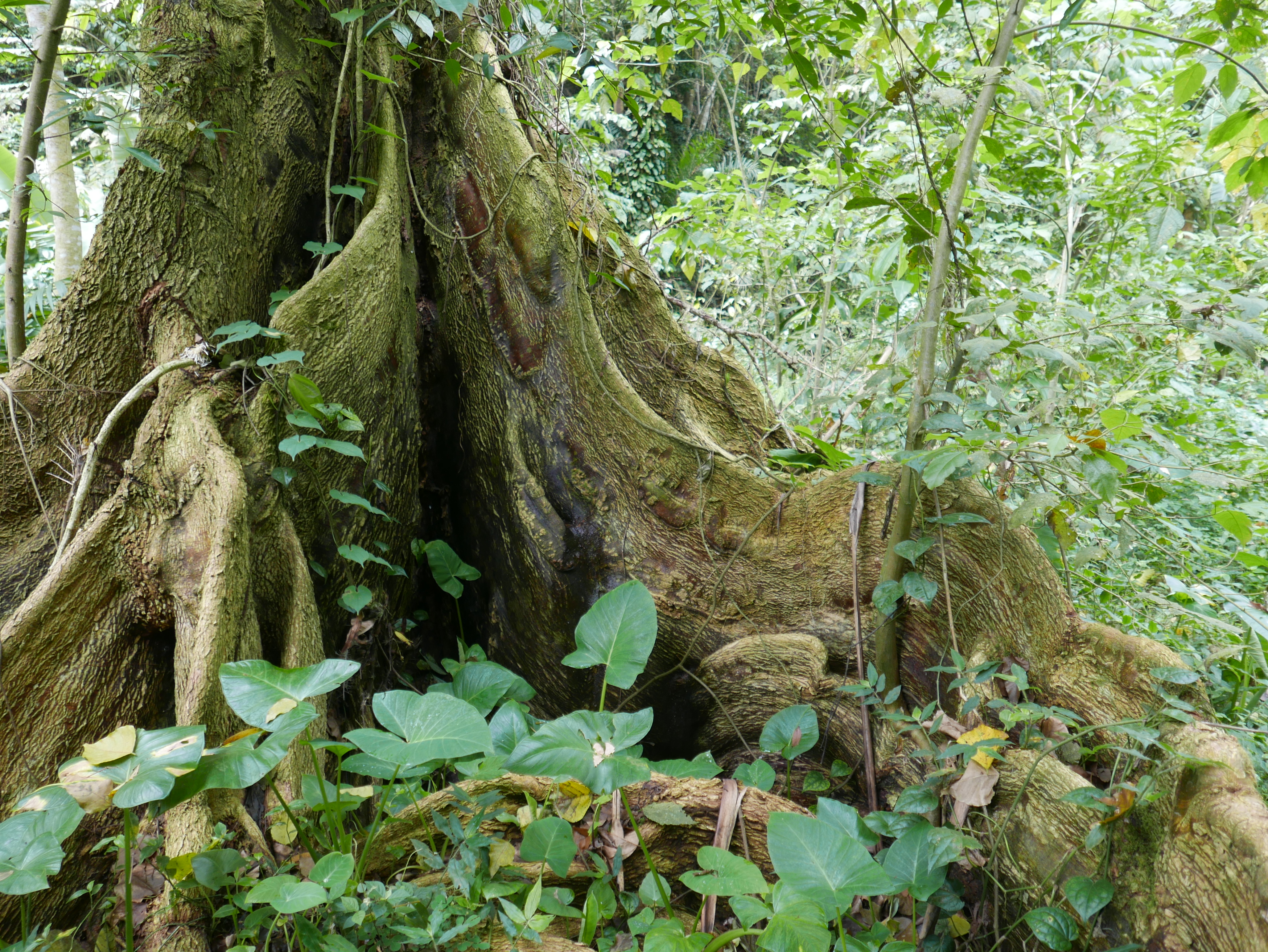
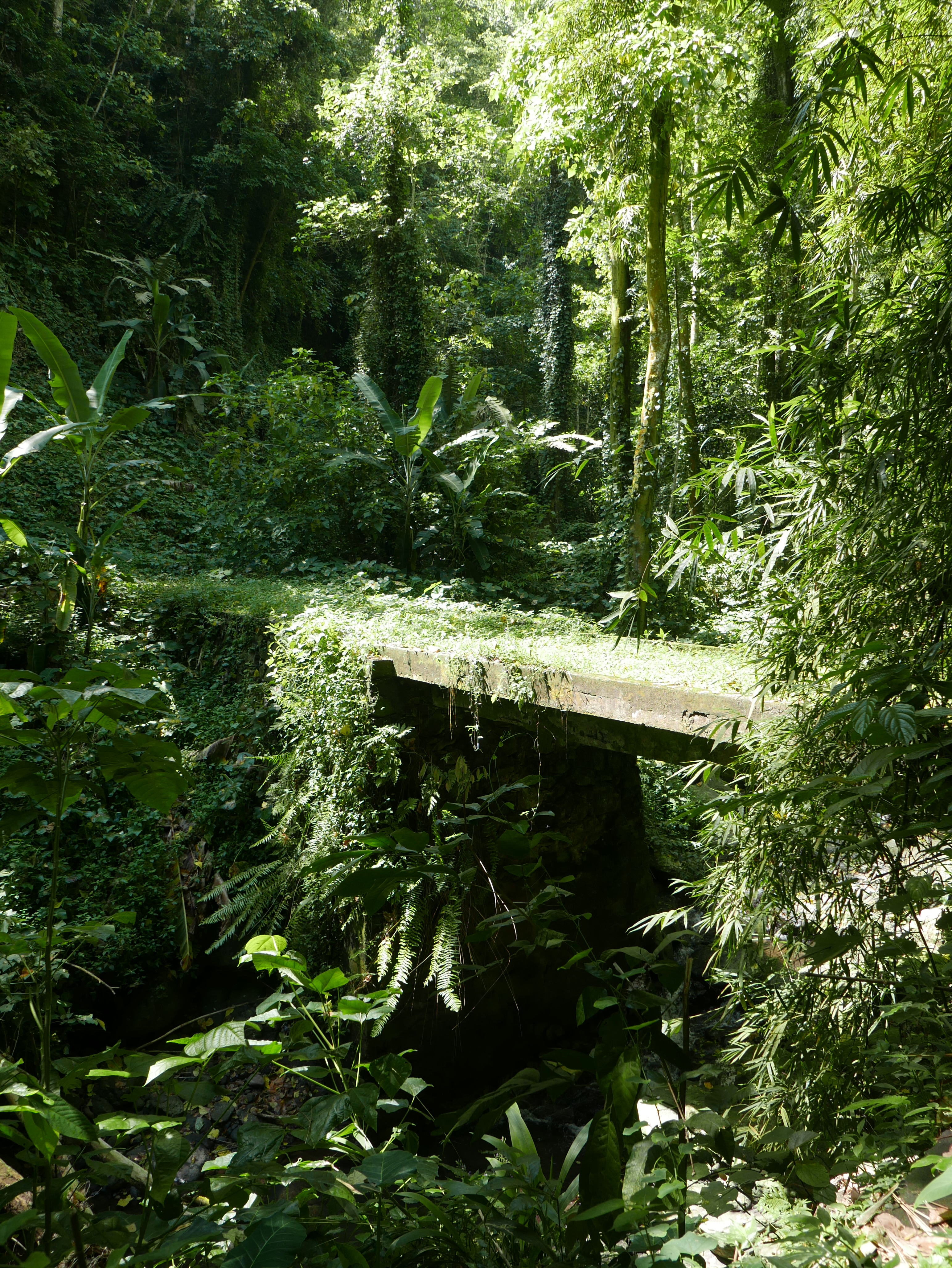
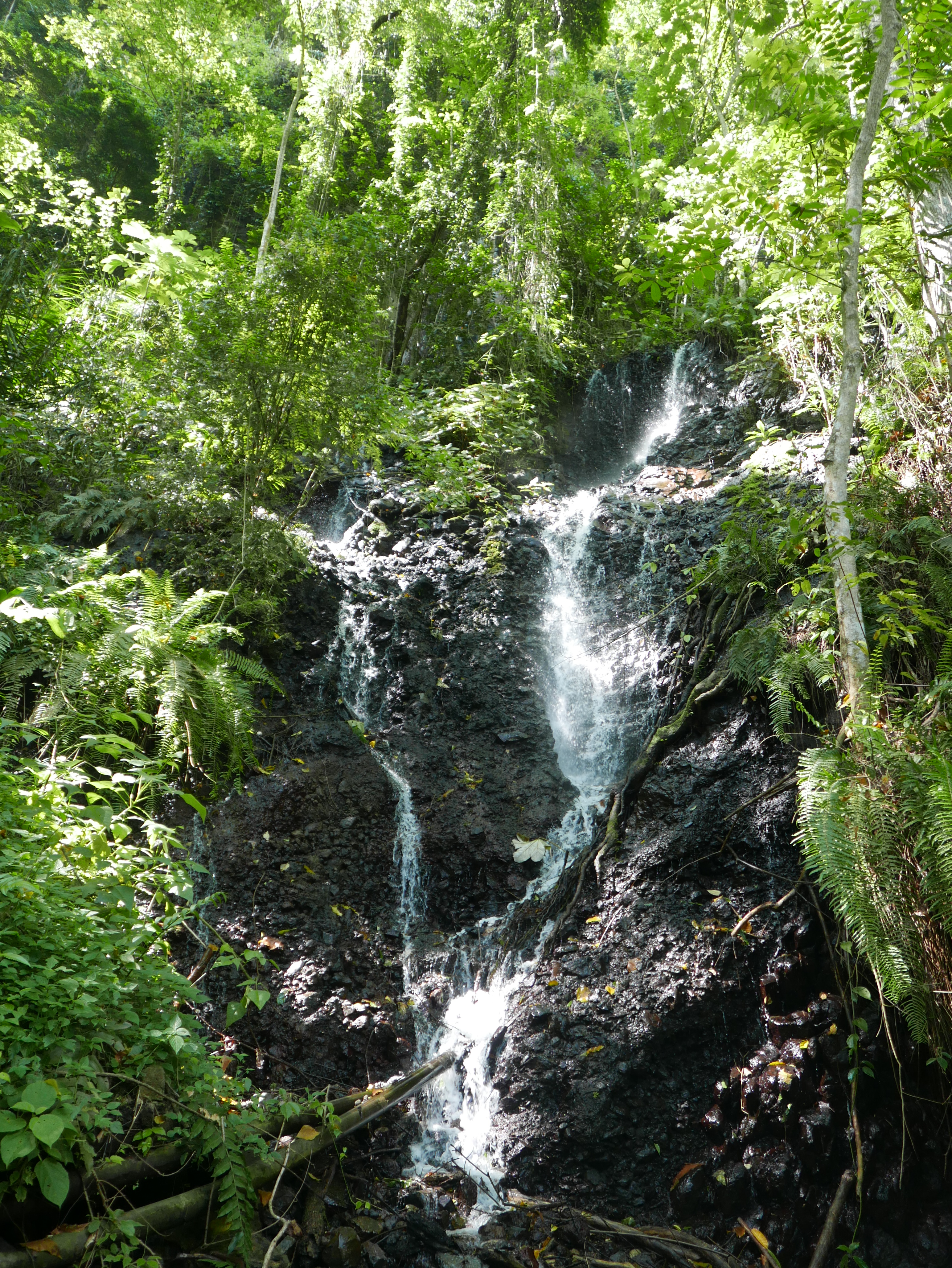
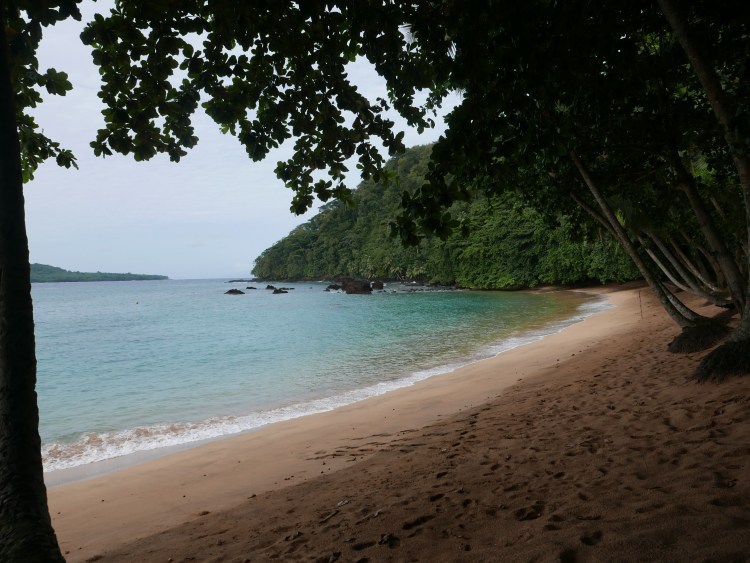
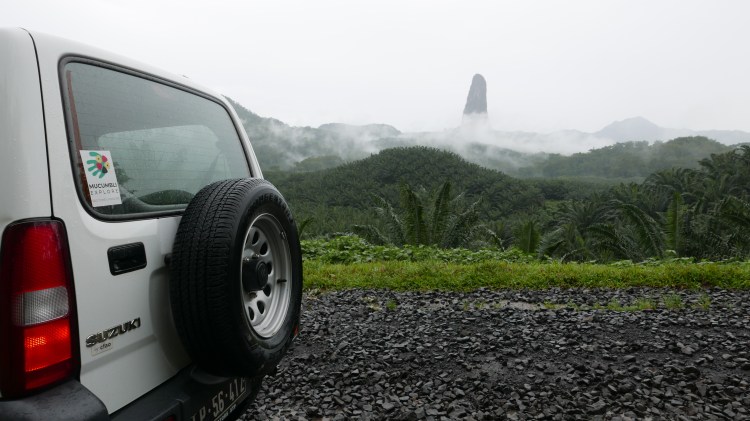
São Tomé offers gently spectacular and varied landscapes. In the North, baobabs stand on beaches and in the savannah. In the South, palm plantations stretch endlessly under sugar loaf-shaped rocky summits, and idyllic sand beaches await the traveller who made it to the very end of the road. The Obo national park covers a third of the island, in its centre and Southwest part: it hosts a lush and elephant-free rainforest, many endemic plants such as the giant begonia, endemic birds such as the Papa Figo, as well as plenty of small green or black snakes, a few monkeys and fascinating remnants of roads, bridges and bat-friendly water tunnels built God knows how a hundred years ago by the Portuguese, who partly succeeded in their ambition to tame such extreme wilderness. The island is dotted all around with countless rivers and streams, and is dominated by the mighty Pico São Tomé, culminating at 2,024 m.
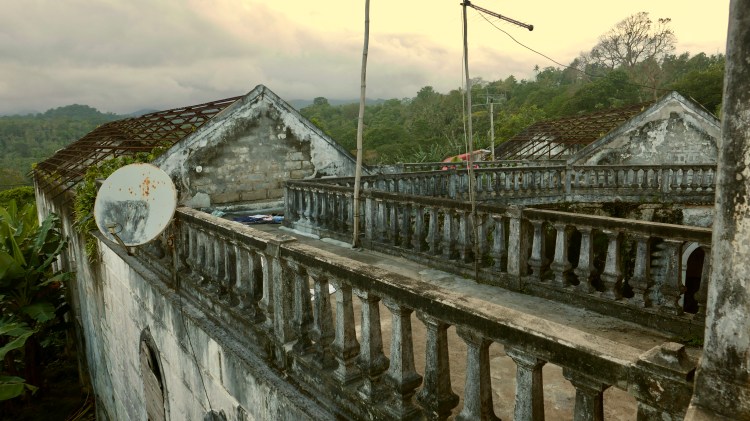
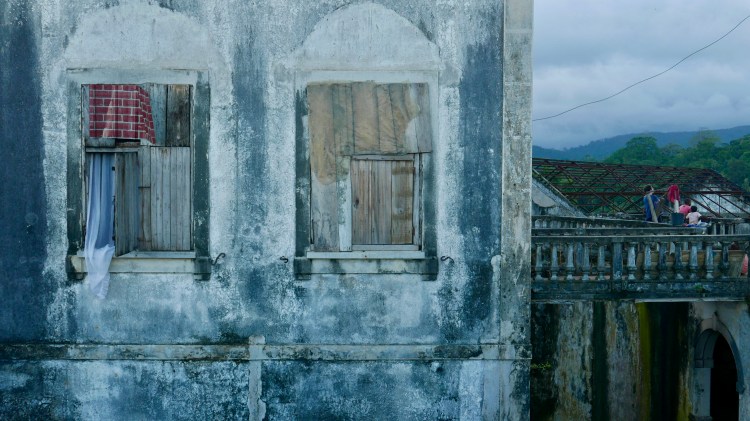
It’s a dream island for hiking, bird-spotting, bird-listening, eating fresh fish, exotic fruits and of course chocolate, or drinking delicious organic coffee. Everywhere, especially in places where a human settlement seems most improbable, roças, miniature cities dedicated to cacao and coffee exploitations built in colonial times, lie in ruins. The bigger ones still thrive with activity today, only as the shadows of what they used to be. They make perfect hiking destinations. There are only three main roads, some portions of which do not look like a road anymore; still, it’s easy to get around by car – just make sure you you have a good spare tire.
Lagoa Azul and its fallen baobab
West coast
Praia Conchas
São Tomé is a shot of equatorial adventure mixed with a sense of peace and safety, a singular trip through the warm colors of Central Africa with the smooth melody of Portuguese as a soundtrack. Within a week, I drove almost all of the island’s roads in my tiny and shaky Suzuki Jimny, went for three serious day-hikes in different areas of the national park, and stopped in many villages to simply watch island life unfold.
Micolo, a tiny village on the North coast
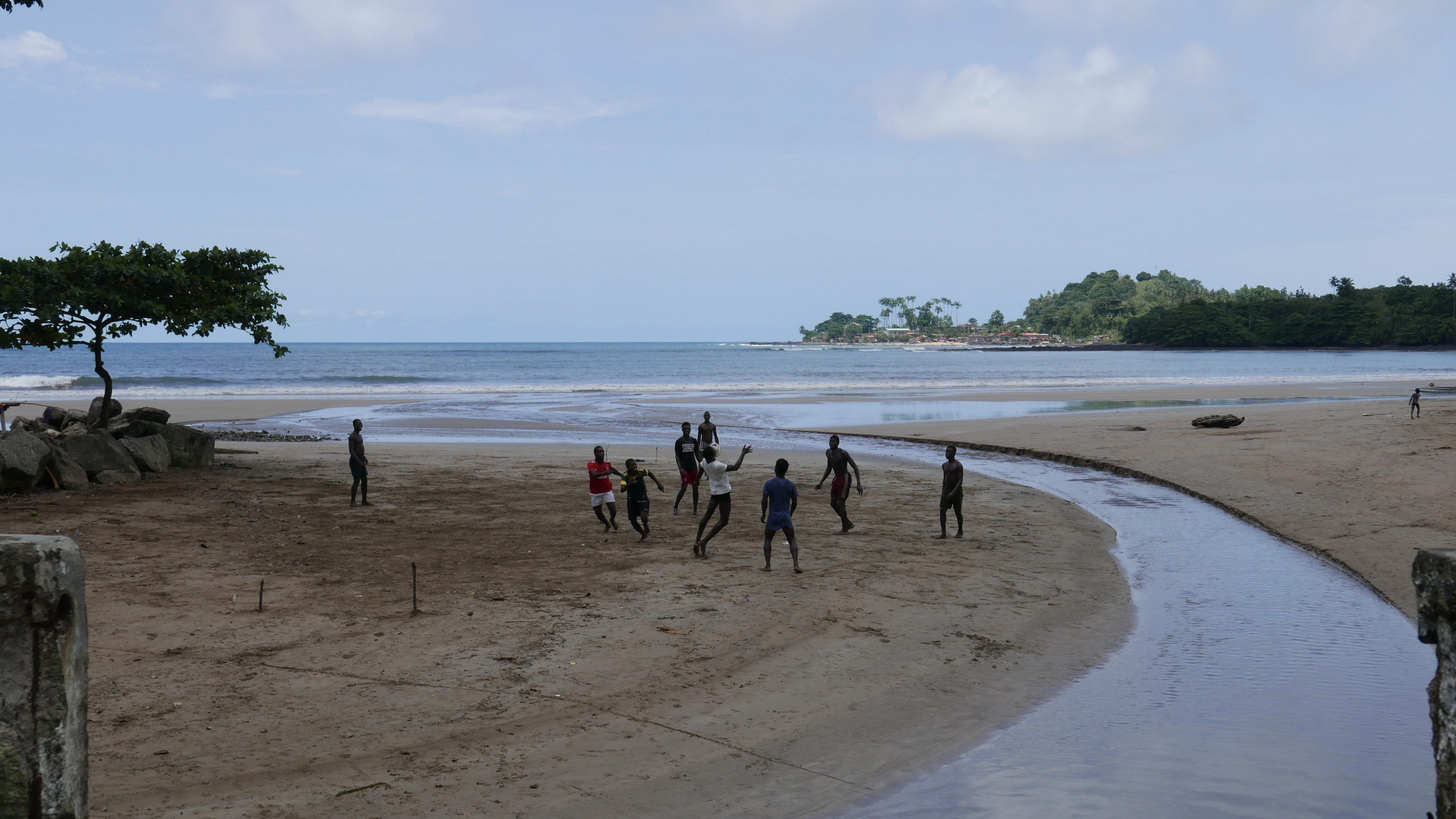
Morning football in Porto Alegre, down South
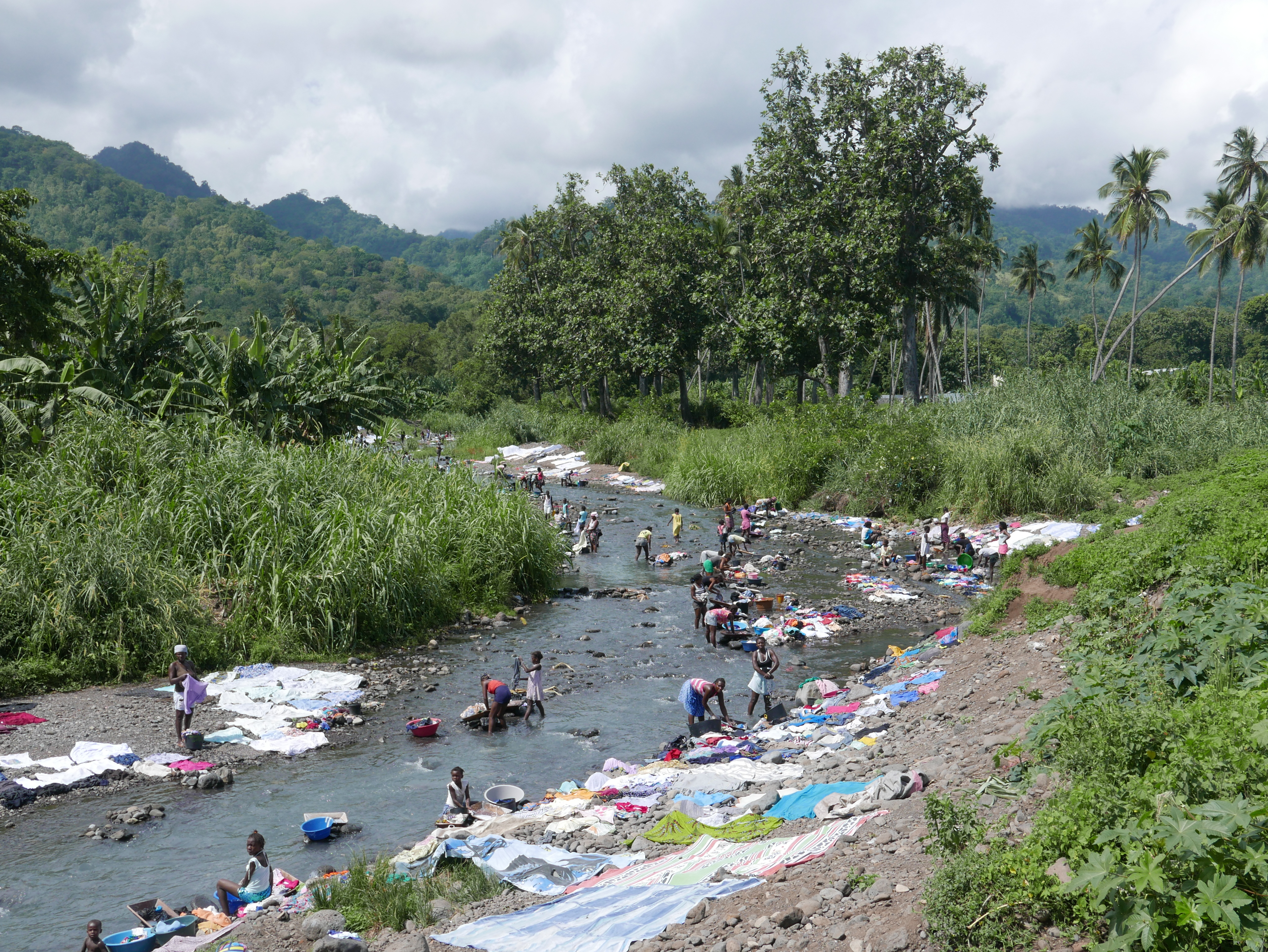
Laundry time in Neves, West coast
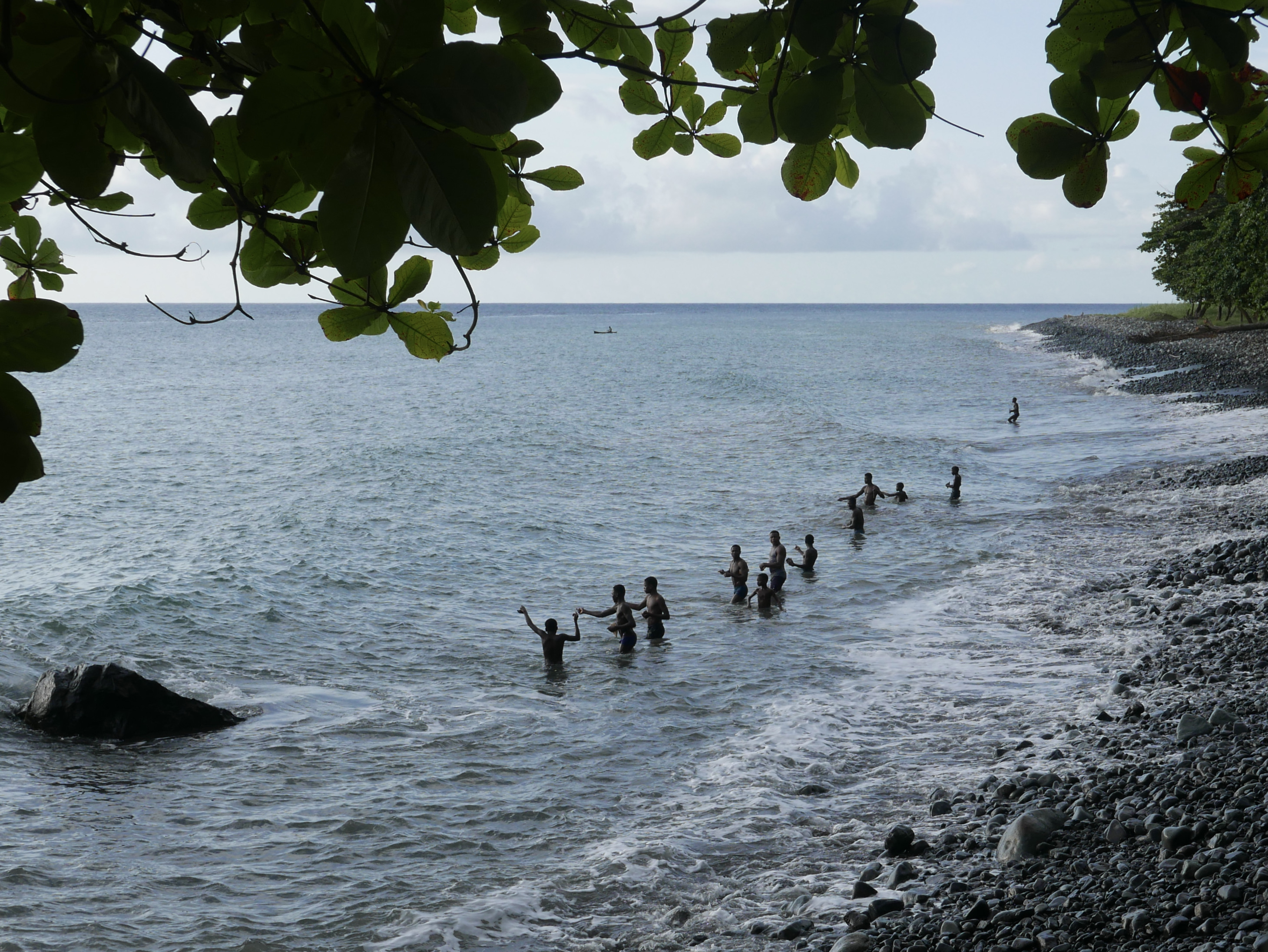
Boys fishing the traditional way in Santa Catarina
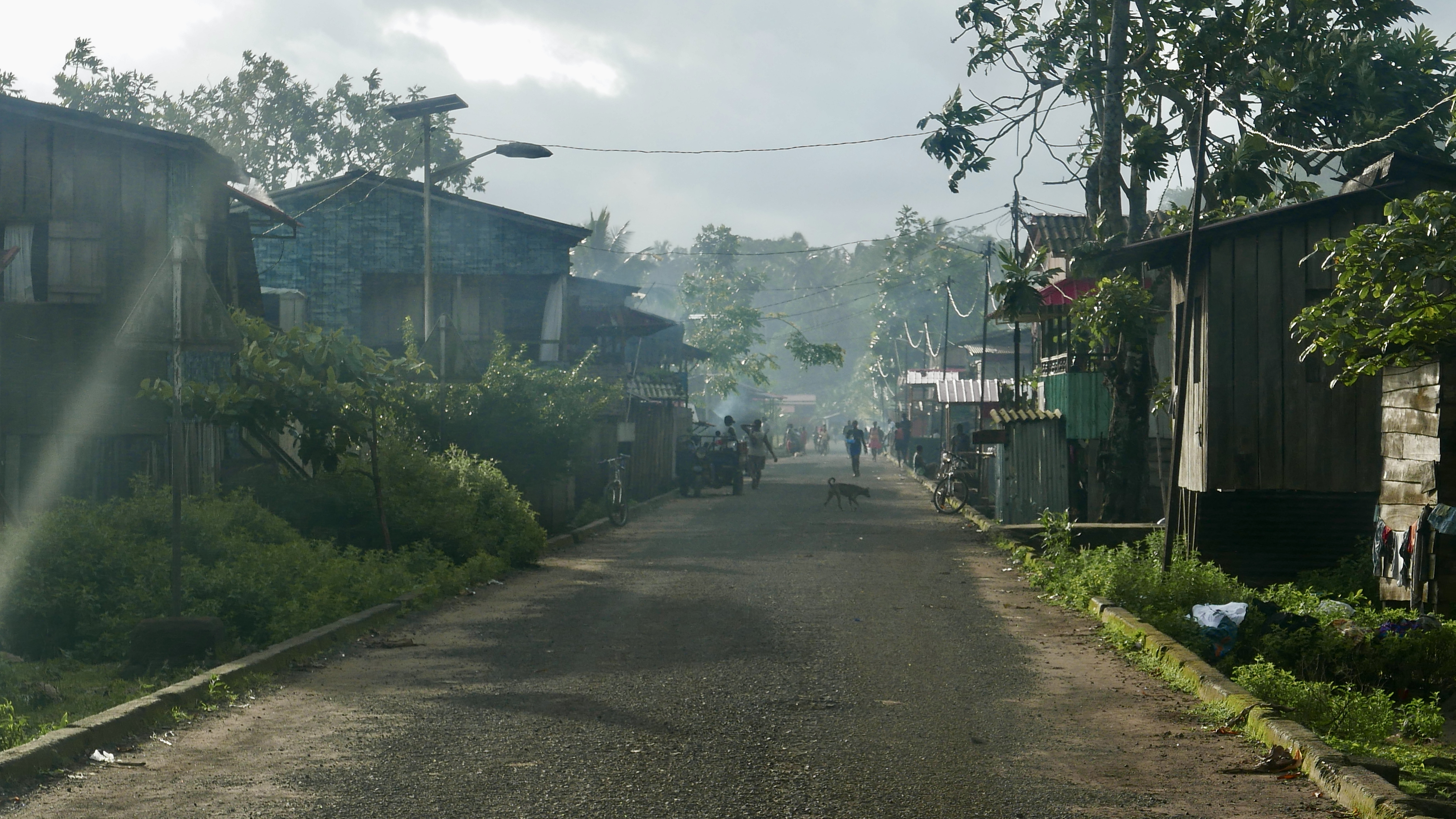
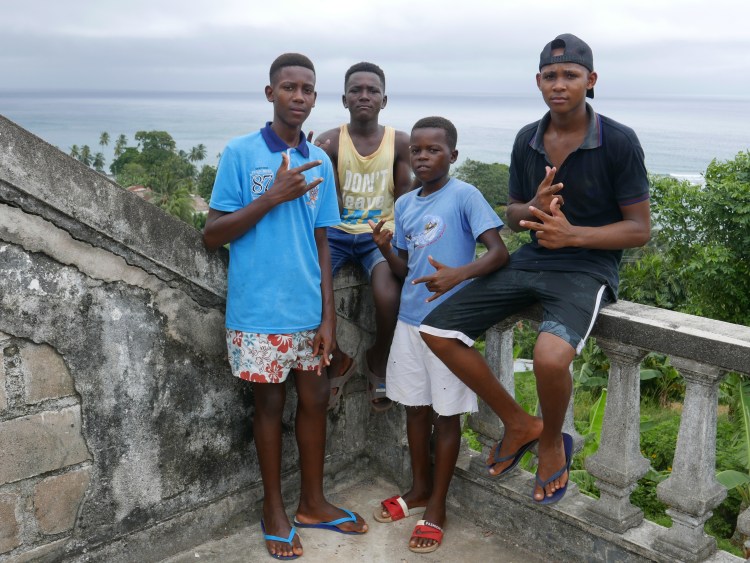
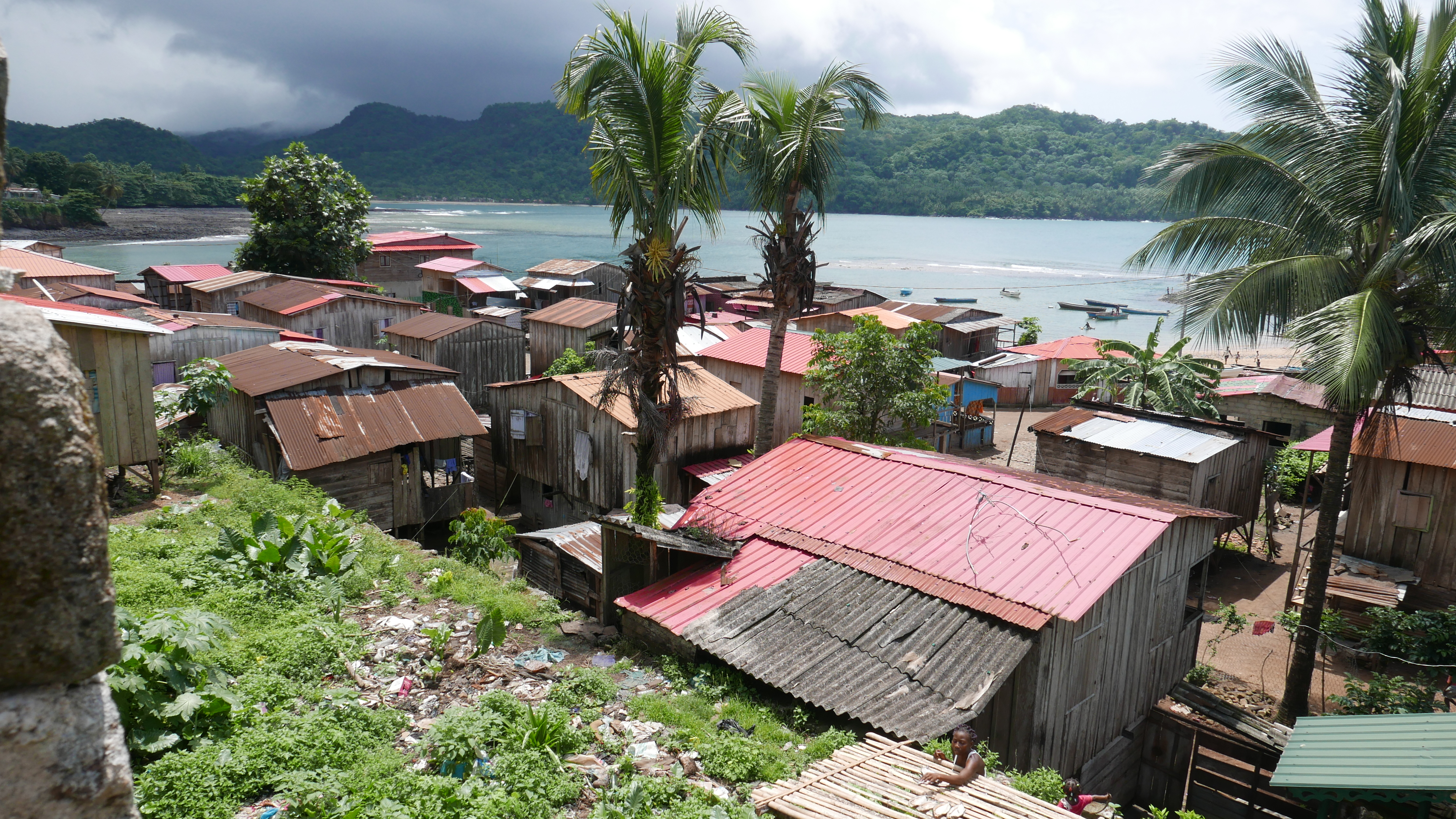
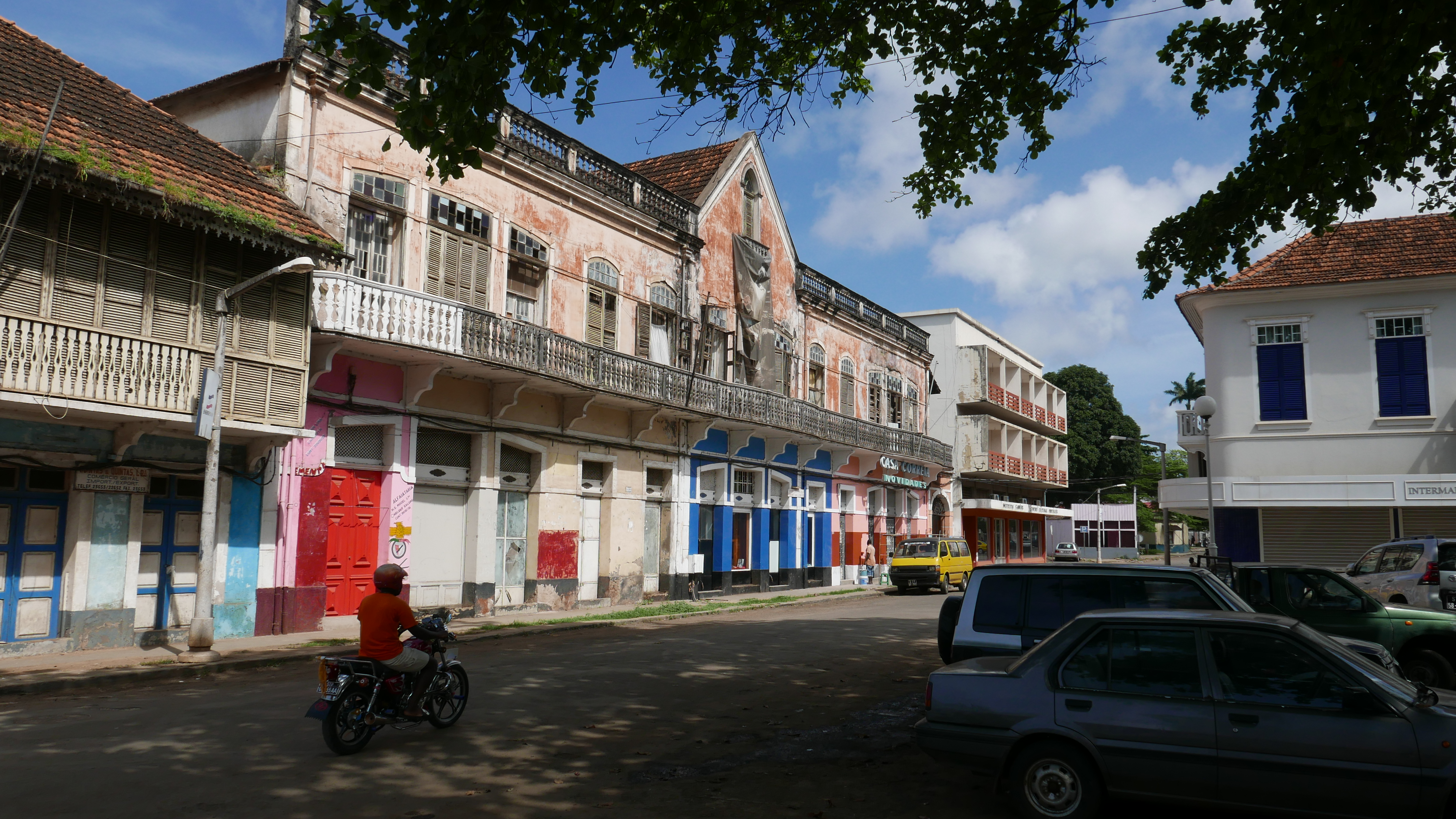
I was riding for the feeling, and day by day the feeling took shape in the “hola amigo!” heard a hundred times a day from the local kids, many of them walking bare feet and hardly having any clothes on them, in the decaying colonial houses and space-age buildings of the sleepy capital, in the joy and disarray emanating from each village, where people live in wooden shacks built on stilts one meter above the mud, the pigs, the roosters and the hens, the ruins of the roças turned into concrete vegetal ghosts in the depths of the rainforest or into makeshift dwellings in the villages, the ineffable sadness in the eyes of teenagers who have already understood that all they will see in their life is this little island, their laughs when they walk home together from school in sky-blue uniforms, their pride as they ride shiny Chinese motorbikes on the main street crossing the village, the tired eyes and backs of the older ones who have spent their life working in the plantations or fishing, the troubled eyes of men on Friday and Saturday evenings after one too many glasses of palm wine, the busy mothers and daughters doing the family laundry in every little stream flowing down from the mountains, the glorious sunsets on the West coast, the certainty of being in a place forgotten and forever stuck sometime at the end of the 70s, locked all around by the ocean. The Portuguese-speaking people of this world seem to have a word that encapsulates all of this at the same time: “saudade” – a somewhat melancholic feeling of incompleteness.
Rainy East coast
Best friends in roça Monte Cafe
Best friends in Água Izé
The old Portuguese hospital from the 1910’s in the old roça Água Izé – now people live in it
I had heard before that traveling solo is almost a religious experience, that it allows you to deeply connect with your inner self, to get out of your comfort zone and unveil unknown regions of your mind and personality, to meet locals more easily, to simply have “a more meaningful traveling experience”. What a promising programme! I was willing to give it a try, after more than 20 years of very well-accompanied travel.
Porto Alegre village
Praia Inhame
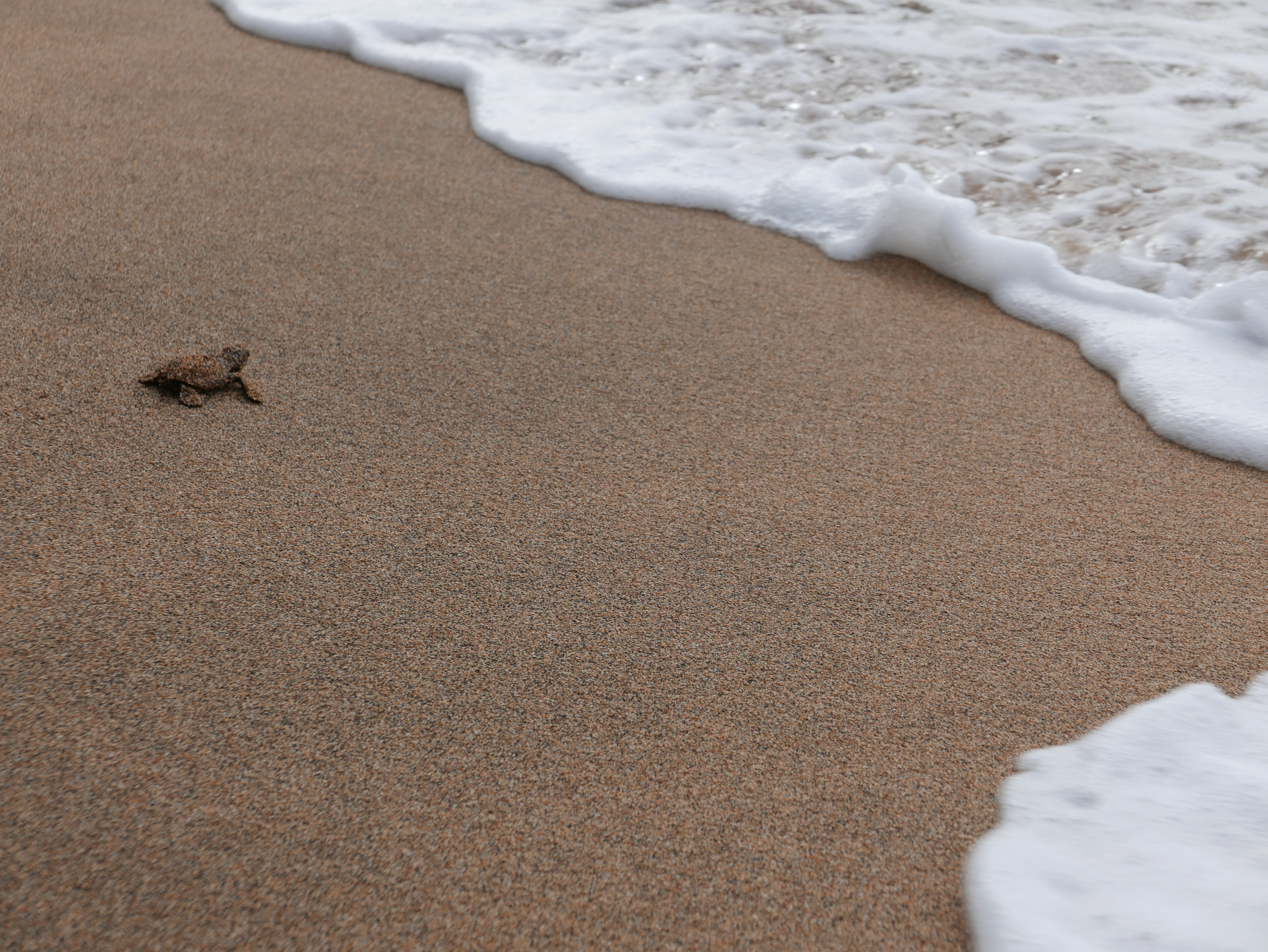
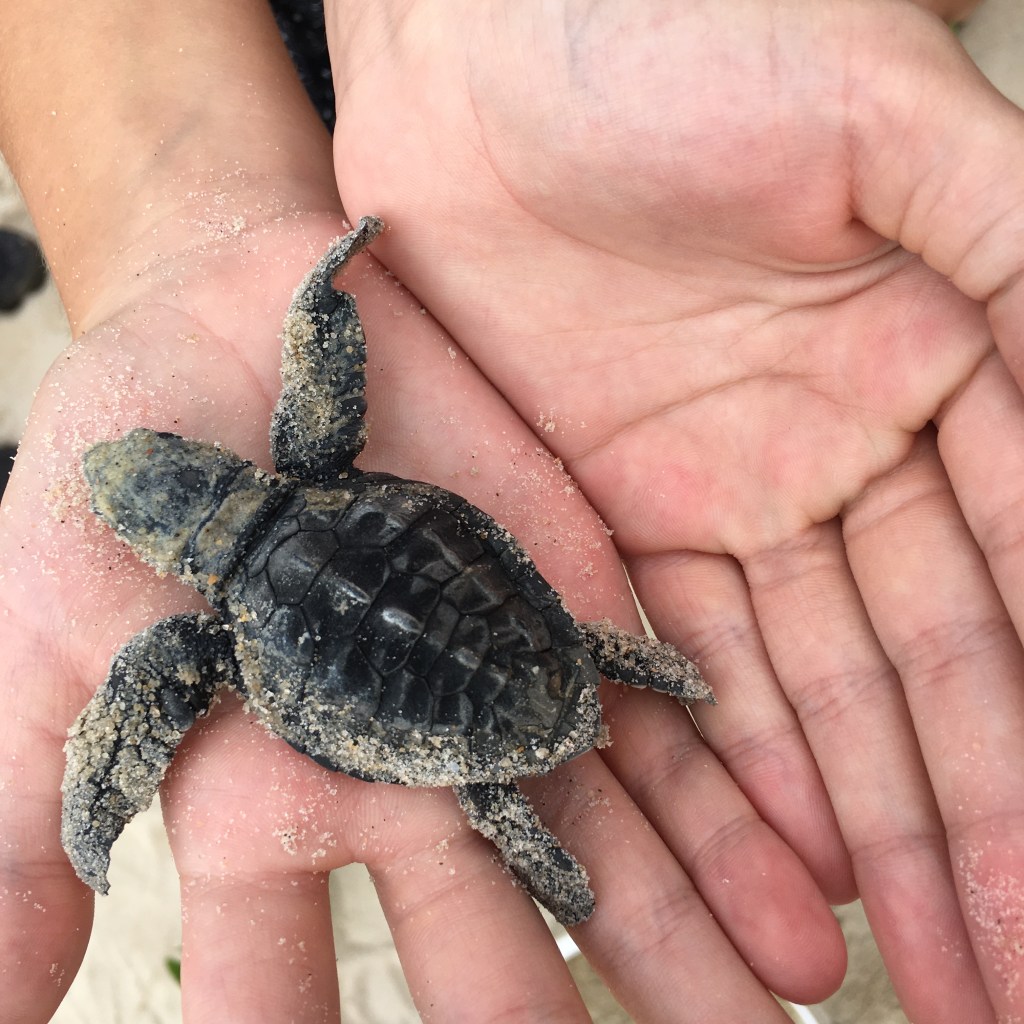
Baby turtle on Praia Inhame
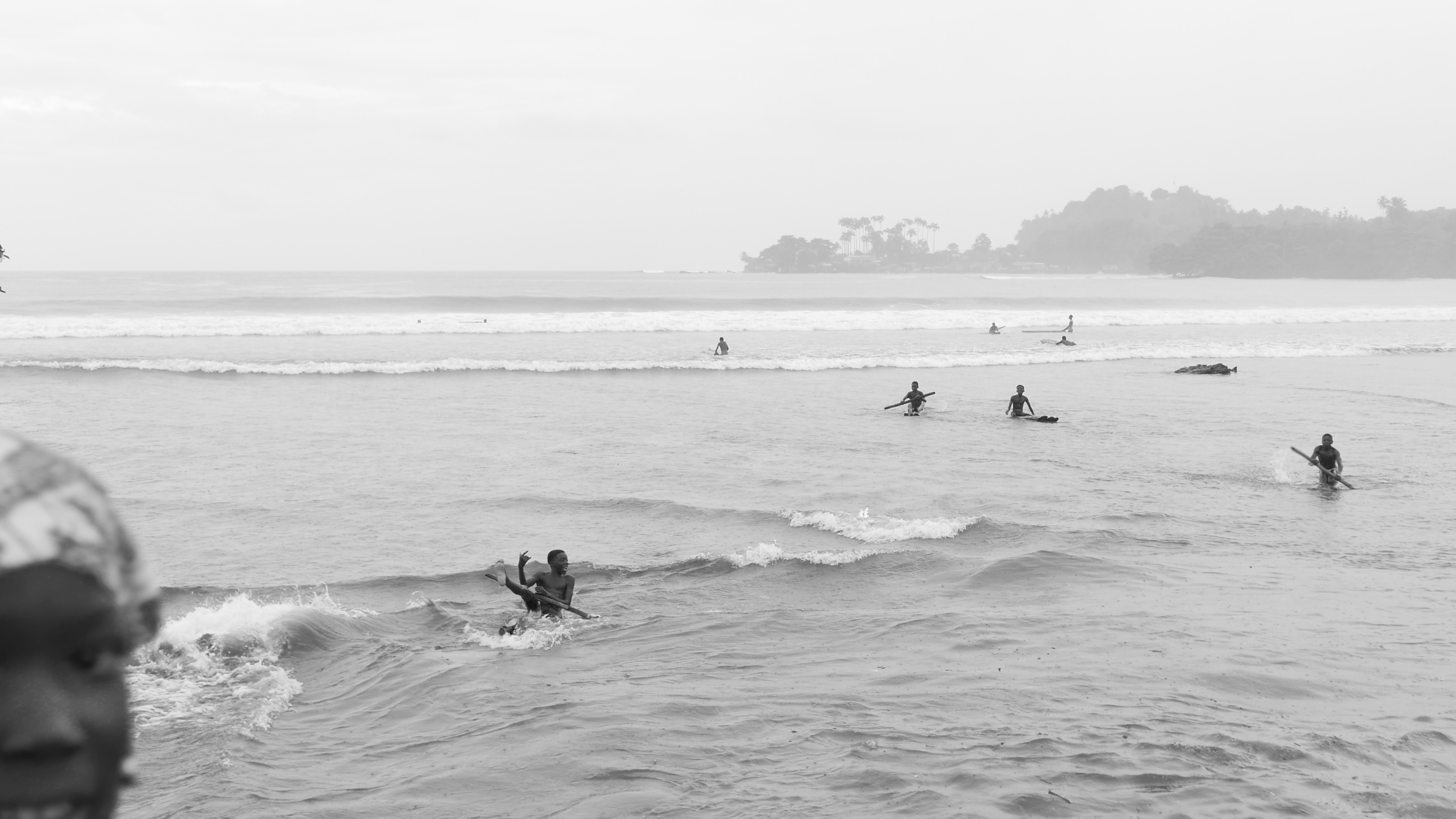
Kids surfing the waves on home-made wood boards in Porto Alegre
I even thought I had a predisposition for solo travel: after all, I still read books, I am able to spend 15 minutes every morning meditating in silence, and I can easily walk in the forest for hours without saying anything. These skills proved very useful, and I enjoyed most of my time alone, or in the company of my local guide when I was hiking. But the truth also is that at least once a day, I felt like a selfish loser: for instance, when I was having the succulent 12-course gastronomic lunch at the world-famous restaurant of the roça São João de Angolares, marvelling from behind the wheel at the panoramic vistas along the ramshackle road to the Southern tip of the island, or swimming in the turquoise waters at Praia Tamarindos all by myself, unable to share these moments with anyone. And of course, I met many Santomeans, managed to communicate with them in a mix a French, Spanish and Portuguese, but I missed the doors that traveling with children often open. My humble conclusion: solo travel is vastly overrated and nothing beats a good travel companion.
The well-followed national motto is “léve-léve”, which means “take it slow slow”. It’s also the name of a fabulous compilation of 70s and 80s music from São Tomé, released last year on vinyl and CD by the friendly Swiss label Bongo Joe records. This music is just as singular as the island it comes from, and its infectious grooves seem to suggest that the first years after independence may have been happy ones on the island. Give it a spin and your hips will start moving by themselves! Ah, and next time you visit your chocolate or coffee dealer, ask if they can fix you with anything Santomean. All of this may suddenly give you unexpected ideas to celebrate the moment when you can travel again to places faraway.
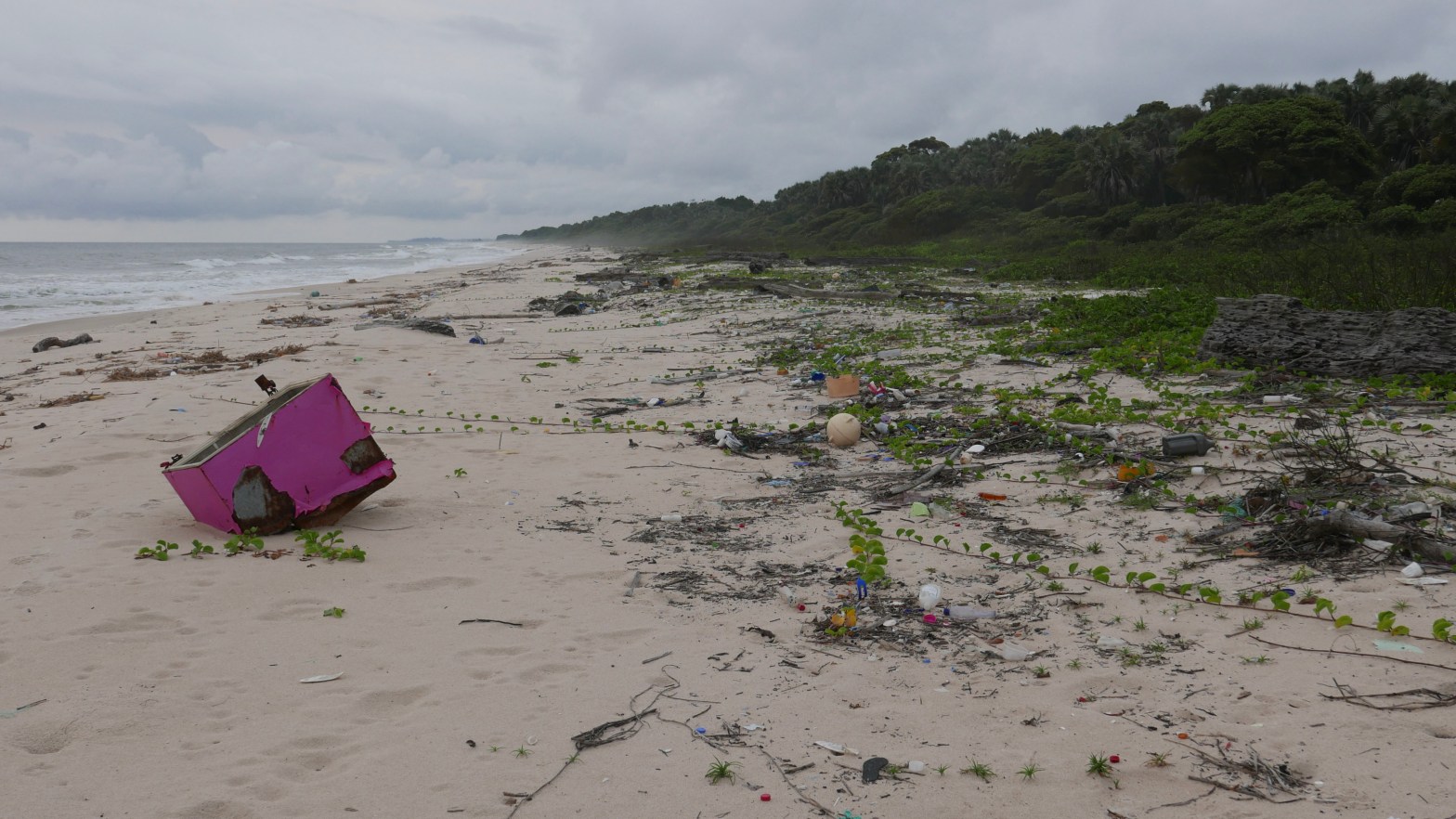
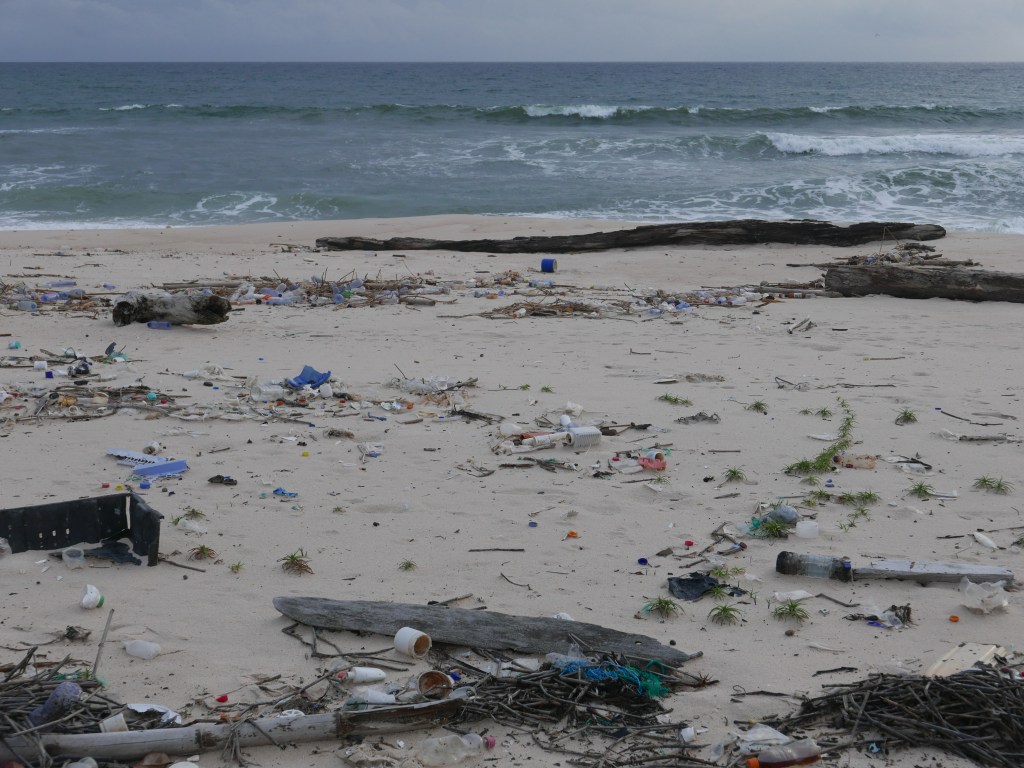
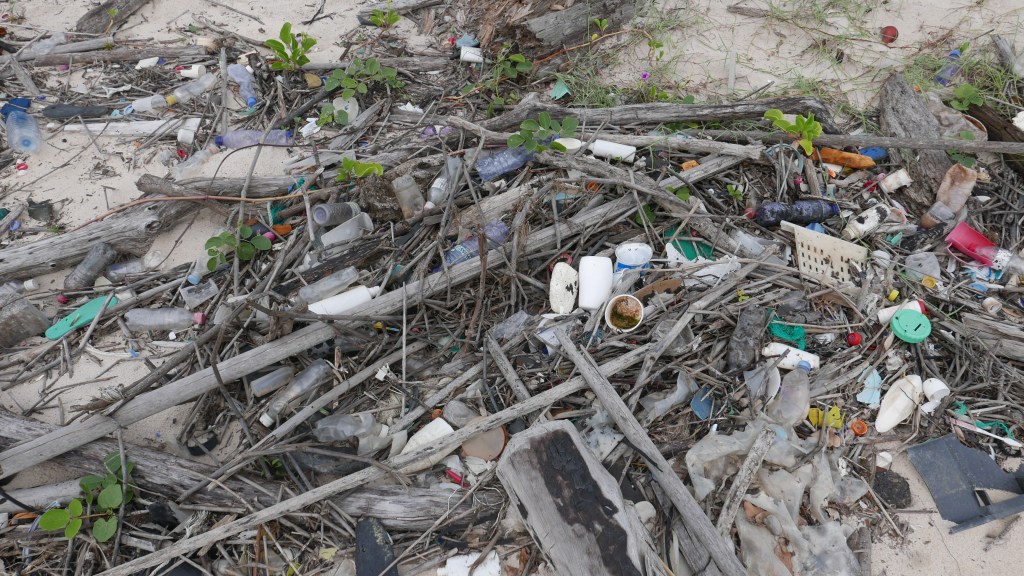
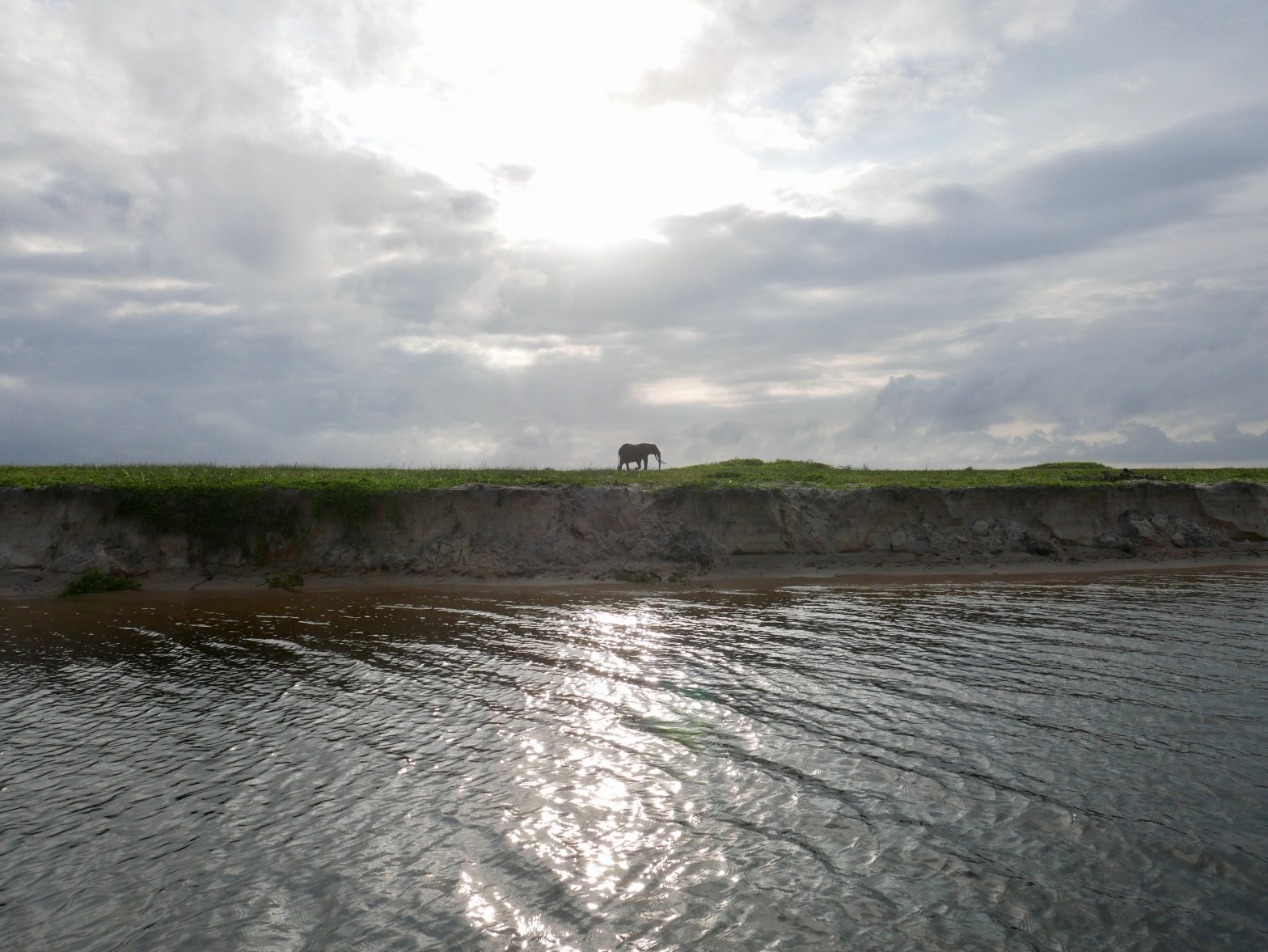
Small plastic bottles. Big plastic bottles. Plastic bottle caps. Plastic bottle films. Flip flops. Lollipop sticks. Motor oil jerrycans. Cooking oil jerrycans. Soap plastic bottles. Shampoo plastic bottles. Toothpaste plastic tubes. Toothbrushes. Plastic yoghurt pots. Plastic make-up pots. Alcohol and Coke glass bottles. Medicine plastic boxes. Medicine spray cans. Insecticide spray cans. Hair gel spray cans. Deodorant spray cans. Spray can lids. Q-tips. Plastic glasses. Plastic forks. Plastic knives. Plastic spoons. Used condoms. Plastic pens. Plastic pen ink refills. Plastic pen caps. Polystyrene. A baby potty. A pink freezer. A computer tower. 1-m unidentified plastic parts. 10-cm unidentified plastic debris. 5-cm unidentified plastic debris. 1-cm unidentified plastic debris. 1-mm unidentified plastic debris. Fishing nets. All of this and more, by the thousands and the tons, is what elephants, hippos, turtles, egrets and men can find lying and decomposing on the sandy beaches of Gabon, from North to South, from Libreville to the national parks of Loango and Mayumba. This is also what we have not shown so far on the nice beach photographs of this blog. To keep them nice, and probably also because this is not what we want to keep as a memory from Gabon. But as much as we hate to admit this is real, this photo below was taken on the same spot in Sette Cama as the nice one with the elephant walking in the sunset – here is a view of what he was treading on:
Now, just imagine this all along the 885 km of Gabonese coastline, most of which is hardly accessible.The devil especially lies in the details. This – and much more – could well still be here in 500 years.
Reading the thin plastic film on the water bottles lying on the beaches of South Gabon is a stimulating activity as it gives you an instant geography lesson, and at the same time an idea of the dazing scale of the problem. The most frequent bottles do not come from Gabon – which makes sense given that coastal currents are mostly northward towards the Gulf of Guinea – but from the two Congos (Congo-Brazzaville and Democratic Republic of Congo) southward. Going further down, Angolese plastic bottles are also widely represented. Then we have lots coming from South Africa. But we also found bottles coming from as far as China, Singapore or Malaysia…
The tiny population of Gabon has grown by roughly 70% since 2000, mostly in and around Libreville. The sewage system of the capital was never meant to meet the needs of 800,000 inhabitants, and could never follow the uncontrolled urban development. Plastic is king – just imagine that you can buy small bags of cold water from street sellers… taxi drivers gulp it in a sec and throw the bag out of the window straight away. Today, city authorities are putting visible efforts behind keeping the centre and wealthier areas clean, but they cannot do much for those tens of thousands of people living in shacks of concrete loosely built along mazes of narrow streets or alleys, inaccessible to cleaning vehicles. So, rather than walk 1 km to the nearest collection point, these people throw their garbage in the ditch or in the nearby stream. On top of this, they do not have access to running water. Typically, a given district has only one water distribution point, and residents spend a lot of their time standing in line, often in the middle of the night, to fill the many plastic bottles that they always keep at home. At some point, these bottles need to be replaced and they also get thrown in the ditch or in the stream. Eventually, all of this goes into the ocean, and ends up on beaches. And the same goes for most cities along the coastline, like Kinshasa, for example, where no less than 17 million people live…
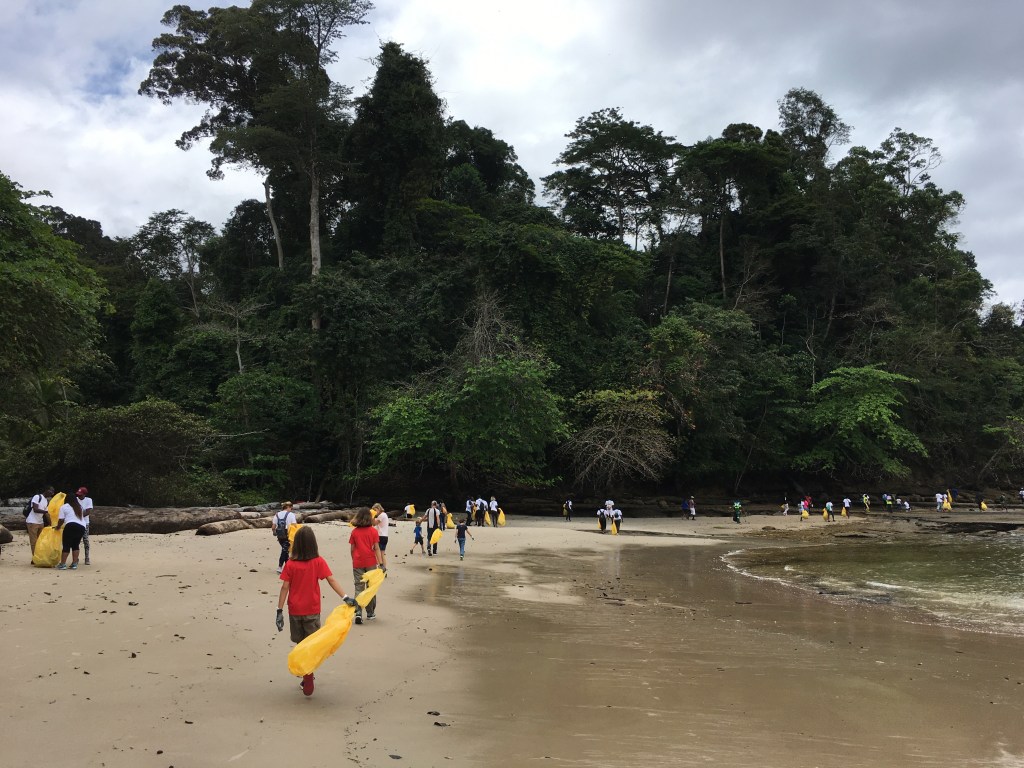
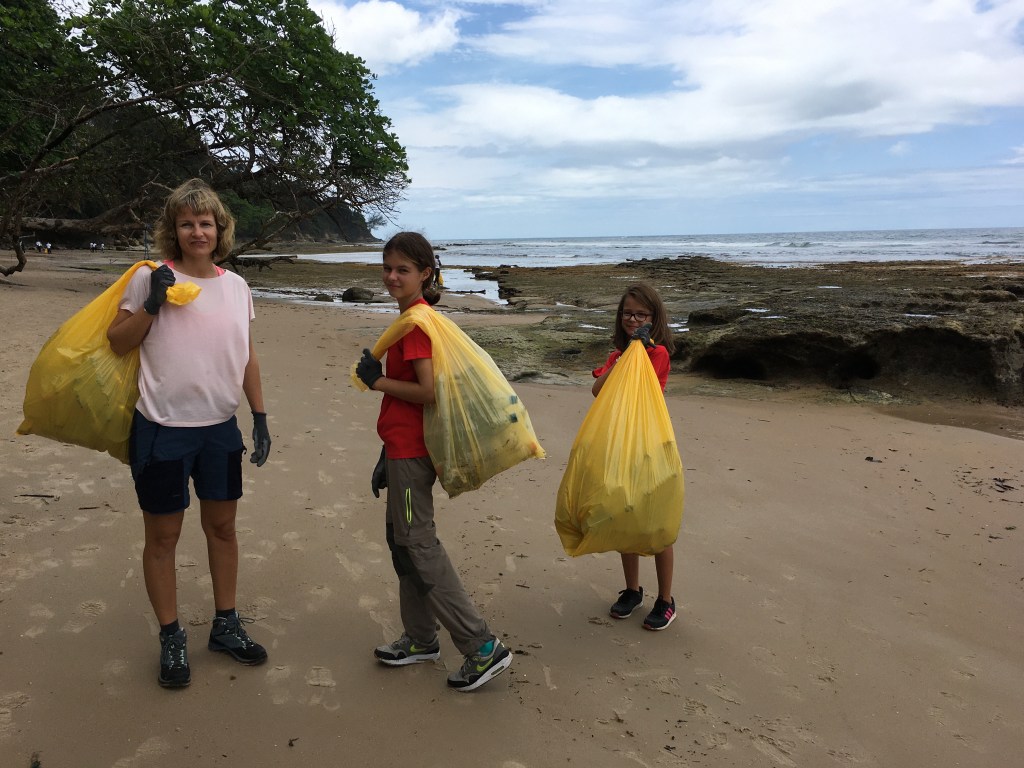
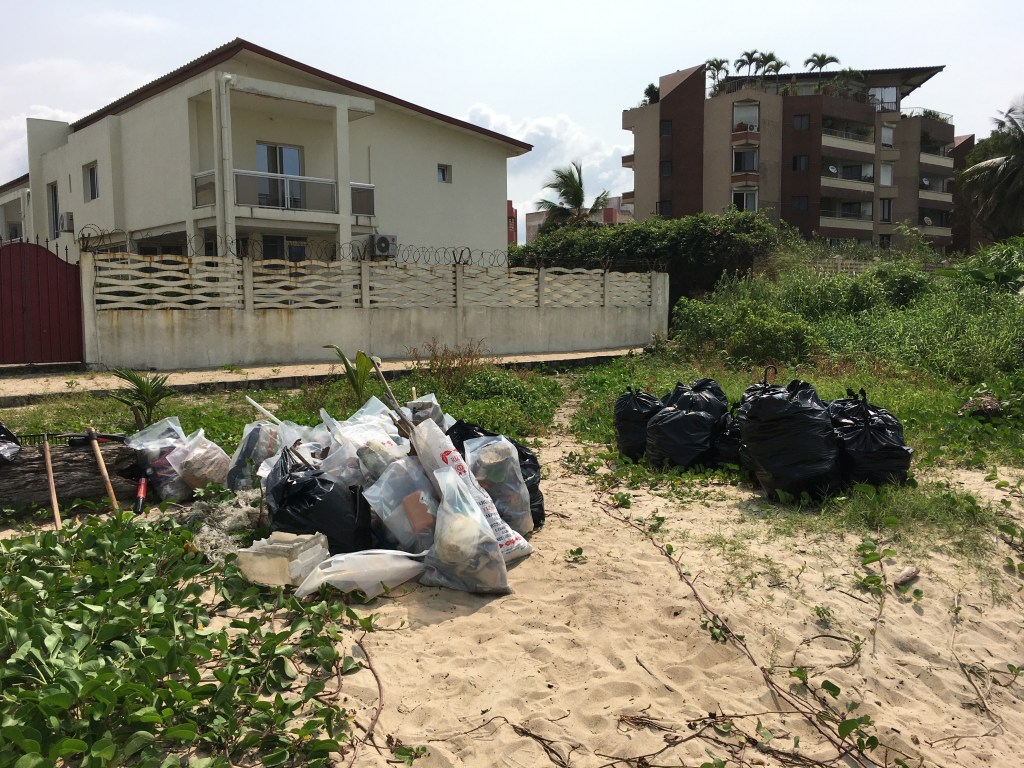
The first thing you can do about this is get depressed. Once you are past this stage, you can choose to act, even though you know you are never going to solve the problem at its roots. In Libreville, there are great initiatives led by both local and foreign residents and NGOs, supported by city authorities – like beach cleaning, the easiest way to make yourself feel useful and to meet nice people. Regularly (a bit less so in these Covid times), on Saturdays or Sundays in the morning, groups of volunteers of all ages gather on a stretch of beach, equipped with gloves and 100-litre bags; for a few hours, everyone stoops and removes every piece of plastic they can find on the sand. It’s totally addictive, because you’re never done: the quantity and variety of plastic you can find on 1 square meter of sand is astonishing. We usually go home with mixed feelings: the satisfaction of leaving a spotless beach behind, and the resignation that new plastic will invade it again within a few weeks.
Strong gloves and a yellow bag… we’re all set and ready to clean (arboretum beach, North Libreville).Every pair of hands counts!The bounty after a couple of hours of work (Tahiti beach, Libreville).
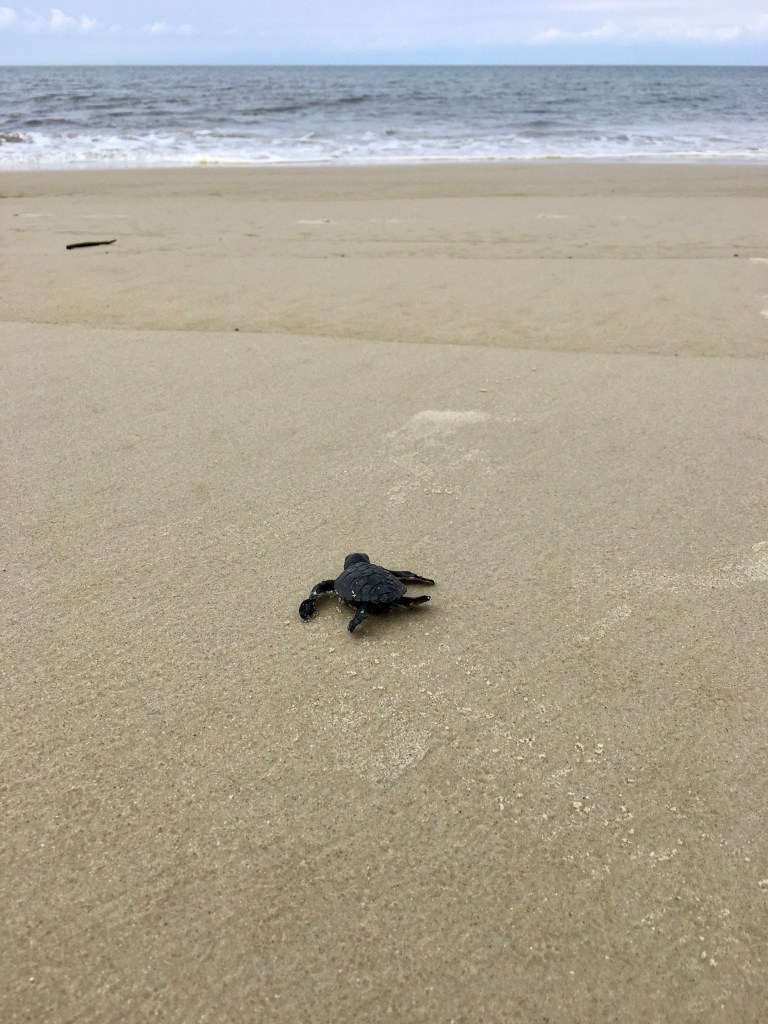
Beach cleaning is definitely fun during turtle season, from October to February. The hard work of volunteers helps newborn baby turtles to move freely from the nest towards the ocean and their destiny (only one out of a thousand will eventually reach adulthood), without meeting any obstacle on their path.
The city of Libreville has installed thick nets under a couple of bridges in the centre, where waste waters meet the sea. These nets retain an enormous quantity of plastic and prevents it from ending up in the ocean. In different areas of the city, a Belgian recycling company has placed a few dozen plastic bottle collection points; they also operate a local recycling factory. Libreville schools participate more and more frequently in beach cleaning activities. In the South, the Ibonga NGO, who hosted us for a night in Gamba and operates up to Port-Gentil, the second biggest city in Gabon, also promotes turtles protection through beach cleaning activities towards children and residents. At national level, a law to forbid plastic bags and single-use plastic objects has been in the works for quite a while, and it should at some point see the light of day. All of these initiatives are reasons to remain hopeful, but they will not be enough. Until all “world leaders” finally decide to treat this issue responsibly and globally, it will get everyday a bit harder for Gabonese elephants to find some sand to step on underneath the plastic, and a bit more impossible for baby turtles to reach the sea. In the meantime, put on your gloves, bring out your (plastic) bags, and listen to the ever-brilliant *Gorillaz album “Plastic beach” while cleaning your local beach!
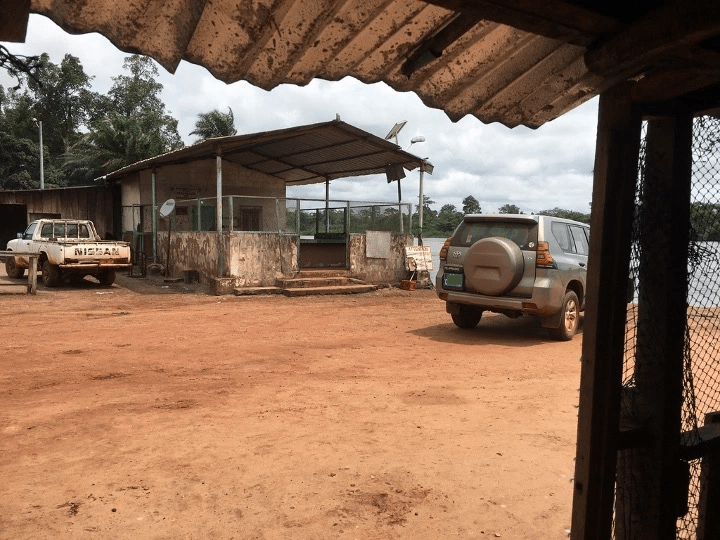
We leave Sette Cama on January 1st early at 7 in the morning, hoping not to wait to long in the village of Mayonami for the “ferry” to the other side of the Nyanga river. When we get there, there are already two cars ahead of us, and the ferry can only fit two cars. Not good news. The barge is actually here, and there is a white guy on it who is feverishly scooping water out with half of a plastic bottle. Not a good sign. The local police officer is roaming around in a state of utter ebriety. Not a good sight.
It takes us a while to fully grasp the situation: the two attendants of the barge have decided not to work today because it’s January 1st, unless they get paid twice the price, the drunk police officer does not agree and they are arguing, moreover one of the attendants is unknown to him and does not have an official qualification to manoeuvre the barge, which has a serious motor issue and is full of water, the scooping white guy is a diligent French soldier, his car precedes ours in the line and he is in a hurry to get back to Libreville. In the background a group of villagers who are yet to get any sleep in 2021 are dancing, singing and still drinking beer. Meanwhile, the temperature has already reached 30 degrees.
patiently waiting for the ferry at the infamous Mayonami pier
But patience opens all doors in Gabon and a few hours later, we surprisingly seem all set. We share the barge with a rusty Hilux, which platform is overloaded with cooler boxes full of fish bound for Libreville. As the driver reverses to embark down a short slope, his front wheels leave the ground. When I open my eyes again, the pickup is on the barge, and it’s my turn to park. After my first try, the captain asks me to park again, this time a little more on the left side, because “we are having a balance issue”.
Before leaving, I still have to finish a philosophical discussion with the police officer. As we are wishing each other well for the new year, he prophetizes that the only thing that is for certain in 2021 is that the sun will keep on rising and setting at the same time everyday in Gabon – I agree that it should be the case unless someone decides to move the equator elsewhere. Our thoughts eventually go to the “inhabitants of the North pole, who surely have a problem”.
As the passenger boat is nowhere in sight today, all of us need to find a place on the barge. The captain advises us either to stand on its left side, or to sit in the car – to this day, I am still pondering on the logic of this alternative. As we are slowly leaving the shore in a cloud of black smoke, we hear our police officer screaming one last time: he is not happy with the safety conditions on board, and the captain will hear from him when they are back. The fact is, 2 passengers are wearing the same life jacket, only it was cut in two halves : Yannick has the left side and Milla the right side.
Taken away by the current, the barge quickly turns sideways. At the first river bend, as the captain starts to yell at his colleague that we are going to hit the shore, I am wondering if on top of being well oiled themselves, they might have poured alcohol in the engine too, while Milla and Flora aptly observe that once again we are quite in a shaky situation, and that it would have been safer for them and their mother in the passenger boat. Nevertheless, to our great relief and still sideways, we – literally – hit terra firma.
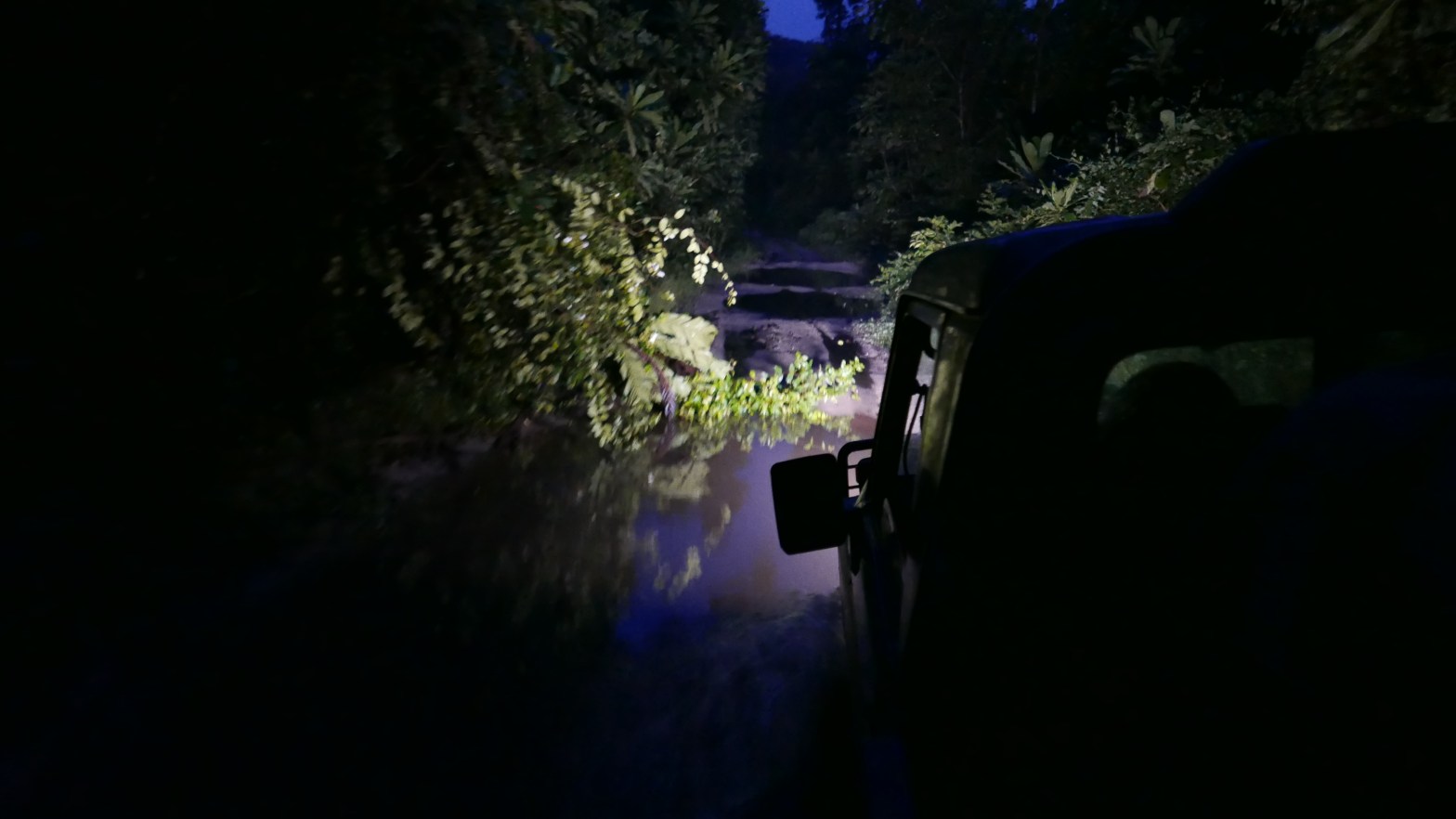
Still 770 km to go! It’s easier as we know the way now. But the greatest gift comes from the policemen and women in position at the 28 checkpoints, as none of them has yet recovered from the new year celebrations: they are either still drunk and very happy to wish us all the best and let us go, or fully hammered and deeply asleep at their desk while they left their checkpoint open. We are free to cross from South to North the giant forest that is Gabon, and peacefully reach Libreville after a 2-day overdose of green.
Sette Cama was first discovered, like a lot of other places along the Gabonese and African coast, by the Portuguese in the late 15th century. The name means “Seven Graves”. Allegedly, a Portuguese ship sunk in front of what is today the village of Sette Cama; seven bodies were found and buried there. No one will ever know if this fine story is true or not.
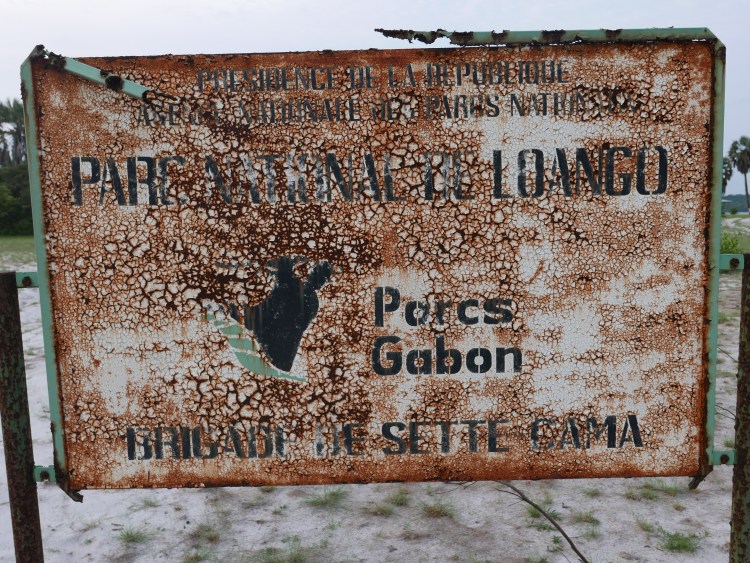
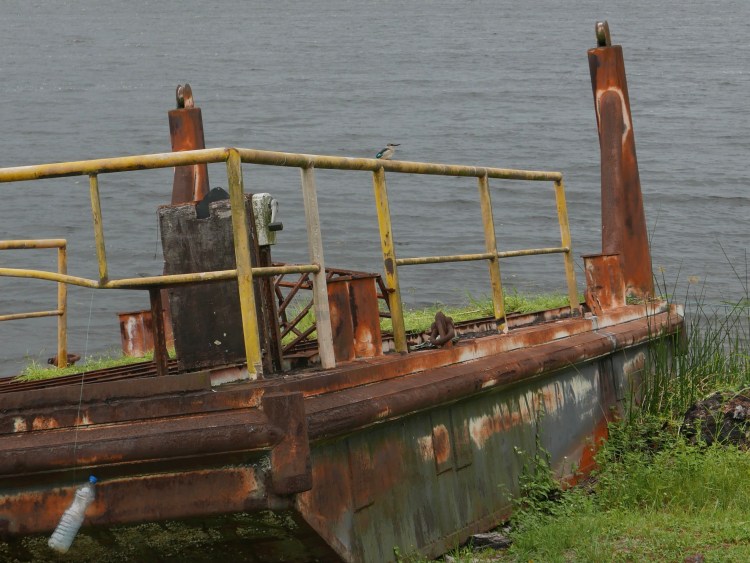
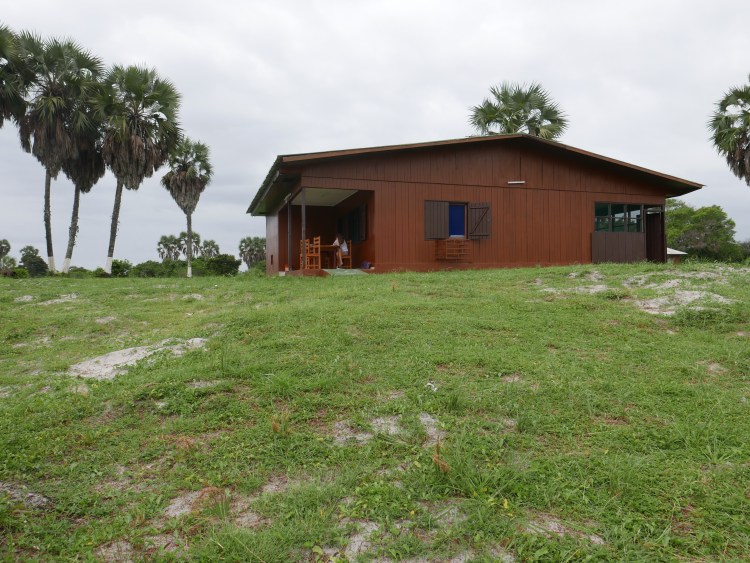
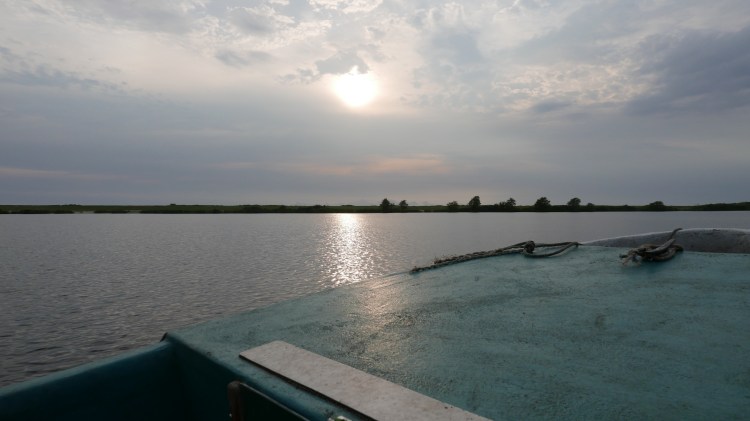
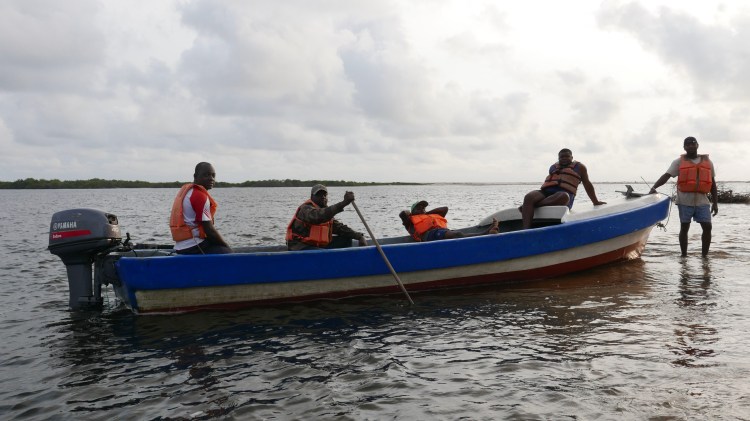
From Gamba, we reach Sette Cama by motorboat. It’s a scenic ride through the mighty Ndogo lagoon, a 50-km long and 20-km wide maze of water, mangrove, and tiny green islands. As we are disembarking, we are so happy to think that we are momentarily done with traveling and that we are going to spend four days and four nights in the same place. The place in question is one of the wooden houses that make the base of the local ANPN (National Agency of National Parks) brigade. Once again, it’s strictly no-frills: we take showers with buckets of water from the lagoon, and the electricity generator works only at night. But the camp feels peaceful, our terrace faces the lagoon, a beautiful grey blue-collared kingfisher is posted on the rusty remains of a barge from colonial times, and it seems like we have once again succeeded in completely escaping civilisation for a little while.
Little kingfisher on the remains of the “Nyanga bus”
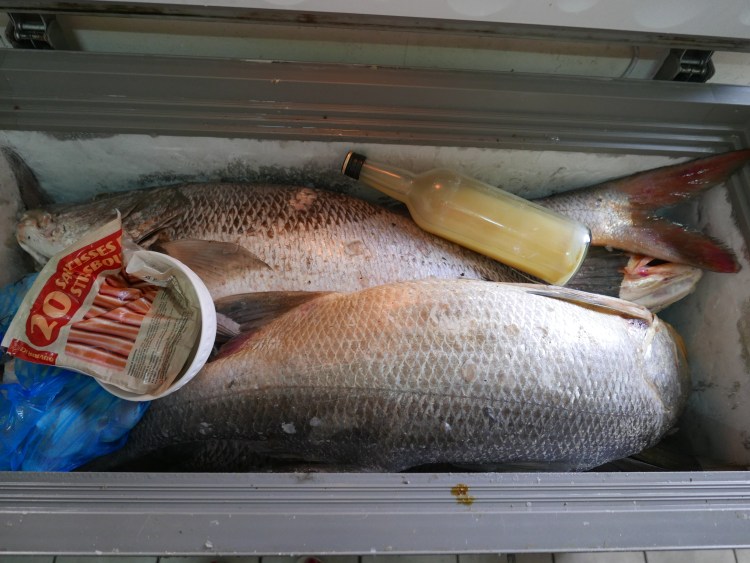
Opening out of curiosity the freezer in our kitchen, we find in it two gigantic fish that could provide a fine meal to 30 people. The eco guards explain us that the day before they caught local fishermen who had largely exceeded the quotas allowed in the lagoon, and that in such cases they have to confiscate the scaled booty as a proof of misdemeanour. We are here at the Southern tip of the Loango National park (we were in the Northern part back in February) and fauna protection is taken seriously here. The biggest part of the eco guards’ job is to patrol the waters and track down illegal fish nets and their owners. They have limited means for that – their main boat is the one that we are renting for these 4 days – and the lagoon offers hundreds of hidden fishing spots. Nevertheless, they look dedicated to their mission and they distribute hefty fines on a regular basis. Thanks to them, the rules that apply in the lagoon are clearly known to the Gamba fishing community, and the concept of sustainable fishing is slowly getting understood. We ask them what they will eventually do with the fish in our freezer. They tell us that in such cases they eventually give it to the villagers so that it does not get lost – now they’d better hurry, cause the freezer is off the grid for half of the day!
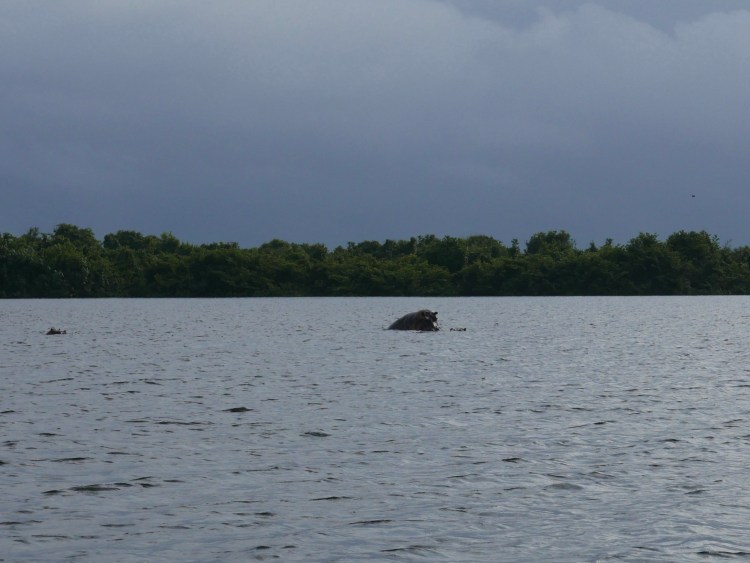
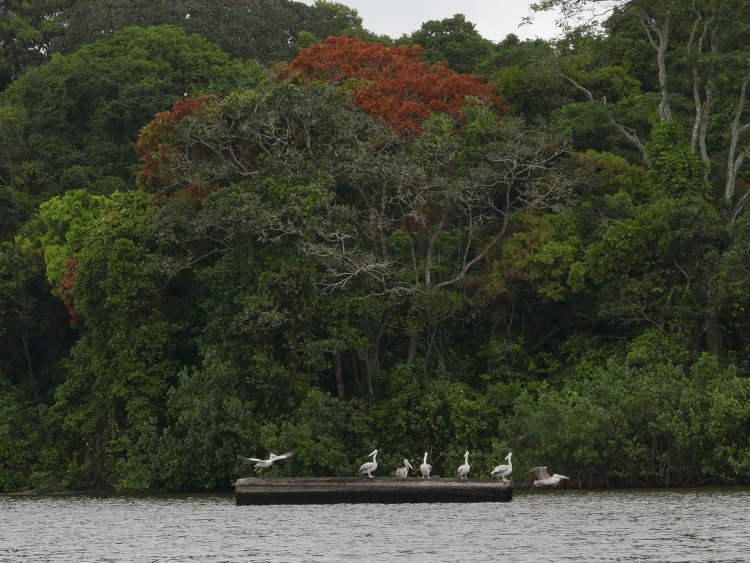
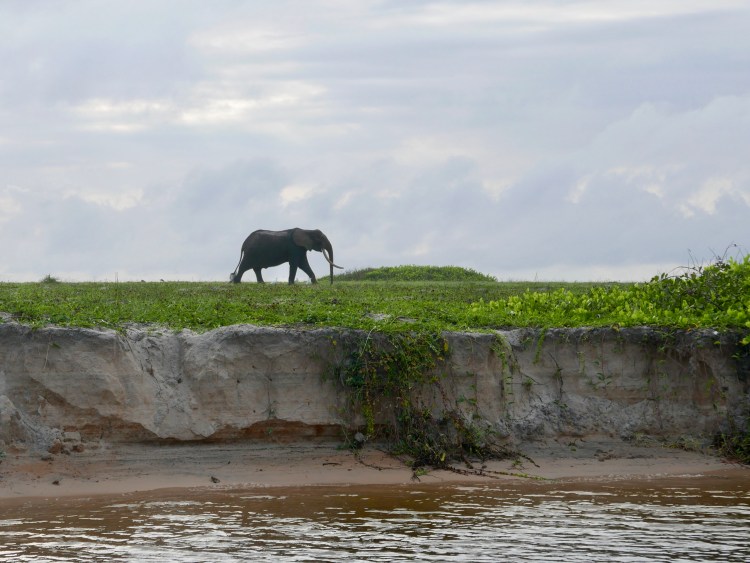
Sette Cama and the ANPN camp are located on a long and narrow stretch of land between the ocean and the lagoon. Around the camp we have forest and sand, and towards the end of the stretch mostly bushes and sand. On our first boat trip, we meet a couple of hippos quietly wading in the middle of the lagoon. They are regulars here, and it turns out we will see them everyday during our stay, never too far from a happy batch of pelicans. Meanwhile on land, an elephant shows up between us and the setting sun.
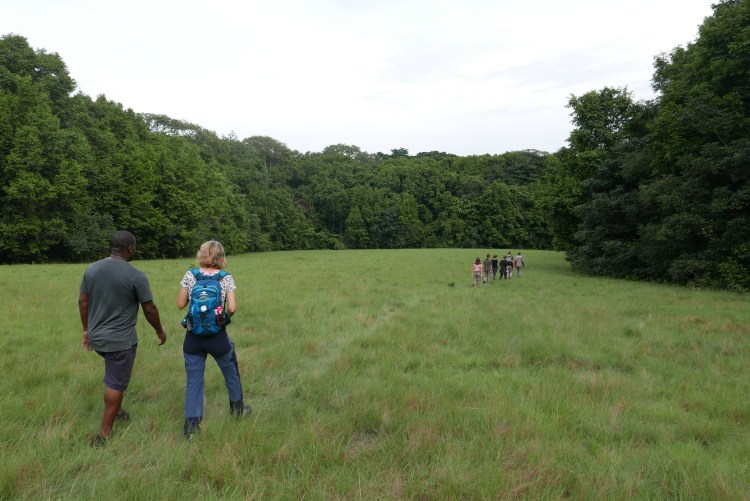
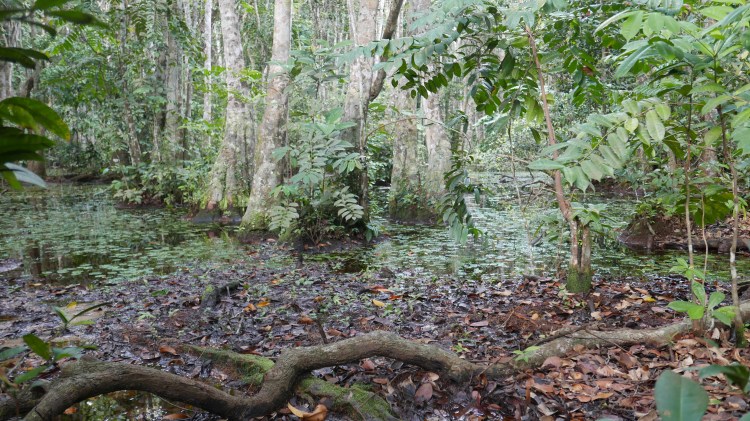
From then on, our time in Sette Cama is all awe, wonder and liters of sweat. With our loyal friend Yannick and the local legend Kassa, we hike every day in the equatorial forest, our feet often looking for roots to step on so they don’t sink in the mud.
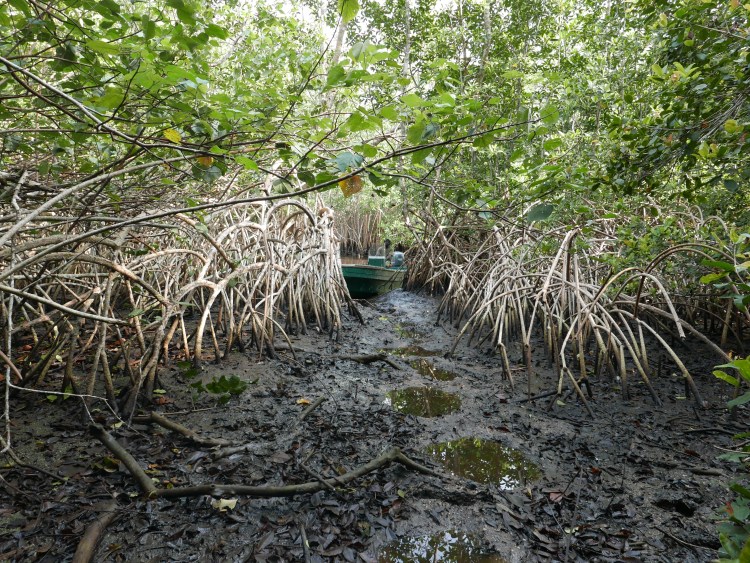
After acrobatic climbing on mangrove roots, it’s nice to be able to walk in the savanna
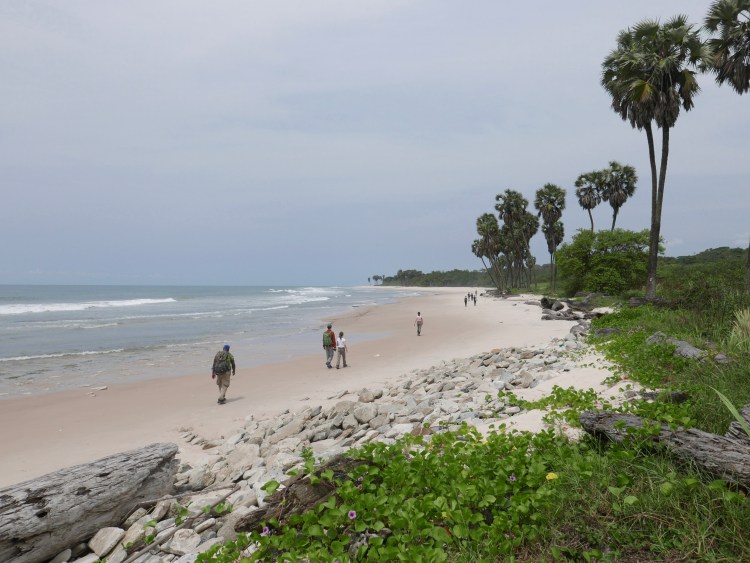
At times, savanna areas give us a welcome respite from the slightly oppressing forest. On our longest hike, we find salvation at midday on a pristine beach, making us feel like discoverers of the New World.
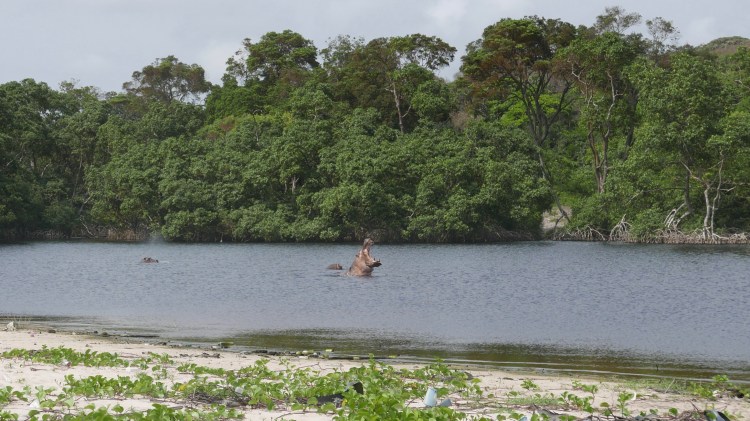
There, we spend time observing a group of hippos in a small lagoon – as members of the Gabonese-only “surfing hippos society”, they go bathing into the sea when they feel their life needs a bit of adrenaline.
On our way back to the camp, walking along the beach, we meet a herd of wild buffalos and a couple of sitatungas, those cute little antelopes of central Africa. Later at night, Kassa takes us crocodile spotting. From the speeding motor boat, he scans the banks of the lagoon with his headlamp. And sure enough, after 4 minutes, and from a 100 meters away, he has already seen a dwarf (but not that small at all) croc, which stays perfectly immobile as we approach to observe him from close. As we are getting to know the “little Loango” a bit more each day, we realise that amongst all places we have visited so far in Gabon, this is where wildlife – big and small – is the most abundant and the easiest to approach.
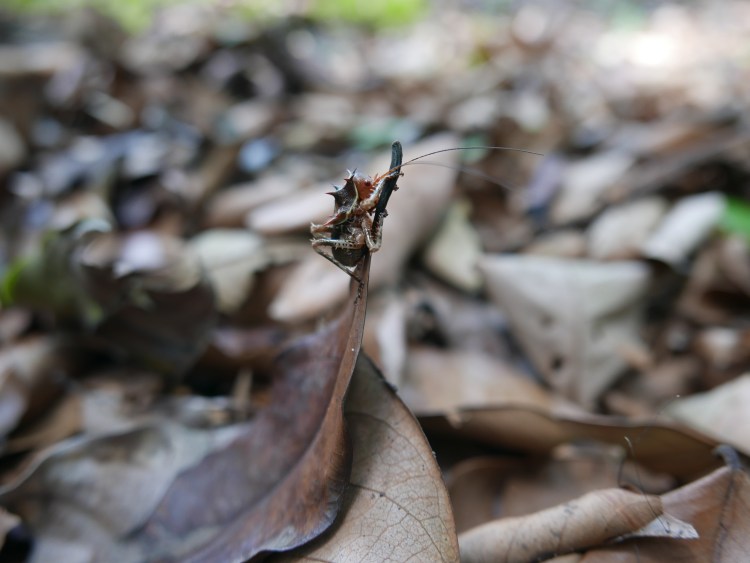
Meet the fantastic-looking cosmoderus
At the end of the land stretch of Sette Cama, the lagoon finally meet the ocean, forming an estuary. At low tide, both side are separated by a shoal, but at high tide the waters hit each other and mix in loud waves, it gets all foamy and whirly, and chockfull of essential nutriments for the fish. This particular spot has been for decades a Mecca for fishermen from all around the world. Until a few years ago, people were coming all the way from Europe, Japan or the USA just to fish here for a few days. Since then, Gamba has lost its plane connection with Libreville due to the oil crisis, and became even more isolated since the Covid crisis hit. As a result, there are only a handful of fishermen around here at the time of our visit, and they are expats living in Libreville. As they talk while preparing their gear about what they fish here and how they fish it, their voice seems to speak to some invisible person beyond us and a mad gleam shines from the bottom of their eyes – they look like possessed Radiohead fans a few hours before the show. This makes us very curious, and we join them on the bank sand one evening at dusk – when the fish start to come out. We watch them, both feet solidly anchored in the sand and water at knee level, throwing their lure far away in the foam one time, two times, twenty times, tirelessly, until the line suddenly tenses itself. That is when the battle begins, and it can take time to bring the fish out of the water. This is “catch and release” fishing, meaning you must return the fish to the water in the end. Tarpon, barracudas, whitefin jack, giant African threadfin, crevalle jack… some of them can weigh up to 90 kilos, so you can be sure to sleep well after an entire fishing night. And you have stories to tell later, like when 3-meter bulldog sharks come out to check from close what you are doing here. Still, once we have understood how it works, and realised that the fish lose half of their mouth in the process, the show quickly loses interest for outsiders like us. These guys definitely live in a world of their own. But they are truly passionate – we respect that.
On our last day, in the forest just beside the ANPN camp, we meet with a group of 30 collared mangabeys, who have seen us coming from far. As we stop to watch, the main part of the group goes about their business of constantly playing and jumping all around (which makes them impossible to photograph), while the few guard monkeys are trying to scare us off by screaming their lungs out from high up in the trees – just listening to them is extremely entertaining. And with their bordeaux cap, they are really elegant animals.
Home and playground of the collared mangabeys
Later, as we are silently leaving the forest on a sand trail towards the sea, Kassa stops: 5 meters away, behind the bushes, an elephant is standing and eating. At this moment, all the elephant training that we have received throughout our expeditions in Gabon is paying off: each one of us manages to stay perfectly calm and kneels down in the sand, following Kassa’s gestured instructions. Time stops as we observe the peaceful giant. Then, as he finally sees us and runs away, the spell breaks.
 Tanad stories from Gabon