Bat break

Let’s take a short break from the narration of our adventure inside Gabon and talk about bats today. It’s been a long time since we wanted to do so, as our closest neighbours in Libreville are bats, fruit bats to be precise. The very species that is widely talked about in these Covid-19 days. The French call it “roussette”, the Hungarians “flying dog”, the English “flying fox”. Here we have a serious colony of them, counting at least 100,000 individuals as far as our eyes can estimate.

We live on the 5th floor and our balcony overlooks what is probably the biggest jungle in Libreville. It’s thick, lush, with a mix of bamboo, palm trees, trees of an average 20 meters height, some of them going up to 50 meters. During the day, our bats nest in these trees, usually in the upper parts. There is a hierarchy system by which the more senior bats stay in the upper branches, while the younger or padawan-level bats are in the lower ones. Fruit bats do not have a sonar, but they have an excellent eyesight. They sleep by shifts of 30 to 40 min, and between these shifts they can be extremely noisy. Our 100,000 neighbours manage to sleep at the same time around 1 or 2 pm. But for most of the day, half of them are asleep while the other half is busy flying around and chatting with each other, producing 21 different types of sounds that land somewhere between the dog bark and the crow caw, not so melodic. It is visually and sonically overwhelming, but we got used to it.

We knew that bats carry hundreds of viruses, and we were concerned in the beginning that they would visit us on the balcony. But actually they have proven to be very well-behaved, and they never come too close. They do not seem very interested in human beings.

Every single day at dusk, something fascinating happens : the fruit bats are all getting really excited, they leave the trees one after the other, start flying around in sky-filling proportions. And then, as the sun is setting into the ocean, they all leave the jungle in flocks to go to their night hunting spot. It’s a beautiful and spectacular sight that we got to love:
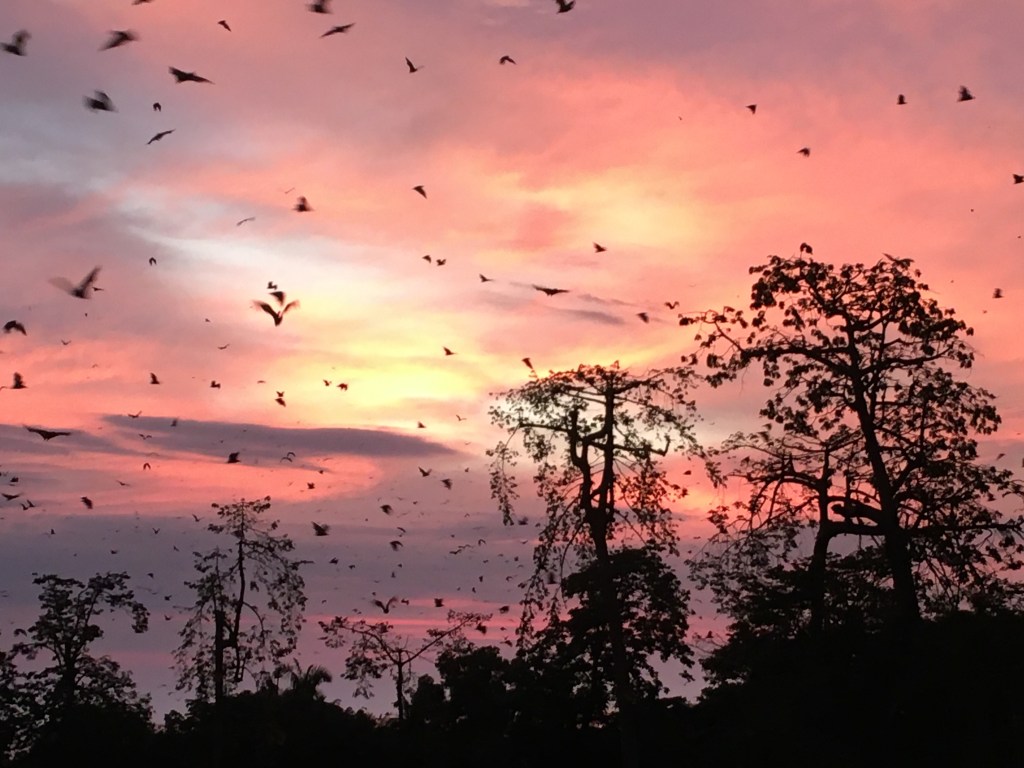
We are not sure exactly where their night hunting spot is. Some locals say they cross the estuary to go to Pointe-Denis, others say that they invade the arboretum some 15 km North… Anyhow, this has to be a spot full of insects, fruit trees, leaves and nectar. And what studies have shown is that, just like they stick to one area by day, they stick to one area by night too, with each bat having a particular tree to occupy itself with. After eating all night, they all loudly come back to our jungle at sunrise, around 6 am. Our natural alarm clock.

But on Wednesday last week, something even more fascinating happened: our natural alarm clock did not ring in the morning. Our bats never came back from their night hunt, and they have been nowhere in sight since then. Now the jungle is all empty and quiet. We do not have to close the windows in the morning to listen to music or hear each other. We hear the chirping of the birds, and we actually see more exotic birds as they seem to understand that there are available spots now in the jungle.

Where have our bats gone? We have read that there is a place in Zambia where every year in spring time millions of them are gathering for a sort of Pan-African bats conference. Perhaps that is where they are now, 4000 km away from here? We do not know. We’ll ask them when they are back in a few weeks or months from now, and we’ll keep you posted.
Update

Hello everyone,

Some of you reached out to us to see how we are doing here in Gabon in these virus times. Thanks! So that is just a quick note to say we’re all right. Schools and borders closed 3 weeks ago, and since last week there is a night curfew from 19:30 to 6:30. Fruzsi is working from home, I have stopped my volunteer teaching activities. We are asked to stay home as much as possible. Only a handful of Covid-19 cases have been declared in the country, so it seems all these measures are paying off so far. But we know things can change very quickly, so are closely monitoring the situation.

Our days look very much like yours: school at home, reading, playing and listening to music, cleaning, trying not to check the news too often, going to the supermarket with a mask on, cooking… all of this with a little help from the sunny and warm weather outside.

We’ll resume with the blog very soon. Stay safe, stay home!

Along the Ogooué river

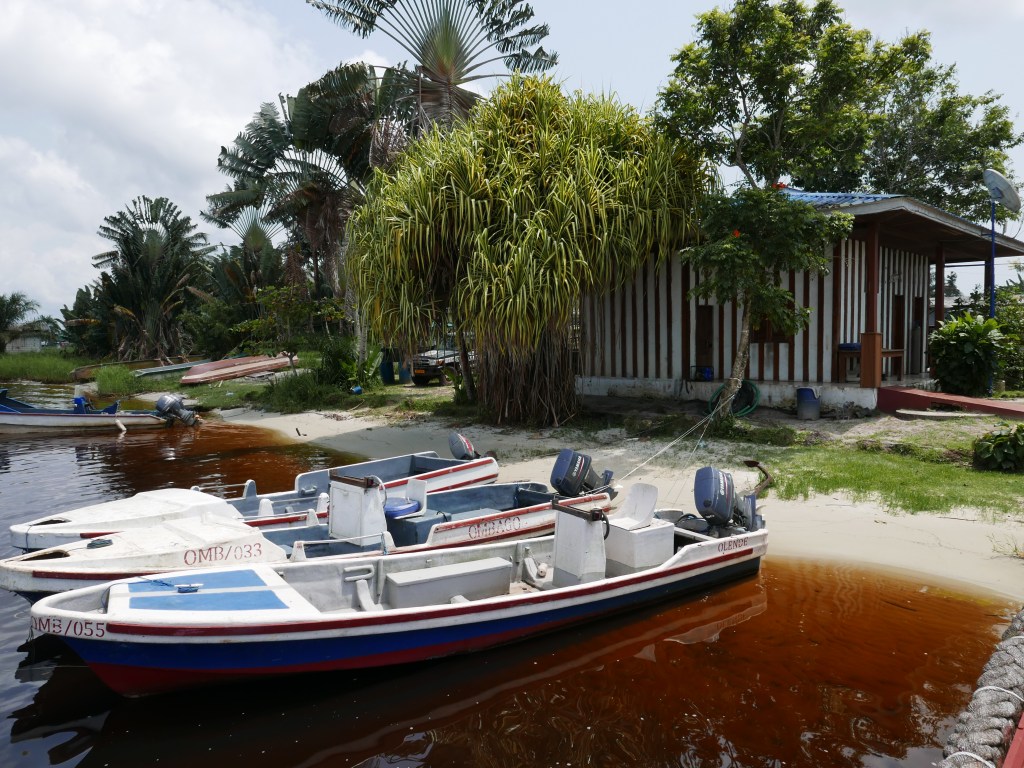
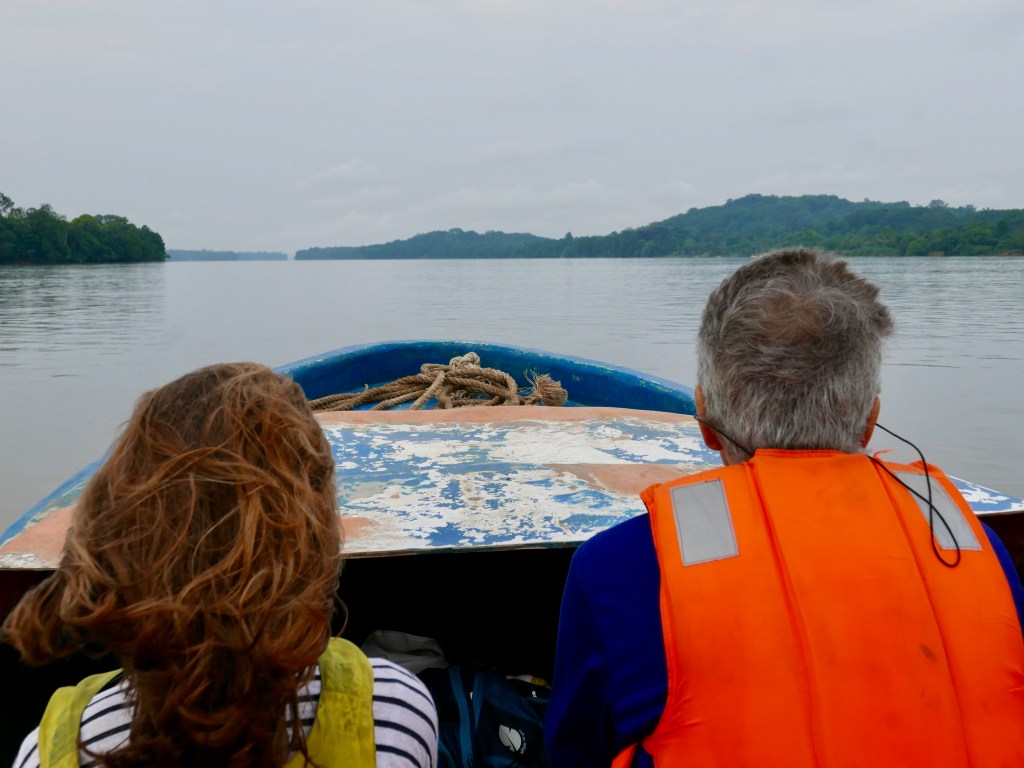
This is day 2 of our family expedition. It’s early morning, and we leave the Albert Schweitzer hospital after a peaceful night. The 7 of us hop on a small motor boat and get introduced to the captain, Jean-Rémy. We are going to navigate on the mythical Ogooué river until Omboué, some 120 nautical miles away. That is no less than 230 km!

We have heard all kinds of stories about this trip. Like engines breaking down in the middle of the trip, with boats arriving after 10 hours on water at night time to Omboué, passengers using their smartphones to shed a few centimetres ahead of the boat, hoping no hippos would surge out of the dark waters. So the first thing we check is that Jean-Rémy has 2 working engines.

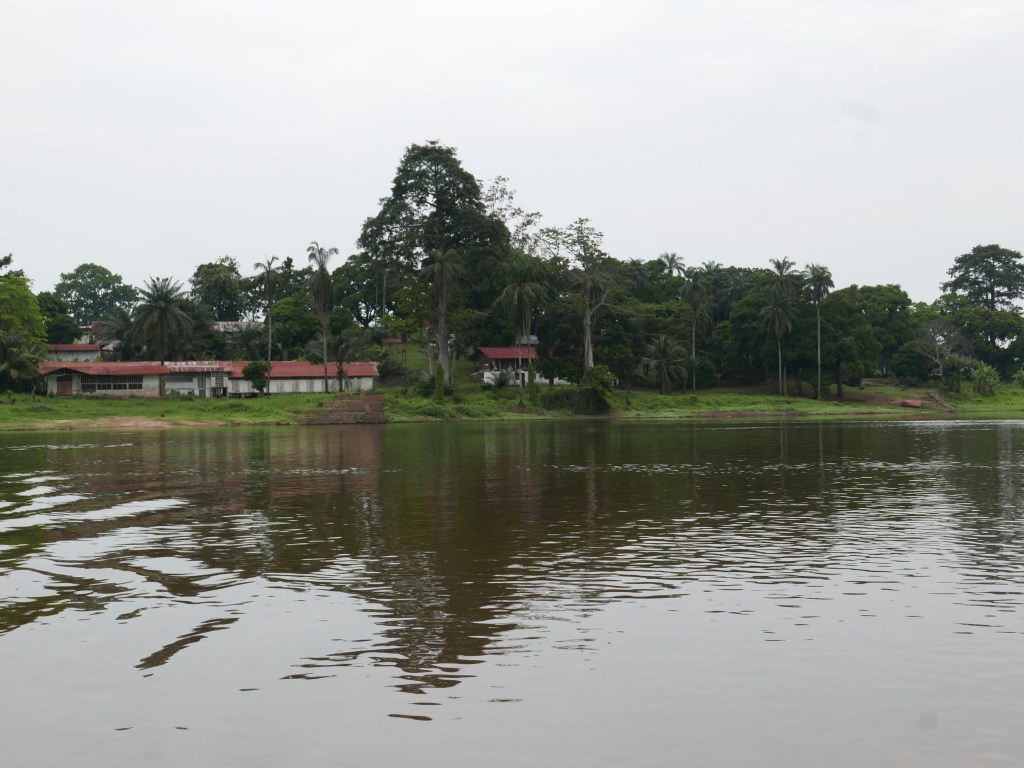
The Ogooué is the longest river in Gabon. Its source lies down South in Congo. 900 km later it ends in a swampy delta down Port-Gentil. Back in the 19th century, European explorers used the river to discover the depths of the country and its tribes. Then, under French colonisation, it was widely used by the burgeoning wood industry in the 20th century to bring enormous quantities of okoumé, ebony and dozens of others kinds of Gabonese wood to Port-Gentil so they could be shipped to Europe and the Americas. And of course, it has been for long the easiest way for all the villagers living along the river to reach the Albert Schweitzer hospital.

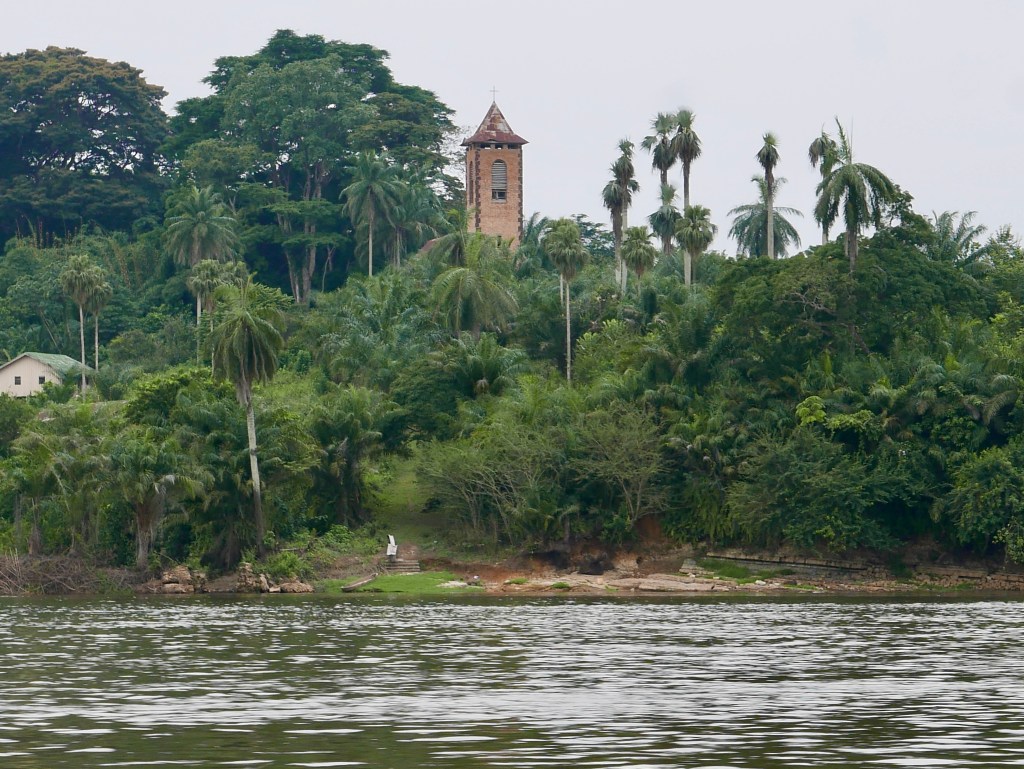
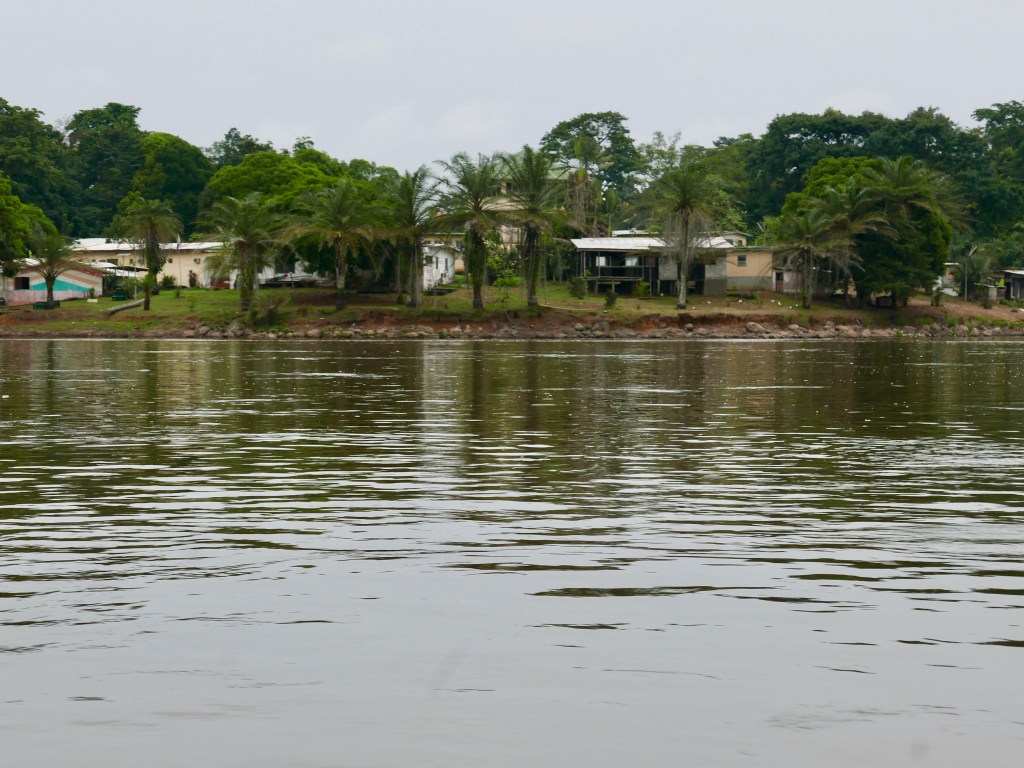
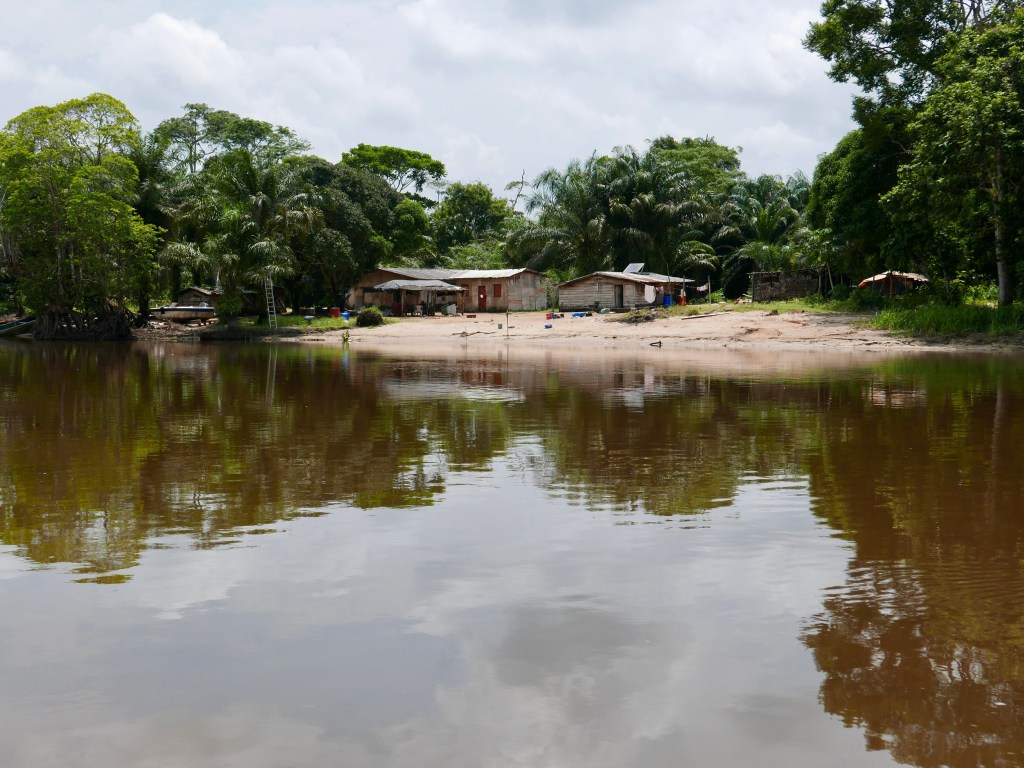
Today, we are lucky to have grey skies above us, which keep the heat at a bearable level. Along our trip we’ll see lonely river villages, a few motor boats coming from Port-Gentil, a couple of enormous rafts full of wood or cars or trucks or construction material towed by small but powerful tugboats, a fantastic-looking church built God knows how in 1898 by missionaries from Alsace, dozens of egrets and herons. But most of the time, we are gliding alone along the river, surrounded by the some of the wildest and thickest vegetation we have ever seen.

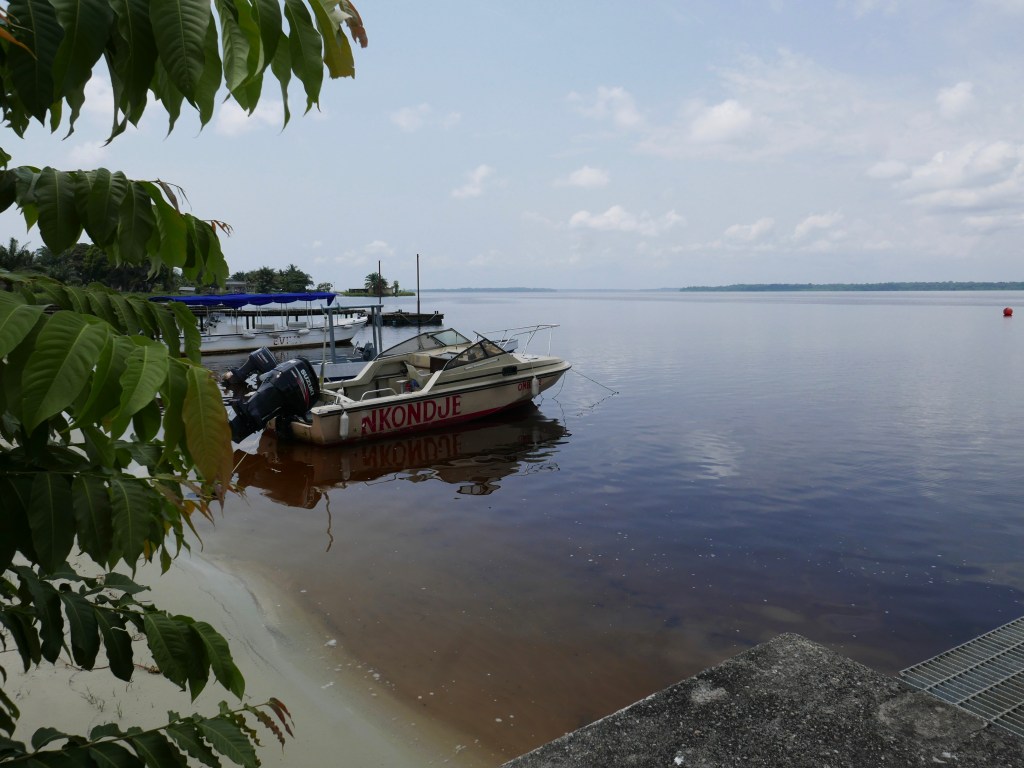
Jean-Rémy does not need a GPS or anything. He knows the river by heart. At some point, after some 3 hours of navigation, he takes a left turn on a narrow river branch. That’s a shortcut, and a well-kept secret – according to Google Earth, there is no water here and we should be in the forest. One hour later, suddenly the landscape becomes a hundred times wider: we have reached the Nkomi lagoon, which is only separated from the ocean by a 2-kilometer stretch of road. The last instants of the trip seem to last forever… the sound of the engines is buzzing in our heads and we badly need to stretch our legs. But there we are, after 5 hours on the river: Omboué, at last. A perfectly unspectacular and friendly little place.
L’hôpital Albert Schweitzer de Lambaréné

We reach Lambaréné in our little bus by the end of the afternoon. Tonight we are visiting and staying in the most famous place in the region: the old Albert Schweitzer hospital, the first of its kind on the African continent.

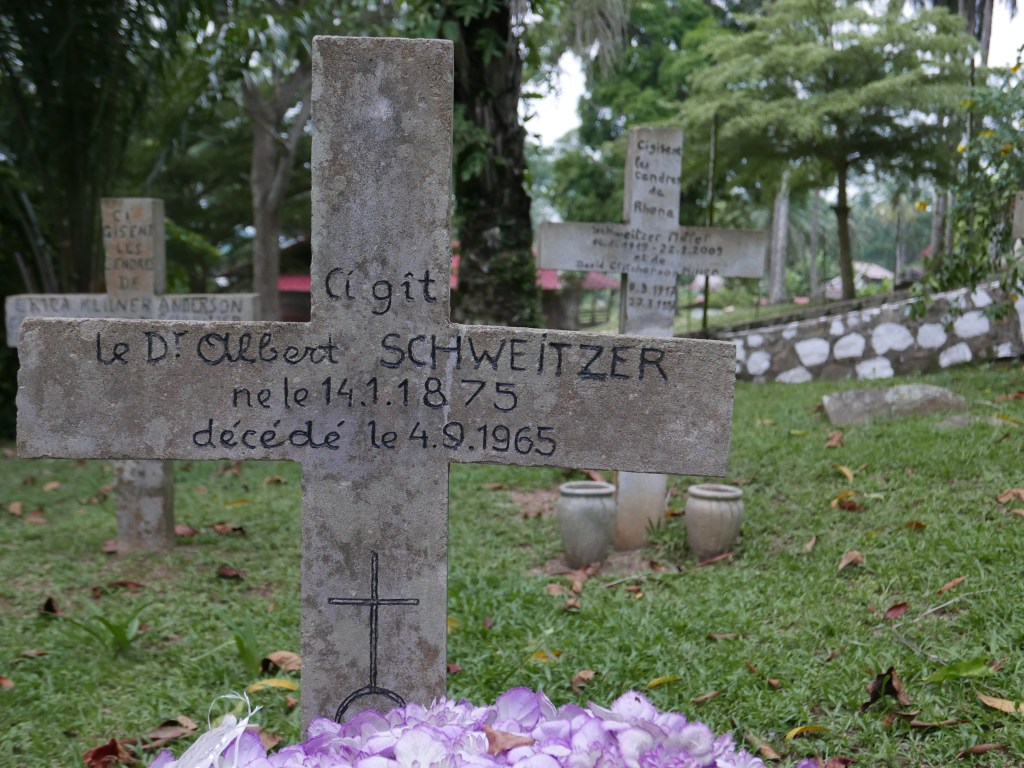
Albert Schweitzer was a theologian, virtuoso pianist, writer, humanitarian, philosopher, and most famously a doctor who received the Nobel prize in 1952 for his work in Lambaréné. There, with money he had made through fundraising and piano concerts, he built a hospital in 1913, and ran it with the help of his wife, and later his daughter, until his death in 1965: https://fr.wikipedia.org/wiki/Hôpital_Albert_Schweitzer, https://en.wikipedia.org/wiki/Hôpital_Albert_Schweitzer

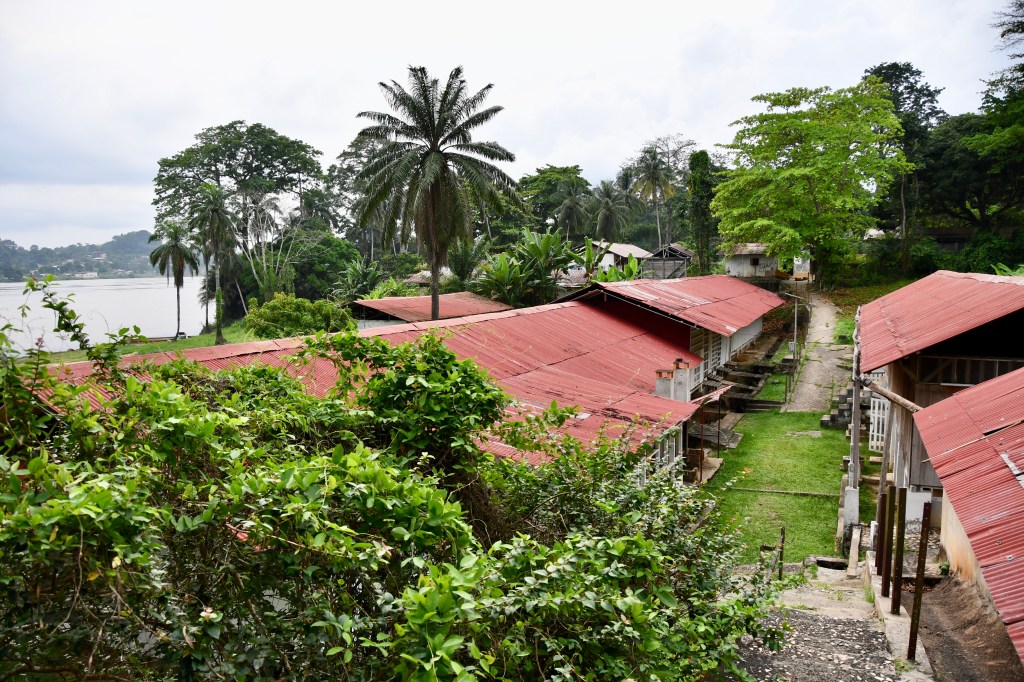
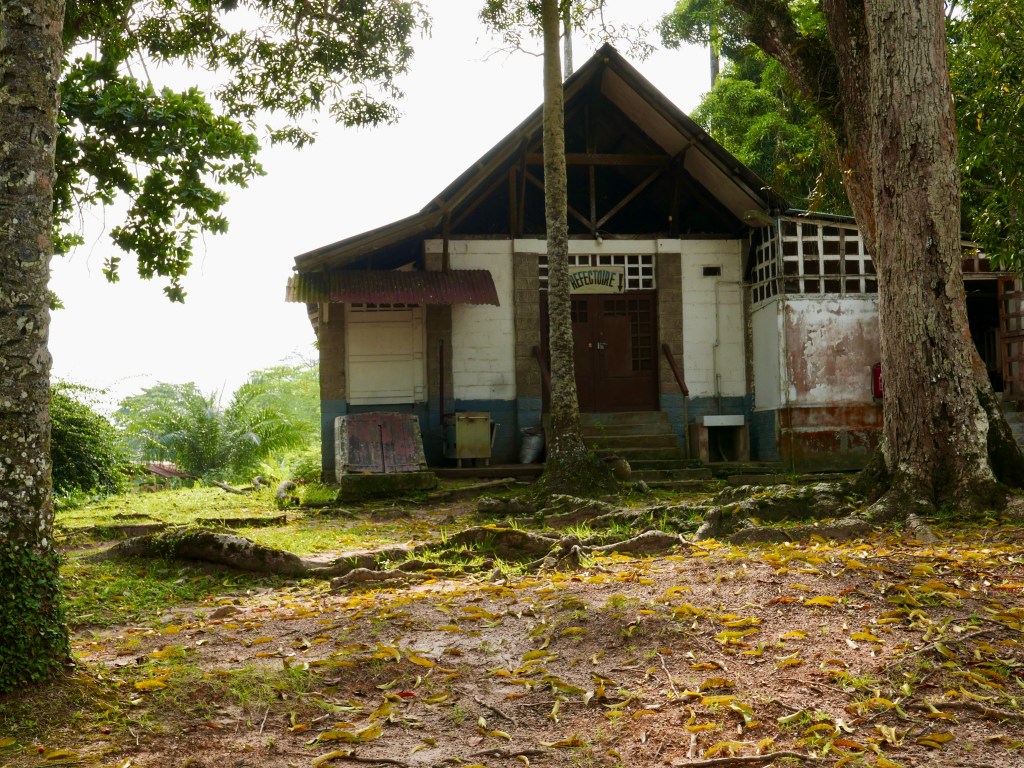
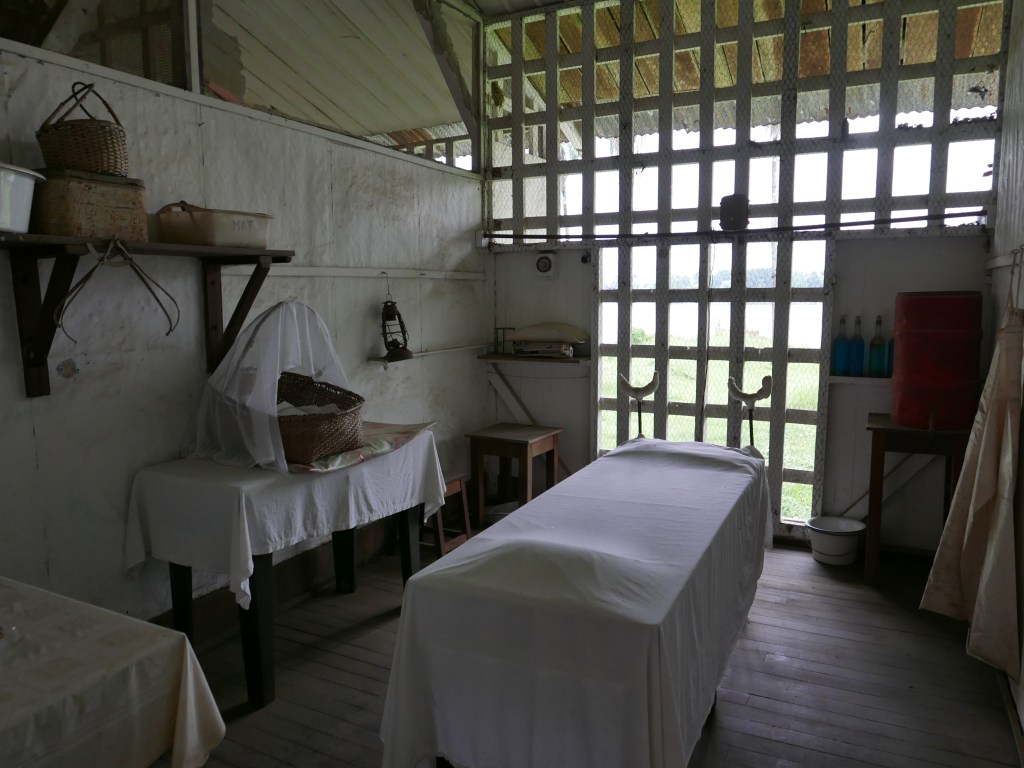
Visiting the old hospital is a deeply moving experience. In these wooden buildings settled on the banks of the mighty Ogooué river, we can feel the presence and the power of “Le grand Blanc”, “The tall White” as the Gabonese still call him affectionately today. Everything is in place as he would just have left the hospital yesterday, and it’s very easy to imagine the doctor’s daily life and work with the patients. Along the visit, we appreciate how much of an extraordinary man he was, saving or improving the lives of thousands of Gabonese, dealing with crazy tropical diseases in very rough conditions, and playing Bach every evening on the piano that still remains today in his room in the museum.

It is astonishing to think that through the willpower of a single man coming from Alsace, a hospital was born in the middle of a deep and unfriendly jungle, at a time when cannibalism was still common practice in certain local ethnic groups, and that its heritage still lives today in the newer hospital nearby. By the end of his life, Schweitzer had gained world fame and knew many of the world’s leading politicians and thinkers personally, from Albert Einstein to André Malraux and the Abbé Pierre. Admirably, until his last day, he remained faithful to the Gabonese and his life’s work in Lambaréné.

You can read more about the doctor’s fascinating life and work here in French: https://fr.wikipedia.org/wiki/Albert_Schweitzer or there in English: https://en.wikipedia.org/wiki/Albert_Schweitzer

En route to Lambaréné

The winter holidays were busy with very special family guests visiting from France. We took together a one-week adventure inside Gabon for the first time, with a guide all along. Many many things happened during this unforgettable trip, and it will take a few blog posts to tell about it.

Our first day was dedicated to traveling to Lambaréné, some 230 km from Libreville. 5 hours in a Toyota Hiace, which had air conditioning a very long time ago, before its petrol engine was swapped with a diesel. Pas de pitié! Go melt yourself! Feel the equatorial heat!

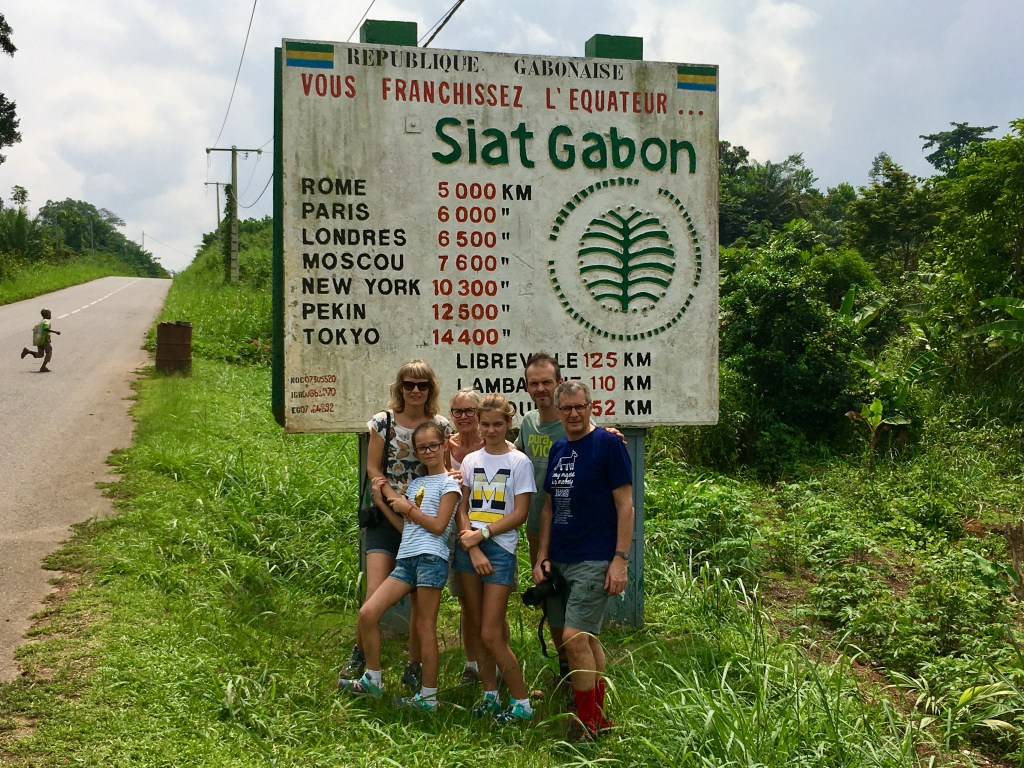
We crossed that special line after 125 km:

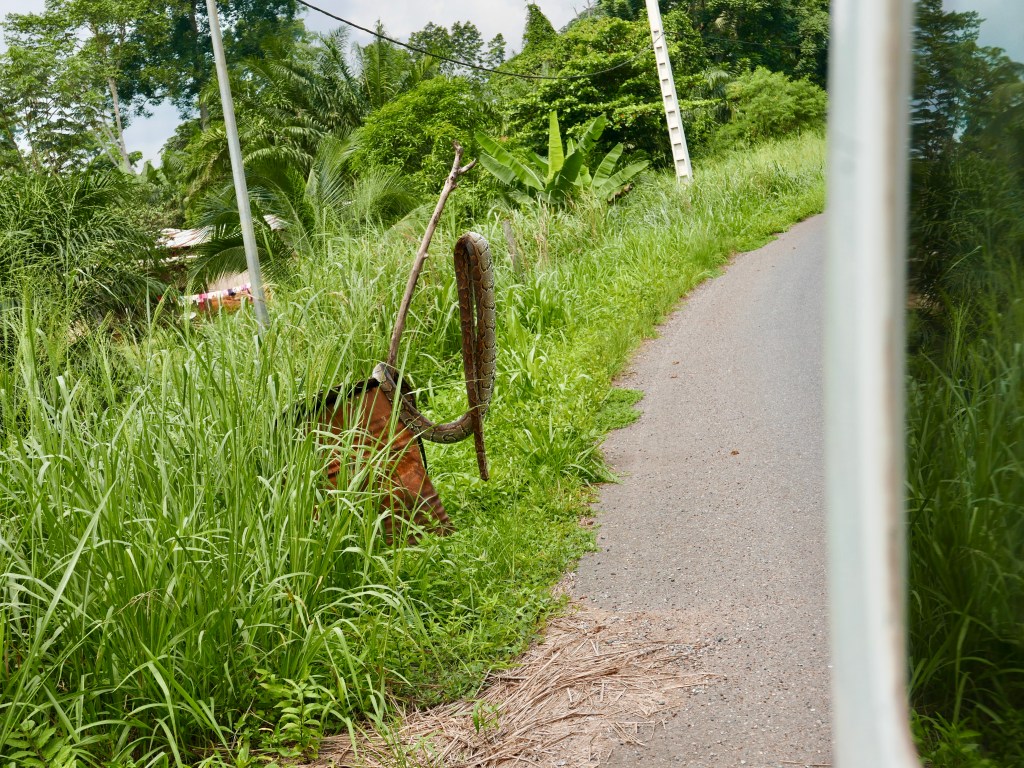
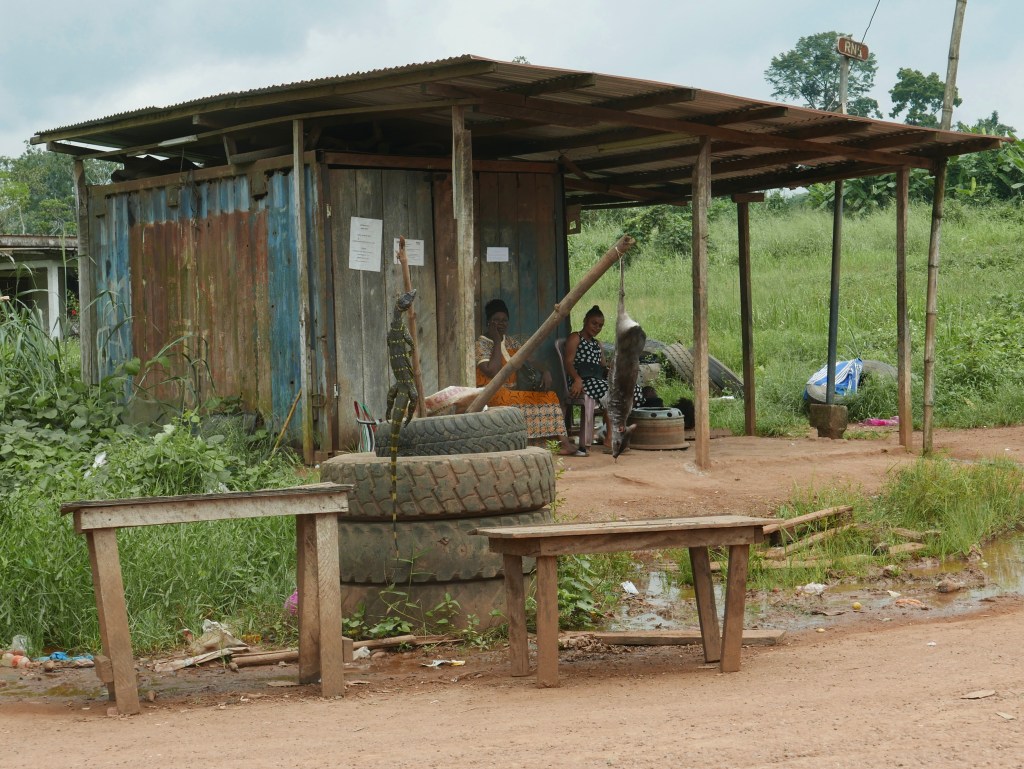
Then, just as we were getting hungry, the first lunch opportunities showed up:

Even though these are protected species, locals do have the right to live by their traditions and eat them, as long as it’s for their own consumption. We were not exactly in the mood for snakes or antelopes, even less for porcupine or pangolin (of which we spare you the sad sights on that page). But when we stopped in a small restaurant on the main square of Bifoun, it turned out the only meals left were an unbelievably spicy sort of river fish, and crocodile with cassava (what we call manioc in French). It was past 2 pm, we had to eat something. So we crossed another line and went for crocodile. Surprise: it’s good! White and a bit chewy, somewhere between chicken and fish.

Sunday

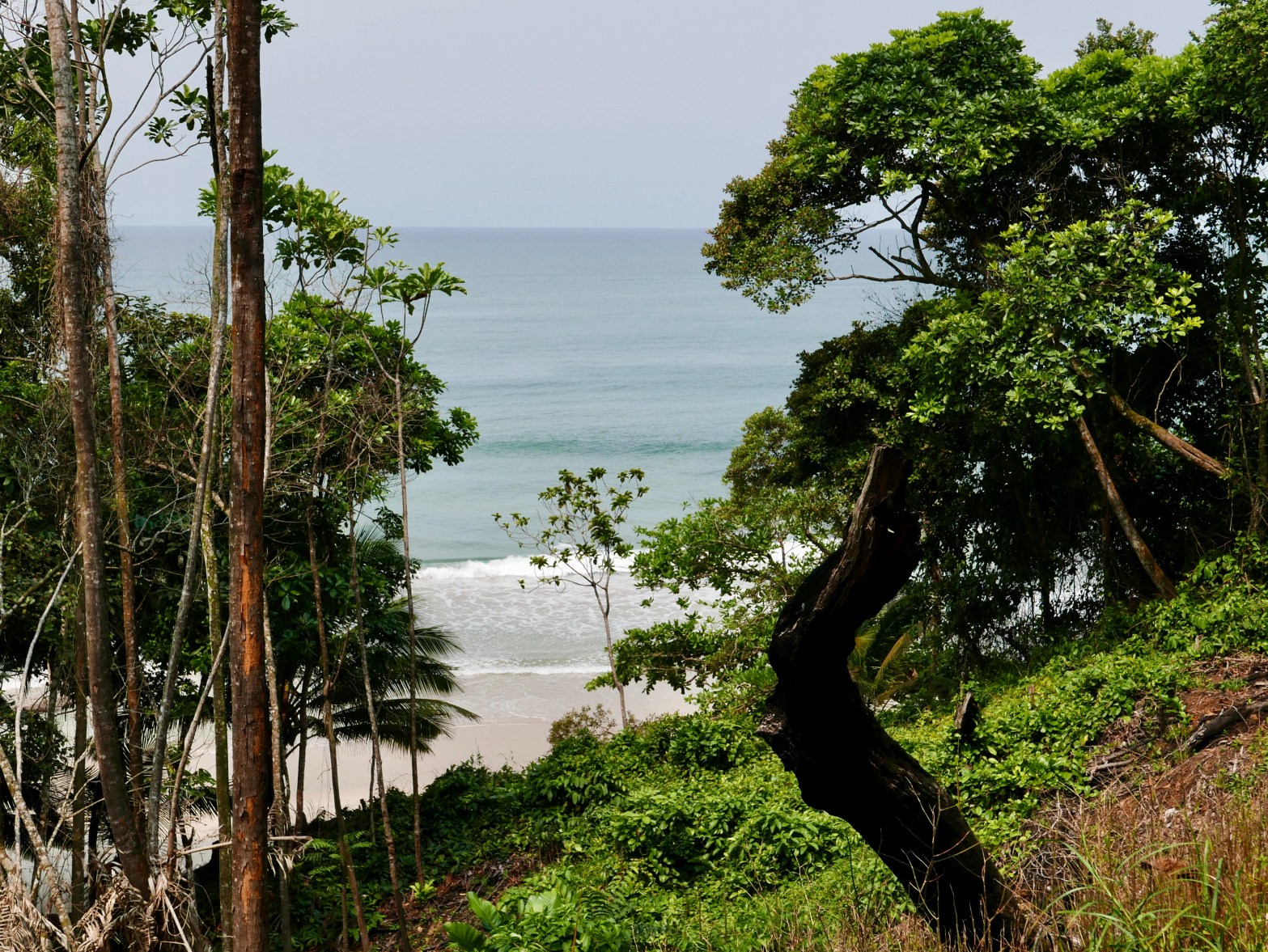
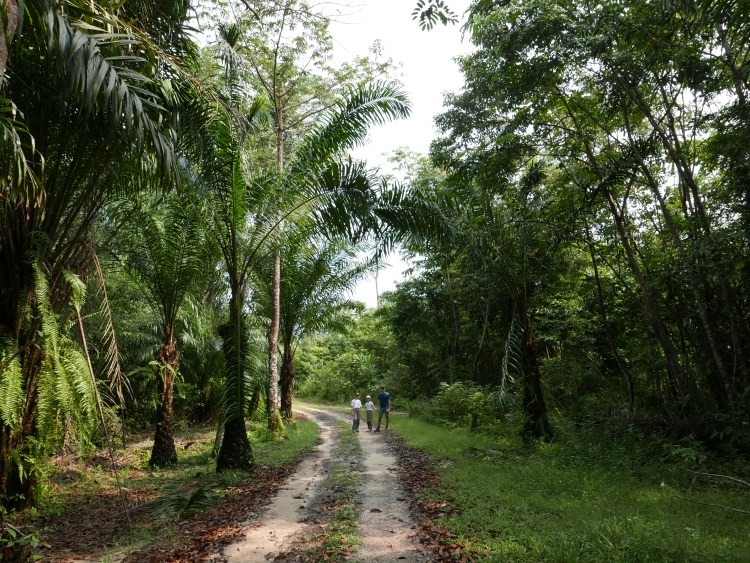
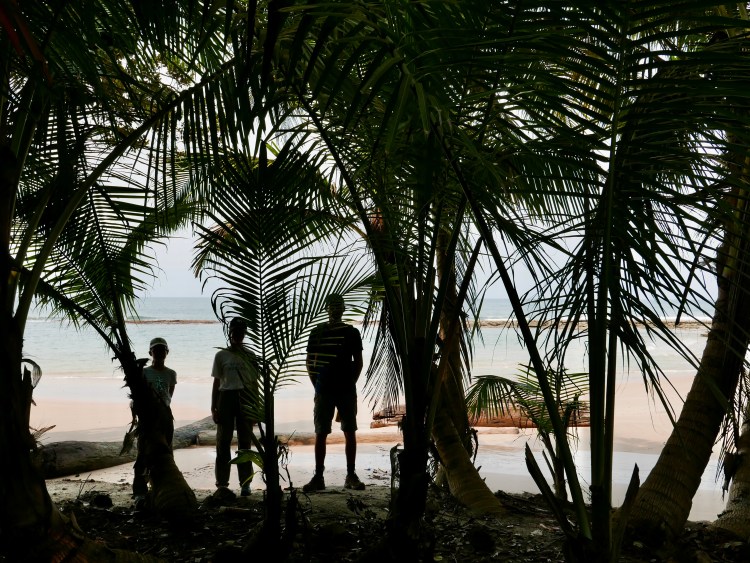
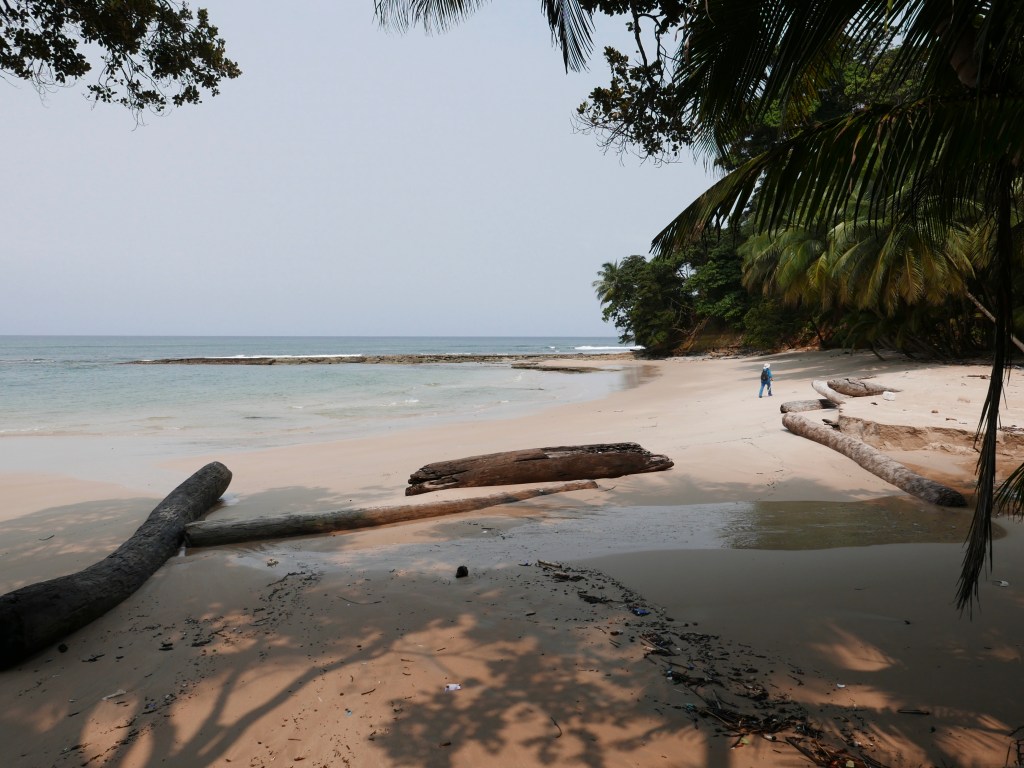
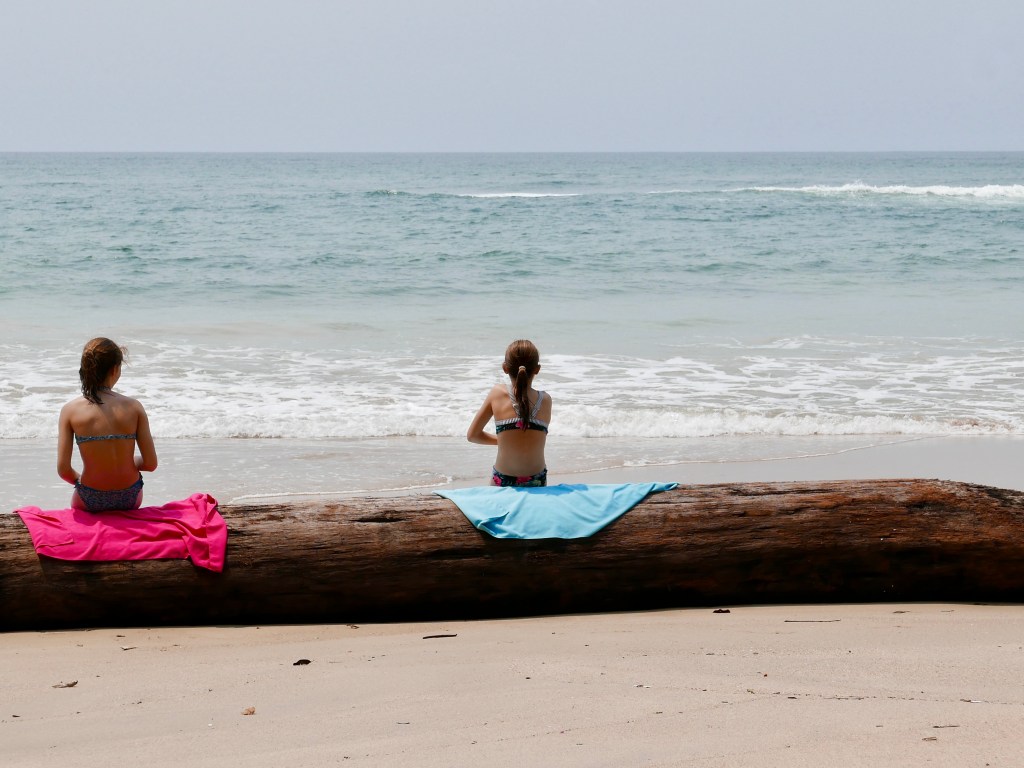
Last Sunday we took a walk with connoisseurs friends of the area around Cap Santa Clara and the arboretum, some 15 km North of Libreville. We get to the starting point through a very mean dirt and mud road. Then we walk 2 hours through the forest, until we reach a really beautiful – though plastic waste is never far – and completely deserted beach. The water is clean and ridiculously warm.

A picnic, a nap and another swim later, we start walking back, and very quickly we realise we should have taken much more drinking water with us. When we are not under the shade of the trees, the sun hits very hard and the temperature feels much closer to 40 than 30. We start looking like Astérix on the cover of “L’Odyssée”. We make it back to the car with some difficulties, and swear to ourselves that next time, we will bring at least 3 liters of water each!

Chez Madame Léonie

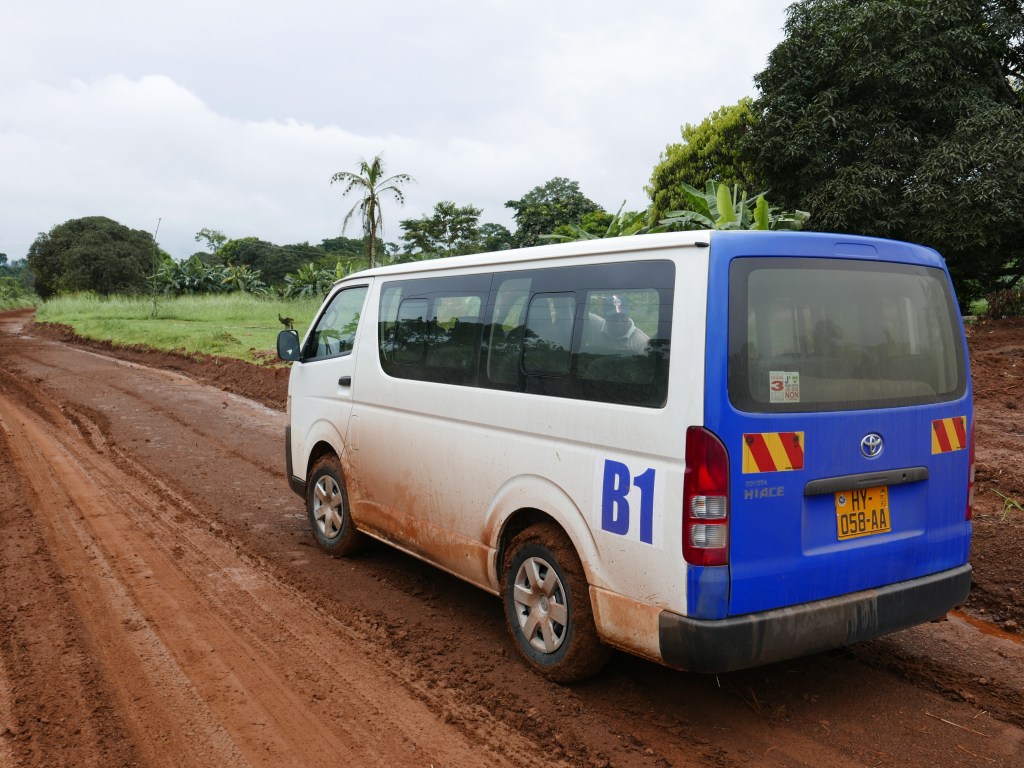
On a hot Friday morning, I am off with my friends from the Bienvenue à Libreville group to visit Madame Léonie’s plantation, some 50 km away from Libreville. And so we hop in a brand new and shiny Toyota Hiace minivan – 14 of us inside. It’s my first time on the notorious Route Nationale 1, which stretches from Libreville in the North to the Congolese border in the South. A portion of it was entirely destructed by the heavy rains in December, which caused major transportation and supply issues for some weeks in the country.

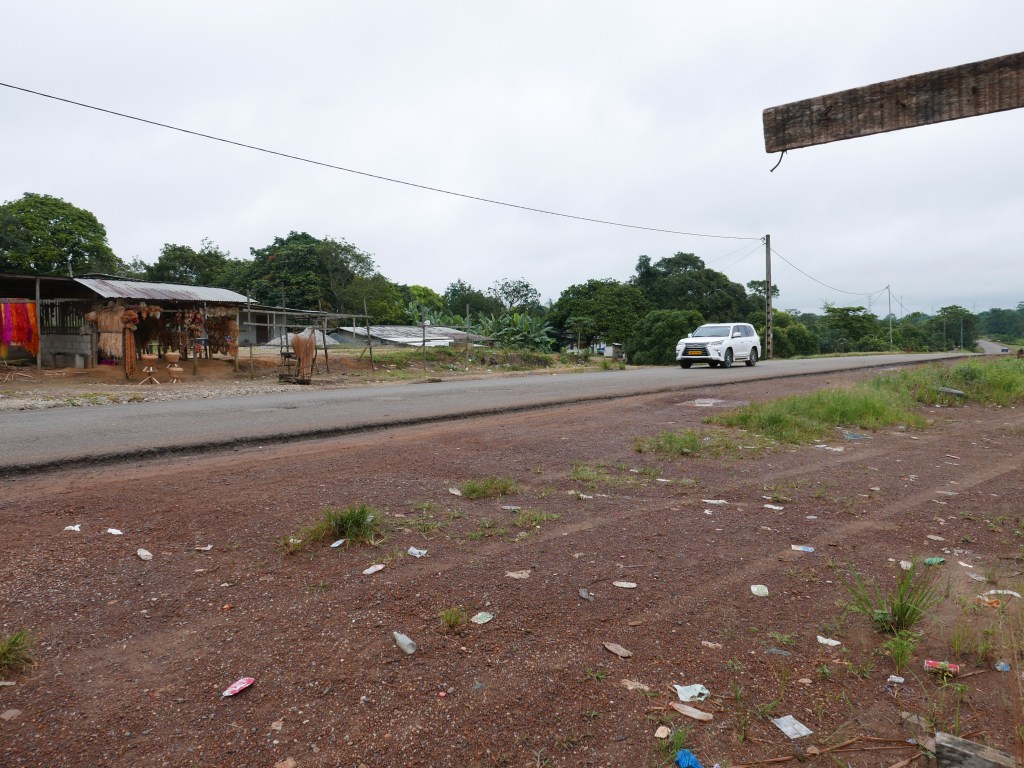
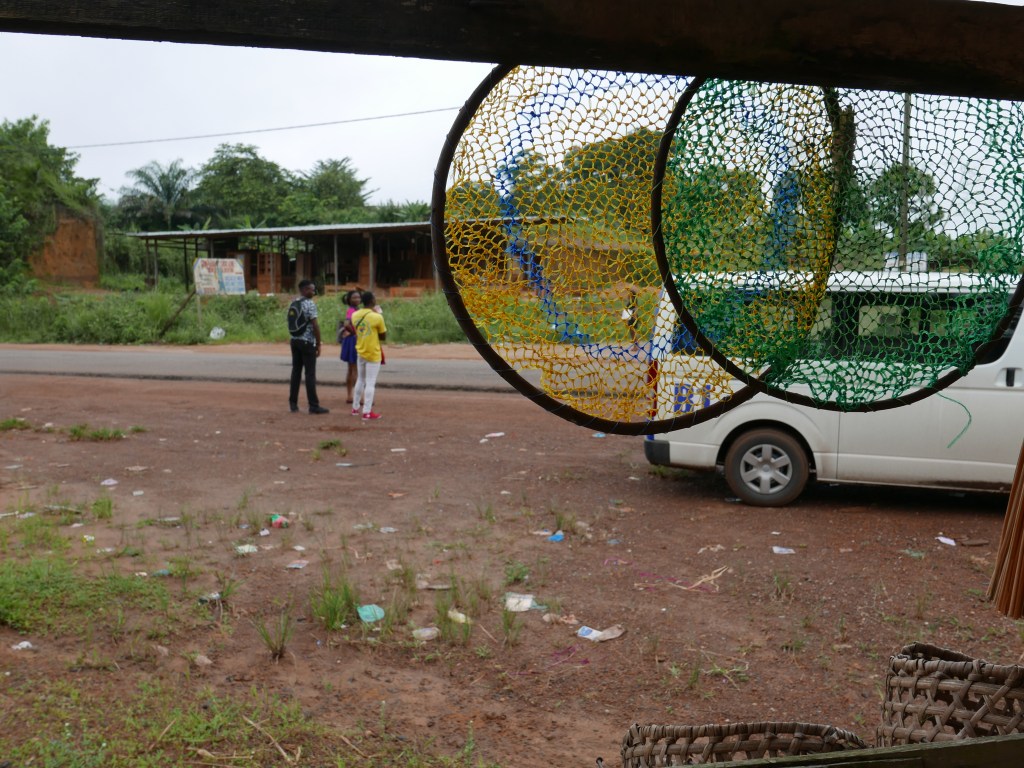
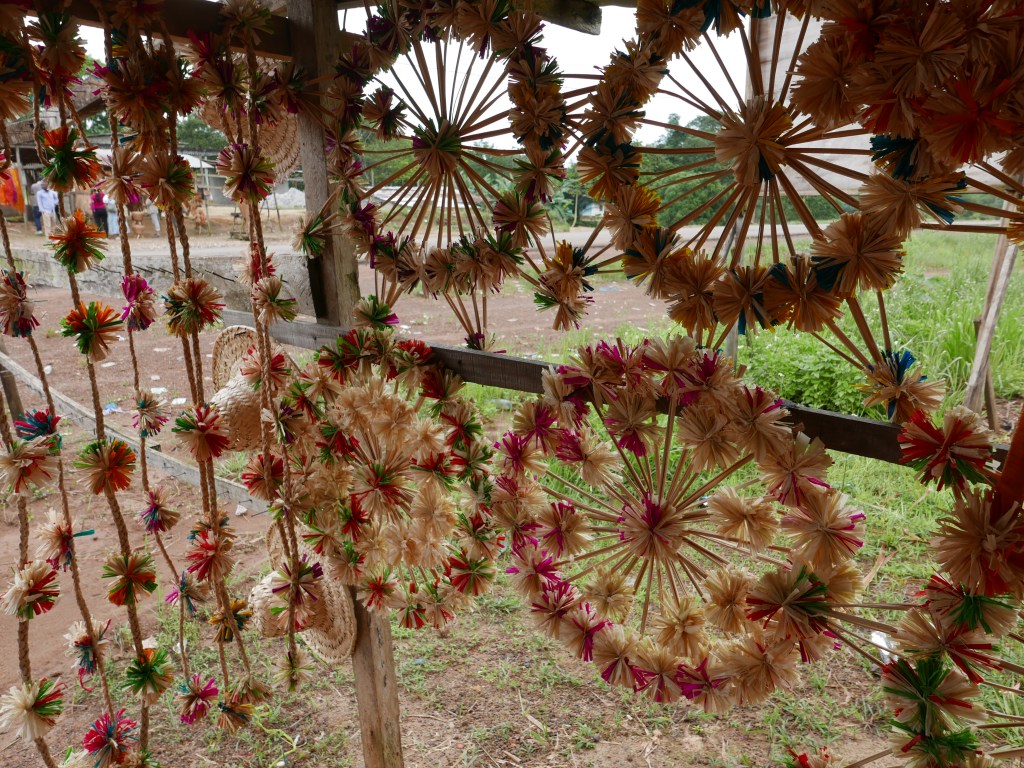
But fortunately, this first section of the RN1 road is still a proper road, with limited traffic except for the scarily giant wood trucks coming back at full speed and fully loaded from the forest. We stop on our way to see raffia craftsmen and women. Raffia is a palm tree from tropical Africa, which long leaves provide very strong fibers and can be used as natural strings or ropes, amongst others. Gabonese also use it for decoration at home and in traditional ceremonies as body ornaments.

Things start to get funny when we reach Ntoum and take the smaller road North to Cocobeach and Equatorial Guinea. Mud all over, giant puddles, pits and bumps, screams in the van especially when it is sliding out of control towards a pickup coming in the opposite direction, and which we miraculously avoid at the last second.

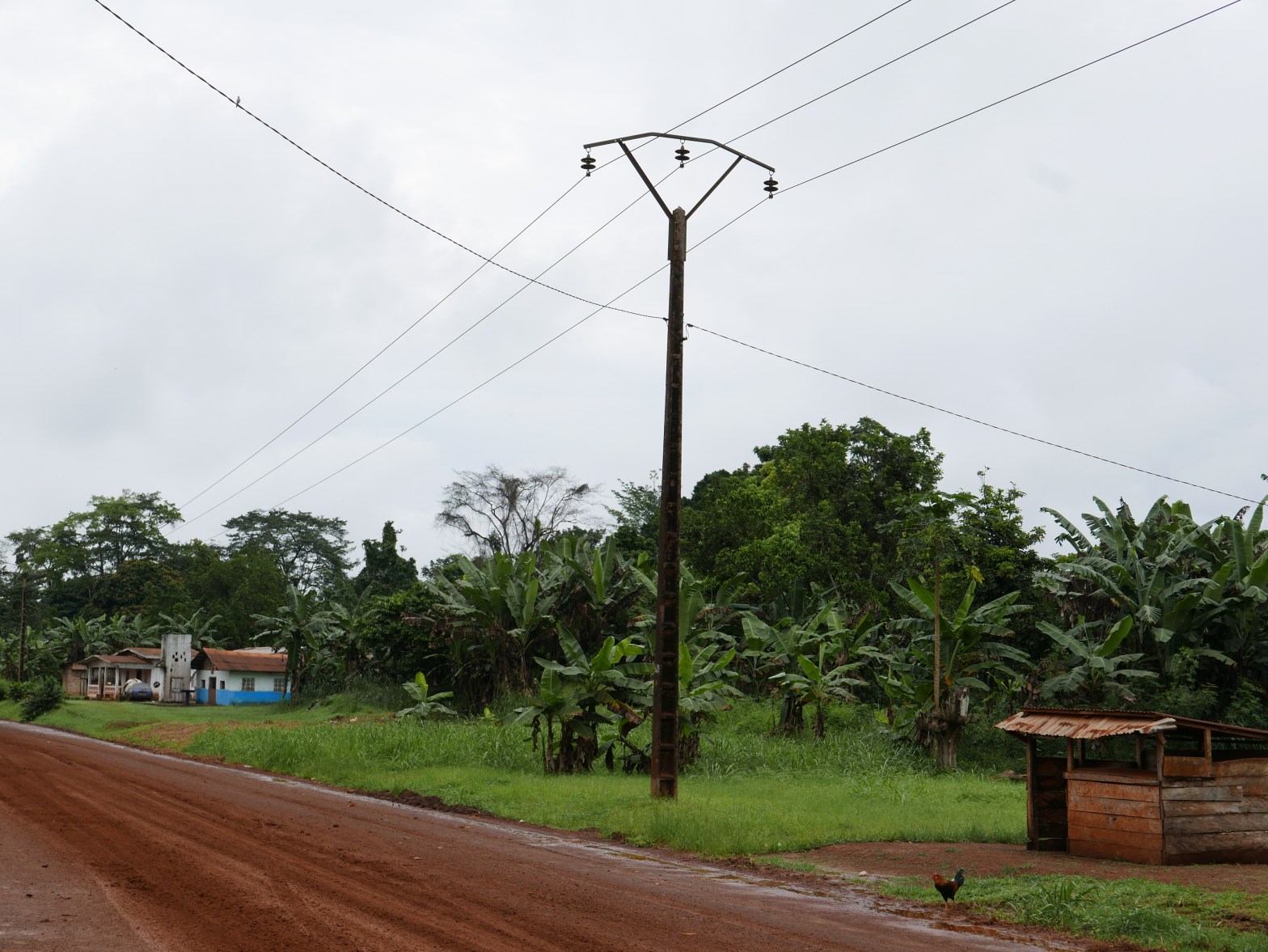
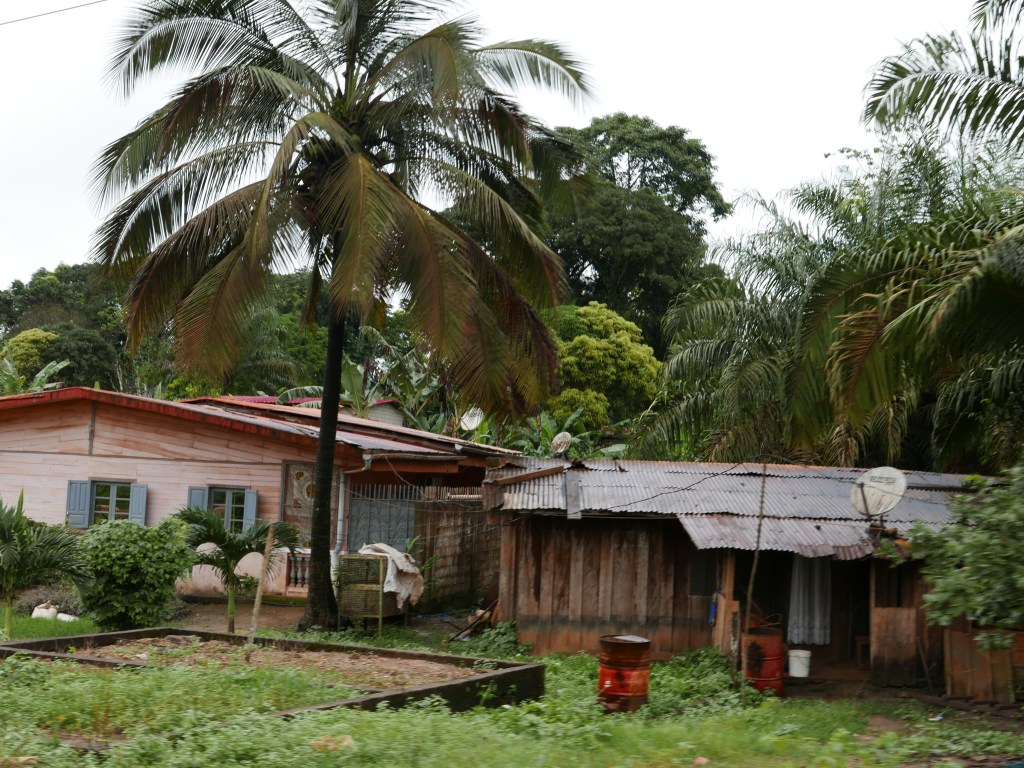
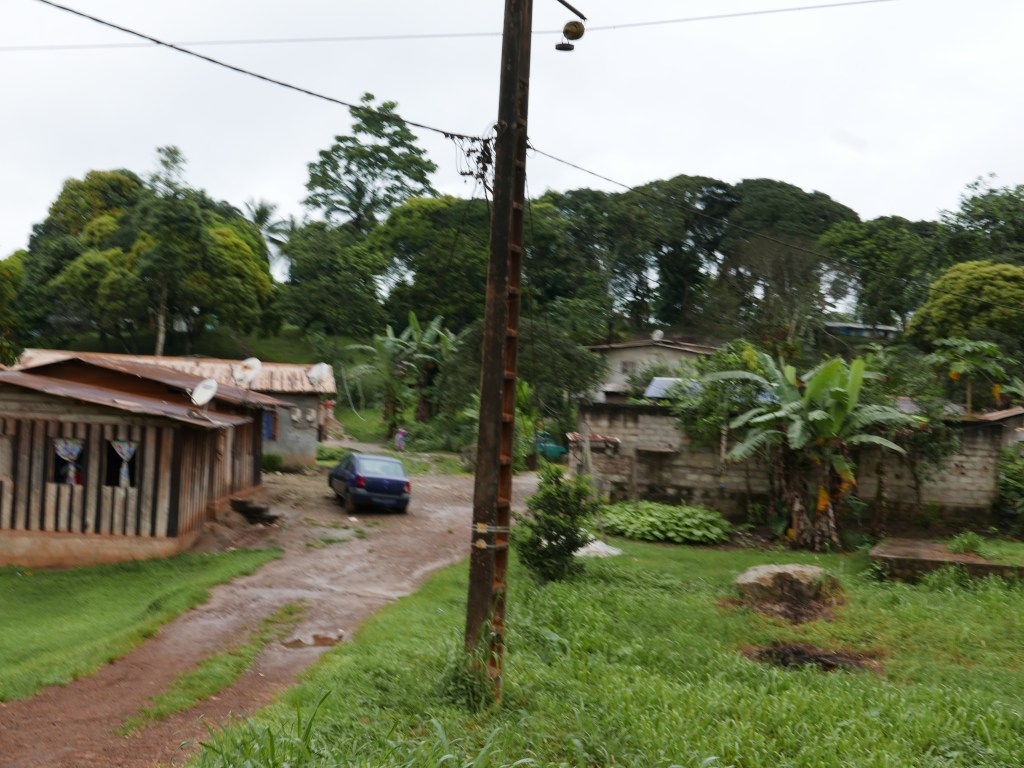
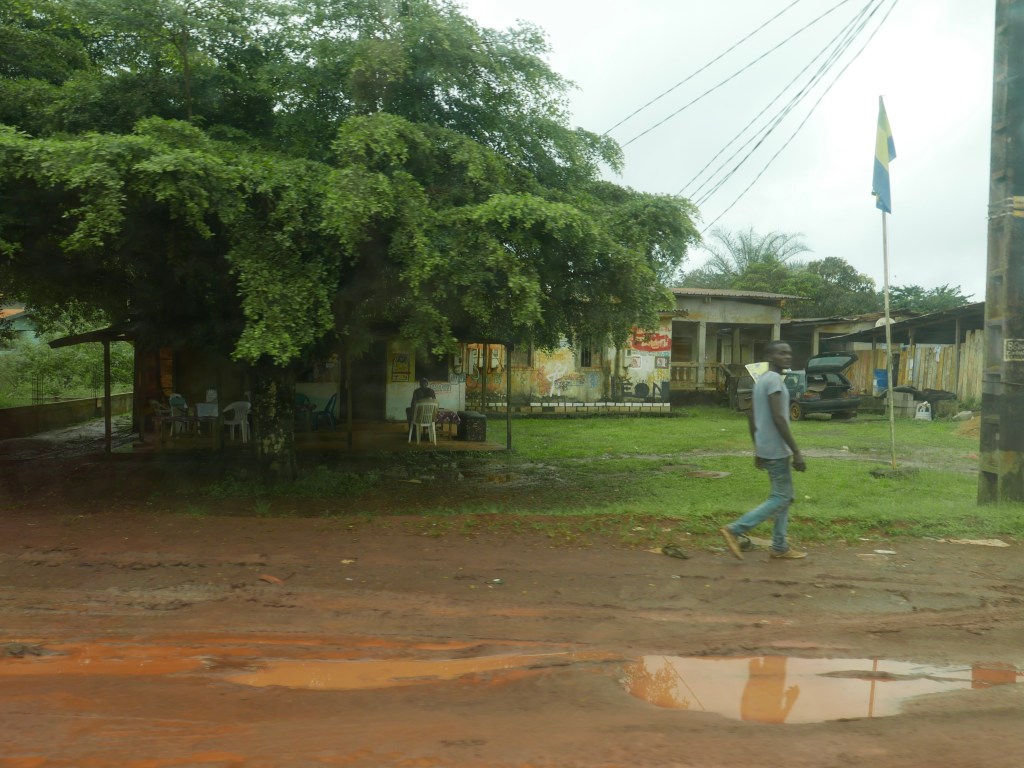
There are a few houses and people along that road, and we wonder how much they are cut off from the world in the rainy season, when water fully takes over the mud road.

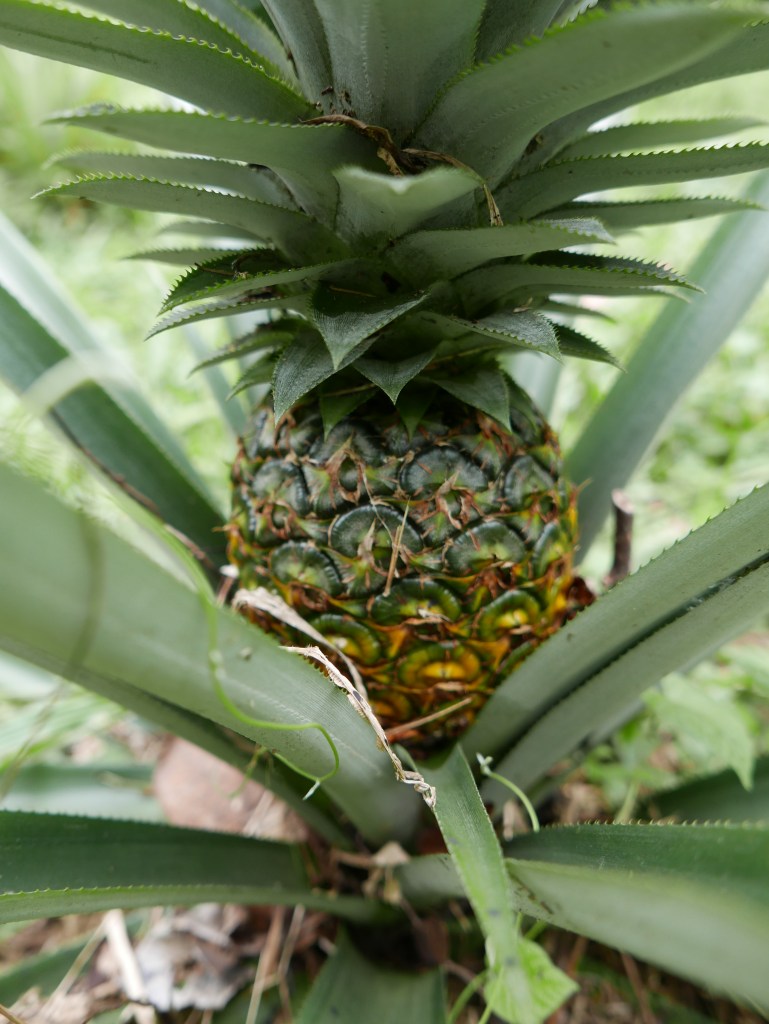
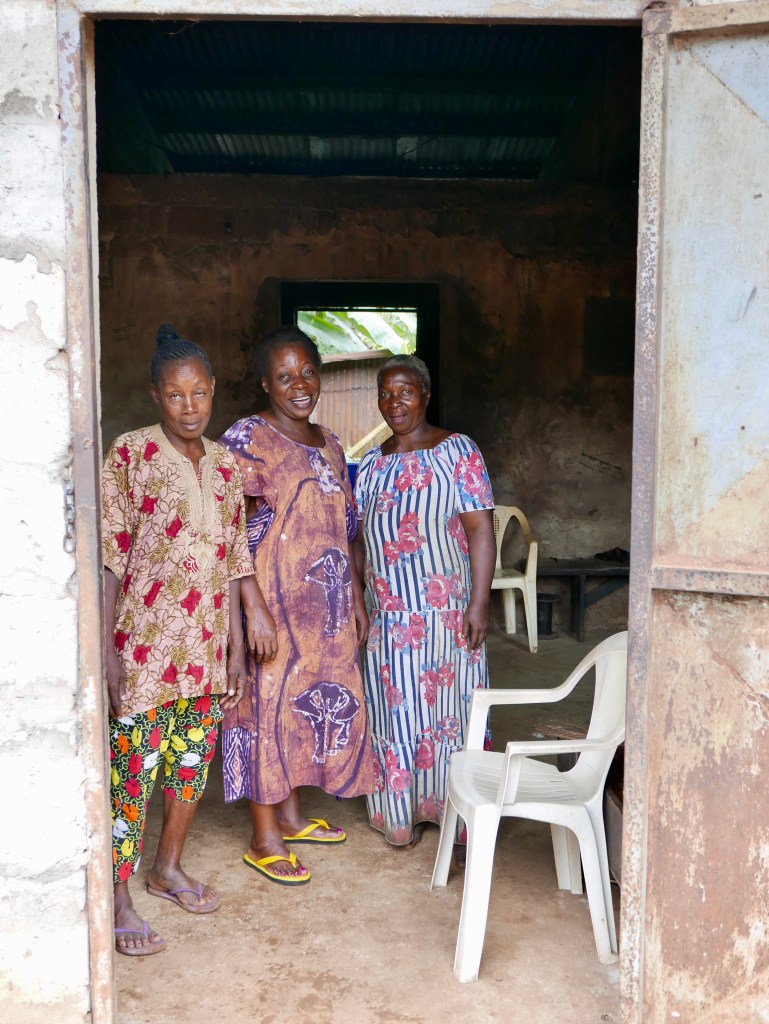
We reach Madame Léonie’s before noon. This elderly and energetic woman takes us around and told us all about the flowers, fruits and vegetables that grow in her big backyard and end up on Libreville stalls.

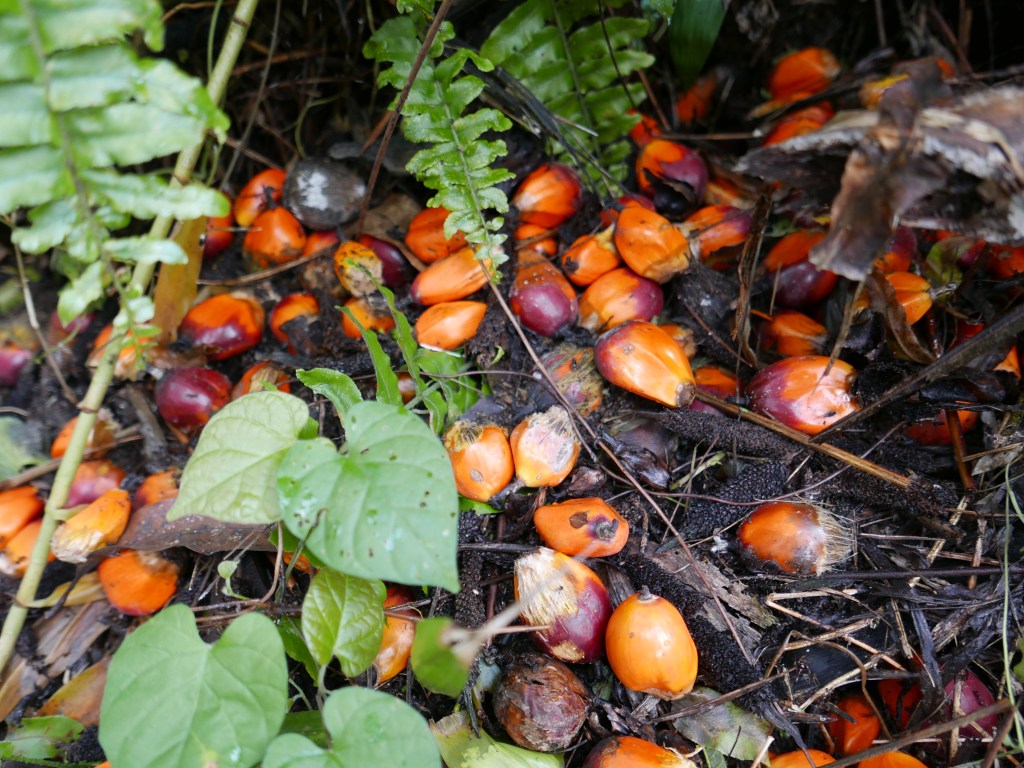
Just at that point when each of us is about to melt completely, our lives are saved by a round of Régab beers. Then we have a wonderful lunch, with smoked fish and nyembwe chicken, the national Gabonese dish – smoked chicken in a palm nut dough. Mmm.

The brand new but not shiny anymore minivan takes another mud bath on the road back to Libreville. We all notice dozens of tiny red bites over our arms and legs. A knowledgeable friend says this is the signature of the fourous, insects so small they are almost invisible. They bite and leave you feeling nothing in the first place.

Back home, I am so tired I can hardly hold a pass me the salt conversation with my girls… I sleep ten and a half hours in a row. Well, almost in a row: at 2 o’clock in the morning, the red bites start itching like crazy! This lasts a couple of hours, then disappears as suddenly as it came. Fourou power!

Thomas

Tenue correcte exigée / Gabonese dress code

Je me rends à la Caisse Nationale de Sécurité Sociale. Le personnel de la réception m’indique que je dois monter au bureau 502. Me voici donc face à l’agent de sécurité, devant l’ascenseur :

“Bonjour Monsieur, je vais au bureau 502. – Monsieur, vous ne pouvez pas passer. – Et pourquoi ? – Parce que vous portez une culotte.”

Je comprends qu’il désigne mon bermuda, que j’ai enfilé ce matin comme tous les matins depuis 5 mois sans réfléchir. Je scrute les murs autour de moi.

“Mais il n’est écrit nulle part que l’on ne peut pas rentrer en culotte. – C’est pour ça que je suis là, Monsieur, c’est moi qui connaît les règles. Revenez un autre jour, correctement habillé, et je vous laisserai passer”.

Yesterday morning, at the Social Security Office. The reception staff tells me I need to go to desk 502. Here I am, facing the security officer in front of the lift :

“Hello Sir, I am going to desk 502. – Sir, you cannot enter. – And why is that? – Because you are wearing shorts.”

This morning, like every single morning for 5 months now, I indeed slipped in my shorts without even noticing it. I look at all the papers stuck on the walls around me.

“But it’s nowhere written that I cannot enter in shorts. – That is why I am here, Sir. I am the one who knows the rules. Come back next week, properly dressed, and I will let you through.”

Let it snow

A couple of weeks ago, I had to laugh out loud by myself when I entered my favourite supermarket, in shorts, a T-shirt and all sweaty as usual: I was greeted by a Christmas tree, its garlands and artificial snow flakes. Since then, the Christmas fever has taken over the main city shops and restaurants, cashiers and waiters sport a red Santa hat, while Frankie Sinatra keeps singing merrily “Letitsnowletitsnowletitsnow!” under a palm tree to the street market sellers.

It does not work yet for us. We are doing lots of efforts but it’s our first December here, and we cannot really feel Christmas in our hearts. The Advent calendar that we bought for our daughters needs to be kept in the fridge otherwise the chocolate would melt within minutes. Give us cold and rain and grey skies!

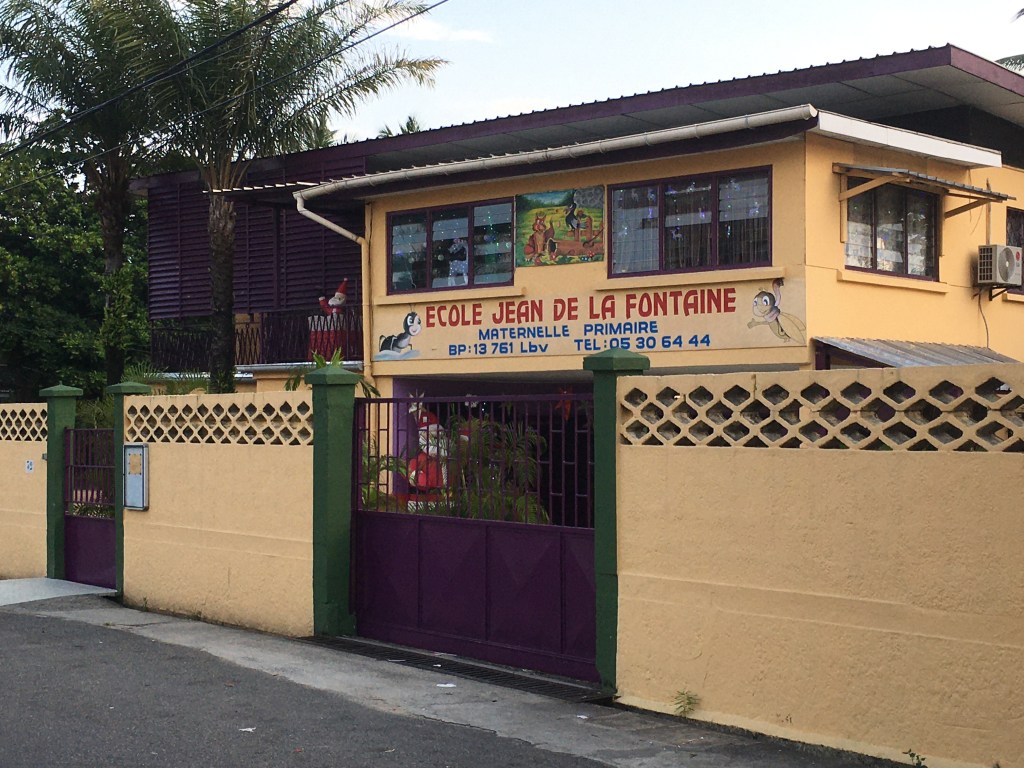
Still, let’s admit it, these school Santa Clauses may feel a bit lost, but they look happy.

Joyeux Noël !

Design a site like this with WordPress.com
Get started