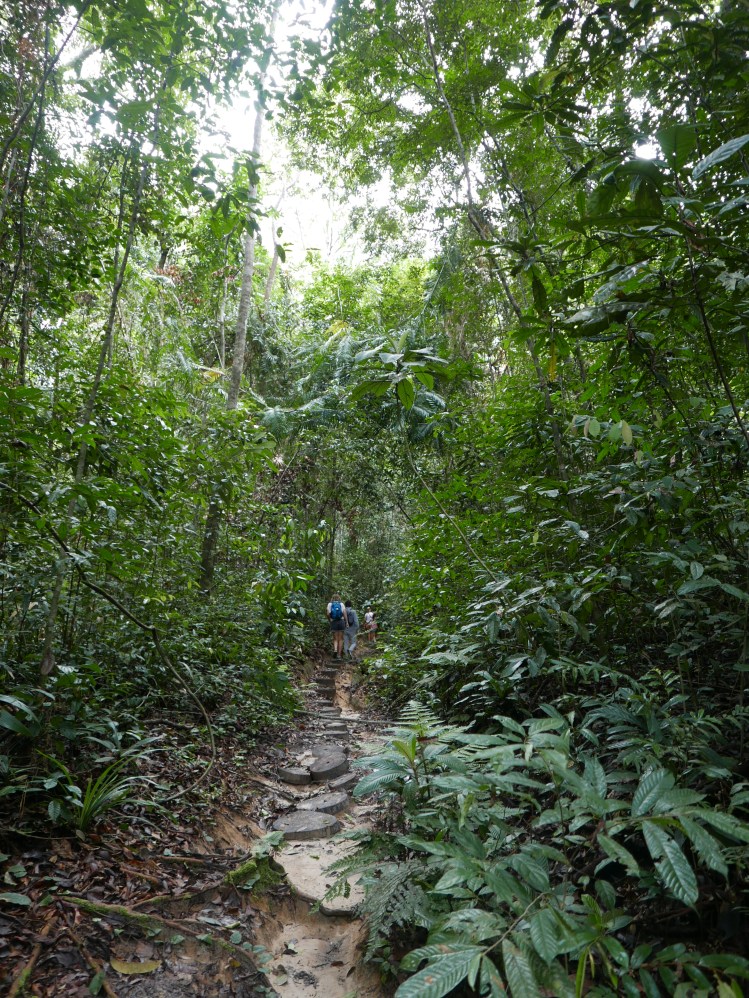
Taxi!

We have been living in Libreville for almost 4 months now, getting around every day, and so far we have only seen 1 city bus. Seriously: 1 bus with 50 seats at best, for 700 or 800 thousand inhabitants. In short, public transport does not exist here.

Back in September, we ordered a new car from a local dealer. Its delivery has been delayed since the customs have been on strike for a while. We have not considered renting a car in the meantime, it’s simply too expensive and without real full insurance.

But 1 out of 4 cars is a taxi. Out of pure necessity, we have therefore become very experienced Libreville taxi riders, which is a rare attribute amongst Europeans living here. And by now, we like taking taxis. It’s fun, and it’s the best way to get the pulse of the city. Until we finalize the Definitive Libreville Taxi User Guide, which we are sure at least 12 people may be interested in, here are some first insider tips:

How to recognize them? By their color.

White and red is for Libreville, white and green is for Akanda (Northern suburbs), white and purple is for Owendo (Southern suburbs). Regardless of these colors, they can take you anywhere. There are also “clandos” (clandestine) taxis moving around, but as a foreigner it’s advisable not to take them.
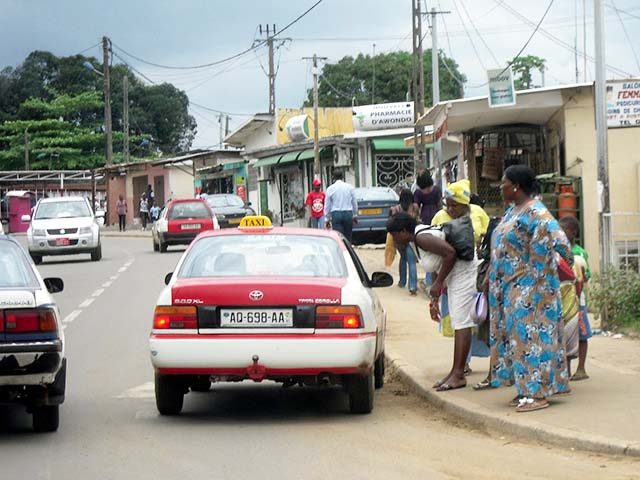
How does it work? By some sort of miracle.

Each street has an unmarked spot at which people stand and flag taxis – if you stand outside of this spot trying to bypass other passengers, you will make enemies. Once you’re in place, just take your thumb out, and within maximum 2 minutes a taxi will slow down towards you and the (sometimes many) other people waiting.

From then on, you have to shout as fast and loud as possible your price and destination: 1500 Sablière! 1000 M’bolo! 500 montée de Louis! There is absolutely no time for negotiation, you need to know the price of this perfectly auto-regulated market – around 1000 CFA francs (1,5 euro) for 4 km, with variations depending on the time of the day and the weather outside (that means you should propose more if it’s peak hour and raining).

Then, the driver makes the final decision to take you on board or not. It all depends on how many passengers he already has in his car, and where he already has promised to take each of them. If your destination fits into his overall itinerary, and he likes your price, then he honks – that means jump in. Of course, you stand a much higher chance to succeed if the taxi is empty.

If it does not work for him, the driver just looks straight ahead and drives away – most often making a chipping noise with his mouth. At first, we felt totally offended when this happened, how dare he treat us like that? But now we understand that drivers have no time for manners nor politeness, and it’s all right.

Never ever accept to get into a taxi that already has 5 passengers, or you may get into serious trouble with the police.

Who is in them? Everyone.

Taxi drivers are usually foreigners, mostly coming from Ivory Coast, Burkina Faso, Mali or Togo. As for passengers, it’s a big melting pot of students, workers, businessmen or women, mums with their little children… Each ride is unique and you’re always in for a surprise! Sometimes, the radio works, so the atmosphere will be the news of the excellent RFI (Radio France International) or music from the driver’s country of origin, stored on an old USB key. Asking details about the music is the best way to engage an interesting conversation with the driver.

What are they like on the outside? Wrecks on wheels.

All taxis are Toyota, without any single exception, with a predominance of 6th and 7th generation Corolla and 4thgeneration Carina. Basically, it means the newer Libreville taxis have been on roads for 25 years. But these are Toyotas, so even though they look like they are about to fall apart from the outside, they don’t fall apart. Still, opening any door is all crackle and rattle.

And on the inside? Like something you’ve never seen before – former Toyota colleagues would call it a crime scene.

Seats are often ripped open, when they are not covered by a thick layer of transparent plastic that sticks to your sweaty skin, or a super furry carpet that keeps you far too warm. Wire and cables can come out of everywhere on and around the dashboard, looking like can worms at the back of the black central hole were a radio once was.

Drivers are stopped and controlled everyday by the police and they need to ensure that the front passenger / mother-in-law’s seatbelt can be effectively fastened. So, you just take this disheveled thread of braided rope, being careful it does not touch your skin too much, and you buckle it up – most of the time with the help of the driver. There are no rear seatbelts.

The orange dials behind the steering wheel simply do not operate, they are stuck at zero. You will never be able to know how fast you’re going, but it does not really matter since there are no speed limits in Gabon.

The default position of the windows is down, or half-down. Depending on the weather, the crazy idea to close it may cross you. In that case, here are the possible scenarios:

  1. the manual handle is totally broken or missing – most likely
  2. all manual handles are missing but the driver can pass 1 handle around, so passengers can wind up the windows one after the other – likely and effective
  3. the driver needs to get out of the car and manually pulls up the window for your comfort – likely and ineffective
  4. the manual handle or automatic window switch works – very unlikely

A good tip is to always carry a plastic bag with you, so that you can hold it out by the window as a means of protection against tropical rain. As for the driver, they usually have a holed T-shirt or an overused cloth at hand by the gearshift, to clean the inside of the windshield and improve visibility, as windshield wipers are either absent or making things worse. This cloth can also be handed around for passengers to dry their rainy seats. We promised never to touch this cloth, rather sitting in a puddle throughout the ride.

Rain or shine or wind, after your taxi ride, your hair anyhow looks like a haystack. Depending on its orientation, one can tell if you have been sitting on the left or right side of the car. Locals do not have this problem – most men have very short hair, and a lot of women wear wigs.

But.. air conditioning? Of course we know what it is. We have heard about it.

How do they drive? The Driver only knows.

How do you get out? Take your hand out of the window.

Since there is most often no inside door handle, you need to open the door from the outside, while still sitting inside the taxi. In the back, only the right door opens (for security, which is really well thought of), so when you have arrived, you’ll need to ask passengers on your right to get out first and let you out.

Congratulations! You’ve safely reached your destination!

Fruzsi & Thomas
Who’s your daddy?

I had always told my daughters that one of the best things about being a father is to be called Papa, and to know that they are the only 2 persons in the world who can call me so. That was before we arrived in Africa.

It took me quite a while to realise that a lot of these taxi drivers, women behind the counter, or these random people with whom I started to chat were calling me Papa, for real. Papa here, Papa there, Papa everywhere. Funny!

I am not sure yet what qualifies you to be called Papa. There surely is some element of age – any man with a bit of grey hair or few hair left or a combination of both (like me) is a Papa. But I also saw teenagers receiving this title. My guess is that it’s mostly a matter of looking just responsible enough for yourself.

Anyhow, I like it because I feel it’s a mark of respect, a sort of token of welcome into the big African family, if such thing exists. No situation can go wrong when you’re talking with someone who tells you that you’re his Daddy.

Ah, and it works for ladies too, of course! Any young girl or woman selling on the street or at the market is a Maman. Even Milla, who’s 12, was called Maman last weekend at the marathon.

Thomas
Le Marathon du Gabon

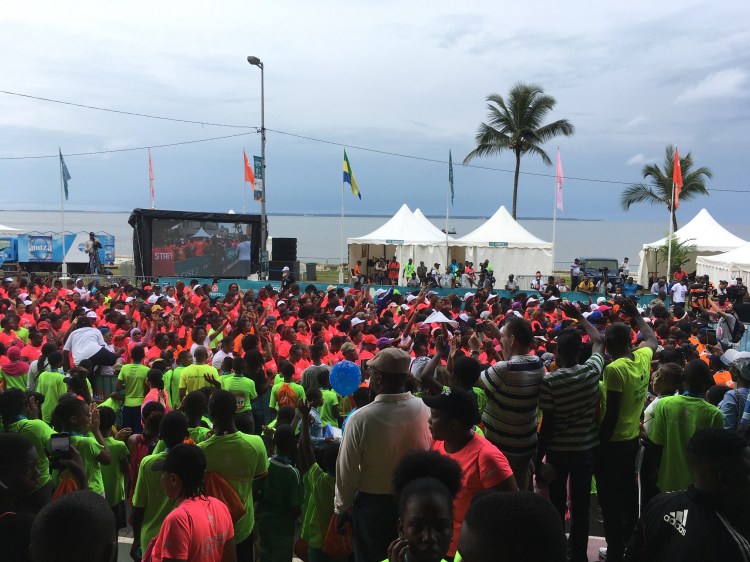
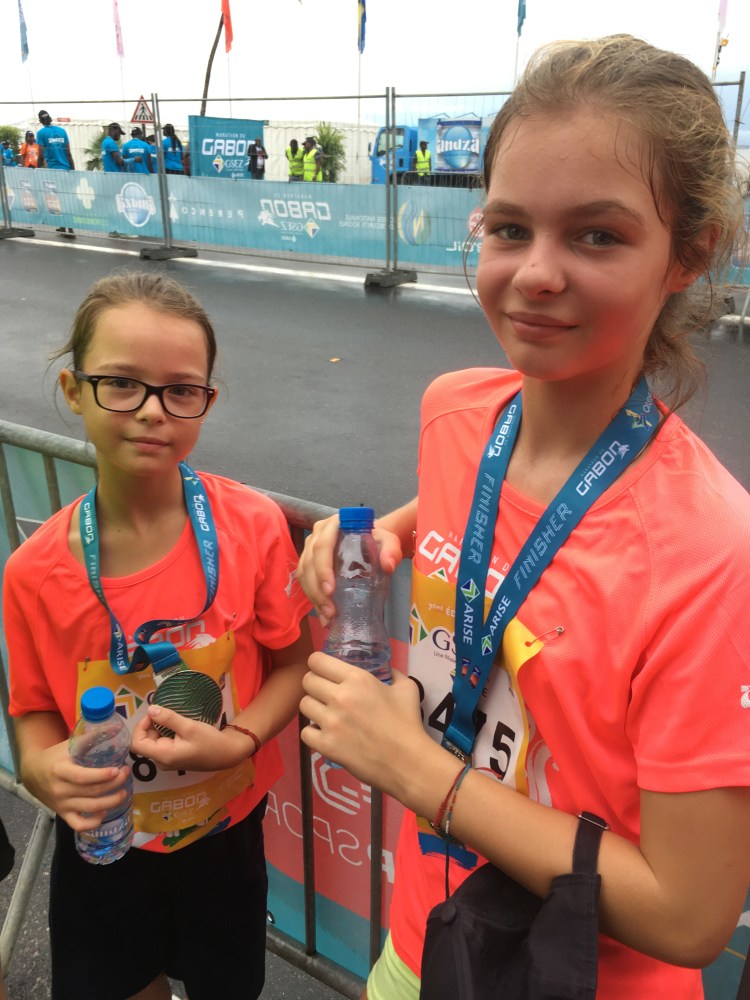
Ce week-end nous avons participé en famille au Marathon du Gabon, l’événement majeur de cette fin d’année à Libreville. Nous ne sommes pas une famille de grands marathoniens et avons donc couru des épreuves à notre portée : 1,5 km pour les filles, 5 km pour Fruzsi et 10 km pour moi. Super ambiance festive au départ, des coureurs et des coureuses partout, des supporters au rendez-vous dans la tribune officielle, et la musique à fond pour motiver les troupes !

Au quatrième kilomètre, le boulevard Triomphal commence à monter sournoisement. Le soleil tape sur la moitié droite de mon visage. La moitié des participants est déjà passé à la marche. Mon allure est ridicule mais je ne m’arrête pas. Et puis, il y a enfin le rond-point de la Démocratie et son point de ravitaillement, le premier de la course. Les tables garnies de bouteilles d’eau et de quartiers d’orange sont prises d’assaut et les 10 premières s’écroulent sous l’emballement des coureurs assoiffés et incontrôlables. J’attrape deux bouteilles au vol, croque un quartier, puis les pompiers m’arrosent d’eau de la tête aux pieds et je repars dans l’autre sens, en descente, presque rafraîchi.

Il faudrait qu’un jour des experts se penchent sur l’incidence du climat sur la performance des Européens plutôt du Nord que nous sommes dans ce genre d’événement sportif. A combien de kilomètres européens sont équivalents 5 ou 10 km parcourus à zéro degré de latitude, sous 28 degrés et 90% d’humidité ? Après la simple satisfaction d’avoir passé la ligne d’arrivée (et pour moi en particulier le soulagement d’être arrivé quelques minutes avant le premier du semi-marathon :-), on se prend à rêver qu’après avoir couru 5 ou 10 km sans s’arrêter dans ces conditions tropicales, on pourrait peut-être courir facilement un semi-marathon en Europe…

Il y a des médailles pour tout le monde à l’arrivée..

Quoiqu’il en soit pour nous pauvres amateurs, la performance des gagnants de chaque compétition est impressionnante. A pied sur le chemin du retour à la maison, je croise le trio de tête du marathon – 3 Kenyans bien sûr, qui semblent planer à quelques centimètres au-dessus du sol, comme étrangers à la sueur.

Et ça remet bien les idées en place de voir des participants prendre le départ en Converse, ou finir le semi-marathon pieds nus sur le bitume tellement ils ont mal dans leurs chaussures à semelle de 5 mm… ici on fait avec les moyens du bord, loin de la surenchère dans l’équipement qui prévaut parfois de par chez nous.

Thomas
Nyonyé

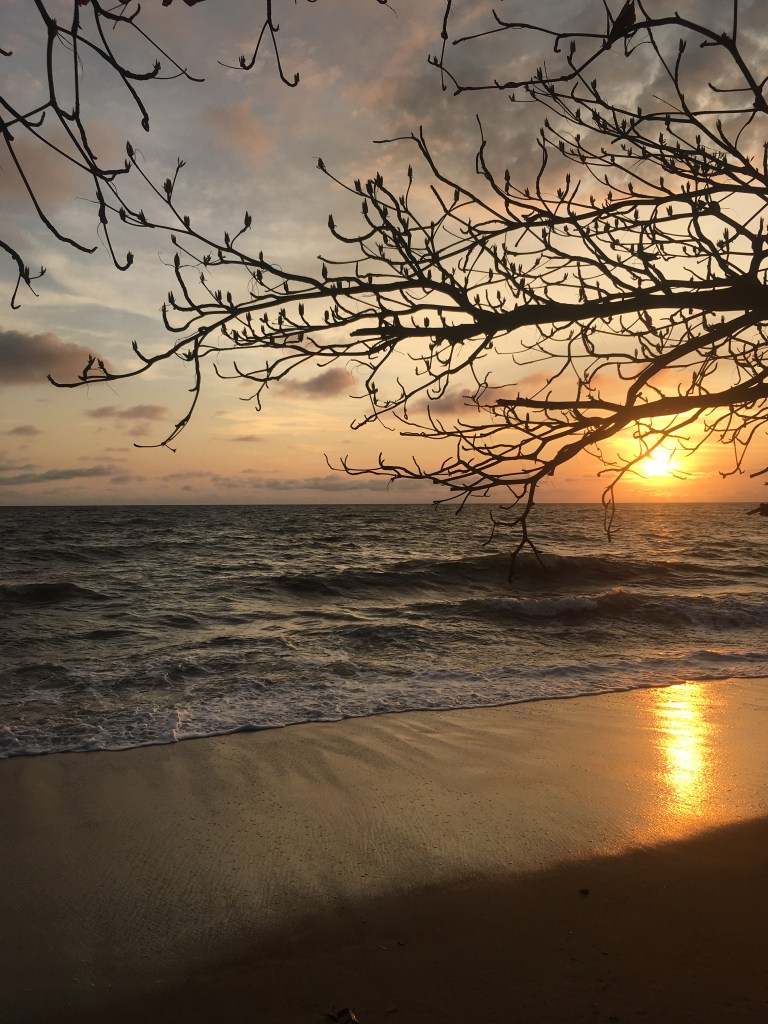
We spent an amazing weekend on the other side of the estuary where the water and the beach is clear and the forest is full of animals. The area is called Nyonyé and Beti, a Frenchman created a host-spot in a paradisiac environment next to a village to kill 3 flies with a stone: employing locals, giving himself a job and enjoying life. It’s a very well thought and affordable safari/relax package. First you start with taking a speedboat early Saturday morning for an hour. As the boat is not covered, we got half lucky, as we only got soaked during the first 30 minutes with horizontal pouring rain in the face. Approaching the mangrove the sky cleared and the sun dried us very quickly.

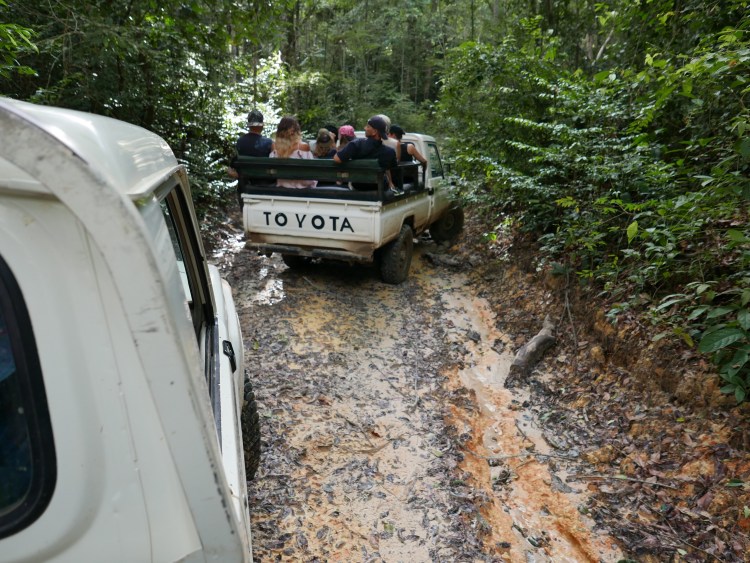
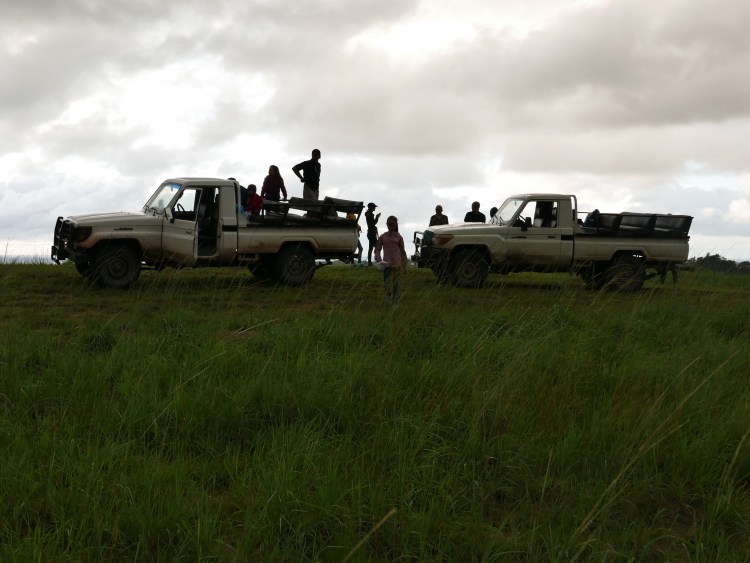
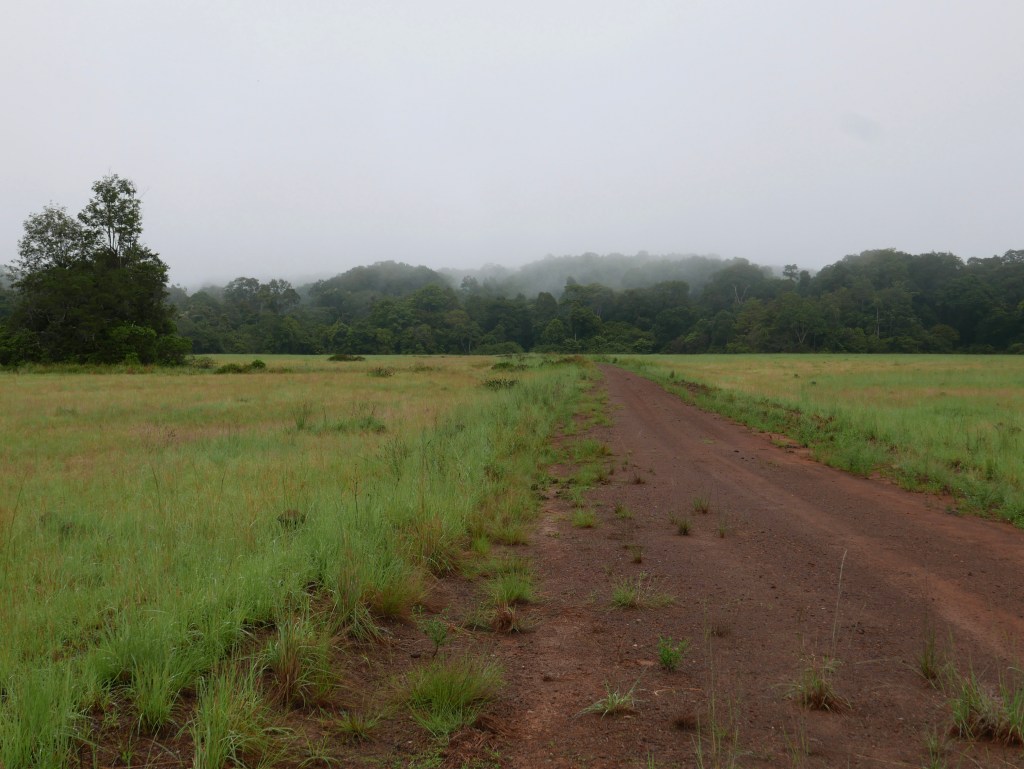
A real pleasure in Gabon that whatever happens to you, you can be 100% sure that you are never cold. The 6 families on 2 boats arriving at the same time were then loaded into 2 open jeeps with the drinks and food for the weekend. The fun safari ride already started on the deep, muddy dirt road through the rainforest and green savannah to reach the village.

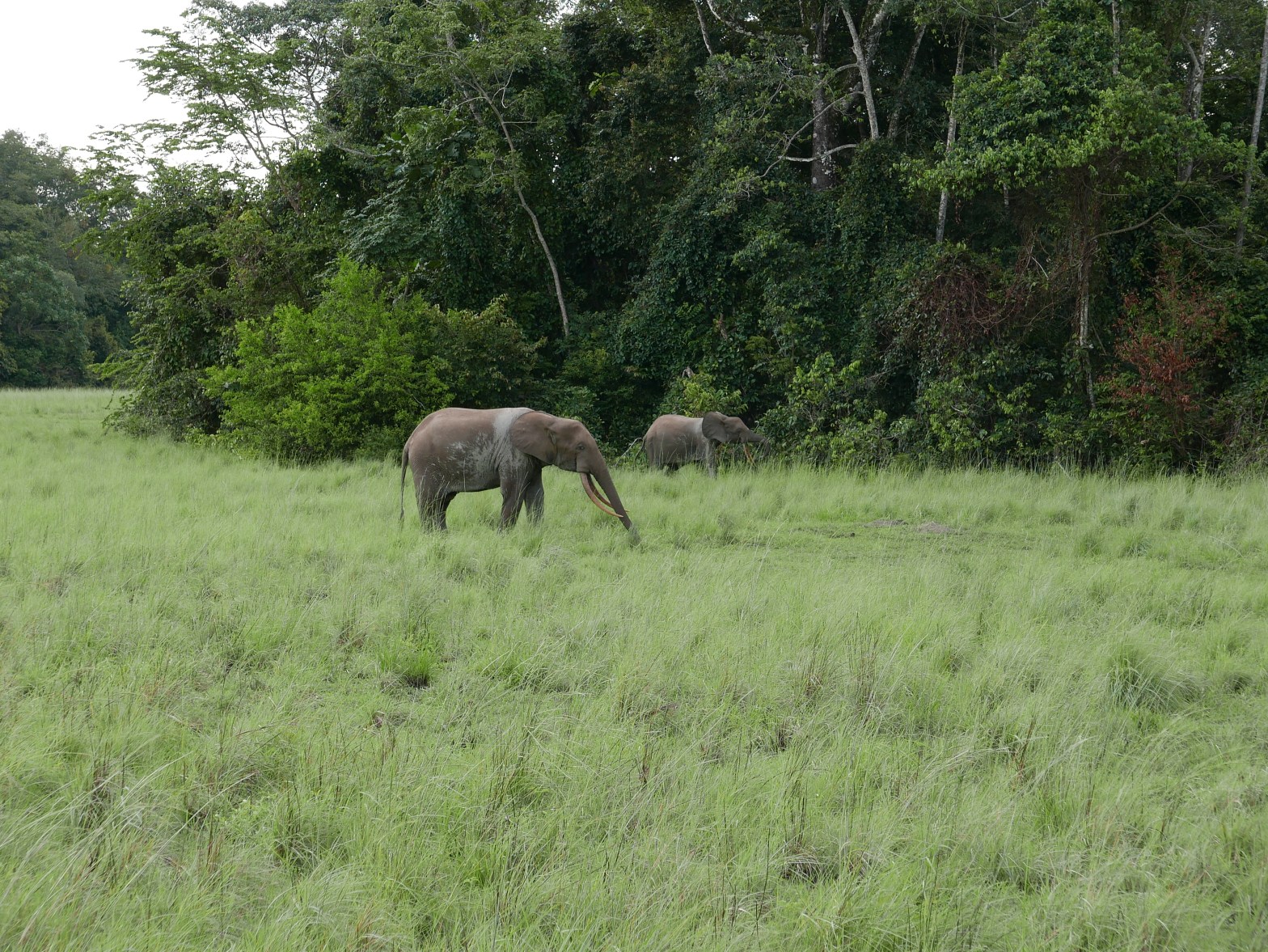
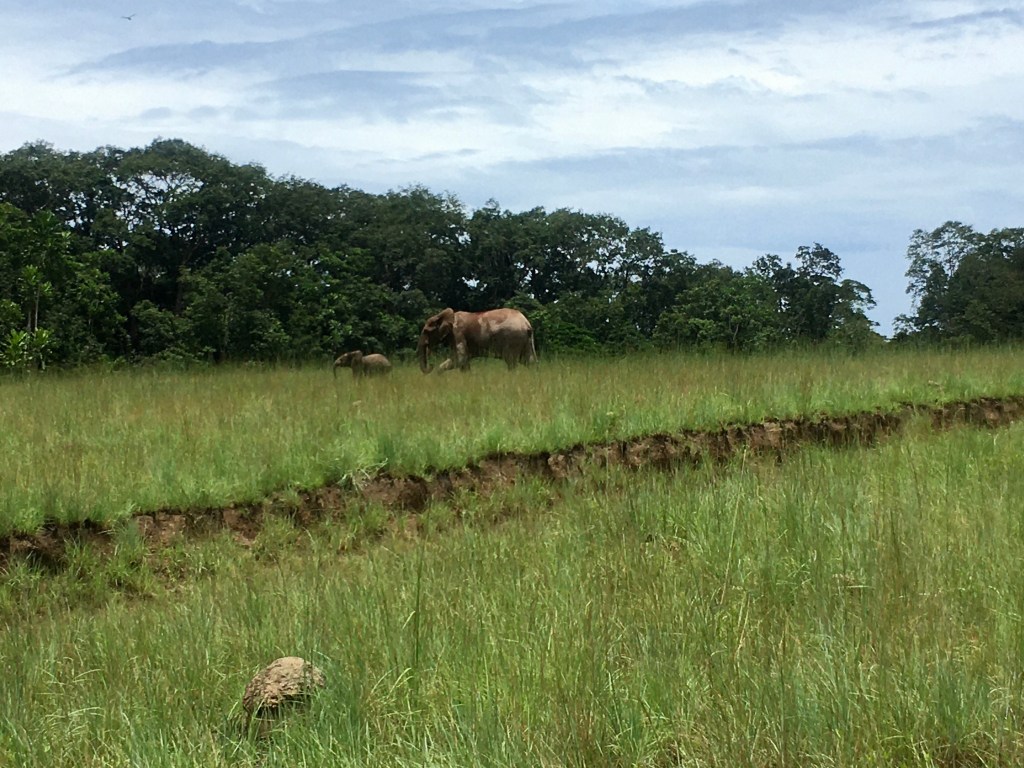
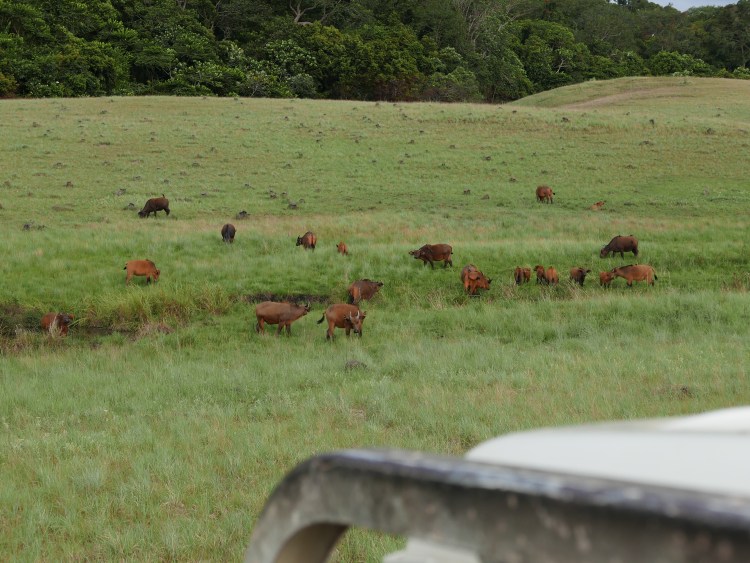
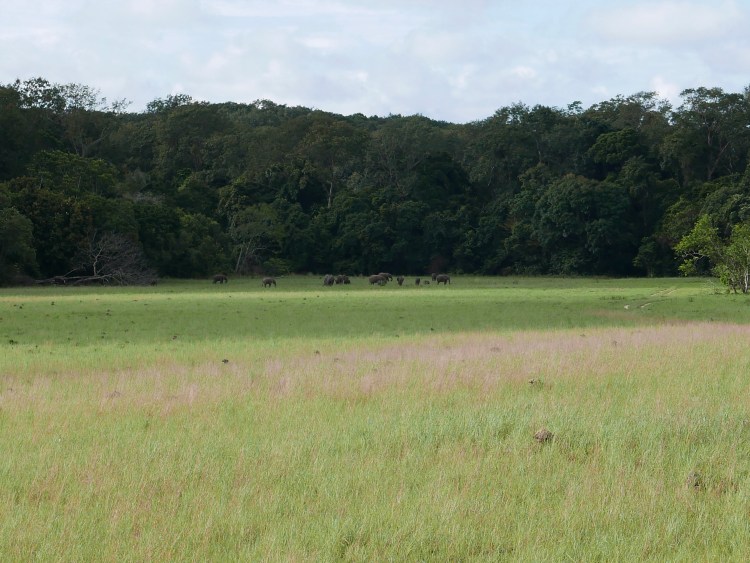
It was like being on an eco-rollercoaster with fresh air. The chauffeurs were amazing handling the tires and the wheel, couple of times we even stopped to clear lianes, fallen branches and trees with machetes. We saw a moustached monkey family, forest buffalos, then appeared a female elephant with her baby. It was a mesmerising scene to see them free in the wild.

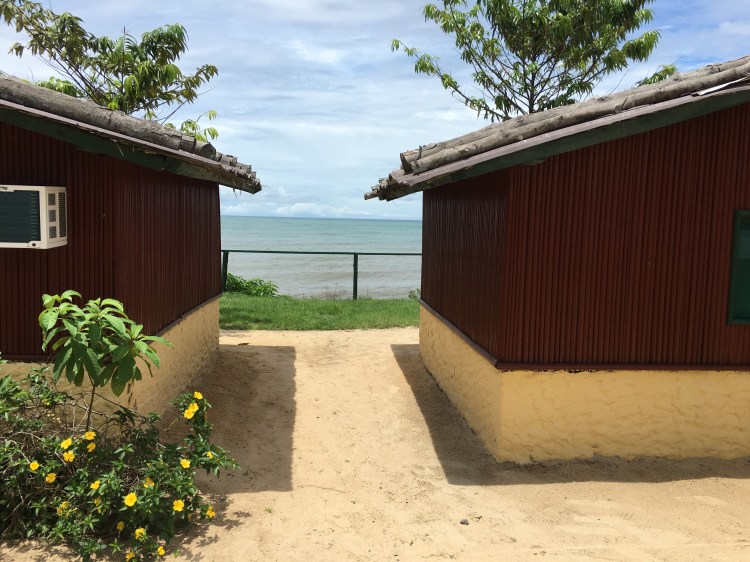
But then, problem! The cute baby elephant started running towards our jeep, followed by the protecting Mamma! The chauffeur did not hesitate much and started the engine asap, as we heard the adult trumpeting, arriving some meters from the vehicle! As we managed to escape, they were running parallel with us for a while, it was astonishing and beautiful. In Bety’s village there are 2 dozens of tiny straw shacks facing the ocean and a covered veranda with a long dining table for all, with a 24-hour self-service bar.

After settling into the little hut (quickly replacing the sheets not to have bad surprises) we had a convivial lunch at the common table with a nice breeze. Our neighbours were a team of eco-guides from a remote Gabonese national park: 3 young Gabonese guys with their tiny Japanese woman boss was quite an unusual combo but seemed to work very well. It was actually a study tour for them to check out how others organise eco-turism. As Beti, in fact, is a legend in Gabon, everybody knows him as he created this place 30 years ago and it’s still blooming and successful. He’s an ex Basque chef, so you can be sure to be treated well at lunch and dinner. He does not cook anymore as he trained the locals to make his simple but delicious recipes. After lunch is time for the 3-hour safari, so off we go, back in the jeeps again.

It’s so much fun to be shaken on the bumpy road, speeding into the deep green forest then out onto the wide savannah always accompanied by colourful butterflies. Very moving to observe several herds of elephants (15-20 of them young and old) or being observed by herds of buffalos. The latter ones could be also very silly, jumping left to right like drunk cows. There were cranes standing on their backs: perfect example of the symbiosis from our 4th grade biology book.

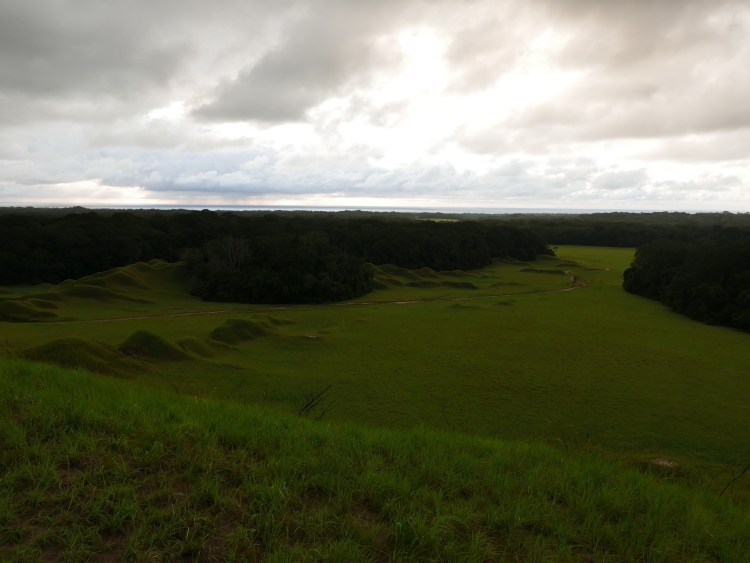
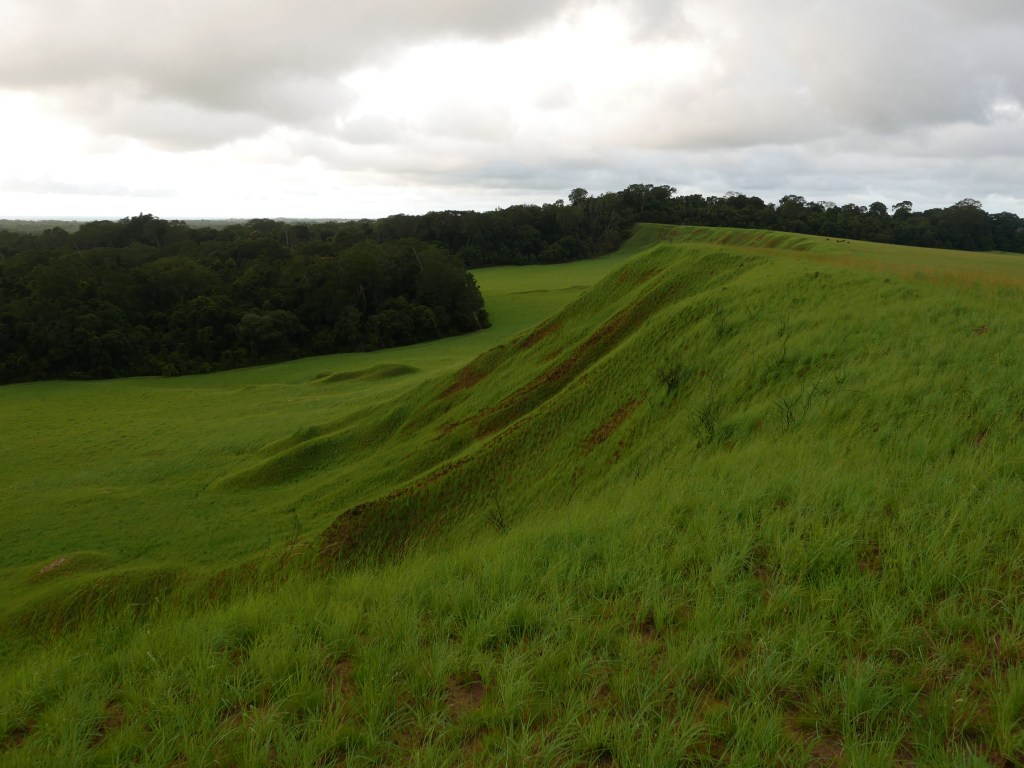
Then we approached a hilltop slowly, but what’s behind is still invisible….then a fantastic view: hilly, bumpy savannah, like it was covered by moss, and the sea in the background; colours are striking also because a huge storm is preparing.

As we are heading back to the camp the rain starts to pour, and we are handed an old tarpaulin that we hold manually with 2 other families, laughing our heads off, trying to peek out of it. The next morning we (only adults) wake up at 5h and go off to a walking safari.

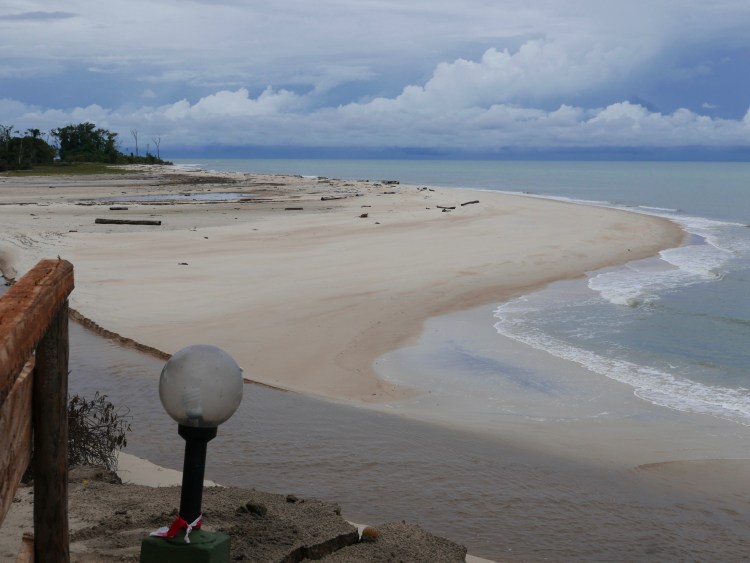
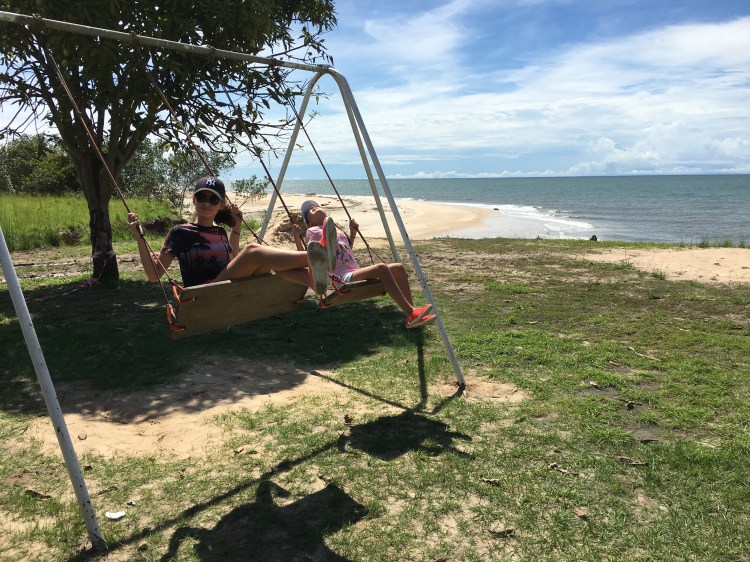
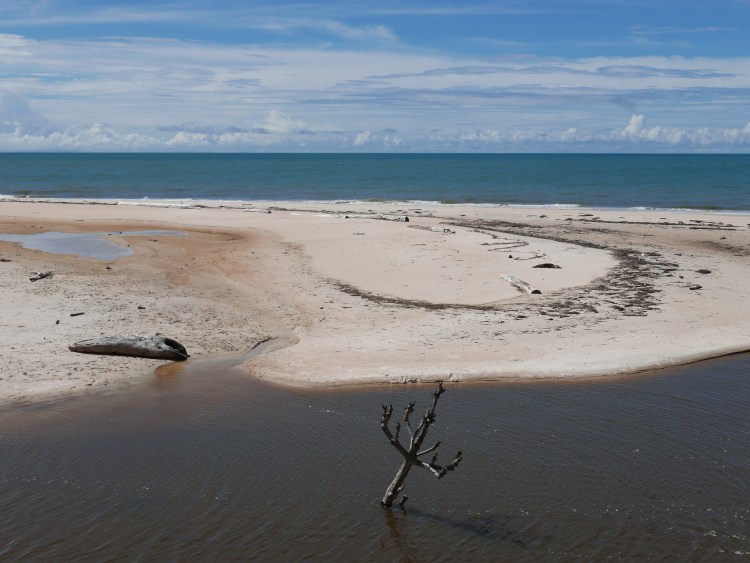
We did not get lucky with seeing animals but the walk was very enjoyable and after, breakfast tastes 3 times better. We still have time for a stroll along the endless beach with the girls, checking the waves, the rocks, the fine sand and the huge crabs.

A superbe family weekend.

Fruzsi

Une journée à la Pointe-Denis

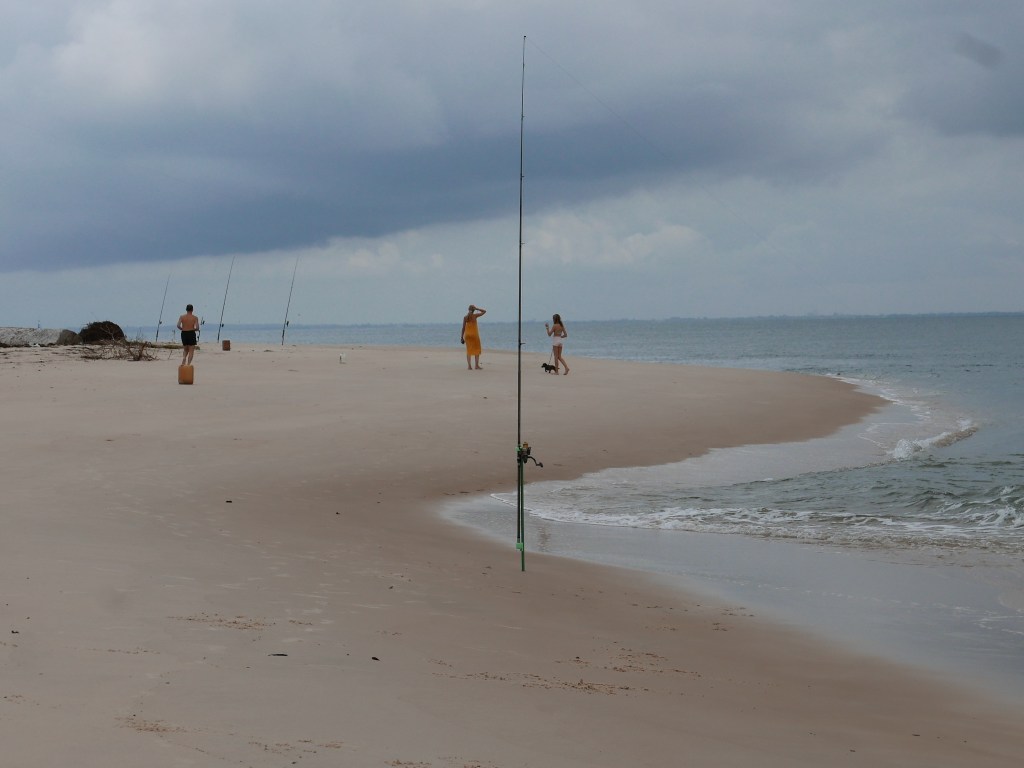
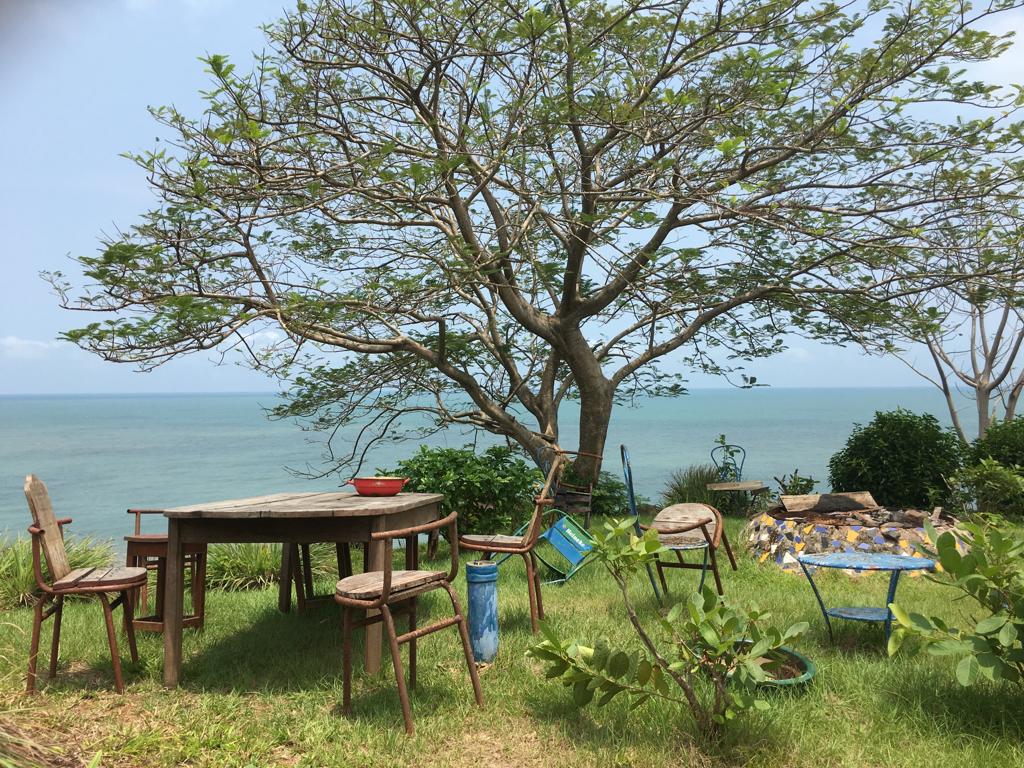
Une mer claire, de longues plages de sable fin, et en toile de fond la forêt du parc national de Pongara… à la Pointe-Denis on comprend tout de suite pourquoi le drapeau du Gabon est vert, jaune et bleu.

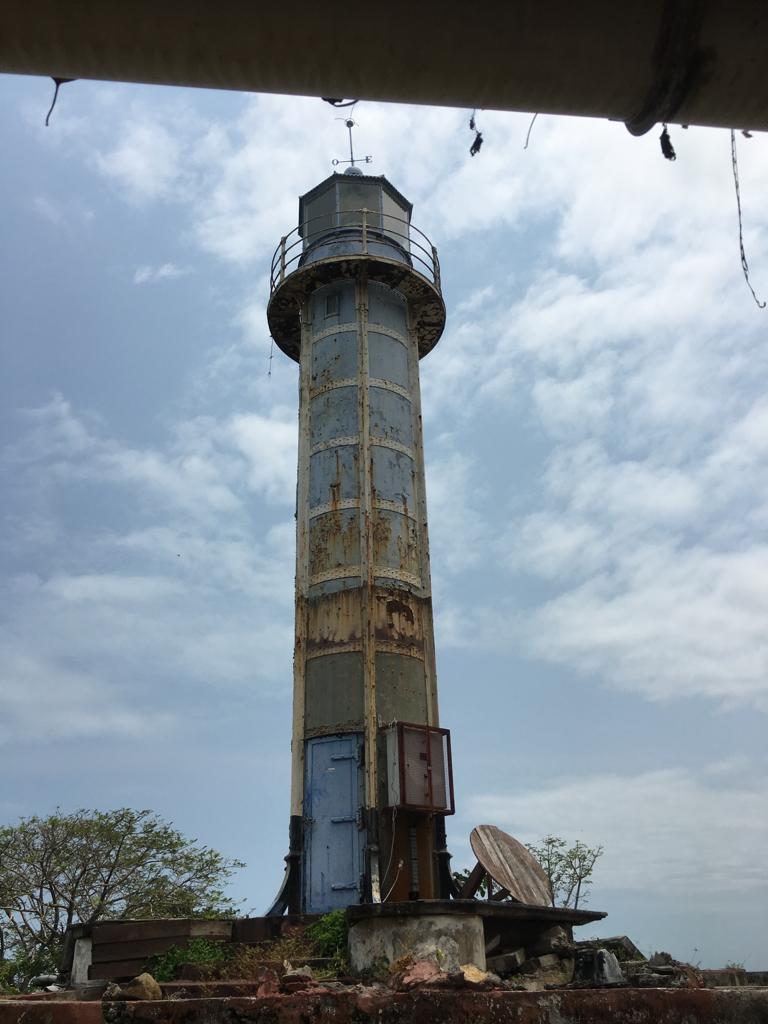
Nous passons une après-midi indolente à nous promener et nous baigner, et prenons un bateau jusqu’au vieux phare de Gombe, construit par les Français il y a plus de 6 décennies, et d’où le point de vue est absolument fabuleux. Quelques surfeurs profitent de la courte mais régulière vague qui déroule en contrebas.

La prochaine fois nous viendrons pour explorer la forêt, dans laquelle se cachent éléphants, buffles, potamochères, singes…

Traverser l’estuaire

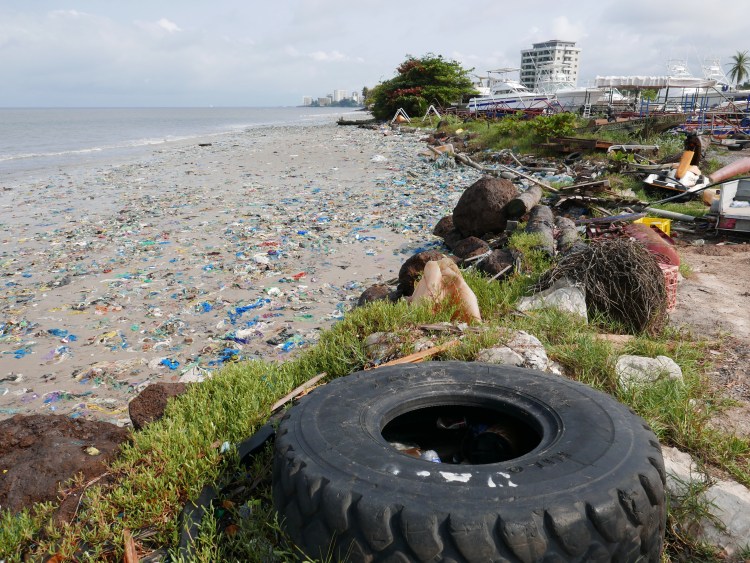
Libreville est située dans un estuaire d’environ 5 km de large. Ici, nous vivons au bord de la mer mais nous ne pouvons pas nous y baigner… trop de choses suspectes dans l’eau, trop de plastique sur la plage. Il est même déconseillé de se promener sur le sable pieds nus sous peine de choper des infections.

Pour trouver des plages propres et une eau plus claire, il faut passer de l’autre côté de l’estuaire et se rendre à la Pointe-Denis. Le point de départ des bateaux est le “port de plaisance” de Michel Marine, tout au Sud de Libreville. L’état de la plage y est triste à pleurer !

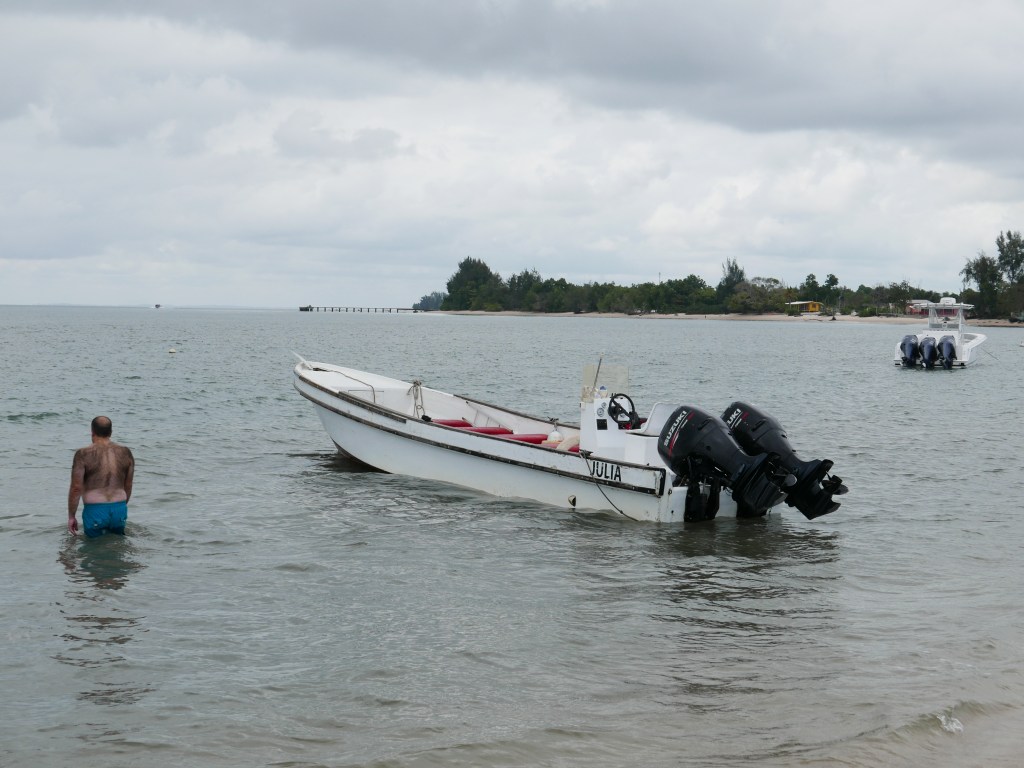
La traversée de l’estuaire se fait en 20-30 min. Ne vous attendez pas à voyager en “pirogue traditionnelle” comme certains semblent l’espérer : ce sont des bateaux à gros moteurs et gros bruit qui nous emmènent de l’autre côté.

Thomas
First impressions

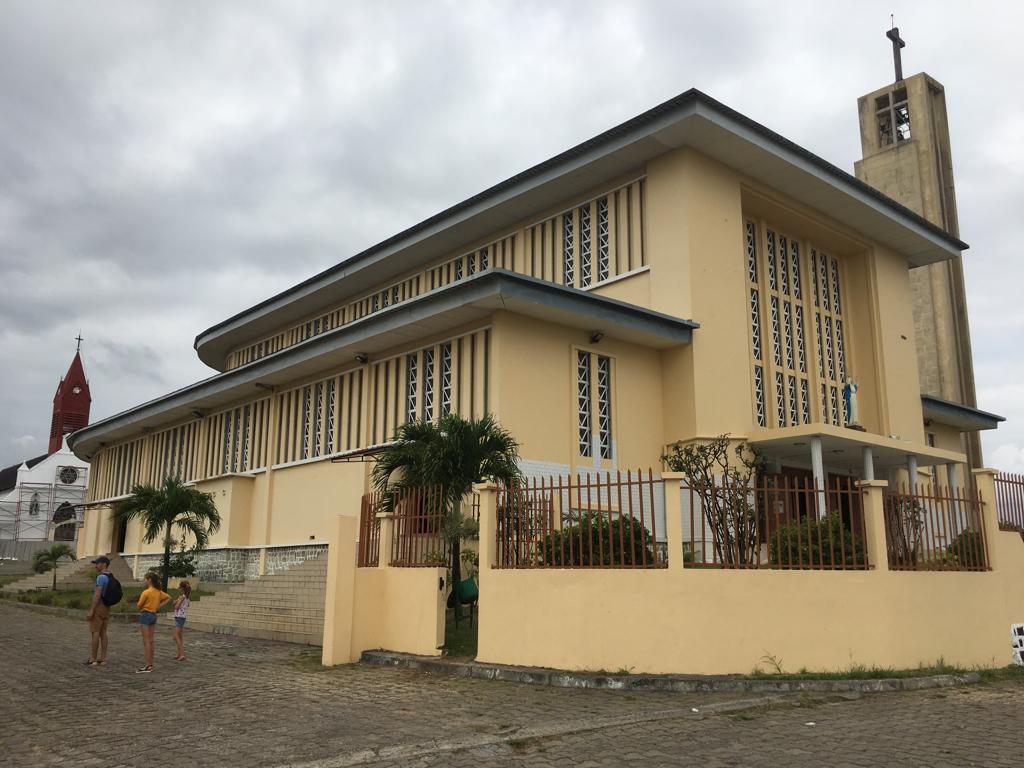
We are starting to like Libreville. It’s not exactly beautiful nor clean, there are actually no sights to speak of apart from perhaps the Cathédrale Sainte-Marie.

In short, it’s kinda rough around the edges. But it’s very alive and it offers a range of different atmospheres depending on which neighbourhood you are in, from typically African to more European-like. And it stretches along the seaside, which is really nice.

Along the more central parts of the city the beach is unfortunately littered with a lot of junk and plastic coming from the sewers. This can be a heart-breaking sight especially after the weekends where a lot of people hang around the beach. The city cleans it regularly but it’s not enough, plastic is always coming back. However awareness about the issue is rising and it’s good to see several beach cleaning initiatives coming from both locals and expats alike as well as schools.

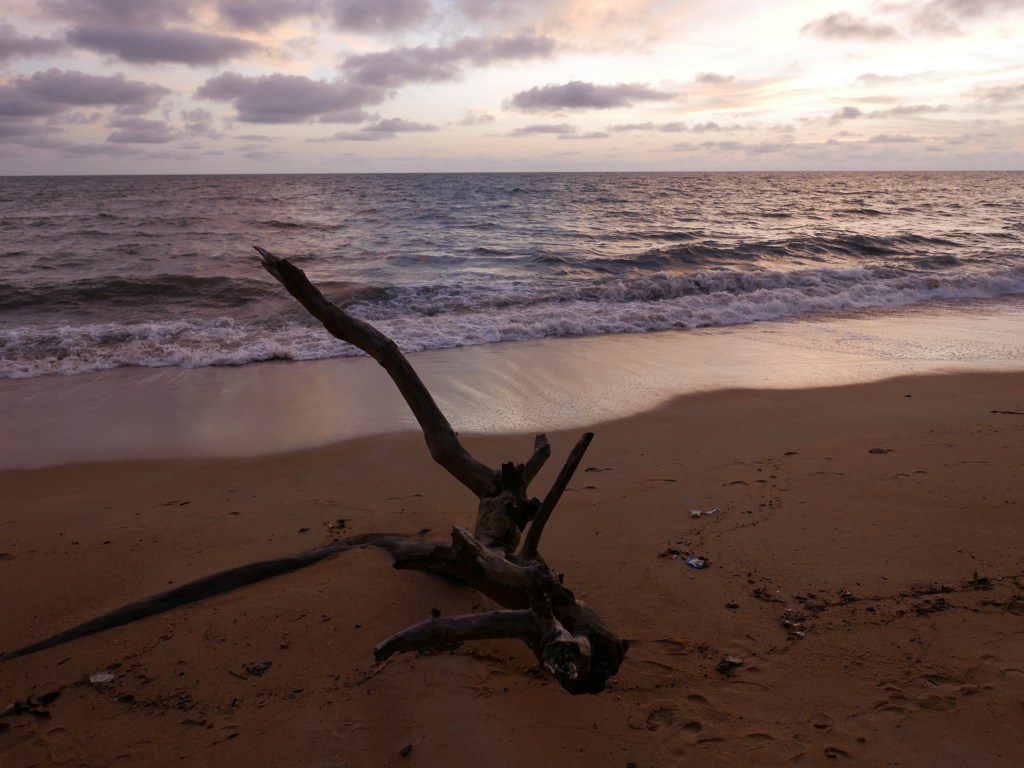
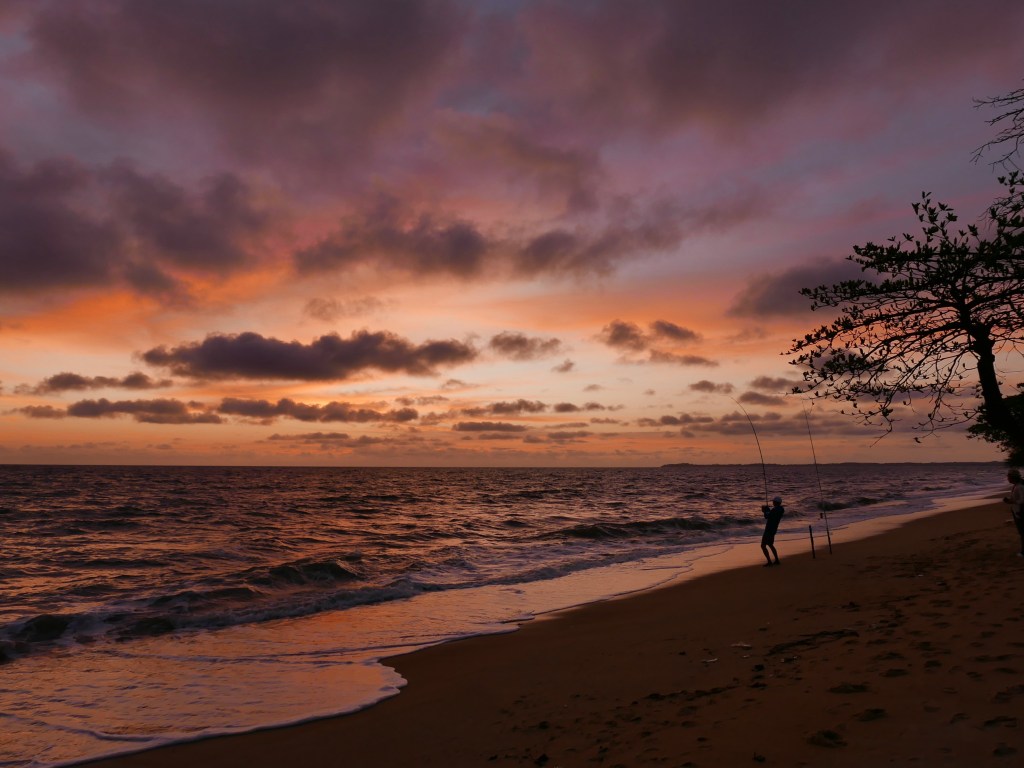
Up North along La Sablière, the chic district in which we live in a temporary accommodation for the month of September, the beach is cleaner, though the water is still not clear enough to swim in without risk. It’s especially nice around dusk, with spectacular sunsets, and it seems to be a good fishing spot.

Libreville taxis would deserve an entire book and we’ll soon write about them, because we use them A LOT. After a couple of weeks we are getting the hang of it – we understand how much it costs to get here or there, and we know we can expect absolutely zero comfort. We sometimes truly enjoy taking them, especially the lively shared rides with other passengers. Of course, people drive like maniacs here. There is only 1 speed limit sign in the city, it shows 40 and cars drive past it every day at 100 km/h. The city centre is a constant traffic jam and honking festival. Being a pedestrian is like living in this old chicken cross the road video game. Ah, and we finally found drivers who are even less talented than Belgians at taking a roundabout 😉

Culturally speaking, the concert and film programme of the French Institute is pretty good, and they also have a nice library. One of the highlights of October was the first concert ever given in Gabon by a symphonic orchestra. The musicians came from Tübingen, Germany. They played Mozart’s requiem accompanied by a Libreville choir and directed by a Gabonese conductor! It was a very special evening, and we never saw a crowd going so wild at a classical music concert.

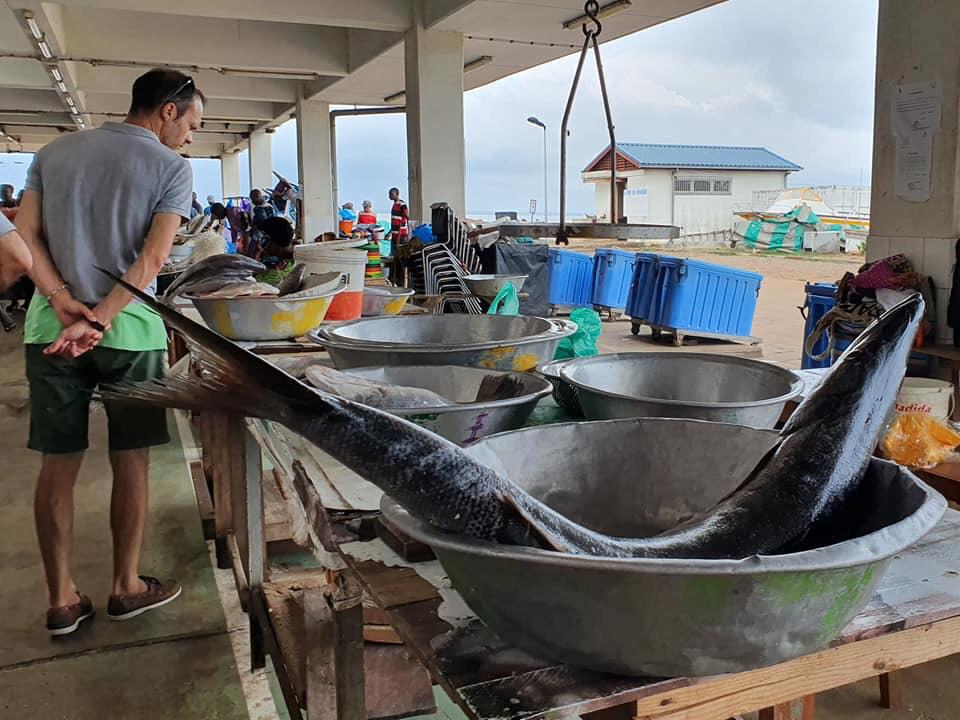
The population is mixed, with a lot of people from other African countries doing the small and manual jobs – people say here that if all foreigners would stop working, the entire city would come to a halt. Overall locals are not overwhelmingly friendly, but they are polite and they leave foreigners in peace, and you still can engage conversations quite easily. Anyhow, we need a bit more time to have a good judgement on these things. As for food, you can find everything European in supermarkets here, but prices are crazy so we are trying to be reasonable. A kilo of European apples costs up to 6 euros, a decent camembert 9 euros, a big Nutella 11 euros. But local fish such as capitaine or mérou is cheap and excellent, as well as local pineapple, papaya, mango, cucumber… and we still have to explore the street markets, which should be of course affordable.

Bonjour, sziasztok, hello, m’bolo !

Our family of four is settling in Libreville, Gabon for a few years. First time in Africa! It feels like entering a mysterious forest… Let’s see what comes out of it and out of us. This blog is multilingual, you’ll find French, Hungarian and English in here, and whichever new language we may learn along the way.

Design a site like this with WordPress.com
Get started