Roadtripping

Christmas holidays, Covid-19… we are staying in Gabon, we have time, we have motivated friends, so we are taking this opportunity to drive down all the way to the small city of Gamba, which lies on the coast in the very South of Gabon. It’s a 770 km ride, and we have planned 2 full days to reach it. We are 2 cars and 2 families, accompanied by our guide Yannick. We hit the road on Saturday in the early morning.

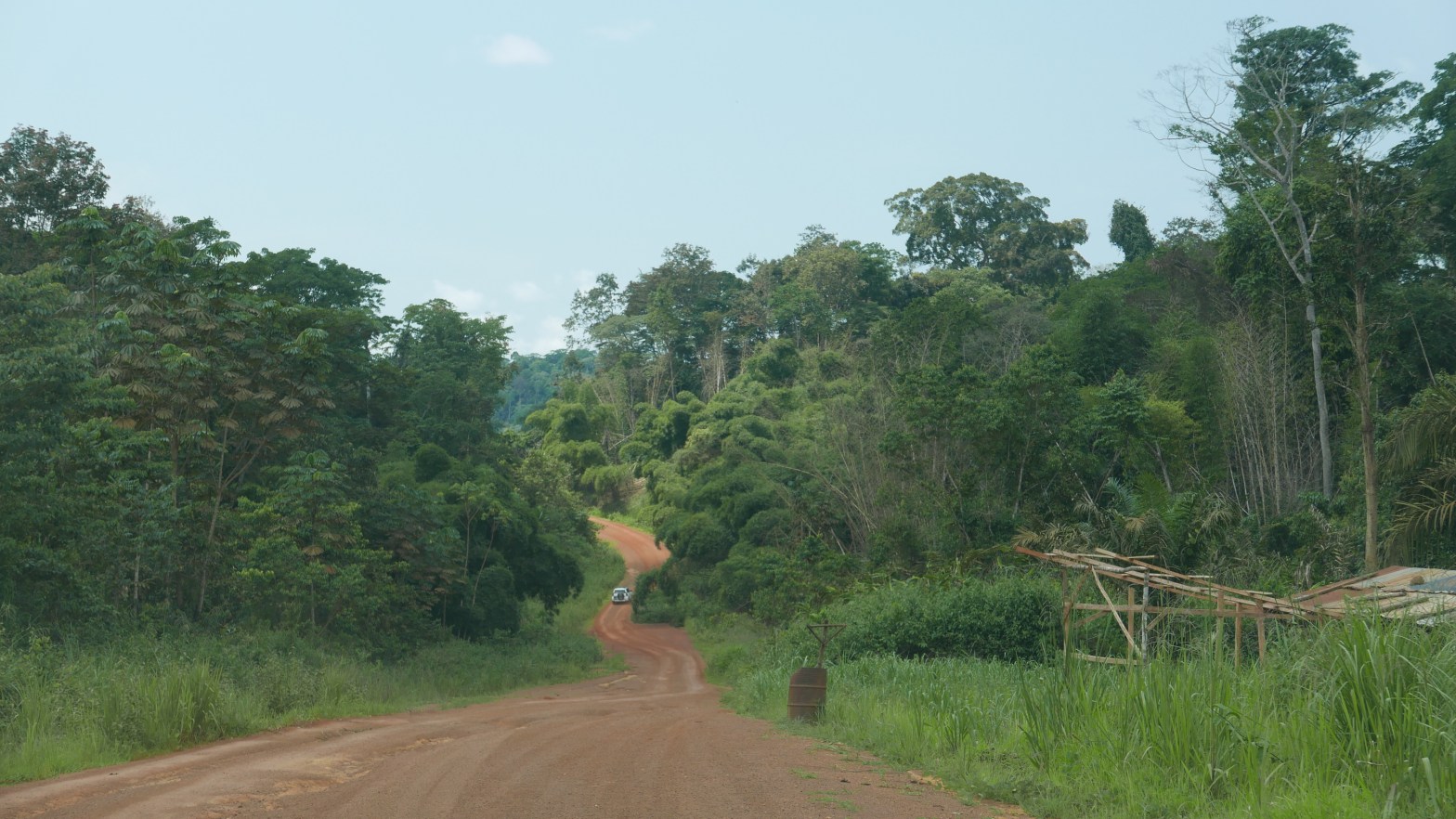
We are now used to the horrendous, back-killing and tyre-killing stretch of potholes, dirt and stones between kilometre 50 and 100 after Libreville. Works have been supposed to start there for quite a while now. We secretly hope it’s the last time we have to endure it, but we know deep inside it’s not going to be the case. Anyhow, once these troubles are over, it makes the smooth and winding asphalt road leading to Lambaréné, then further to Fougamou, all the more enjoyable.

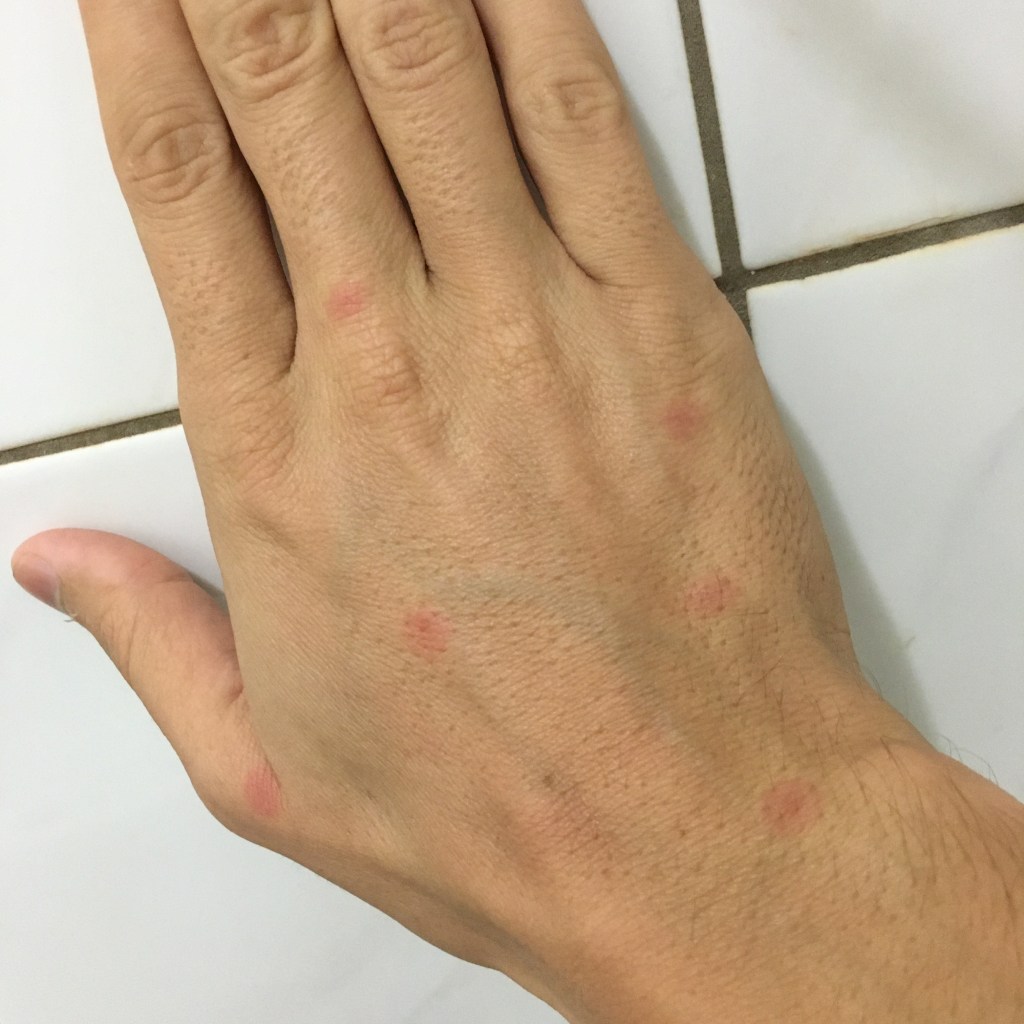
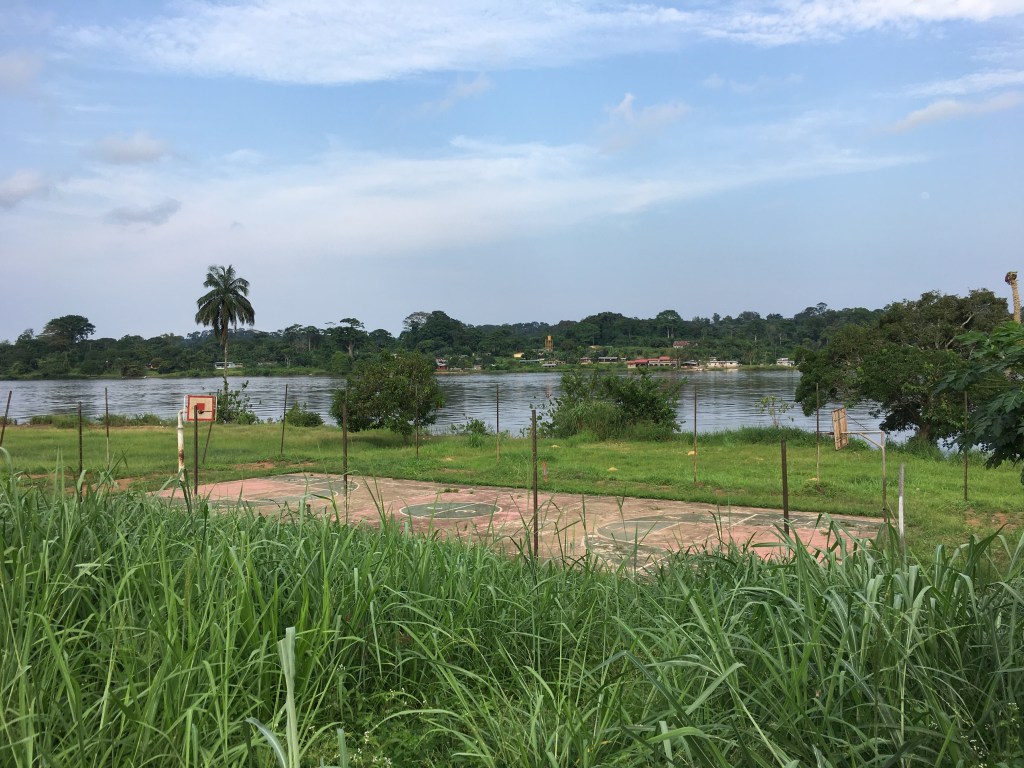
Fougamou is a peaceful little town nestled on the banks of the Ngounié river. We spend our first night there in a cosy little hotel. There, we are the object of a serious attack by fourous – these almost invisible insects that bite and leave a red dot on your skin, which start to itch terribly 5 or 6 hours later. Some of us (mostly teenager girls who felt like our technical trekking clothes would not look good in trendy Fougamou) end up with dozens of red dots.
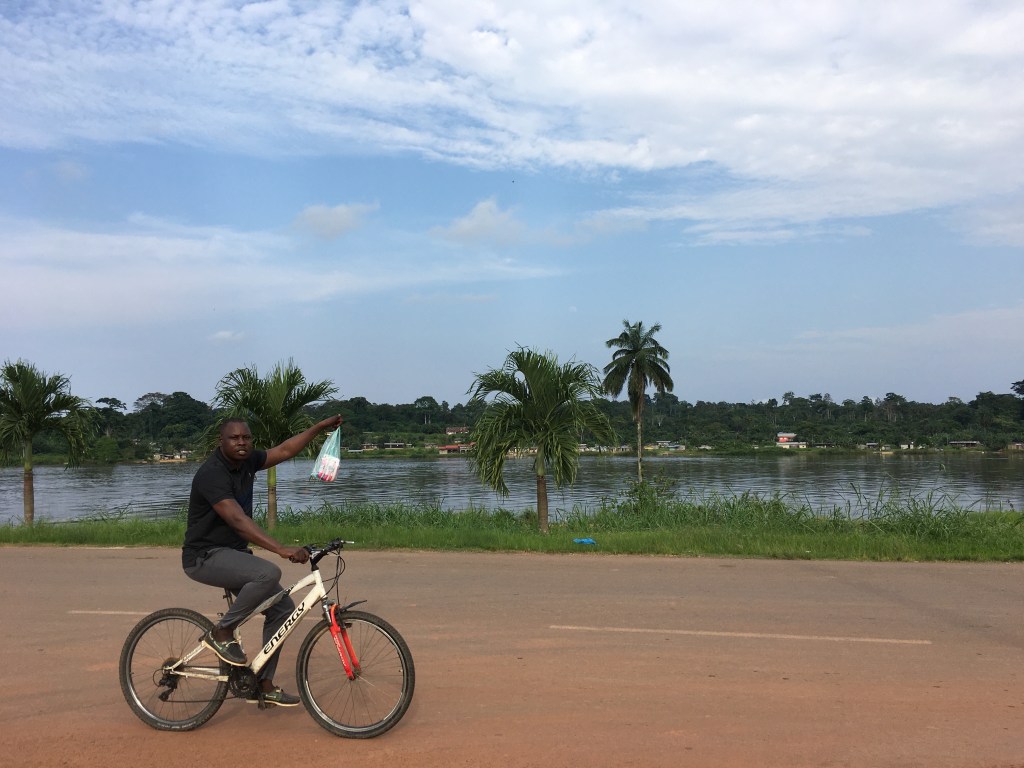
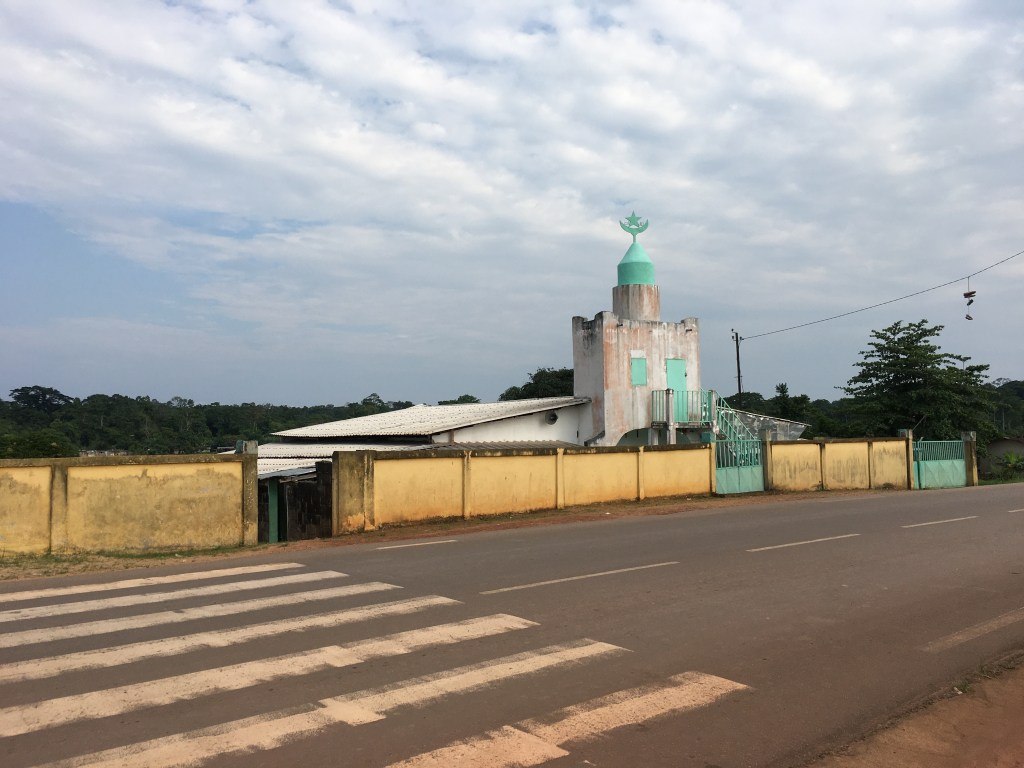
On the next day, we leave the thick forest behind us and peacefully make our way on a straight and perfect asphalt laid on plains and savannah, with small hills in the background. Once we pass the region’s main city of Mouila, we have the road almost for ourselves, and with Johnny Cash in the speakers, we are not sure anymore that we are in Gabon (until the next police check, but that comes later).
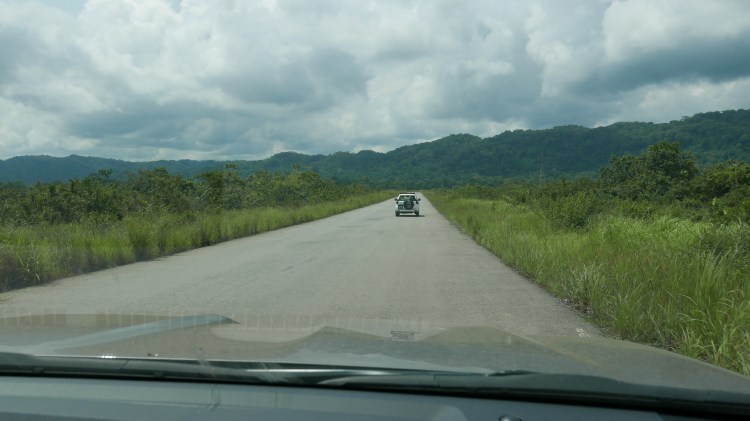
A bit of adventure finally arrives before the city of Tchibanga: a few dozen kilometres of dirt road through the hills and villages literally lost in the middle of nowhere. Fortunately, we drive serious and sturdy vehicles and get through it easily.
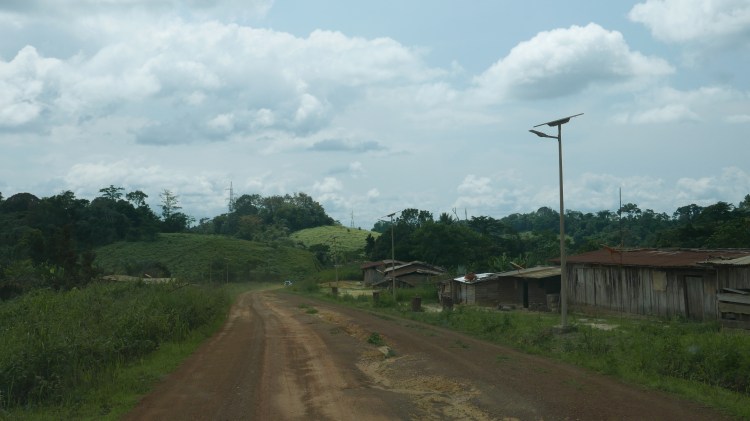
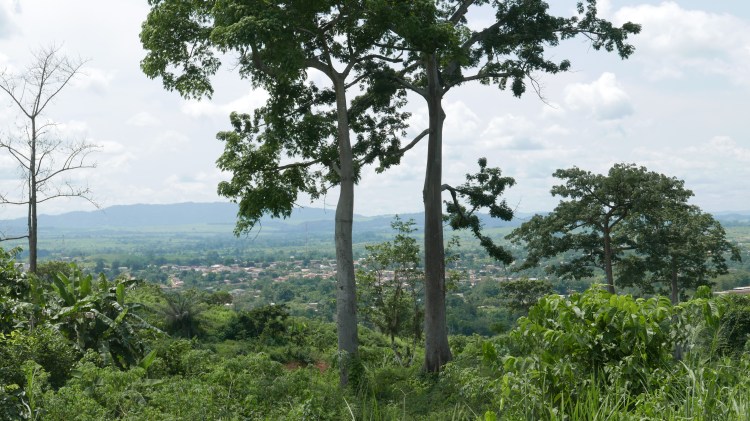
We pass Tchibanga, and the last obstacle before the coast is a chain of middle-height mountains. Here, to our amazement, the road is beautifully built, we are in a sort of tropical version of Austria. If such roads can exist in Gabon, how come the ones around Libreville still cannot be fixed?

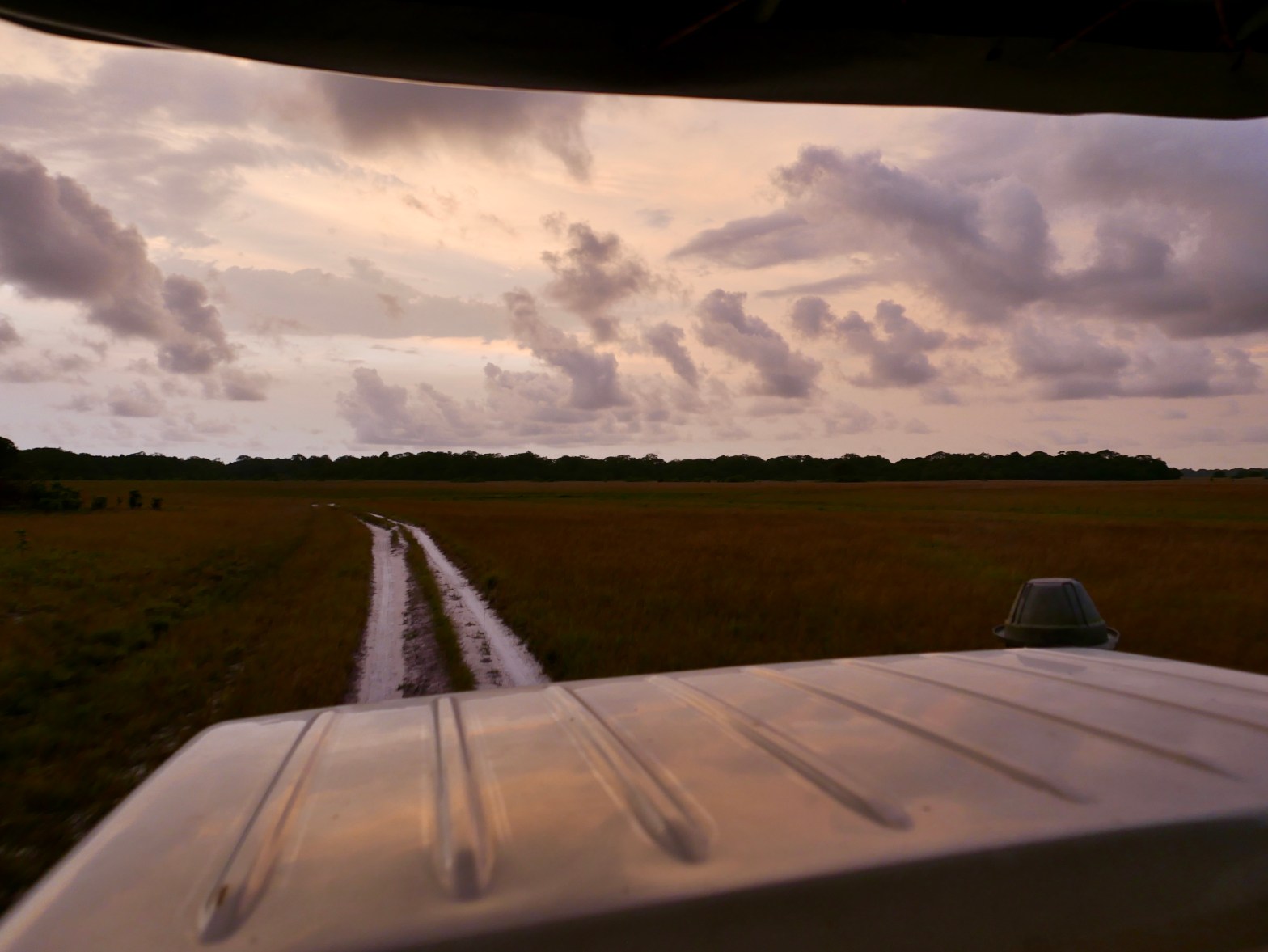
After the mountains, the brand new road we are flying over is nowhere on Google Maps. Not sure how we would have made it without Yannick. We have a thin curtain of forest on our left hiding the ocean, and savannah on our right. By the time we reach the minuscule pier of Mougagara, we have not seen any other cars for a couple of hours.

The road stops here. In front of us, lies the Nyanga river, which we must cross if we want to reach Gamba. To do so, there is only one solution: put our cars on a shabby-looking metal and wood floating and motorised platform , wives and children on a motor boat, and pray that everyone reach the other side. As I stand on the “ferry” with my friend Ronan, I catch myself thinking of the car insurance I just renewed, and wondering if it covers such incidents as “total loss by sinking in the Nyanga river”.
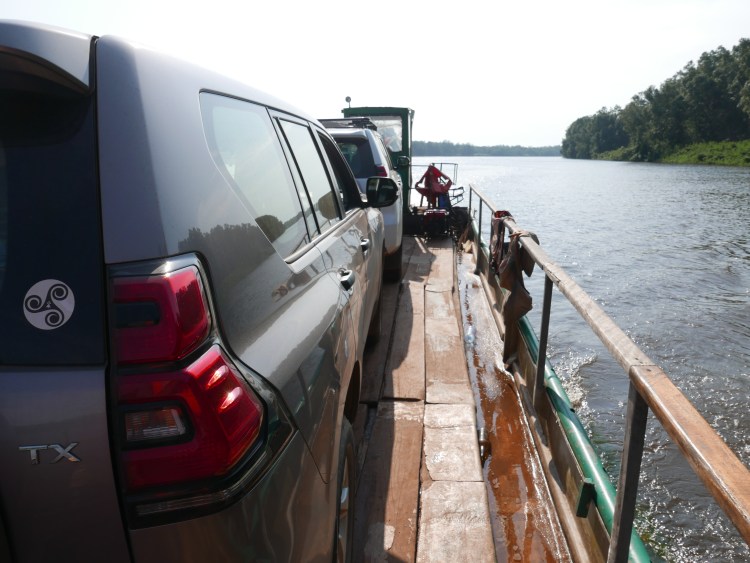
We make it to the other side safely, and it really is a miracle. We are now in the village of Mayonami, it’s the end of the afternoon and we have been on the road for 2 days. We are stopped at the 28th (no more no less) police checkpoint since we left Libreville. The agent is a zealous one, he wants to know everything about us, even things he is not allowed to ask such as our vaccination book, which we do not carry with us. Fortunately, Yannick gets us out of his hands with a bit of talking. Yes, this is a reality of traveling in Gabon: you must be prepared to meet with police forces at the entrance and exit of every city or big village. Most of the time the discussions go well, but it happens that the officials have something else in mind (guess what) than just checking your papers.
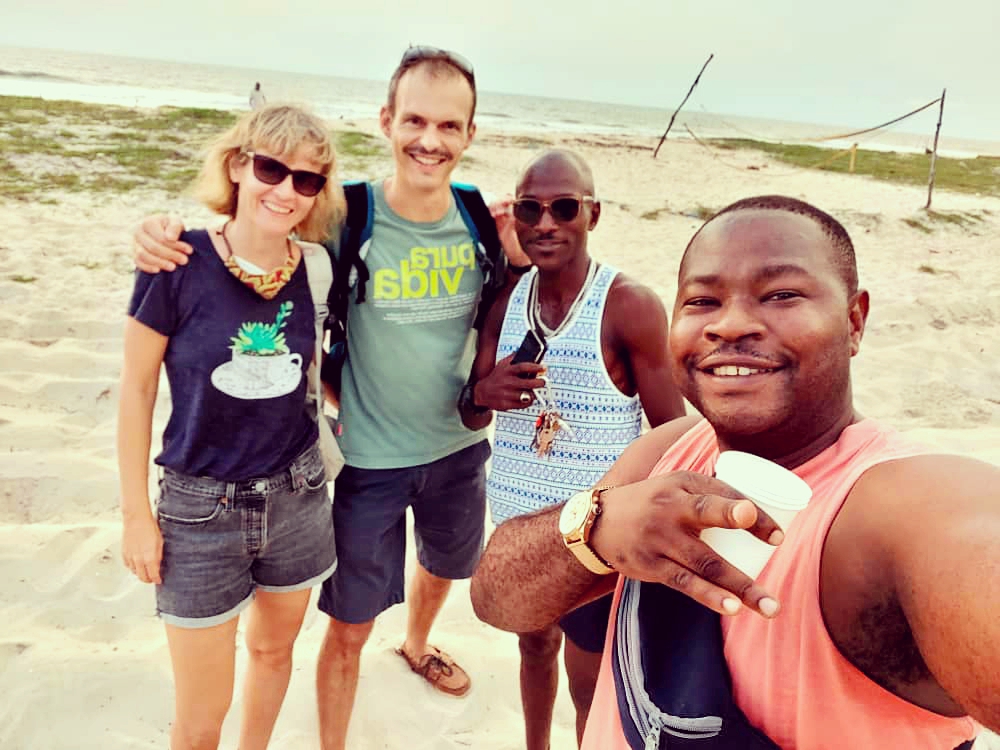
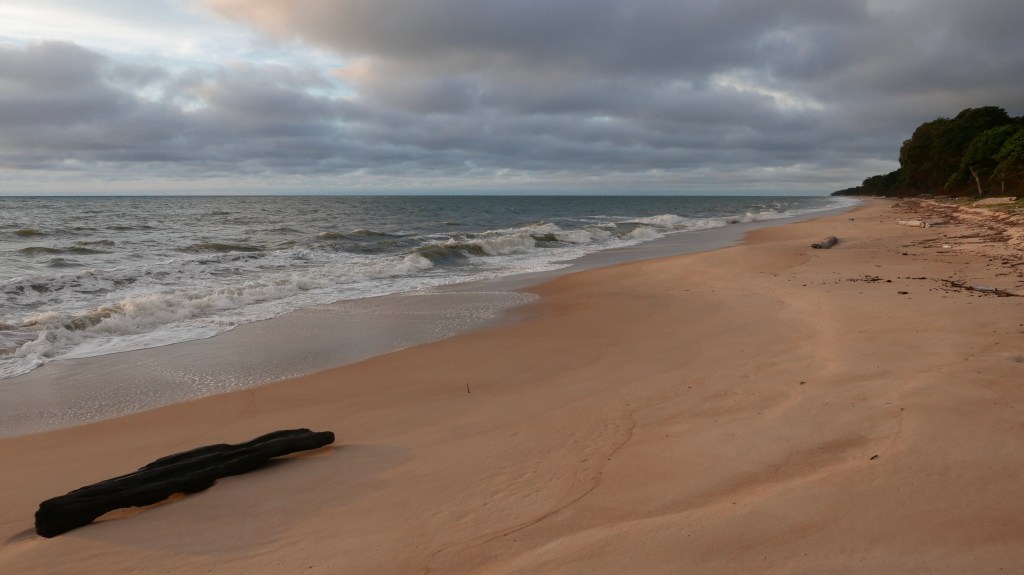
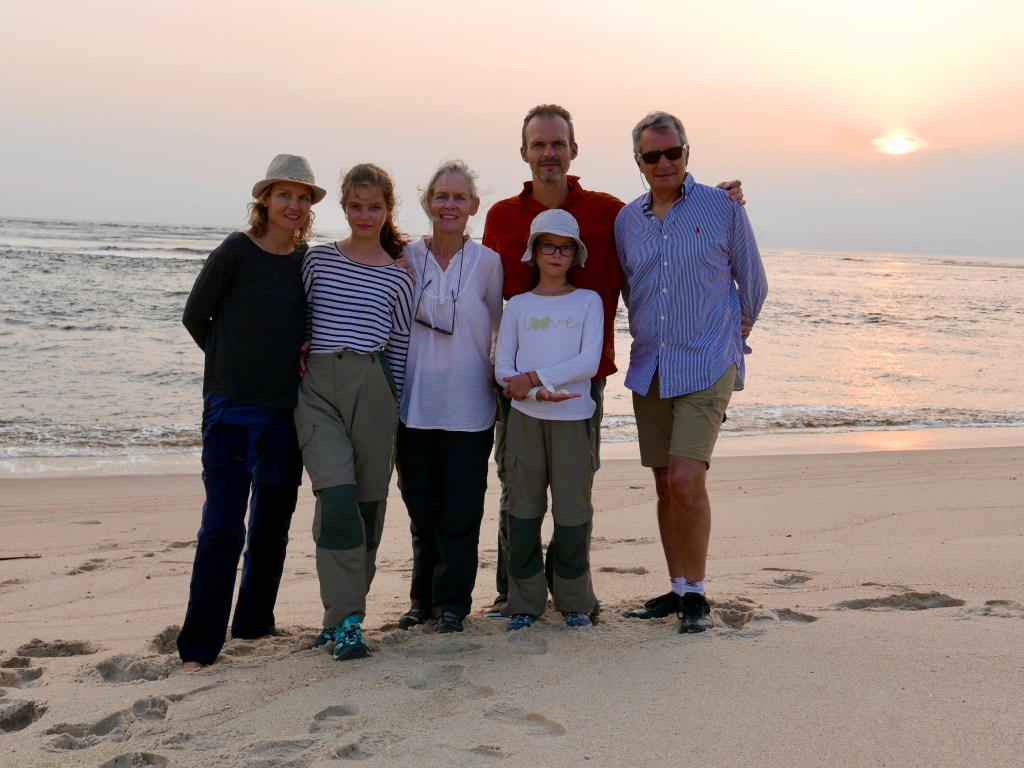
Gamba, finally! We are happy, exhausted, and greeted on the beach like kings by the Ibonga NGO team and a few very welcoming locals. We are sleeping in Ibonga’s brand new wooden bungalows, next to their research center dedicated to the sea turtles of Gabon. The beach of Gamba is actually one of the primary eggs laying spot in the world for 4 species of turtles, including the mighty leatherback sea turtle, which population is going through a steep decline (as the temperature of the waters around Gabon is slowly but surely rising above the 29° mark, more females and less males are born). And now we are in the middle of the laying season. They explain us their daily activities on the 14 km-stretch of beach they have under their responsibility: during the day, they walk to locate the nests, and at night they walk again and try spotting the turtles laying their eggs. Each turtle is marked and in this way they can study their habits and exchange information with other research centres in Gabon and neighbouring countries. Besides this work for the turtles, they are very active in building environmental awareness among the inhabitants and especially kids of Gamba.

We all gather the few bits of energy we have left and at 10 pm, under the magic light of the pale and full moon, we follow the Ibonga guides for a night walk on the beach in the hope of meeting at least one turtle. At some point, we think we are seeing one. As we approach the dark shape, it turns out it’s a log. We are actually closer to being asleep than awake, which causes strange hallucinations. But that’s okay. We have already learned that in Gabon, wild animals are not coming to you on demand.

Here is a link to Ibonga’s FB page – lots of turtles you shall see, and a few white tourists around Christmas time: https://www.facebook.com/Ibonga-ACPE-332614610194976/.
Pongara Lodge

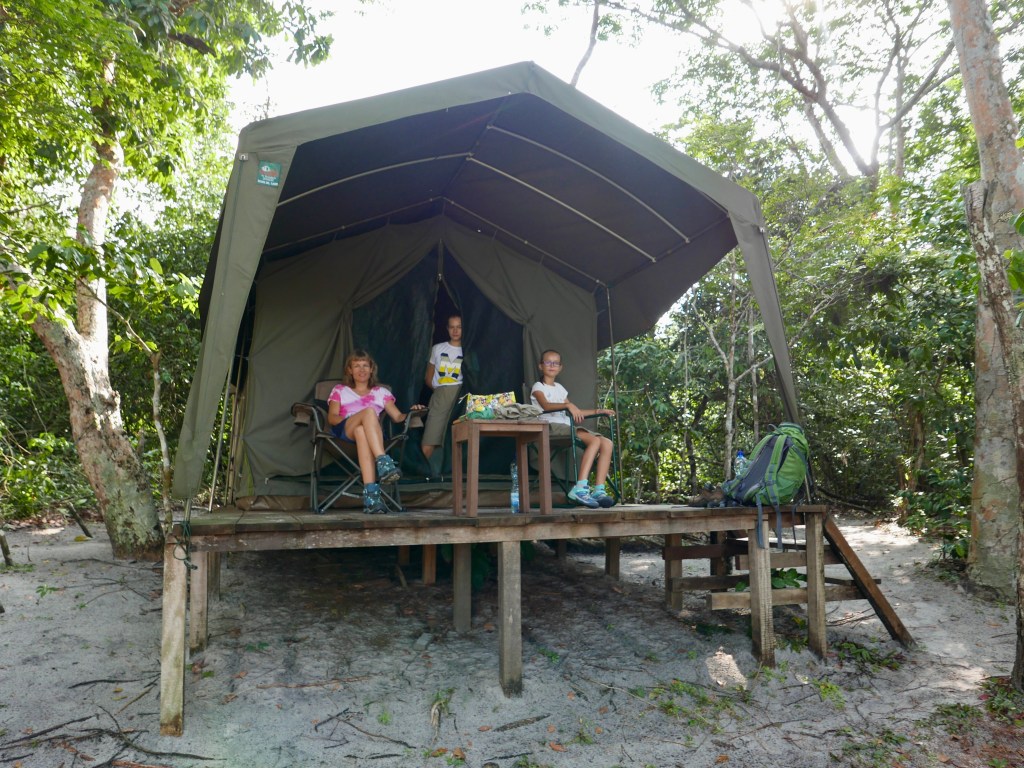
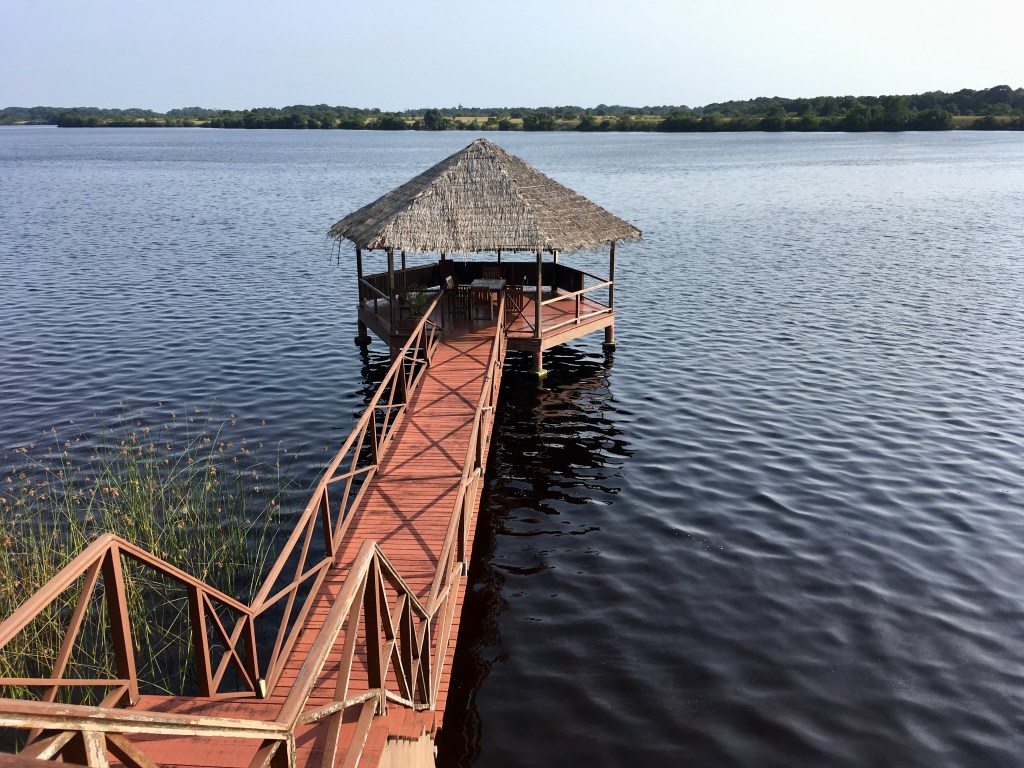
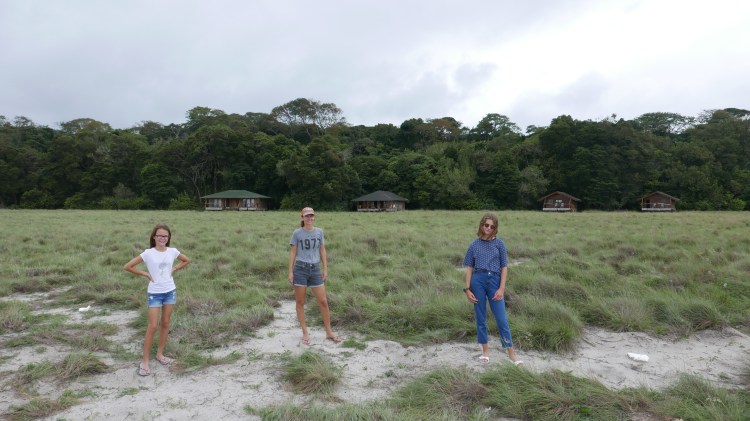
Pongara lodge is a 45-min boat ride from Libreville. It’s located on the ocean side of the Pointe Denis, in the Pongara National Park. Just 8 bungalows and a restaurant area, very comfortable and all made of wood, overlooking the savannah and the ocean in the background. We come here for a couple of days to rest and to find just a bit of adventure.
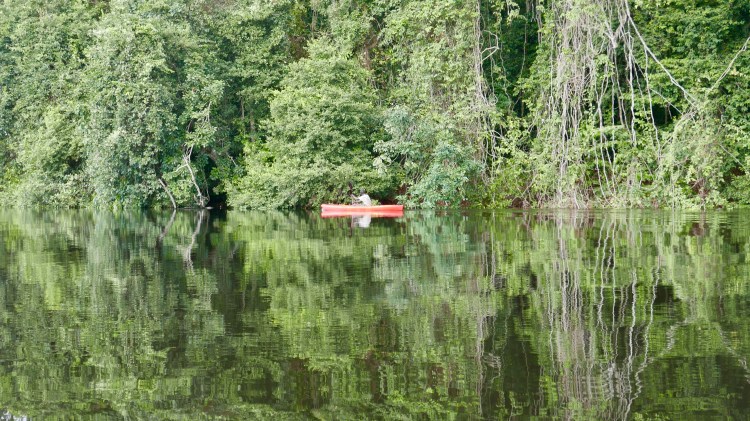
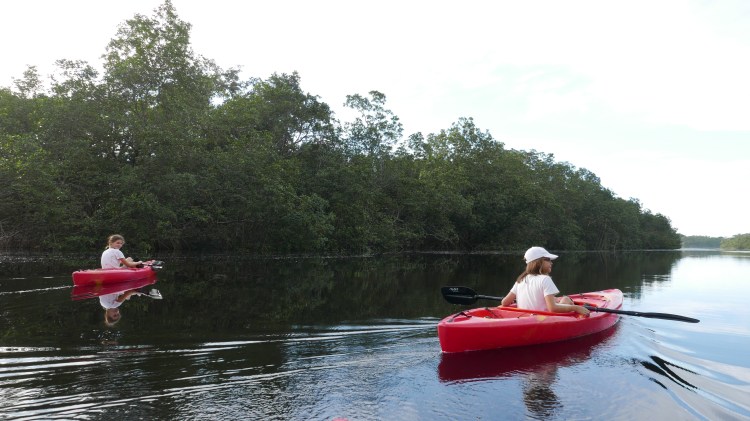
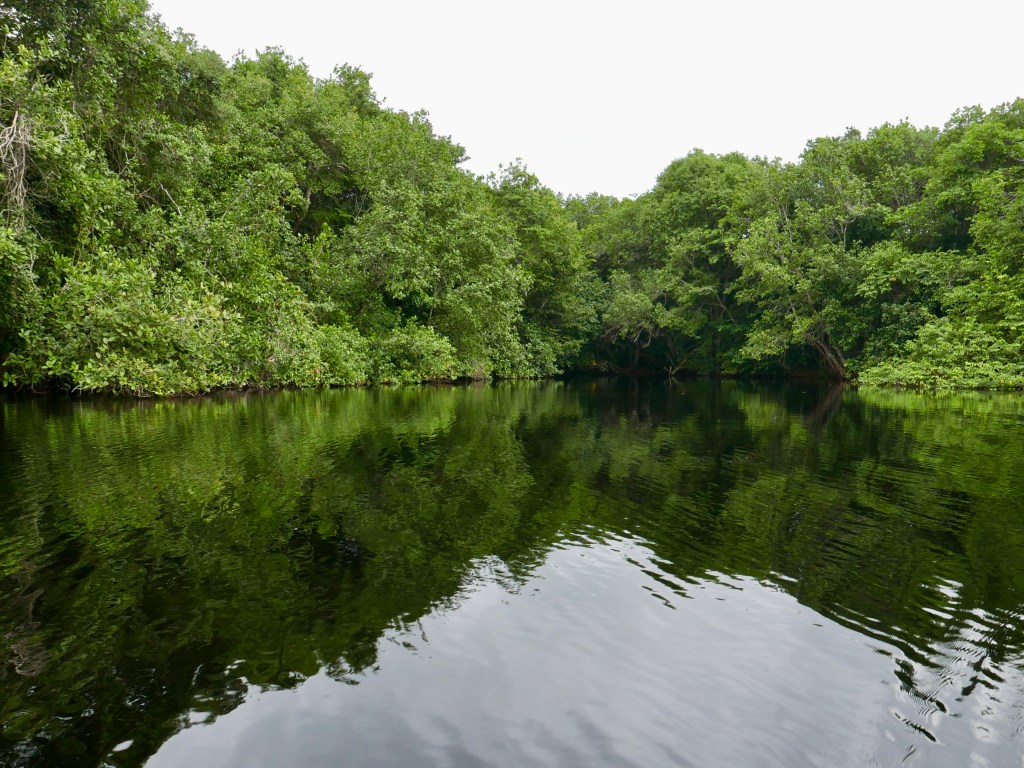
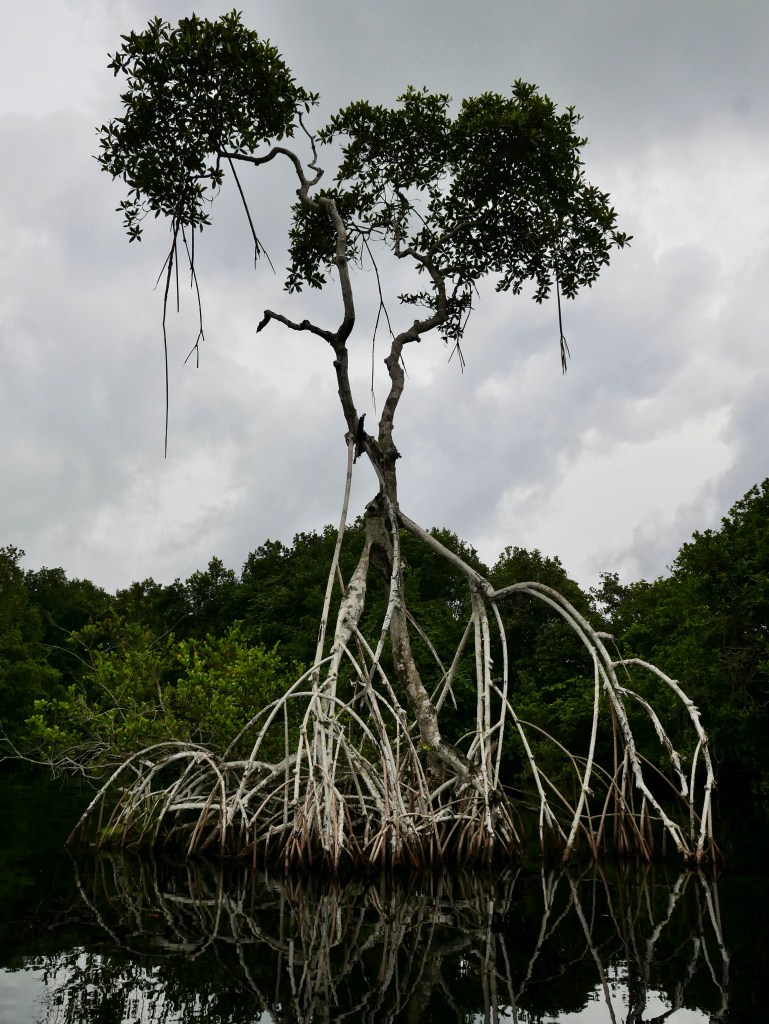
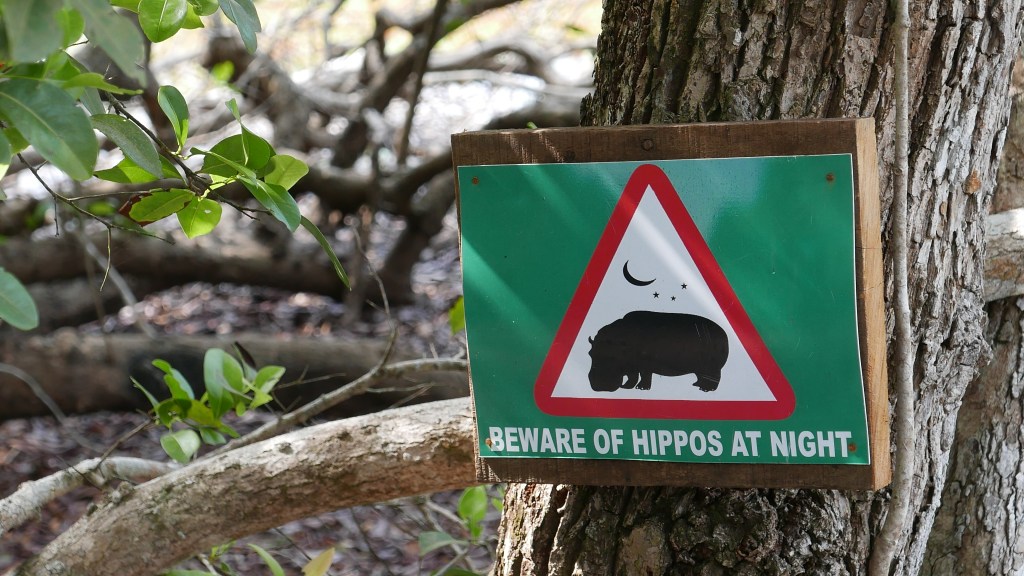
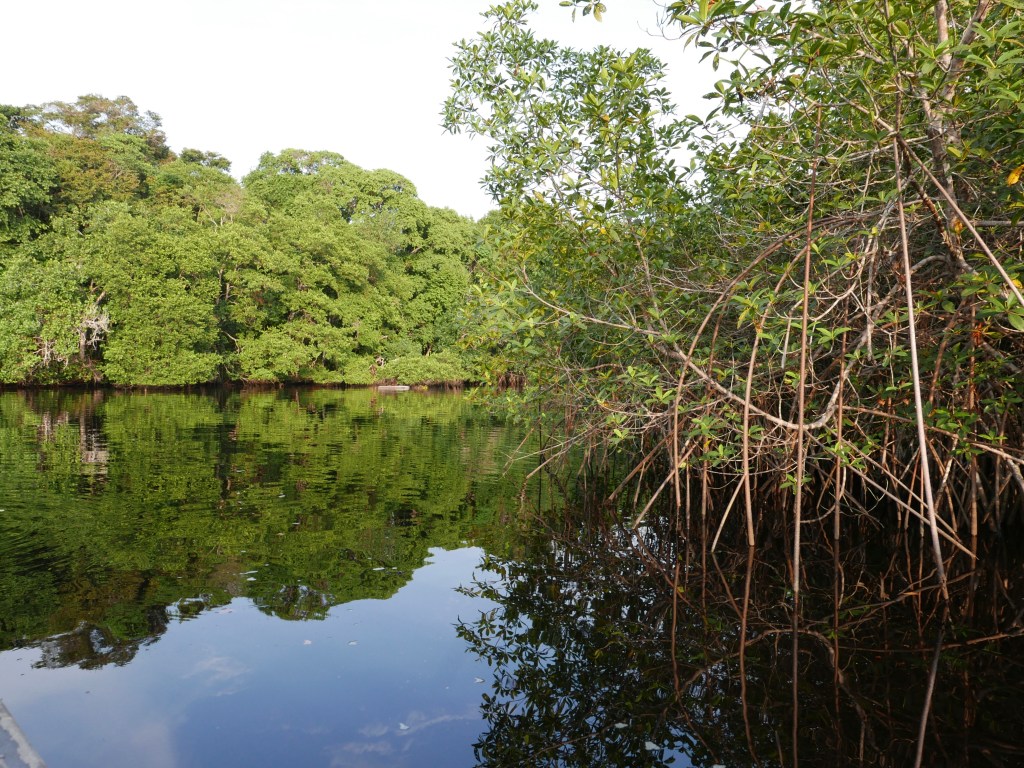
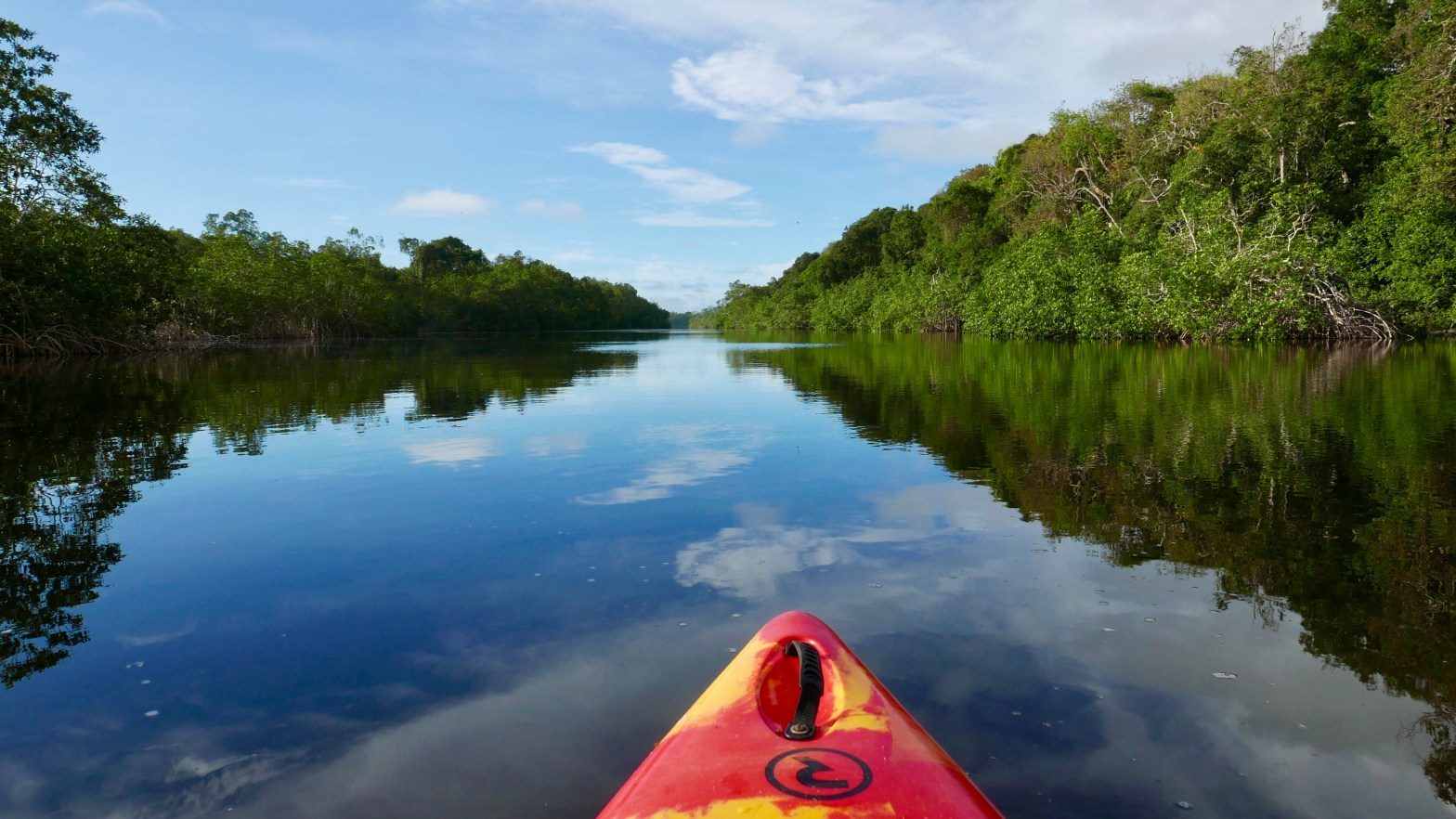
The best moment we spend here is on a kayak, paddling our way along the laguna and the mangrove. Prior to our first moves on the water, the park ranger made a thorough hippo check, to make sure we will not meet with the two regular grey guests of the area.

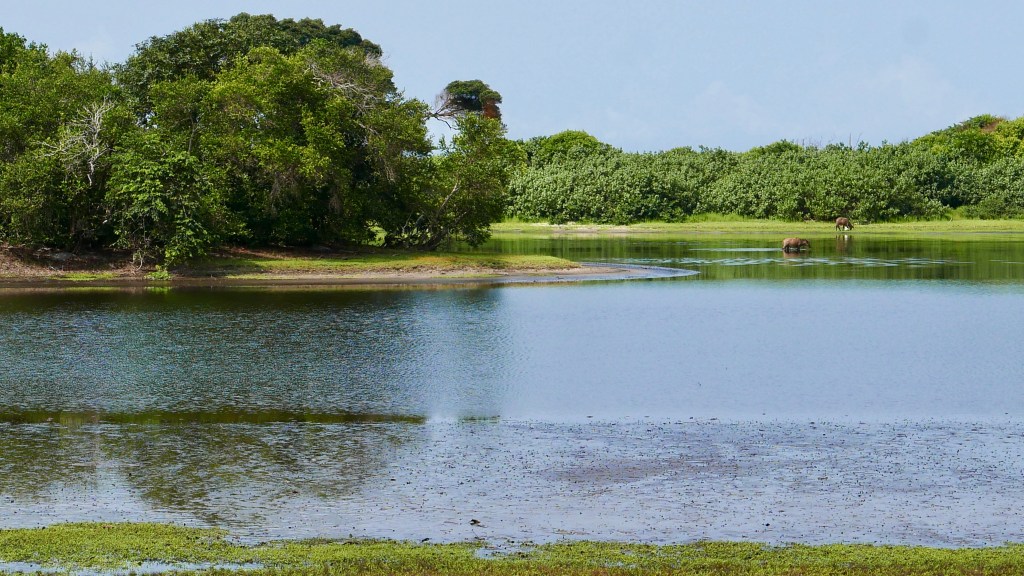
It’s all lush, peaceful and slightly spooky at the same time, as it’s difficult not to think of the 2 hippos. We paddle far, where the laguna is only separated from the ocean by a few dozen meters of sand.

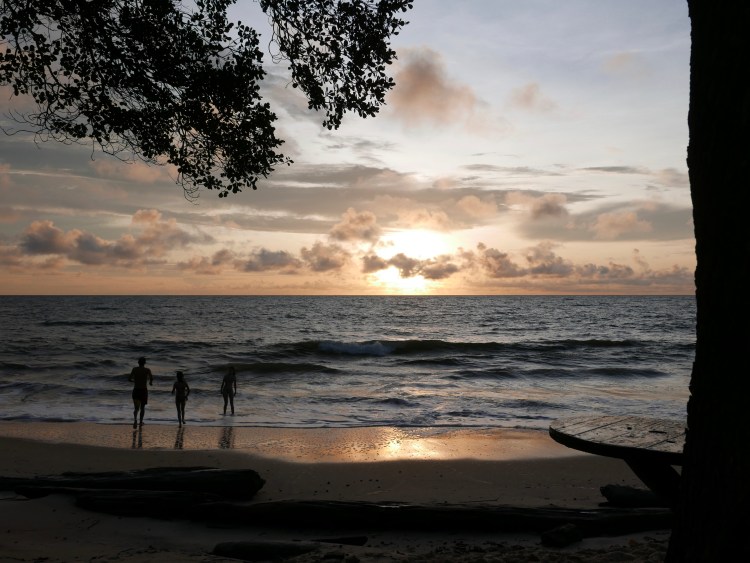
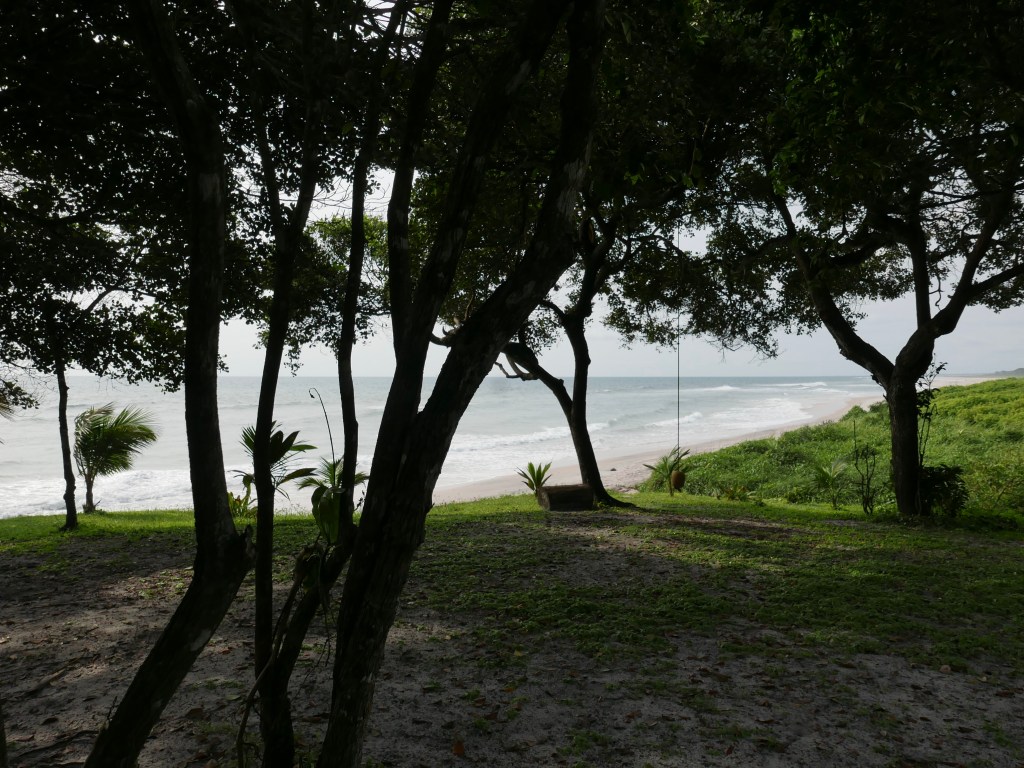
On the ocean side, it looks like the beach never ends… The sea is very warm, we spend quite some time playing in the waves, remaining very careful at all times, since they can be very powerful and the tide feels strong.

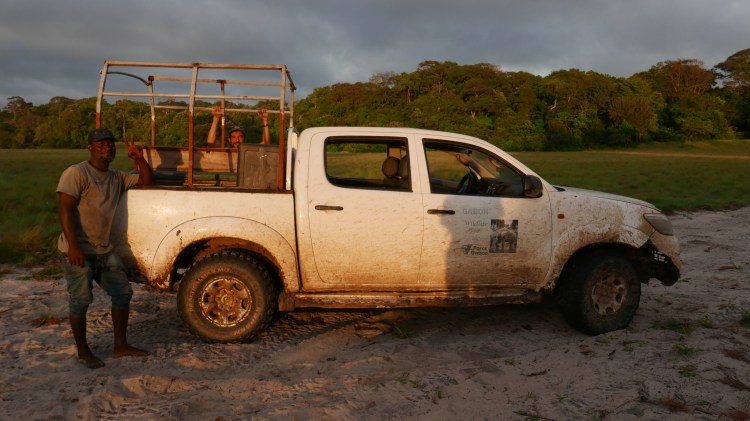
We take a short ride at dusk through the savannah aboard a very worn out but still alive Toyota Hilux, stopping by a few buffaloes who do not get even mildly interested in us.

It’s a nice feeling to be so close to the city and at the same time completely remote from civilisation – it helps that there is no Internet whatsoever in Pongara. Evenings are brilliant, because of the sunset of course, but also thanks to the talents of the cook!

Zilé

Cyril and the Tsam-Tsam boat take us back to the Dr Schweitzer hospital in Lambaréné. We just want to spend one more day here to discover the lakes on the North side of Lambaréné, upstream of the Ogooué river, and if we are lucky, to spot some hippos.

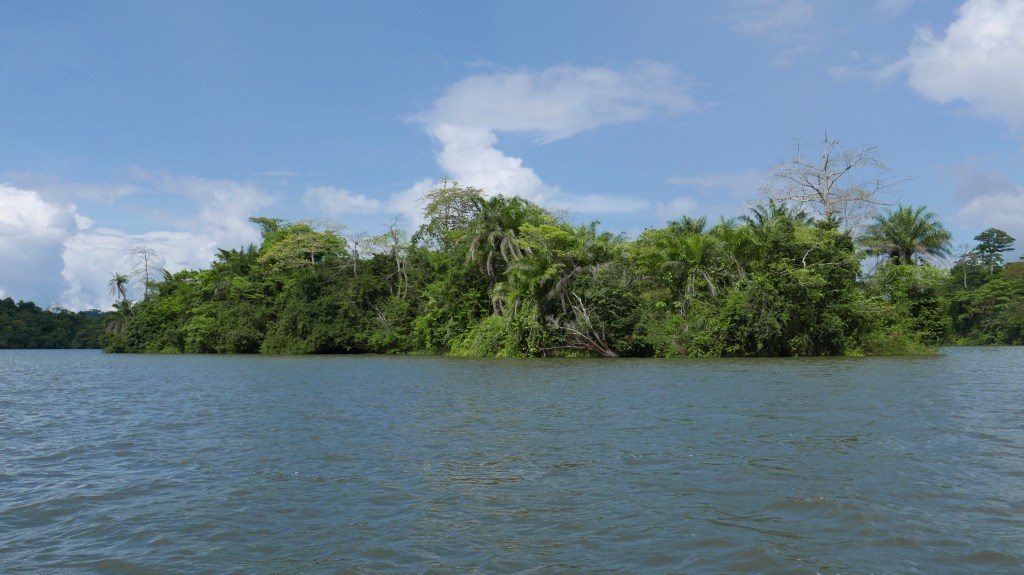
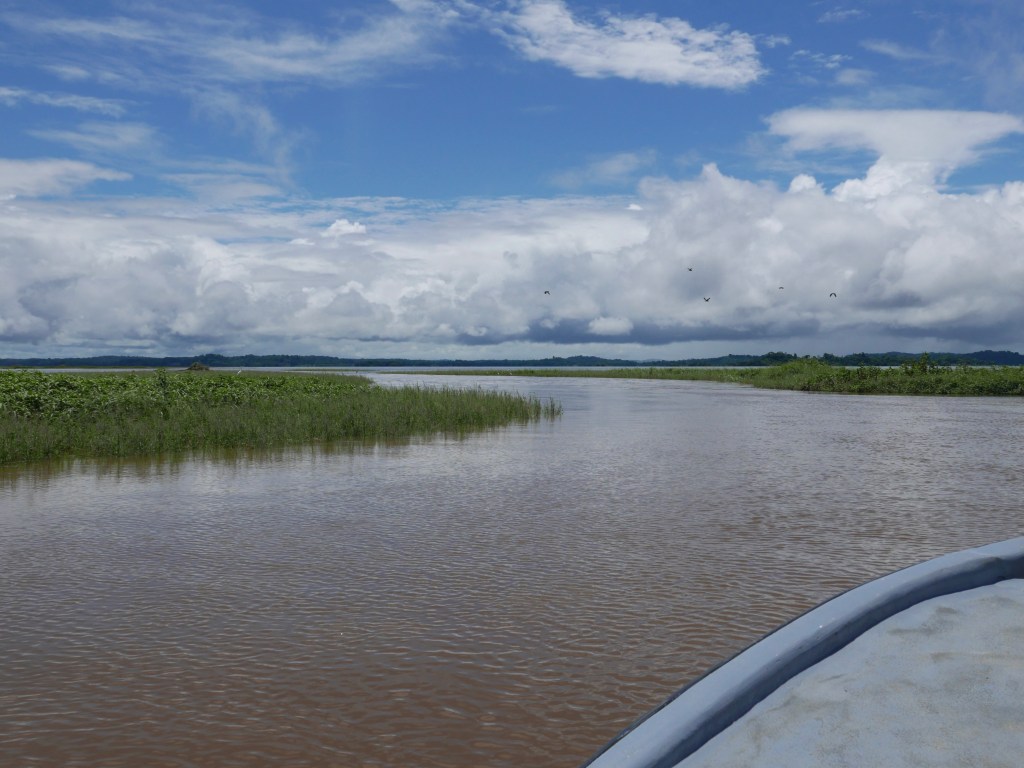
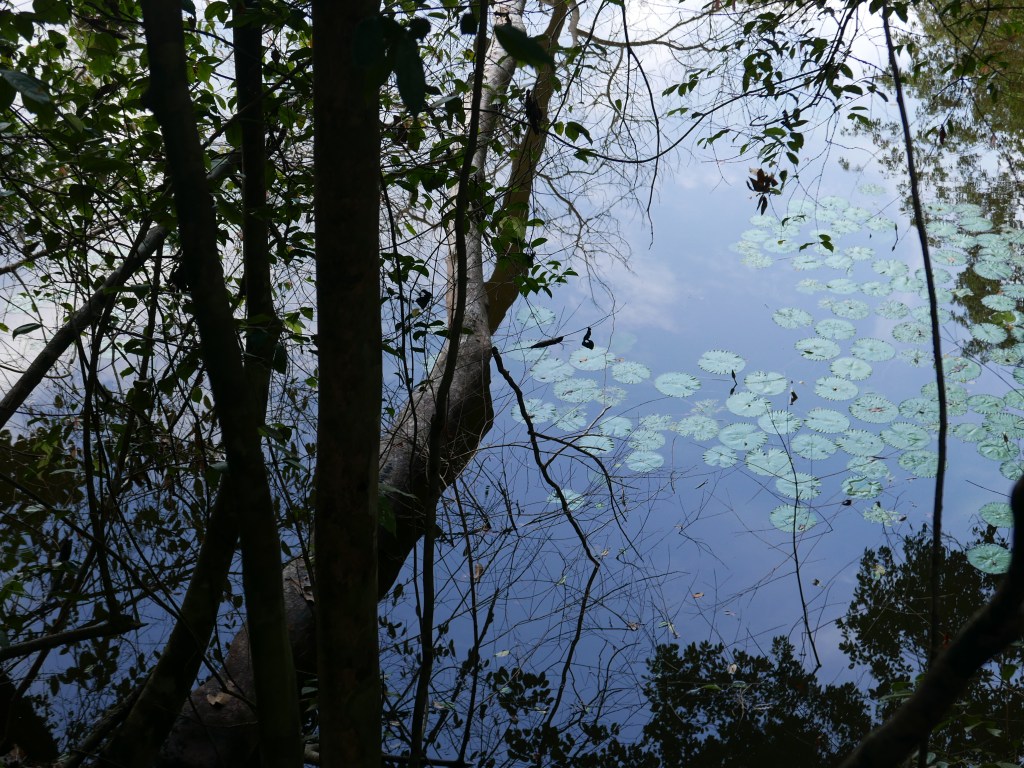
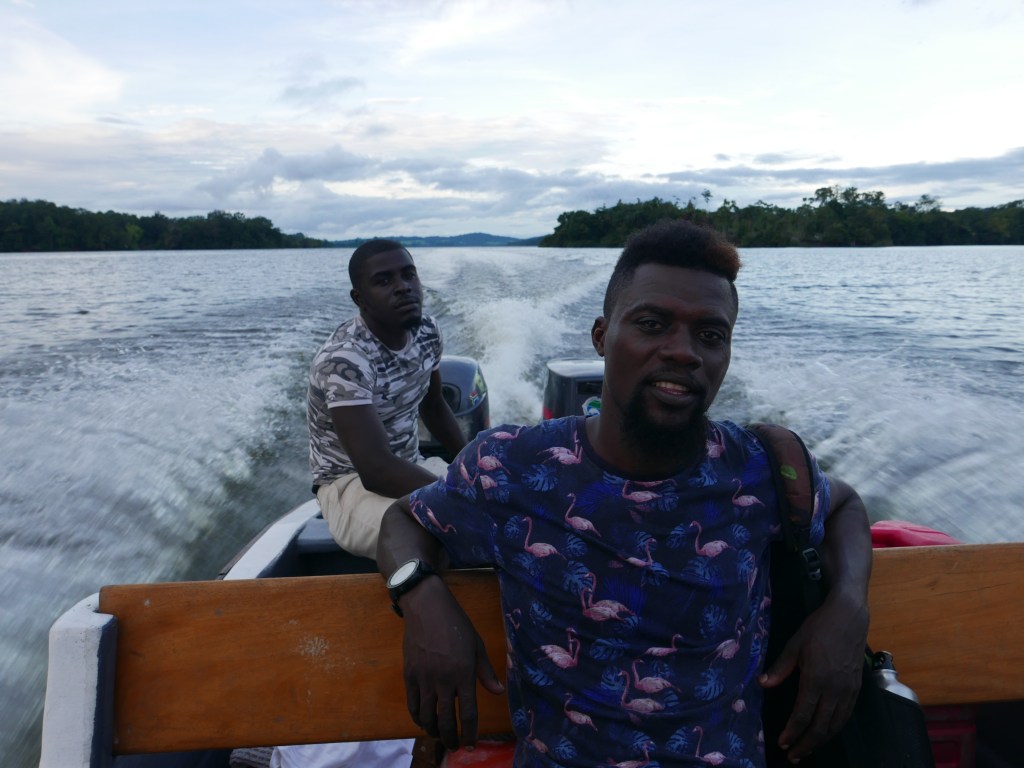
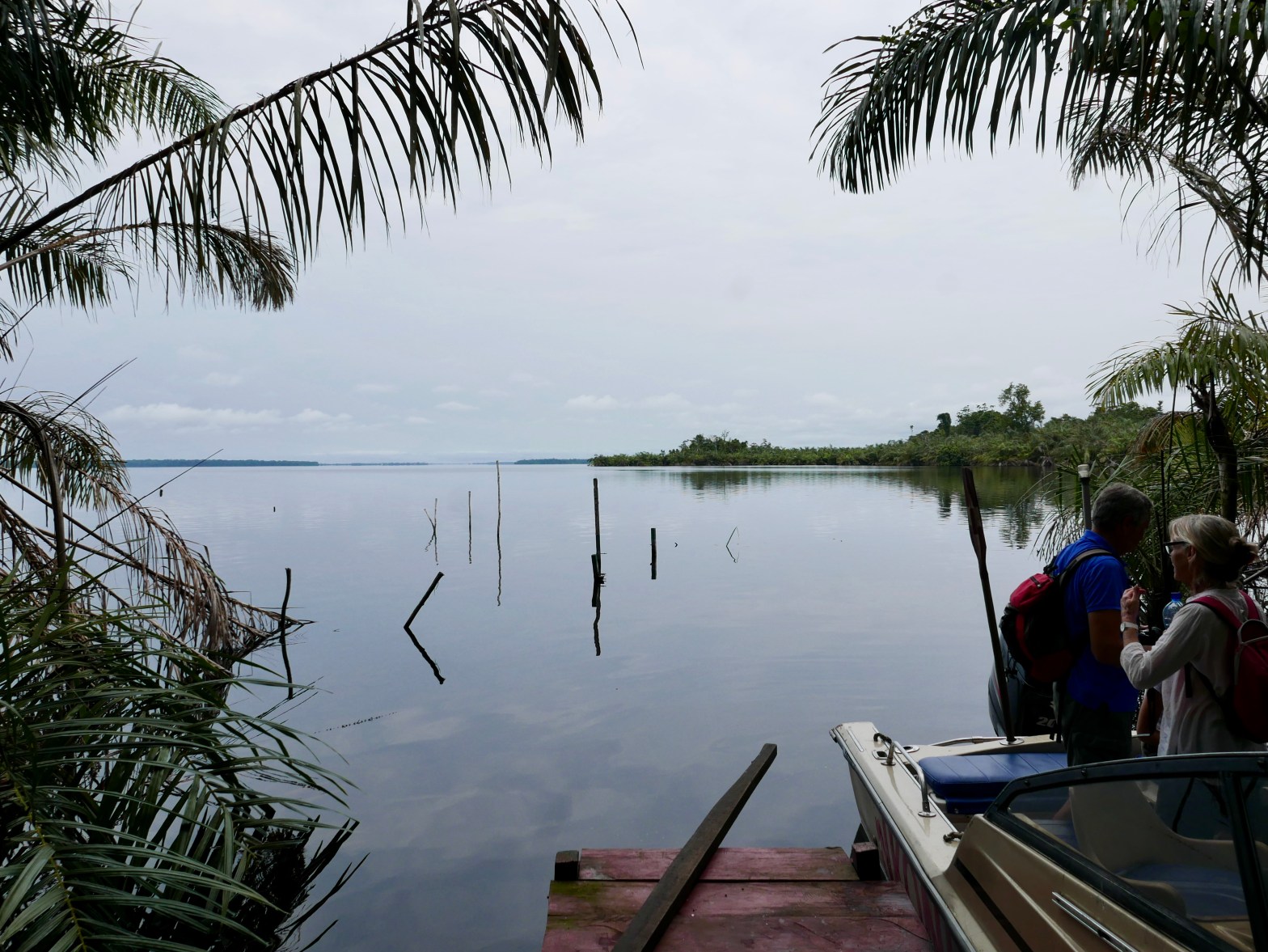
Our motorcanoe captain for the afternoon is called Ibrahim. He’s a young and strong guy with a constant and contagious smile on his face. He know the secret entry to lake Zilé. It’s a very narrow water path in the mangrove, which then winds through tall reeds. Behind the reed curtain lies the lake, peaceful and spectacularly wide, dotted with little green islands. Some of these islands are occupied by fishermen who use them as a base so they do not have to go back and forth to Lambaréné. Some of them are perfectly green and unoccupied, such as “Sacred island”: according to the local legend, the few people who ventured on it never ever came back. So even though it looks fairly small and even welcoming, you will never find a boatman to take you there.

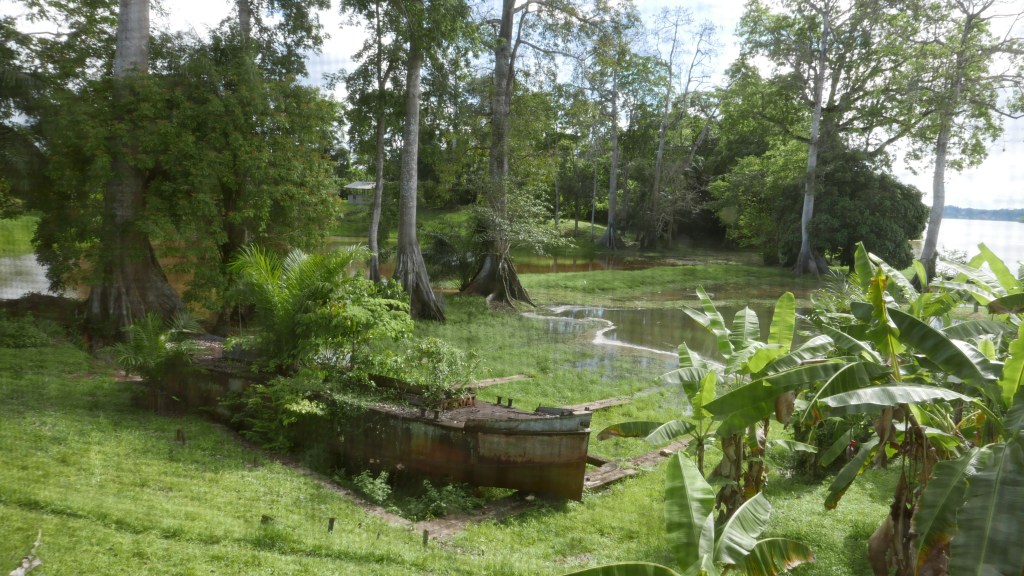
At one point, only a tiny stretch of land separates lake Zilé from the Ogooué river. We step out of the boat and have a look at the one-century-old remains of a small woodcutting factory created by the French. Rusty Renault machines and motors, the green ghost of a boat called “Corsaire”… it all looks very mysterious and unlikely, and the locals do not know much about what happened here. There seems to be quite a few of these places in Gabon, quickly deserted after decolonisation, and whose owners took away the stories and history with them.

Back on the Ogooué river, we start looking for hippos. Unfortunately the water levels are high as we are in rainy season, so there are fewer stretches of land for them to roam around. After an unfruitful search, we turn round and head back to Lambaréné, slightly disappointed. But Ibrahim and our guide Yannick have not given up and keep on scrutinising the waterline. Suddenly, their eyes see another pair of eyes, popping out of the water. We slow down, then completely stop the engine. Three huge beasts are there, a few dozen meters away.

During 7 or 8 suspended minutes, we see their heads and hear them at intermittent moments, as they are noisily coming to the surface to catch some air, then go back underwater for a little while. The thing is, they are slowly but surely getting closer to us each time they pop out. The girls are not exactly at ease, and after all it’s one of the most dangerous animals on Earth. Ibrahim, as a responsible captain who would prefer to get paid at the end of the day by living customers, turns on the engine. We wave goodbye to our grey friends, from whom we will not bring any photo nor film home – a camera would have ruined the intensity of the moment.

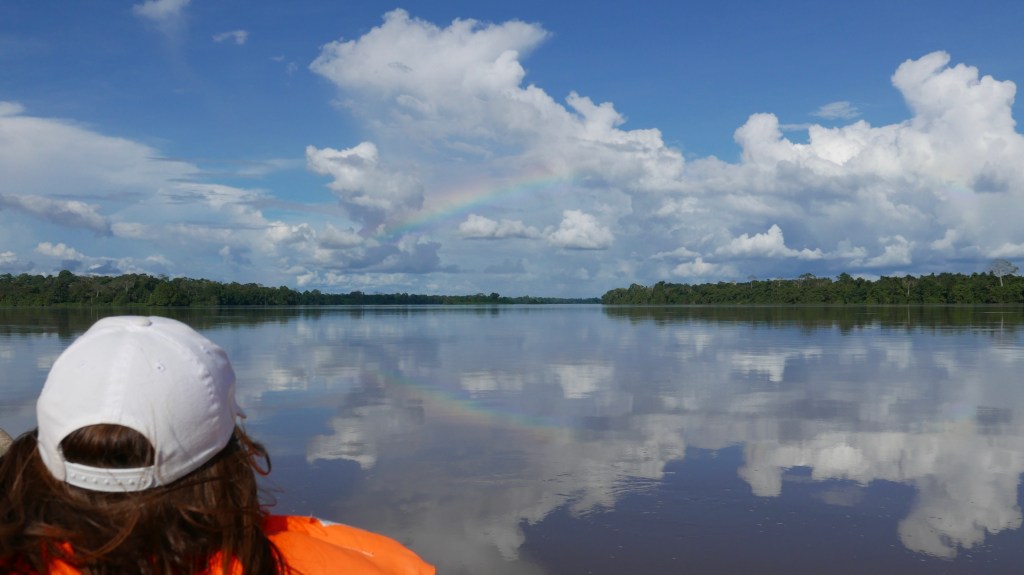
As we happily hover back to Lambaréné, a rainbow crowns this glorious afternoon. Sometimes, you get lucky!

Tsam-Tsam time

School holidays! We have one week ahead of us and after many months sticking around the Libreville region, we are off to Lambaréné for the second time this year, only this time it takes a negative Covid test to get there. We are getting used to the gruelling 5-hour drive, however not yet to the bushmeat on regular display on the side of the road (gazelles, porcupines, turtles, bush pigs, monitor lizards hanging from ropes, some of them still moving…). Eventually, we appreciate finding ourselves back dining and sleeping at the venerable Albert Schweitzer hospital (about which you may read our earlier post).

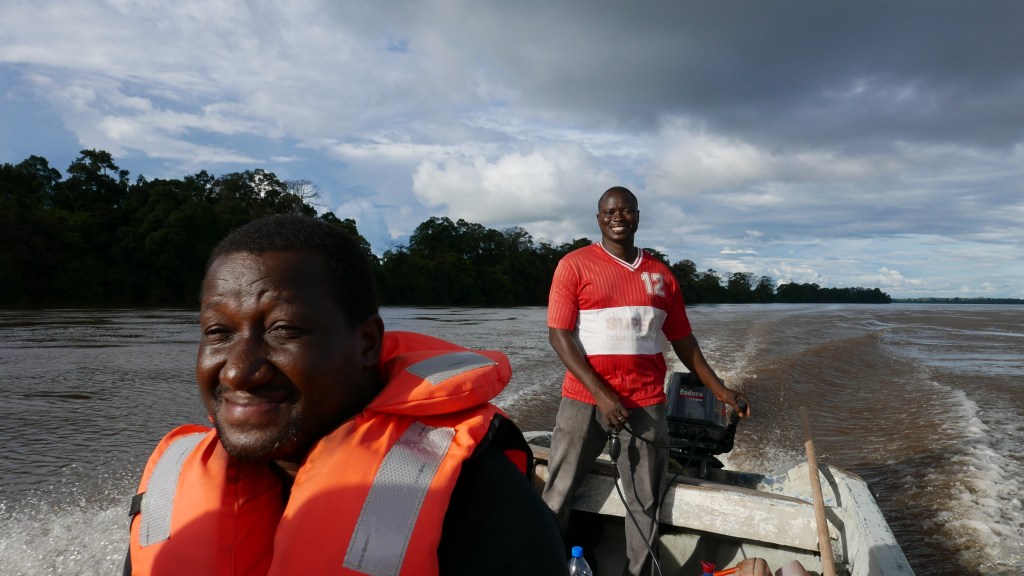
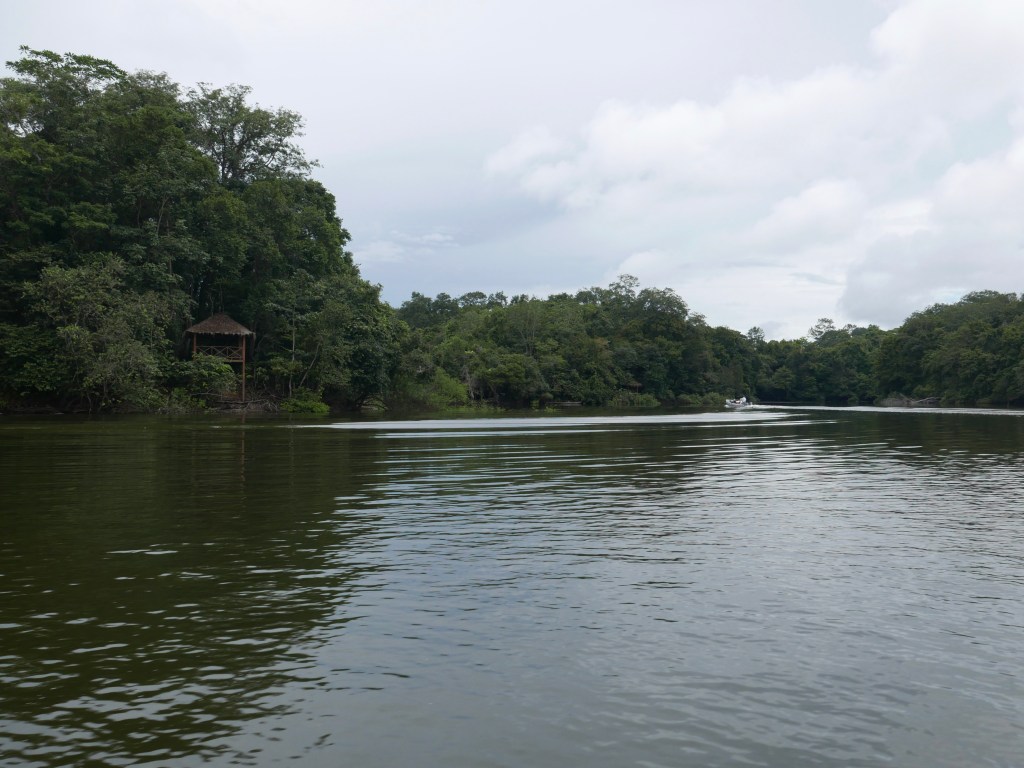
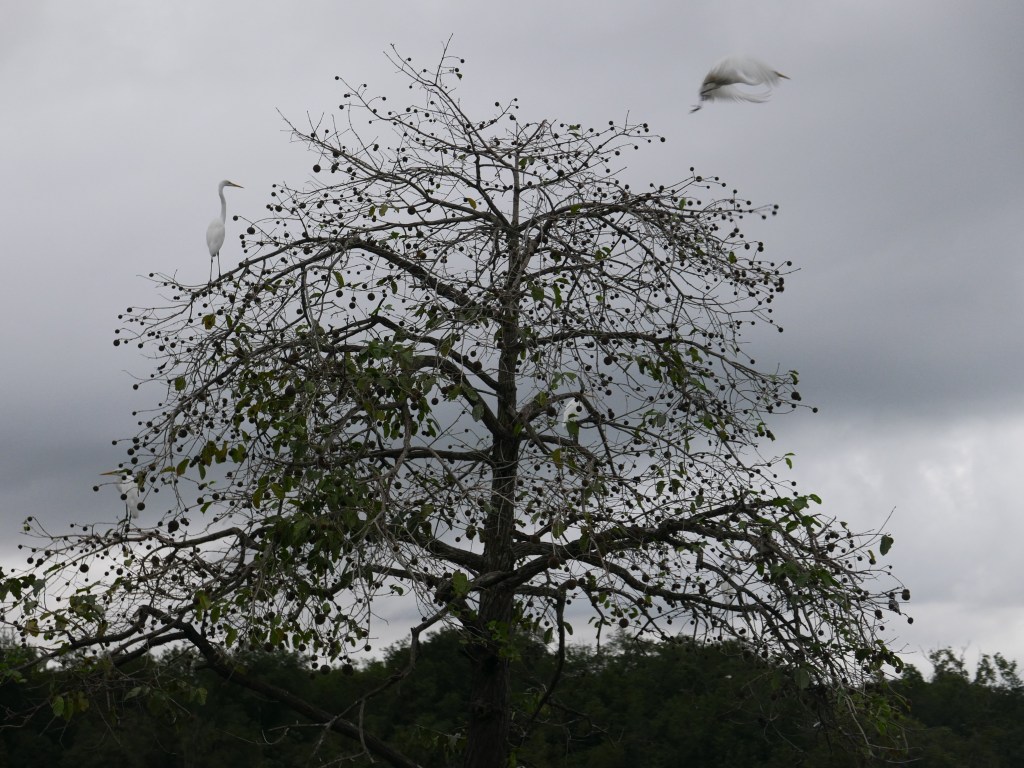
The next morning, we meet Cyril, who takes us aboard his motorboat down the Ogooué river, fringed by two thick green walls of equatorial forest. After 45 min, we take a left turn into the mangrove. The water path is getting narrower and airier as we enter the “pelican alley”. And indeed we soon seen them, sitting in and flying around their nests built on the high branches of trees that look like apartment blocks for birds. Their immediate neighbours are flocks of white egrets, and some grey-feathered herons.

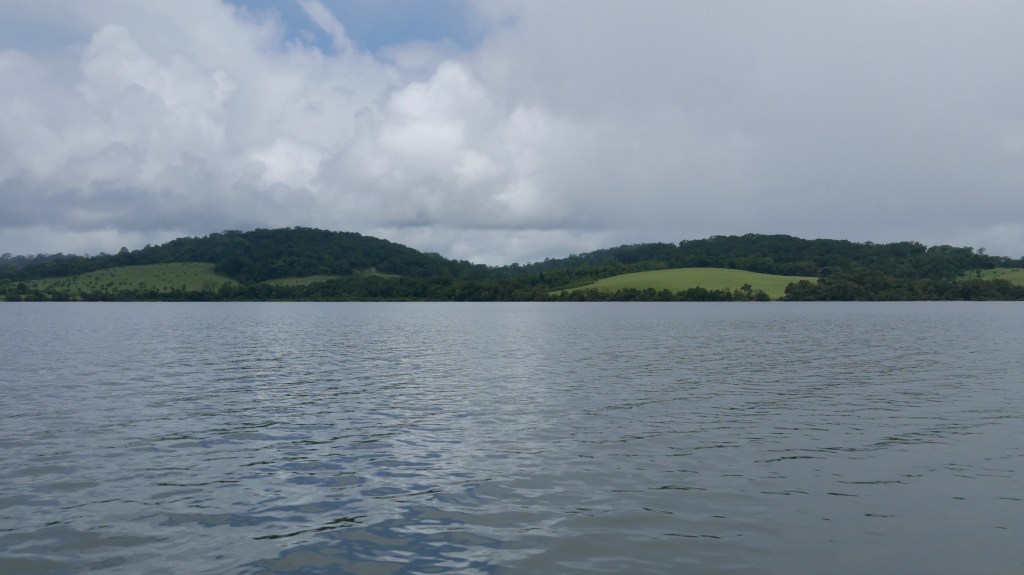
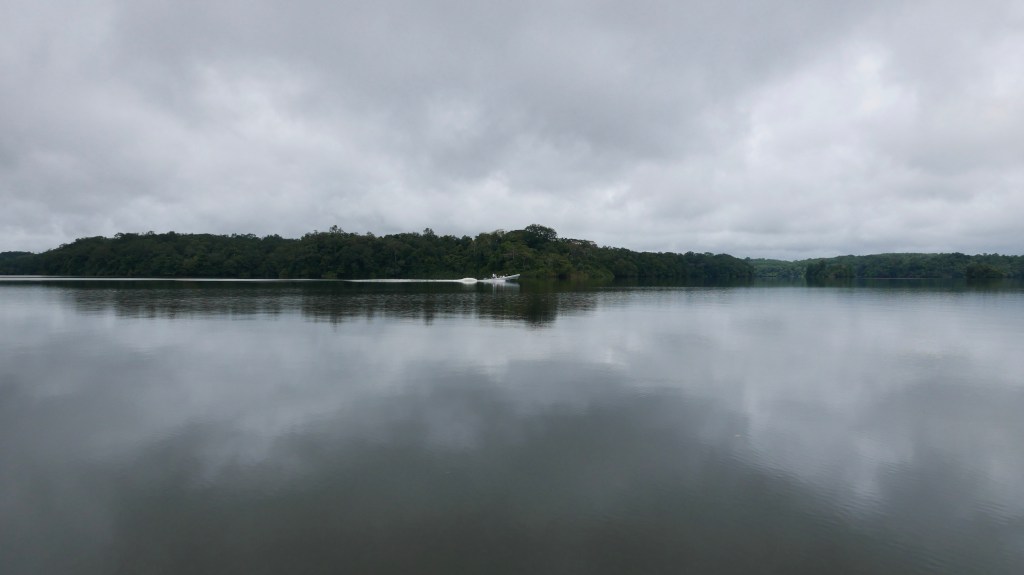
We then enter the great wide open : the peacefully spectacular lake Onague. Cyril invites us to abide to the tradition for first-time guests in the area to wash our face with the lake waters. Around us is a surprising mix of forest, green hills of savannah, and tiny villages nestled on the banks.

We voyage further on to lake Oguémoué and reach our destination: Tsam-Tsam, an ecotourism camp settled a 2-min boat ride away from the village of the same name, here.

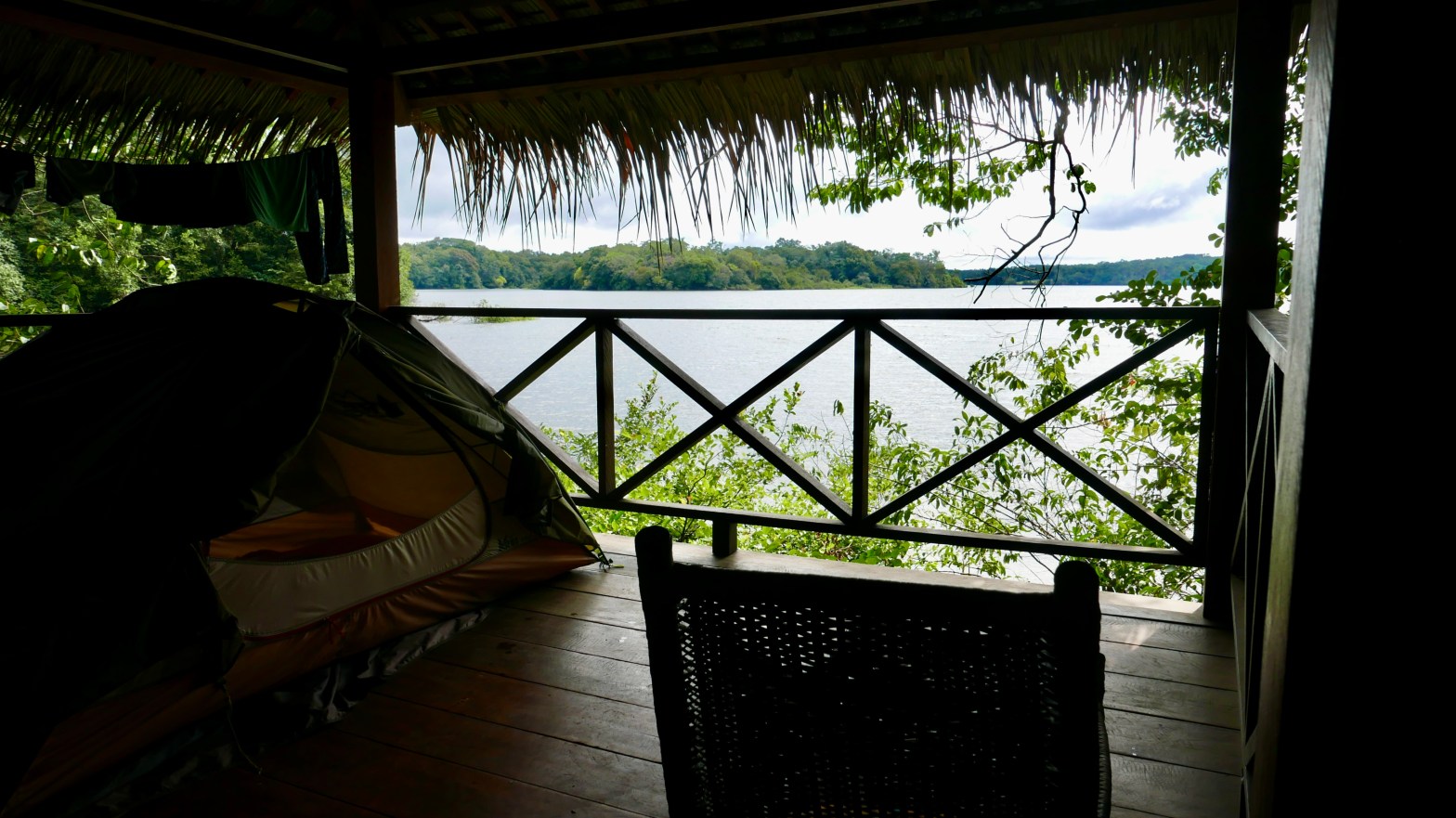
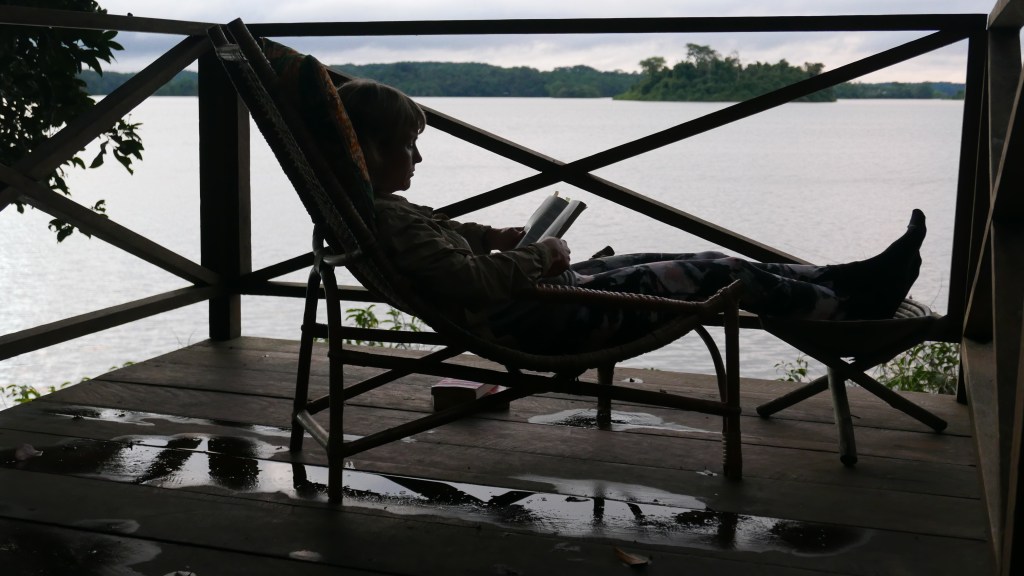
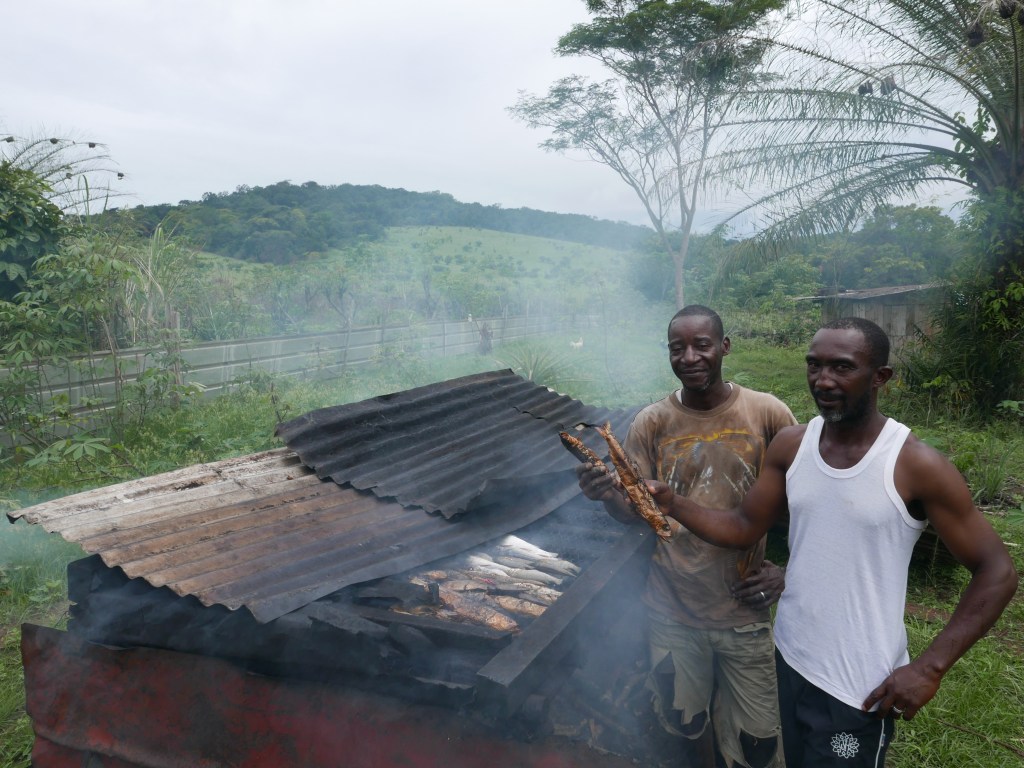
The camp consists of a few wooden and roofed platforms, on which comfortable tents are installed for guests, and a main platform that fits the dining table as well as a nice chillout area. These installations overlook the lake and seem to dissolve in the lush surrounding forest. Dry toilets, no running water. We take our showers with buckets of lake water. Food is cooked by a few ladies from the village. We spend a few days enjoying the scenery and taking things slow, eating local specialties – fish from the lake tastes delicious and we even venture towards challenging African delights such as manioc leaves. The small team at the camp is really welcoming and we slowly drift away from civilisation.

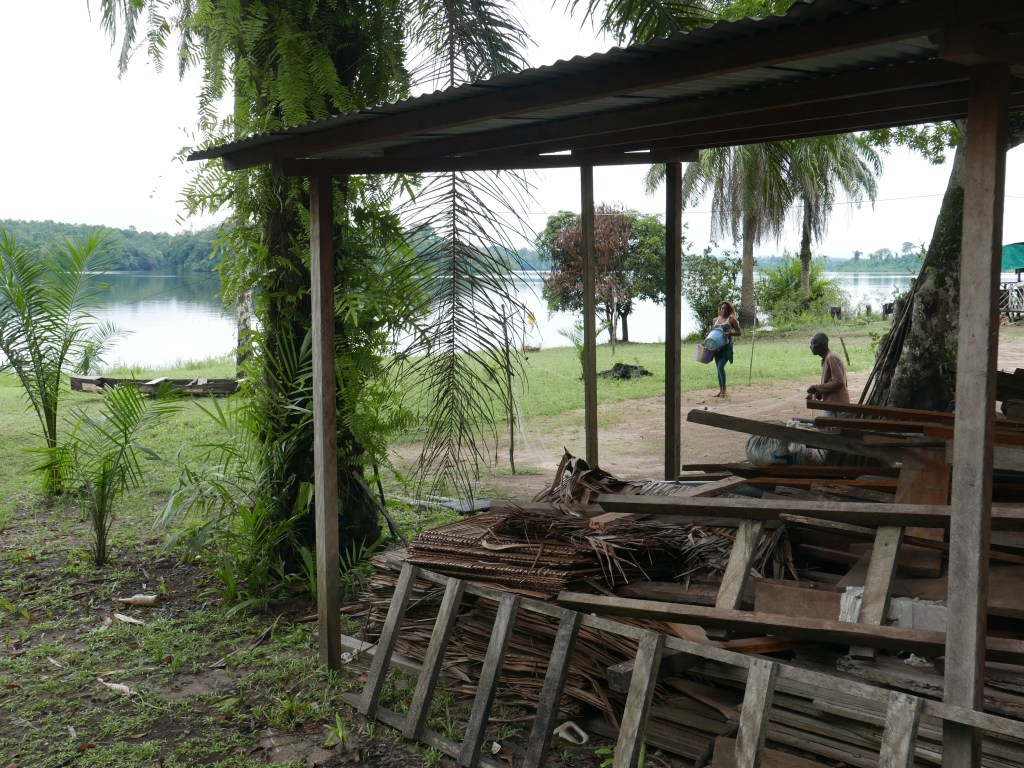
Cyril and his team take us on trips around the lake to visit local villages. Living conditions are very rough, it only takes a few houses to make a village, and the lake and the Ogooué river are the only road that connects people to Lambaréné, 90 min away. Fishing is the main activity. Ecotourism provides a welcome additional source of revenue for the community, even though, given the beauty of the scenery, it could be a dozen times more developed.

Cyril is entirely dedicated to the NGO that he founded with his American wife. It’s called OELO (Organisation Ecologique des Lacs et de l’Ogooué). They work hard in the following priority areas for the region: environmental education, reducing illegal bushmeat trade, sustainable fishing, ecotourism and research facilitation. You may learn more about them and support them here: https://oelogabon.org. Their activity report is truly impressive and shows that their actions positively impact hundreds of people in the region.

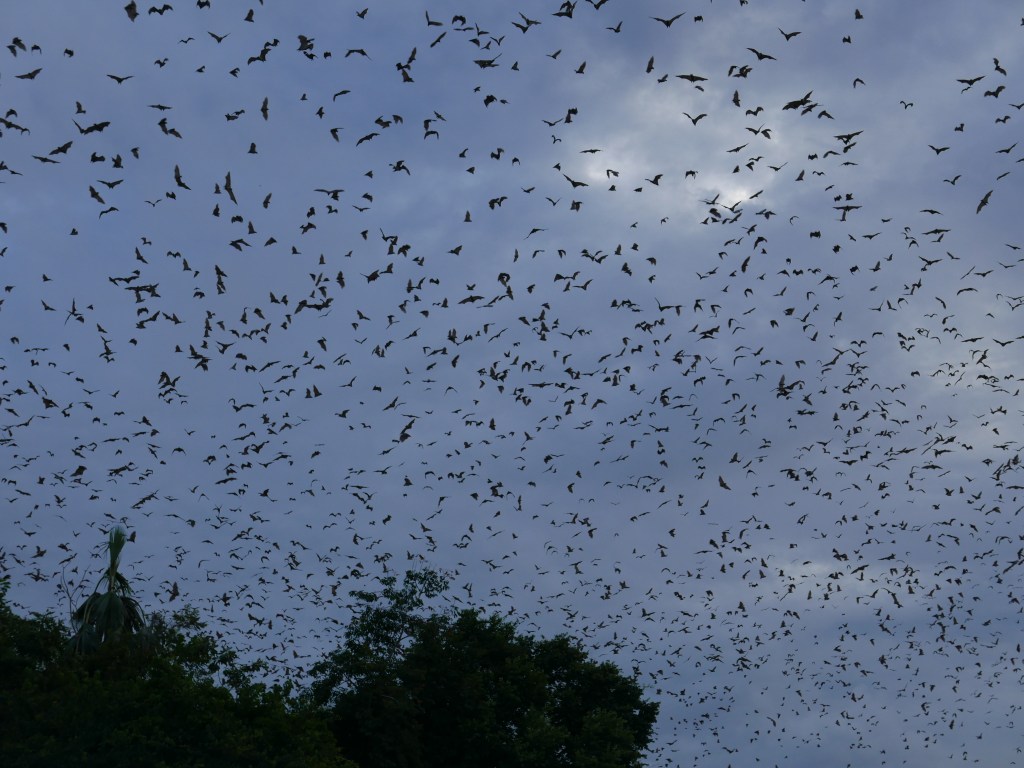
In Tsam-Tsam, we also get close, by foot and by boat to the local wildlife. Beautiful birds abound and share the lake shores and mangroves with monkeys, huge lizards, crocodiles, and of course a few bats.

The highlight of our stay is a walk through the forest, led by Cyril and Joli, a very experienced guide. As usual in Gabon, we do not see the animals because the forest is too thick, but we hear them all around and find their footsteps on the ground. At some point, the noises get so close and so loud that Joli asks us to stop and kneel down. He then starts a fascinating series of imitations of several animal noises, ranging from the capuchin monkey to the bushpig, from the hornbill the gorilla. He uses his mouth and hands in ways unseen and unheard in the Western world, getting in a sort of trance. And animals respond immediately, they get louder even though we thought it was not possible. We hold our breath and open our ears for 5 minutes of this most amazing spectacle. In the end, it’s all quiet again, and we have only seen the shadow of a monkey’s tail, but we are all in a state of awe.

A moment later, we find ourselves on the banks of the so-called “mystic lake”. Joli spots the eyes of a crocodile from 200 meters away. Putting his hands around his mouth, he starts producing another fantastic throat noise, like someone banging on soft drums at a regular pace: it’s the noise of a crocodile in distress. We then just have to watch the prodigy happen… the animal is slowly, cautiously gliding towards us… until he is close enough to see that he was tricked, and decides to turn round. Joli has learned to speak in animal tongues from his father and grandfather who were forest hunters. Now we fully understand why Gabonese are reputed to be some of Africa’s most authentic “forest people”.

Joli has another talent: he can play the mouth bow (l’arc-en-bouche), an instrument made of a wooden bow and a string that was originally invented in Gabon by the Pygmees, and later spread through other ethnic groups and communities. The sound of our evenings in Tsam-Tsam is deliciously monotonous and hypnotic.

Les Monts de Cristal

Bonjour ! At last, we’re back to discovering Gabon, after a long forced break. Sanitary measures are still in place, but they have been applied in a lighter way throughout the country since we came back at the end of August from our European Covid summer retreat. So on this last weekend of September, we take on the Monts de Cristal national park, which name alone suggests Indiana Jones-level adventures.

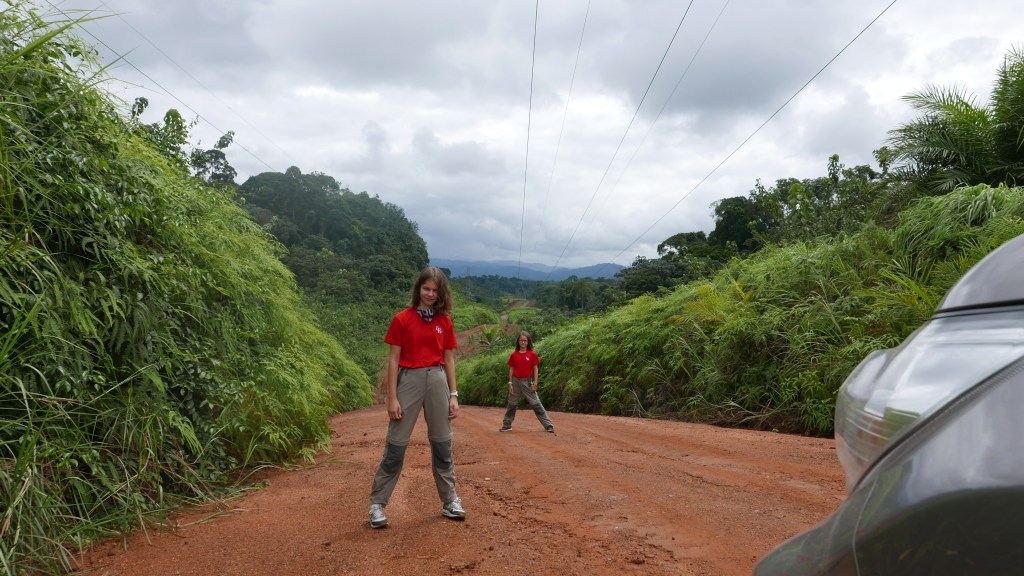
We hit the road early in the morning, but very quickly it’s the road that hit us. The main national road, the very one that should be smooth and shiny enough to bring travellers and businessmen inside the country, and manganese and timber back to the capital, is nothing but a festival of potholes, gravel and dust from kilometre 30 to kilometre 80 after Libreville. It seems unbelievable, but the ocher mud and dirt road going to the national park is in a much better state and feels like a relief for both the car and our bodies. In the end, it takes us 4,5 hours to drive 110 km and reach our destination…

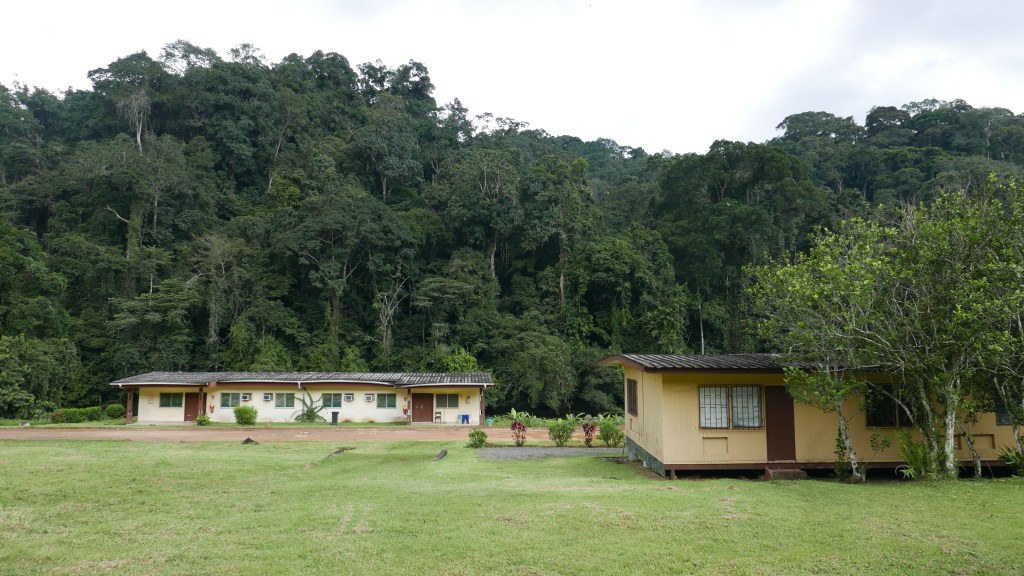
This dirt road to the park is actually maintained by the national electricity company. The reason for that is that the Monts de Cristal surround 2 of the country’s biggest dams, which provide electricity for Libreville. That also means that the electricity company is your point of contact if you want to visit the park: this weekend, we are staying in the workers’ shacks, and eating in their canteen. You cannot just come to the park unannounced: you have to contact well ahead the electricity company, and book and pay everything through them in Libreville. That’s how easy tourism in Gabon is. As usual, the good side of it is that the 7 of us – we came with 2 friends and our guide – are the only visitors around.

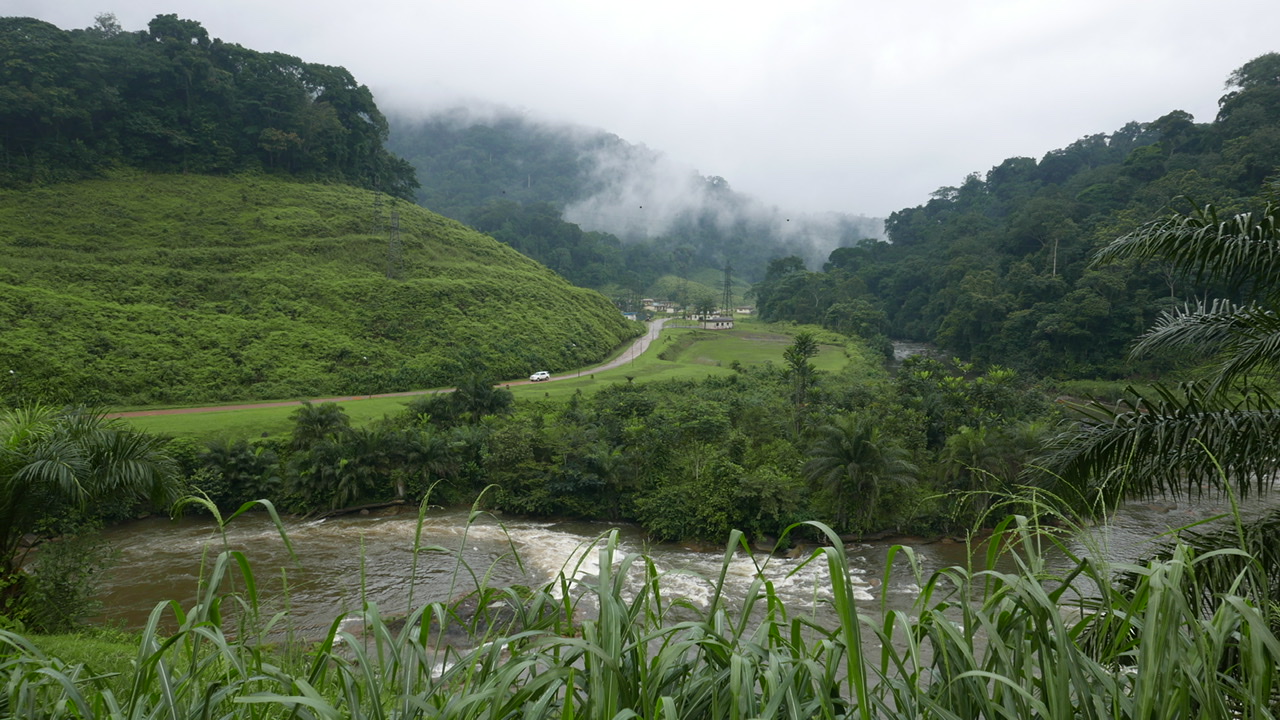
The Monts de Cristal offer an eerie backdrop: a very dense and lush equatorial forest set on endless hills, clouds hanging on the top of the trees. We take a first hike with two rangers from the ANPN (Agence Nationale des Parcs Nationaux). They tell us the stories behind each plant and tree, and about their unique lifestyle, split between 1 or 2-week stays in the park, away from everything and everyone (forget about 3G here), and rest periods when they join their families in Libreville. We also learn that a lot of their job is about patrolling and making sure only authorised visitors stay in the park. And sometimes this can be a risky activity: a couple of nights before, the unarmed rangers arrested a group of 6 armed poachers in the middle of the forest, at around 3 o’clock in the morning. When we ask them how they did that, they simply respond that their training includes several techniques to face such situations. The poachers did not kill any elephant and were sent to jail immediately.

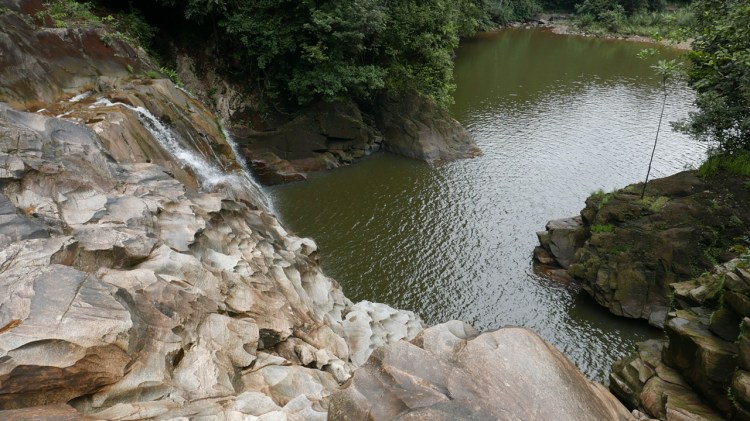
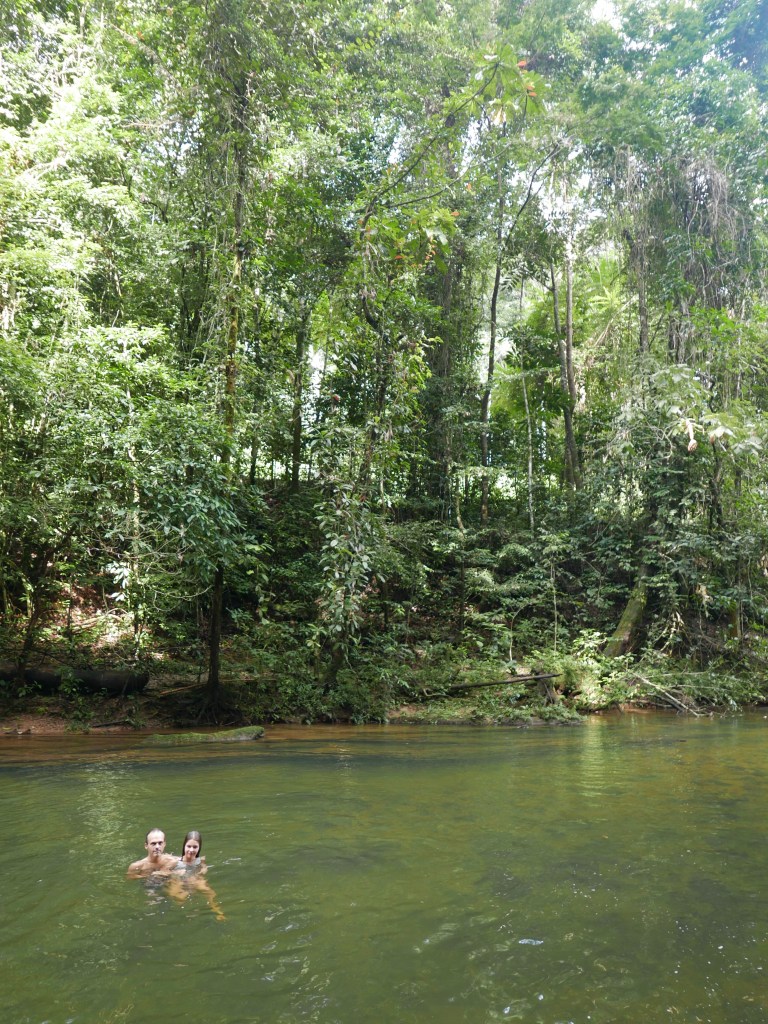
The hike is short but tough, and the weather is unsurprisingly hot and humid. We reach a beautiful cascade. The rangers tell us we should not linger on too long, as the guys up there may open the dam’s valves anytime – they are supposed to send a loud alarm warning throughout the area, but you never know. On our way back, we take a life-saving swim in a crystal-clear river.

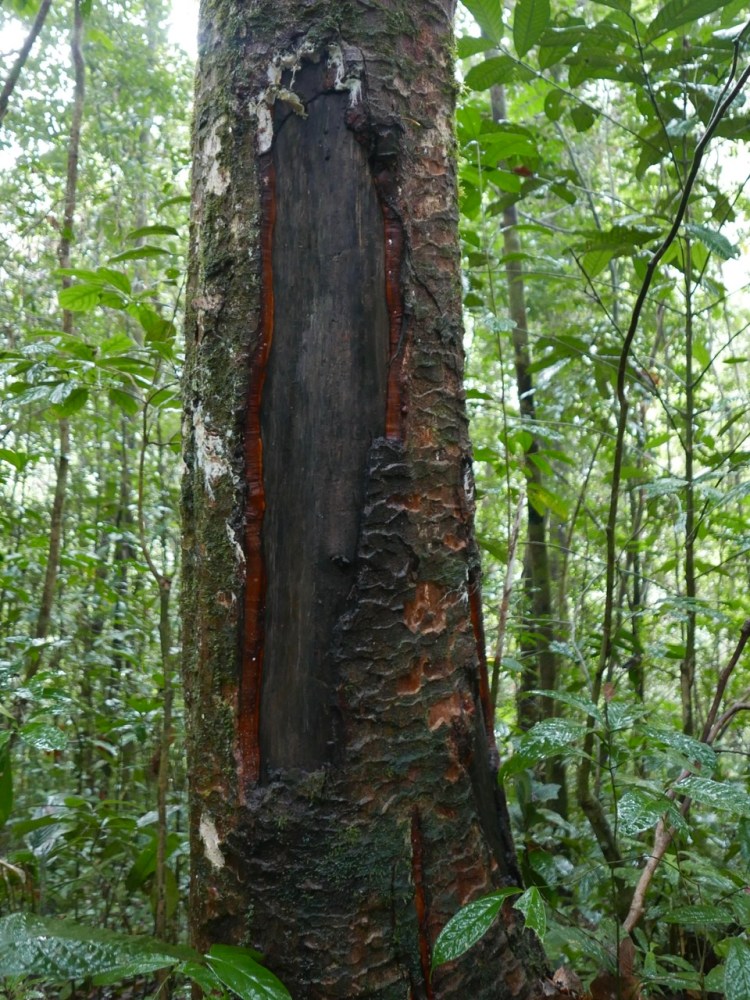
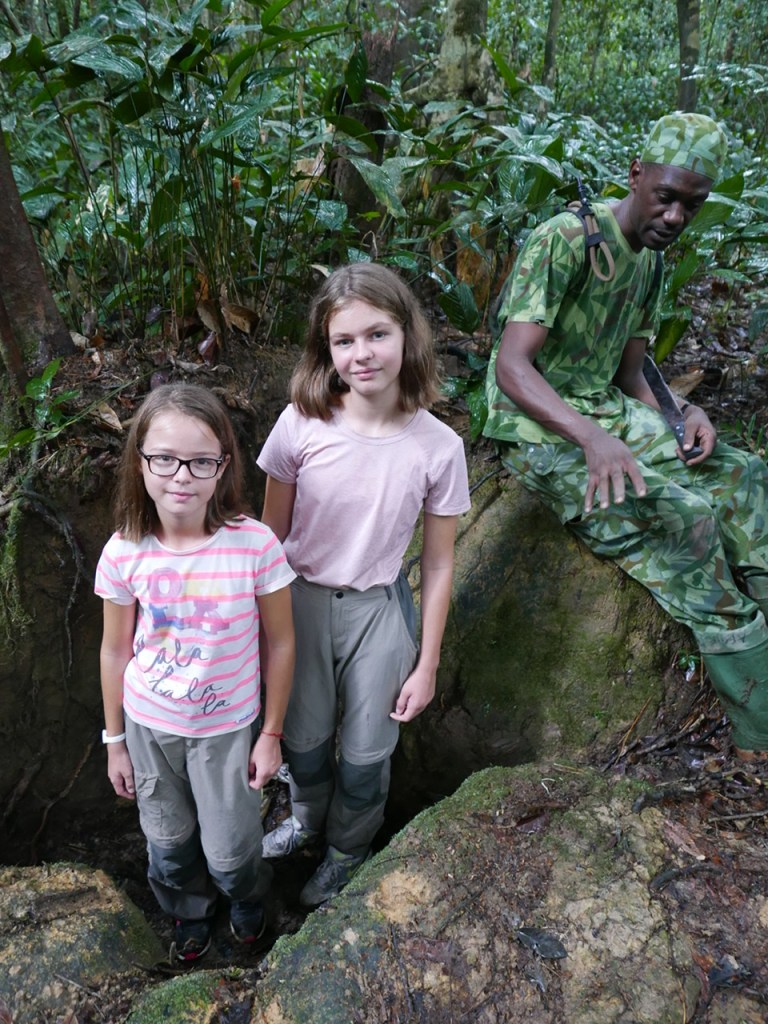
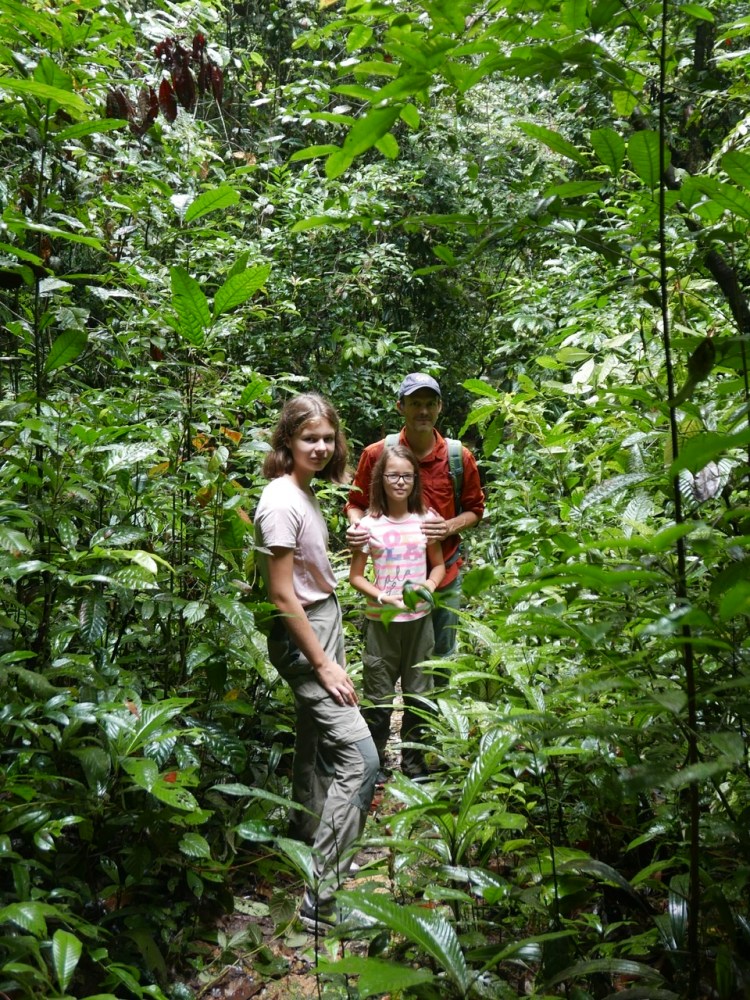
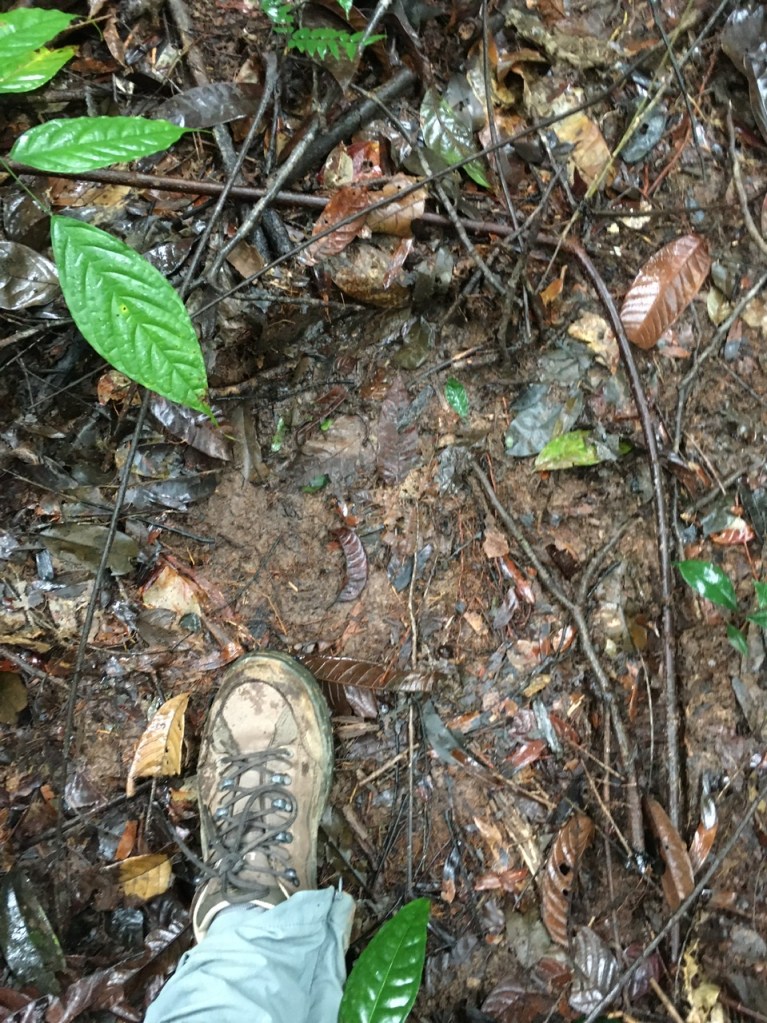
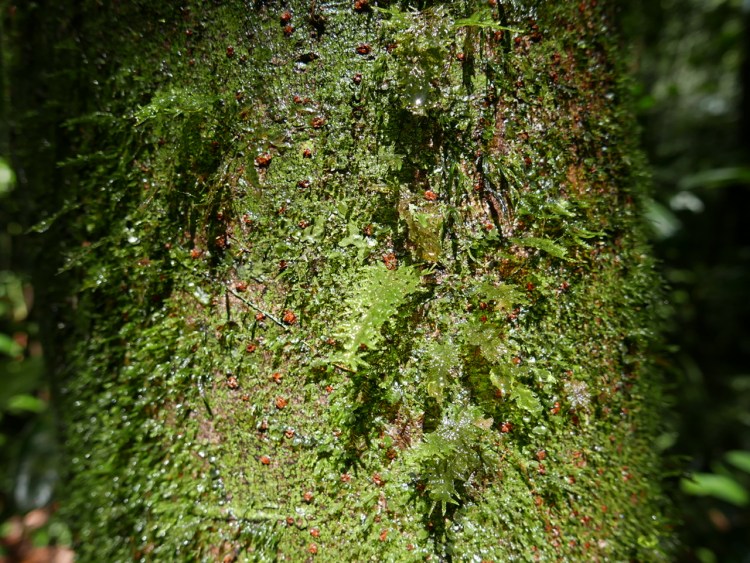
In the evening, we initiate (with moderation, these guys are professionals) the rangers to the pleasures of transparent East European liquors, have a brilliant dinner at the electricity company’s canteen, then a peaceful night in our shack. The next day, we are fit for a longer hike, which takes us straight into the steps of elephants. Once you are in the forest, you see traces of them everywhere. On the photos below, elephants have been rubbing their backs to the trunk of this tree, and digging the earth underneath another tree, which roots they know feed on special minerals that they need. Milla and Flora are standing in the hole they made with their tusks. One of them has left fresh prints on the ground and an extremely strong urine smell in the air – we may look relaxed on this group photo, but in reality we are not. The rangers split in two – one of them stays with us, and the other walks ahead to check the surroundings are safe. At some point, he sees traces indicating that the animal has taken a turn. Good! We can walk further. No one wants to meet an elephant in such a thick forest, where you hardly have space to retreat if needed.

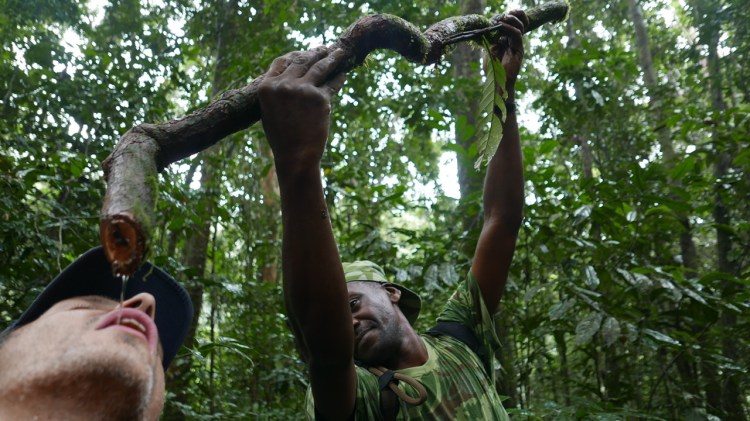
Kevin the ranger introduces us to the most famous tree species of Gabon: okoumé, okala, kevazingo… And like earlier this year in the Loango National Park, we drink pure water from the amazing water liana, which can save your life should you find yourself lost and without water in the forest – you just have to know how to identify this particular liana among the dozen of different types of liana.

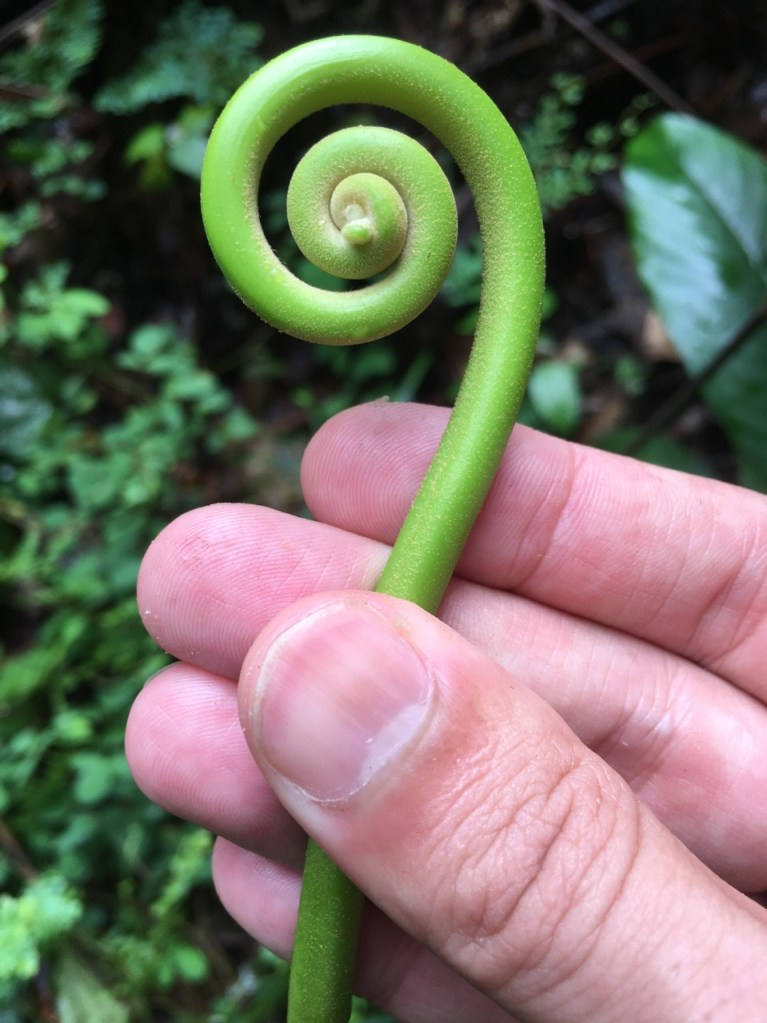
All along the trail, we find wonders in the bigger and smaller details. And still, this special feeling of being surrounded by forest spirits.

The drive back to Libreville feels a bit shorter somehow – this time, we know exactly what we are in for, and this dreadful road is part of the experience after all. We really loved the Monts de Cristal, one weekend was a bit short, but if anything it made us want to come back!

T-T

Look in front, and watch behind

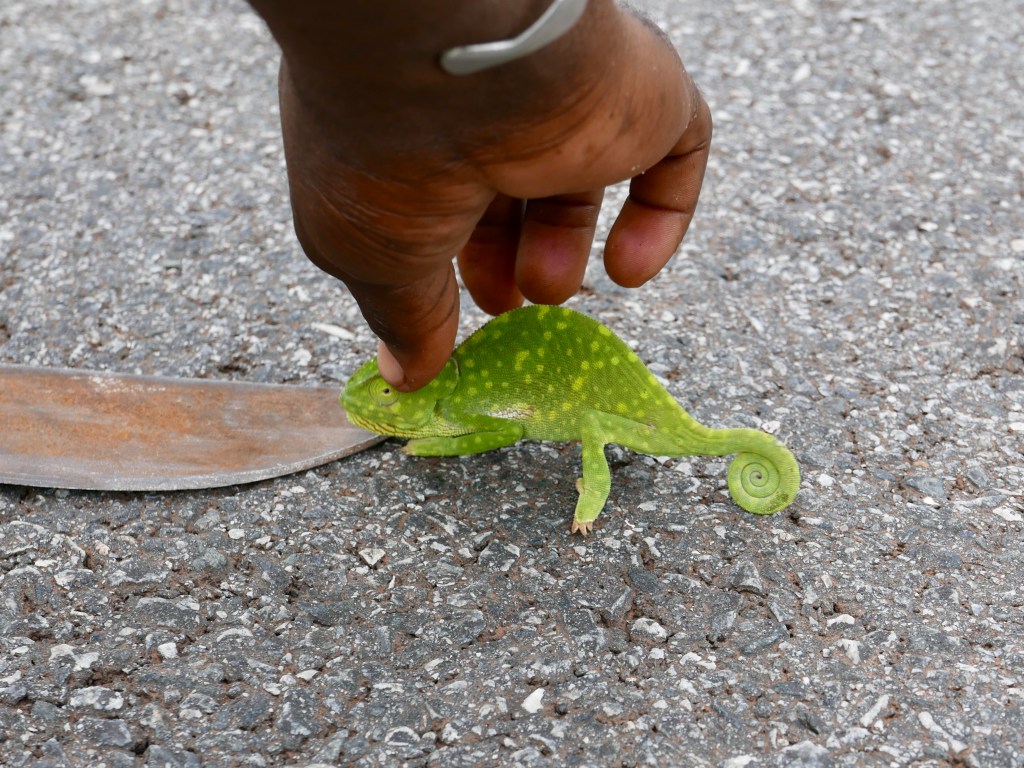
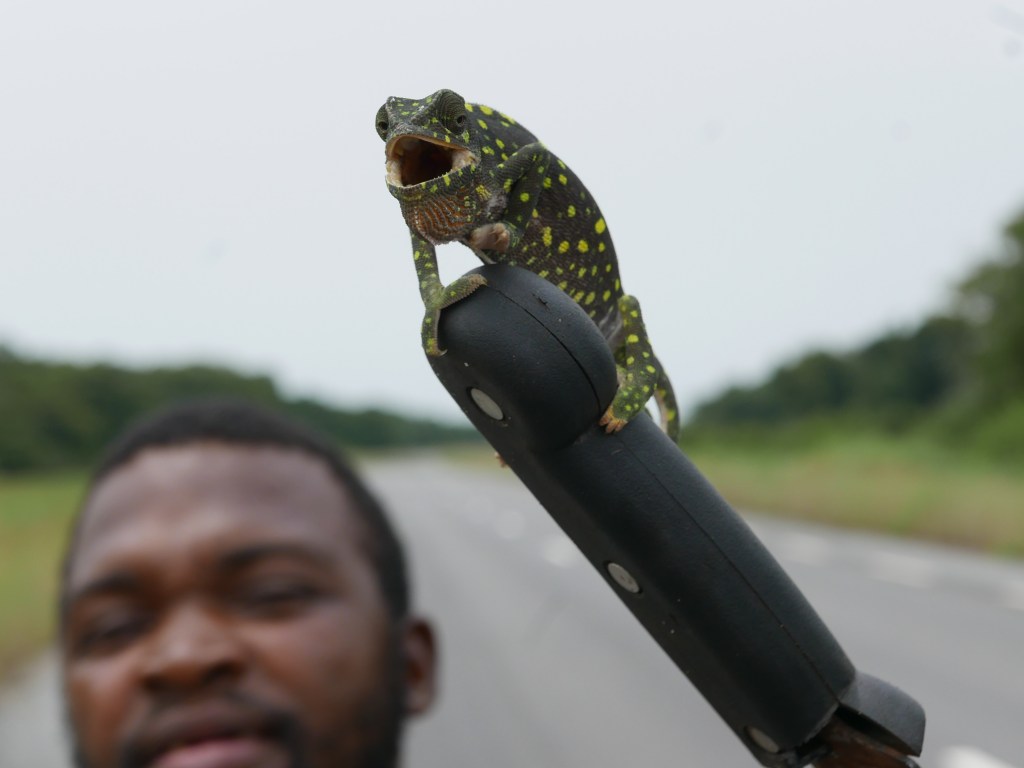
Our 1-week family adventure is coming to its end. We are driving on the new and empty highway to Port-Gentil in the company of Cédric, a car mechanic who regularly comes down from Libreville to Enamino to check and repair Philippe’s Land Cruiser and Hilux. He is Gabonese and Congolese, and a huge fan of Fally Ipupa, an immensely popular singer from Kinshasa, whose songs fill the air around us. As we are absorbed in romantic stories about a girl as sweet as sugar cane, Cédric suddenly slows down, stops the car, and starts driving full speed in reverse (on the highway, yes yes). As a native from Omboué and a friend of Philippe’s, Cédric the mechanic also has the eagle eye. He has spotted a tiny green dot crossing the asphalt… As we come closer, the green dot is not green anymore. Cédric actually follows this old African saying: “Move like a chameleon: look in front, and watch behind”.

We drop our colourful friend on the other side of the road, in the thick grass, where he belongs. This will be our last encounter with inhabitants of the Gabonese jungle. In the evening, we are in Port-Gentil, and on the morning after, we are on the boat back to Libreville. These have been some of the wildest days of our lives.

The Fernan Vaz lagoon

Back into the real world after Enamino, we find ourselves in friendly Omboué again. A boat is waiting to take us around the Fernan Vaz lagoon. This lagoon has a significant historical importance, as it has always been a transport and communication hub from and towards the villages of the deep interior, and became a place of commercial activity in the beginning of the 20th century, when pioneer woodsmen started to bring timber on the waters of the lagoon and send it to Port-Gentil, from where it would be exported to Europe and the Americas.

Life in these times around the Fernan Vaz is very vividly described in “La Mémoire du Fleuve”, a book written in the 80s by Christian Dedet on the extraordinary life of Jean Michonnet, the most legendary of these pioneers, who grew up in the lagoon as a French-Gabonese kid. Michonnet developed a very deep knowledge and understanding of the local ethnic groups, and grew businesses involving both local and colonial communities. He also knew Albert Schweitzer well. I could never recommend this book enough, even for people who have never been to Gabon: it abounds with fascinating stories, not told anywhere else.

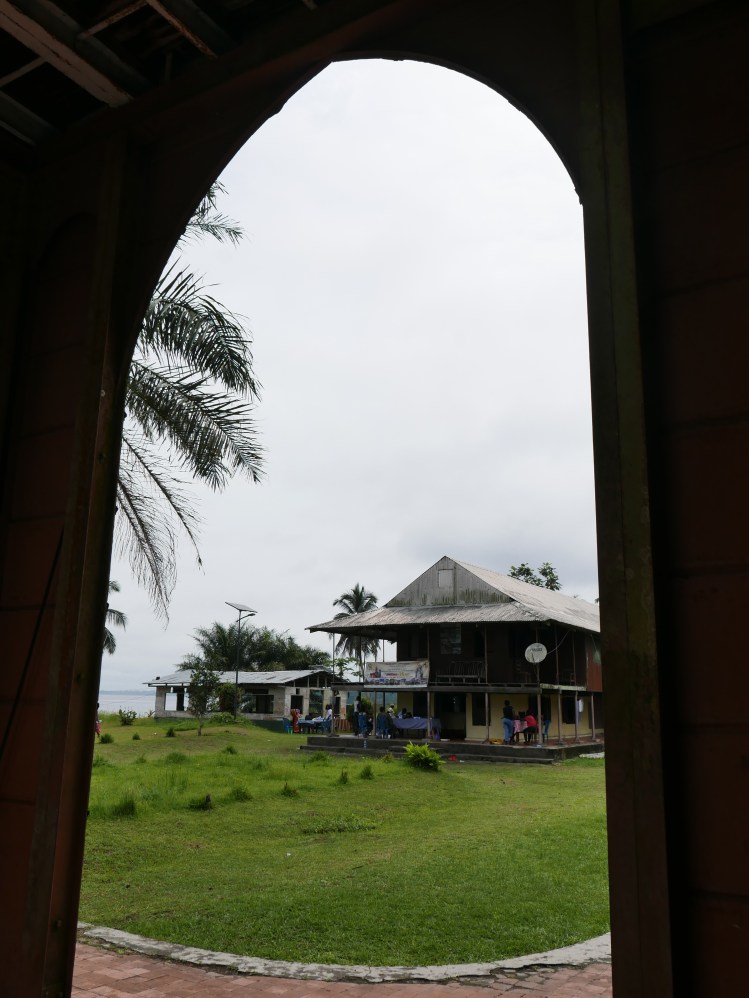
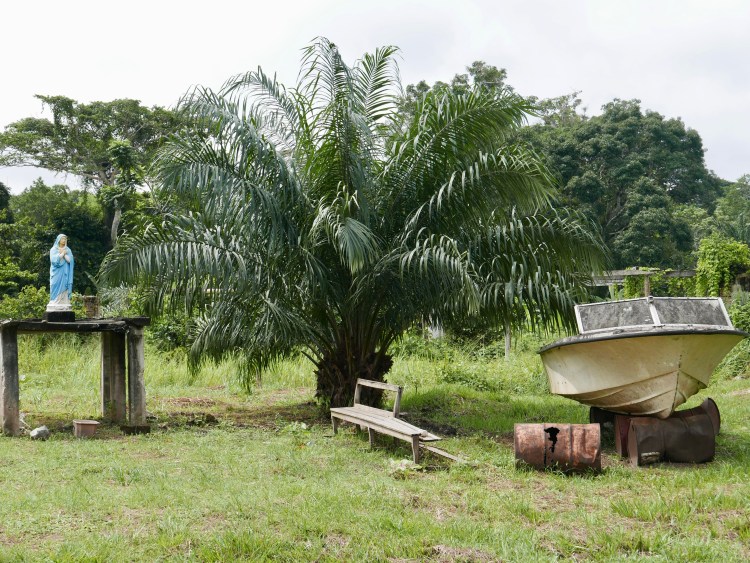
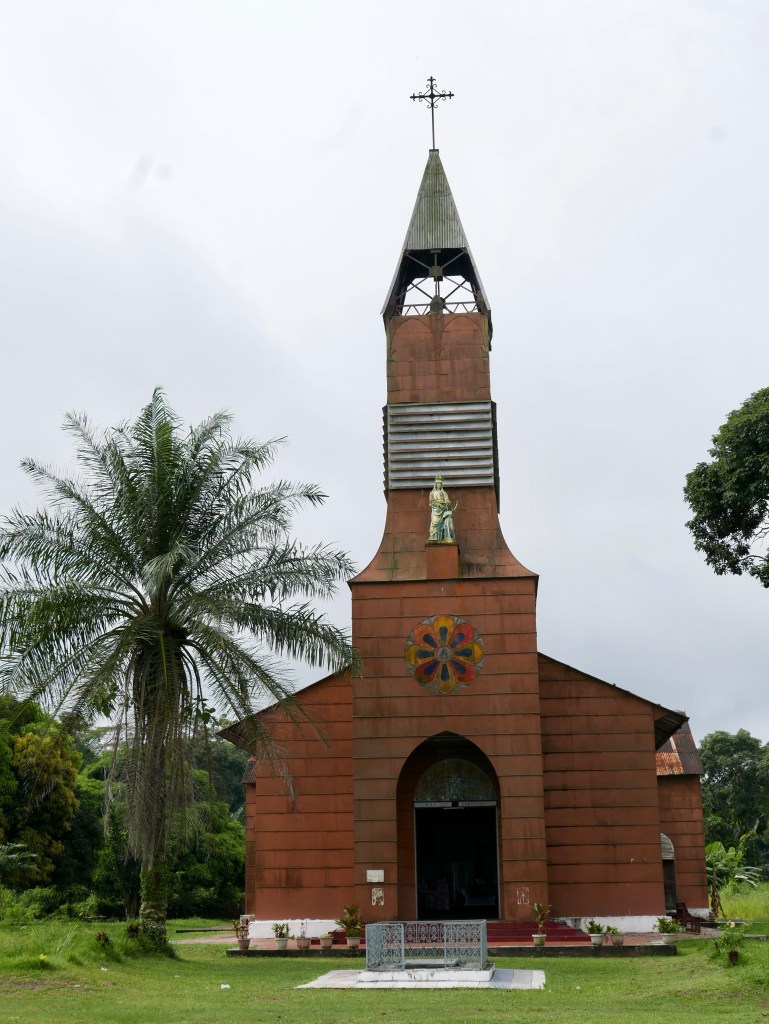
Overlooking the lagoon, between water and jungle, the Sainte-Anne church appears just like a mirage to someone lost in the desert. The Sainte-Anne mission was created at the end of the 19th century, and developed under the patronage of Father Bichet, a priest who came all the way from Brittany and dedicated his entire life to the mission. Since then, it has been the social heart of the lagoon. The mission of course aimed at spreading the Gospel, but Bichet also did a lot to promote education and access to healthcare for villagers.

Today, the historical school still stands and operates, though the classrooms look extremely tired, suffering from humidity and the lack of every basic educational equipment. Across the lush garden, a couple of old buildings still resist, like the dormitories of the school. The newly appointed priest of the Sainte-Anne church takes us around and tells us about his renovation projects. He is full of energy and has taken lots of contacts with potential sponsors, though it looks like a daunting task to gather funds for such a remote place – needless to say, where are the only visitors today.

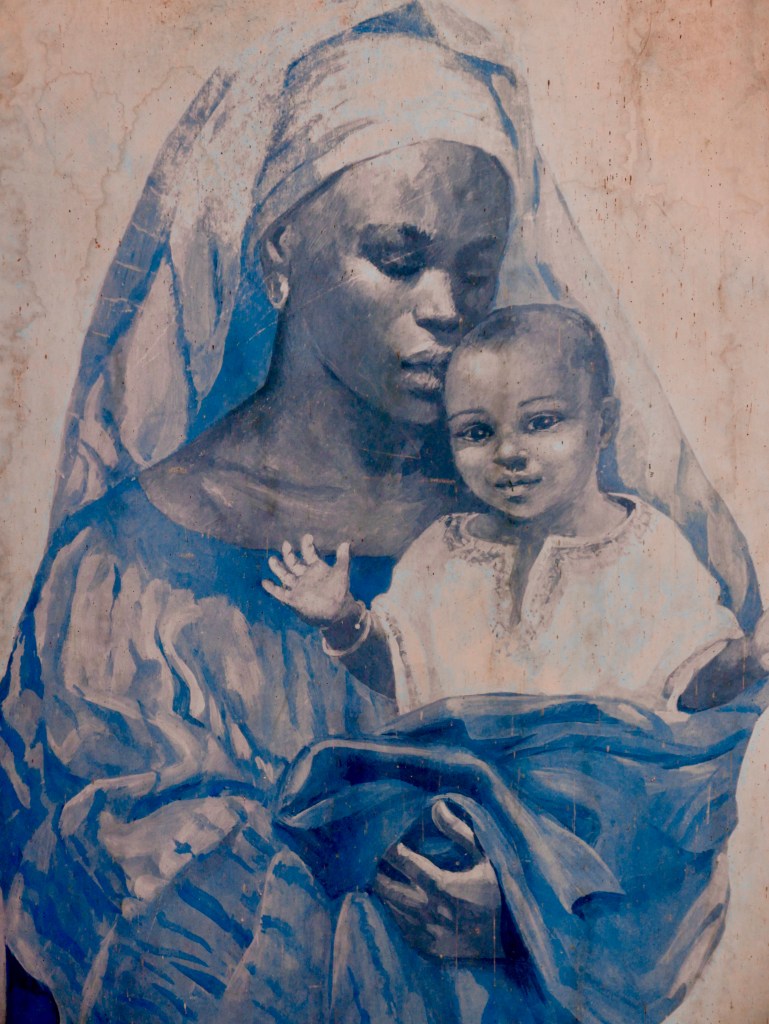
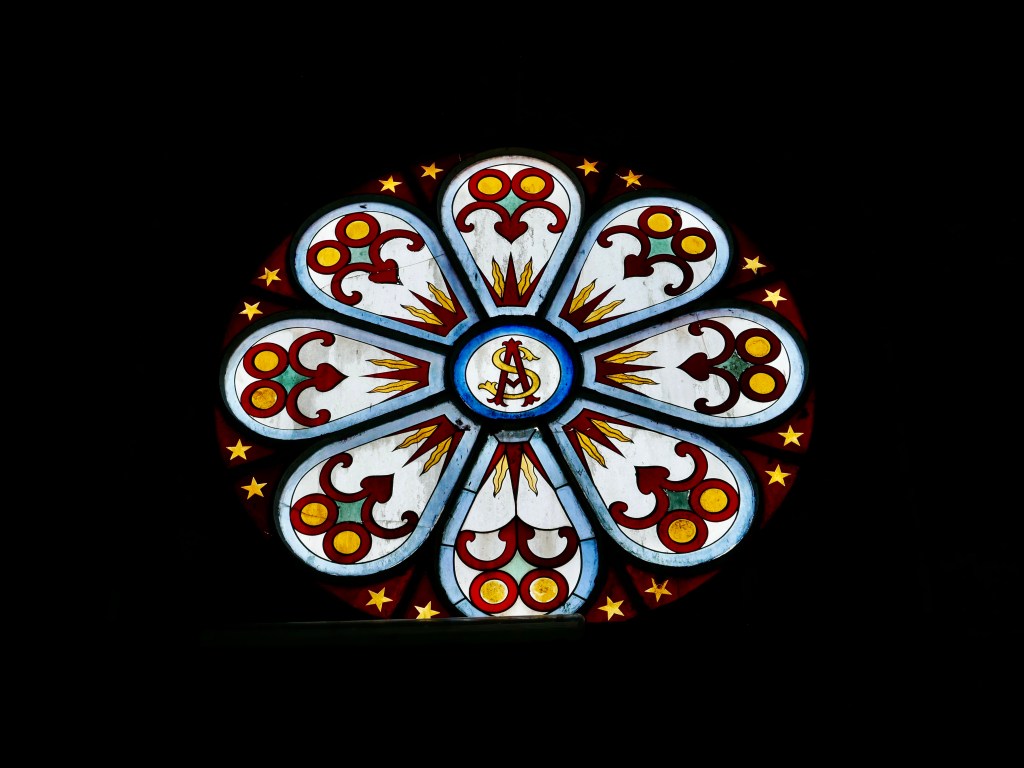
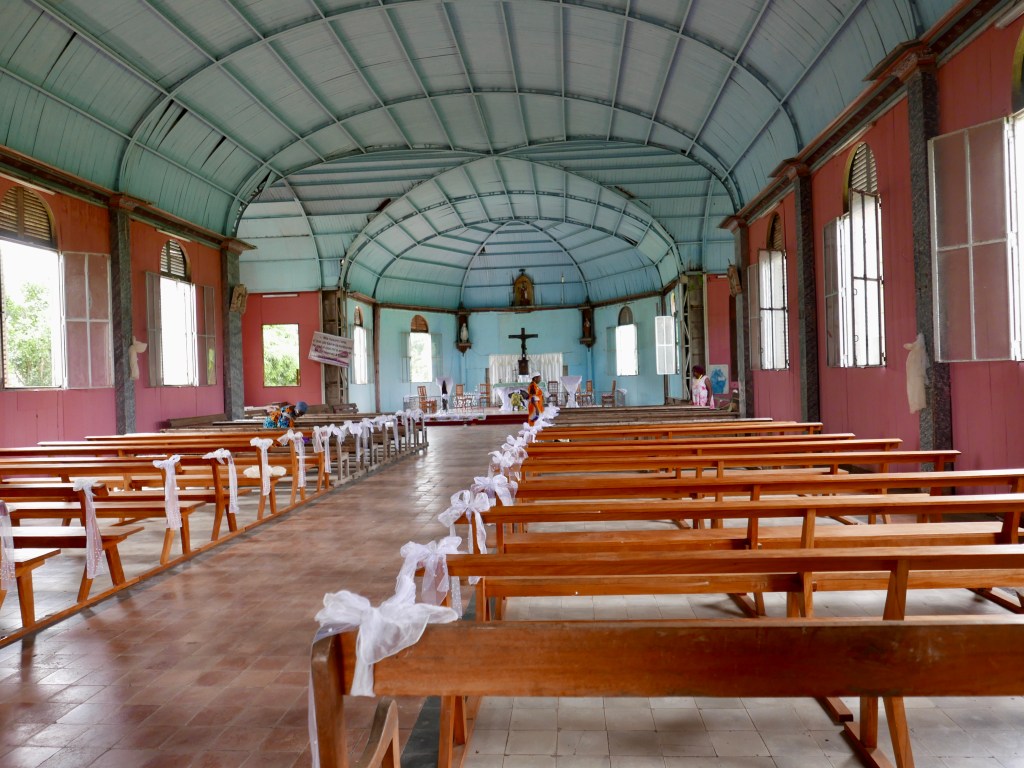
The story of the Sainte-Anne church is hardly believable. It was built in 1889 in the Parisian workshop of… Gustave Eiffel, and shipped in pieces to Gabon to Father Bichet. Then, 30 workers from Senegal assembled it, under the supervision of a French architect. Today, it still draws crowds every Sunday and is full for all important Christian celebrations and inside, nothing much has changed for the past 130 years. The priest shows us how humidity and rust attack its every wall and corner. There are even thousands of a sort of local bee building nests all over and flying around our heads. Still, it’s moving to see local men and women preparing flowers and decorations for the Sunday mass. It’s their church, their history. The UNESCO already came over here to study a potential world heritage status for the church, as one of the other projects the priest and the villagers have been fighting for. But before the UNESCO moves, the Gabonese government first must do something for the preservation the church – that may take a long time under the current circumstances, but this place and its people would really deserve it it to happen.

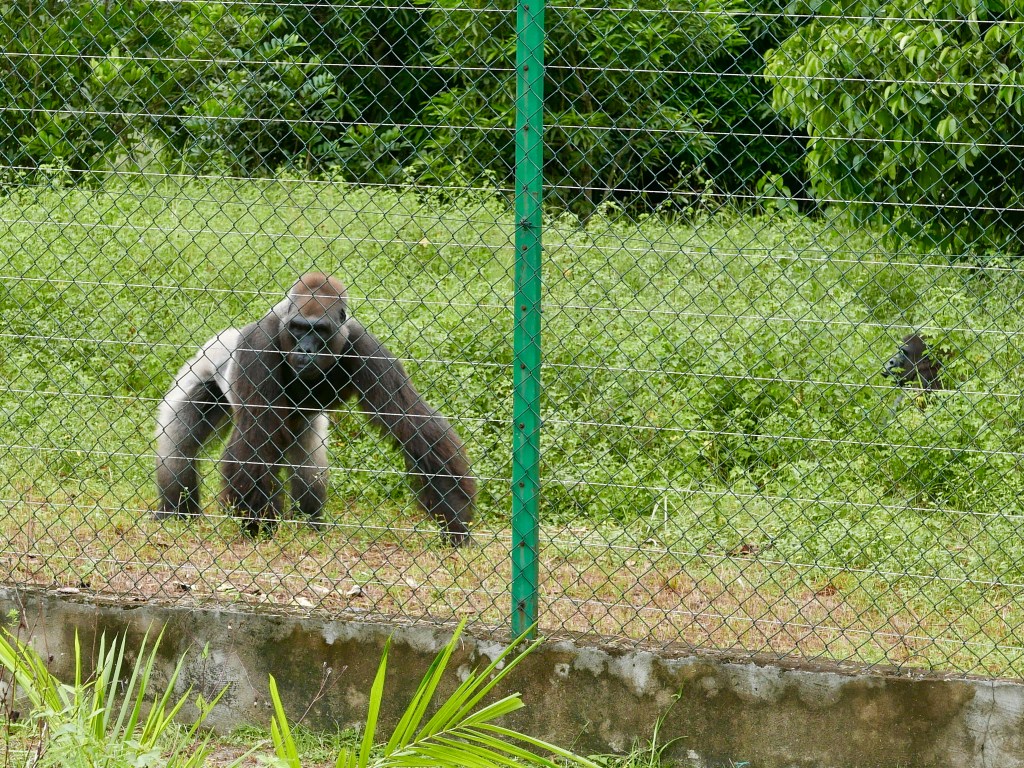
Further on the lagoon, we also make a quick stop to Evengué island to visit the Fernan-Vaz Gorilla project ONG (www.gorillasgabon.org). This island is a sanctuary, where orphan gorillas are rescued from the bushmeat trade and taken care of, growing in a wild but protected environment. There are always two guards on duty, coming from Omboué and rotating every week. They know their gorillas very well, however our presence is a source of stress for the animals, so we must keep a distance and respect a maximum of 20 minutes to watch them. These are powerful beasts, looking very calm when they seat eating fruits, but impressive when males run while loudly thumping their chest!

Off the map in Enamino

We have just left Loango behind and rejoined the main dirt road, when at some totally unmarked point our driver turns and takes the car onto the sand, through the savannah, the forest, the savannah, the jungle, and it’s shaking all over, and it’s the sea, the wind, the sound of the waves, and a few wooden houses scattered on a stretch of grass overlooking the sea. It’s the Enamino camp, and it cannot be found by someone who has never been there before.

Enamino is the life’s work of Philippe, a legendary local guide. He created the camp some 20 years ago, from scratch, from the very wild jungle, which he cut and cleared with his own hands, tree after tree, sleeping in a tent for a few years until he would build these rustic houses and make the place livable, lovable and super ecological. No running water, and the generator produces electricity for one hour a day, but who cares when the view looks like this and the first neighbour is 50 km away?

We spend time soaking in the atmosphere. As we have a first swim in the warm sea, staying close to the shore as the currents are strong, we are in company of a huge turtle poking its head out at the top of the waves, enjoying the swell.

The next morning, Philippe is looking for hands to help him and his friends fishing in the lagoon, which is supposedly a 30-minute walk away. 90 minutes later, we are where the fresh water meets the sea. The lagoon is wide, circled by mangrove. We put our feet in a mix of mud, sand, and hundreds of broken oyster shells that make for quite a sharp massage. The fishing net is 300 meters long. With 3-4 people at each end, we deploy it vertically across the lagoon, then take it gradually closer to the shore, trying to keep it in contact with the sand at our feet so that the fish does not slip under. Though we do lose fish under and over the net, the technique works well. We repeat this 4 times, and end up with full buckets securing lunches and dinners for the community for at least a couple of weeks, and quite a few cuts at our feet – but it was well worth the pain.

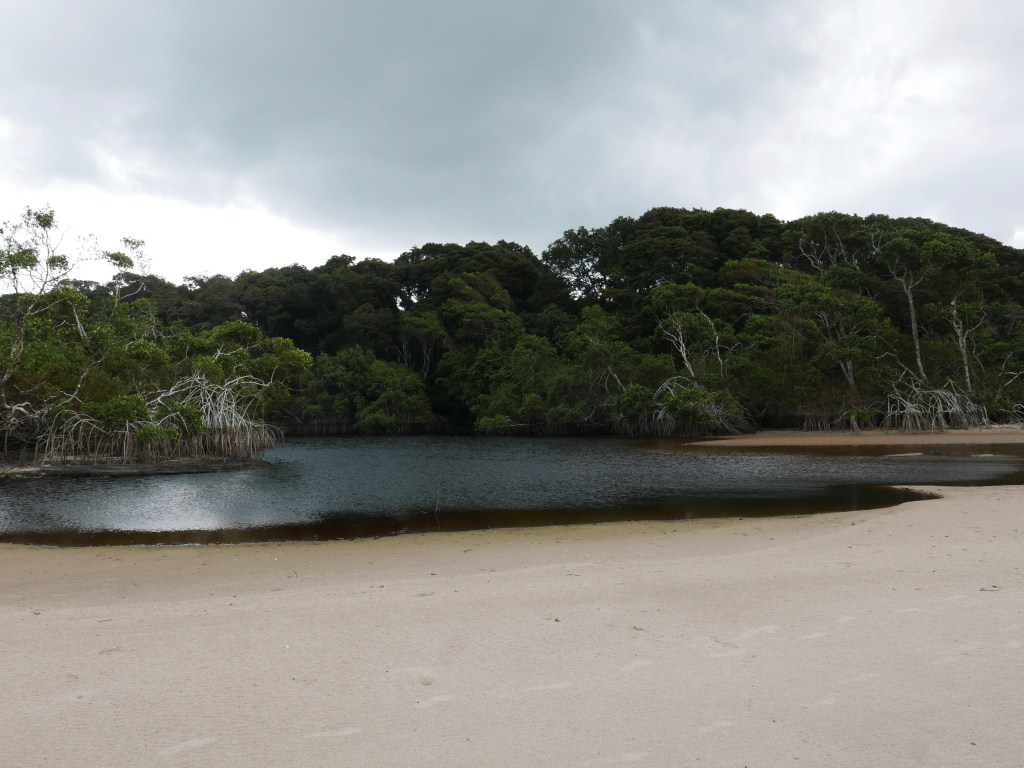
In the late afternoon, we take a hike in the surrounding jungle with Paul, who works with Philippe. He teaches us the magic properties of some trees, like the okoumé, which sap makes for a perfect mosquito repeller as well as a natural light torch, or the water liana, which can save your life, as when you cut a chunk of it and hold it vertically, delicious natural water flows right out of it. Paul tells us stories of hippos, elephants, gorillas, crocodiles, shows us where they roam, their favourite itineraries, as we get deeper into the humid jungle. Flora still remembers the elephant charge a couple of days ago in Loango and she squeezes my hand at every tiny noise we hear. We spot fresh hippo and gorilla footprints. We feel observed, but we can’t see anything. It’s both an oppressing and fascinating feeling. We jump in a small motor boat and start gliding on the black and calm waters of a lake that looks bottomless and ready to swallow anything that falls in. The grey skies, the trees and the mangrove around us wrap up the lake in a veil of menace and sheer mystery. In this place, even the most rational person will surrender to the spirits. Still, the only living thing we see is a thin green snake undulating at the surface of the water.

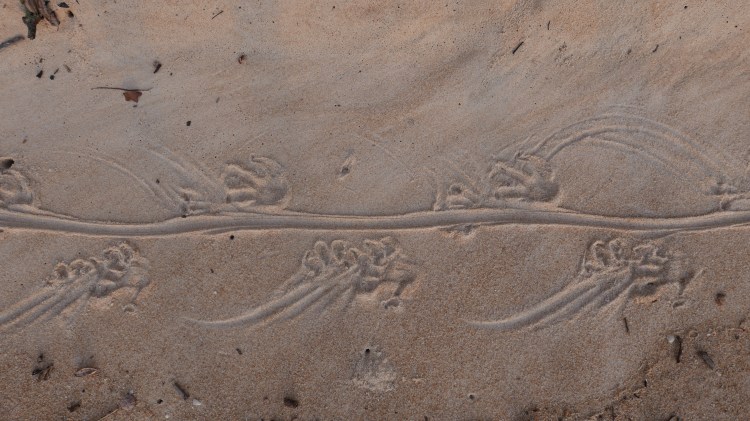
After this surreal experience, some of us are happy to reach the sea shore. Around Enamino, it’s frequent to see elephants and hippos taking a beach stroll in the early morning or later at night – Gabon is actually the only country in the world where such scenes can be seen. At the camp around lunch time, we did see from far a hippo jogging around the area we are in now. We find his footprints in the sand quite easily. They are surrounded by a few others – Paul can tell it was a mum elephant with her baby.

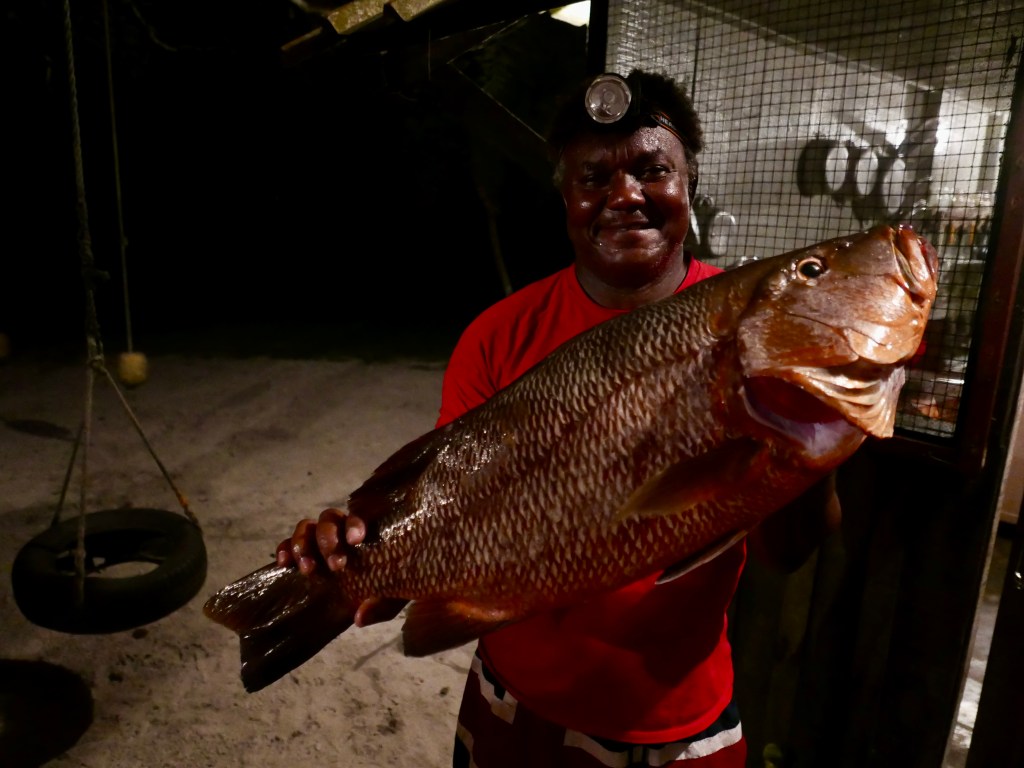
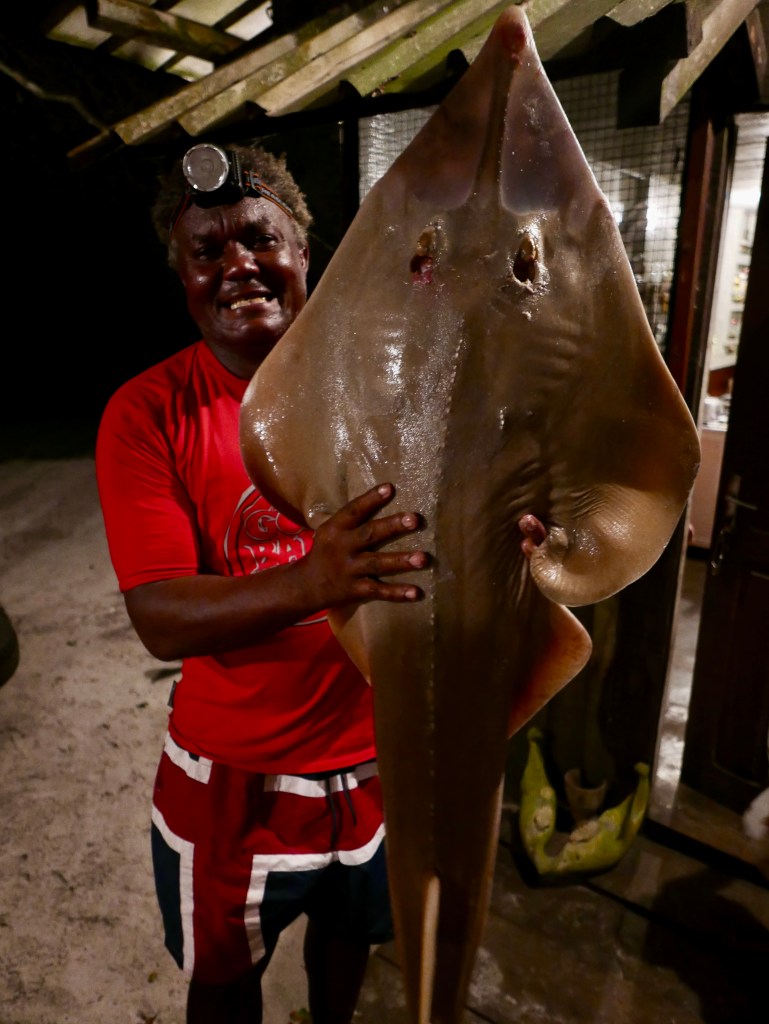
While we eat our delicious morning fish and giant oysters at dinner, Philippe and Paul’s friends are nightfishing in front of the camp, simply throwing the hook from the small cliff. Fantastic beasts come out one after the other:

In two very intense days, we have just scratched the surface of the mysteries of Enamino. It’s the kind of place that opens something in you, and you do not want to close whatever that thing is. We know we will come back here someday.

Loango

The sea, the savannah, the forest, beaches and lagoons. Put these together and you have a very unusual ecosystem called Loango, Gabon’s most famed national park. But because it’s Gabon and because Loango is hard to get to, “fame” is a very relative word, and as a visitor you get the privilege to have these 155,000 hectares of pristine nature all for yourself.

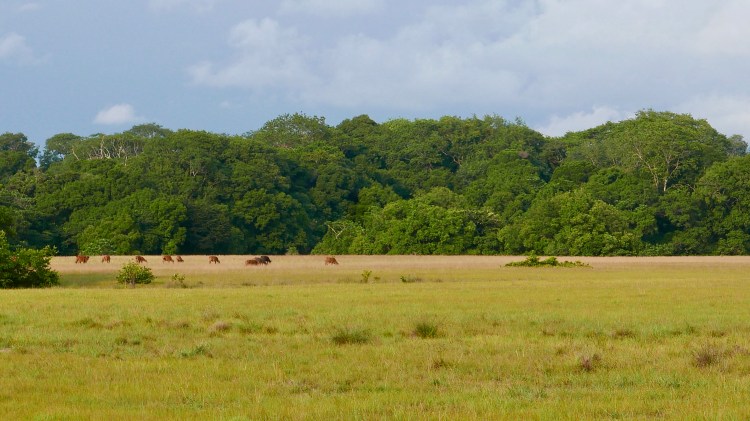
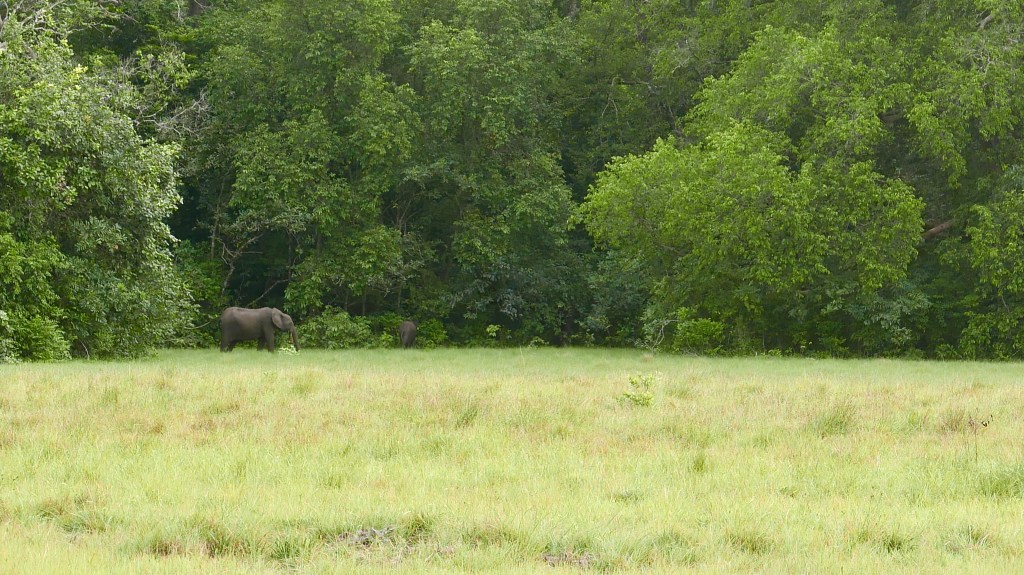
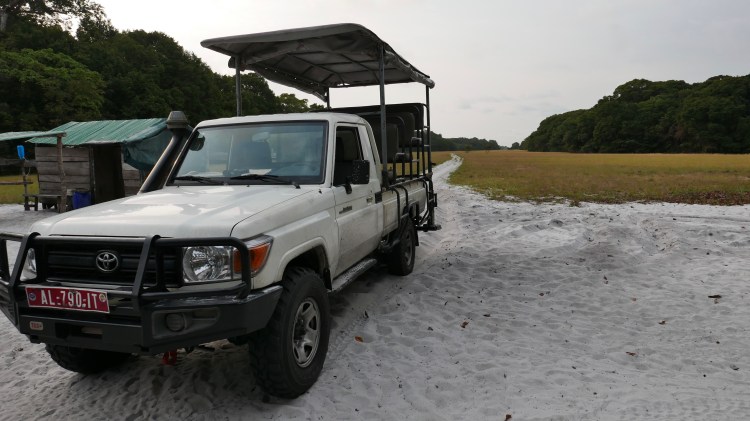
Our Toyota blazes through the park on sandy paths, in search of animals. And we do see a lot of them: brown buffaloes, majestic elephants, funny bush pigs, frail sitatungas. All of these are fast and do not like to be approached too close, so our guides are careful to leave some distance so that we can spend time contemplating them.

Once though, we find a few elephants stand across the road. Among them, a mother and her baby elephant. We stop the car some 50 meters from the mother, and then starts a fascinating face-to-face that will last for almost 10 minutes, after which the mother moves towards us and decides to charge with loud trumpeting. Our eyes meet hers, and she is not happy. Goosebumps and screams. An unforgettable scene.

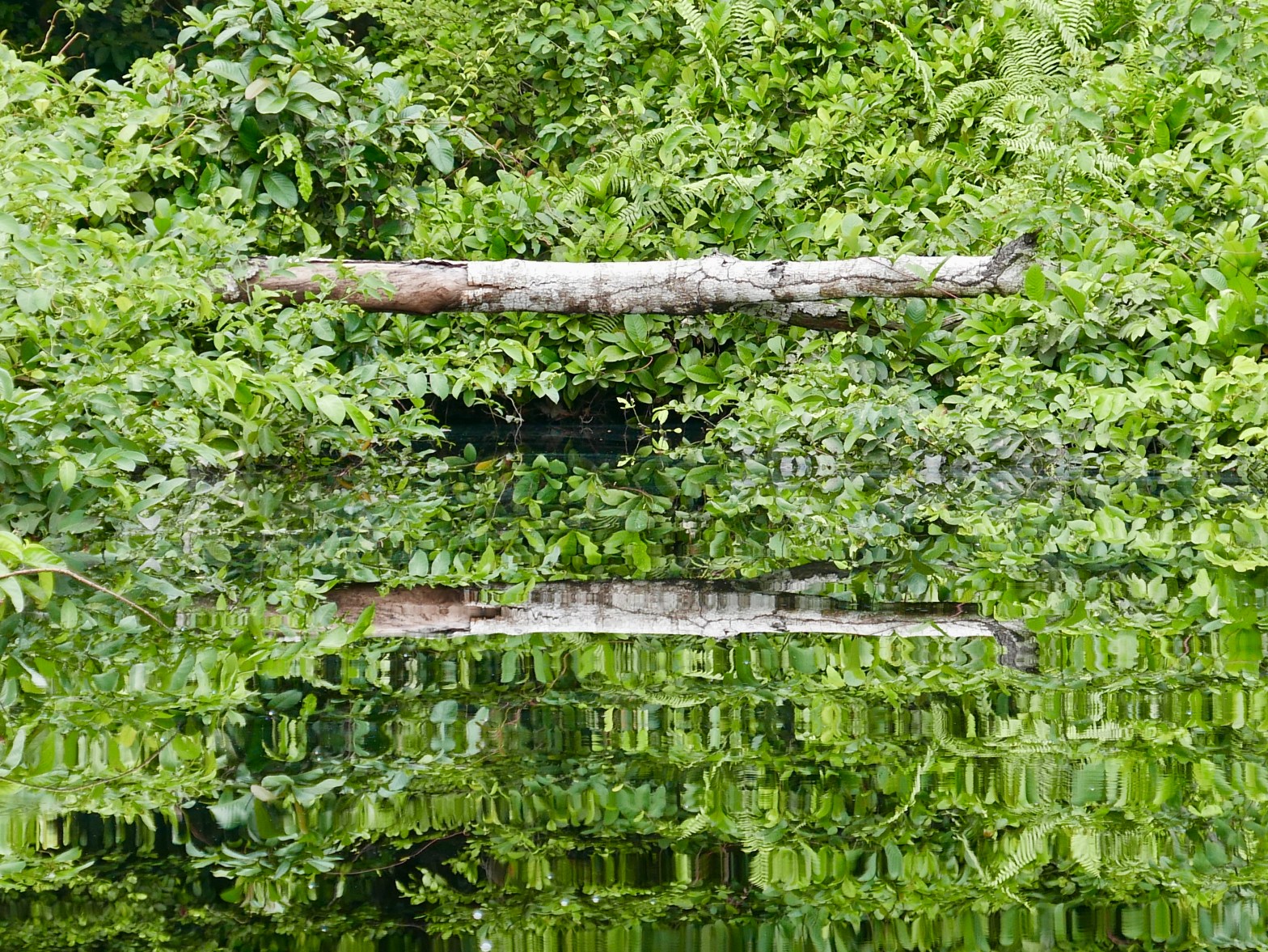
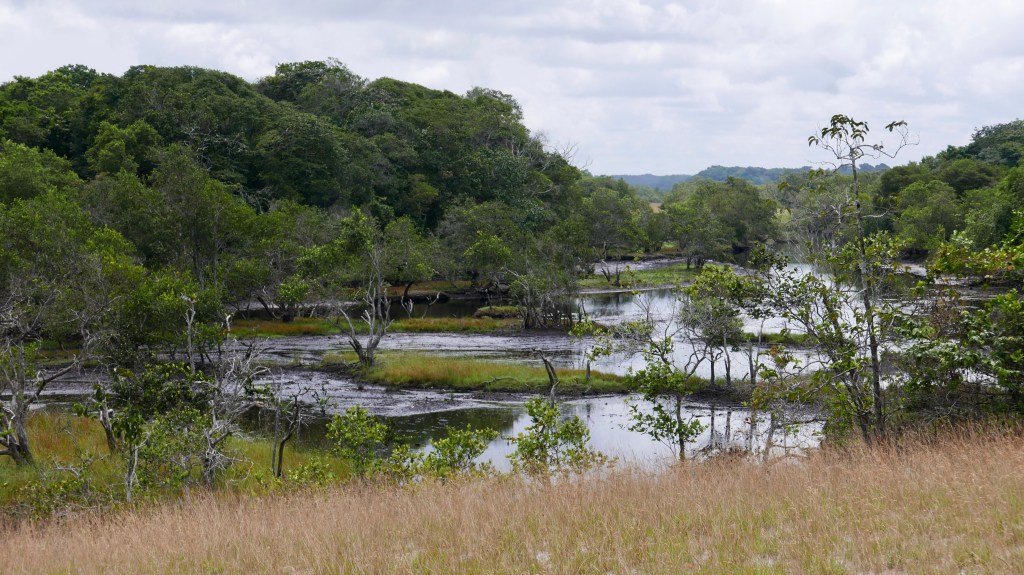
Even when there are no animals, we are absorbed in the scenery, which can get very surprising and mysterious in some marshy spots.

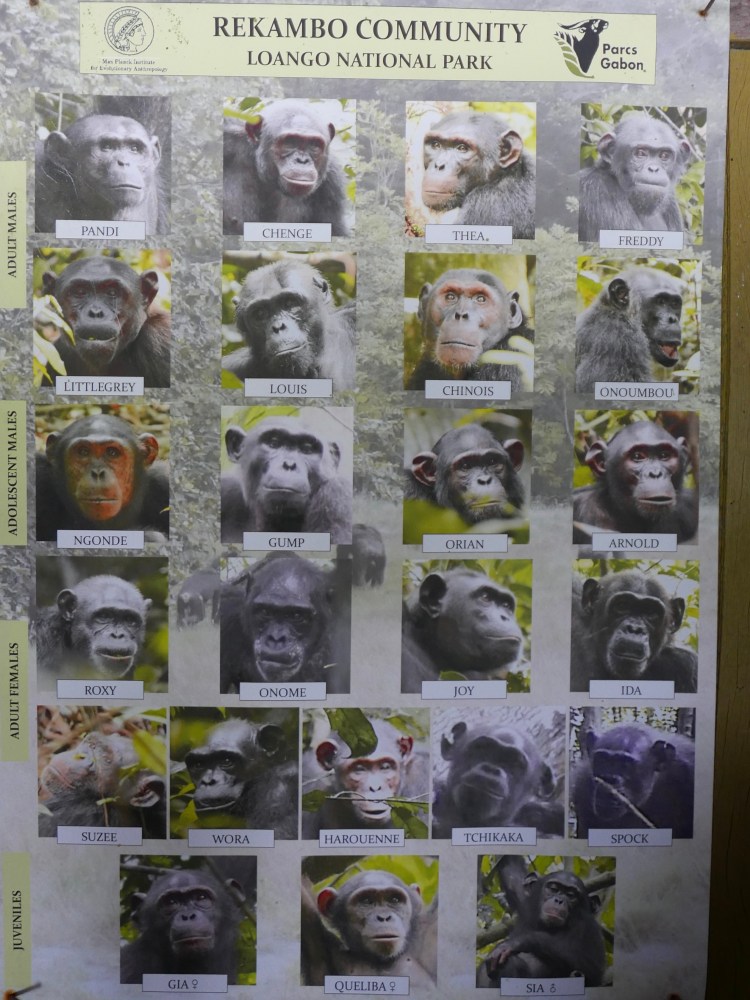
We make an interesting stopover at a remote and no-frills scientific camp. There, Gabonese and European experts study in deep details the gorilla community. They spend their days in the forest tracking them and registering all of their movements and behaviours. They have made a map and given a name to each individual. What a job! We spend time discussing with a young German biologist and veterinary who has been in the park for 6 months already. She is almost entirely covered with bites of all sorts, but she wears the smile of someone having the time of her life.

We will neither meet Louis, Chinois, Iboumbou nor Tchikaka. The gorillas are too deep in the forest, the permit to get there is super expensive, and kids below 16 are not allowed anyway. At our night camp facing the beautiful Louri lagoon, we will not see from our tent the hippos either – but we are rather happy about it. The sound of insects at night is wild enough.

La lagune d’Iguéla

This is still day 2 of our trip inside Gabon back a few weeks ago (before the world changed).

After 5 hours riding along the Ogooué river, we are so happy to stretch our legs in the tiny village of Omboué, and we start wondering if the buzz that the motor of the boat put in our ears will ever stop. Now we hop on a fantastic-looking safari converted Land Cruiser with 3 comfortable benches on the outside deck and a tarpaulin roof to protect us from the sun. The vehicle quickly reaches a dirt road. We are leaving civilisation behind to spend a few days in what many experts refer to as Central Africa’s most beautiful national park : Loango.

The park is not easy to access. Of course, you need a very strong 4×4 to get there, but that is not enough: without a mix of supernatural and local driving skills, you will either get stuck in the mud in the middle of the jungle, or in the sand somewhere in the savannah. On the benches at the back, it’s all bumps and jumps, hang on, and try to forget that you are sweating by the gallon and have not eaten anything for 7 hours. We arrive at Loango Lodge after the two longest hours of the week. The scenery suddenly makes it all worthwhile.

Now I need to make an announcement (or a confession): I have managed to wipe out from their SD card all the photos that my father took during his stay in Gabon. Don’t ask me how, all I know is that it never happened to me before, and that this time it did happen. A few hundred beautiful and pro-level photos, all gone. So what you see now on the blog are Fruzsi’s and my photos, made with our modest camera. They’re all right, but nowhere close to my father’s, especially those of the animals in the park. Voilà, the painful truth is said now.

After a comforting late lunch, we take a small boat for an evening discovery of the Iguéla lagoon and its inhabitants. We quietly glide along the banks. Sometimes our guide stops the engine and all is so quiet. We spot the 2 eyes of a hippo. Then an elephant surges out of the woods above us, munching his dinner (sorry – no photos, now you know why). A few minutes later, we see monkeys playing at the top of the trees.

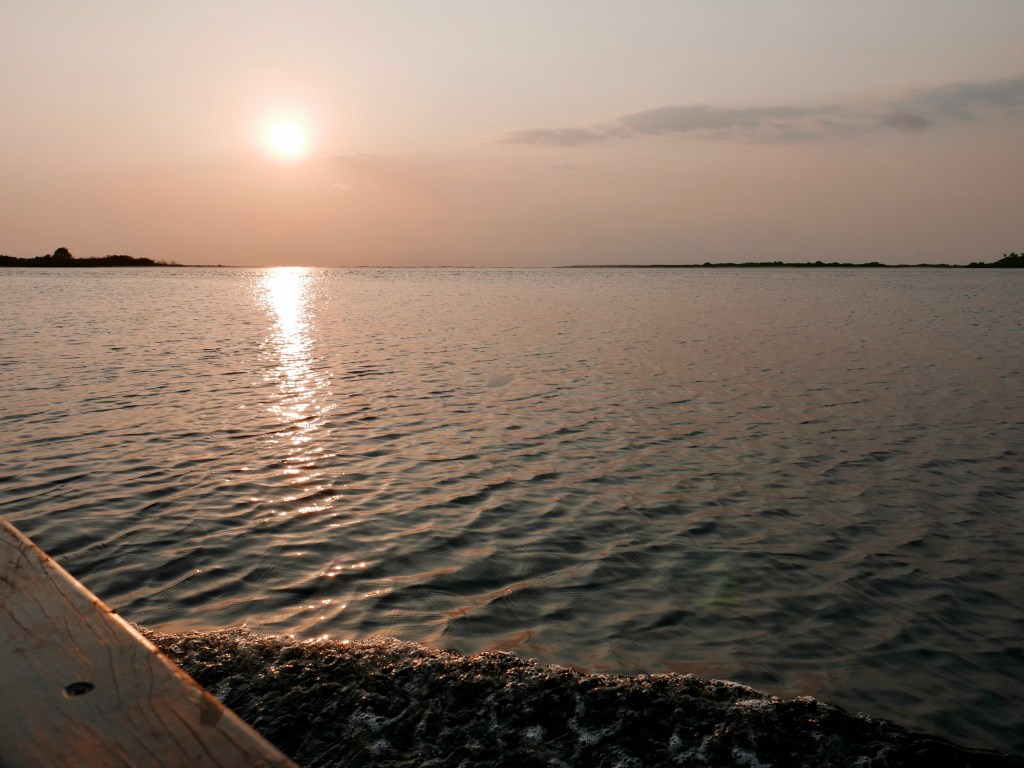
Then, as the sun is setting, we reach Pointe Sainte Catherine, where the waters of the lagoon meet the sea. A world-famous fishing spot supposedly – but besides us there are no human beings in sight.

Design a site like this with WordPress.com
Get started